Bob Moses Named AES Executive Director

December 20, 2011 by  
/* Filed under News, SPARS Feed */

Since the announcement last summer that Roger Furness would step down as executive director of the Audio Engineering Society (AES), a position he’s held for 17 years, we’ve wondered who would take the reigns.

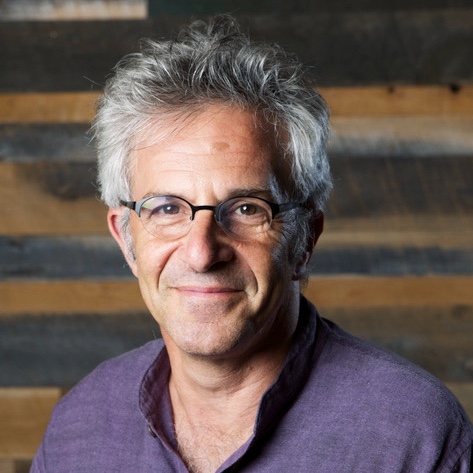
Bob Moses

Today, after an exhaustive search, AES President Jan Abildgaard Pedersen announced that the new executive director is Bob Moses, longtime AES member and officer, accomplished product designer (Rane, DHT, THAT), technologist, and pro audio industry advocate.

Moses will assume his new role January 1, 2012. In accepting the position, Moses commented on the challenges the organization faces, and where he plans to start…

“My initial task is to identify where the AES provides maximum value to its membership and the industry, and to advance new ways to enhance this value,” Moses said. “Sixty-three years ago the AES was the place for the scientific community to share ideas. Over time, AES Conventions evolved as the best forum for manufactures to exhibit professional audio products. But today, the Internet and persistent economic challenges worldwide have changed the game.

“Based on my own experience as an AES member, author, and exhibitor, I know the AES remains a vital resource for audio professionals. We need to clarify that value and communicate it better. I’m ready for the challenge.”

A bit of background on Moses…

In 1987 after graduating from McGill University with an electrical engineering degree, Bob Moses joined Rane Corporation as a digital audio product designer. In 1995 he invented a novel means of transporting audio over Firewire and cofounded Digital Harmony Technologies (DHT) to deploy this technology.  Moses worked as a consultant to numerous consumer and professional audio manufacturers until he was recruited by THAT Corporation in 2006 as Program Manager of its integrated circuit (IC) business. During the past five years he has concentrated his energies on managing new technology development at THAT.

As a member of the AES Board of Governors since 1999; VP Western Region, 2001 -2006; and President, 2007 – 2008, Bob Moses has served an increasingly integral role within the organization and on Convention development, including several consecutive turns as Product Design Track Chair.

For more information, visit www.aes.org.

Picture This: Sightings from The Flux Studios “Fabulous” Party, AES 2011

October 26, 2011 by  
/* Filed under NYC Spotlight */

EAST VILLAGE, NEW YORK: The festive spirit of AES 2011 stayed strong on Saturday night, as aisle-dwellers transformed into party-hoppers after sunset.

Flux was the center of attention on Saturday night at AES 2011. (photo: Christopher Wells Kpictures.com )

For many, the post-Javits evening began with a packed gathering at Electric Lady Studios. Later on, those with the inside track got to an intimate event at Germano Studios. From there, it was just a hop, skip and a cab ride to the reigning emperor of East Village recording, Flux Studios.

The stylish three-room facility is the HQ for producer Fabrice Dupont (PureMix.net, Santigold, Mark Ronson, Les Nubians, Toots & the Maytals, Sean Lennnon, Babyface, Brazilian Girls, Bebel Giberto). It’s also legendary for being the former home of the Dangerous Music genius team, which originally founded the studio and served as a sponsor for the evening’s activities. Joining Dangerous in making it all happen was Focal, Lauten Audio, Vovox and Sterling Modular.

Visitors arrived in waves, greeted with champagne at the door and more on each floor, including Flux’ luscious rooftop. Audio luminaries and their entourages stayed laaaaate – the perfect crossfade into AES’ final day.

The way to Fabulousness.

Flux in triplicate (photo: Christopher Wells, Kpictures.com)

Raise high the roof! (photo: Christopher Wells, Kpictures.com)

Tender is the night. (photo: Christopher Wells, Kpictures.com)

Top of the world, AES style. (photo: Christopher Wells, Kpictures.com)

SonicScoop's Janice Brown and David Weiss surround Steve Massey. (photo: Christopher Wells, Kpictures.com)

Safe in the Dangerous studio. (photo: Christopher Wells, Kpictures.com)

Inside the Neve 55 series-equipped Dangerous room. (photo: Christopher Wells, Kpictures.com)

Real time music rang out in the live room: Cyrille Aimée on vocals, Shawn Connely on the bass, Koran Hagan and Adrien Moignard on guitar (photo: Christopher Wells, Kpictures.com)

The night went deep. (photo: Christopher Wells, Kpictures.com)

Fabrice Dupont -- the FABULOUS owner of Flux. (photo: Christopher Wells, Kpictures.com)


Kicking it in the corridor. (photo: Christopher Wells, Kpictures.com)

Things got chilly, but always stayed sparkling! (photo: Christopher Wells, Kpictures.com)


Photostory: Inside the Studio G Progress Party, AES 2011

October 25, 2011 by  
/* Filed under NYC Spotlight */

WILLIAMSBURG, BROOKLYN: For a lot of people at this year’s AES, the action at the Javits Center was a mere appetizer for the intensive show-spawned nightlife spanning New York City.

G proprietor Joel Hamilton and engineer Andrew Schneider came out of hiding on Friday night. (photo: Andrew Sheron)

Producers, artists, engineers and audio heads of all stripes found plenty to keep them buzzing on Friday. Many started out at the Fred Perry Artist Lounge at Stratosphere Sound, others kicked it off at an intimate gathering at Area 51, while still more got going at an energetic midtown bash at Quad Studios.

But for those in the know, all roads led to Brooklyn and the Progress Party at the new 5,000 sq. ft. home of Studio G, just off of Williamsburg’s McCarren Park.

The new facility will be home to musician/producer/engineers Joel Hamilton (Blakroc, Elvis Costello), Tony Maimone (They Might Be Giants, Bob Mould), and Jeff Hill (Rufus Wainwright), and no doubt a great many records to come. Studio G has been a Williamsburg recording destination for over a decade, and has built a reputation for its discerning staff, selective gear, and work with boundary-pushing artists like Blakroc, Matisyahu, Mike Watt and Dub Trio.

Guests arrived to find the new G in gloriously raw form as it moves closer to its opening, while like-minded Brooklyn-based sponsor Audio Power Tools and its premium brands – Burl Audio, Mojave Audio, Royer Labs, Slate Digital – lavished them with tamales and positive vibes.

But don’t take our word for it – the camera never lies!


The key to Studio G.

Studio G's Tony Maimone in the middle of Catalina Spinel and Rachel Doriss. (photo: David Weiss)

Warming up Studio A for the 48-input SSL 8000 G+. (photo: Andrew Sheron)

(l-r) Mike Caffrey of NYC studio Monster Island and Steven Slate join Tape Op's Larry Crane. (photo: David Weiss)

(l-r) Aaron Nevezie of the Bunker, with SonicScoop's Justin Colletti and David Weiss (photo: Andrew Sheron)

(l-r) Erica Glyn, Bob Power and Catherine Oberg were geometrically composed. photo: David Weiss)

Peer into the future...at G's Studio B. (photo: Andrew Sheron)

We just had to give you a closer look at Studio C's classic 1980's Sony board. (photo: Andrew Sheron)

Todd Hodges and Steve Massey of Massey Plugins are REALLY enjoying their beer! (photo: Andrew Sheron)

Studio G's Jeff Hill and Joel Hamilton -- they have more than just initials in common. (photo: Andrew Sheron)

The inimitable Fletcher and Steven Slate (photo: Janice Brown)

All the super DJ's/That act so cool: Kurt Submerged of the Ohm Resistance label. (photo: David Weiss)

Audio Power Tools' Blue Wilding (center) ran a tight ship. (photo: Andrew Sheron)


Special thanks to Andrew Sheron for his stellar photography! Visit him at www.andrewsheron.com.


AES Reflections: 2011 in NYC

October 24, 2011 by  
/* Filed under Music Biz */

WEST SIDE, MANHATTAN: What made you come to AES? Or why did you think about visiting the just-concluded annual convention this year, even if you couldn’t? Or how come you were glad to skip it entirely?

No matter what you decided to do, there are great reasons to back up your choice. For those who made it, the annual audio pow wow was just too essential for business or pleasure to skip. There were those who were tempted but had to pass, because the industry’s increasingly challenging/ confusing economics made the trip untenable. While others, ready to see fresh leadership and direction for the sector, willingly sat it out.

Convention convo had its own flavor in 2011.

I spent the days of AES 2011 at the Javits Center and the nights absorbing New York City’s beautiful old boroughs, bouncing from one nocturnal event to another. Starting with Avid’s announcement of Pro Tools 10 Thursday night at Lincoln Center, to the show’s final bell at 4:00 PM on Sunday, it was a steady stream of breaking information, familiar faces, new friends and spirited conversations.

While in years past, the buzz has been about finding the newest/latest hardware and software, I didn’t sense very much of that this time. There were boxes and plugins debuting here and there (500-series modules for all!), but many exhibitors had nothing new to display — and were just fine with that.

R&D cycles seem longer now, and the race to compete has been replaced with just keeping pace. For many at AES 2011, simply being there was the Big Statement. In our industry, sheer survival now comes with bragging rights.

Interestingly, besides in some panels and at the citywide in-studio live band and DJ sets, I heard very little mention of…music. Among the many mic pre mavens, producers, engineers, artists, friends, and colleagues that I saw, it feels like we talked about pretty much anything but that. It was like an old mutual friend whose health felt too fragile to bring up.

There was dialogue aplenty about phattening frequencies, clip gain, and sweetening signals; powered speakers and flat FRC’s; exciting projects and possibilities; hanging in there. But that sweet source of inspiration which also provided income – music – sometimes felt a little MIA, even as we auditioned Adele in the tweeters.

We have to make sure we don’t miss our muse, even as things get complicated.

It can be hard to hum a happy tune on the show floor. So hopefully now that AES is over, everyone else who was there got to do what I’ve been doing today: listening to my favorite songs. Those are what got us here. The craving to hear new ones is what keeps us all moving ahead.

– David Weiss

CharterOak (CT) Announces H1000 Large Diaphragm Condenser Microphone, MPA1 Mic Pre

October 20, 2011 by  
/* Filed under Deli Feed, Deli NYC Feed, News */

Enfield, CT-based manufacturer CharterOak has announced that it will show and demo the new H1000 Large Diaphragm Condenser this week at AES 2011, being held this weekend in NYC.

Experience the new CharterOak H1000 at AES 2011.

The New CharterOak H1000 (MSP: $2200)  is a modern side address dual diaphragm tube microphone fitted with a custom capsule, Lundahl output transformer, hand-selected JJ ECC83, bass roll off and -10dB pad. With its mid-range focus and balanced bass and smooth top end, the H1000 is intended to be an alternative to the U47 and other recent clones.

The microphone is delivered with a lifetime warranty on all parts and labor.

The company will also demonstrate the CharterOak MPA-1 ($2250), a solid-state, dual channel microphone preamplifier. The MPA-1acheives extremely high headroom, and features transformerless input circuitry and transformer balanced output. With the input and output gain controls, the engineer can carefully control the signal from ultra clean and transparent, to pleasant coloration added by the MPA-1’s output stage and Cinemag output transformer.

The MPA-1 is also fitted with constantly variable high pass and low pass filters that encompass the entire bandwidth of the device, a -6dB pad, +48VDC phantom power, and phase reverse, giving the engineer further control of the signal and flexibility.

CharterOak MPA-1 Technical Specifications

The highly flexible new MPA1 mic pre extends CharterOak's product line.

Minimum Gain – 20Db
Maximum Gain – 76Db
Frequency Response – 10Hz – 100kHz (+/- 3dB)
Noise -    -100dB or better
Maximum Input Level – +23dBu
Maximum Output Level – +32dBu
Phantom Power – +48VDC
Output Impedance – 600 ohms (transformer balanced)
Power Requirements – 100-120VAC/200-240VAC switchable

MSRP on both products have not yet been announced.

Earthworks to Debut WL40V Wireless Capsule Microphone at AES

October 17, 2011 by  
/* Filed under Deli Feed, Deli NYC Feed, News */

Earthworks Microphones has announced that it will debut its first-ever wireless product, the WL40V Wireless Vocal Microphone Capsule, at AES 2011.

Earthworks goes wireless with the WL40V.

According to Earthworks, the WL40V has been adapted in wireless capsule form from the SR40V Vocal Microphone released earlier this year. The WL40V is designed to maintain the same sound as its wired counterpart, delivering a detailed and realistic vocal sound that requires little-to-no EQ. Its perfect hypercardioid polar pattern and extended flat frequency response translate to a natural on- and off-axis performance, with extremely high levels of clarity and detail.

The wireless capsule is interchangeable with any screw-on-type handheld transmitters that receive a 31.3mm/pitch 1.0mm threading, such as those from Lectrosonics, Line 6 and Shure.

The WL40V will be available through authorized Earthworks dealers Q1 2012 and will come with a 15-year warranty.

The WL40V, and the rest of the Earthworks product line can be seen be at the 131st AES Convention in New York City, October 21-23, Booth #645.

JBL to Demonstrate LSR Series Studio Monitors at AES 2011

October 13, 2011 by  
/* Filed under Deli NYC Feed, News */

Among the myriad listening experiences in store at AES 2011, JBL will be demonstrating its complete line of LSR Series studio monitors at the show October 21-23.

Monitor JBL and the LSR line at the Harman Truck, throughout AES 2011.

The JBL LSR line includes the flagship LSR6300 Series, the LSR4300 Series featuring RMC (Room Mode Correction), and the affordable LSR2300 Series.

Checking out the cost-effective LSR monitors will be an excellent reason to visit the Harman Truck on the AES show floor at booth space T1.

Countdown to AES with Peter Katis

September 8, 2011 by  
/* Filed under NYC Spotlight */

BRIDGEPORT, CT: In the old days, there were engineers who came up through the established studio system, rising from the ranks of interns, and there were engineers who worked their way into their living by diligently slaving away in hodgepodge basement studios on quirky indie releases. Peter Katis did both.

Peter Katis, Tarquin Studios (Bridgeport, CT)

“I was always a DIY kind of guy,” he says, ”But I thought it would be stupid to reinvent the lightbulb. I figured there were a lot of people who were really good at it already, and I could pick up a lot from watching them. I think it was good to see both sides of it. Otherwise I always would have gone my whole life wondering if I was doing it wrong. Although nowadays I think that secretly, everyone still worries about that.”

Katis had become obsessed with recording after taking a class at SUNY Purchase and never looked back. “For a long time every cent I made was another cent I could put into new gear, and every spare minute was time I could be in the studio.”

He’d soon go on to work on breakthrough releases for artists like Interpol and The National and build up a clientele of some of the most active and unordinary independent rock bands of the day: Frightened Rabbit, Mates Of State, Mice Parade, Tapes N’ Tapes, The Swell Season, Mobius Band, Guster, Mercury Rev, Tokyo Police Club.

Katis first worked out of his parent’s basement, and then built out a residential studio in Bridgeport CT named after his brother, Tarquin.

“When I started interning in studios back in the early 90s, people would really beat into your head that there was a right and a wrong way to do things. Nowadays, I don’t think anyone is that arrogant. I remember thinking ‘wow, I’m coming from a really different place than these people are.”

Recently, Katis has completed a solo project for Jónsi Birgisson of Sigur Ros, signed on to another with Trey Anastasio of Phish, released an album of his own music, and was commissioned to teach a small class of recording enthusiasts and burgeoning pros at a private villa in the South of France. We asked him about all that and more in preparation for our “Studio As an Instrument Panel” at this year’s AES Convention.

I hear you’ve been doing some recording workshops overseas. Can you tell us a little bit about this Mix With The Masters program? It seems to be getting a lot of attention lately.

The name of the program is hard to say without sounding insanely immodest, but it was a really great experience. The whole thing takes place in this really beautiful residential studio in the south of France [Studio La Fabrique] organized by two of the sweetest people.  They’ve had a bunch of other speakers – Michael Brauer, David Kahne, Andy Wallace, Tchad Blake. Pretty good company!

I mean, it was hard work in the sense that it’s not easy to talk to a room of people for 8 or 9 hours and try to be interesting and educational the whole time. It’s harder than making a record I think! [Laughs] So in that way, it’s demanding. People were coming from all over the world, so if you were really boring… well, that would suck.

But it wasn’t all just talking. I also got to bring in some sessions from records I worked on. On the 4th day we actually got a French band in and pre-produced, tracked and mixed a song. In the last couple of days people played their own music and we all got to talk about that too. It was a great time.

People ask me sometimes if they should go to one of the other sessions coming up with other engineers. They’ll ask if it’s worth the money. It is expensive – but honestly, even if no one was there to lecture you’d have a great time, it’s such a beautiful place. People are hanging out all day just talking about recording in this amazing environment.

Well hopefully it’s left you prepared to talk to our crowd at AES. Thanks for agreeing to participate on the panel by the way.

Yeah, thanks for inviting me. The name “studio as an instrument” was kind of exciting to me. I think with my own band, The Philistines Jr., even more than any other, I get to approach things that way because there’s no one to answer to. I’ve been intrigued by that idea of the studio being an instrument since I started, since the very first time I got my hands on a 4-track.

Can you tell us what that phrase means to you?

Sure. I mean, as an artist and a producer I’ve always been frustrated with the straight-ahead and normal approach to making music. It’s always weird to see you words in print, so I hope this comes out right, but I can’t stand to just pick up an acoustic guitar and write songs that way. What I like more is coming up with general ideas that I can stomach to start with, and then twisting them around in ways that aren’t offensive to me. [Laughs]

Some people can do it the other way, just pick up a guitar and write songs, and that’s great. Some of my favorite music is like that. But when it comes to making music, it’s just not what I want. I’m not sure I would keep making music if I didn’t have the studio as its own kind of instrument.

To me, part of what makes recordings interesting is when you experiment. You can make great plans, but sometimes the most interesting things come out when you set yourself up to make great mistakes also. That can happen in the studio – You’re not under any direct pressure like you are in front of an audience. You can try anything, and if it’s terrible, who cares?

From what I’m gathering here, when you work on your own music, it’s an exaggeration of the approach you take with other bands, rather than a whole different process?

Yeah, exactly. In all the years I’ve been recording, I guess I’ve kind of noticed all the things one can do to end up with a record that sounds special. You’d be surprised, but the worst people to do that with are often the young bands who come in and just want to play their songs the way they wrote them and perform them and be done with it.

Sometimes in the studio we’ll mess around with a guitar sound and you get it to a point where everyone’s thinking “Wow, that sound is amazing!” But then they’ll go to do the take and they’ll play their part and it just sounds kind of okay. So I always talk to bands about playing your part to the sound. “Play to the sound.” If you play with no regard to the sound, just playing it the way you wrote it no matter what’s coming back through the speakers then the odds are a lot lower that it’s going to be very interesting.

Some of the more commercially successful records you’ve worked on, the ones a lot of our readers will be familiar with, like Interpol and The National, were they immediately receptive to that process?

Katis co-produced/engineered Interpol's debut album for Matador

Interesting question. I like both the records I did with Interpol. The 1st record definitely has kind of a cool sound. But to be honest, those guys did not play to the sound at all. That’s an example where things ended up sounding cool in spite of the fact that they just wanted to play them as they wrote them and arranged them. So that one is an example of where it worked out alright where they didn’t do it that way at all.

Now the National is a tricky one. We have a funny relationship – I love those guys. They’re some of my best friends in real life, even outside the studio.

I’ve known them and worked with them for so long, but we seem to butt heads all the time about sounds. In a way we agree on everything, but there’s also loads of disagreement between us, and within the band. But in their case that’s all part of some chemistry that really seems to add up to something in the end.

Interpol has this great gift where they write music, they play it and, for the most part, that’s it. They like it, people like it, done. The songs end up sounding as they were initially envisioned. But with the National, it’s kind of like with my own stuff. When we make music, at first we almost hate it, and we sort of have to beat the sh*t out of it to make it aesthetically acceptable. It’s like if you have a really pretty, really beautiful song, the production can’t necessarily be perfectly pretty and beautiful.

I remember playing in bands years ago and being frustrated and kind of envious of the Smashing Pumpkins sometimes. You know, Billy Corgan has this really strange whining kind of voice, so he can sing these really beautiful melodies and they don’t come off as cheesy.

So with the National, it’s kind of like that. In the end, on the records they’re trying to mess their sounds up more because otherwise, it’s just too pretty to hear.

The tough thing is that sometimes a band with those priorities doesn’t get that I get that too! I like to really work for a great sound, but I don’t want to spend all this time making everything too slick and perfect. It’s so important to The National that they end up with things that don’t sound phony.

But there’s a fine line between having sounds that aren’t too polished, and having sounds that are unintentionally lo-fi. There’s this certain new lofi aesthetic that’s developing now since so many bands are self-recording completely. It’s not just purposefully rough around the edges avoiding overpolish, but instead it’s lofi in the sense that it’s just not well done. I hope that doesn’t make me sound like a jerk.

A lot of the coolest sounding records I’m part of are the ones where people come here with the intention of making an interesting sounding record working meticulously from start to finish. But that’s not always possible.

I also work with a lot of very-indie bands that don’t have the budget to come into the studio and experiment. That means that a lot of the projects I do now are this kind of hybrid where the band will come in and track a bunch of stuff and then leave for a month or two, sometimes more. They’ll do a lot of overdubs on their own, sometimes spend time getting the vocals right at their own studio, and then come back here for a couple weeks to mix.

That way, they spend a fraction of what they would have, but they get the luxury of starting off with some proper sounds to judge everything else against, and they get a proper mix, but they also have months to tinker away and use their own home studio as an instrument. I think more and more bands are about that now, which probably, they should be.

Sure, I’m definitely seeing a lot of that. A while back, I mixed a DeLeon record you tracked drums on. I think that when the band went to record a lot of the extra stuff at home they did so well with it because everything else they tracked had to live up to that drum sound in some way, which was just a great foundation.

But what effect has that had on you? If more and more of your projects spending less time with you is it good because you get to take on more projects? Or bad because you get to spend less time on each of them?

I like it. I like the fact that I get to do a lot of both of those things.

Lately I’ve been doing a lot of projects start to finish which is great, but it can also be harder on you in some ways.

I’m not a fan of really long, long projects — you can get kind of beat down, you lose perspective, and some of the inspiration can be lost. So I really do like these projects where the band comes in, you do a lot of hard work, the band goes away for a little while. When they come back to you, its all fresh in your head and you say “Oh, yeah! I can mix this!”

Since I work with a Pro Tools system I’m kind of mixing as I go. Even though the final mix happens in the analog domain, I like to tweak and clean things up as I go. So it can be hard sometimes to think of doing a fresh mix. What am I gonna change? I mean, if I didn’t like the way something sounded, I would have changed it already!

So yeah, I like the combination of full-album projects combined with mixing other people’s records, or mixing albums I’ve worked on partly. I’ve even done that with bands like Frightened Rabbit on their second record, or The National on their most recent one, High Violet. They wanted to take a year to record it in their home studio. After that they came here for two-and-a-half months to mix it, which of course meant we were doing a lot of overdubs and fixes and rethinking at the same time.

Wow, that’s a long time for a mix.

Katis co-produced/engineered The National's "High Violet."

It is, but it’s the way they work. The one before that, Boxer, was an agonizing process in many ways. They were nervous about time and money so I gave them a kind of an unprecedented deal. I don’t want anyone nervous about that stuff if I can help it. [Laughs]

We were going to do 3-months straight over the summer of 2006. But at the end of the 3 months, nothing that had to do with the album was really done. There was a lot of trying things out, re-doing and re-doing, scrapping whole songs. The National guys call it“circling the vortex”.

So that was the first time where I kind of sent them on their way to go flesh things out. With them it’s become this kind of hybrid situation and that’s great. They’re the kinds of guys who need time away so they can just throw everything at it. When they came back we mixed for about 6 weeks, which is a long time too. When we’re mixing we’re still doing massive amounts of overdubs and changing things and rearranging.

It’s interesting to hear about that kind of tension on some of your biggest projects. Do you think a degree of tension sometimes it leads to better results? Have their been projects that you’re just as happy with that were a dream to work on?

That’s a good question. I think one of the best records I’ve ever been a part of was for Jónsi Birgisson from Sigur Ros. I worked on his solo record Go a couple of years ago and I just loved that one. That was truly using the studio as an instrument, I think.

When you hear that record, its hard to remember that there were no electric instruments on the whole thing. They’re all acoustic instruments but it sounds almost like an electronic record. It’s just acoustic guitar and voice with a string ensemble, a brass ensemble, a woodwind ensemble, an upright bass and crazy percussion, no drum-kit. It’s just that it was manipulated to all hell in the end.

It’s interesting because that wasn’t the initial intent. So that might be a good an example of the recording process completely overtaking the initial vision of what the project should be – but in a really good way. Every time I did something weird or crazy with a sound, Jónsi would say “More! Yes, yes!”. I would tell him: “You know there’s no way we can undo this? We’re going to be recording all overdriven like this and he’d just say “I don’t care”.

On that record, no one was scared if it would be screwed up. I think that’s one of the benefits of working with people who’ve already done a whole bunch of records. They can have this attitude of “I’ve been there, I’ve done that, I just want to do something different.

That can be a really exciting thing. He wanted it to be very different from Sigur Ros. One of the only frustrating moments I can remember was working on one of my favorite tracks on the record. It had this beautiful harmonium intro that he’d recorded at his house, and I thought it had to go on the record. But in the end, he said “No, no, we can’t use that, It sounds too much like Sigur Ros”. I just thought “Nooooo, it’s so good![Laughs]. I mean, it ended up being great without it, but it took a minute to get over.

Sounds like you’d be a good choice for an artist looking to reinvent what they do.

Yeah, if they want that. I’m hoping the record I’m going to be doing with Trey Anastasio has some of the same potential to have some of that kind of energy. He’s the lead singer of the band Phish, and he wants to do something totally out of left-field for him. They’re the kind of band that’s always been about live performance more than anything else. But this time I think he wants to make a record that’s just about making a record, and it doesn’t have to be the kind of thing that you could re-create live. We’ll see!

Hear more from Peter Katis at the AES Platinum Engineers panel on Saturday, October 22 from 11AM – 1PM, at the Javits Center (exact room # TBD).

Justin Colletti is a Brooklyn-based producer/engineer who works with uncommon artists, and a journalist who writes about music and how we make it. Visit him at www.justincolletti.com.

Countdown to AES with Chris Shaw

September 1, 2011 by  
/* Filed under NYC Spotlight, SonicSearch News */

SonicScoop is proud to host a pair of live talks as part of AES’ Platinum Panels series. The first of these interactive discussions is “Creative Engineering: The Studio As an Instrument”, a panel that brings together four of the busiest and most innovative engineers in the business to talk about the creative applications of recording technology.

We put our heads together to come up with a dream-team of recordists and mixers with unique backgrounds and a knack for crafting compelling new sounds. Luckily, they all said yes. Panelists include Dave Fridmann (The Flaming Lips, MGMT); Peter Katis (The National, Interpol); and Damian Taylor (Bjork, The Prodigy)

Chris Shaw

Rounding out this panel is Chris Shaw, a man who’s recorded some of the most iconic artists from the golden ages of both Hip Hop and Alternative Rock.

Originally a guitar player, Shaw got his start in audio as a teenager, dismantling and looping tape cassettes in homage to the “Frippertronics” style popularized by both Robert Fripp and Brian Eno. He soon enrolled at NYU, and continued learning the trade as an intern and assistant.

Shaw first made his way to the engineer’s chair with hip-hop legends A Tribe Called Quest and Public Enemy. He quickly began to diversify, picking up Alternative Rock clients including Ric Ocasek. Bad Brains, Weezer, Soul Asylum, Meat Puppets and Jon Spencer Blues Explosion, before scoring engineering and mixing slots on two critically-acclaimed albums with Bob Dylan.

While some of our panelists are known for their unorthodox approach and extreme sonic manipulations, Shaw keeps our panel grounded in reality with his penchant for working quickly to capture performers at their best.

Although he learned his craft in NYC’s flagship multi-room studios, Shaw has begun to favor mixing in his new home-based studio. We caught up with him to find out what’s on his mind in advance of the conference.

You’ve recently made a big switch by taking your mix work home with you. How’s that transition been?

It was mostly an economic decision, but it turns out I really enjoy it. The only thing I don’t like about it is that I’m usually mixing at home alone. I miss the environment of being in a multi-room studio – running into people, hanging out with musicians – the social aspect of it. I miss the interaction with people and the business, but that’s about all.

I still do all my tracking at outside studios. Wind-up Records has a great studio of their own, and I do a lot of work for them. Also I like Headgear, and Stratosphere too – I’m good friends with all of those guys [at Stratosphere]. It’s a really great room.

Has working this way sped up or slowed down the process?

I like a lot of things about mixing at home. But it actually does go a little more slowly.

When I’d mix an album at Electric Lady, I’d have an assistant with me who would be helping me out – prepping the next song to mix, checking out the edits, organizing the tracks, maybe doing a little vocal tuning or setting up drum triggers if it needed it. So by the time I’m ready to get started on the next song, it’s all ready to go – I can just hit play and mix.

When I mix at home, it’s actually twice as many man-hours. If I mix a song in 8 hours, there’s actually maybe 16 man-hours that go into it, because I no longer have someone else doing the grunt work for me.

In the past, when it came to printing stems, instrumentals, TV tracks, vocal-up, vocal-down versions, I could hand that off to an assistant, go home, catch an extra couple hours of sleep and come back fresh. Now, I’m doing all that myself, so what we might have been able to do in 12 hours with two guys working in parallel, now takes 24 linear hours instead.

And of course you have to work to separate your work day from your living day. But in general, no one complains about it. Most of the time a label doesn’t care about a few extra days. They’re much more interested in the budget.

As we’re gearing up for a panel on working creatively in the studio, what thoughts are on your mind?

Shaw engineered Bob Dylan's Grammy winning "Modern Times."

Well, sometimes I think we put way too much emphasis on the technology part. A great record always begins with a great song and a great artist.

I do some guest lectures at SAE and a couple other recording schools. I’ll bring in a session and invariably someone will ask me how I get great drum sounds as if there’s some keystrokes or a special microphone that’s going to do that. I always have to tell them that a great sound begins primarily with a great drummer. After that, you’ve gotta put the drummer behind a good, well-tuned kit. You get that kit into a great room, you put some nice mics on it, run it through a nice console. After all that, the last part of the chain is me.

The truth is, recording great drummers is one of the easiest things on the planet. And I’ve been lucky to work with some really great guys. I always say, I’d rather work with the world’s greatest drummer in the world’s worst room than the worst drummer in the word’s greatest room. One’s a nightmare and the other’s a dream.

So what do you see the engineer’s role?

I think people are putting too much emphasis on using technology to fix things. Sure, it’s part of our jobs to cover up mistakes and make things sound as good as they can, but it’s starting to become more of the norm for me to be fixing things rather than to be recording great performers and trying to enhance them.

I’ll gladly polish turds because I get paid to do it, but to be honest, it’s kind of exhausting. On the other hand, I jump to work with great musicians. If it comes down to having to choose between two projects, it’s almost always better to go for the one where you’ll be working with better musicians, regardless of how much money is on the table.

Nowadays, you’re doing a lot of mixing without the big analog consoles you grew up on. You also made some news for engineering with Bob Dylan on his first Pro Tools album. How do you feel about the impact of digital recording, and the lowered cost of technology across the board?

On that side of technology, I think things are great! If anything, there’s a resurgence in good microphones and good preamps.

I also like the fact that music is portable. You can record anywhere if you have the budget to bring in some halfway decent mics and pres. I did the latest Nada Surf record that way. We tracked the basics at Headgear, but we recorded the rest of the album at the bass player’s loft. Our string arrangements were done by FTP with a great arranger in Germany. It’s wonderful that you can collaborate that way. 10 years ago all this would be virtually unheard of.

I think technology has leveled the playing field. But it’s also opened up the floodgates to all sorts of mediocre performances and mediocre engineering. I never like to say anything bad about other engineers, but there’s some really mediocre ones out there, more now than in the past. But, hey, I’m sure people say the same thing about me! (Laughs)

There are times though, where I get tracks, push up the fader and kinda have to do a face-palm like, “Oh god, I can’t believe you call that a kick drum.”

Fortunately, there are more tools than ever to fix that kind of thing, but you have to make sure you don’t go too far overboard with them. You’ve gotta fight the temptation to make everything sound too “famous”, to the point where you don’t let any of the imperfections get through.

What do you think can help counteract some of the mediocre engineering that might be more prevalent today?

Shaw produced/engineered The Static Jacks' "If You're Young", released this week.

I think it’s about more than education. The only way you’re going to learn to be a great engineer is to watch people do it. I don’t think you can go out, buy a laptop and Pro Tools 9 and expect to become a good engineer, no matter how long you do it.

I went to recording school back in the mid-80s. I took all the cources, but everything I really learned, I learned at the studios as an intern and an assistant: “Oh, that’s how you get that sound; That’s how you treat a singer in the studio to get a really great take.”

It’s cool that everyone can record now, but if you really want to be a great engineer – not just an artist who can record themselves sometimes – then I don’t think you can do that on your own.

It’s hard to find really great self-taught engineers. There might be an exception somewhere, but for the most part, all the greats – Massenburg, Swedien, Clearmountain – they’ll all say they started out and they watched for at least a year or two before they stepped out and started doing things.

So, even today, you’d still put your money behind the studio system as being the best way to learn?

Yeah, I really would. Even if it’s not in a big major studio, at the very least you can take an internship with a producer that owns his own studio – they’re all putting together their own rooms now. That might be the only way you’re going to learn.

When I was taking recording courses, no one said those little crucial things like “Ok, now if you’re trying to get this kind of kick sound, you wanna take out all the low mids around 200Hz with a narrow notch EQ. That’s what’ll make your low-end and your high-end really pop out.” I mean, no one says that to a class. You can read that kind of thing in books and magazines, but it’s really nothing until you see it applied on a real session. That’s what makes it sink in, gets you to really understand just how much of it you might need.

Is that something you imagine catching on in the future? Apprenticeships with individual producers and engineers? Could you imagine taking on an intern in your own home studio?

(Sounding surprised) Ha! Yeah, I guess. My management company keeps getting emails from this one kid who really wants to intern with me. I never really considered it, but now I’m thinking, yeah! Where the hell was this guy 3 months ago when I was working on that record for Nada Surf? I could have really used some help with the grunt work on that one.

There’s a lot of records being made, and there’s only so many multi-room studios left out there. So sure. I imagine that could be a new frontier.

Hear more from Chris Shaw at the AES Platinum Engineers panel on Saturday, October 22 from 11AM – 1PM, at the Javits Center (exact Room # TBD).

Justin Colletti is a Brooklyn-based producer/engineer who works with uncommon artists, and a journalist who writes about music and how we make it. Visit him at www.justincolletti.com.

Dave Fridmann, Peter Katis, Gabe Roth, David Kahne & More Featured In SonicScoop-Curated AES Platinum Panels

August 18, 2011 by  
/* Filed under Deli NYC Feed, News, SPARS Feed */

This year, the Audio Engineering Society (AES) asked SonicScoop to develop its Platinum Panels in Engineering and Production. And we were happy they did!

The 131st Convention comes to NYC October 21-23 at the Javits Center, and the Platinum Panels are still TBD in terms of day/time, but we have lined up some incredible panelists so far. Check it out…

CREATIVE ENGINEERING – THE STUDIO AS AN INSTRUMENT:  Co-moderators, Engineer/Producer/Journalist, Justin Colletti and SonicScoop Co-Founder Janice Brown; Platinum Engineer/Producer Panelists - Dave Fridmann (The Flaming Lips, MGMT, Neon Indian); Peter Katis (The National, Jónsi, Interpol); Chris Shaw (Bob Dylan, Public Enemy, Weezer) and Damian Taylor (Bjork, The Prodigy)

Peter Katis, Tarquin Studios, Bridgeport, CT

Engineers of a particularly creative breed, these multi-faceted audio gurus reflect a singular studio fluency which has inspired and produced some of today’s most sonically expressive, adventurous and influential recordings.

Typically recording, mixing and co-producing entire albums, these craftsman often collaborate with artists whose distinct points-of-view come across not only in the songwriting and playing, but also in the sound of their records. Though they may program, play and/or produce on their projects, these panelists are engineers first, with the skill set to truly play the studio as an instrument.

Participants will discuss the creative recording and mixing techniques they’ve developed, and how they’ve led to great success.

THE PRODUCER’S PORTFOLIO: Moderator David Weiss (co-founder SonicScoop) – Panelists: Gabe Roth (Founder, Daptone Records, Amy Winehouse, Sharon Jones and the Dap-Kings), David Kahne (Sublime, Regina Spektor, Paul McCartney), additional panelists TBA.

Gabe Roth, Daptone Studios, Brooklyn

Everyone agrees the artist hires the producer to serve the band or singer/songwriter and their music. This panel, however, will address the producer’s personal artistic visions, and the growing bodies of work their creative philosophies pilot into reality.

Considered a creative artistic force in their own right, each of these producers collaborates fully with their clients both in pre-production and the studio. Participants will explore the artistic sensibilities they’ve nurtured, how they’ve expressed themselves in their work, and how that self-assurance and unique perspective has enabled their careers to flourish.

Stay tuned for more details…we hope to see you there!

Next Page »