Avatar Action: Sugarland, the Michel Legrand Orchestra, State Farm Was There
October 3, 2011 by David Weiss
/* Filed under News, SPARS Feed */
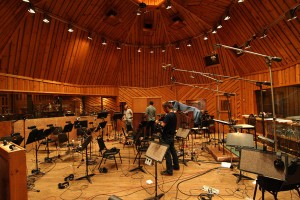
Avatar Studios session action recently was fast and furious, as reported by the studio. Superstars returned, and multiple major label and indie artists tracked along with TV, film and Broadway cast recordings.
Jennifer Nettles and Kristian Bush AKA Sugarland recorded in Studio C on the Neve VRP 72-input console with producer Byron Gallamore. Engineer Tom Tapley was assisted by Bob Mallory.
Tony Bennett returned to Studio A and the Neve 8088, with Lady Gaga and producer Phil Ramone. Engineer Dae Bennett was assisted by Fernando Lodeiro and Tim Marchiafava.
State Farm made a choral recording in Studio A for a 9/11 Spike Lee-directed commercial with producer Eric David Johnson. Engineer Jonathan Duckett was assisted by Charlie Kramsky.
Joe Jackson recorded in Studio C. Engineer Elliot Scheiner was assisted by Aki Nishimura.
Bassist/singer Esperanza Spalding recorded in Studio G with engineers Fernando Lodeiro and Brian Montgomery assisted by Tim Marchiafava. The sessions are being produced by Esperanza Spalding and Q-Tip.
Studio B and the SSL 9000 J were on duty for Dar Williams, recording with producer/engineer Kevin Killen assisted by Fernando Lodeiro.
Horn specialist Mark Rivera recorded in Studio B with producer Jimmy Bralower, and engineer Roy Hendrickson assisted by Charlie Kramsky.
Rock singer/songwriter Danielia Cotton recorded in Studio A with engineer Dave Swanson assisted by Bob Mallory.
Producer John Oddo was on point for Broadway singer/actress Christine Ebersole, recording in Studio B with engineer Roy Hendrickson assisted by Tim Marchiafava.
Legendary jazz drummer Jack DeJohnette recorded in Studio A with producer Bob Sadin, engineer Dave Darlington assisted by Bob Mallory.
Continuing on the jazzzzzzzz tip, artists Claire Martin and Kenny Barron recorded in Studio B with producer Philip Hobbs, engineer Calum Malcolm assisted by Charlie Kramsky.
Also in Studio A, the 52-piece Michel Legrand Orchestra tracked with producer Sylvain Taillet. Engineer Lawrence Manchester was assisted by Bob Mallory and Tim Marchiafava.
Another ensemble, the Manhattan Chamber Orchestra was in Studio A with producer Howard Cass, while engineer Paul Zinman was assisted by Tim Marchiafava.
The Birdland Big Band dug into their first studio album in Studio C. The team of producer Tommy Igoe, engineer Phil Magnotti, and assistant engineer Aki Nishimura oversaw the recording.
On the music-for-media front, score for the film Friends with Kids was recorded in Studio C with producer/composer Marcelo Zarvos, engineer Erlin Velberg assisted by Fernando Lodeiro. The film stars Kristen Wiig, Megan Fox and Jon Hamm.
The cast album for Stage Door Canteen was recorded in Studio A with producer Hugh Fordin, and engineer Cynthia Daniels was assisted by Aki Nishimura. Meanwhile, a benefit project for Broadway Cares was recorded in Studio B with producer Lynn Pinto, engineer Andros Rodriguez assisted by Tim Marchiafava.
In Studio A, the cast album for Death Takes a Holiday tracked with producer Tommy Krasker. Engineer Bart Migal assisted by Bob Mallory and Charlie Kramsky.
Summing Up: Quad Launches Studio Q1
July 27, 2011 by David Weiss
/* Filed under NYC Spotlight, SPARS Feed */
MIDTOWN, MANHATTAN: Blink, and you might miss it. The action in the NYC studio scene right now is raging fast and furious, with noteworthy new rooms opening up at a pace almost too fast to keep track of.
The latest big-time addition to the cityscape: Q1 at Quad Recording Studios. The flagship revision to this storied facility, Q1 represents the latest evolution in NYC’s world-class studio offerings for artists, producers, mixers, and songwriters in search of new creative options and inspiring surroundings.
With its arrival, the fascinating timeline of 723 7th Avenue gets yet another update. The seeds of this new room were sown in Quad’s 2010 sale of its 8th floor — emerging lean and mean, Quad President Ricky Hosn and his staff embarked on a $500,000 overhaul of its remaining territory, the 3500 sq. ft. 10th floor.
Ask Hosn about the current NYC studio climate, and he’ll readily admit that navigating the scene is more challenging than ever. “It’s kept us on our toes,” he says, “and restructuring the place was essential for us. Quad was five floors at one point, but the market won’t sustain that anymore. We had to reinvent ourselves, to move in step with a changing of the times — we feel we have the right formula now.”
Making the Update
The results of the remake are as easy to see as they are to hear. Visitors step off of the elevator directly into the atmospheric Qlounge, complete with a pool table, bar and a carnivorous fish tank (show up for feeding time – if you dare). Those familiar with the powerful audio pod previously known as Studio D – now Q2 – will be happy to know that that room remains intact, although it is equipped with a new lounge that flanks it to the left.
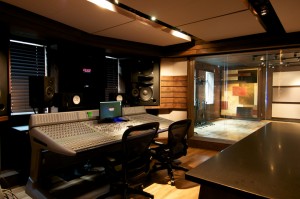
Also with a brand new lounge is the latest addition Q1, a space designed to make all kinds of waves. At 320 sq. ft., the comfortable Larry Swist-designed control room may seem slightly compact, but once the advanced functionality and exhilaratingly loud and accurate acoustics have been experienced, size no longer matters.
To the contrary, Q1 is already making a big impact with its extreme flexibility, both in workflow and capabilities. “In the past a studio would have a mix room, a production room, a tracking room,” Hosn explains. “We said, ‘Let’s put all three together, and make a room where any producer, engineer or artist can walk in and feel at home.
“That’s the approach we took. There’s a producer’s desk in the back where you can sit, listen accurately, and work. The producer or artist is never sitting too far from the controls and the engineer. It’s geared around the artist and production, and that’s the trend we see: A lot of producers are handling the whole project, and we built it around that reality. It’s the same principle we had with creating Studio D five years ago, but we made this a bigger format, with better gear and a much bigger live room, so you really can handle any kind of music project.”
Outfitted with oiled walnut wood appointments, Swist’s pleasing design employs generous views to the outside and the adjacent control room, providing Q1’s users with an expansive experience while they work. “Windows were essential: You’re in Times Square so take advantage of it,” Hosn says. “Both the live room and control room have windows out to Times Square, and the window between the live and control room is bigger than most windows in the city. You feel like you’re right next to the artist — it just feels like one big room between the control and live room.”
Once clients get settled into the welcoming environment, things get increasingly interesting. While the ICON control surface won’t raise any eyebrows, the Pro Tools HD 4 Accel 9.0 system is to be expected, and the comprehensive list of plugins is de rigueur, where the signal can flow from there is unique: three different summing mixers – a Chandler 16 x 2, SSL X Logic 16 Channel, and a Manley 16 x 2 Custom mic/line – flanked by a who’s who of outboard gear.
“We had the opportunity to go with a typical analog desk, but we said, ‘Let’s do something different and get creative with the equipment,’” Hosn says. “We focused on summing, with three summing mixers to give the engineer more of a choice for the sound. This is the best of the summing world: Chandler comes from the old EMI consoles, SSL is the industry standard, and we have something different in the Manley mixer, which is amazing on vocals. As far as outboard gear, we went for — not vintage, but brand new — Chandler, GML, SSL, Manley EQ/compressor, and of course the Universal Audio units like the 1176 and LA-2A.”
For monitoring, a pair of Augspurger Dual 15” main monitors, custom built by Professional Audio Design, supplemented with 2 subwoofers, throws down the gauntlet for mega volume listening in NYC. In a recent visit listening to hip hop, pop and rock through these speakers in the tight, well-tuned room was a sonically exciting experience, revealing extremely high levels of full-frequency detail cleanly across the stereo field. For those who need to craft, check or just feel their mixes at massive SPL’s, Q1 may well become a mandatory stop on the way to the mastering lab.
Design Assignment
According to Swist, whose credits include Tainted Blue, Premier’s Studio E, Eastman School of Music, SUNY Fredonia, and The Lodge, the directive for Q1 was to create a warm but contemporary look and feel. “We used a lot of sharp lines, and the sound has got to be there — the acoustics need to be spot-on because people are going to mix in there,” Swist notes. “The challenge today in an NYC facility is that you don’t have the cubic footage you used to, so you have to spend more time in the design phase ensuring that the room will translate in the outside world, especially with bass response. It also has to have a broad sweet spot. It’s easy to make it work right in the middle, but to make the room work for the producer standing next to you or in the back is a challenge.
“Most live rooms have an idiosyncratic quality to them: The great engineers find its good characteristics, the right places for the drums and mics, and use gobos,” Swist continues. “My approach is to keep it a relatively active room, and then you can come down from there. So Q1’s tracking room sits in a relatively live place: It’s good for drums, but reverb times can be cut down with gobos and more acoustical absorption. I think the live room is larger than most. It’s not huge, but then again most people are just putting in booths in a production suite today. This offers the ability to actually track a band. A lot of those rooms are going away, and this fills that void.
“Overall, the studio is something fresh, and you do have a really good initial emotional reaction to it. It’s positive creatively, and that’s what we were striving for. It’s like, ‘Wow, it feels nice and it sounds nice. We have a good combination there.’”
Under the Hood
Cleanly integrating Q1’s three analog summing mixers and outboard gear with the ICON was no plug ‘n’ play operation. “We wanted to do something focused on an easier workflow, quick mix recalls for engineers and easy accessibility for producers,” states Alessio Casalini Operations Manager and Chief Tech for Quad Studios NYC/Halo Records. “This improves the possibility to change little things fast and maintain top quality in terms of outboard gear and technical components like patchbays, wires, and connectors.
“The wiring of the whole studio and the patchbay’s layout were designed by Glenn Baughmann and myself,” continues Casalini. “We brainstormed in order to find the best result to yield a simple layout, one noted example being: The three summing mixers normalled to the multitrack outs, and the outs of those mixers normalled to the Stereo inputs of the (ICON) XMon (monitoring controller), and dedicated computer output to the XMon. Even the TV is on the bays.
“We started with the best quality wires and connectors, and used only two DB25 patchbays for connections with XMon and audio interfaces. All the other patchbays are soldered by hand and split to DL connectors panels.”
Connectivity in Q1 is obsessive: Every wallplate in the live room, control room and in the lounge are equipped with SpeakON plugs, Ethernet, instrument, MIDI, and BNC. “The goal being,” says Casalini, “to give the engineer every possibility, without trying to find a way around what he has in mind. In this scenario the artist, producer, and/or engineer will have everything accessible in the clearest way possible.
“New York City studios are looking to the future, and retaining our experience from the past. We expect that our careful planning yielded a room ninety percent ready for anything — with the client left only to decide the direction of the last ten percent.”
In Action
Online since June, Quad has quickly been breaking in Q1. Sessions include Engineer/Producer Andros Rodriguez (Shakira, Oh Land), Music Producer Rico Beats (Justin Bieber, Niki Manaj), and Universal Music Artist Stephen Marley. One frequent visitor has been the NYC engineer Stuart White (Alicia Keys, K’Naan), who’s gotten to know the room via mix sessions for the artists Borni, Fumibella, and Sunny.
“The mains are really smooth,” he says. “They sound good and balanced. The ProAc monitors I use a lot and they’re dialed in, very smooth on the top end. Having three different summing boxes gives you three different colors. The Chandler is really punchy, with a lot of transformers in it: It’s got color to it, with some punch when you drive it hard. I typically use that summing bus. The Manley is all tubes, which provides a fat tubey sound, and the SSL is a different color.”
According to Stu, Q1 met Quad’s objectives in smoothing out the NYC studio continuum. “I think in a lot of ways Q1 is bridging the gap between the old-style, large-format console style way of working and the new summing bus-style way,” Stu adds. “There’s not a large format console, but still a plethora of analog gear so you can mix with the speed of what we need today. You have clients that expect you to mix in the box for speed, but at the same time Q1 makes you and the analog purists happy by being able to sum in analog gear.
“I think it’s a new breed of room in that sense. A few years ago, most engineers didn’t want to mix on an ICON, they wanted a large format board. But Tony Maserati is working exactly this way, and he’s the one who kind of inspired me to do it: You’re mixing with faders, and tactile controls, so you can stay creative and not use the mouse so much. But if someone wants to come in and change the song, it’s very easy to pull your mixes back up. It bridges the gap between the older generation rooms and the newer ones that are all digital.”
Cue the Q
As New York production possibilities continue to morph, at least one thing is clear: As previously noted on this site, a subtle sense of cooperation is weaving itself into the intensive competition between NYC studios. Facilities are avoiding blatant duplication in favor of an overall sense of regional integration, where each new room creates a fresh niche, rather than further crowding an existing one. “You don’t want to build what’s already there, and then compete against the same thing,” Hosn says. “The key for us was to make it a top notch room at an affordable price.”
As Ricky Hosn points out, the big winner in the friendly NYC studio arms race are music’s avid listeners, whose insatiable appetite for new sounds are increasing yet again with the availability of Spotify in the U.S. “Who knows what the next big record will sound like?” he says. “There’s a lot of opportunity to come up with something that hasn’t been heard yet.”
– David Weiss
Premier Studios Hosts Sessions with Will.i.am, Amber Riley, Wiz Khalifa
July 11, 2011 by David Weiss
/* Filed under News */
Premier Studios in Midtown has seen a plethora of action recently, with its SSL J 9072-equipped Studio A, and SSL J 9000-equipped Studio B, plus writer studios E and F hosting a number of sessions. Projects at Premier have included:
Hollywood Records artist Demi Lovato was in on a project for Disney Pictures. The song was produced by superstar producer Sandy Vee, with piano overdubs played by Mikkel Eriksen from Stargate. The session was engineered by Sam Giannelli.
Geffen recording artist Will.i.am of the Black Eyed Peas produced tracks for Lil Wayne. Engineered by Mike Cadahia with Kevin Geigel assisting.
DefJam artist Ace Hood, produced by DJ Khaled, recorded vocals and mixed. Engineered by Ben Diehl with Colin Rivers assisting.
EMI Artist MoZella, with producer Scyience, has been mixing with engineer Anthony Daniel.
DefJam artist DJ Khalid tracked and mixed with GRAMMY Award-winning engineer Chris Conway, with Colin Rivers assisting.
Cash Money artist Lil Wayne has been in doing several dates, writing and recording vocals. The sessions were engineered by Mike Cadahia, with Kevin Geigel assisting.
Atlantic Recording artist Wiz Khalifa has been in recording vocals, engineered by Josiah Hendler with Colin Rivers assisting.
Sony Epic Recording artist Oh Land recorded vocals with producer Dave McCracken. Engineered by Andros Rodriguez, with Sam Giannelli assisting.
Columbia Recording artist Amber Riley from GLEE cut vocals with producer Adam Black. Sam Giannelli engineered, and Chris Melendez assisted.
Warner Bros Recording Artist Rich Hill has been in Premier recording vocals and mixing with Engineer Ari Raskin. Kevin Geigel assisted.
Universal Motown artist Lil Twist came through to do vocals, with Ari Raskin engineering and Sam Giannelli assisting.
Sony Roc Nation artist J. Cole recorded vocals with producer Brian Kidd. Engineered by Mez, and Colin Rivers assisting.
Epic Recording artist Alice Smith mixed with Producer Scyience. The mix was engineered by Push Buttons, with Colin Rivers assisting.
Berklee College of Music visited with their Student Ensemble, directed by Eric Abreu. Engineered by Tony Black with Sam Giannelli assisting.
Shark Media GRB showed up with production team the Berman Bros. The mix was engineered by Christian Berman, with Sam Giannelli assisting.
Musical Arranger Douglas Gibson tracked a 16-piece Orchestra and Piano for an upcoming major film soundtrack. The session was engineered by Andros Rodriguez, and assisted by Sam Giannelli.
Last but certainly not least, Jamaican recording artist Joneal was in to mix. The sessions were produced by Phillip Forrestor, and the mix was engineered by Anthony Daniel.
MTV “Skins,” Diamondsnake, Chromeo Recording at Stratosphere
January 19, 2011 by Janice Brown
/* Filed under News */
Catch MTV’s latest teen docu-drama-style show, Skins, this week? The chiptune theme song, by Brooklyn-based duo Starscream was tracked at NYC’s Stratosphere Studios, with producer/engineer Gabe Liberti. The cast of the show also joined Liberti in the studio to record vocals.

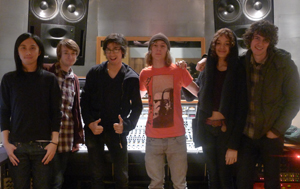
Pictured at Stratosphere (l-r): Assistant Engineer Atsuo Matsumoto, Starscream's George Stroud & Damon Hardjowirogo, Skins' Daniel Flaherty & Britne Oldford and producer/engineer Gabe Liberti.
Stratosphere has also welcomed songwriter and former Epic Records president, Amanda Ghost (Beyonce, James Blunt, Shakira), producer Dave McCracken (Depeche Mode, John Legend, Ian Brown) and engineer Andros Rodriguez (Justin Timberlake, Ben Folds, Leona Lewis) as the new long-term clients in Studio B. They will reportedly be working on a variety of projects over the next few months. Stay tuned….
In other recent Stratosphere sessions, Diamondsnake — Moby’s metal band project with Dave Hill, Phil Costello and Chris “Tomato” Harfenist — tracked and mixed new material in Studio A with engineer Ruddy Cullers; Brooklyn trio Menage à Twang tracked and mixed an album with engineer Reed Black (formerly of Saves the Day) in Studio B; engineer Thom Leinbach recorded tracks by composer John Angier for the upcoming animated series Jolly Rabbit; Chromeo worked out of Studios A and B, tracking and mixing with producer Sonjay Prabhakar and engineer Michael Nesci; and producer Tony Visconti tracked backing vocals and strings for Welsh singer Debbie Clarke.
For more on Stratosphere, visit www.stratospheresound.com!
P. Diddy, Swizz Beats, Dr. Dre, Oh Land, The Roots & More Recording at Premier Studios, Times Square
December 3, 2010 by Janice Brown
/* Filed under News */
Since their recent expansion, Premier Studios has been jumping. Here’s a recent sampling of sessions that have gone down in this multi-room Manhattan facility, equipped with two SSL 9000J rooms and two writing/production studios:
- P. Diddy, Swizz Beats and Lloyd Banks from G-Unit mixing with Pat Viala at the controls. Assistant engineers include Anthony Daniel & Kevin Geigel.
Viala also recently mixed upcoming releases for FAME on MBK Entertainment, Redman with Sha Money XL producing, and David Banner at Premier.
- Oh Land wrapped up writing and tracking for her new album on Epic Records, with Dave McCracken producing and Andros Rodriguez engineering, with Sam Giannelli assisting.
- Tu Phace on Epic Records was in writing with Dave McCracken. Engineered by Sam Giannelli and assisted by Kevin Geigel.
- The Roots with John Legend came through — these sessions were engineered by Steve Mandell, and assisted by Anthony Daniel and Chris Souverain.
- Jasmine V worked on songs for her new album with Dave Clauss engineering and Sam Giannelli assisting.
- Kat DeLuna was in doing songs for her new album with Ari Raskin engineering and Kevin Geigel assisting.
- Kerry “Krucial Keys” Brothers producing tracks with engineer Stuart White and Zeke MacUmber assisting.
- Young Jeezy came in with Maxwell, doing songs for Jeezy’s new album. Engineered by Carlos Oyanedel, and assisted by Kevin Geigel & Chris Souverain.

Premier's new Larry Swist-designed Studio E writing/production room is equipped with Pro Tools HD3, Logic 9, Reason (etc.) and powerful/accurate playback via the Guzauski-Swist Monitoring System w/ 21″ Sub.
- Chris Brown doing tracks for his new album produced by Swizz Beats, with Kenny Lloyd engineering and Sam Giannelli assisting.
- Kim Kardashian and Victoria Secret model Jessica White were in with Chris Brown and Swizz Beats.
- Dr Dre. came in for several days producing his new artist Slim Da Mobster with engineer Charlie Garcia, assisted by Kevin Geigel.
- Songwriter August Rigo worked on some new songs with producer Carlos McKinney for various artists for Sony ATV Publishing.
- Lynn Pinto completed recordings for her Broadway Cares Foundation album featuring incredible Broadway Cast members and orchestra musicians. The record was engineered and mixed by Andros Rodriguez, assisted by Sam Giannelli.
- Sean Kingston was in doing songs for his new album with engineer Dave Clauss and assistant Kevin Geigel.
- And the Macy’s Day Parade producers were in doing all the kids vocals for the Thanksgiving Day Parade. This session was engineered by Alex Venguer.
For more information on Premier’s rooms and equipment, and to book time, visit www.premierstudiosny.com.
Gig Alert: Tatiana Moroz CD Release Party Saturday, 6/26 at The Bitter End
June 23, 2010 by David Weiss
/* Filed under News */
Singer/songwriter Tatiana Moroz will be rolling out her debut album, Tatiana, at the Bitter End on Saturday, June 26, at 8:30 PM.
Straight outta Jersey, Moroz puts a subtly sultry spin on her blues/pop/rock explorations. From smokey to sweet to just plain pissed off, her many moods and new collection of songs create a cohesive musical journey.
Recorded, mixed and mastered 100% in the NYC area, SonicScoop gives Ms. Moroz a thumbs up for being 100% home-grown. Among the studios used to record Tatiana were Avatar, Chung King (RIP), Quad Studios, and Big Fat Suite. Mastering was by Angelo Montrone of Majestic Music Factory.
All mixes were by Chris Conway, except “Release In You” by LB Dorsey and “Look Like Honey” by Andros Rodriguez. “Evolution” was mixed by LB Dorsey and Chris Conway.
Congratulations and props to SonicScoop compadre Tatiana!! Party with the best of ‘em at The Bitter End!