A&R Registry Report: Chris “Tricky” Stewart, Mark Shimmel Go to Epic Records

December 7, 2011 by  
/* Filed under Music Biz */

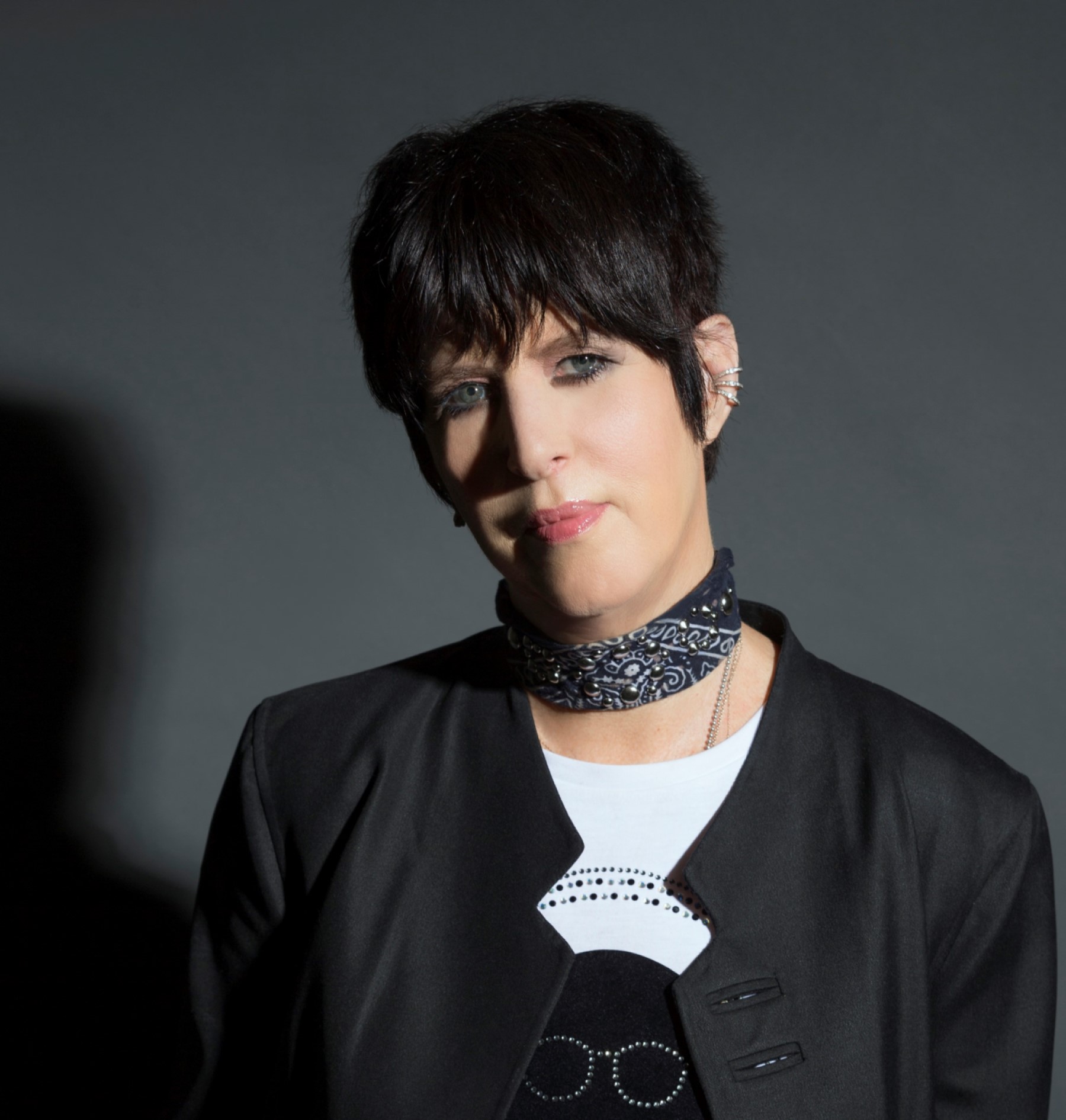
The A&R Registry reports that Chris “Tricky” Stewart has been named Head of A&R at Epic Records.

Epic Records reinforces its A&R brain trust again.

Stewart is the hit songwriter and producer behind many huge chart-topping singles, such as Beyoncé’s “Single Ladies (Put a Ring on It)”, Britney Spears‘ “Me Against the Music”, Mýa’s “Case of the Ex”, Rihanna’s “Umbrella”, Mary J. Blige’s “Just Fine”, Mariah Carey’s “Touch My Body” and “Obsessed”, Jesse McCartney’s “Leavin’”, Justin Bieber’s “Baby”, Ciara’s“Ride” and many others.

In addition, Mark Shimmel is also joining Epic from Turner Broadcasting, in a Sr. Executive capacity.  Shimmel was formally COO of LaFace Records as well as Sr. VP Marketing & Artist Relations at Arista Records.

Ritch Esra is Co-Publisher of the A&R Registry, which is published every eight weeks.d

Comedy Central Records: Serious Lessons from a Label That Means Business

November 27, 2011 by  
/* Filed under Music Biz */

TRIBECA, MANHATTAN: Quick quiz! Which NYC record label

See CCR for the powerhouse that it is.

• Has won three GRAMMY awards and been nominated for five more in the last five years,
• Has had 11 albums by five different artists certified RIAA Platinum or Gold since 2002,
• Signs its artists based on their talent, not the size of their YouTube following?

If you guessed Epic Records, well, you may be right — frankly, we haven’t done that much research for this article. What we’re actually talking about here is Comedy Central Records (CCR), the label arm of the Viacom/MTV Networks channel of the same name. And it turns out that by studying the evolution of this indie within a mega-major communications company, you can get a serious tutorial on record business success.

Before CCR’s Founder/Vice President in Charge Jack Vaughn, became a magnate responsible for signing elite funnypeeps like Mitch Hedberg, Daniel Tosh, Jim Gaffigan, Dane Cook, Lewis Black, Demetri Martin, Bo Burnham, Aziz Ansari, and Nick Swardson, he was overseeing another indie-label-on-the-rise story – one that quickly fell flat as a pancake. But he was blessed with resiliency, drive, and a genuine talent for niche marketing, and he would need all three to bring CCR into existence, and then deliver on the big promises he made to Viacom.

Run – don’t walk – to the sharp insights available as Vaughn deconstructs CCR’s rise, its adaptation from a physical to a digital market, what they really look for in an artist recording, the shockingly simply A&R philosophy employed by him and CCR Label Manager Ian Stearns, why specializing is a dual-edge sword, and more.

Comedy Central Records has an interesting story of how it came into being. How did you get the idea to start the label in the first place?

In the mid-to-late 1990s, I was running a label called Slimstyle that was the independent label of the modern swing movement.  In many respects, swing at the time was a reaction to grunge and the tired alternative rock scene.  It was a cool underground movement, with a distinct dance style and dress code and great music, and it happened to be so good that it was irresistible to the press.

The media got ahold of it and it exploded, then went supernova, and burned out in under three years.  In fact, by the time it went mainstream, the burnout took less than 18 months.  In mid-1999, the phone stopped ringing and we couldn’t sell another swing record.  For the next couple of years I was at loose ends and couldn’t figure out what to do next.

I had been a huge fan of comedy for years, and as I was growing up, amassed a large collection of comedy albums that I played over and over.  I had also been a fan of Comedy Central and had watched it basically since its inception.  The clincher, though, was around 1998 when I saw a clip of Mitch Hedberg doing a few minutes on television.  I was blown away and tracked down his self-released CD, Strategic Grill Locations.

After memorizing it, it hit me that it was crazy that something this good wasn’t being properly released and marketed.  That was when the idea crystallized that it was time to start a comedy label, and instead of trying to raise funding for it, the obvious home would be Comedy Central.

That is what we call an A HA moment! So how did you get Comedy Central on board to back it from there?

It may seem like a no-brainer, but back at the time — 2001 — it was a little out there.  Every so often you’d see a comedy album released by a big star, but there were almost no small-to-mid-level comics releasing CDs, there was no comedy section in record stores, and comedy albums really hadn’t sold since the late seventies or early eighties.

The CCR team, L-R: Ian Stearns, Miro Terrell, and Jack Vaughn

I had a friend who knew how to get in touch with the head of Comedy Central and I flew out and pitched them the idea for the label.  They had already been in talks to license the Comedy Central brand to majors, but my take on it was to do it all internally- signing artists, producing the albums and handling all aspects of the label in-house.  It was a tenuous uphill battle, and I flew to New York with improvements to the plan for about nine months until it was to a point where they decided to give it a shot.

The nice part about having so little competition was that the list of possible comics to sign was almost limitless.  In the first year I signed Dave Attell, Jim Breuer, Lewis Black, Dane Cook, Bobcat Goldthawait, and Mitch Hedberg.  We also released the audio from a new show on the network called “Crank Yankers”.

The downside was convincing artists that doing a comedy record was a good idea, convincing record stores to take them, and reintroducing the public to the idea of buying comedy records.  To this day most people don’t walk into record stores looking for comedy albums.  In fairness, most people don’t walk into record stores anymore period, but you get the point.

That sounds like a good way to start. As the label opened for business, what parts of your original business plan were confirmed? And on the flipside, what were the surprises that you discovered in the first few years?

I recently took a look back at the old plan I first pitched to Comedy Central and shockingly, it was about 80% on target, from the artists signed to the profit margins.  The sales projections that I had which were largely blind guesswork and in my mind even a little ambitious, but they turned out to be way below where we netted out.

As far as surprises, there weren’t too many.  Some artists I thought would do better didn’t and some I thought would take a very long time to develop turned into stars in relatively short order.

The really interesting part was how the industry as a whole changed from the start until now. For example, we did exactly zero digital sales in the beginning (2002), and today, I’d estimate we’re 85% digital.  There’s a good chance we won’t be manufacturing physical CDs two years from now.

On that note, wow would you describe Comedy Central Records today? It is it an indie label? A major label? Or is it a hybrid of both? What are the advantages and disadvantages of having that mixed status?

It really defies description, because it’s not set up as a traditional label.  In many ways it’s a perfect hybrid  — backed by the marketing and financing, not to mention prestige, of Comedy Central, and the top-notch distribution of ADA, but still small enough to have a personal touch and everyone here is doing it for the love of comedy.

CCR artist Dane Cook's "Retaliation" debuted at #4 on the Billboard charts, and has sold 650,000 copies since 2005.

For example, unlike majors there is no constantly shifting bureaucracy and executive team- no one gets orphaned by a fired regime.  And if any artist, manager, or agent has a problem that needs resolving or has an idea or a need, they can get me right on the phone and it gets taken care of if there’s a viable solution.

The artists get advertising on the network and robust off-network marketing, we use the best royalty accounting firm in the business to make sure artist royalties are paid accurately, and hopefully there is none of the same terror and frustration having to deal with the machinations of a major.

Plus, our catalog generates a good amount of revenue so we don’t have to desperately try to grasp for the next immediate hit and can focus on development and what we think is funny — even if the artist hasn’t built up a big fan base yet.  And in the Internet age, quality tends to get found.

It seems like there are many interesting comparisons of running a comedy label, as opposed to a music label. What are the most striking ways in which a comedy label operates differently from a music label? In what ways are they the same?

One of the major drawbacks is that we can’t license our audio to TV, film, commercials, video games, etc… because it’s by and large spoken word standup as opposed to music.  Another is that our sales are limited to English speakers.

But there are some big positives.  With spoken word standup, people tend to buy the whole album as opposed to just singles, which is a big problem with music.  Of course there are those out there who just want Jim Gaffigan’s “Hot Pockets” joke, but for the most part, the comedy album is a piece of whole cloth.

Another plus is that, as opposed to musical acts who tend to be comprised of numerous players and prone to breaking up, comedy is almost always just one person with no equipment who just tends to get more famous.  With Slimstyle, the costs and logistics of getting an eight-to-ten piece swing band on a bus and touring were almost insurmountable.

For those who just want Jim Gaffigan’s “Hot Pockets” joke — instant gratification:

Who makes it on to CCR? When it comes to your A&R process, how do you discover talent?

We have an absolutely amazing talent department at Comedy Central who identify talent for the network early on.  The normal process is that comics with a strong ten minutes of material perform on our TV shows like “Live At Gotham” which will showcase a few up-and-coming acts every episode.

Then, comics who have at least a strong half hour of material are invited to perform on their own “Comedy Central Presents” special.  This is the point where the label typically becomes interested for two reasons- one, because the comics are close to or at the point at which they have an album’s worth of material, and two, because we can now advertise the comedian’s CD every time their “CC Presents” airs on the network.

This is how we deal with a lot of emerging talent, but there are also other ways we work.  For example, I often sign established acts who want to work more closely with the label or network, or are leaving another label.  CCR also brings talent to the network- Bo Burnham is a good example of this.  He got his start producing and starring in web videos that became a sensation, we released those videos commercially in a DVD accompanying his debut album and he ended up doing a “CC Presents” and hour special (that also ended up as a DVD) with Comedy Central.

Ultimately, there are basically two criteria for who we sign to the label:

1. You have to be really funny.
2. You have to have a distinctive voice or point of view.

That’s it.  Things like having a strong following or being on TV or in movies is great, but those two criteria are the main things we look for.

Now that you’ve been doing this for a while, what comedians have you found are a good fit for CCR, and on the other hand, who isn’t?

Again, really funny people with distinctive voices or points of view are the best fit.  I realize that sounds glib, but that’s the real answer.  This is what we look for. Ideally, we try to deal with talent who have or want to have a relationship with the network as a whole.

"Stark Raving Black" netted CCR its latest award, the 2011 GRAMMY for "Best Comedy Album".

Are there things that CCR can do for your artists careers that a typical music label can’t? What kind of comedians stand to most benefit from working with CCR?

I could go on for a while on this one, and a lot of it was outlined earlier, but one of the major factors is that we can advertise the records at little to no cost on the network- typically running lower third ads contextually during the comedian’s programming- and promoting the releases on comedycentral.com.

This is, of course, the perfect audience to be in front of, and also represents tens of thousands of dollars worth of promotion that no one else can come close to duplicating.  That’s in addition to the significant off-network campaigns we do.

The bottom line is that we make, sell, and promote nothing but comedy records 24/7/365 which gives us and our artists significant obvious advantages.

When it comes to production and distribution of the records, how do you work? Do you record only live shows? Record in studios? And are your costs for production high or low?

The vast majority of our records are spoken word standup, which necessitates recording in a live setting.  We will typically send out a mobile recording engineer to the venue (typically a comedy club), and record a weekend’s worth of shows.  Usually there is one standout show of the bunch that we will use as the body of the album, then cut in additional material or jokes that worked better in the other sets.

One of the quirks of this genre is that the audience tends to be the most important part of the recording, and how the audience reacts can drastically change how the jokes are perceived by the listener.  Jokes seem funnier the harder people are laughing at them — this is the reason sitcoms customarily use laugh tracks — which may seem obvious, but you’d be surprised just how important it is.

By the time of the album recording, the comic has gotten so good at doing the material that the differences in delivery among the sets are usually minimal.  But the difference between an intelligent, raucous audience in a packed room, and a sober one in a half-empty club is staggering.  We’ll re-record shows if the audience isn’t good enough.

Our costs of recording, as one might imagine, aren’t high.  We can spend a lot in editing and post, making sure everything is just right, and we put a lot into the artwork.  But in the end, we like keeping the production costs low, because those costs are recoupable, and as such the artists start seeing royalties sooner.  It also allows us to put more money into marketing which benefits everyone.

Also on the business tip, how is your sector changing, and how do you expect it to continue to evolve? As record company executives how do you keep pace with the changing business environment?

The biggest change is the switch to digital — both from a distribution and marketing perspective.  There are always new platforms cropping up that sell or stream audio, and it’s a challenge to keep up with it all, but it’s exciting to find these new ways to get our albums out, and we’re always up to experiment.

Mitch Hedberg -- the man who inspired it all.

On the marketing side, we now have to reevaluate the ways we market every three or four months as the different outlets change and get more sophisticated.  A lot of the time we have to make money on smaller numbers of units, so marketing effectiveness is key.

I expect to see a complete shift to digital albums very shortly with its requisite benefits and pitfalls.  On the one hand, we will no longer have to manufacture, warehouse, ship, take returns on, and destroy physical product, but the downside is that piracy is becoming more prevalent and increasingly difficult to stop.  Luckily, people are still willing to support comedy and pay for good content.

Let us peer inside your head: Are there music business mentors that have been particularly inspirational to you?

I grew up with the Washington, DC punk rock scene of the late eighties and early nineties, and Dischord Records and its bands were hugely inspirational to how I do business in terms of ethics and production value.

And Sub Pop, Moon Records, and all of the other genre-focused labels highlighted the need to specialize in one type of music or audio.  There are a number of benefits to specialization in that you can really connect with your audience, and it makes marketing easier and more effective when you don’t have to reinvent the wheel every time you put out an album of a different genre by figuring out how best to get to the target listeners.  Ideally, we want someone who will buy every album on the label, just by nature of it being a CCR release- because they know it will be good.

There are cautionary tales in these labels as well, though, because if you are the main label of a popular genre, the tendency is to want to put out records by everyone in that genre, focusing on quantity over quality, which inevitably leads to a burnout and dropoff in interest by the audience.

I see CCR as, among other things, a comedy filter. Recording and distributing comedy albums is relatively inexpensive and easy — they’re released and disappear all the time — but great records with strong marketing campaigns behind them are much fewer and farther between.  We are acutely aware of this, and as such sign and release a limited number of artists and albums every year in order to try to maintain that quality.

It looks like you’re really in a groove. Lastly we ask, what makes NYC a seriously good place for Comedy Central Records to run its business?

For the most part, the comedy industry is in New York City and Los Angeles.  We love the city and its amazing comedy scene – from Upright Citizens Brigade  and the small alternative rooms to Saturday Night Live.  The comedy heart beats strongly here.

– David Weiss

Roadrunner Records (NYC) Signs At The Skylines

September 27, 2011 by  
/* Filed under News */

The NYC-based label Roadrunner Records announced that they have signed Southern California-based At The Skylines to the label’s roster.

At The Skylines is the newest addition to the Roadrunner Records roster.

The melodic alternative trancecore six-piece features two lead vocalists and dual guitars, and is currently in the process of writing its debut album. The band is currently recording in Sweden with Fredrik Nordstrom (At the Gates, Bring Me the Horizon, In Flames, Dimmu Borgir).

In addition, At the Skyline will tour in November as part of  the “To Write Love On Her Arms Presents: The Children Of Fire Tour,” which also features Oh, Sleeper, Greeley Estates, Ten After Two and Secrets. The closest date to NYC is November 7, Jamestown, NY, at the Jamestown Savings Bank Ice Arena.

Roadrunner A&R rep Andy Serrao was responsible for the signing.

At The Skylines formed in 2009, and includes vocalists Chris Shelley and Mark Barela, guitarists Shawn Yates and Billy Barber, bassist Tim Trad and drummer David Angle.

A&R Registry Report: Shani Gonzales and Randi Razzano to Epic Records

September 19, 2011 by  
/* Filed under News */

The A&R Registry reports that Shani Gonzales and Randi Razzano joined L.A. Reid’s A&R department at Epic Records this month. Both are NYC-based.

There are two new additions to Epic Records' NYC A&R arm.

Gonzales was most recently Director of A&R at Def Jam. Razzano was most recently the Creative Director at Mighty Seven Songs (NYC), and had previously worked at Island Records and Mercury Records.

Ritch Esra is Co-Publisher of the A&R Registry, which is published every eight weeks.

Behind the Release: Fleet Walker “Morning Void”

September 11, 2011 by  
/* Filed under NYC Spotlight */

SUNSET PARK, BROOKLYN: Even the most natural talent needs some nurturing. And when an emerging songwriter crosses paths with a label that understands the strength of artist development, very good things happen.

"Morning Void" by Fleet Walker is available on CD now, with the digital release set for September 27.

The very latest evidence of this is in with Morning Void, the new album arriving this month from the captivating NJ-bred artist Fleet Walker. A record as explosive as it is fragile in its raw expressiveness, the release holds 12 beautiful tracks for those seeiking the same emotional high they drew from the likes of Jeff Buckley and Elliott Smith.

Walker’s label, 825 Records, did more than just upload the record to iTunes and call a couple of radio stations. After captivating the ears of 825 founder Matty Amendola (profiled in-depth by SonicScoop in June, 2010), the producer/drummer/multi-instrumentalist put his heart and soul into advancing Walker’s instinctual songcraft.

A highly accomplished session player and songwriter in his own right, Amendola partnered intensively with Walker in pre-production and in the studio, then brought out a highly organic listening experience with a mix executed 100% in the box. For up-to-the-minute applications of some wonderfully old-skool wisdom, read on about 825’s approach to filling out Morning Void.

Where are you as a producer and label owner today? Let us know where your head is at.
As a label “From the Studio To the Masses” has been our motto since day one and it always will be. We’re a label that wants completely raw, natural, and honest talent to develop, get them in the studio, put out a great record, give them publicity, marketing, promotion, and help them towards the goal of getting an incredible jump-start into the industry that they deserve.

As a producer and session musician I just have to go with the flow. (Outside of 825) I’m very lucky to have the amount of work that I do. I believe in every single project I work on, but the industry is in a fragile state. It’s constantly changing. Since our last interview I’ve developed 7 artists, produced a little over 20 projects and played on approximately 131 recordings. It’s sad that half of these records will never see the light of day just because of the shape of the industry, but it’s all about going with the flow and hoping for the best.

From that, how did you get introduced to Fleet Walker? And why did you both agree that you would be a good match?
Fleet contacted our Head of A&R Matthew Kruszelnicki, and he forwarded me the stuff to check out right away. He had a MySpace page with 3 or 4 “bedroom demos.” The first demo I listened to was a song called “Faro” and I dug it before the vocals even kicked in.

I heard a really simple-sounding, yet complex picking pattern between a couple of 7th chords which was all psychedelic, enigmatic, melancholic, happy, bubbly and unique and interesting at the same time. The vocal melody, lyrics, and tone of his voice when the verse came in matched all of the same emotions. And even though the lyrics were somewhat abstract, they were creating a clear visual and intriguing story.

I was a fan within 40 seconds. It was music I wanted to listen to, it was music I wanted to write, and Fleet’s approach to tone, sound, and his writing direction really seemed to be similar to my own.

Matty Amendola of 825 Records: merging artist development and the studio.

Nice when that happens! That makes me interested in your definition of a “song” and how your approach to songwriting clicks with Fleet’s talents/capabilities?
In my opinion it’s an emotion adapted into sounds, words, melody… I’m only a fan of honest music.

It’s a magical thing when an artist can portray a sometimes-indescribable feeling into “sound” organically, naturally, and honestly. That’s when music really connects with the listener. It’s something in my opinion that Fleet does so effortlessly.

You said that this record was an interesting project, starting with the pre-production. What did Fleet bring in to pre pro, and how did the two of you collaborate from there to bring the songs for
Morning Void?
I called Fleet to come into the studio to do one song before committing to anything else, and he walked in and started playing me a song called “In a Dungeon at the Bottom Of the Sea.” It was dark, yet catchy in a weird way. He approached simple things uniquely.

The first thing I did was address the “standard producer duties.” All he had was an acoustic guitar part, lead vocal, two verses, and two choruses. I immediately suggested he play the song a half step down for his vocal tone to be warmer, add an intro and a bridge and write new lyrics for the 2nd verse.

In a collaborative effort we completed all of that in about 20 minutes — we worked incredibly well together and thought very much alike. I had him record a scratch guitar track and vocal to the click and sent him home, because I knew the hard part was on its way.

For the next week I sat in the studio listening to that scratch track — it was up to me to develop his overall sound practically from the ground up. I listened to a lot of Radiohead, Elliot Smith, Jon Brion, and Jeff Buckley for production ideas, artists we both love. When I decided to dive into it, I dove into it… In my mind I had three possible drum parts for the entire song i.e three parts that could bring the song in a different direction. I recorded all three of them separately, and then listened to all of them on at the same time. BAM! It took off from there.

Sounds like a good start. What did you do with the drum tracks you recorded?
I love Wave Machine Labs’ Drumagog software – I replaced some drums with different sounds and cut up certain sections between the three drum parts. I had something very, very interesting: I put a very Beatles-esque bass track down, a ton of distorted ambient guitars, feedback, and noise, programmed some subtle Radiohead-type samples and prepared a mix for Fleet to come back in and sing on.

I’ll never forget the look on his face when I played him the track. I didn’t know if he was gonna punch me in the face or hug me. He was speechless. He loved it and after we finished the track, I handed him the label contract on the spot.

Fleet Walker contemplates song creation and evolution.

Good timing with the paperwork! When it came time to record the rest of the album, you said that this record was done all in the box, yet in your opinion feels “live and raw.” How did you go about achieving these sonic characteristics during tracking?
The whole record was done at the 825 Records’ facility, it’s become such a great space. When we started recording Fleet’s record we were still in the process of construction. We were expanding, building a lounge room, conference room, vocal/iso booth, buying new gear, so I think I was already in an experimental headspace.

I made sure every instrument we used had character, too. His acoustic guitar was all beat up but sounded good under mics. We used a ‘59 Danelectro for a lot of electric guitars and that brought some twang and grit compared to the other cleaner strat and tele sounds. There’s also nothing like a violin bass, which is what I used on the whole record.

Besides some of my favorite Earthworks microphones, I also bought a Telefunken AK47, which I used on a session a few weeks before I met Fleet and I knew it was gonna be the mic for him. We tracked all of the vocals with it, and a lot of his acoustic guitars. I even used the Brendon O’Brien technique and stuck it right in front of the drum kit for that crunchy, live sound.  The natural sound of that mic contributed a lot.

We did every single song like we did the first — he’d come in and lay down his lead vocal and guitar to a click, I’d work on the core of the instrumentation for a few days, and then he’d come in to finish it up with me, adding some more guitars, keys, harmony, etc…

One of my favorite drummers of all time, Jim Keltner, gave me some great advice when he explained to me how he approached playing with John Lennon: He told me everyone followed Lennon no matter what. If he slowed down, everyone slowed down, etc… There was so much connection between the feelings and performances and I needed to make sure I captured that same thing when I added my instrumentation on top of Fleet’s.

I tried to keep it as raw as possible. I would give him three takes max for the main acoustic guitar track, and I gave myself no more than two takes with drums, bass, and other core rhythm section parts. No punch-ins, no comps, no fucking copying-and-pasting. I wanted to approach it like recording to tape. Sure enough, it feels live. It feels like it’s Fleet and a band in the room.

Extensive behind the scenes footage of the making of Morning Void is available along with the CD. Check out the trailer here:


There’s some great lessons for songwriting and tracking there. Then how did all this extend to the mix?
We started recording the album in October 2010, and I started finalizing all the mixes in February 2011. It all happened so quickly and as much as I don’t consider myself a mixer, so much of my production happens in the mixing stage and I’d rather have the magical moments come across in the mix that I hear in my head, then give it off to a better mixer with the hopes that it might sound a little better.

Everything was done in the box. Mic placements, instruments, amps, tones, and sounds were something we spent a lot of time on so the tracks felt great right from the start. I did use a lot of long echoes, backwards reverbs, delays, modulators, and stuff like that on the vocals but I kept the instrumentation pretty bare. I used Drumagog 5 and BFD on a lot of the drums, slight compression when it was needed everywhere else, but I wanted to keep all of the dynamics and raw feel.

The record didn’t even go through “real mastering.” I finalized the mixes with an L3 and a broadband EQ for a little bit of volume and translation to other systems and that was it. I wasn’t fighting in the volume war. You know that little thing called a volume knob? Guess what? Every consumer has one.

True, that! We know it’s hard to choose, but what’s a standout track or two on the record, to you?
I really love the final track “It’s Mid December.” It was such a great song when Fleet played it for me and I actually had a song of my own that I took apart to add some of the parts. I can listen to it all day. It’s beautiful and the emotions pour through on the recording.

“Faro” will also always have a special place in my heart, being the first song of Fleet’s that I heard. There’s no official single on the album but “Faro” is kind of the featured track… and check it! I also directed the music video for it that will be released with the album. It was a blast!

(l-r) Matty Amendola and Fleet Walker.

On that note, you said that a big part of what drives what you do is your interest in artist development. Why is this so important for a label to offer now?
Being the kind of producer I am, it’s just how I work. I work one-on-one with every artist and I’m usually their partner, their band, and their professional outlet. I think Fleet is now the poster child for what 825 Records wants to do for artists.

He’s an individual with incredible talent, dedication, and so much love for music that reached out and found a team to give him everything that takes most artists years to find and achieve. He deserves all of it in my opinion and he has raised the bar for all future 825 artists.

My team is handling everything from booking, promotion, publicity, marketing, and everything in between. We already have several major publications and blogs that will be reviewing and featuring the album. Just about every college station in the U.S. and indie stations worldwide has copies of the album, and are starting to add songs into their rotation. We’ve essentially had to build a fan base from scratch so it’s something that will take some time, but between gigs, proper social networking, and people hearing the album, I believe he will have a committed and loyal fan base for quite some years to come.

Most importantly my personal goal for Fleet has been completed. He’s out there, he’s got a great record to look back on for the rest of his life, his name is slowly creeping into industry heads worldwide, and it can only go up from here!

That’s a plan! We’ll be interested to see what happens next. Who are you looking up to these days for Intergalactic Guidance?
I mentioned producer/multi-instrumentalist Jon Brion in our last interview, and he’s probably my biggest influence. I don’t think there are many producers out there who can make records like this: from the songwriting, to the instrumentation, the direction, development, sound, etc. I asked myself one question a lot during the making of this record: WWJBD? Ha!

David Weiss

The CD release of Morning Void is available now, with the digital release on September 27.

Music Producer Profile: David Kahne Leads On

May 10, 2011 by  
/* Filed under Deli NYC Feed, NYC Spotlight */

HELL’S KITCHEN, MANHATTAN: Modern music can get shaped by the most unassuming of influencers. David Kahne is one such source: often unseen, but always very well heard.

A talk with David Kahne awaits.

Spend some time with him, and it’s clear that he always puts sound first. If you’re lucky, you’ll be there when Kahne hears a song that he loves – wholly absorbed, the music literally moves him.

After being an artist on Capitol Records a long time ago, in a galaxy far far away, Kahne stayed interested in the studio. He became a producer/engineer for the legendary 415 Records new wave label in San Francisco, then a VP of A&R for Columbia Records and Warner Bros.

Along the way, Kahne’s scientific instincts established him in some circles as an indispensable producer. In addition to a GRAMMY win for producing Tony Bennett’s 1995 MTV: Unplugged album, Kahne’s production credits range from Fishbone, Sublime, Sir Paul McCartney, The Strokes, Sean Lennon, and Linkin Park, to current collaborators such as Ingrid Michaelson, Regina Spektor, James McCartney, Jay Brannan, and The Dirty Pearls. If that’s not enough, Kahne is beginning a production of a ballet version of Peter Pan that he wrote, and he’s just wrapped scores on three films.

One way he does it is by working out of a personal audio wonderland he’s established at Avatar Studios. A resident of New York City since 1990, and bi-coastal until 4 years ago, Kahne was led from the Golden State by his muses to become a full-time NYC dweller. Now Kahne is feeding off of the Big Apple’s energy as he moves music forward.

Why is NYC your home base now? And how did you settle on Avatar as your HQ?
I liked the vibe and the creative feeling of it here. I’ll give you a great example; I write ballet music — I recently wrote a ballet of Peter Pan in MIDI – and I found a choreographer in Brooklyn. 90 dance companies use her space, and it’s part of a thing that makes that sense of DIY seem stronger here.

I sometimes feel like the LA scene is more about chasing the industry – although there are so many talented musicians there – and I like the environment of NYC. Walking, biking, the way the clubs are…It’s more saturated here in the city.

How does that translate with the artists you’re working with here in NYC?

Turning to the keys.

When I was head of A&R at Columbia, there were 212 artists on the roster. I asked somebody over there recently how many artists they currently have signed onto the roster, and they said it was in the fifties. So that’s a hundred-something records not being made, artists not being supported. Those artists are still making music, but now they’re trying to turn their own thing.

People I work with like Regina Spektor, Ingrid Michaelson, Jay Brannan, these are amazing artists — Jay books himself, he manages himself, and he saves money for his album budget. It’s hard. You’re spending more and more time promoting yourself, and less time making music. But I think that that’s the way it’s going to be for more and more artists.

Back in the day, there was a general feeling that a song could change the world. And that created an environment for big rosters and lots of sales, and more artists being able to have careers spanning decades. I think that bubble has burst.

I feel like we’re all entrepreneurs now, more than ever. The means of distribution and collection change almost faster than we can adapt to them, and there’s not a settled system for monetizing the music. So it’s harder to build a business.

I also think it’s interesting that we’re back to the way it was in the ‘50’s, a singles market. The publishers started record companies then, and they have a lead on the power now, especially when you talk about the synch fees. Synch seems like the new radio for lots of new artists.

It’s very difficult for a major label to build up an artist around touring. It takes a long time to do that, and for the most part, I don’t think the numbers work. Gotta get radio.

A self-contained artist would most often have a very hard time with all the test marketing that goes on, and all the changes that are made to the music to meet the market expectation. If the market were “people who are looking for something new, different, etc…” it would be a different music world. But that market is very individualized, and spread out and you have to reach it in a different way. That’s my opinion, anyway.

Shifting gears, how do you see yourself today? As a producer? Mixer? Engineer? Composer? All of the above? How do you balance all those roles?
Yes, all of the above. Because of the economics of things now, I’m mixing. I think my favorite parts of the process — arranging and programming — are sort of blended together, and that’s one reason I like working on the ballet so much. It’s all orchestral, and when you’re scoring something you’re actually mixing something while you’re writing the arrangement.

With my MADI system in my room here at Avatar, I mix as I go. I have all this outboard gear and it’s all accessible through real time via the MADI. When I call Cubase up to continue a session or do an overdub, I call all my hardware up at the same moment.

I have the entire Vienna library on one dedicated computer. It runs through Ethernet with zero latency – it’s mind-blowing. I used to be able to load four complex instruments on Cubase, now with this 64-bit computer running Windows 7 I can load 31! Another computer runs only Hollywood Strings, which is a fantastic library, but it’s all solid state drives. Some of these Hollywood Strings loads are 18,000 samples and streaming. Without solid state drives, you can’t even load the complex instruments. It’s worth getting the drives.

Listening in.

It’s crazy, but it’s fascinating technology. Again, with the DIY thing, you’re getting to the place where you’re going to have the ability to create whole orchestrations, to the point where nobody’s going to be able to tell it’s not a real symphony orchestra playing.

Looking at your setup and how many up-to-date components you have – hardware and virtual – it’s clear that you’re constantly introducing new software and hardware into your system. How do you keep up such a breakneck pace?
Every time I see a new plugin, I buy it! I bought buy plug-ins like Geist or Trigger the first day they come out. I’m quite the early adopter. I went full 64bit and Windows 7 the moment it was possible. I’m spending probably 15% of my time keeping my gear running and checking out new software.

I don’t need any new hardware. Sometimes I think about having a console, and then I tell myself I’m insane, what am I talking about? I have friends that are still on consoles, and they sometimes feel behind the curve, because it takes time to get up to speed on the computer, and trust your software.

Hardware compressors are my favorite thing. I’ve got a Fairchild, and two Federals over there. Someone told me about the Elysia Mpressor when it came out, and I freaked when I got it. It’s so powerful – with the gain control, you can get tremendous compression without harshness. You can get it to pump and suck, and now the software version is identical to the hardware unit, as far as I can tell.

But Brainworx and all the UAD stuff, and some of the SPL stuff is important stuff to have because it’s like having another instrument. It’s like the difference between two different kinds of saxophones. You’d use one for one thing, and a different one for another.

How does your particular studio setup allow you to get around the console?
I have four Dangerous 2-Bus summing boxes, totaling 64-channels, with my analog outboard gear hard-wired between the interface D/A outputs and the inputs to the 2-Busses. This allows me to select what track or stem I want to send to a particular piece of outboard via the output assignment in MADI, so I have in effect a virtual analog patch bay.

You can also set up parallel processing chains with this system. For example, I have an output from the computer going to my Fairchild on a dedicated line, so I can send a dry stem directly to the Dangerous 2-Bus and also send the same stem to the Fairchild; the Fairchild is patched into its own 2-Bus input, so I get foldback compression as part of the stream in the 2-Bus summed mix. If I want insert compression only, I just turn off the dry stem feed. All the audio splits out in the MADI mixer, 64 tracks.

I save the MADI mixer doc for the song I’m working on, and when I call the song back up in the DAW, I load the MADI mixer and my mix is back exactly as I left it. I have about 20 pieces of gear, or chains of gear, that I can access from my computer in this way.

You get the call for some pretty high-profile clients to work on their projects – Sir Paul McCartney picking you to co-produce James McCartney’s excellent 2010 EP Available Light comes to mind. Why do you think they chose you?

I’ve been working with Paul for a while, on two studio albums and three live albums. I’d met James earlier, and we all knew each other, and Paul asked me if I would work on James’ album with him. Paul knows me and I think he thought I’d be a good person to get the album done. And we’re still working on it. We just did two new songs – it’s a work in progress.

You seem to really get the most out of a band’s sound, whether you’re working with James McCartney, Fishbone, The Strokes, Regina Spektor. What’s your approach to tracking and mixing?
Mostly it’s the preparatory work, I have to say, that I really like. I spend a lot of time in rehearsal and pre pro, so that as much as I can know about not only the amplifier, but how the people play.  That’s if it’s a band. If it’s a solo artist, I like to build models and get the vocals done as soon as possible, and then do the arrangements: and record the live instruments last. Takes the mystery out of it, saves money, and there’s still plenty of room for surprises to happen with great players.

The mad rack o' fun

You know, I was in Vegas once. I was backstage, there were these tall girls walking by with massive eyelashes — they looked like freaks. I thought, “It’s so weird looking.” But later on, seeing them out in the theater they looked really pretty. It’s about scale. Environment. Arranging and mixing for stereo is the same thing – you’re trying to create depth and power using musical tools of counterpoint, voice-leading.  Then software after. At least, that’s what I try to do.

My main focus for arranging is vocals. For example, there’s a band I was going to work with, where this girl is an amazing singer. There was all this great stuff I heard from them live, but the demos of the new songs had big holes. In a lot of the songwriting, they’d have a verse that worked great. You could feel this stuff going on between the quiet and loud in her voice, and you knew that was going to work. But in the pre-choruses, she would start vamping because there wasn’t enough information there, and as a singer she instinctively knew there wasn’t enough going on in the song — she was trying to make it happen physically in the performance, rather than in the composition.

So she was giving away the nut that was supposed to be in the chorus. I heard her go there in a less musical way. She was solving the problem by singing it out. She felt like she made the arc to the chorus, but I was talking to her about working on this one part of the song so that she could sing across the bar line and get into the chorus.

That would have solved the problem, but the leader of the band didn’t like that. I didn’t end up working on the project. I like to find that out early on – if I can’t develop an approach to the music overall with the artist, it’s best that we don’t work together. There’s only been a few times when I’ve started working and the method we’d agreed on didn’t work.

An emerging NYC band you’re working on now is the Dirty Pearls. How did you get involved with them?
I heard their song “New York City Is a Drug”, and I really liked that. So we worked together on the album. I really liked the style of that record – they wanted to play guitars loud and be a band. I saw these guys live at a music festival. There were 20 bands on before them that were completely interchangeable. Then these guys came on – they have a show, they look different.

Now you see him....

We’re trying to see if we can get something going with them. We’re getting airplay, but again as we were talking about earlier, it’s some guys starting a business. They’re building their brand, so to speak – that term is used so much now.

We’ve talked about you being a mentor and inspiration to many. Who out there is inspiring you now?
Bartok. I listen to Bartok’s Concerto for Orchestra to go (in awe) “FUUUUCK!”. To feel tiny. There’s a bust of him on 57th because he used to live over there. I go by there to look at his head.

Regina Spektor was a big influence on me. She’s one of the reasons I moved back here, because she’s completely her own person. That’s how Brad in Sublime was, and he was a big influence on me as I was working with him, not before. I end up being very heavily influenced by the people I work with if they’re really good: Paul, Regina, Brad, James Brown… Fishbone was a huge influence on me. I go back and listen to that stuff, and think about all the different places they were coming from.

When I was in college, I was listening to Count Basie and I decided I would try to do that. So I got theory books, studied them like a music slave, and wrote with my first big band chart. It’s all about that organization of instruments and tones in time. What do you play and where does it go? You look at a score, and you have a master plan for the musicians. Then they play it, you listen, and then say (awed), “Oh FUCK. I suck,” or  “I’m doing OK.”

That’s why the masters were so influential to me – I learned by reading their scores. It’s just some guys doing great stuff, and it’s fascinating to see how they approached it – and did it a hundred years before it became popular. Debussy, they must have thought he was out of his fucking mind, like the Dead Kennedys.

That kind of thinking about music is sort of what I assume you could keep yourself sane with. Because you’re in awe of something, it gives you perspective. Rather than thinking that brushing your teeth with Jack is the coolest thing you could possibly do.

David Weiss

Event Alert: “This Is Music: Social Media Secrets” Panel and Showcase at the Knitting Factory (2/16)

February 7, 2011 by  
/* Filed under News */

Next Wednesday, February 16, the Knitting Factory Brooklyn and ReverbNation will present an educational and social networking event geared to musicians and music industry professionals on the topic of social media.

2/16: A night of networking and music at the Knitting Factory in Williamsburg

This Is Music: Social Media Secrets” will be held at the Knitting Factory in Williamsburg from 6 – 11PM, and will kick off with an hour of mingling/networking followed by a panel discussion with ReverbNation co-founder Lou Plaia, Noteworking (and DubFiler) founder Corey Maass and Epic Records product manager Jason Lekberg.

After the panel, there will be an artist/band showcase featuring Will Hanza, Jonie Blinman, Mike Borgia, Daniel Eiseman, The Hotcakes and A&R.

Full Coordinates:

Knitting Factory Brooklyn
(361 Metropolitan Ave, Brooklyn)
Wed, February 16, 2011
6-7 pm: Social Networking
7-8 pm: Educational Panel
8-11 pm: Artist Showcase
$10.00 – $15.00

Click for tickets!

Don’t Call it A&R: SongCircle Rewrites the Rules for Artist Development and Discovery

September 26, 2010 by  
/* Filed under Music Biz */

MANHATTAN: Change rocks. Or at least, it can, depending on your outlook and what you’re ready to do when the landscape shifts.

SongCircle reacted to the drastically altered A&R environment, then took the lead with the updated options it presents to artists today. Known for over 20 years as the New York Songwriters Circle, their original mission was to create a true community of singer/songwriters and artists showcasing at the Bitter EndNorah Jones, Gavin DeGraw, Vanessa Carlton, Lisa Loeb, Jesse Harris, and Chris Barron all took part at one point. Past winners of their annual contest include label acts Kate Voegele (Interscope/”One Tree Hill“) and Company of Thieves (Wind-up/Sony).

Under the leadership of Founder/Artistic Director Tina Shafer, the Songwriters Circle kept committed to developing artists’ live chops as they expanded naturally into other cities, including Boston, Chicago, Philladelphia and Los Angeles. Further evolution came via a new name, SongCircle, a multi-faceted Website, and a crack team that includes Billy Gaus (Membership), David Chidekel (Business & Legal) and Allan Tepper (Publishing & Licensing.

What’s online now is intriguing, as the site facilitates a hybrid music company. Charts, interaction through private messaging, the ability to submit to their contest (going on now through Oct 31st 2010), features, showcase considerations for all showcases in the States and possible placements for songs chosen out of their top-rated songs are there. It’s a useful suite of artist career tools.

Wielding an exclusive deal with EMI Music services as their distributor, Shafer explained how SongCircle is serving as a farming ground that develops and discovers – as well as inspires – talent along with songs.

Tina, why do artists today need help with navigating the trrrrrreacherous waters of A&R?
Because the traditional single-siloed method of finding one artist and throwing a bunch of money at them and hoping they break through radio, is over.

Now, an artist has to do a lot of the leg work themselves, build their own community and create their own buzz in order to be considered by anyone for anything. The great thing about SongCircleMusic.com is that we provide that platform in a very artist-friendly and easy state-of-the-art website.

SongCircle's Founder/Artistic Director Tina Shafer

An artist can upload their songs, photos, links, blog, interact with other artists, get on to our charts, be considered for our live showcases and enter our contest.  All create exposure and we on the back end can see who is getting the most hits and comments, who is sticking on the charts the longest.  It’s really a people’s-choice on the charts – there’s a built-in market that we can see following an artist. If we hear something we love, we can consider partnering with that artist for their present needs.

We also have an educational LOFT series in which we supply great industry speakers and a comfortable place for artists to hear and learn from those speakers, and interact with other artists who come to those events.

SongCircle puts a big emphasis on live prowess — let us know why the live focus is so important, and how you facilitate that.
The live portion is important because that is the heart of what I’ve always done and what we are continuing to do.  There’s nothing like live music and seeing someone do their thing.

Short and sweet. Apart from the live gigs, do artists get “signed” to SongCircle? What are the tools you provide, and/or the different things that can happen for an artist and their career when they start working with SongCircle?
Yes, we offer a record deal to our Grand Prize winner which is described in detail on the Website. It’s a partnership with SongCircle, the artists and EMI Records music services.

We’re currently in the process of signing our past grand prize winner: Mieka Pauley (2008). Once the deal is completed, we’ll put together a marketing plan, finish recording her record and present it to EMI to distribute globally with their marketing team. Mieka will still be her own company, we will have a partnership deal with her.

Other artists can get signed if they prove themselves on the charts and in live performances, but because we are a small company, we will only be doing a very few in the beginning.

That sounds like a good strategy. Building from there, you’ve recently added a licensing/publishing department: Why was tending to synch licensing an important step?
The SongCircle licensing and publishing department will be headed by Allan Tepper, and the top-level members’ songs get considered for possible placements. There are no guarantees, but Allan has the background of years of connections running many top publishing firms. If a song sounds like the right fit for something available, we can submit it.

Mieka Pauley was a SongCircle Grand Prize winner.

Looking around, SongCircle puts on shows in many cities across the country. What’s the difference between music artist communities throughout the US?
We do shows in LA, Chicago, Boston Philly and New York. Chicago at Schubas is more of a “band” show, and LA’s Room 5 is more high-profile because it’s just harder to get people out in LA, it is sooo spread out!  Boston’s Cafe 939 and NY’s the Bitter End are similar, there are lots of singer songwriters of all types.

We’re NYC-based because that’s where it started twenty years ago — when I was three — at The Bitter End, with Ken Gorka as manager of the club. Plus, NYC is just a hotbed for great talent.

Oui! SongCircle has seen an interesting evolution of its mission and scope. Where do you look to for fresh ideas?
What inspires me is being an artist myself and a businesswoman and trying to continue the heart of a community amongst the many artists and writers throughout the world.

Who do I admire in the business?  My friend Derek Sivers, who used to work in the tape room when I was a writer at Warner Chappell, and who had the vision and drive to go into a territory that no one else had — he created CD Baby for indie artists and their CDs.  He has a true heart and is his own person.  He has kept it real all these years and I admire that.  He is a hero to me: He spreads his vision and keeps asking the right questions.  I feel Songcircle is doing the same thing for the indie artist but with song placement, performing and partnerships.

We heart a lot of those qualities ourselves…
We all just want to be loved…truly! We want to touch people with our music and as many of them as possible.  That’s why I believe SongCircle will work — what goes around comes around. We have a good heart. We are small, but small is the new big.

– David Weiss

A&R Primer II: Ron Burman, Senior VP of A&R for Roadrunner Records

April 6, 2010 by  
/* Filed under Music Biz */

FLATIRON DISTRICT, MANHATTAN: In your quest for integrity within the dark art of A&R, cast your gaze upon Ron Burman, Senior Vice President of A&R for Roadrunner Records. During his 13-year tenure at one of America’s premier rock labels, Burman single-handedly transformed the airwaves with his signing of Nickelback, followed more recently by rising acts like Theory of a Deadman and Airbourne.

Ron Burman

Ron Burman

Burman rose up by not only knowing how to pick bands, but how to relate to them. Before he became a success story at Roadrunner, Burman was literally a starving artist himself in the early ‘90’s, surviving as an Alphabet City painter with the thankless task of managing punk  bands like Alice Donut and Ultra Bidé on shoestring labels like Alternative Tentacles.

Today, he may have the proverbial platinum bling on the walls, but he’s as down to Earth as ever. Ron kept it real in his assessment of A&R in 2010.

Q: True or false: The role of an A&R person has changed significantly since you joined Roadrunner.

A: I don’t know if it’s changed significantly. My directive has always been to find great, commercially viable rock for Roadrunner Records. Maybe the means by which I find bands – the vehicles of electronic media — are different, but I’m still scouring the planet for the next big thing. It’s still gotta be in the parameter of rock or hard rock, but something that can also be on the radio and reach the masses.

Q: You signed Nickelback. Could you have predicted their career arc? Why did this band manage to succeed at such a level?

A: I couldn’t have predicted that they’d be this huge. But when I first went out to Vancouver to see them, and heard them play “Leader of Men”, their first hit off of their first album (The State, first released in Canada in 1996, then re-released in the US in March, 2000), I just got this feeling. I got goosebumps. Everyone was singing along, and I could see a lot of people enjoying it. I was really moved by the audience’s reaction to the band and their songs.

That was 11 years ago. Now fast forward, we’re on record #5 (2008’s Dark Horse), and every one of them has been a hit album. They’ve been able to sustain their career, and I feel blessed to be a part of it, and help them maintain their position out there.

Q: Why do you think Nickelback has been able to sustain such a long, successful career, when other bands burn out much more quickly?

A: Because they’ve put in relentless touring all over the world. Also, in addition to huge radio hits, I think they have 12 to 15 songs — at least three off of every one of their albums – that are smash hits. So people know and love their songs.

Nickelback

Nickelback

They tour and tour and tour, and they’ve won their fans over with their live shows, in addition to radio. I think a lot of bands don’t want to put in that kind of work. That was one thing that attracted me to them: their work ethic. They’ve gone overseas, built it up everywhere, and they’re constantly striving to expand their penetration to other markets.    But having universal songs with universal themes that everyone in every country can relate to, and sing along with, doesn’t hurt.

Q: From an A&R perspective, is there a downside to this level of success? How does having such a massive signing affect expectations that people have of you, and that you have of yourself?

A: Good question. I think the bar has been raised so high that my bosses count on me to bring in things they think can be commercially viable and potentially the next huge thing.

Nickelback is an anomaly in the industry, period. There aren’t other bands like them. The Rolling Stones may be bigger live, but there isn’t a bigger rock band out there now in terms of music sales today. That’s a fact. Currently Nickelback’s sales are around 35,000,000 worldwide and counting. Their current record is 3X platinum, and their last record was 8X platinum.

So there’s a lot of pressure. It’s rare and not that easy to come up with something that huge. I’ve been fortunate enough that I have another band that’s doing extremely well and about to go platinum in the states, Theory of a Deadman, whose current album Scars and Souvenirs is gold, and we should hit platinum in the next couple of months. They’re platinum in Canada, where they’re from, and they’re following the model: touring touring touring and winning over fans. And I have a few new bands that we’re developing. It’s a lot of pressure. A hit band like Nickelback doesn’t happen that often. A lot of the pressure is unrealistic. But we do our best.

Q: How would you characterize your A&R philosophy today? How do you strive to be as an “A&R man”, and what kind of bands do you sign?

A: My philosophy has always been the same, it’s just finding bands that have great songs, and that I believe can appeal to the everyman, to the average person in mid- America that listens to rock radio. It’s been the same M.O. all along.

Theory of a Deadman

Theory of a Deadman

One thing that’s changed is I find I’m getting more good/decent demos from band than I ever got, because the technology has gotten better or more user-friendly to the masses. The average person can make decent-sounding demos more easily than ever before, and because the business is hurting, they have access to producers and engineers they might not have had access to a few years ago. They’ll work with a baby band to have something on their schedule and make some money.

So I’m getting better-sounding music, but it’s getting more and more homogenous and faceless. Less exciting, and more trying to sound like Nickelback than breaking away from their contemporaries. So that makes my job harder in a way. Most things sound good, so less sticks out to sound really special. I play stuff in my meetings and my boss says, “That sounds cool,” but it’s just pleasant, in a way. It doesn’t stand out.

Q: The other thing I was getting at was, how would you characterize your own commitment to the bands you sign, once you have them on the Roadrunner roster?

A: I don’t sign that many bands. If I signed them, I believe in them. I think they’re special and that they’ll be huge. Some A&R guys are about signing the band, and then letting the rest of the company do their thing. I go to weekly marketing meetings, talk to our radio department daily, and try to be an internal cheerleader for the artists. I’m also involved with our head of artist development and touring manager, trying to secure live touring opportunities for my bands as well.

When we have success, I feel ecstatic. When they fail, I feel the pain. I’m heavily involved and vested in every artist that I sign, and everyone who knows me knows that I’m a straight shooter. Even bands who’ve been dropped still consider me a friend. I’ve treated them all with respect.

Q: People are always taking shots at the major label “establishment” and the A&R reps who sign their bands. Is the bad reputation fair or not, in your opinion?

A: I think that a lot of major label A&R guys are out of touch. I’m not at a major label, so we’re not out of touch. We’ve always been very independent-minded at Roadrunner, and a street-oriented label. So we’re always hands-on, and I think pretty damn in touch because we have to be.

Often some major label A&R people follow trends, and when something changes they go whichever way the wind blows. But A&R people across the board today are under more pressure than they’ve ever been, needing to sell records or music. But with a dwindling market share and a bad economy, everyone feels the pain and everyone feels the pressure.

It’s sort of, “What have you done for me lately?” Hit or no hit. It’s always been that way, but in the past there was a lot more fluff, and everyone was buffered from it. Everyone is under the magnifying glass. Is something selling or not? If not, you’re under the gun and scrutinized more than ever these days.

Q: What do you want artists today who want to get your attention to know? What’s the correct way to get your attention, and should they probably avoid?

A: You have to be a self starter and take the initiative to make shit happen on your own. Don’t wait for us — a label — to come and do it for you. I’m looking for bands that have the fire and blind passion to be successful and make things happen, no matter who’s involved!  Also make sure you have GREAT songs before you send them to me/us. If it’s GREAT we will find you.

Q: What are you working on now that’s got you excited?

A: The band Airbourne from Australia is working their second album, No Guts, No Glory. In one album cycle they went from a small club band to headlining 2,000-5,000 seat venues regularly throughout Europe and Canada. Their new album is ass-kicking rock and roll, in the vein of of AC/DC and Rose Tattoo.

The band Hail the Villain is out of Toronto, and their album is called Population: Declining. They’re an awesome melodic heavy rock band, in the vein of Disturbed. The early response from radio across North America has been phenomenal. They just secured the support slot for Sevendust, North America, and the opening slot for the Uproar Tour in late summer/early fall. I think that the singer, Bryan Crouch, is an enigmatic character and a star.

Madam Adam

Madam Adam

Lastly, is Madam Adam – that’s a palindrome – from Charlseton, SC. Their record comes out at the end of the summer. They’re a catchy radio rock band with Foo Fighters overtones and great songs.

Q: You seem like you’re still completely excited about your job. Am I right?

A: Yes! I get excited when I hear stuff that’s great, refreshing, and something I want to listen to. Even if I can’t work with it – it’s too alternative or left-of-center – there’s a lot of young musicians out there with great stuff that’s more exciting than ever. And with the Internet and touring, they can get to their audiences.

I’ve been in the music business in NYC for 22 years. I’ve done a lot of different things – manager, tour manager, booking agent, promoter, festival booker, and now A&R — and I’m still really excited about it. I feel really fortunate to be doing what I’m doing. The business is changing rapidly, but people always need someone to spot new talent and develop it. Hopefully we’ll be doing that for a long time to come. – David Weiss

A&R Primer Part II: Take it Straight from Jason Jordan

February 10, 2010 by  
/* Filed under Music Biz */

Last week we found out what makes Jason Jordan, Vice President of A&R for Hollywood Records, tick. This week, he goes straight to the strong stuff, pulling no punches on the good/bad/ugly on A&R in 2010.

Learn what to do – and what not to do – to get his attention. And that’s if you should even be calling a major label at all. Following are the fast facts, live from Hollywood:

Q: True or false: The role of an A&R person has changed significantly since you entered this career track.

A: True.  But I still do things the way I like to do them.  I have always, from Day One, used technology to my advantage – I’m a nerd and love anything new that makes my life easier.  So the only real extension to what I have always done, is how I may access the content now.

Jason Jordan, VP of A&R for Hollywood Records

Jason Jordan, VP of A&R for Hollywood Records

Rather than loads of CDs coming at me all day, I have links filling my inbox.  I prefer it this way for reviewing music — demos, mixes, whatever — with the ease of access to music and video content I can listen and review so much faster.

I am not a research-driven A&R person so while software like Big Champagne and such are useful tools, in the end I really have to love what you’re doing to sign you.  We don’t have a huge catalog or a lot of artists, so what I sign does indeed matter to not only the bottom line, but also the culture and vibe of the company.  So I take that very seriously.

I don’t chase singles. I chase bands and artists that I either want to be (or bands that I want to be in) that I think can sell. That’s really the only thing that has changed with me – I don’t have to dig as deep to get an answer about something, so I am a lot more efficient.  Also, with 15+ years of major label A&R experience, I have just become better at my job as a direct result of having done the work for so long, learning from my mistakes (and my successes), and listening and learning from the professionals that surround me that have and continue to teach me what they know.  It’s always a growing and learning process and if you don’t keep up, you’ve already fallen too far behind to be relevant.

A&R is a dying art, to say the least. Finding talent and signing it is probably the easiest part of the job — it’s what you do with that talent afterwards that counts.  There are a lot of younger A&R people out there in the field that have amazing taste but no studio chops.  That’s the only disconnect I see out there, and it only makes me a stronger option when pursuing an artist.  Having the background and knowledge of how to construct an album from start to finish is a skill-set unto itself.  We are a dying breed.

Q: Taking that into account, what do you feel are the most important attributes of an effective A&R person today?

A: Well, I think a good attribute is being honest and completely objective about reality — the things we can control, for instance: how something sounds or the quality of the recording/mix, the song, etc… — but being totally open to opinion when something can and should be improved upon.  A&R is a subjective art form anyway you slice it.  I don’t have the monopoly on good taste, so I absolutely rely on feedback from not only my peers, but also the people I’m actually making the record with.

Honesty is probably the number one attribute to being an excellent A&R person.  Having an opinion, sticking to it, saying it out loud, repeating it out loud to the person who wants to hear your opinion, and then moving forward.  I think that’s a good way to live your life anyways and especially when dealing with something so pure as music.  Be honest with the artist if it sucks — or the manager or lawyer that pitches you something.  That’s all … life is easier that way.

Q: Word! Fair or not, A&R people at major labels today frequently get a bad rap for being out of touch, overly profit-driven, or otherwise not acting in the best interests of music today. Where do you think this reputation comes from? What would you like people who think that to know?

A: Fair enough.  Let’s be honest: This is a business so it’s absolutely profit-driven.  The balance for me is finding something that is absolutely stunning, but also totally commercial.  It is possible to do A&R, be successful and have a standard you apply to your signings, as I do – I’m living proof of that.

My latest signing Alpha Rev rings all of the bells on the art side for me (stunning lyrics, beautiful music) and also I envision their place in the modern landscape of radio and touring.  We are in the business of music.

Alpha Rev

Alpha Rev

The bad rap part, well, is that anything new?  Labels have always been guilty of dealing with art as a commodity.  That’s the rub, “music” and “business”.  Art and commerce.  There are certainly labels that are mostly research-oriented when scouting talent, which is like shooting with a big gun and hoping you hit something.  With the business model of throwing ten records against a wall and praying one of them wins, the burn rate at which they go through art and artists is disgusting.  I get it.  I understand that.

Luckily for me I work at a label where artist development is paramount, as we have no catalog to fall back on.  We have to succeed.  We are a small music group in the grand scheme of things, and certainly have our own business model we are following – which works for us.

So a lot of the larger market share labels tend to — and have to, actually, by the sheer volume of how big they are — put out more product.  By putting out more records, that in turn hurts or helps more careers depending on the success or failure of the project, of course.  It’s true that there are more failures than successes.  It’s a sad fact of the business: art that fails and falls through the crack and becomes statistical – but it’s always been that way.  So in my opinion this bad rap is not something new, it’s just something people are more aware of as the microscope is on the record industry even more than ever right now.

Q: Thanks for the insight. What should artists today who want to get your attention know? What’s the right way to get your attention – and what’s the wrong way?
A: Don’t be pushy.  I get a lot of media coming at me, from CDs to email.  It’s incredible actually and I do my best to check it all out.  I only sign one or two things a year so I’m not looking for singles or trends.

So the best way to get anyone’s attention is – be polite and be patient.  Don’t send MP3’s without asking first, ever.  To me or any other A&R rep – that’s a really assumptive thing to do and hogs up valuable server space.  Send links to music that exists on outside servers and just ask if we can have a quick listen.  Most people will.  I usually do.

Q: That fine line between overly persistent and patient – I hear it all the time. So pursuant to what you just said, what do you want artists who desire long careers to know, whether their aspirations include working with a major label like Hollywood, or just to make some revenue through their art?

A: If you don’t have to deal with a major label, don’t.  Do it yourself.  With the current state of the record industry there is a tremendous amount of space to maneuver through the minefield, so to speak.  It’s easy to put out a digital record, for instance.  That’s a good place to start.  Build a career.  Sell some records.  Tour.  If you someday want to or need to deal with a major, then by that point someone will have found you already.  Oh, the irony. But seriously, don’t wait around for us to find you to do the work.  Start now.

Q: It doesn’t get any more straight-up than that! If you could be responsible for one artist signing and album in history (your present portfolio excepted), what would it be? Why?

A: The Clash London Calling.  My all-time favorite album.  It’s amazing, really.  The Clash were the first proper punk band who broke through to the mainstream, who had something to say and said it well, and also managed to fuse reggae and punk in a manner no one had ever done before.  They were and are the most groundbreaking band ever.

Q: My Impossible Objects electronic music project is actually working on a cover of “Train in Vain” – I’ll let you know when it’s done. Tell us when your job feels great, and let us know when a VP of A&R feels not-so-fresh.

A: When I saw Breaking Benjamin for the first time on a stage in front of 15,000+ people I thought back to the first day I saw them play for 300 people in a dive in Wilkes-Barre, PA.  It gave me chills to know I had a hand in that.  That’s satisfying as hell.

Discovering new music that is exciting to me and pushes the envelope — even if it’s not something I’m trying to sign as I am first and foremost a music fan — that’s always a mindbender.  I love hearing something new and cutting edge.

The most challenging part of my job is knowing what to sign.  As I’ve said, A&R is indeed opinion.  I hope that my opinion translates to a larger audience — people who will also think it is as special as I do.  So if I only swing a couple of times a year, I really have to have that gut instinct and proceed with the knowledge, as best that I can, that I’m not making a mistake.

Q: Do you get a local assist? Why is NYC still a good place to be in music, both from an A&R perspective, and from an artist perspective?

A: NYC is the capitol of the world.  It’s a living, breathing entity.  This city can be both superlative and detrimental to art, it really depends on how you use it.  I think it is still one of the edgiest and most colorful and diverse cities in the world.  The Ramones, that’s all I need to say.

People will always argue about which city is best for a musician, LA or NYC.  But it doesn’t really matter in the end unless you plan on building a scene, doing something groundbreaking, and making amazing music.  You could be on the moon for all I care, as long as it’s stunning.  But NYC does still smoke everywhere else, I don’t care what anyone says!

Q: SonicScoop wholeheartedly agrees. Finally, how is your sector of the music business going to evolve in the next five years, in your opinion?

A: This is the crystal ball question isn’t it?  I think the only thing I can be certain of is that people will want media at their fingertips at all times.  There will always be people who want to own tangible product, but the future of the music, film and media business is streaming everything: Subscription-based service for all-you-can-eat, all the time.  The beauty in it, is that someone will still have to make the content.  That’s where I can help.Hollywood Records

Q: Let’s see what happens! Anything else?
A: Thanks for the interview and I appreciate you giving me a forum to discuss my career and life.  I think this is the most thorough description of my early days and how I became an A&R person that I have ever documented anywhere.  I think this Website is an amazing idea and I hope people utilize the tool you are providing.  I look forward to reading more interviews with creative people in our business in the future.  Thanks again!

Q: No NO no NO no NO NO. Thank YOU! Keep in touch, y’hear? – David Weiss