Game Scoring: Pure Rhythm Drives “From Dust”

September 19, 2011 by  

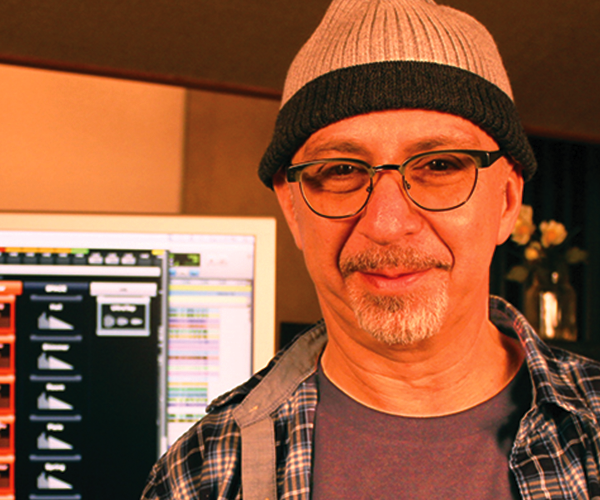
NORWALK, CT: Among the flavors of the Nutmeg State, deep tribal rhythms are not necessarily what this sleepy Northeast enclave is known for. But as you soar through the clouds and into the sanctum of Tom Salta’s studio, the pulse of advanced, yet ancient, beats beat louder.

The Ubisoft title "From Dust" presented mountainous challenges to composer Tom Salta.

Here Salta – one of the Northeast’s most in-demand video game/multimedia composers — is perfecting the stems for From Dust, the richly beguiling god game from Ubisoft. Created by one of the industry’s most revered developers in Eric Chahi, Salta’s skill at sculpting immersive sonic environments earned him spot on Chahi’s hand-picked team.

In From Dust, the player gets to be a god, but one with limitations: as you labor to help tribespeople rebuild their civilization and culture, you have less than total control over the tsunamis, volcanos, and fires that constantly threaten to consume them anew. In a fantasy that can take six hours or more to play out, the constant bombast of typical game-sized strings and horns wasn’t going to cut it.

Salta (profiled in SonicScoop in 2010) went in another direction entirely, building a non-stop, subtly stimulating soundtrack of ethnic rhythm and wind instrument performances by top percussionists Bashiri Johnson (Michael Jackson, Madonna, Rolling Stones) and Kimati Dinizulu (Harry Belafonte, Wynton Marsalis, Dizzie Gillespie). The result: an auditory experience that is one with the game play. “This is not your typical epic score,” the always-inspired Salta assures. “It’s the antithesis of that.”

Gamers must have been ready for a misdirection: the Xbox 360 version broke digital sales records after its worldwide launch this summer, with the highest first-day sales of any Xbox LIVE Arcade in Ubisoft’s history. The tallies for the PC downloads, available from the middle of last month, should also end up in the incredibly healthy zone, just part of the estimated $950 million market for that sector alone this year.

Tell us how you approached the game “From Dust” and its specific music needs.
The direction I was given was that it had to be non-Hollywood. All the music in the game while you’re playing is percussive – there’s an ongoing pulse throughout the gameplay that never stops. The BPM is 120, and that’s not an accident. It symbolizes time: It’s twice 60, which is our universal representation of time.

The tribes in the game are constantly playing percussive instruments, no matter what they’re doing. They use music to control nature. The term for the kind of sound that’s applied here is “diegetic,” which means the sound’s source is visible on the screen, originating from the actual location/experience in the game, instead of playing over it. And as the camera pulls back, the sound becomes more distant.

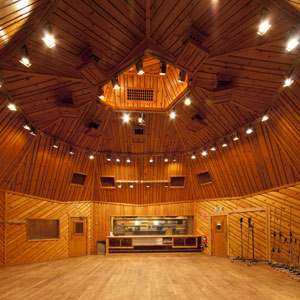
Then, when you get through one level and progress to the next, the non-diegetic theme music starts playing, which is is the antithesis of tribal percussion – it’s a very small string ensemble that we recorded at Avatar Studios, and it juxtaposes against the tribal rhythm. This part of the score features a sophisticated, ethereal kind of music to represent almost like God is looking down onto these people. That music was meant to be very indifferent and symbolize the passage of time. It’s even-keeled and doesn’t have a happy feel or a sad feel to it; somewhat Philip Glass-inspired.

String sessions at Avatar were only the start.

When it came to the percussion, how did you start to work with all that material?
I recorded hundreds of layers of live percussive pieces into Logic. Using Flex Time I was able to mix and match, and move things around.

There’s an alternate tempo point in the game when the pulse of the game speeds up -  at times of severe crisis, everything rises to a higher tempo of up to 145 BPM. Using Flex Time I was able to keep things tightly locked.

The rhythm, again, is very non-Hollywood. I had to hold myself back from using typical sample libraries that are generally very epic, clean, polished, reverberant and bright.  That’s why I wanted to record all live percussion.

What was the creative direction you received from Ubisoft as you moved forward with these elements?
From Dust was the brainchild of celebrated visionary and Creative Director, Eric Chahi. In 1991 he created the highly acclaimed game, Another World which was really ahead of its time. It was innovative in its use of cinematic effects in the graphics, sound and cut scenes, with characters communicating through their facial features, gestures, and actions only. He established himself as a pioneer, taking risks and working outside of the box. Naturally, I was excited to work with him.

Eric himself and the whole audio team flew over here to NYC from Ubisoft’s headquarters in France. We all experimented at my home studio, we spent a day at Bashiri’s studio in Brooklyn, and we also spent a day recording at Avatar.

Can you explain what you communicated to these world-class percussionists?
I asked Bashiri and Kimati to bring all their toys to these sessions, and told them to think of it this way: “You’re on a deserted island with no technology, no metal, nothing. We need to create a texture with all-natural elements.” The drums had to be skins, wood, seashells. We had to experiment to create new textures and deliver an original music palette.

For example, there are a variety of different powers you receive: One of them, the tsunami power, gives you the power to repel water when a tsunami threatens to overtake a village. We had to come up with a way to make a percussive, rhythm-based texture to reflect the power of repelling water.

So we had Kimati playing on a seashell, and his performance was reminiscent of an African ritual to a sea god. He started blowing in the shell Too too too! I said, “That’s it!” We had volcano powers, voices, hnnnnnh growling. Everything was made with voices and primitive instruments.

It was fantastic; we created something I’ve never heard before and it gives the game a completely unique sonic treatment. You hear a few seconds and you know you’re playing From Dust. That’s always my goal on every game I work on.

(L-R) Kimati Dinizulu, Tom Salta, and Bashiri Johnson.

Can you tell us some more details about working with these engrossing percussive tracks?
The team spent two full days together, and at a later date I went back to Bashiri’s on my own to fill in the missing pieces.  Then I completed everything back in my home studio.

The game was evolving, things were changing and in fact we had to make some micro-adjustments to the tempo, due to frame-rate adjustments within the game. We had to move the tempo from 120 to 120.4 BPM. Thank goodness the Flex Time was there  – with very little fuss I was able to make adjustments.

The score was produced very quickly. I had to have a good plan going in there. I grouped my tracks together based on what kind of textures or areas we were going for. There were all these different, independent soundscapes that would be playing when the whole village was in quiet, ho-hum daily life, with things like Bashiri doing fake language.

While you’re walking around, and depending on where the camera is  – up high, ground level, all these different layers get mixed in real-time. Then the music could come along, and all these different rhythms could overlap each other. If a new village comes and grows out of the ground, there’s a sequence that happens for that.

You can imagine how complex this became, and how much thought had to be given to how things could fit together, so it becomes aurally cohesive and enhances the game experience.

Can you elaborate more on how you accomplish that?
It takes some experimentation and auditioning. I might have a beat that I say is our basic beat, and this can happen over it and this can happen over it. I’ll move those elements together, make a copy and simulate them playing together. Then I’ll ask myself, “Does that work? What’s cluttering it up?”

It’s trial and error. I’m not a magician who automatically knows what’s going to work, especially when you’re doing something as unique as From Dust. I have a feeling for what might be the best approach, and then find out for sure what works and what doesn’t.

When you score a game, you’re writing for multiple possibilities. You can’t have the immediate satisfaction of saying, “OK, I’m looking at the picture. Here’s the music to that. I’m done.” You have to ask, “Will that sound good? Will that sound good?” And I try it out. As you become more experienced, the less experimentation you have to do.

The "From Dust" audio crew -- and one big drum.

Once the tracks were completed and organized, how did you deliver them to Ubisoft so the game’s mixer could work with it?
I would send them either a stereo mix, or stereo stems. I don’t deal with too much Quad or surround delivery these days. In the case of “From Dust”, I was delivering them individual stereo mixes of different components, “Here’s your Quiet Village, Layer 1,” etc.

It all then goes into the audio engine. They play it out, tell me what’s working and what’s not. It requires a lot of good communication and collaboration between myself and the audio team.

What’s an example of a change they’d request, and a modification you’d then have to make?
Generally I know what they need as far as mixing. But a lot of times, they’d come up with some very ambitious ideas that may need to be simplified in order to achieve their vision. Or they might actually have to remove an entire component, because that feature isn’t going to make it in the game. Sometimes certain instruments might be too loud, or bass-heavy, but that’s not typical.

Here’s an example. “We’d like this to be a bit longer because it’s going to be playing for a while and we don’t want it to get too repetitive. So can you please extend it to :60 in a way so that it sounds random and doesn’t get too monotonous?”

So I have to go back there and take something that started out as eight bars, and extend it to 64 bars in a way so that if you hear it continuously for several minutes it won’t take you out of the experience. In From Dust, we’re always dealing with rhythm. I’ve never played a game before with this constant pulse.

So how does this all translate to the true end result – the user experience?
I’ve played the full game now and I have to say all the music really worked well in context. Everything feels effortless and natural. You just become immersed in the world. The rhythms become integrated into the environment – it feels like all the music we recorded was meant to be here.

That’s especially important in a game like this since that’s the intent of the music. It was meant to sound like it’s coming from the world, not a fourth dimension of emotion that’s added on top.

Of course, the musical opening sets the theme and mood as the camera slowly approaches and enters an ominous black hole-like portal. But with the exception of that, playing the game along with all the rhythms felt natural and immersive. I was very happy with how the music really helped bring the atmosphere of the game to life.

I give a ton of credit to Eric Chahi’s direction. Normally we would never have thought of approaching a score in this way. He had a vision of this game in his head. I know he was really happy with the end result and it was an honor to be a part of something so artistic and uniquely special like From Dust.

– David Weiss

FROM DUST is available for digital download on PlayStation Network, Xbox Live Arcade, Xbox 360 and PC download via Steam.

Sessions at Avatar Studios with Jean Morrison, Lady Gaga, Tony Bennett, Aretha, Kenny Garrett

August 23, 2011 by  

July was a hot month in Hell’s Kitchen, as Avatar Studios hosted sessions for some of the biggest names in the biz. Let’s fire it up!

In Studio A, the Neve 8088 captured the sweet sounds of Tony Bennett (happy 85th birthday this month!) recording a duet with Lady Gaga in Studio A for his upcoming Duets II album. The session was produced by Phil Ramone, engineered by Dae Bennett, and assisted by Fernando Lodeiro and Tim Marchiafava.  Tony Bennett also sang and recoded a duet with Intergalactic Queen of Soul Aretha Franklin in the spacious Studio C, with its Neve VRP 72-input console, for the same project.  Both sessions were filmed.

Triple talent: Vernon Reid, Jean Morrison, and Nile Rodgers are only to happy to grace Studio A.

Also in Studio A, Jean Morrison recorded for her upcoming album with help from Nile Rodgers and Vernon Reid.  Diego Paul produced the session and Hillary Johnson engineered, assisted by Charlie Kramsky.

Detroit-borne jazz great Kenny Garrett recorded some transcendent new songs (SonicScoop received a special preview – story to come) in Studio C with producer Donald Brown, engineer Todd Whitelock, and assistant  Fernando Lodeiro.

Studio B and the SSL 9000 J were on duty recording for an Evanescence project. Nick Raskulinecz produced, and engineer Paul Figueroa was assisted by Fernando Lodeiro.

Scarlett Johansson recorded vocals in Studio G through the SSL 4000G+ for a Dean Martin project. Producer/engineer Eric Rosse and assistant Charlie Kramsky were on point.

The Gaddabouts returned to Studio A to record with producers Steve Gadd and Edie Brickell. Engineer Andy Smith was assisted here by Bob Mallory.

Studio A and G were rocking with the bluesy jams of The Zak Smith Band, recorded in Studio A and G by producer Zak Smith, engineer Milan Sudzuk assisted by Aki Nishimura.

Saxophonist and composer Jane Ira Bloom was recording in Studio B with super-engineer Jim Anderson, assisted by Fernando Lodeiro.

Michael Maier and Freddie Cole tracked vocals in Studio W, in a session produced by Michael Maier with engineer Bryan Smith.

In the TV realm, music for the Discovery Channel’s show The Rising: Rebuilding Ground Zero was recorded in Studio C with producer Robert Miller. Peter Hylenski engineered, assisted by Charlie Kramsky.

For the multimedia realm, James Sheldon, author of Before I Forget – Directing Television: 1948-1988, was in Studio E reading from his own book for an upcoming audio book.

Session Buzz: Who’s Recording In & Around NYC — A Monthly Report

August 4, 2011 by  

GREATER NYC AREA: It’s midsummer…the middle of a traditionally “slow season” for recording with so many bands out on the road. But this is the city that never sleeps, and slow is a relative term. The following is but a sampling of recent sessions, and works in progress…a snapshot of what’s going on around town:

Justin Nozuka (here with band) has been recording at Germano with producer Steve Jordan, and Dave O'Donnell engineering.

Starting at Germano Studios downtown…50 Cent has been writing and recording new material with Araab Muzik producing and Ky Miller engineering, Ne-Yo was in writing and recording with Swizz Beatz producing and Moses Gallart engineering, and Justin Nozuka recorded basic tracks with Steve Jordan producing and Dave O’Donnell engineering – all in Studio 1.

In Studio 2, will.i.am continues to record new material which he’s self-producing and engineering, and Oriane recently recorded vocals with Walter Afanasieff producing and Jason Agel engineering.

Nearby at The Lodge, Mastering Engineers Emily Lazar, Joe LaPorta and Heba Kadry have been busy working on Björk‘s epic multimedia release, Biophilia, due out this Fall. The music for Biophilia – featuring a 10-song album and 10 musical iPad apps themed after each song’s scientific subject matter – was mastered at the Lodge in March by Lazar and LaPorta alongside Björk and her longtime engineer/producer Damian Taylor.

Bjork's new album, "Biophilia," was mastered at The Lodge by Emily Lazar and Joe LaPorta alongside Björk and engineer/producer Damian Taylor.

Other recent releases mastered at The Lodge include Chris Taylor’s CANT LP, Morgan Page’s new album, In The Air, Ronnie Vannuci’s (of the Killers) solo debut Big Talk – produced by Joe Chiccarelli and mixed by Alan Moulder – the new Boy & Bear album – also produced by Chiccarelli – and Large Professor’s latest for Fat Beats Records.

The Lodge also mastered Ronnie Spector’s tribute cover of Amy Winehouse’s Back to Black – produced by Richard Gottehrer – Surfer Blood’s cover of Nirvana’s “Territorial Pissings” for SPIN’s Nevermind compilation, new releases by Zechs Marquise (band formed by Marcel Rodriguez Lopez from the Mars Volta), and Junior Mance, and the new Wooden Ships album – produced by Phil Manley of Trans Am.

Over in the East Village at Flux Studios, Todd Whitelock mixed an upcoming album by jazz saxophonist and flautist Kenny Garrett in the Revolution Room. Garrett – who was a member of the Duke Ellington Orchestra, and Miles Davis’ band – will release his upcoming album via Mack Avenue Records.

And down in SoHo, The Magic Shop has been going steady…Shooter Jennings tracked for his upcoming album with engineer Brandon Mason, assisted by Brian Thorn, Burning Spear tracked and mixed for their upcoming album with Thorn engineering, assisted by Kabir Hermon, and Tom Schick was in mixing for She and Him’s upcoming Merge album.

Other recent sessions in the Magic Shop’s unique Studio A include: The American Secrets tracking and mixing songs for upcoming freecreditscore.com commercials with producer Neil McClellan (The Lodge Music creative director) and engineers Ted Young and Colin Thibadeau; The Gaslight Anthem tracking an iTunes exclusive live session with producer Jason Marcucci, and engineers Ted Young and Mike Judeh; and tracking sessions for new albums by Elliot Sharp (producer Joe Mardin/ engineer Ted Young), Lee Feldman (engineer Ted Young), Ben Carroll (producer Adam Levy / engineer Brian Thorn), The Virgins (engineer Emery Dobyns) and The Universal Thump (engineer Kabir Hermon).

The Virgins tracked new material for their upcoming Atlantic release with producer/engineer Emery Dobyns at The Magic Shop.

Meanwhile in the Magic Shop’s Blue Room, Warren Russell-Smith has been doing restoration work for the second season of Boardwalk Empire. Recent mastering sessions at the Magic Shop include albums for Rockstar Games, Anna Volgelzang, Warpaint, Nightplane (mastered by Russel-Smith) and Nâ Hawa Doumbia, Vic Varney and Pretty Good Dance Moves (mastered by Jessica Thompson).

At another studio down in SoHo – Serious Business Music – producer/engineer Travis Harrison has had a steady stream of bands in to appear on his BreakThru Radio show. In the last month, “Serious Business on BTR” has featured performances and interviews (by Harrison) with A Million Years, Fort Lean, Les Sans Culottes, El Jezel and Quiet Loudly.

Harrison has also been working on a number of album projects, including an album with a new band called The Cosmos – formed by Dougy Payne and Andy Dunlop from Travis, and Cinjun Tate from Remy Zero – a solo 7” with Doug Gillard from Guided By Voices, and a record with Rocketship Park for Serious Business Records.

In Park Slope at Seaside Lounge Recording, engineer/producer/musician Josh Clark mixed a record by Nashville native Luke Roberts, The Iron Gates at Throop and Newport, to be released by Thrill Jockey Records in 2012. Initial tracking sessions for the record went down at The Beach House in Nashville and Atlantic Sound in Brooklyn (with “Seaside Lounge” rounding out the coastal recording theme.)

On the West Side at Stratosphere, Japanese electro-rock band The Telephones tracked their new album in Studio A with producer/engineer Alex Newport, recording everything to tape on the studio’s Studer 2″.

The Telephones in Stratosphere Studio A. Photo by Yuki Shingai.

Also at Stratosphere…Ice T booked an afternoon of vocals and filming for upcoming documentary Something From Nothing: The Art of Rap. Stratosphere’s own Adam Tilzer engineered. Aaron Neville returned to record vocals with producer Matthew Ferraro and engineer Geoff Sanoff.

Daniel Merriweather was back for sessions with Dave McCracken, Amanda Ghost and engineer Chris Shaw, Florence + the Machine was in with engineer Andros Rodriguez, and Nathan Larson (A Camp, Shudder To Think) tracked and mixed music for an upcoming film, Tiger Eyes, with Geoff Sanoff engineering.

Up at Carriage House Recording in Stamford, cellist Dave Eggar (Evanescense, Coldplay) and his band Deoro finished mixes for their upcoming record in Studio A with engineer/mixer Brendan Muldowney, and art-pop songstress Rachael Sage tracked basics for her upcoming release with engineer John Shyloski.

Back in town, at Sear Sound, NYC denizen Donald Fagen tracked in Studio A on the 8038 Neve with Michael Leonhart producing and Charlie Martinez engineering for Warner Bros. Records. eONE Music was in Studio C, reportedly “classisizing” Frank Zappa songs for a new release. In this process, Zappa’s original songs were rescored for classical orchestral instruments and tracked on Sear Sound’s custom Avalon/Sear console in sessions produced by Susan Del Giorno with GRAMMY-winning engineer Silas Brown.

Producer/engineer Gary Maurer also checked into Sear to track an ensemble of 22 musicians for his upcoming HEM album in Studio C. He will reportedly return to Sear Sound shortly to mix a 24 song double album.

Red Hot Chili Peppers' tenth studio album "I'm With You" comes out August 30. Produced by Rick Rubin, Engineered by Greg Fidelman and Andrew Scheps out in LA; Mastered by Vlado Meller at Masterdisk

Further west at Masterdisk, Scott Hull mastered Sting’s three-CD box set, Sting 25 Years, featuring remixes and a previously unreleased live concert DVD with 10 tracks recorded live in NYC, produced by Rob Mathes. Also at Masterdisk, Vlado Meller mastered a Julio Iglesias two-disc “Greatest Hits” set, with songs re-recorded and re-mixed by Alberto Sanchez, the new Red Hot Chili Peppers album, I’m With You, and the Jane’s Addiction single “Irresistible Force,” and upcoming album, The Great Escape Artist.

Andy VanDette recently mastered the Spiderman Turn Off The Dark cast album and albums by Blessthefall, The Static Jacks and Barefoot Truth, and Ellen Fitton remastered Debbie Harry’s Koo Koo, and Jellybean’s Wotupski.

Premier Studios in Times Square hosted Demi Lovato working on a project for Disney Pictures – a song produced by Sandy Vee, with piano overdubs played by Mikkel Eriksen from Stargate. The session was engineered by Sam Giannelli. Will.i.am of the Black Eyed Peas produced tracks for Lil Wayne, working with engineer Mike Cadahia with Kevin Geigel assisting. DefJam artist Ace Hood, produced by DJ Khaled, was at Premier recording vocals and mixing an upcoming release with engineer Ben Diehl.

Atlantic artist Wiz Khalifa recorded vocals, with engineer Josiah Hendler, EMI Artist MoZella was in with producer Scyience, mixing with engineer Anthony Daniel, and Scyience was also in with Epic artist Alice Smith, mixing an upcoming release with an engineer by the name of Push Buttons.

Over at Avatar Studios, strings were recorded in Studio A for the upcoming Lou Reed/Metallica album with producer Hal Willner and engineer Greg Fidelman, assisted by Bob Mallory. NYC/Ireland rockers Suddyn recorded their single in Studio G on the SSL 4000G+ with producer David Kahne, engineer Roy Hendrickson and assistant Tyler Hartman. The Brooklyn Youth Chorus was in Studio A recording with producer Bryce Dessner, of The National and Clogs, and engineer Lawson White, assisted by Aki Nishimura.

Music for the upcoming film, A Late Quartet, was also recorded in Studio A with producer Alan Bise and engineer Bruce Egre. The cast albums for People in the Picture (producers Mike Stoller and Steven Epstein, engineer Todd Whitelock) and A Minister’s Wife (producer Tommy Krasker, engineer Bart Migal) were also recorded at Avatar.

And we know there’s so much more going on out there! If you’d like to be featured in “Session Buzz,” please submit your studio news to submissions@sonicscoop.com.

Lou Reed/Metallica, Theo Croker, Suddyn, Sadao Watanabe Projects Appear at Avatar

July 19, 2011 by  

Mixing and tracking rocked on unabated at Avatar Studios this past month. Projects in the Hell’s Kitchen sonic landmark included:

Suddyn looked into a lockout at Avatar.

Strings were recorded in Studio A for the upcoming Lou Reed/Metallica album with producer Hal Willner. Engineer Greg Fidelman was assisted by Bob Mallory.

The music for the TV broadcast of the 2011 Tony Awards Show was recorded in the Neve 8088-equipped Studio A with producer Elliot Lawrence. Engineer Ed Rak was assisted by Bob Mallory, Tim Marchiafava and Mike Bauer.

Jazz/Bossa Nova saxophonist Sadao Watanabe was in Studio C recording on the Neve VRP 72 console for his upcoming release with engineer Jim Anderson, assisted by Aki Nishimura.

The genre-bending trumpet player Theo Croker recorded and mixed in Studio B with producer Dee Dee Bridgewater, engineer Anthony Ruotolo assisted by Bob Mallory.

Oriane was in Studio B with the SSL 9000J, recording with producer Walter Afanasieff, engineer Kevin Killen assisted by Charlie Kramsky.

NYC/Ireland rockers Suddyn recorded their single in Studio G on the SSL 4000G+ with the dream team of producer David Kahne, engineer Roy Hendrickson and assistant Tyler Hartman.

The Brooklyn Youth Chorus was in Studio A recording with producer Bryce Dessner. Engineer Lawson White assisted by Aki Nishimura.

Music for the upcoming film, A Late Quartet, was recorded in Studio A with producer Alan Bise. Engineer Bruce Egre was assisted by Bob Mallory.

The cast album for People in the Picture was recorded in Studio A and B with producers Mike Stoller and Steven Epstein. Engineer Todd Whitelock was assisted by Fernando Lodeiro and Aki Nishimura.

Additionally, the cast album for A Minister’s Wife was recorded in Studio C with producer Tommy Krasker, working with engineer Bart Migal and assisted by Bob Mallory and Tim Marchiafava.

Session Buzz: Who’s Recording In & Around NYC — A Monthly Report

June 29, 2011 by  

GREATER NYC AREA: Heading into Summer, the city’s recording studios show no signs of slowing down. The following is but a sampling of recent sessions, and works in progress…a snapshot of what’s going on around town:

Aventura – the Bachata band out of the Bronx – has been at Daddy’s House tracking and mixing a new release with Justin Sampson engineering. Pop artist One Love has also been recording at Daddy’s House – tracking basics and vocals with producer/engineer Jon Thimple for his upcoming full-length album on Intrepid Music.

Meanwhile, Daddy’s House is currently undergoing a complete overhaul of infrastructure, operations, and aesthetics – with extensive work being done to both the SSL G Series and Neve VR consoles. Stay tuned for more on this, as the studio prepares to re-set as a full-blown commercial operation.

Chris Taylor's latest solo album as CANT will come out on Terrible Records in September. Mixed by Jack Aron at Germano Studios.

Queens born rapper Ja Rule was at Area 51 tracking and mixing for his upcoming LP with producer Seven Aurelius and engineer Darren Moore. Also at Area 51: Jacob Latimore recorded new material with producer “CJ” and engineer Alberto Vaccarino, and David Banner was in to mix his upcoming release with Pat Viala (50 Cent, Mariah Carey).

Downtown, Christina Aguilera was recording vocals at Germano Studios for a duet with Maroon 5 – the song “Moves Like Jagger” – with Manny Marroquin (Kanye West, Alicia Keys) engineering. Aguilera has also been writing and recording with producer/songwriter Sandy Vee at Germano in sessions engineered by Kevin Porter.

Vee – whose songwriting/producing credits include Katy Perry’s “Firework,” Rhianna’s “Only Girl in the World” – was also working at Germano with Disney ingenue Demi Lovato, and with pop artist/singer Dev, writing and recording new material with Porter engineering.

Other Germano sessions include will.i.am, Beyonce, The Kin recording with  producer/engineer Thom Panunzio, DJ/producer/remixer Chew Fu, and Tiësto mixing with engineer Ben Chang. And Chris Taylor (Grizzly Bear) brought his new solo project, CANT – featuring George Lewis Jr. of Twin Shadow – to Germano to mix with Jake Aron (Yeasayer, Jamie Lidell). The new album will be released September 13 via Taylor’s own Terrible Records.

Up the block, experimental Toronto punk band Fucked Up mastered their conceptual sophomore LP David Comes To Life (on Matador Records) at The Lodge. An epic 18-song rock opera, David Comes To Life was produced by NYC’s Shane Stoneback (Cults, Sleigh Bells, Vampire Weekend).

Engineer Hillary Johnson, Jean Morisson, Vernon Reid and producer Diego Paul Sanchez at Electric Lady.

Other records mastered at The Lodge and released this month include Hooray For Earth’s True Loves, Ford & Lopatin’s Channel Pressure, and both The Postelles’ and Cults’ debut albums.

Nearby, rock singer Jean Morisson, formerly of MorissonPoe, has been recording at Electric Lady (Studio C) with producer Diego Paul Sanchez and Hillary Johnson engineering – assisted by Pete Bishoff.

Vernon Reid has been through to play guitar on several tracks on the album, and Nuno Bettencourt will be adding guitars on this project as well.

This week, Universal Japan artist Chihiro Yamanaka recorded at EastSide Sound in the Lower East Side. The recording session, engineered by Marc Urselli, featured Yamanaka playing (piano) with legendary drummer Bernard Purdie and upright bass player Larry Grenadier.

Urselli has also been engineering sessions with John Zorn this week – recording soundtrack music for a play featuring Zorn on sax, Bill Laswell on bass and effects, Kevin Norton on vibes and percussion and Rob Burger on piano/organ/Rhodes.

Bassist Larry Grenadier, Universal Japan artist Chihiro Yamanaka and drummer Bernard Purdie at EastSide Sound.

Heading on over to Long Island City, Lamb of God drummer Chris Adler checked into Spin Recording Studios to track drums for the band’s upcoming release with Josh Wilbur producing and engineering.

Also at Spin, Andy Wallace mixed Natalie Findlay’s upcoming album for Polydor, guitarist-producer Alex Skolnick (Testament) worked on Adrienne Warren’s upcoming album with engineer Nik Chinboukas, and Jeff Kazee (Southside Johnny & the Asbury Jukes, Bon Jovi) produced Jersey rock-and-rollers Outside the Box for their upcoming release – also with Chinboukas engineering.

And south to Williamsburg, indie rock band Nada Surf recorded basic tracks for their upcoming LP at Headgear Recording with producer/engineer Chris Shaw. Also at Headgear… Virgin Forest tracked and mixed their second full-length album (for Partisan) with Alex Lipsen engineering; Lipsen produced some new music by Sam Marine, which John Agnello mixed; Kelli Scarr did some tracking with Scott F. Norton; and Male Bonding mixed their upcoming SubPop album with Agnello.

Chris Shaw and Nada Surf also recently booked Joe McGinty (Psychedelic Furs, Loser’s Lounge) at Carousel Recording in Greenpoint to play and record keyboard parts on new songs. McGinty added Hammond Organ, RMI Keyboard Computer, Mass-Rowe Vibrachime, ARP Strings, Modular Moog, and Fender Rhodes to their forthcoming record. McGinty also recently recorded Piano, Hammond, Combo Organ, and others for Lianne Smith’s debut record, being produced by Anton Fier.

And Norah Jones stopped by Bryce Goggin’s Trout Recording to lay down some vocals on an upcoming So Brown record, being co-produced by Goggin and Sonia Brown and engineered by Adam Sachs.

Back in Manhattan, Carol King has been at KMA Studios mixing her upcoming holiday album with producer Louise Goffin and engineer Nathaniel Kunkel.

Also at KMA recently… Pianist Eric Lewis recorded and mixed an album with Bryan Williams engineering, Mike Posner recorded songs for his upcoming Sony album –producing/engineering the sessions himself – hit songwriters Claude Kelly and Chuck Harmony wrote/recorded for CJ Holland with engineers Ben Chang and Conrad Martin, Corey Gunz cut vocals for his upcoming Cash Money/Universal release with S. Dot engineering, and Yo Gotti recorded vocals for his album on Sony with Leo Goff engineering.

Engineer Leo Goff, Yo Gotti and KMA manager David "Roz" Rosner.

Yo Gotti’s new album – Live From The Kitchen – is scheduled for release on Sept 6th, and is expected to have guest appearances by Lupe Fiasco, Lil Wayne, Nicky Minaj, Ciara, Rick Ross, Waka Flocka and Young Jeezy.

John Lithgow was also at KMA doing voiceovers for a children’s book – Trumpet of The Swan – with Jayson Brown producing and Ian Kagey engineering for PS Classics.

Out on Long Island at  PIE Studios in Glen Cove…NYC rock band Lion in the Mane recorded a new EP, taking advantage of Pie’s Neve-equipped, George Augspurger-tuned control room and 35’ x 28’ x 18’ live room. NYC-based producer/engineer William Wittman oversaw the sessions.

Back in big town, Joe Jackson recently recorded his upcoming self-produced release at Avatar Studios with engineer Elliot Scheiner, assisted by Aki Nishimura. Other recent sessions at Avatar include… Esperanza Spalding recording her upcoming release co-produced with Q-Tip in Studio A with engineer Joe Ferla, assisted by Fernando Lodeiro; Honor Society recording on the SSL 9000J in Studio B with producer Adam Blackstone and engineer Jon Smeltz, assisted by Tim Marchiafava; and the Manhattan Chamber Orchestra recording with producer Howard Cass and engineer David Merrill.

Also in Midtown, Foreigner checked in at Threshold Recording Studios NYC to cut acoustic versions of ten of their greatest hits — Mick Jones and Jeff Pilson produced, with Jeremy Sklarsky (Freelance Whales) engineering. And Dave Eggar and Heather Holley produced a track for singer/songwriter Jacob Baine Fields at Threshold recently, also with Sklarsky at the controls.

Santigold with producer Dave McCracken, engineer Andros Rodriguez and songwriter Ian Dench in Stratosphere Studio A.

On the way west side, Santigold was at Stratosphere Sound working with songwriters Amanda Ghost and Ian Dench in Studio A. Ghost, Dave McCracken and Andros Rodriguez also worked with Daniel Merriweather in Studios A & B, and Louis C.K. was in Studio A, overseeing music recording for Season Two of his FX sitcom Louie. Ruddy Cullers engineered.

And staying on the west side, mastering engineer Vlado Meller is up and running in his new studio at Masterdisk.

Here, Meller recently mastered the Red Hot Chili Peppers’ single “The Adventures of Rain Dance Maggie,” produced by Rick Rubin and engineered by Andrew Schoeps for Warner Bros, and a Harry Connick, Jr. album, The Happy Elf, produced by Tracey Freeman and engineered by Vince Caro for Marsalis Music.

And we know there’s so much more going on out there! If you’d like to be featured in “Session Buzz,” please submit your studio news to submissions@sonicscoop.com.

Honor Society, VHS or Beta, Esperanza Spalding, Joe Jackson Visit Avatar

June 23, 2011 by  

Avatar Studios was a beehive of sonic activity last month, reporting sessions spanning pop, rock, jazz, classical and more.

Honor Society popped the halls around Avatar's Studio B.

In Studio C, Joe Jackson was recording his upcoming self-produced release through the Neve VRP 72 console with engineer Elliot Scheiner. Aki Nishimura assisted.

GRAMMY Award winner Esperanza Spalding was recording her upcoming release co-produced with Q-Tip in Studio A, with its legendary live room and custom Neve 8088. Engineer Joe Ferla was assisted by Fernando Lodeiro.

VHS or Beta mixed in Studio G on the SSL 4000G+ with engineer Martin Brumbach, assisted by Fernando Lodeiro.

Honor Society recorded on the SSL 9000J in Studio B with producer Adam Blackstone. Engineer Jon Smeltz was assisted by Tim Marchiafava.

A jazz single to benefit the victims of Japan earthquake/tsunami was written and produced by guitarist Masuo Yoshiaki. NYC jazz musicians Tim Ries, Lew Soloff, Makoto Ozone were also on hand. Katsu Naito engineered and was assisted by Bob Mallory.

In Studio A, the Manhattan Chamber Orchestra recorded with producer Howard Cass. Engineer David Merrill was assisted by Fernando Lodeiro.

The Music of Mary Lou Williams with Carmen Lundy was recorded in Studio A. Producer Peter O’Brien oversaw the action with engineer Anthony Ruotolo, assisted by Fernando Lodeiro.

Back in Studio B, Freddy Cole recorded with producer Todd Barkan. Engineer Katherine Miller was assisted by Bob Mallory.

Revolving back around to Studio C, Mike Stern worked with producer Jim Beard, engineer Phil Magnotti, and assistant engineer Bob Mallory.

Session Buzz: Who’s Recording In & Around NYC — A Monthly Report

May 31, 2011 by  

GREATER NYC AREA: As always, there are a number of interesting recording projects underway in studios throughout the NYC area. The following is but a sampling of recent sessions, and works in progress…a snapshot of what’s going on around town:

We’ll start at Great City Productions in Chelsea, where Anand Wilder of Yeasayer has been producing a musical called “Coal Into Diamonds,” an homage to the hard rock and psychedelia-inspired musicals of the 1960′s and 70′s

Co-produced and co-written by Wilder and pianist Max Kardon, “Coal Into Diamonds” features performances by members of Vampire Weekend, MGMT, Dirty Projectors, Chairlift, Man Man, Suckers, and Dragons of Zynth. Engineered by Britt Myers and Geoff Vincent, and mixed by Britt Myers at Great City, the 11-song LP will be released on Secretly Canadian.

Next stop – Fluxivity in Williamsburg, where Brooklyn-based singer/songwriter Colin McGrath recently mixed several songs with producer William Berlind, and engineer Brian Thorn, and Flight of The Conchords’ Jemaine Clement and engineer/producer Matt Shane worked on some new songs for an upcoming film project. John Agnello also visited Fluxivity to overdub and mix songs for an upcoming release for Barton Stanley David. The sessions were mixed to ½” tape on Fluxivity’s Ampex ATR100 recorder.

During sessions at Mission Sound (l-r): Jack Daley, Steve Wolf, Jay Picton, Mike Peden and Mission owner/engineer Oliver Straus.

Universal artist Jay Picton was in town from London, recording his debut release at Mission Sound in Williamsburg. Oliver Straus tracked an assortment of New York’s “A” team musicians for this album including Jack Daley, Steve Wolf, James Poyser of The Roots and Clifford Carter. Mike Peden produced.

And at The Buddy Project in Astoria, Julia Nunes tracked a new album with producer/engineer Zach McNees, Pipe Villaran (former lead singer of Los Fuckin Sombreros) recorded his debut solo EP with producer/engineer Kieran Kelly, and Nate Campany recorded some finishing touches for his solo album, with Kelly engineering.

Meanwhile at Vacation Island Recording in East Williamsburg, indie cult hero R. Stevie Moore “and some friends” recorded a song for a benefit compilation. Jorge Elbrecht from Violens produced the tracks and Matt Boynton engineered.

And, bouncing around, up at the Carriage House Studios in Stamford, CT, Johnny Winter has been working on a new record, his first studio album in 7 years. The record was tracked and mixed by engineer Brendan Muldowney on Carriage House’s SSL 4000 E series console and produced by Paul Nelson. Guest guitarists include Warren Haynes, Derek Trucks, Vince Gill, and Sonny Landreth.

Back in town, Avatar Studios has been hosting Ingrid Michaelson recording her upcoming album with producer David Kahne and engineer Roy Hendrickson; VHS or Beta mixing an upcoming release with Martin Brumbach engineering; Vince Giordano & The Nighthawks recording with Regina Spektor for HBO’s Boardwalk Empire, with Stewart Lerman producing/engineering; the Baby It’s You cast album recording with producer Richard Perry and engineer Frank Filipetti; and New York Yankee Nick Swisher recording a kids album with producer Loren Harriet and engineer Danny Bernini.

And as previously reported, Sear Sound hosted Sting composing and recording on the 1973 Steinway “D” grand piano, with Rob Mathes arranging and co-producing; Foreigner tracking with original frontman/producer Mick Jones co-producing, Jeff Pilson, Tom Gimble and Kelly Hansesn completing the band, and Wyn Davis of Total Access Recording engineering; and the Gipsy Kings working with engineer James Farber mixing to RMGI 1/2″ 900 tape using Sear Sound’s ATR 102. Bernard Paganotti produced and supervised the Gipsy Kings mixes from France.

(l-r) Phil Ramone and Jorge Calandrelli collaborate in MCS' Studio 7.

Also previously reported, Manhattan Center Studios hosted the recording of a 52-piece orchestra for Tony Bennett’s Duets Album 2. The all-star team on the sessions included Producer Phil Ramone, Conductor and Orchestrator Jorge Calandrelli and Engineer Dae Bennett.

Renee Fleming was recorded singing live with a  69-piece orchestra in Manhattan Center’s Grand Ballroom and adjacent Studio 7, equipped with the 108-input Neve VR, for Steven Speilberg’s animated film Tintin.

Two video crews were present at the sessions, one for a polycom set up allowing Speilberg and composer John Williams to attend the session from LA. The second crew performed motion capture, which will allow the film’s animators to capture Fleming’s facial expressions exactly for her animated character. Todd Whitelock was the engineer on the session.

Back in Brooklyn — at Grand Street Recording — owner/producer/engineer Ken Rich has been working on new records with NYC singer Deborah Berg and Nashville singer-songwriter David Mead. And S-Curve artist Diane Birch spent a week at Grand Street with English producer Ant Whiting. The pair began production on her next record, with Tomek Miernowski engineering.

Miernowski also produced and engineered “Dress and Tie,” a single for singer/songwriter Charlene Kaye and Darren Criss of Glee. Ken Rich has also been working on The Compulsions’ newest project, with Hugh Pool co-producing. And actor/artist Michael Pitt mixed a live recording from Paris with Miernowski.

And we know there’s so much more going on out there! If you’d like to be featured in “Session Buzz,” please submit your studio news to submissions@sonicscoop.com.

Session Buzz: Who’s Recording In & Around NYC — A Monthly Report

April 21, 2011 by  

GREATER NYC AREA: Both through the grapevine and straight from the source(s), we’ve been hearing about a number of different recording projects going on in studios throughout the NYC area. The following is but a sampling of recent sessions, and works in progress…a snapshot of what’s going on around town:

Germano Studios has been going non-stop in 2011, between multiple months of lock-out sessions with Lady Gaga, and sessions with a host of other major artists.

Lady Gaga has been recording/mixing for "Born This Way" at Germano Studios, NYC

Gaga and crew have been working out of both Germano Studio 1 and Studio 2, recording and mixing her upcoming album, Born This Way – due out May 23 – and the title track lead single, released in February.

Also – as previously reported – T-Pain was also at Germano Studios, recording vocals in Studio 2 with Levar “LV” Coppin producing and Javier Valverde engineering. And producer Steve Jordan and engineer Dave O’Donnell were in tracking basics with Kelly Clarkson and writing/recording with Keith Richards.

Meanwhile in the Brill Building, KMA Music has been going strong, with Beyoncé locked out Studios A and B for writing, recording and mixing sessions for her new album with an array of producers – The-Dream, Switch, Robert “Shea” Taylor, Jeff Bhasker – and engineers, including Swivel, Pat Thrall, Serge Nudel. Mya also booked out KMA for tracking and mixing sessions with producer Chuck Harmony and engineer Ben Chang. And Joe Jonas tracked and mixed material for his new solo project with Danja producing and Marcella Araica engineering. Lil Wayne was at KMA for a late-night vocal session as well.

In Brooklyn, producer/engineer Tim O’Heir has been holed up in his “Golden Ear” studio in the Music Garage in Williamsburg mixing the upcoming Austin TV double album epic. Austin TV, according to O’Heir, is “an instrumental group from Mexico City who compare themselves to Mogwai but with more ‘theatre.’

Austin TV: self-described Mogwai with more "theatre"

“The tracks were produced by Meme from Cafe Tacuba in Mexico and they FTP’d the Pro Tools sessions to me here in NY. It’s been a trip as these pieces are 100% math rock. The trick for them, and myself, was to get them as musical sounding as possible. (I think that was accomplished.)

The tracks were mixed in the box, summed through a Dangerous D-Box. Waves and Sound Toys as well as a few Digi plug-ins brought the whole thing to life.”

Nearby at The Bunker in East Williamsburg, Aaron Nevezie tracked and mixed the debut album by the Williamsburg Salsa Orchestra. This is an 11-piece traditional salsa band tracked live, playing fresh arrangements of indie-rock songs by LCD Soundsystem, Arcade Fire, Spoon and more. Nevezie also produced new releases for local Brooklyn bands Des Roar, and Crinkles, and mixed Peoples Champs.

The Bunker is also excited to have added a 1969 Steinway M grand piano and a new pair of vintage RCA ribbon mics to the studio.

And down in the financial district, Engine Room Audio has been popping with projects up in its SSL 4064G+ equipped penthouse tracking/mixing room, including G-Unit’s Tony Yayo and Waka Flocka tracking a new single with engineer Drew Fisher. Sean Kingston and Trav also mixed a new single at Engine Room, with engineer Sam Jacquet. Indie rock band Lowry just wrapped mixing on their new full-length album for Engine Room Recordings, with Mark Christensen producing and Fisher engineering. And “indie-pop-on-Mozart quintet” Wakey! Wakey! has been in recording for an upcoming Engine Room Recordings compilation.

Down in his mastering suite, Christensen’s been working on a new OK Go! live album, mixed by Dave Fridmann, as well as a new album by The Color Bars. Christensen also recently mastered the new Ryan Leslie single, “Glory,” and a new record by Cheryl Englehard.

Stream Tune-Yards’ sonically expansive “Whokill” – mastered By Joe LaPorta at The Lodge – here

Inside another popular NYC mastering haunt, The Lodge, mastering engineers Emily Lazar, Joe LaPorta, Sarah Register, and Heba Kadry have been busy with releases by Serg Tankian and Shirley Manson, Against Me!, The Naked and Famous, and Chris Taylor’s newest production work on Blood Orange’s upcoming 7″. (Lazar and LaPorta also mastered Foo Fighters’ Wasting Light!)

Other albums recently mastered by The Lodge crew: Tune-yards’ w h o k i l l, Fucked Up’s  David Comes To Life, Ford & Lopatin’s Channel Pressure, Cold Cave’s Cherish The Light Years, EMA’s Past Life Martyred Saints, Liturgy, Xray Eyeballs, Eternal Tapestry/Sun Araw, White Hills and more.

Back uptown at Area 51 NYC… singer Vita Chambers was working on a new release for Universal Motown with producers CJ, Carl Sturken and Evan Rogers, and Henry “Skem” Kaprali engineering, assisted by John Lurie. Also for Universal Motown, Gail Scott was in session working with producer Kenneth “Soundz” Coby and Michelle Figueroa engineering. French house DJ/producer David Guetta was at Area 51 co-producing new material with CJ, and engineer Dan Smith, for Guetta’s own Gum Productions.

Area 51 also installed new Augspurger mains in the North Room. Says Area 51 co-owner/manager Tony Drootin: “We purchased the dual 15” cabinets and subs that used to reside in Studio D at Sony Studios. We replaced all the components, added a new crossover, and tweaked the system to our room.” He also reports that Area 51 is now configured for drum tracking out of the South Room, and has added some new mics and outboard gear to its arsenal.

Nearby at Avatar Studios, the city’s most famous “Studio A” hosted… a duet by Tony Bennett and Sheryl Crow, produced by Phil Ramone, and engineered by Dae Bennett; Elvis Costello recording a song for an upcoming film with engineer Kevin Killen; and James McCartney recording new material with David Kahne producing and Roy Hendrickson engineering. Meanwhile in Studio C, Steve Reich / So Percussion recorded with producer Judith Sherman and engineer John Kilgore.

The Static Jacks with Chris Shaw and assistant engineer Mike Nesci in Stratosphere Studio A.

At Threshold Recording Studios NYCsinger/songwriter Alana Kessler worked on her new single “The Best Thing” with producer/engineer and multi-instrumentalist Jeremy Sklarsky; composer / PBS producer Tim Janis prepared for his upcoming annual Christmas show at Carnegie Hall with Alexa Ray Joel; and Bad Company drummer Simon Kirke was back as part of the Road Recovery Performance Workshops Program.

And finally, Stratosphere Sound hosted New Jersey indie rockers The Static Jacks for a month, recording their debut full-length in Studio A with producer/engineer Chris Shaw. R&B legend Aaron Neville also recorded vocals at Stratosphere recently with Geoff Sanoff in Studio A.

And Amanda Ghost, producer Dave McCracken and engineer Andros Rodriguez – long-term clients in Studio B – have been working with female rapper KFlay, singers Sky Ferreira and Murray James, as well as John Legend.

And we know there’s so much more going on out there! If you’d like to be featured in “Session Buzz,” please submit your studio news to submissions@sonicscoop.com.

Avatar Studios Hosts James McCartney, Travis Barker, Regis Philbin, Roberta Flack

April 14, 2011 by  

The rooms at Avatar Studios have been crowded this past month, with projects for everyone from global artists to talk show royalty. Top producers and engineers have been in on many of the sessions as well.

(l-r): Rebecca Arons, Regis Philbin, Ben Arons in Avatar's Studio C. (Photo credit: Ben Arons)

Studio A, with its legendary 2,496 sq. ft. live room, accommodated a duet by Tony Bennett and Sheryl Crow, produced by Phil Ramone, engineered by Dae Bennett, and assisted by Fernando Lodeiro. Elvis Costello was also in A, recording a song for an upcoming film with engineer Kevin Killen, assisted by Fernando Lodeiro.

Staying in Studio A, James McCartney recorded in Studio A with producer David Kahne, engineer Roy Hendrickson assisted by Fernando Lodeiro. Mark Ronson recorded music there for Warner Pictures’ Arthur, with engineer Vaughan Merrick, and assisted by Bob Mallory. On the drumming tip, Travis Barker recorded drums for an ad with producer James Covill, engineer James Ingram, and assisted by Bob Mallory.

Roberta Flack recorded in Studio A as well as well as the SSL 9000J-equipped Studio B with co-producer Sherrod Barnes, engineer Roy Hendrickson, and assisted by Bob Mallory.

In Studio C with its Neve VRP 72, Constantine Maroulis recorded with producers Phil Galdston and Marc Copely — engineer Lawrence Manchester was on hand, assisted by Bob Mallory. In addition Rebecca Arons recorded with Regis Philbin in Studio C with engineer Anthony Ruotolo, assisted by Bob Mallory. Also in C, Steve Reich / So Percussion recorded with producer Judith Sherman, engineer John Kilgore, and assisted by Charlie Kramsky.

On the multimedia front, Cirque de Soleil recorded in Studio C with producer Phil Ramone and engineer Roy Hendrickson, assisted by Fernando Lodeiro. Music for HBO’s “Boardwalk Empire” was recorded in Studio B with producers Stewart Lerman, Jim Dunbar, engineer Stewart Lerman, and assisted by Bob Mallory. Last but not least, music for Fox’s “Glee” was recorded in Studio G with producer Tommy Faragher and engineer Bryan Smith, assisted by Fernando Lodeiro.

Paul McCartney, Lou Reed, Bjork, Mark Ronson Recording at Avatar

March 18, 2011 by  

We’ve got the latest on who’s been recording at NYC’s Avatar Studios most recently. Check it out:

The James Carter Organ Trio in Studio A (l-r): James Carter, Gerard Gibbs, Leonard King, Michael Cuscuna (producer)

In the legendary Studio APaul McCartney recorded a Buddy Holly tribute with producer David Kahne and engineer Roy Hendrickson, assisted by Fernando Lodeiro; Lou Reed recorded (and mixed) music for a TV commercial with producer Rob Mathes and engineer Elliot Scheiner, also assisted by Lodeiro;

Mark Ronson recorded music for Warner Brothers Pictures’ upcoming film Arthur, with engineer Vaughan Merrick, assisted by Bob Mallory; and Vince Giordano and the Nighthawks continued recorded music for HBO’s Mildred Pierce with producer/engineer Stewart Lerman, assisted by Rick Kwan.

James Carter Organ Trio also recorded an upcoming release in Studio A with producer Michael Cuscuna and engineer Jim Anderson assisted by Aki Nishimura, and an upcoming release for Kendrick Scott’s “Oracle” was recorded with Scott and Derrick Hodge producing and Joe Barbaria engineering, assisted by Charlie Kramsky.

Stanley Jordan was at Avatar recording an upcoming release with a “who’s who” of top jazz musicians that included Mike Stern, Christian McBride, Charnett Moffett, Nicholas Payton, Bucky Pizzarelli, Charlie Hunter, Russell Malone, Regina Carter and Kenwood Dennard. Al Pryor produced the session with engineer Todd Whitelock.

Kendrick Scott on drums in Studio A, engineer Joe Barbaria in background.

Meanwhile in the large, Motown-inspired and Neve-equipped Studio C, recorded for an upcoming release with engineer Damian Taylor; Kelli O’Hara recorded an upcoming release with producer Dan Lipton and engineer Lawrence Manchester; Louis C.K. and engineer Robert Smith worked on music for Season 2 of the FX show, Louie.

In the SSL 4000 G+ equipped Studio G, Hal Willner produced a “Sea Shanties” project that featured vocals by Sean Lennon, Michael Stipe and Courtney Love, all recorded and mixed by engineers Martin Brumbach and Roy Hendrickson, and more vocals for Fox’s Glee were recorded and mixed with producer Tommy Faragher and engineer Bryan Smith.

Finally, in Studio B, Isabella Rossellini recorded a voice over for an upcoming environmental documentary Home with producer Eva Ferrero and engineer Neil Dorfsman; and Renee Fleming was in for a video shoot for a Sydney Opera House performance. The session was produced by Alex Coletti and engineered by Aki Nishimura.

« Previous PageNext Page »