Game Scoring: Pure Rhythm Drives “From Dust”
September 19, 2011 by David Weiss
/* Filed under NYC Spotlight */
NORWALK, CT: Among the flavors of the Nutmeg State, deep tribal rhythms are not necessarily what this sleepy Northeast enclave is known for. But as you soar through the clouds and into the sanctum of Tom Salta’s studio, the pulse of advanced, yet ancient, beats beat louder.
Here Salta – one of the Northeast’s most in-demand video game/multimedia composers — is perfecting the stems for From Dust, the richly beguiling god game from Ubisoft. Created by one of the industry’s most revered developers in Eric Chahi, Salta’s skill at sculpting immersive sonic environments earned him spot on Chahi’s hand-picked team.
In From Dust, the player gets to be a god, but one with limitations: as you labor to help tribespeople rebuild their civilization and culture, you have less than total control over the tsunamis, volcanos, and fires that constantly threaten to consume them anew. In a fantasy that can take six hours or more to play out, the constant bombast of typical game-sized strings and horns wasn’t going to cut it.
Salta (profiled in SonicScoop in 2010) went in another direction entirely, building a non-stop, subtly stimulating soundtrack of ethnic rhythm and wind instrument performances by top percussionists Bashiri Johnson (Michael Jackson, Madonna, Rolling Stones) and Kimati Dinizulu (Harry Belafonte, Wynton Marsalis, Dizzie Gillespie). The result: an auditory experience that is one with the game play. “This is not your typical epic score,” the always-inspired Salta assures. “It’s the antithesis of that.”
Gamers must have been ready for a misdirection: the Xbox 360 version broke digital sales records after its worldwide launch this summer, with the highest first-day sales of any Xbox LIVE Arcade in Ubisoft’s history. The tallies for the PC downloads, available from the middle of last month, should also end up in the incredibly healthy zone, just part of the estimated $950 million market for that sector alone this year.
Tell us how you approached the game “From Dust” and its specific music needs.
The direction I was given was that it had to be non-Hollywood. All the music in the game while you’re playing is percussive – there’s an ongoing pulse throughout the gameplay that never stops. The BPM is 120, and that’s not an accident. It symbolizes time: It’s twice 60, which is our universal representation of time.
The tribes in the game are constantly playing percussive instruments, no matter what they’re doing. They use music to control nature. The term for the kind of sound that’s applied here is “diegetic,” which means the sound’s source is visible on the screen, originating from the actual location/experience in the game, instead of playing over it. And as the camera pulls back, the sound becomes more distant.
Then, when you get through one level and progress to the next, the non-diegetic theme music starts playing, which is is the antithesis of tribal percussion – it’s a very small string ensemble that we recorded at Avatar Studios, and it juxtaposes against the tribal rhythm. This part of the score features a sophisticated, ethereal kind of music to represent almost like God is looking down onto these people. That music was meant to be very indifferent and symbolize the passage of time. It’s even-keeled and doesn’t have a happy feel or a sad feel to it; somewhat Philip Glass-inspired.
When it came to the percussion, how did you start to work with all that material?
I recorded hundreds of layers of live percussive pieces into Logic. Using Flex Time I was able to mix and match, and move things around.
There’s an alternate tempo point in the game when the pulse of the game speeds up - at times of severe crisis, everything rises to a higher tempo of up to 145 BPM. Using Flex Time I was able to keep things tightly locked.
The rhythm, again, is very non-Hollywood. I had to hold myself back from using typical sample libraries that are generally very epic, clean, polished, reverberant and bright. That’s why I wanted to record all live percussion.
What was the creative direction you received from Ubisoft as you moved forward with these elements?
From Dust was the brainchild of celebrated visionary and Creative Director, Eric Chahi. In 1991 he created the highly acclaimed game, Another World which was really ahead of its time. It was innovative in its use of cinematic effects in the graphics, sound and cut scenes, with characters communicating through their facial features, gestures, and actions only. He established himself as a pioneer, taking risks and working outside of the box. Naturally, I was excited to work with him.
Eric himself and the whole audio team flew over here to NYC from Ubisoft’s headquarters in France. We all experimented at my home studio, we spent a day at Bashiri’s studio in Brooklyn, and we also spent a day recording at Avatar.
Can you explain what you communicated to these world-class percussionists?
I asked Bashiri and Kimati to bring all their toys to these sessions, and told them to think of it this way: “You’re on a deserted island with no technology, no metal, nothing. We need to create a texture with all-natural elements.” The drums had to be skins, wood, seashells. We had to experiment to create new textures and deliver an original music palette.
For example, there are a variety of different powers you receive: One of them, the tsunami power, gives you the power to repel water when a tsunami threatens to overtake a village. We had to come up with a way to make a percussive, rhythm-based texture to reflect the power of repelling water.
So we had Kimati playing on a seashell, and his performance was reminiscent of an African ritual to a sea god. He started blowing in the shell Too too too! I said, “That’s it!” We had volcano powers, voices, hnnnnnh growling. Everything was made with voices and primitive instruments.
It was fantastic; we created something I’ve never heard before and it gives the game a completely unique sonic treatment. You hear a few seconds and you know you’re playing From Dust. That’s always my goal on every game I work on.
Can you tell us some more details about working with these engrossing percussive tracks?
The team spent two full days together, and at a later date I went back to Bashiri’s on my own to fill in the missing pieces. Then I completed everything back in my home studio.
The game was evolving, things were changing and in fact we had to make some micro-adjustments to the tempo, due to frame-rate adjustments within the game. We had to move the tempo from 120 to 120.4 BPM. Thank goodness the Flex Time was there – with very little fuss I was able to make adjustments.
The score was produced very quickly. I had to have a good plan going in there. I grouped my tracks together based on what kind of textures or areas we were going for. There were all these different, independent soundscapes that would be playing when the whole village was in quiet, ho-hum daily life, with things like Bashiri doing fake language.
While you’re walking around, and depending on where the camera is – up high, ground level, all these different layers get mixed in real-time. Then the music could come along, and all these different rhythms could overlap each other. If a new village comes and grows out of the ground, there’s a sequence that happens for that.
You can imagine how complex this became, and how much thought had to be given to how things could fit together, so it becomes aurally cohesive and enhances the game experience.
Can you elaborate more on how you accomplish that?
It takes some experimentation and auditioning. I might have a beat that I say is our basic beat, and this can happen over it and this can happen over it. I’ll move those elements together, make a copy and simulate them playing together. Then I’ll ask myself, “Does that work? What’s cluttering it up?”
It’s trial and error. I’m not a magician who automatically knows what’s going to work, especially when you’re doing something as unique as From Dust. I have a feeling for what might be the best approach, and then find out for sure what works and what doesn’t.
When you score a game, you’re writing for multiple possibilities. You can’t have the immediate satisfaction of saying, “OK, I’m looking at the picture. Here’s the music to that. I’m done.” You have to ask, “Will that sound good? Will that sound good?” And I try it out. As you become more experienced, the less experimentation you have to do.
Once the tracks were completed and organized, how did you deliver them to Ubisoft so the game’s mixer could work with it?
I would send them either a stereo mix, or stereo stems. I don’t deal with too much Quad or surround delivery these days. In the case of “From Dust”, I was delivering them individual stereo mixes of different components, “Here’s your Quiet Village, Layer 1,” etc.
It all then goes into the audio engine. They play it out, tell me what’s working and what’s not. It requires a lot of good communication and collaboration between myself and the audio team.
What’s an example of a change they’d request, and a modification you’d then have to make?
Generally I know what they need as far as mixing. But a lot of times, they’d come up with some very ambitious ideas that may need to be simplified in order to achieve their vision. Or they might actually have to remove an entire component, because that feature isn’t going to make it in the game. Sometimes certain instruments might be too loud, or bass-heavy, but that’s not typical.
Here’s an example. “We’d like this to be a bit longer because it’s going to be playing for a while and we don’t want it to get too repetitive. So can you please extend it to :60 in a way so that it sounds random and doesn’t get too monotonous?”
So I have to go back there and take something that started out as eight bars, and extend it to 64 bars in a way so that if you hear it continuously for several minutes it won’t take you out of the experience. In From Dust, we’re always dealing with rhythm. I’ve never played a game before with this constant pulse.
So how does this all translate to the true end result – the user experience?
I’ve played the full game now and I have to say all the music really worked well in context. Everything feels effortless and natural. You just become immersed in the world. The rhythms become integrated into the environment – it feels like all the music we recorded was meant to be here.
That’s especially important in a game like this since that’s the intent of the music. It was meant to sound like it’s coming from the world, not a fourth dimension of emotion that’s added on top.
Of course, the musical opening sets the theme and mood as the camera slowly approaches and enters an ominous black hole-like portal. But with the exception of that, playing the game along with all the rhythms felt natural and immersive. I was very happy with how the music really helped bring the atmosphere of the game to life.
I give a ton of credit to Eric Chahi’s direction. Normally we would never have thought of approaching a score in this way. He had a vision of this game in his head. I know he was really happy with the end result and it was an honor to be a part of something so artistic and uniquely special like From Dust.
– David Weiss
FROM DUST is available for digital download on PlayStation Network, Xbox Live Arcade, Xbox 360 and PC download via Steam.
Review: Toontrack Superior Drummer 2.0 by Zach McNees
September 13, 2011 by Zach McNees
/* Filed under Deli Feed, Deli NYC Feed, SPARS Feed, Tech & Reviews */
PARK SLOPE, BROOKLYN: In his eponymous autobiography, Slash recollects a story about legendary mix engineer Bob Clearmountain who’d been originally hired to mix the Guns N’ Roses recordings that became the Illusions albums. Slash recalls that he had discovered a notebook where Clearmountain “had notated all of the drum samples he planned to mix in over Matt’s drum tracks…he’d brought in samples that would change Matt’s sound drastically. We showed it to Matt who had no idea and he wasn’t too pleased at all.”
Because each hit was essentially the same exact sample repeated endlessly, drum sampling technology during its infancy in the 1990’s significantly altered the sound of the instruments recorded on tape – creating a robotic, clunky sound. Today, the quality and detail of drum samples available has changed all that, allowing for seamless blending of the original drums with variable, natural sounding multi-track samples.
So while the idea of drum sampling was heresy in the early 90’s, today many drummers assume that their drum sounds can and will be augmented with high quality samples to enhance the overall sound.
Today, there are a great deal of high quality drum sampling software platforms and audio packs available to engineers and producers. At the head of the class is Toontrack who has revolutionized drum sampling with the Superior Drummer software engine. Employing multi-hit and multitrack capabilities, Superior Drummer is by far the most detailed and comprehensive platform I’ve come across for creating, replacing or augmenting acoustic drums and percussion.
TECH SPECS
Superior Drummer 2.0 is available in RTAS, VST and Audio Units formats at 32-bit and 64-bit for both PC and MAC. Superior Drummer 2.0 comes bundled with the NYC Vol.1 Avatar recording studio pack and is available for $349. A great deal of available hard drive space is recommended as full installers can run upwards of 25GB.
WHAT IT DOES
Superior Drummer 2.0 (or SD2) is a full production multitrack drum-sampling platform. SD2 utilizes thousands of drum and cymbal hits corresponding to different MIDI velocities to create a detailed yet user-friendly system for engineers and producers to create and supplement acoustic drums. Each session sold as an SDX pack for SD2 was recorded in a world-class studio with top tier engineers and drummers. For the included Avatar Pack, Toontrack employed Grammy-winning engineer and producer Neil Dorfsman as well as engineer Pat Thrall and drummer Nir Z to shape the sounds.
THE INTERFACE
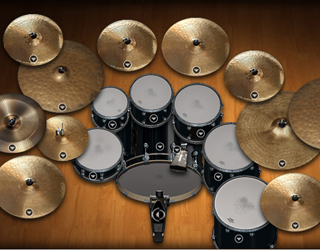
SD2’s interface is a veritable Starship Enterprise of controls and displays. In standard view, the construct window features a graphical display of a drum kit and cymbals corresponding to the available instruments. Sections for Instrument, Envelope, Pitch, Volume, EZ mixer and Memory & Status as well as drop downs for tool settings and library access provide a wealth of controls for working with the different sounds that SD2 has to offer. Other panels within SD2 provide controls for the full DAW style Mixer, Grooves, Mapping, Bouncing and internal settings.
Although SD2 houses a complex and detailed set of tools and features, it’s never too overwhelming or difficult to use after viewing a few short tutorials and a quick glance through the manual.
SD2 offers an enormous range of features and capabilities that I will detail step by step.
Let’s take a look…
THE BRAIN
What sets Toontrack and SD2 apart, in my opinion, from other drum sampling platforms is the sheer detail. Toontrack has captured every possible nuance of a real drummer playing a drum kit just as it would exist if recorded in your favorite DAW at the studio.
How does SD2 make this possible? Rather than focusing solely on the close mics on individual drums, SD2 allows every individual microphone on the entire drum kit and in the room to be open and useable for any drum strike. In addition, each drum and cymbal strike has been recorded at least 60 times at differing volumes to correspond to the velocities available in the MIDI world (0-127). From the quietest tap to the loudest rim shot, SD2 has captured every instrument in their arsenal with unparalleled detail to give users the ability to recreate the most nuanced, human sounding drum patterns imaginable.
Additionally, SD2 provides a wide range of variables to swap in and out as needed. While each SDX drum pack available has slightly different capabilities, the Avatar pack with SD2 includes the following:
- Clear or coated tom heads
- Each instrument struck with drum sticks, brushes, hot rods and felt mallets
- Felt or plastic kick drum beater
- Bottom snare wires on or off. (Particularly noticeable when sampling toms)
SD2 has also provided nearly every possible type of hit on each of the instruments available. These include:
Snare Drum: Center, Edge, Rimshot, Sidestick, Rim Only, Muted, Flams, Roll, and Ruffs. (Swirls also in brush mode)
Toms: Center, Rimshot, Rim Only
Hi Hats: Closed Edge, Closed Tip, Tight Edge, Tight Tip, Seq Hard, Seq Soft, Open 1-5, Closed Bell, Open Bell 1-2, Open Pedal, Closed Pedal
Crash Cymbals: Crash or Mute
Ride Cymbals: Ride, Bell or Edge
To give you an example of what this means, taking into account just one of the seven snare drums available with the Avatar pack:
60 separate velocity hits x 9 types of drum strikes = 540 hits.
Those hits are each struck every way possible with a hard stick (540), brushes (360), rods (480) and felt mallets (300) totaling 1,680 hits. Finally, all of the drumstick and felt mallet hits were also struck with the bottom snare wires off (3,360). Based on my rough calculations, there are over 5,000 hits for just the first of seven snare drums available in the SD2 Avatar pack! That is truly extraordinary. Variations of this are seen all across SD2 on the toms, hats and cymbals piling up to a mind-boggling amount of organized data.
One final note on the detail available in SD2 is the humanize section. Humanize provides a thorough mix-up of hits to be added in at random from the available pool allowing for the most natural sound possible. Considerations such as differing between left and right hand/foot and volume relative to velocity we’re all taken into consideration for Humanize.
Simply put, no two consecutive hits are ever the exact same strike. To me, this is one of the features that has put SD2 in a class of its own.
CONSTRUCT
The Construct window is the home screen for SD2 where you have access to the main controls. In standard view is a graphical depiction of a drum kit surrounded by the many controls used to manipulate the sound. Each drum and cymbal on the kit can be clicked on to preview its sound and via the small triangle indicating a pull down menu, you can select from a list of available drums.
For instance, the following snares are included and available with the stock SD2 Avatar pack:
• Nir-Z GMS
• Ludwig Black Beauty
• GMS Piccolo 13″
• Slingerland 70s 6.5×14″
• Rogers Wood 4.5×14″
• GMS Ash Shell 6.5×14″
• GMS 5×10″
Once you’ve selected your drums and cymbals you can head to the “Tool Settings” pull down to select all the stick and beater combinations. It should be noted here that not every possible variable has been recorded for each drum. Whenever a variable is not available the drum is highlighted by a red exclamation point and the pull down label has an asterisk.
As stated in the manual, the bottom section of the construction window features essential functionalities, which are easy to access regardless of what window you’re in. From left to right:
- Memory & Status: An overview of RAM usage and sample loading. Here, you’re able to greatly reduce the amount of ram used by pressing the Cache button to only load the articulations that are used in your midi sequence into ram.
- The EZ Mixer: A simplified mixer giving you instant access to a single microphone for quick volume level dialing, panning or overall bleed adjustment.
- Master Volume: Transport and overall volume output control.
- Voices and Layers: Used to optimize SD2s demand on computer resources by limiting the instruments polyphony and RAM by dialing exact layer populations.
- Instruments: Instrument relative volumes can be adjusted, including balancing the articulations available across the set. Also used to map and quickly learn incoming midi notes.
One of the most inventive and exciting features in SD2’s Construct window is the X-drum section.
X-drum allows you to add additional drums or percussion pieces to their kit from any of the libraries in their arsenal. Once added, the user has the ability to select which mics are to be used with the new drum, adding new channel strips for each which show up in the Mixer section.
A great example of this feature would be a user who has loaded drums from Toontrack’s Custom & Vintage pack (an excellent but very dry selection of drums). Using X-drum, the user can add a snare from a different studio such as Allaire (NYC Vol.2 pack) and select only the ambience mics to be used with the new X-Snare. Using the join feature from the mapping page (detailed below) the user can now join the snare ambience mics from Allaire to any snare drum selected from Custom & Vintage. This has effectively added fully mixable room ambience tracks to a drum kit that was originally recorded very dry. To me, this is one of the most powerful features of SD2.
MIXER
SD2 houses a fully functional DAW style mixer allowing you to route each instrument’s microphones to busses and outputs. Internal effects, if needed, are also accessible here.
As stated in the manual, each microphone used in the recording session has a dedicated channel strip and can be routed directly to one of the 16 outputs, or sent to any of the 16 available busses. The Mixer page is where you can also define exactly what amount of direct signal or bleed should be sent to a particular bus. Try doing that in the real world!
The mixer page is packed with features that allow full control over the mix of your drum kit. A great example of this is the STEREO REV button, which allows swapping the full stereo image from Left to Right instantly with the push of a button. This is a fantastic time saving feature for switching from the drummer’s to the audience’s perspective quickly depending on the project you’re working on. Each individual channel strip has a presets pull down menu which allows easy access to channel presets for Kick, Snare, Room, Hats and Overheads. Full drum kit presets and producer present packs (sold separately) are also available which will load new settings into every facet of SD2 based on the preset.
In my personal experience, I’ve found that the drum sounds inside SD2 always sound best completely dry and free of processing – the way the engineer intended them to sound.
The FX insert section provides EQ, Filter, Gate, Comp and Transient design plug-ins powered by Sonalksis. These are high quality plug-ins which allow quick and easy manipulation of individual microphones within your SD2 session which is great for pre and sub-mixing.
One of the best features of the Mixer page is the ability to break out individual channels from SD2 into Aux tracks of your DAW. Simply pressing the output button and selecting the desired channel achieves this. Once you’re routed in SD2, create an AUX track and select the input as “plug-in” and the matching input. Now your individual microphones from SD2 are mixable as if they were audio like anything else in your DAW.
GROOVES
The grooves page allows users to access and control the internal MIDI engine of SD2. Here, you have access to all the libraries of MIDI content that come standard with SD2 or have been purchased separately.
Toontrack’s MIDI groove libraries are phenomenal and really showcase the true power of the engine. All MIDI grooves were played by an expert drummer playing electronic drums giving Toontrack’s grooves a truly human feel unlike any other drum sample platform I’ve heard.
From the left, grooves are broken up first by library, then by feel such as straight 4/4 or swing 6/8. The next cascading page shows all the available variations such as HATS INTRO, HATS CLOSED, CYMBAL VARIATIONS, FILL VARIATIONS etc. From there we’re able to view each different type of groove available. Finally, the last panel to the right provides info on exactly which kit pieces were used in the groove. The entire groove page is very intuitive and packed with smart features like the ability to double on a groove or even on a single kit piece used in the groove to solo exactly what is being played.
Dedicated controls in the grooves page allow for playback at full, double or half speed. Grooves will play at the recorded tempo or selecting the metronome button allows for playback at the DAW’s set tempo. The velocity knob allows the ability to turn the overall velocity of the groove up or down. This is a fantastic way to hear the true detail of SD2. By simply playing a groove and turning the velocity up or down, you can hear the drummer physically play louder or quieter as opposed to the samples simply being louder or quieter. This is an incredible achievement taking into consideration the amount of programming and processing power required.
All of the grooves are easily dropped into your DAW’s timeline by clicking and dragging. The grooves page allows users to build complex and human sounding drum patterns from scratch very easily.
MAPPING
SD2s mapping section is where the real customization takes place. Here, users can access and change the assignment of incoming MIDI notes to instruments in the drum kit. Mapping is also used to manipulate the articulations that make up the hits.
For more advanced users, MAPPING is where you can stack or join drums together, allowing multiple drums to be triggered simultaneously. The JOIN feature is how a user can add ambience mics from one studio to a snare drum recorded somewhere else. It’s important to note that while the JOIN feature allows two different drum hits to play back simultaneously, control for each drum or sound always remains separated and mixable in the MIXER window.
BOUNCE
The bounce page allows for offline rendering of all MIDI created and used within your SD2 session into physical audio files. This allows you to create a full set of multi-track audio from your MIDI session which can then be imported back in and edited, mixed and treated as if it were anything else recorded for your session.
SETTINGS
Finally, the settings window is where SD2 preferences and library paths are stored and selected.
IN USE
Because I’ve been an SD2 owner for a couple of years prior to this writing, I’ve spent a great deal of time with it. I can say honestly that SD2 has been used on every project I have mixed in the past two years.
As a mix engineer, I generally use SD2 to supplement existing real drums recorded for my sessions. Therefore, my first step is always converting kick and snare audio tracks to MIDI. I choose to use a third party AudioSuite plug-in for this job (Massey DTM “drums-to-MIDI”) which is quick and easy. Toontrack has its own standalone drum to midi converter called Drumtracker (available separately).
Most recently I used SD2 on mix sessions for Toronto band Enter the Haggis on their upcoming album Whitelake. The recorded drums on tape came to me sounding good overall but lacking a bit of definition in the low end and were in need of a fair bit of help to achieve a more punchy and dynamic sound. I chose the 18×22” GMS kick drum from Avatar and a combination of two snares, one from Avatar and one from Allaire (6.5×14” Ludwig Black Beauty and 7×14” Ludwig Wood Vintage 1930’s).
As I mentioned, I generally don’t use any internal SD2 processing or presets but simply use the drums coming out of SD2 dry because they sound simply fantastic out of the box. The kick drum has a full and well-articulated low end with just enough snap. In the mixer page I’m able to quickly solo and adjust mics for Kick In, Kick Out, Kick Sub and Overheads as well as the ambience mics to taste. Blended together, the two snares I chose had a great deal of body and thickness and supported the natural drums perfectly when blended 4-5 dB below the original snare.
The opening track on the Enter the Haggis album in particular benefited from the SD2. The intro, first verse and chorus came in with one floor tom played with a mallet live off the floor during the session. I decided that these sections could really jump if they were supplemented with multiple floor toms spread out across the stereo image as if played by a group of people to sound very orchestral and tribal. This is where SD2 shines. I was able to convert the single floor tom to MIDI and spent a fair amount of time digging in and adjusting the velocities so they were perfectly matched. I then selected different floor toms in different rooms all adjusted by varying degrees to create a really lush percussive landscape that simply didn’t exist when the tracks originally came to me.
Hear the original and supplemented Enter The Haggis drum tracks below:
Audio clip: Adobe Flash Player (version 9 or above) is required to play this audio clip. Download the latest version here. You also need to have JavaScript enabled in your browser.
I have also dabbled in using the grooves section to create full drum parts for demos and writing purposes. As I mentioned, the grooves included with SD2 are high quality and played by an expert drummer on a full eletronic kit. The attention to detail within each instrument, particularly at low velocities is truly awesome. The ability to drag and drop allows for quickly mixing and matching different grooves and fills to create an exciting, dynamic drum part very quickly.
Overall, the sounds inside SD2 and each available pack are in my opinion the best out there. Every instrument sounds full and crisp and has a sound unique to every other drum in the pack. Because SD2 really is all about the sounds, I’ve included a showcase of drums and cymbals at increasing velocities as well as groove examples:
TOMS
Audio clip: Adobe Flash Player (version 9 or above) is required to play this audio clip. Download the latest version here. You also need to have JavaScript enabled in your browser.
RODS
Audio clip: Adobe Flash Player (version 9 or above) is required to play this audio clip. Download the latest version here. You also need to have JavaScript enabled in your browser.
KICKS & SNARES
Audio clip: Adobe Flash Player (version 9 or above) is required to play this audio clip. Download the latest version here. You also need to have JavaScript enabled in your browser.
HATS
Audio clip: Adobe Flash Player (version 9 or above) is required to play this audio clip. Download the latest version here. You also need to have JavaScript enabled in your browser.
FELT MALLETS
Audio clip: Adobe Flash Player (version 9 or above) is required to play this audio clip. Download the latest version here. You also need to have JavaScript enabled in your browser.
CYMBALS
Audio clip: Adobe Flash Player (version 9 or above) is required to play this audio clip. Download the latest version here. You also need to have JavaScript enabled in your browser.
BRUSHES
Audio clip: Adobe Flash Player (version 9 or above) is required to play this audio clip. Download the latest version here. You also need to have JavaScript enabled in your browser.
16×16 GMS Coated Floor Ambience Only Hot Rods
Audio clip: Adobe Flash Player (version 9 or above) is required to play this audio clip. Download the latest version here. You also need to have JavaScript enabled in your browser.
6.5×14 GMS Custom Nir-Z Ambience Only
Audio clip: Adobe Flash Player (version 9 or above) is required to play this audio clip. Download the latest version here. You also need to have JavaScript enabled in your browser.
MIDI GROOVES
AVATAR ROCK GROOVE
Audio clip: Adobe Flash Player (version 9 or above) is required to play this audio clip. Download the latest version here. You also need to have JavaScript enabled in your browser.
AVATAR JAZZ BRUSHES GROOVE
Audio clip: Adobe Flash Player (version 9 or above) is required to play this audio clip. Download the latest version here. You also need to have JavaScript enabled in your browser.
TO BE CRITICAL
Surprisingly, as of this writing there is no available audio to MIDI converter from Toontrack that can be used inside my DAW as an Audiosuite plugin. Toontrack’s current Drumtracker software can do this job but it’s a standalone app. Aside from this my only criticism would be that I’ve found SD2 to be quite a CPU/RAM hog from time to time so I generally bounce my tracks out early on in the mixing process once I know I have the sounds I’m going to use.
IN CONCLUSION
SD2 is packed with features and Toontrack has paid extreme attention to detail. I can say with confidence that the drum sounds inside SD2 are quite simply the best sounding, most natural reproduction of acoustic drums available anywhere on the market. For $349 you are essentially purchasing a drummer, an engineer and a world-class studio in a box.
Also worth noting: the folks at Toontrack have mentioned to me that there are a few new SDX packs they’re working on for release over the next year that I will follow up on here. The first of these packs is said to be many times more detailed than anything they’ve ever done which is saying a lot!
For more information, visit www.toontrack.com and the Superior Drummer 2.0 homepage.
Zach McNees is a Brooklyn-based producer/engineer/mixer and live recordist who’s worked with Bjork, Rob Thomas, Julia Nunes, The Gregory Brothers, Pixies, Liars and Alice Cooper. Get in touch with Zach via www.zachmcnees.com.
Honor Society, VHS or Beta, Esperanza Spalding, Joe Jackson Visit Avatar
June 23, 2011 by David Weiss
/* Filed under News */
Avatar Studios was a beehive of sonic activity last month, reporting sessions spanning pop, rock, jazz, classical and more.
In Studio C, Joe Jackson was recording his upcoming self-produced release through the Neve VRP 72 console with engineer Elliot Scheiner. Aki Nishimura assisted.
GRAMMY Award winner Esperanza Spalding was recording her upcoming release co-produced with Q-Tip in Studio A, with its legendary live room and custom Neve 8088. Engineer Joe Ferla was assisted by Fernando Lodeiro.
VHS or Beta mixed in Studio G on the SSL 4000G+ with engineer Martin Brumbach, assisted by Fernando Lodeiro.
Honor Society recorded on the SSL 9000J in Studio B with producer Adam Blackstone. Engineer Jon Smeltz was assisted by Tim Marchiafava.
A jazz single to benefit the victims of Japan earthquake/tsunami was written and produced by guitarist Masuo Yoshiaki. NYC jazz musicians Tim Ries, Lew Soloff, Makoto Ozone were also on hand. Katsu Naito engineered and was assisted by Bob Mallory.
In Studio A, the Manhattan Chamber Orchestra recorded with producer Howard Cass. Engineer David Merrill was assisted by Fernando Lodeiro.
The Music of Mary Lou Williams with Carmen Lundy was recorded in Studio A. Producer Peter O’Brien oversaw the action with engineer Anthony Ruotolo, assisted by Fernando Lodeiro.
Back in Studio B, Freddy Cole recorded with producer Todd Barkan. Engineer Katherine Miller was assisted by Bob Mallory.
Revolving back around to Studio C, Mike Stern worked with producer Jim Beard, engineer Phil Magnotti, and assistant engineer Bob Mallory.
Return of the Nomad Engineer II: The Top NYC Studios of Freelancer Ari Raskin, Part II
March 7, 2011 by David Weiss
/* Filed under NYC Spotlight, SPARS Feed */
CHELSEA, MANHATTAN: Last week, in-demand NYC freelance engineer Ari Raskin (Whitney Houston, Wyclef Jean, Meshell N’Degeocello, Black Eyed Peas, Kanye West, J.Dilla and Illa J — Yancey Boys, and Justin Timberlake) let us in on five of his top studios in the city. Now, he clues us in to four more local options for capturing supreme sound.
Rough Magic Studios; Greenpoint, BKLYN
Every once in a while someone convinces me to step outside my usual 1-mile radius and travel into Brooklyn to do a session here. It’s a couple of nice rehearsal spaces/live rooms combined with a couple of real chill control rooms. It’s run by the musicians who rent the space, and it has a much different vibe than a typical studio.
They don’t seem to be interested in making big profits; it’s more just a spot to get some vocals tracked, or jam and record your band for not a ton of money and without having to leave Brooklyn. Fun vibe there.
Recently I did sessions there for Chapter 2, The Fyre Dept, and Pharoahe Monch featuring Jean Grae. It’s good for writing, overdubs, small bands and Greenpoint/Williamsburg-based artists.
Avatar Studios A, B, C; Hell’s Kitchen
I would assume most readers already know about this place (and most of these places I’ve mentioned). It’s one of only a few studios actually still capable of everything that would have been normal 10 or 20 years ago. If you want to use 2″, it won’t be a disaster (it will be almost everywhere else in the city). Big board mixes with lots of gear – not an issue. Huge tracking sessions with 15 tube mics and 10 private cues – happens regularly.
The assistants are probably better engineers technically than 95% of the music engineers working in NYC. They own almost every classic piece of gear, multiples of most, AND working properly. They have a large VR in Studio C, not easy to come by lately — no one cares anymore but me! I like Neve VR’s, they have balls. Back in the 90′s, when albums sounded good, a lot of stuff was mixed on VR’s. Their vintage Neve in Studio A works quite well for its age. And the main plus — the live rooms in A, B, and C are all incredible-sounding.
My recent sessions there include Erin Barra, Rich Hil. I recommend it for rock bands, jazz bands, scoring and orchestral sessions, overdubs of instruments or vocals — anything you’d want tube mics, Neve pres, and a serious live room for. In other words, for when making an enjoyable-sounding record is the goal.
MSR Studios, Studio A; Times Square
This is another real well-known room. MSR is the only studio I can think of left in NYC that’s actually capable of EVERYTHING. Remember when it was a standard for every major studio to have 2 Blackface 1176′s, 2 LA-2A’s, a DMX, an RMX, a plate, a 165, a pair of 160vu’s, a 480L, an SPX 90…? This is the only place I know of that still has these tools as well also having top notch monitoring and comfortable control rooms.
Some studios have gear but don’t have comfort, or good room tuning. Other studios have comfort but the gear is minimal. MSR actually has everything, and a good staff to set it up properly. The mic collection is huge too. They have A827′s. Studio A’s live room is huge with lots of isos and nice high ceilings, and the piano is no joke either. The control room sounds great too. Studio C’s control room mains are BANGIN’, and the lounge in Studio C is probably the nicest lounge in NYC — not the first consideration, but it reminds me of the level of service you’d get at Hit Factory or Sony back before they closed.
My recent sessions there include Claude Kelly, Wyclef Jean, Dayme. Recommended for pretty much anyone and everyone, from rock or jazz bands to songwriters to mixers, to film crews. Though for those who don’t want to, or can’t, spend the money to make a record “the right way” or just don’t need anything so extravagant – MSR might not be the first choice.
Robin Thicke‘s temporary home studio; SoHo
Last fall Robin’s manager called me saying Robin was going to be in New York for a few weeks and wanted me to track instruments and vocals at a loft apartment he was renting at the time. Between Robin, his producer ProJay and myself, we put together a list of stuff we needed and gave it to Jim Flynn (they also were wise enough to throw in some forgotten necessities).
Robin wanted to write and get ideas, but of course a bunch of what we’d record would end up being final, and Robin likes to do things right (as long as it’s quick). He understands the importance of good gear, so we rented four 1073′s, a CL 1B, an ELAM, an HD-3 rig, a Big Knob, another headphone amp, a few pairs of 7506′s, a Motif xs8, some DI’s, and me and ProJay brought in some of our own mics and other gear.
The apartment was one of those huge SoHo lofts with high ceilings, so it was quite ambient, which Robin was cool with and wanted all over the recording. This idea of putting a temporary but pro studio together worked out well, saved money in comparison to booking an equivalent studio, and it allowed the artist to literally roll out of bed, tell me to hit record, and kick me out 16 hours later when he was ready to go to sleep.
The vibe of the sessions was good too; we recorded all types of songs, all types of instruments, and never touched Autotune. It was a great idea looking back on it, and I figured I should bring it up for this article as it’s just another example of being a traveling freelance engineer.
You can find Ari Raskin at REThuggz.com and AmIaGoodSinger.com.
Return of the Nomad Engineer: The Top NYC Studios of Freelancer Ari Raskin, Part I
February 27, 2011 by David Weiss
/* Filed under Deli Feed, NYC Spotlight, SPARS Feed */
CHELSEA, MANHATTAN: No one can say Ari Raskin hasn’t paid his dues. This in-demand freelancer engineer may regularly make the rounds of NYC’s top studios today, but it’s only after he’s sweated it out for a decade-plus, making a name for himself in the city’s fiercely competitive studio scene.

Ari Raskin in his element: with producers Mysto and Pizzi, and artist Wynter Gordon in Chung King's famed Blue Room (RIP).
Raskin can contribute in many ways to a project – tracking, mixing, editing, drum programming, and even the occasional master – and has done just that for a wide range of artists: Whitney Houston, Wyclef Jean, Meshell N’Degeocello, Black Eyed Peas, Kanye West, Kid Cudi, J.Dilla and Illa J — Yancey Boys, and Justin Timberlake among them. His career got moving after he departed Berklee College of Music with the goal of being the next Brendan O’Brien or Andy Wallace, then went from being an intern at Chung King to House Engineer.
Today, no longer afforded his home base that was Chung King, Raskin makes music all over Manhattan and beyond – a positive vibes traveling man that makes him the perfect subject for the return of our Nomad Engineer series.
How would you describe the ups and downs of a New York City freelance audio engineer in 2011?
The real benefit of freelance engineering and traveling is getting to choose which studio is right for the project — be it the sound of the live room, the sound of the control room, the vibe of the control room, the gear, the rigs’ plugins, the budget, or just how late the staff stays — so that you can comfortably make a great recording that fits the music. Also, having clients agree that you suggested a good studio for them is a nice thing too.
If you’re a staff engineer at a small Pro Tools studio with a 5′ x 8′ live room, and a rock band is introduced to you by the studio manager, you’re never going to be able to tell them, “We should do the rhythm section at Avatar or Skyline. You’re never gonna get real big drum sounds here, and these reissue mic preamps and 414′s just don’t have the real rock-star vibe you’re after.” Although of course most of us now would just shut up and do the modern thing and use Drumagog or SoundReplacer.
I’d like to note, though, that when I first stepped into the major-label part of the recording industry when I moved to New York 10 years ago, there were LOTS of freelance engineers working from studio to studio. It seemed much less common for labels to use house engineers unless it was for a transfer session. Engineers definitely used to be more highly regarded before everyone and their sister had Pro Tools, so I think that’s why hiring the respected freelance guys was much more the norm in the day, whereas now labels just want a house engineer who knows how to use Pro Tools and isn’t expensive.
Lately, whenever I run into former Chung King clients at other studios, I constantly get told “Oh, I didn’t know you were still working since Chung King closed,” or “You work here now?” as if the idea of a tracking engineer being freelance is now an unknown concept.
We’re glad to get the inside track from you on your fave NYC recording spots. What made you say “Yes” to this article, rather than keeping your top studios close to the vest?
Seemed like a fun topic, and I do work around, and do have opinions on a number of various rooms. I just wish there were more large-format rooms in this city, with all the standard vintage outboard gear and mics. Five years ago there were a lot more real-deal pro-studio choices, and 10 years ago a lot more than that. It’s getting hard now, especially when your first choice-room is already booked, and you’re actually trying to do a serious recording and not just track vocals. Therefore…
Downtown Music Studios, Studio A; SoHo, NYC
Many positives about this place. For one, there isn’t a vibe like they are dying for business and need to squeeze every penny they potentially can out of your clients. Also, the ProTools rigs have more plug-ins than any other rigs I’ve seen. Unlike so many rooms, the studios at Downtown were planned and configured by good working engineers, so things make a lot of sense in real world practice.
Studio A there is possibly the most accurate-sounding control room in the city that I’ve worked in, and has no room EQ on the mains. The almost-mint Neve 8014 console they just installed is not only amazing for its sixteen 1084 pres for tracking, it’s also possibly the best summing amp in Manhattan for Pro Tools in-the-box mixing. There’s also a ton of clean vintage and high-quality modern gear — they won’t let someone who doesn’t know what they’re doing assist in sessions.
The live room in Studio A is very clean and neutral-sounding, great for tracking vocals, instrument overdubs, or a live band. You can easily get a dry drum sound, or put up some far room mics, 1176 them, and get a big rock sound. Studio B has a great rig as well, with good external converters, a totally different vibe from Studio A, and is probably the most-equipped room for the money in Manhattan.
Some of my recent sessions there include Sean Paul, Black Thought, Kat Deluna. I’d recommend this studio to any type of client, other than a gigantic orchestra or those craving a huge castle drum sound, or those wanting to mix on an SSL. The Neve console they have has no automation, but for mixing a jazz, acoustic, or a small production, it sounds incredible.
Platinum Sound Recording, Studios J and K; Times Square, NYC
The “sexiest” of the big studios in NYC. I think it’s the only studio I know of — not that I claim to have worked in every studio — that has a designated receptionist and interns always ready for runs, 24 hours a day. That might seem like a minor detail, but for those who have clients who like to work past midnight, it’s a major concern. Very cool vibe, cool staff.
They have a real live K, and a J — and unlike most SSL’s in NYC, they get used for mixing regularly still, so the assistants aren’t new to that: big board mixes with old-school engineers who use lots of gear are often the most demanding type of session for an assistant. Also, I haven’t heard the new Augspurger speakers in studio K, but the J room has the HEAVIEST bass of all time — although Studio C at MSR is quite thumpin’ too.
Some of my recent sessions there include Wyclef, Kat Deluna and Ritz Crackers. This is a good studio for SSL board mixing; good studio for late-night artists/producers; decent-sized live room with some good mic pres, so it’s not a bad choice for producers who like live instruments. The best for those who like it so loud their faces melt and eardrums shred. Great for those who like to vibe and create.
Premier Studios, Times Square, NYC
Premier is the former Studios A and B of Quad, renovated and heavily cleaned up, with two newer, very good Pro Tools “writer’s” rooms, very fairly priced. Studios A and B were both recently tuned and both sound accurate and get quite loud. The live room in B is great for a clean drum sound, and great for any vocal or instrument overdub.
The staff there is eager and friendly and understands the concept of working towards the future — in other words, they don’t take the clients that come in for granted. They have real LA-2A’s in most rooms — which didn’t used to be unusual anyway — and they are maintained.
Another great thing — they have four rooms, all with excellent Pro Tools rigs with all the necessary plugins, so if a room is booked, there’s still likely others open. How many other 3+ room studios are left and commercially-bookable in NYC today? Also, so many other studios are opening now with gear you can also easily get at Guitar Center, and not enough real mic pres or compressors in the room, forcing clients to rent every little thing (which, along with today’s tight budgets, can make a freelance engineer seem needy). Instead, Premier seems to be constantly investing and trying to improve their gear arsenal to impress engineers and producers. The recent addition of two perfect vintage Neve 1073′s and the overhauling of their Studio A Steinway piano are both welcome improvements and important tools for making great recordings.
My recent sessions there include Oh Land, Duane McLaughlin, Rich Hil, Kat Deluna. Premier is great for J9000 mixing, Pro Tools in-the-box mixing, instrument and vocal overdubs, pop songwriting sessions, and jazz and rock bands that want some real isolation but don’t want to pay for one of the city’s massive rooms.
Grand Street Recording, Williamsburg, BKLYN
I only worked there once, but I think it’s by far the best studio for tracking instruments for the money. Amazing selection of vintage mics, pres, keyboards, amps, and drums — nothing I used there seems modded or overly repaired, and none of the current reissue stuff (that doesn’t actually have any magic. I’m a snob about having the real vintage stuff, clearly).
The staff is knowledgeable too. The ceilings aren’t that high and live room isn’t terribly ambient, but for plenty of bands it’s perfect. You can make a real, classic-sounding, proper recording there for not a lot of money. And their vintage mics may be in better shape than any other studios I know of.
I recently did a tracking session there for the jam/rock band Moose Convention. I think Grand Street is great for rock or jazz band tracking — live and overdubs — and vocal tracking.
(Editor’s Note: An earlier version of this article incorrectly referred to this studio as Grand Street Studio. It should have referred to Grand Street Recording.)
jrock Studios, Chelsea, NYC
I saw you guys did a piece on Jamie Siegel and his studio recently, and I will second that it’s a cool spot. Great location, nice dry-sounding live room that has some breathing space so it doesn’t sound like you’re tracking in a closet, some nice pres, and a real chill pleasant vibe, good for getting work done. And of course, not nearly as pricey as the big SSL rooms.
Recently I did some vocal and percussion sessions there with singer/songwriter Erin Barra. Recommended for anyone who wants a relaxed spot to do overdubs, writing, or Pro Tools mix sessions.
Next Week! Return of the Nomad Engineer Part II: More finds, from Midtown to Greenpoint.
You can find Ari Raskin at REThuggz.com and AmIaGoodSinger.com.
Post Sweet Spot: Hobo Audio Company
January 9, 2011 by David Weiss
/* Filed under NYC Spotlight */
Facility Name: Hobo Audio Company
Website: www.hoboaudio.com
Location: Hell’s Kitchen, Manhattan
Neighborhood Advantages: Near all major transportation hubs and excellent restaurant choices
Date of Birth: October, 2006
Facility Focus: As a company specializing in audio post production, we offer the following services: Recording, editing, surround mixing, sound design, music composition, VO casting and making great coffee.
Mission Statement: “Will record for food.”
Clients/Credits: Major ad agencies, TV production companies and film makers
Key Personnel: They are all key
System Highlights: Two Protools HD3 Accel systems, each with an ICON D-Command console. A 2-Channel GoldMike Preamp and 8-Channel DigiPre. Massive Custom SFX Library, powered by Soundminer. All this being said, it’s the creators behind the equipment that really highlight the work we do.
Distinguishing Characteristics: We consider ourselves partners to our clients, to help them achieve their creative goals through audio excellence.
The building is on fire, you only have time to grab ONE thing to save, what is it? My issue of Sonic Scoop.
Rave Reviews — what do people love about your studio? You’d have to ask them but my impression is they love the experience and the environment, from the audio sound to the people they work with here.
Most Memorable Session Ever: I enjoyed working with Janelle Monae for a huge animated project by record producer Jack Splash.
Session You’d Like to Forget: Fortunately for me, I’ve already forgotten.
Dream Session: James Cameron working on the sound for Avatar.
– Howard Bowler, Founder, Hobo Audio Company
The SonicScoop Year in Review: Top NYC Music Business News and Trends of 2010
December 29, 2010 by David Weiss
/* Filed under Music Biz */
THE FIVE BOROUGHS: 2010 has been busy all right. For anyone involved in New York City’s expansive business of music – producer, publisher, entrepreneur, engineer, artist, and many more – the environment remains fast-paced, ultra-competitive and constantly changing.
With 2011 looming, SonicScoop looked for the news, trends and topics that stood out to us over the past 365 days.
In audio post, it was grow or die in the uppermost echelon. The biggest facilities, including hsr|ny, Nutmeg, and Sound Lounge made serious expansions into audio and/or video:
Sound Lounge opened an ADR Stage and multiple studios.
Nutmeg Post added a strong team and facility when it soaked up Soundhound.
The big post house Mega Playground built out audio capabilities.
Northern Lights added a 5.1 audio mixing suite.
Video house Click3X reversed the trend and added their own audio suite.
Large and mid-sized recording/tracking/mixing studios kept making capital improvements and expanding:
Premier Studios took over the 8th floor at 723 7th Avenue.
Engine Room opened up its penthouse studio.
Stadium Red expanded with a new studio for Just Blaze and a mastering suite.
Platinum Studios added Augspurgers to Studio K.
Sear Sound set up the Moog-centric Studio D.
Tainted Blue swapped out its SSL for a Euphonix (nee Avid) System 5.
And props to Electric Lady for marking its 40th Anniversary.
Converse (yes, the shoe company) has an interesting business plan for the Rubber Tracks studio it’s going to open in Williamsburg in 2011: no-cost recording.
Advanced smaller studios – independent and within larger facilities — and producer rooms also opened up at a peppy pace:
Chris Theberge’s Music Works arrived on the Upper West Side.
The former One Point Six in Williamsburg was reborn as Three Egg Studios.
Manhattan Center Studios launched The Fuse Box with Public Enemy’s Brian Hardgroove.
Avatar opened up its Studio W writing room.
Sisko’s Min-Max Studios opened up in midtown.
Guitarist Justin King moved his Vinegar Hill Sound from Portland, OR to DUMBO, Brooklyn.
Avid capped off a furious year of reinvention and new products with the release of Pro Tools 9.
Music houses and composers still had a ton of TV, film and video game work to go after and win:
Joel Beckerman of Man Made Music continued to make NYC a TV music powerhouse.
Composer Peter Nashel turned ears everywhere with his work for shows like Rubicon.
Outfits like Expansion Team scored for networks such as the Biography Channel.
Tom Salta understands how to get chosen to score for games like Prince of Persia and Red Steel 2.
Production music and synch licensing remained a solid business, especially for those who got in at the right time or had a smart approach.
NYC’s Kingsize Music was acquired by 615 Music.
And later on Warner-Chappell (NYC) bought up 615 Music.
NYC’s Videohelper released the “Scenarios” music search tool.
Jingle Punks continued to grow.
Mechanical licensing experts RightsFlow kept progressing.
One of NYC’s most controversial music business plays, peer-to-peer file sharing network Limewire, appeared to be finally finished.
Tracking, mixing and mastering at NYC’s established facilities did a relatively healthy volume of A-level and independent work throughout the year:
The Black Eyed Peas, Rivers Cuomo and Kanye West were at Germano Studios.
Neon Indian, Beach House, Matt and Kim, Bear Hands and more were mastered at The Lodge.
MSR Studios handled Kid Cudi, Evanescence and Broadway Cast recordings.
Lenny Kravitz, The Dirty Pearls, “Glee”, and Vampire Weekend were all at Avatar.
Joe Lambert Mastering worked with Moby and Ninjasonik.
New software and hardware happiness abounded:
Propellerhead released Reason 5.
NYC suffered losses when beloved people and places left us:
Recording icon Walter Sear passed away.
The great hip hop/jazz experimentalist Guru was gone before his time.
Clinton Recording Studios hosted its last session.
Brick and mortar music retail took another hit when Fat Beats shuttered its last stores.
Baseline Studios, home of Just Blaze and countless Jay-Z hits, closed.
Chung King Studios started off 2010 with a bang by suddenly vacating Varick Street.
NYC-based producers, mixers, engineers and artists became businesses in their own right:
People like Allen Farmelo developed their distinctive sound.
Choice songwriter Claude Kelly made a business of hits.
Shane Stoneback’s career took off via work with Sleigh Bells and Vampire Weekend.
Mixer Mark Saunders embraced multiple aspects of the biz from his studio at Beat 360.
Dream Theater’s Jordan Rudess took his iPad/iPhone app MorphWiz all the way to #1.
The studio scene got a lot more socialicious and FUN:

Two fiesta types plus (r) introspective Stadiumred artist Jeremy Carr. SonicScoop says: HAVE FUN AND PROSPER IN 2011!
Digital Music NY was one of many popular business-based meetups.
Stadium Red partied down post-CMJ.
20dot20 mixed advertising and music.
And the Connectors connected a LOT of people.
What big stories would you include? And what do you see next in 2011? Don’t be shy – leave a comment and let us know!
– Janice Brown and David Weiss
Glee Hit Covers of “Teenage Dream”, “Hey Soul Sister” Recorded/Mixed by Robert L. Smith of Defy Recordings
December 8, 2010 by Janice Brown
/* Filed under News */
Robert L. Smith of NYC-based Defy Recordings recently helmed the record and mix for two hit singles for The Fox show “Glee”. His work on the choral cover of Katy Perry’s “Teenage Dream” helped to score “Glee” it’s first #1 single on iTunes, and the choral version of “Hey Soul Sister” by Train also went to the iTunes Top Ten.
Working with producer Tommy Faragher, Smith recorded Tufts University’s Beelzebubs men’s choir and Glee’s Darren Criss at Avatar’s Studio G, and mixed on that room’s SSL 4000G+.
See Glee’s performance of “Teenage Dream”.
Career Engineering: Allen Farmelo on Recording Cinematic Orchestra, & That Post-Pink Floyd Sound
November 3, 2010 by David Weiss
/* Filed under NYC Spotlight */
CHINATOWN, MANHATTAN/FORT GREENE, BROOKLYN: What headspace are you in? For a music producer/engineer/mixer like Allen Farmelo, getting your talents to that sought-after place is all about finding yourself.
In the process of doing that, of course, people will find you — that explains why one of Farmelo’s fans is an artful outfit like Cinematic Orchestra, the engrossing British jazz/electronic/soul influenced outfit led by Jason Swincoe. The ever-evolving group recently called on Farmelo to engineer their upcoming release for Ninja Tune, a project that he executed in the semi-exclusive confines of Chinatown’s intriguing Mavericks Studio.
Whether working at Mavericks or mixing/mastering at his rapidly evolving Fort Greene facility, The Farm, Farmelo’s primary angle – a sound he gravitates to that he calls “Post-Pink Floyd” – and artist-centric philosophy shows how an NYC audio pro gets on the map. As his list of credits grows (The Loom, Second Dan, Cucu Diamantes, Jonah Smith, Ian Gillan, The Cabriolets, Jesus H. Christ), so does his insight on what makes today’s music, and the business of it, tick.
You’ve been working a lot with Cinematic Orchestra the last few weeks. How would you describe that workflow?
I wouldn’t say it’s improvisational, but I would say it’s a very grand project that operates on a lot of different levels and that there’s a lot of exploration happening. Jason’s done a lot of writing beforehand, and he brings in musicians to flesh out the ideas. The writing is extremely intentional, and harmonically/melodically very plotted out. He knows the goal of those songs.
He’s an amazing producer because he manages to get people to do stuff that works for the song, without telling them what to do. Is he micromanaging? No. But is he getting the micro-details he wants out of people? Yes. So I’m watching him closely and learning from him.
Cinematic’s not like the Beatles where you have the same four members, and without one of them you’re done. Jason’s brought in people he feels will contribute to that particular song in the way he thinks it will happen best. Different singers for different songs, that kind of thing. So far it’s a bit of a different-sounding record than the previous one, and I think the lineup will reflect those changes.
So what’s it like coming into the project as an engineer? Do they let you do your thing, or is it a collaborative process?
Jason knows what he wants to hear, he is extremely good at communicating it, and he lets me achieve that. He can sometimes get right down to the gear. They were working at Livingston Studios in London, using those Coles 4038s as the overheads. He described that setup, and I did that here to get the specific sound that worked well when he tracked in England.
So sometimes he’s very specific, other times he’ll describe a vibe or metaphor to get what he’s looking for, and then the way I achieve that is up to me. Mixing the Grey Reverend record that Jason produced was a lot like that, where both Grey and Jason would articulate well what they wanted from the record. Then I sent them home, said, “Let me do this,” and then let them come back.
My first stab was good on about 70% of the material — and then fell on its face on the other! We talked about that, and they were very good at articulating what they wanted changed. So we freed up some things in the mix, found the center of the record, and let those things happen. As the record went on, I was able to take more ownership of the aesthetic. So the collaboration is very easy and open.
So is it easier to go into this project now that you’re in the same headspace? Are there traditional references to other records he’s listening to as far as the approach, or is it like you’re already aware of what he likes based on the past experience?
Jason has written amazing, amazing music that is dictating everything about what follows. The songwriting is so strong and beautiful that everybody else is just there to serve that song – including Jason. I don’t feel any references to anything outside of those songs happening at all. Instead we’re coming from the center of those songs. And when you hear them, they all have their own character, life, logic, feel, tonality and beauty that’s obvious from the get-go, even when they’re just played on acoustic guitar. You say, “That’s freakin’ beautiful. Let’s make it more beautiful.”
How do you go about taking the song further at that point?
So everything from changing a mic to subdividing a beat to figuring out how to lay a crash down is there to serve that inner logic. Jason makes sure we’re there to serve that inner logic and the inner beauty of the song, and he communicates it very easily. You have the songwriter, the vision, and the songs are giving you tons of information from that.
You don’t have to do that much to know how to get the studio to sing properly for the song, and that’s where I feel I’m trusted to make some good choices along the way. It can be something as simple as, “Wow, slow tempo – let’s raise the overheads and let the drums sing a little more,” or for more complex patterns I might think, “Let’s get things a little tighter.”
For me, setting the tone on the guitar amp is instinctively informed by the guitar pattern. Since we feel very much in tune with the music, we all kind of trust each other aesthetically and say, “OK, let’s make this happen.” There’s not a lot of discussion about this stuff. It’s kind of obvious when things are working or not, everyone’s got great ears.
The thing that’s refreshing about working with these guys is that there’s no ego to get in the way of this discussion, so it’s an aesthetic conversation at all times – a really clean and artistic conversation.
That sounds like a rewarding way to be recording. Why is this studio a fit for this band and record?
Well, Maverick’s fits any project really well, as long as you don’t need to record forty musicians here. I had thirteen here once – that worked surprisingly well. That was a big, amazing, raucous New Orleansy anti-war album. So Maverick’s can kind of do that. We did the strings for Grey Reverend’s upcoming album here – we had a quartet in the main space. I did the whole Loom record, Teeth, which was a six-piece band all playing in the room together. A lot of people come to just do drums. It’s a very versatile space, and as long as your mics are in phase, you’ll sound good. There’s really no crappy-sounding place in here. For the Cinematic record, there’s just something wonderful happening between the songs and the room sound. They match beautifully.
It feels that way. What do you think about the “open concept” (studio in the round) format here?
I’ve been on two Tape Op Conference panels with other people talking about open concept studios, so I’ve thought a lot about it. And of course the most famous reference is Lanois. The number one benefit of it is being able to speak face-to-face with the people you’re working with and not through a talkback system. The alienation of a talkback system is apparent as soon as it’s taken away. It’s so nice to pull off the headphones and talk to the person you’re speaking to.
The drawback is there’s no room for bullshit. Everyone has to be reverent to the music happening. You can’t rattle your keys, text your boyfriend, read Vogue – a lot of what normally happens in the control room can’t happen here. So if you’re not into being reverent, you have to go into the back room where there are no speakers. You’re either in or out.
I didn’t realize I was paying so much attention to what was coming out of the speakers – instead of to the musicians – until I started working in an open studio. It’s a positive for me, but not for everyone – my friend Joel Hamilton jokingly calls us a bunch of hippies that like to sit in the same room together, and he’s kind of got a point as it can be pretty touchy-feely. But the other most obvious benefit is the amount of space I have. We have one of the biggest control rooms in NYC, because we have all this space, and when we’re tracking we can subdivide it any way we want.
If we’d had a separate control room, we’d be like a lot of little studios, but instead we’re like a good midsize studio here. For a facility our size, we have a really big control room and a really big live room. They just happen to be the same space – it’s an incredible way to take advantage of small spaces.
That makes sense. What guides the gear choices here?
First and foremost, we have pairs of everything in the studio: Coles 4038’s, Royer 121’s, RCA BK 5As, Beyer M 160’s, Shure SM7’s, Elux 251s, 87s, 84s, 441s…a pair of everything. The point being that we are really ready to put up a pair of anything on any source, so we are really versatile when recording drums. We can get any flavor stereo overhead and room sound we want.
We used to have a mishmash of preamps, and then came to realize really quickly that we love API, and miss the glue/consistency of having the same preamps working off of a console. So we have 16 of the API 512s. We do have other pres – the Chandler, a pair of original 1073 Neves racked up by Brent Averil…but we have far fewer flavors then we used to, and we love it. We’re thrilled to have the same preamp on everything, because when you bring up the faders it all sits together tonally. We went through the “We could have a little of everything phase” and grew out of it.
We have a lot of really interesting compressors, and a lot of really standard standbys. We have two Purple MC77s, two 1176s, and a pair of DBX 160’s that used to belong to Johnny Cash! We have a pair of Distressors. Where we deviate is the API 2500 – I mix through that 2500 almost exclusively. I have one in my studio in Brooklyn, The Farm, and I have one here that’s always strapped onto my two buss. It reminds me not to over compress and to cascade from the individual channel compressors into that bus compressor. I work with it on all the time, so I know where I’m going to land compression-wise when it comes time to mix.
And there are other non-standard compressors here. We just got the Airfield Audio Liminator Two, which is a beautiful piece of kit, and this Gyrotek Varimu Tube Compressor is stunning – handmade in Denmark. So we have a lot of neat flavors on the compression side, and again, everything is stereo. We have two of everything, so you can run any pair of mics through any pair of pres/compressors.
Do you also mix here, or at The Farm?
I used to mix here, and then I had to mix back at my place because of a scheduling thing – this was like in 2006. So I recorded a record for Rachel Z., which featured Tony Levin, and other great musicians, and due to scheduling and some technical issues I ended up with mixes done on the console here at Mavericks, some summed in Pro Tools here, and some mixed in my room in Brooklyn. When we got to mastering, there were definitely differences – and the analog summed mixes were way better – but my mixes done at home were sounding really good. They were right up there. It was weird: I went to the news stand across the street from my Brooklyn apartment and saw that Rachel’s record was charting in Billboard, then I looked up at my window where my mix room is and said, “Wow, a new era.” So I did what everyone else did: I put together a mix room.
And now my studio, The Farm in Fort Greene, is a serious mixing situation. I have a lot of outboard gear, the Crane Song HEDD which I’m using to print my mixes off a Studer A-80 1/2” machine; a fully acoustically treated room. It’s pretty ideal and I’m doing pretty much all of my mixing there. That allows me to work within the budgets that are coming my way, allowing me to offer better deals to my clients and make a living at it.
That said, mixing here at Mavericks is a wonderful experience. We’ve got the Studer two-track, the center section of the Neotek, which is modified by Purple Audio, sounds wonderful. That console is like the mid-size luxury touring sedan with a badass racing engine in it.
We hear you’re putting together an interesting new console for The Farm. What was the concept, and how is it coming together?
The concept is to have an API Legacy console built from their amazing 7600 channel strips, which each have a 550A EQ, 225L compressor and 212L preamp along with four busses, four aux sends and infinite routing possibilities.
I realized after working on the big Vision console up at NYU’s Clive Davis school and then, days after, tracking at Mavericks with all API 512 preamps that API was a sound I could very happily commit to. But I couldn’t afford, nor did I really need, nor did I want to maintain, a full-on Legacy or Vision console.
The API 7600’s all connect to the 7800 Master Module to form a true, discrete Legacy console with as many channels you want or can afford. So I bought a pair of 7600s to try on a mix session and within about three minutes I knew I’d found my channels, and when I summed through the 7800 Master Module, I knew I’d found my console. Problem was I had to get it built.
Francois Chambard of UM Project in Greenpoint came on board, and our goal was to defy the look and feel of traditional consoles – which to my eye look like either Cold War-era military equipment, a dentist’s office, or some leather bound thing you’d expect Ron Burgundy to tell you he mixed his jazz flute on. I’m a really visual guy, and none of those inspire me, nor did I really want to spend the rest of my career behind one.
Instead we found a great blend between Francois’s sense of modern design and my own fascination with the landscape, architecture and design of Iceland. It’s going to look really different, yet it has the ergonomics of my favorite consoles all bundled together with space for over twenty-four channels, eventually. I couldn’t be happier, and Francois is a bad-ass designer. There’ll be racks and diffusors to match, I’m sure.
Sounds amaaaazing. Switching gears, let’s talk about the NYC recording scene. How would you describe what’s happening here?
There is an incredible energy around making records in NYC right now. Specifically in Brooklyn, there’s an incredibly good, positive foundation of recording happening.
Five years ago we were in distress a little bit, we were watching the big studios close. Now Avatar is still there, Sear Sound is still there – Walter RIP – they’re booked solid. Magic Shop is still there. These amazing rooms that really held close to their missions are still operating and they’re there for us to go in and use as needed. The new era is here, and we’re all relaxing into it.
The market crash happened in 2008, which was a grim year for everyone, but we got used to it. Now it’s a community of people making records. I see NYC as a place that adapted swiftly to a new model, and everyone’s got a room with an increasing amount of gear in it. Between the bigger studio and your own space, records are being made wonderfully that way. There are fewer places to get an orchestra recorded, but a hell of a lot of places for an acoustic guitar overdub!
The big loss is community. That’s not an original thought, but I do miss the community of being with a lot of people doing what you do. Writing for Tape Op helps, being on Facebook helps – when you have status updates, you feel like you’re in a conversation. I find I have to make an effort to find people who do what I do. It’s an effort, but it’s worth it.
So there’s a lot of obstacles to overcome, but musically I think NYC is bringing together the sophistication of indie, jazz and “new” classical music with the street levelness of the rock scene – now it’s almost the norm to have a string quartet on your record. I like seeing those worlds coming together. Maybe because no one can make a living at it anymore, we’ll all play on each other’s records! That cross-pollination is really exciting: Grizzly Bear and Arcade Fire used a lot of NYC string players on their last records, and you can feel a new kind of sound emerging nationally that has a particular stamp on it that, to my ears, says “Brooklyn.”
You’re from Buffalo originally, right? How did you work your way up as an engineer in the NYC studio scene?
I’m very much a self-taught guy. I had a bit of experience working at Trackmasters in Buffalo, now called Inner Machine and owned by the Goo Goo Dolls. It’s an amazing room, designed by John Storyk, and the Goo Goo Dolls are currently packing it with amazing gear. That studio is absolutely iconic in Buffalo’s music scene, and my first time in there I was playing keyboards in my highschool jazz band. We were badass that year, and then all the great players went off to college. It’s funny, I heard that recording recently and thought, “whoh, that’s amazing.”
Anyways, that first experience in a real studio had me hooked, and I soon after got a four-track and had at it. But where I really learned was in the DIY hardcore scene of the late ‘80’s. I did a record at Trackmasters in 1989 with my band RedDog7, then helped some friends make records there. I was kind of producing, but I had no idea that’s what I was doing. We made some seriously good sounding records, actually, and I was obsessed with getting good sounds – I knew guitars, amps, drums, cymbals, strings and even obsessed over sticks and picks. My head was way up in it from an early age, and I was thinking from the player to the instrument to the mic, which I now know is the right way to think.
Then we had a band house for a while, and and then this whole basement situation with the Mackie board and DAT machines. We made deals and acquired gear, recording, doing live sound and playing gigs, and then running this little DIY studio. That’s where I really cut my teeth as a recording guy, struggling to get a decent sound outside of Trackmasters. Over time in Buffalo I had the chance to become a bigger fish in a small pond, which is a nurturing environment, but that pond got too small. It was time to move on, so I came to NYC.
What’s your take on producing? You seem to have a studied approach to that role.
My philosophy of producing is that I try not to carry around any pre-ordained philosophy, but instead to generate a philosophy for the project in collaboration with the artist. I call that “guiding principles” – a very intentional guiding philosophy I try to lock in on and externalize for the project, in case we get lost.
For example, I’m doing a children’s record with the Brooklyn-based artist Shelley Kay, and we have two guiding principles. One is, “Fuck Romper Room”, and the other is “Playful Minimalism.” Fuck-Romper-Room is easy – that means that whenever we’re getting into the mamby-pamby kindergarten shit, hit the red STOP button. And “Playful Minimalism” means that when we’re confronted with a decision we ask: Is it playful? It is minimalist? Those two words show us the choice to make. Between two drum patterns for example, if one is more minimalist, that’s typically the one to go with, and the result comes back closer to our original artistic intentions to keep the production clean.
Another artist that I’m working with, the guiding principle is “Sincere Otherworldliness.” I’m putting him through the paces as a songwriter. He’s been struggling to get his sincerity out, and the otherworldliness is an outwardly-stated goal of his to create a sonic world that’s very different from reality, another world one can enter into. To bring those two together is difficult – if you’re too sincere, you can’t get it spacey and amazing, but if you’re too otherworldly, you can miss being right there with the listener, making it sincere. These principles are meant to be challenging.
In production it’s very hard to stop saying, “I like that, I don’t like that.” If that’s going on in the conversation, you’ll never get to the heart of the matter. If you get past “I like that, I don’t like that” and closer to stating what you want to achieve, something like a guiding principle starts to open up, and you have much more productive conversations about what’s happening.
In my work, that’s the best thing I can give to their project: an open, comfortable dialogue about things, but with structure instead of just being completely wide open. One of the functions of the producer is to help the artist specify what they’re doing, and not be all over the place. Not everyone is making their fifth record and bringing all that experience to the table. A lot of people are making their first or second, and I have to be intentional about my role, because if I don’t we get sloppy.
How did you get to be like that as a producer? It sounds like you’ve evolved in that role, just as an artist does with their music.
It’s not a new idea to find artistic growth as a producer, I don’t think. I have to attribute my own growth partly to Bob Power, one of my mentors. He always says it’s about getting to a place where you’re letting the music make decisions, and I know exactly what he means. That idea inspired me to ask, “Well, how do you get to that place?” Like most great ideas, it’s not complex, but it can be a real bugger to achieve. There are so many things that can get in the way, like ego, fear, imagined or real audiences, commercial pressure, well disguised self-sabotage tendencies – basically anything external to the actual crafts of writing, performing and recording music. For me, to get to that place where the music is speaking clearly requires a pretty intentional approach to how I talk about the work being done, and that’s where the guiding principles idea kind of came from.
More and more of us producers are doing the A&R job of developing artists and their material. If we don’t have record labels, who will do all the development work? It turns out to be the record producer in a lot of cases. It’s a big part of the job. So if I can obsess about a compressor as an engineer, I hope I can also obsess about the dialogue that’s going to shape decisions about the album as a producer. That’s been a big area of growth for me, to enter into dialogue about the work with more and more clarity. It’s really fucking hard work, but when it pays off it’s amazing. I even read books about collaborating, about creativity – whatever I can get my hands on that I think might help. Right now it’s where I’m focusing my professional growth.
That sounds like amazing guidance to be able to provide throughout the process…
Yes, although I should also state that all of that development of the guiding principles, and doing the artist and material development, happens long before we hit record. It’s like pre-pre-production. It goes on long before I’m getting things ready for the actual recording date. It’s more of trying to figure out what the vision of the artist is, and helping them shape it. I’ll say it again, it’s not easy. It’s not the easy path of just saying “I like this, I don’t like that.”

Catch a Waveform: Chinatown's Mavericks pays homage to the famed Northern California surfing mecca of the same name.
The other thing is the kind of music I’m working on can call for this kind of approach. I’ve more recently committed as a mixer/engineer/producer to this specific vibe within modern rock music that I call post-Pink Floyd. Don’t take that term too literally, but one day someone asked that inevitable question “what kind of music do you work on” and I just said it – “post-Pink Floyd.” What I meant by it is this thread of really innovative, beautiful, spacious, compassionate music.
Pink Floyd had incredible empathy, beautiful spaces, beautiful sounds, and brought in influences of jazz and classical without doing them overly in the music. The ideas they brought in were so involved in empathy – it wasn’t, “Let’s go shake our butts and hump each other and party all night long.” Instead, they were dealing more directly with the human condition, and I just wind up working with a lot of artists who seem to have somewhat similar goals lyrically and thematically. So it’s not really about Pink Floyd in particular, but if I had to point to a moment in rock history where this compassionate, open, spacious music began, I’d say “Dark Side of the Moon.”
Cinematic Orchestra exemplifies it. Radiohead and Sigur Ros exemplify it. Elbow’s got it. Peter Gabriel’s work with Lanois has it. In fact, Lanois seems to get it out of people in general – he got it out of Dylan, perhaps for the first time. I work with a lot of artist who seem to want to work towards the aesthetic that are embodied by those examples, even if those records aren’t particular influences. Cinematic Orchestra is an honor to work with, because I feel that they’re harmonically, musically, thematically within that realm. I think they’re masters of space and compassion, and I think the record they’re making is going to blow people away. But that post-Pink Floyd thing comes in a lot of flavors. In American bands I’d include The National, Grizzly Bear, Fleet Foxes, Wilco does it do a degree, and especially Band of Horses. The Loom, whose record I produced, fits under that umbrella for me, even thought they sound nothing like these other bands, really. Again, it’s not really a particular sound, but a set of harmonic and thematic threads that run through the music.
It’s a hard and awful thing to have to put into the limitations of language something you feel and know so intuitively, but I guess that’s the exact challenge I’m putting on the artists I work with when trying to get positive dialogue happening about projects. In a way, post-Pink Floyd is my own kind of guiding priciple as I try to intentionally steer my career in a specific direction. I should probably work harder on clarifying that!
That sounds like an expansive genre to hang your hat on – what else is on the Post-Pink Floyd horizon for you?
I’m currently producing two records that are definitely going to carry some of that vibe. One is with Austin Donohue, who is writing some amazingly beautiful stuff, really finding his themes. He’s the Sincere Otherworldliness guy. The other is with Diana Hickman, who I think is writing some of the most innovative material I’ve heard in a while – like Joni Mitchell and Bjork go SCUBA diving together and surface with a record. Both of them are working their asses off, doing a ton of development work with me. Those will get done this winter.
I’ve also become inspired by Iceland as a place for music and making records. It’s a very sparsely populated, lovely place that just doesn’t go to war or pollute very much, and their landscape and relative remoteness lends itself to music that is really quite unique. When people settled Iceland, they didn’t colonize anybody, and it just doesn’t have this scarred past which so many other places rife with conflict have. It’s quieter. You can feel that lack of conflict and that quiet, and a sense of expansiveness in much of the music there, even when it’s erupting like a volcano.
At least that’s what my tired NYC ears hear. I just went back there in October to the Airwaves Music Festival in Reykjavik and saw amazing bands every night. I’m talking to one in particular about working together, and I really hope it starts to happen for me over there. I’m very interested in putting my foot on that other piece of land.
– Interview by Janice Brown and David Weiss
Stadiumred Launches “Masters Series” On 10/28 with Composer Chance Thomas of Avatar: The Game
October 25, 2010 by David Weiss
/* Filed under News */
NYC studio Stadiumred is beginning The “Masters Series” of expert audio panels, feature panels and presentations by industry “Masters” working in Music, Video Game Audio, TV/Film Audio and more. The series, held at the facility, will also include top engineers, mixers, masterers, producers, composers, managers, agents and business executives.
For the first installment, famed video game composer Chance Thomas will give a presentation about creating the music and sound for Avatar: The Game. This talk is a Stadiumred East Coast exclusive, having only ever been given twice before on the West Coast. Thomas’ discussion on Avatar premiered at this years GDC (Game Developers Conference), standing as the highest rated talk of hundreds given at the conference.
Additional details on the full presentation are here.
Full Coordinates:
Stadiumred Masters Series Presents
Avatar: The Game Music Score Postmortem By Chance Thomas
Thursday, October 28th, 7-9PM
$40 Admission (Online) / $50 (At Door)
$20 For G.A.N.G Members and for SonicScoop readers. Promo Code: scoopsonic
PURCHASE TICKETS:
WWW.STADIUMREDNY.COM/TICKETS
Stadiumred Studios
1825 Park Ave, Sixth Floor
New York, NY 10035
www.stadiumredny.com
Sponsored by: Huge Sound, Blue Sky, G.A.N.G, Stadiumred
Stadiumred Launches “Master Series” On 10/28 with Composer Chance Thomas of Avatar: The Game
NYC studio Stadiumred is beginning The “Masters Series” of expert audio panels, feature panels and presentations by industry “Masters” working in Music, Video Game Audio, TV/Film Audio and more. The series, held at the facility, will also include top engineers, mixers, masterers, producers, composers, managers, agents and business executives.
For the first installment, famed video game composer Chance Thomas will present about creating the music and sound for Avatar: The Game. This talk is a Stadiumred East Coast exclusive, having only ever been given twice before on the West Coast. Thomas’ discussion on Avatar premiered at this years GDC (Game Developers Conference), standing as the highest rated talk of hundreds given at the conference.
Additional details on the full presentation are here http://www.stadiumredny.com/newsletters/masterseries_avatar/masterseries_avatar.html
Full Coordinates:
Stadiumred Masters Series Presents:
Avatar: The Game Music Score Postmortem By Chance Thomas
Thursday, October 28th
7-9PM
$40 Admission (Online) / $50 (At Door)
$20 For G.A.N.G Members
PURCHASE TICKETS:
WWW.STADIUMREDNY.COM/TICKETS
Stadiumred Studios
1825 Park Ave, Sixth Floor
New York, NY 10035
www.stadiumredny.com
Sponsored by: Huge Sound, Blue Sky, G.A.N.G, Stadiumred