DUMBO Studio Ishlab Seeks Long-Term Time Share Tenant

January 24, 2012 by  
/* Filed under Deli NYC Feed, News */

Ishlab Studio, located on the waterfront in DUMBO, is in search of a long-term time share tenant.

Ishlab seeks those in tune with their musical philosophy.

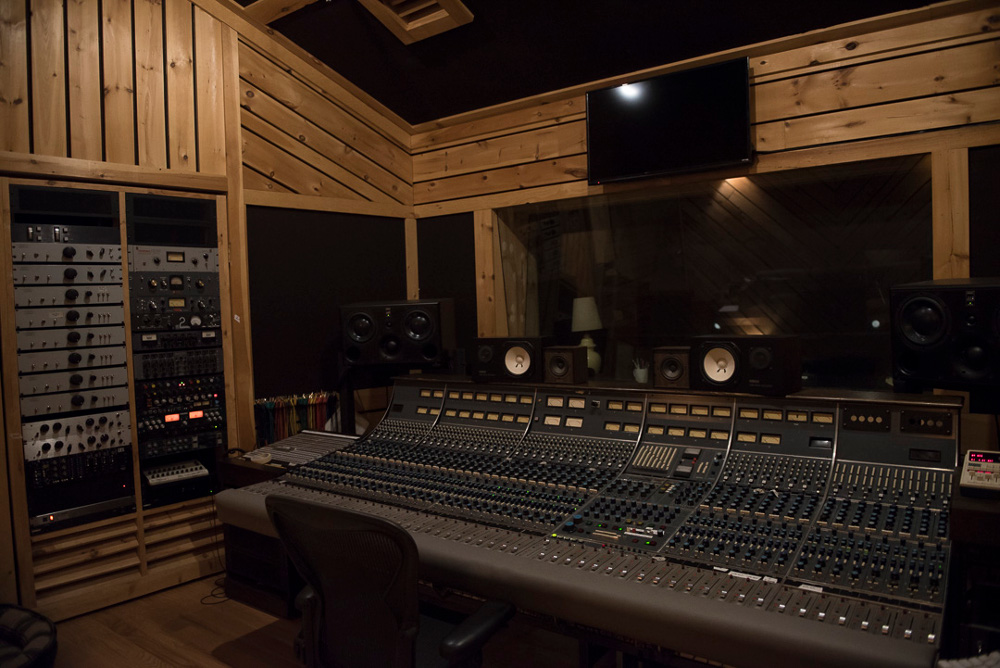
The studio is a versatile space, with a live/tracking room, control room, and B-room lounge, benefiting from 800 sq. ft. of natural light.

Conveniently located a stone’s throw from Manhattan in Brooklyn’s DUMBO neighborhood. Ishlab is a fully functional facility, has been in business since 2000 and has facilitated recording by artists such as Bear Hands, Melissa Auf der Maur, Ladytron, Emanuel and the Fear, DJ Sasha, Nicole Atkins, M.I.A., Roberta Flack, and many more.

The lease includes the use of the studio’s equipment, and three rooms.

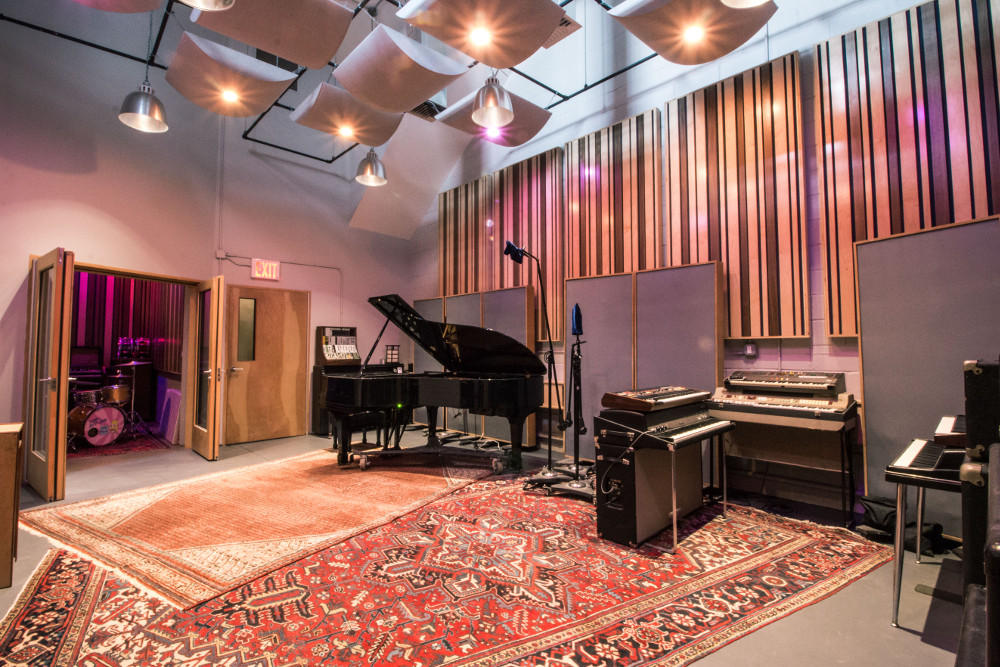
Equipment features a baby grand piano, drum set, vintage synthesizers, guitars, amplifiers, microphones, preamps, plugins, etc…

Click here to see the full control room equipment list and here to see live room equipment.

The Ishlab live room.

Additional equipment from tenant is welcome and a plus.

The lease is offered as a shared studio space. Price is negotiable, with a minimum of 90 hours/month, maximum of 250 hours/month.

For more details, email Ishlab’s owner and studio manager, Jamin Gilbert, at jamin@ishlab.com.


Recording Studio Sweet Spot: Tiny Thunder Audio, Greenpoint

October 30, 2011 by  
/* Filed under NYC Spotlight */

GREENPOINT, BROOKLYN: Bigger isn’t necessarily better. Nestled inside Greenpoint is Tiny Thunder Audio, a compact room designed to maximize sonic ideas.

Serge Espitia has massive plans for Tiny Thunder.

A full-service analog/digital facility, the room was borne into New York City this year by Chief Engineer, Producer and Music Business Consultant Serge Espitia. The Mexico City native toiled as an attorney before turning over to the Light Side of the Force and making music his #1 priority.

At Tiny Thunder, Espitia makes the most of his brain/space to not only record and mix, but also partner with his clients on artist development.

Read forward for all the facts…

Facility Name: Tiny Thunder Audio Inc.

Website: www.tinythunderaudio.com

Location: Greenpoint, Brooklyn, walking distance from the Nassau Ave subway station on the G line.

Neighborhood Advantages: Greenpoint offers an eclectic, relaxed atmosphere. Despite its proximity to NYC, the neighborhood feels like a great escape from the chaos of the city. Greenpoint is also home to a diverse community of musicians and artists, so creativity is always in the air.

Date of Birth:June 2011

Head compression comes standard at TTA.

Facility Focus: While we track and mix all genres of music, vocal and voiceover recording are the studio’s primary focus. Production is also a very big part of what we do.

Our goal is to develop and enhance each client’s artistic vision, and deliver a product that exceeds their expectations. We also provide music business consulting services for artists who are trying to launch or develop their musical careers.

Mission Statement: Our motto “small in size but big on sound” reflects our vision and business model. We believe that everyone should have the opportunity to work with high-end recording equipment without having to spend a fortune in the process. We try to accomplish this by offering affordable rates that can be tailored to satisfy each of our client’s particular needs.

Clients/Credits: Our client lists includes independent artists from all over the world, such as: Cat Caught Lark, Emerson Young, Johann Kolstrup, Ek Entertainment, Elreda, Liz Scott and is constantly growing.

Key Personnel: Serge Espitia

System Highlights: Neve 8816 analog summing mixer, Pro Tools 9 (Waves, Sound Toys) TL Audio and Universal Audio microphone preamps and dynamics, along with a wide assortment of microphones and musical instruments. I am frequently adding new software and equipment to help create a unique, polished sound for my clients.

Distinguishing Characteristics: The studio offers a very relaxed and cozy environment. We really try to provide clients with all the tools they need to express themselves in a fun and creative way, and make them feel right at home in the process.

The Les Paul shall live!

The building is on fire, you only have time to grab ONE thing to save, what is it? The first thing I would run for would be my Gibson Les Paul.

Rave Reviews: I actually get this quote a lot: “Nice little place where you can really get things done”. I guess that really sums up our studio.

We take a no-frills, pragmatic approach to recording, and our clients walk away feeling like they were able to accomplish what they wanted for a reasonable price. We also have a great time in the process!

Most Memorable Session Ever: So far, I think that the Cat Caught Lark sessions have been the most memorable ones. Cat Caught Lark is a neo-folk duo from Denmark, and were recently here for a couple weeks working on their debut album. We worked long days and even longer nights, and a lot of fun recording and mixing a beautiful set of songs.

Session You’d Like to Forget: Haven’t had one (yet…)

Dream Session: Just to think of Led Zeppelin in the studio gives me goosebumps.

Serge Espitia, Founder, Tiny Thunder. Visit www.tinythunderaudio.com for more information and to get in touch.

Behind the Release: Fleet Walker “Morning Void”

September 11, 2011 by  
/* Filed under NYC Spotlight */

SUNSET PARK, BROOKLYN: Even the most natural talent needs some nurturing. And when an emerging songwriter crosses paths with a label that understands the strength of artist development, very good things happen.

"Morning Void" by Fleet Walker is available on CD now, with the digital release set for September 27.

The very latest evidence of this is in with Morning Void, the new album arriving this month from the captivating NJ-bred artist Fleet Walker. A record as explosive as it is fragile in its raw expressiveness, the release holds 12 beautiful tracks for those seeiking the same emotional high they drew from the likes of Jeff Buckley and Elliott Smith.

Walker’s label, 825 Records, did more than just upload the record to iTunes and call a couple of radio stations. After captivating the ears of 825 founder Matty Amendola (profiled in-depth by SonicScoop in June, 2010), the producer/drummer/multi-instrumentalist put his heart and soul into advancing Walker’s instinctual songcraft.

A highly accomplished session player and songwriter in his own right, Amendola partnered intensively with Walker in pre-production and in the studio, then brought out a highly organic listening experience with a mix executed 100% in the box. For up-to-the-minute applications of some wonderfully old-skool wisdom, read on about 825’s approach to filling out Morning Void.

Where are you as a producer and label owner today? Let us know where your head is at.
As a label “From the Studio To the Masses” has been our motto since day one and it always will be. We’re a label that wants completely raw, natural, and honest talent to develop, get them in the studio, put out a great record, give them publicity, marketing, promotion, and help them towards the goal of getting an incredible jump-start into the industry that they deserve.

As a producer and session musician I just have to go with the flow. (Outside of 825) I’m very lucky to have the amount of work that I do. I believe in every single project I work on, but the industry is in a fragile state. It’s constantly changing. Since our last interview I’ve developed 7 artists, produced a little over 20 projects and played on approximately 131 recordings. It’s sad that half of these records will never see the light of day just because of the shape of the industry, but it’s all about going with the flow and hoping for the best.

From that, how did you get introduced to Fleet Walker? And why did you both agree that you would be a good match?
Fleet contacted our Head of A&R Matthew Kruszelnicki, and he forwarded me the stuff to check out right away. He had a MySpace page with 3 or 4 “bedroom demos.” The first demo I listened to was a song called “Faro” and I dug it before the vocals even kicked in.

I heard a really simple-sounding, yet complex picking pattern between a couple of 7th chords which was all psychedelic, enigmatic, melancholic, happy, bubbly and unique and interesting at the same time. The vocal melody, lyrics, and tone of his voice when the verse came in matched all of the same emotions. And even though the lyrics were somewhat abstract, they were creating a clear visual and intriguing story.

I was a fan within 40 seconds. It was music I wanted to listen to, it was music I wanted to write, and Fleet’s approach to tone, sound, and his writing direction really seemed to be similar to my own.

Matty Amendola of 825 Records: merging artist development and the studio.

Nice when that happens! That makes me interested in your definition of a “song” and how your approach to songwriting clicks with Fleet’s talents/capabilities?
In my opinion it’s an emotion adapted into sounds, words, melody… I’m only a fan of honest music.

It’s a magical thing when an artist can portray a sometimes-indescribable feeling into “sound” organically, naturally, and honestly. That’s when music really connects with the listener. It’s something in my opinion that Fleet does so effortlessly.

You said that this record was an interesting project, starting with the pre-production. What did Fleet bring in to pre pro, and how did the two of you collaborate from there to bring the songs for
Morning Void?
I called Fleet to come into the studio to do one song before committing to anything else, and he walked in and started playing me a song called “In a Dungeon at the Bottom Of the Sea.” It was dark, yet catchy in a weird way. He approached simple things uniquely.

The first thing I did was address the “standard producer duties.” All he had was an acoustic guitar part, lead vocal, two verses, and two choruses. I immediately suggested he play the song a half step down for his vocal tone to be warmer, add an intro and a bridge and write new lyrics for the 2nd verse.

In a collaborative effort we completed all of that in about 20 minutes — we worked incredibly well together and thought very much alike. I had him record a scratch guitar track and vocal to the click and sent him home, because I knew the hard part was on its way.

For the next week I sat in the studio listening to that scratch track — it was up to me to develop his overall sound practically from the ground up. I listened to a lot of Radiohead, Elliot Smith, Jon Brion, and Jeff Buckley for production ideas, artists we both love. When I decided to dive into it, I dove into it… In my mind I had three possible drum parts for the entire song i.e three parts that could bring the song in a different direction. I recorded all three of them separately, and then listened to all of them on at the same time. BAM! It took off from there.

Sounds like a good start. What did you do with the drum tracks you recorded?
I love Wave Machine Labs’ Drumagog software – I replaced some drums with different sounds and cut up certain sections between the three drum parts. I had something very, very interesting: I put a very Beatles-esque bass track down, a ton of distorted ambient guitars, feedback, and noise, programmed some subtle Radiohead-type samples and prepared a mix for Fleet to come back in and sing on.

I’ll never forget the look on his face when I played him the track. I didn’t know if he was gonna punch me in the face or hug me. He was speechless. He loved it and after we finished the track, I handed him the label contract on the spot.

Fleet Walker contemplates song creation and evolution.

Good timing with the paperwork! When it came time to record the rest of the album, you said that this record was done all in the box, yet in your opinion feels “live and raw.” How did you go about achieving these sonic characteristics during tracking?
The whole record was done at the 825 Records’ facility, it’s become such a great space. When we started recording Fleet’s record we were still in the process of construction. We were expanding, building a lounge room, conference room, vocal/iso booth, buying new gear, so I think I was already in an experimental headspace.

I made sure every instrument we used had character, too. His acoustic guitar was all beat up but sounded good under mics. We used a ‘59 Danelectro for a lot of electric guitars and that brought some twang and grit compared to the other cleaner strat and tele sounds. There’s also nothing like a violin bass, which is what I used on the whole record.

Besides some of my favorite Earthworks microphones, I also bought a Telefunken AK47, which I used on a session a few weeks before I met Fleet and I knew it was gonna be the mic for him. We tracked all of the vocals with it, and a lot of his acoustic guitars. I even used the Brendon O’Brien technique and stuck it right in front of the drum kit for that crunchy, live sound.  The natural sound of that mic contributed a lot.

We did every single song like we did the first — he’d come in and lay down his lead vocal and guitar to a click, I’d work on the core of the instrumentation for a few days, and then he’d come in to finish it up with me, adding some more guitars, keys, harmony, etc…

One of my favorite drummers of all time, Jim Keltner, gave me some great advice when he explained to me how he approached playing with John Lennon: He told me everyone followed Lennon no matter what. If he slowed down, everyone slowed down, etc… There was so much connection between the feelings and performances and I needed to make sure I captured that same thing when I added my instrumentation on top of Fleet’s.

I tried to keep it as raw as possible. I would give him three takes max for the main acoustic guitar track, and I gave myself no more than two takes with drums, bass, and other core rhythm section parts. No punch-ins, no comps, no fucking copying-and-pasting. I wanted to approach it like recording to tape. Sure enough, it feels live. It feels like it’s Fleet and a band in the room.

Extensive behind the scenes footage of the making of Morning Void is available along with the CD. Check out the trailer here:


There’s some great lessons for songwriting and tracking there. Then how did all this extend to the mix?
We started recording the album in October 2010, and I started finalizing all the mixes in February 2011. It all happened so quickly and as much as I don’t consider myself a mixer, so much of my production happens in the mixing stage and I’d rather have the magical moments come across in the mix that I hear in my head, then give it off to a better mixer with the hopes that it might sound a little better.

Everything was done in the box. Mic placements, instruments, amps, tones, and sounds were something we spent a lot of time on so the tracks felt great right from the start. I did use a lot of long echoes, backwards reverbs, delays, modulators, and stuff like that on the vocals but I kept the instrumentation pretty bare. I used Drumagog 5 and BFD on a lot of the drums, slight compression when it was needed everywhere else, but I wanted to keep all of the dynamics and raw feel.

The record didn’t even go through “real mastering.” I finalized the mixes with an L3 and a broadband EQ for a little bit of volume and translation to other systems and that was it. I wasn’t fighting in the volume war. You know that little thing called a volume knob? Guess what? Every consumer has one.

True, that! We know it’s hard to choose, but what’s a standout track or two on the record, to you?
I really love the final track “It’s Mid December.” It was such a great song when Fleet played it for me and I actually had a song of my own that I took apart to add some of the parts. I can listen to it all day. It’s beautiful and the emotions pour through on the recording.

“Faro” will also always have a special place in my heart, being the first song of Fleet’s that I heard. There’s no official single on the album but “Faro” is kind of the featured track… and check it! I also directed the music video for it that will be released with the album. It was a blast!

(l-r) Matty Amendola and Fleet Walker.

On that note, you said that a big part of what drives what you do is your interest in artist development. Why is this so important for a label to offer now?
Being the kind of producer I am, it’s just how I work. I work one-on-one with every artist and I’m usually their partner, their band, and their professional outlet. I think Fleet is now the poster child for what 825 Records wants to do for artists.

He’s an individual with incredible talent, dedication, and so much love for music that reached out and found a team to give him everything that takes most artists years to find and achieve. He deserves all of it in my opinion and he has raised the bar for all future 825 artists.

My team is handling everything from booking, promotion, publicity, marketing, and everything in between. We already have several major publications and blogs that will be reviewing and featuring the album. Just about every college station in the U.S. and indie stations worldwide has copies of the album, and are starting to add songs into their rotation. We’ve essentially had to build a fan base from scratch so it’s something that will take some time, but between gigs, proper social networking, and people hearing the album, I believe he will have a committed and loyal fan base for quite some years to come.

Most importantly my personal goal for Fleet has been completed. He’s out there, he’s got a great record to look back on for the rest of his life, his name is slowly creeping into industry heads worldwide, and it can only go up from here!

That’s a plan! We’ll be interested to see what happens next. Who are you looking up to these days for Intergalactic Guidance?
I mentioned producer/multi-instrumentalist Jon Brion in our last interview, and he’s probably my biggest influence. I don’t think there are many producers out there who can make records like this: from the songwriting, to the instrumentation, the direction, development, sound, etc. I asked myself one question a lot during the making of this record: WWJBD? Ha!

David Weiss

The CD release of Morning Void is available now, with the digital release on September 27.

Brooklyn’s Newest Studio: Anthony Gallo Opens Virtue and Vice for Production, Tracking, Mixing

August 22, 2011 by  
/* Filed under Deli NYC Feed, NYC Spotlight */

GREENPOINT, BROOKLYN: There’s no substitute for experience, a fact that Anthony “Rocky” Gallo is taking firmly into account as he expands the buzzing Brooklyn studio scene by another degree. His addition to the Broken Land’s soundscape: Virtue and Vice, a just-right room that he’s growing in Greenpoint.

Virtue and Vice Studios has launched in Greenpoint.

Gallo has set up shop as he exits his position of Chief Engineer at Manhattan’s Cutting Room Studios, his professional home since 2003 (he was also briefly partnered in Williamsburg’s 1.6 studios, before it changed ownership and became Three Egg). In the process of working with major names like John Legend, Carrie Underwood, Jon Bon Jovi, Yeasayer, The XX, and KRS1, along with scores of indie artists, Gallo became convinced that there was a need for a New York City tracking/mixing room that wasn’t too big, and wasn’t too small.

Instead of investing in a massive gear list, Gallo has stocked Virtue and Vice with a tight but superior inventory of the components he knows best, and wired them into a naturally light space that facilitates comfort and creative flow. Filling out 800 sq. ft. in a Greenpoint commercial loft building close to the L train, Rocky G believes V&V can excel and succeed in NYC.

What kind of space were you looking for to go into business?
The big thing to me was creating an accurate, great-sounding listening environment. I was looking for windows with good light, a very clean design and affordability. This building had all of those things — and I spent two or three years looking for a room before I settled on one.

My theory is that the old way of making records is completely dead: control rooms, live rooms, machine rooms…the way they did it for 40 years isn’t working any more. I wasn’t trying to create this super-isolated environment with a control room and a live room – instead there’s a large vocal booth with a large control/main space. I was talking to a colleague who said he thought that around $500 a day with engineer is the magic number, and that was my main goal.

In Brooklyn, that approach can work out well for my clients and for me – you can break even without having to be booked every day of the month. I also have two or three other guys that come in, and they can charge a little less if I’m working in Nashville. It’s a flexible thing.

What niche did you design Virtue and Vice to fill?
The reality is that artists spend a day or two doing drums — that’s what it’s been for most of the records I’ve done. So why spend money for a buildout and treatments for a room you’ll use one or two days a month? For the gear, it’s the same thing: I’m buying pres and compressors that will never go down in value. If you’re going to buy something, you should never have to say later on, “That was stupid.”

So really the idea is to get as clean of a signal as you can get for overdubs and guitar tracking. This is a place where you can set the amp up, run the speaker cable and actually hear what you’re doing — all the things you should be capable of that a lot of people ignore, as far as the indie market goes.

Go live at V&V.

Good feng shui was obviously on the top of your mind when laying this studio out.
A mentor of mine told me once that a great couch can mean more than a $15,000 microphone. As sad as that is for me as a gear head, I’ll realize that that’s true, and I’ll stop myself from buying a new compressor all the time.

As soon as you can make a client feel that they’re not in a recording studio, and feel like they’re in a living room instead and completely relax, they can focus on doing work. The studio environment freaks people out. Back in the day, that was the office for studio musicians, but now it’s a rarity. Making records might happen more often, but a lot less time is spent in the process.

So I was going for a more comfortable environment, rather than saying I had three Telefunken microphones — it’s the reality that it doesn’t matter as much as the feel of the place. Not to say the equipment can’t be good, but I realized that where to put your energy was in a really clean, comfortable environment. Because 90% of the time the project will require one microphone – three tops – for overdubs.

You expect to be doing a lot of mixing here as well, right?
Mixing is most of the work that I do, as far as my clients go, but production, mixing, and overdubs are all my main personal workload. When it comes to mixing, for me the Dangerous 2-BUS has definitely added a huge dimension to the stereo image. I come out of Pro Tools HD3 into the Neve 1081 channels or compressors – which I use like a strip of the console — then back into the Dangerous again. The amount of clarity and overall fatness the combination creates was a huge, noticeable difference.

You’ve been steadily building up an impressive portfolio in NYC and beyond. What would you say is driving your evolution as an engineer/mixer?
The whole Manhattan music production scene has changed more in the last in the last year or two than in the previous twenty years. The way people are releasing and recording records is transforming: Now you can work in Pro Tools on your laptop without an interface. Five years ago that was never even thought of – you were carrying around an Mbox at least.

As far as my approach, I figured out how you can make a record for very little overhead, and still make it sound really great. You should be able to make a major release for $10-15K. Those live KEXP sessions at the Cutting Room really opened my eyes. Great bands like Yeasayer were coming in and saying, “This sounds better than the record,” and I was thinking, “I just spent 25 minutes on this, and you must have spent at least two months making your record. What’s wrong here?”

So you don’t need everything in the world — just experience and doing it time and time again. The theory is just you knowing what you want to hear in the end. I would love to work on a big console today, but I just started to realize you don’t need it. It’s really not important. And time after time I found myself using the desk less and less, based on the short amount of time I had with the client.

On that note, what type of clients are you appealing to with Virtue and Vice?
Pretty much any stage of their project. If someone’s looking to do a record and they hit us up, we’ll find a place to do the drums for the day. We take a strategic approach to production, rather than saying, “Show up for your first day, we’ll set mics up, and see what happens.”

As a staff engineer, for example, I was constantly seeing that people were coming in with problematic drums – they didn’t have their time signature noted, their tempos weren’t set, etc…. I’d rather go over that with my clients in advance, because it will make things challenging for me if I’m the one mixing it down the road. I think the best thing to do is spend some time before you come in, so you make the right decisions before you go in to work.

The equipment s about quality -- not quantity -- at Virtue and Vice.

Overall, the target audience is someone working on a budget, but who still needs to make something really great. I know I’m not the cheapest, but I definitely have the experience and probably work faster than most people, being the product of a Manhattan studio. When your client is getting charged up to $175 an hour you have to be fast and not think twice about what you’re doing. And that’s how I was trained.

You had your choice of boroughs and neighborhoods to set out a shingle. What’s going on in Greenpoint that made you select  it as the home for Virtue and Vice?
A lot of my colleagues are in Manhattan and they’re saying to me, “You’re going to have trouble getting people out here (in Greenpoint).” Some of them say it’s like going to New Jersey, but I tell them that all my clients live out there.

The only people still living in Manhattan are label heads, and how much longer will they be working at that label? The clientele has really moved out here, and the people that have been making music here for the last ten years are growing up, and getting much more developed in what they’re creating. The people doing this for a living are not afraid to spend money to get the right person to do the job. Young guys see how it’s going, and how records as are being made.

Brooklyn’s Greenpoint and Bushwick areas are becoming a mecca for making music: The artists are there, and the studios are there because it’s less expensive to operate. The whole Manhattan recording scenario to me seems bizarre: high rent and a small room to work in. The people who are doing volume recoding are out in Brooklyn. There’s a lot of great places coming up, with guys coming from Manhattan studios who are super-experienced and putting together really tight rooms, like Kevin Blackler who came from Sony (and established Blackler Mastering in Brooklyn). I think the mastering guys like him have it the best, because they can be anywhere.

There are a lot of options already for artists and producers working at that level you just mentioned, as we’re sure you aware. What made you decide to look past that and open another NYC audio facility?
My next door neighbor across the hall is doing the same thing in his off-time, and when I moved into this building, he basically said the same thing, “Another studio?” I said, “I know…”  But this is not a hobby for me. This is the way I live. It’s the way I purchased my equipment: I didn’t give up my old job and make a bunch of miscellaneous purchases with my severance package. I learned how to make records from guys doing it for 20 years, and then I made records in order to buy this gear.

Yes, it seems like the market is flooded with studio choices. and I know a lot of great guys are getting out of doing it, because its flooded with more kids coming out of recording school than there are bands to record, and the young kids are the ones doing it for a six-pack and a pizza. It’s a funny thing, how many people are opening up studios: They think it’s affordable –  that they can charge $300 a day in exchange for making an investment of $15,000 and make it right back.

But it’s not an easy job, and it’s not for somebody who’s in it for the short term. I think I’m finally getting a real grasp of what to do and how to do it, and I’m talking to people who have been doing it for 25 years who are getting their minds blown with the recent developments, and changing what they’re doing.

There’s always been people who are good talkers and will get the gig, but this is a long, slow, steady course. The more you put in, the more you’ll get out of it, and the better records you’ll make. That’s the best way to approach it.

– David Weiss

Producer Profile: Dan Romer Wins Out with Lelia Broussard, Songwriting…and the Tuba

May 25, 2011 by  
/* Filed under Deli NYC Feed, NYC Spotlight, SPARS Feed */

PARK SLOPE, BROOKLYN: Fluency on the tuba is not at the top of Dan Romer’s resume, but dig deeply enough into his profile and you’ll find he’s got it down. That, and a number of other interconnecting abilities that make this Brooklyn-based producer/songwriter/mixer/arranger a man in demand.

With Dan Romer, every song is a think piece. (Photo credit: Shervin Lainez)

The diverse skill set on musical instruments – Romer can hit the stage on accordion, guitar, Mellotron, drum machines and percussion, in addition to tuba – reflects his agility in his Park Slope studio, home of Drawing Number One Productions. There, he’s tracked, mixed and collaborated with songwriters that are stepping up and out, scoring big with singles and synch licensing: a list that includes Ingrid Michealson, Jenny Owen Youngs, Ian Axel, and April Smith, among others.

Meanwhile, his work with Lelia Broussard has been a big part of the smart songstresses’ fast and recent rise. One of two finalists in Rolling Stone’s “Do You Wanna Be a Rock Star?” competition, Broussard has gone deep into the contest armed with the arresting album Masquerade that Romer produced. Equal parts sage, savage and sweet, Masquerade is a record real enough to cut right through the clutter — precisely why you should expect to see Broussard on the cover of Rolling Stone this August.

Smoking a cigarette on the stoop while his latest charge, Cara Salimando, looked through lyrics inside Drawing Number One, Romer made it clear that production, songwriting, engineering and raw musical instinct can successfully intersect.

On your Website, you seem pretty uninterested in making a big deal out of your studio, gear or the tools that you use. Why is that?
The most obvious answer is, I don’t really think it’s about the gear. It’s about the work. I don’t use the most expensive equipment in the world. I personally feel the way that home recording works is: If you’re not going to be doing drums at your place, really what you need more than anything else is a good-sounding space and a really good stereo chain.

I use a mic that I love, a preamp that I love, HD converters, and that kind of chain is something you’d see in a super professional recording studio.

What mic and pre is that specifically?
The mic is a Pearlman TM 1. It’s hand-built by a guy named Dave Pearlman in L.A. He’s a total sweetheart — I’ve left my mic on too long and blown out the tubes, and he’s sent out new ones right away. It’s in the U 47 vein. If I can, I prefer to go with mics where actual people are building them — you get more attention from them.

The mic pre is the Portico 5012. It’s a somewhat mellow preamp. I like getting the sound super-aggressive at the source, and then using my pres to mellow it out. The Portico, when you press down the “Silk” button, it makes more use of the transformers. When you’re recording something like percussion, you can hit it and it calms it down a little bit. It’s like having two preamps in one — it’s a fantastic feature.

What are the spaces you have available to you in your home studio?

Inside the HQ of Drawing Number One, with drummer Elliot Jacobson looking on. (Photo Credit: Deborah Lopez)

I have closet that I turned into a vocal booth. I padded every wall down with fiberglass, put a rug down, and left the ceiling open so I could have one reflection. I also have a humongous basement. What I did there is got a bunch of packing blankets and killed reflections until I had no slapback, then left it at that. So it’s as natural as possible.

When I record drum sounds there, I set up room mics near the heating ducts and get a whole lot of sustain. But I prefer a jagged live room with no slapback to a very well-treated wood panel room.

You seem to get along with some determined female singer/songwriters. In addition to Lelia Broussard, I see on your discography Ingrid Michaelson, Jenny Owen Youngs, Bess Rogers, for starters. What’s their appeal to you as clients, and why do they seem to like you back?
When you’re in high school, it’s very common for guys to be in hardcore, punk and rock bands, and very common for girls to be playing an instrument and singing alone unaccompanied. That has nothing to do with abilities or mindframe of either gender, it has to do with where society pushes them.

So when I got to college at SUNY Purchase, the situation there was that the guys had been playing with bands since they were 14 or 15 years old, while many of the female singer/songwriters had very little experience in bands. SUNY Purchase has some pretty distinguished alumni by the way — Regina Spektor, Moby, Langhorne Slim, Dan Deacon, Jenny Owen Youngs, the Presidents of the United States of America. It’s a left-of-center pop music school.

Jenny Owen Youngs and I were really close friends in college. I had never produced a record before, but I somehow convinced her that I knew how to do that! She allowed me to record her first album, which she released independently and then got picked up by Nettwerk unchanged — they kept my mixes and the mastering.

More often than not, I’ve noticed guys have full bands that they’re already in, in which all the band members have artistic and financial stake, while it’s a lot more common for ladies to be solo artists. So it gives me an opportunity while working with them to put a band together and get the sound with them, rather than working with the sound that already exists between a bunch of people. Plus, the artists I’ve worked with that people know the best are Jenny Owen Youngs and Ingrid Michaelson. So I get inquiries from mostly female artists.

Beyond simply being a producer/engineer, you also collaborate with many of these artists as a songwriter. How does that work out?
I think being available as a co-songwriter as well introduces a specialness to the project. Instead of you [the artist] coming in with songs and just having them recorded, you’re making a whole new baby. It becomes a whole different project that couldn’t have happened otherwise.

When I’m writing with an artist, I try to get them out of their box. For instance with Cara Salimando, it’s a case of me saying, “You’ve written a lot of beautiful down tempo songs. Now let’s write some punk songs.” So when I sit down and start playing a guitar part unlike anything they’ve ever used, it’s an exciting place – ideas they’ve never tried before take them out of their comfort zone.

With an artist, I look at their top four or five songs they’re showing on the Internet. I’ll say, “What’s the same among all these songs?” Rhythms, chord progressions? Do they never use a two-chord? Or do they always change their chords on the down beat, or only have offbeat chord progressions? When I’m arranging, I’ll say, “What if we slow this song by 20 BPM? What happens if we don’t have the guitar, what if it’s just drums, bass and long piano chords?”

I try to get them going in another direction, not because what they’re doing isn’t great, but to get them out of their comfort zone so they get some ideas they haven’t thought of before.

That sounds stimulating. But what if an artist doesn’t want to leave that place that’s so comfy for them?

Ingrid Michaelson enters Brooklyn to exit the comfort zone. (Photo Credit: Deborah Lopez)

It’s happened before: An artist didn’t want to go out of their comfort zone, and it ended up not working. We did three days of writing and that was it.

As I understand it, Lelia started out as just a one-or two-song project. Why did it blossom into a full album?
She was going to record an acoustic EP out in L.A. We knew each other via some mutual friends, we hung out — I’d seen her live and really liked her.

I was playing a show with Ingrid out in L.A. and Lelia told me she was recording an acoustic EP. I told her it might be cool if we did a string quartet arrangement for the four songs, just to make them something special. I gifted her the album Chelsea Girl by Nico, and said, “Check out these arrangements. It’s pretty much acoustic guitar and a string quartet.” She called me back and said, “I love this record. Let me send you the songs I want to do.”

After some back and forth, and deciding the strings were a terrible idea and we should just do full band arrangements, Lelia and I wound up recording five songs in two weeks – “Spiderwebs,” “Rosey,” “Hipster Bitch,” “You’re Not Fooling Anyone,” and “Shoot for the Moon.” She went back to L.A., and then called me and said, “Can we just do another five, and make it a whole record?”

Couldn’t ask for a better introduction. What happened when she returned to NYC and your studio?
Having us both so happy with the recordings as they were — when she came back, we knew we had to one-up ourselves. Which was daunting and exciting. You always want to do better. So we did “Armor on my Heart,” “Masquerade,” “Something True,” “Satellite,” and “Heart Collectors.” It’s all the same players, it’s all the same gear, the same room, so it sounds like a cohesive record.

Together those became the album Masquerade, which came out late last year. The two singles from the record are “Masquerade” and “Satellite,” and those two come from the second batch.

What was your approach to capturing her sound, especially the all-important vocal?
The thing that I wanted to bring out in her music, more than anything else was the guttural nature of it.

When you listen to her chord progressions, which often have jazz qualities in them, an obvious vision a producer could have is a jazzy rock kind of thing, in a smooth realm. But her vocal isn’t just this big beautiful smooth thing – it’s also got this guttural thing going on, and that’s what I wanted to focus on.

It’s a very basementy-sounding record in a lot of ways, and we went for that sound to bring out this quality that I want to keep saying: guttural. She’s such an amazing singer — there’s not a stitch of Auto-tune on the entire record. The vocal chain was the TM 1 and the Neve Portico. We did a lot of takes and picked the ones we liked the best.

For an album like this, what are the strengths and limitations of working in your method, which is totally in the box?

Lelia Broussard's collab with Romer has gotten her THIS CLOSE to the Rolling Stone championship. (Photo credit: Shervin Lainez)

The strengths are recall speed, and also having as many instances of a hardware emulation as you want. For example, I’m smashing the room mics with an 1176 clone. I might have four tracks of toms, laid on top of each other, each with four room mics up and I use an 1176 on every room mic. So we’re talking — just for tom overdubs — sixteen 1176’s.

I know that there’s a certain magic that hardware has that software doesn’t, but price and convenience wins out in this area right now. I do believe this whole concept of hardware having any kinds of strength over software is going to be gone in ten years. Technology exponentially improves. How much better the plugins are now then 10 years ago is insane — the CLA 1176 plugin is just worlds ahead of any 1176 emulator from 10 years ago.

What’s the overall setup that all those emulations are stacked up in?
I’m running a newish desktop Mac, Pro Tools HD9, a 192 I/O, Focal monitors, and a pair of Events for reference, and Sennheiser HD650 headphones to check the headphone mix.

My preamps are the Portico, an API 3124, the Grace M101 — that pairs great with a Royer because it’s so transparent — and a Focusrite ISA 828, which I use when I need extra channels when I record drums.

My mics are the Pearlman TM 1, a pair of Mojave MA-200s, a Royer 121, a pair of KM-69s from Mercernary Audio, a slew of SM57s, a pair of Sennheiser 421s, Electro Voice RE20, AKG D112, Shure Beta 52 and a pair of Audio Technica 4033s. All the room sounds for drums on Lelia’s record are 4033s.

You and Lelia have done a lot of hard work together. Now it seems to be paying off, if approval from Rolling Stone and its audience still counts for something – which we think it does. Why do you think she’s made it down to the final two in the Rolling Stone “Rock Star” contest?
I feel like a lot of it has to do with the songs and the songwriting quality. She has great songs, great style, and we made a really special record together. She’s got a large fan base that’s behind her in this contest.

I know it’s an old rhetoric – “if the songs aren’t good you can’t do anything with the music” – but it’s true. She came with lot of really great songs, and we were able to transform them into recordings we both really love.

– David Weiss


www.gracedesign.com/products/m101/m101.htm

Event Alert: A2IM Brooklyn Bar Takeover Tonight, 5/19 6-9 PM

May 19, 2011 by  
/* Filed under Deli NYC Feed, News */

A2IM, the American Association of Independent Music, is holding their first-ever Brooklyn Bar Bar Takeover tonight, Thursday, May 19, from 6-9PM, at High Dive, 243 Fifth Ave @ Carroll St., Brooklyn.

Hang out with A2IM in BKLYN tonight!

All of the independent music community is welcome. Mingle NOW!

Happy Hour pricing:
$2 PBR drafts, $3 Yuengling drafts and $1 off everything else

Please RSVP to jen@a2im.org if you plan to attend.

A2IM is an organization of independent music labels that promotes business opportunity, provides advocacy and representation, as well as networking opportunities for the independent label community.

Event Alert: Deli B.E.A.F. Rocks Brooklyn 5/24-5/28

May 18, 2011 by  
/* Filed under Deli NYC Feed, News */

SonicScoop BFF the Deli Magazine has announced the full lineup of their B.E.A.F. (Best Emerging Artist Fest), now in its third year.

The Deli B.E.A.F. is crazy go nuts in its third year!

A thoroughly underground and cross-genre showcase of NYC’s new talent, the Deli’s B.E.A.F. is culled from a nationwide vote to discover who deserves the title of Best Emerging Local Artist. Each year, the Spring issue of The Deli (out in May) is entirely dedicated to the artists that made the Best of NYC List, and to this live event linked to it.

For 2011, 107 artists including Fang Island, Delicate Steve, Turkuaz, The Rassle, Zongo Junction and many more have been selected by a jury of scene makers including NYC bloggers, music writers, venue booking agents and radio DJs.

The Deli’s NYC B.E.A.F. spans five of Williamsburg’s top live venues including Brooklyn Bowl, Glasslands, the Knitting Factory, Public Assembly and Cameo Gallery.

Check out the full schedule, and represent for the trailblazers leading the NYC music scene!

EVENT ALERT: Three Egg, Cantora Records, FACTORY Brooklyn Co-Host Gravity Sleeps Salon Tonight, Saturday 4/30

April 30, 2011 by  
/* Filed under News */

Gravity Sleeps and co-hosts Three Egg Studios, FACTORY Brooklyn, and Cantora Records are presenting the Gravity Sleeps Salon at FACTORY Brooklyn in Williamsburg.

Gravity Sleeps will keep you up late tonight.

The event takes place tonight, Saturday, April 30, 6 PM-2AM at 79 Lorimer Street, Brooklyn, NY.

According to Gravity Sleeps, the salon will be an evening “of performance, dance, paint, pictures, pregnancy tests, music, (bands and DJ’s) and RAGE in three magnificent spaces at FACTORY, Brooklyn.”

Open bar FROM 7:30-9:30, courtesy of Brooklyn Brewery and Bulldog Gin.

Visit FACTORY Brooklyn for full details and schedule of performances.

GALA NYC Performance Series Debuting in May at Brooklyn Lyceum

April 21, 2011 by  
/* Filed under News */

GALA NYC, a unique performance series, will preview at the Brooklyn Lyceum for four concerts in May with a full season of twice-monthly shows to begin in September.

Mike Block is the Artistic Director and creative force behind the upcoming GALA NYC series.

The first shows will take place on Saturday evenings at 8 PM on May 7, 14, 21 and 28, with tickets costing $15 in advance and $18 at the door. Tickets are available here.

Developed by the Juilliard-trained cellist and composer Mike Block, who has been described by Yo Yo Ma as “the ideal 21st century musician”, the concert series expands the musical conversation to create an artistically multi-lingual program that is intimate, immediate and interactive.

Drawing performers from a wide swath of musical styles and arts disciplines, GALA NYC serves as a platform for artists to collaborate and connect with one another, and with the audience, in a unique and spontaneous way.

“At the highest level, GALA NYC is about a personal interaction between the specific artists,” Mike Block says. “It’s not an academic exercise about how can we combine genres but a dialogue shaped by peoples’ individual backgrounds, responses and influences.

“I want to break down the barrier between audiences and performers so it becomes one creative community,” Block continues. “The audience can influence the direction the show takes.”

To open a more direct communication between musicians and concertgoers, the program will always include an improvisational element guided by audience members. In addition, Block will keep a blog during rehearsals that reveal collaborations in real-time and viewers can give their input on the music being created. As a result, responses to the concert preparations can actually influence the final performances.

The range of artists includes multiple Grammy winners and nominees, as well as other world-class musicians from diverse backgrounds. The concerts in May will feature Aaron Dugan, guitarist for the Top-40 band Matisyahu; and Classical Grammy nominees—Russian violin soloist Anastasia Khitruk, and the Enso String Quartet.

Among the other performers scheduled are: Aoife O’Donovan, vocalist for the Alt-Bluegrass band Crooked Still; Jay Foote, bassist for pop singer-songwriter Diane Birch; Mathias Kunzli, a percussionist for Lauryn Hill and Moby; Japanese folk and jazz flutist Kaoru Watanabe; Carmela Torchia & Chris Shiak Mathis (of the CxC StreetstyleContemporary Dancers); Syrian clarinetist Kinan Azmeh and his City Band; Kristin Andreassen, a folk singer-songwriter with Uncle Earl; and Shane Shanahan, a percussionist who performs regularly with Yo-Yo Ma’s Silk Road Ensemble and for the Broadway show “Shrek.”

Martin Bisi: Producing Music from the Belly of the Brooklyn Beast

April 13, 2011 by  
/* Filed under NYC Spotlight */

PARK SLOPE, BROOKLYN: Despite its neighborly demeanor, it’s known that Park Slope has an industrial backbone. Step off the R train at the Union Street stop, walk a few blocks down, and suddenly you’re in something like no-man’s land. Welcome to BC Studio.

Right this way...Bisi bids you descend into his audio heaven. (Photo: David Weiss)

Martin Bisi will see you know. The administrator of this otherworldly recording warren since 1979, one of New York City’s most progressive music producer/engineers is steadily advancing his craft. Today he’s recording strictly when and with whom he chooses, a meditative phase for a man who’s discography includes many of music’s no-holds-barred risk takers: Brian Eno, Bill Laswell, Herbie Hancock, John Zorn, Afrika Bambaataa, The Golden Palominos, Sonic Youth, Iggy Pop, Cop Shoot Cop, Ginger Baker, Bootsy Collins, Swans, Alice Donut, Helmet, Cibo Matto. More.

Things continue to sound very interesting to Bisi, as is evident from his current projects. Experience the noxiously charged drag of Woman, the marching ska punk of The Stumblebum Brass Band, and the huge drums he recorded for Boston epic experimentalist rockers Face of the Sun. Or why not check out the man himself? He records plenty of his own tense, heady music with guest stars like the Dresden Dolls’ Brian Viglione.

Explore the massive live spaces of his studio – the inner walls of some chambers date back to the 1840’s birth of this former warehouse – then sit down with him, the glowing controls of his early 1970′s MCI board close at hand. And buckle your seat belts, because when the topic is music, Martin Bisi’s mind moves fast.

You seem to have an uncomplicated philosophy about recording.
What I say is, “Ears over gear.” What that means is that I use ears as the guide and the actual tool. I’ve found that for either beginning engineers, or engineers that aren’t very good, the actual issue isn’t skill so much – the issue is hearing.

Seeing what I do versus what other people do, that’s really the way I’ve begun to understand it more. It’s hard for me to explain to you what role the board has versus the electronics of the tape machine, or the monitoring, or the carpeting in the room. Until you actually start comparing variables back to back, you don’t really know.

For instance, I’m afraid of changing the color scheme in here. Because God forbid I do and something’s off, and I can’t think in the same way. That goes for a lot of things in music: engineering, production, bands in general. You don’t understand the chemistry that’s there. People come here, get a certain result with me, and they think they know why – maybe it’s me, the gear, or something else.

Then they try it in a different context and – surprise! – it’s different and they don’t know why. People may say then that there’s a problem with the other engineer on their project, so I’ll talk to that engineer and I find out they don’t think there’s a problem. That’s the problem. Because if the engineer thought there was an issue with the gear or the converters, he’d do everything it takes to fix it.

When I think I know what the problem is, I just start trying shit to fix it – the qualities of the gear don’t have to dictate the results. So that’s why I say “ears over gear”. It’s about having a sonic vision in mind. If that sonic vision isn’t there, you’re kind of lost a little. Within that, however, a reference point is important. That’s why I’ve kept NS10’s since the 80′s in addition to other monitors, and I’m generally afraid of changing monitors. Something has to be an absolute.

Martin sez: Think about it.

Sometimes I kind of have a sonic vision, and I just start trying different things. I move the mic a little bit, and I’m constantly surprised at how it sounds. It’s a big room here, there’s 300 places you can put an amp, and so far I’m only up to #200. When I’m mixing, people will say, “What are you doing?” and I’ll say, “I’m just fishing around.” I’ll try a hundred things in three minutes. Sometimes I know what I’m looking for, sometimes I don’t – I just know when something starts clicking for me.

For example, I don’t say, “Everyone who records here will get the same drum sound!” although my ears obviously often take me to a point that I like, and sometimes I get similar results. Ironically, I’m actually not proud of the fact that there’s a signature drum sound that I get, but you can hear it on projects like Face of the Sun.

But if musicians have a distinctive sound, doesn’t it make sense that engineers and producers would as well?
Naturally, we’d all like to be specialists AND jacks-of-all-trades. But that’s not how things work. To quote Dirty Harry, “A man’s got to know his limitations.”

Actually, I think a lot of professionals realize that they start working well in a niche, a specialty. I think there’s a lot of things I can do, but the places I’m going to shine and add something a little indispensable are in small niches. I’ve discovered that I’m not that exceptional with quiet music – not that I like it or dislike it. And some of these things take decades to understand the chemistry of what’s going on – you spend your whole life trying to understand why that is.

What’s a recent example of how your own approach shows up in the music that you work on?
How I affect the sensibility can be heard in my work with the band Face of the Sun. The drum sounds do sound like me – a vibe, a social thing, happens there. The guitarist and drummer came from Boston, and they wanted to work with me, and maybe there was a same-page situation thing happening. We got tuned into a sort of sound, and maybe that informed the overall quality of the project a little bit.

It’s another example of how it’s hard to know why things turn out the way that they do, but it’s definitely not just the gear. I roll my eyes when people say, “I want to record on your MCI board to get the Philly sound.” Forget it! It’s surprising to me that people think that if you work on certain gear, you’ll get a certain sound. It also comes down to the musicians: Jimi Hendrix always sounded like Jimi Hendrix. He was famous for taking guitars off the rack in music stores and sounding 100% like himself on instruments he’d never touched before.

Your collaborations include some of the most eclectic, pioneering and successful names in modern Western music: Brian Eno, Bill Laswell, Herbie Hancock, to name a few. How did you get on the same page with these hard-to-classify pioneers?
I think that musically, I’m not a purist – that’s a very common thread between me and those names you just mentioned. It’s a big deal: There’s really a big separation between purists and non-purists.

I’m very much in the Sgt. Pepper tradition. The recording is a piece of art, and the engineer should screw around and experiment in the studio. So I generally tend not to do projects, or draw projects to me, that involve a lot of just capturing a performance. That to me sounds average.

There’s a big difference between me and Steve Albini. He has an attitude that’s almost like jazz: He feels an engineer is there to capture a performance – that a band has a sound, and an engineer should be transparent almost. In his case, I feel it’s a little disingenuous, because his stuff does have a sonic signature. The project goes a certain way just because of his presence. I could even go in to work with Steve Albini and come out sounding like Jesus Lizard!

I tend to draw people who want me to massage a certain something into the music when I’m mixing. It’s funny because it sounds so normal to you and me that you would want that from an engineer. But I mentioned Steve Albini, because there’s a lot of people who don’t want that. That cuts out half of the people who might be interested in working with me.

So what projects wind up having a mutual attraction for you?

His sounds will grab your attention.

I’ve said that a producer should be a little trendy. For better or worse, I respond to trends, and I’ll be like, “We can’t have this project associated with this other thing.” Let’s say it’s hard indie rock, I’ll say, “Whatever we do, it can’t sound like metal.” Then I’ll do whatever it takes, like I’ll distort the vocals, so it won’t sound like metal.

When I start a project I’ll say, “What does it sound like? What are we going for?” If it’s indie rock, I go out of my way to make sure that’s what’s conveyed. A lot of people I work with have the same outlook, they just may not say it as shamelessly as I do. People are sometimes more caught up in scenes than they care to admit.

A lot of what I’ve worked on is connected with a social happening. I’m down with that. Laswell is smart enough to understand that social energy is important in the music. It causes people to say, “We’re angry about this music. We hate pop music, so we do everything we can to undermine it. We’re going to be lo-fi because we hate hi fi.” That’s good creative fodder.

Not to have a chip on my shoulder, but why I got into music is social happenings. Social trends. A lot of that was informed by the 60’s. I grew up in the ‘60’s – I was informed by the time and the music. I’m more enamored with “punk” than with punk music. I respond to the message. I think that spirit is what ties me into people for really effective collaborations.

In your opinion, what does a music producer do? That’s another topic I know you have distinct ideas on.
Process is a big part of it. One thing I say to all kinds of creative people is that an artist is only as good as their process. Without a good process, what the hell will come out?

Process involves understanding creativity as a sort of opportunism: Something presents itself, and I better jump on it, rather than fishing around. I think creativity requires a certain amount of subconscious screwing around. It’s good that I don’t know what this will lead to — that allows me to make mistakes, go up wrong alleys, and then a part of that is me jumping on opportunities. And a part of that is respecting the time-and-budget policeman. That’s why process is a good thing for a producer to have.

The other reason a producer is important is in the context of a recording studio. An artist might be used to their process, but here, for example, there is no audience:  Part of what’s compelling about the performance is missing in the studio. So the producer’s processes help make the most of the recording time.

Another place where a producer is important as a creative component is mixing. A musician is used to playing on a stage, and managing their levels, or arranging. It’s very different being in a room and having all the amps and instruments coming from different points. Try cramming that into two speakers, where things are on top of each other. Try having a snare drum on top of a vocal, all things coming from the same point. Maybe you can do a little panning, but that’s it.

So in terms of arrangement, I think arranging for a recording is quite different from arranging for live. Live, things come from different points: A drummer might wail, but a vocalist is over there, so imagine putting the vocalist right over the snare drum: When you’re mixing, that’s what you gotta do. And to do that takes years, and hundreds of hours of engineering, to get right.

I get the impression from some of the things you’ve said and done – like the videos on your site where you took your prized records off the wall in 2008 – that you’re interested in consciously evolving.

Connect with yourself deep down in BC Studios (click through for the big picture).

That’s really very true with me. I tend to jump ship a lot. I’ll say, “I’m sick of the attitudes of people who do free jazz. I’m sick of indie rock attitudes.” That happened. So I say, “I’m going industrial.” After five years of certain attitudes, I just get sick of it. I can only function if I’m reasonably happy on a day-to-day level. So having an agenda, or doing things for too much of a long range, careerist attitude – it doesn’t work well for me.

So it’s about the scene, and the right people with the right spirit and the right kind of energy – I’m drawn to that like a fly to shit. I’ve had a good social instinct, and I’ve been in the right place. I’m not sure if that would apply in Kansas, but it’s part of what’s good in NYC. Here’s there’s a lot happening. Overlapping. Big turnover. Things move fast. NYC is definitely a destination that people are drawn to.

You’ve been a prolific member of the NYC recording scene for a long time – working out of the same Brooklyn studio since 1979 – how would you describe the current condition of the music scene?
I’m generally quite happy with the way things are in Brooklyn. I am of the scene and the scene is of me. I’ve come to appreciate it from touring. There’s a lot more boring music out there – I’m surprised how much more straight and boring things can be in a lot of towns. You can make weird music anywhere, so why aren’t they?

Right now in Brooklyn, if you want to get a leg up: Be weird. Be twisted. That’s at a higher premium, and I’m all for it.

– David Weiss

Next Page »