Behind the Mix: Everlast’s “Songs of the Ungrateful Living”

October 17, 2011 by  
/* Filed under NYC Spotlight */

NYACK, NEW YORK: In a bittersweet burst of serendipity, Everlast’s new record arrives the same week that the Occupy Wall Street movement is picking up international steam. #Occupy may not have a clear agenda, but as of October 18th at least they have an anthem.

"Ungrateful Living" has arrived -- and not a moment too soon.

“I Get By”, the lead single off of Everlast’s long-awaited sixth studio album, Songs of the Ungrateful Living, should serve well in this capacity. A gritty chant for the everyman, the song’s verses tell it like it is for many many in 2011, via the athletically interlocking wordflow that originally put this Long Island-borne blues rapper on the map:

Put your hands in the sky if you barely getting by/It’s on and on till the break of dawn/Got to keep the rent paid and the power on…We dip and we dive and we socialize/We struggle and we strive just to stay alive/ I get by/I barely get by.”

To mix his engrossing new collection – the first in three years since 2008’s Love, War and the Ghost of Whitey Ford – the now LA-based raconteur looked back East to one of the people he could depend on: Jamey Staub.

The veteran NYC mixer had worked the faders for Everlast’s 1998 multi-platinum tome Whitey Ford Sings the Blues and its #1 rock/hip hop/blues hybrid single, “What It’s Like.” The rapper – who got hooked on hits ever since co-founding House of Pain and smashing the charts with the darkly irrepressible “Jump Around” – sensibly turned to his hitmaker again.

But a little catching up was in order. “When he called me, I was really surprised,” says Staub from his Nyack studio, The Astoria Lounge. “We hadn’t spoken in 13 years. I was like, ‘Erik — Erik who?’ ‘Everlast, bitch!’

“He said, ‘I went back and listened to the albums I’ve done, and my favorite was Whitey Ford Sings the Blues,’” Staub recalls. “Everlast told me, ‘I love the way the way the hip hop tracks sound, and the way the rock tracks sound. I want you to mix my new album.’”

Staub’s Start

With mixing in his blood, there was no reason for Staub to pass the project up. A graduate of the University of Miami’s pioneering “Music Engineering Technology” program in the 1980’s, Staub got his start at Miami’s Criteria Studios, then moved to NYC where he landed an internship at the Hit Factory before finally establishing home base at Greene Street Recording.

Def Jam founder Russell Simmons and his artists were steady clients, while Staub found tape and MIDI mentors in Greene Street Chief Engineer Rod Hui, engineer/mixer/producer Chris Shaw, and engineer/producer Nick Sansano. In these formative pre-Pro Toolsyears, Staub, Shaw and the other assistants began explorations with tape that would serve them well in the ensuing age of the DAW.

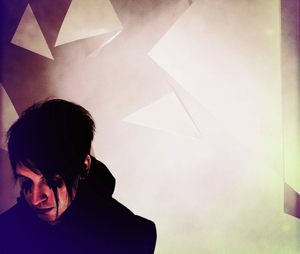
Everlast is prepared to lead world citizens into battle.

“We were using tape only, and we got creative with it,” Staub remembers. “We’d say, ‘Let’s over-bias by X amount, let’s get a little more tape saturation and distortion. It’ll make the drums sound a little dirtier if we hit the tape hard.’ That was a real process for me, trying to get as much analog level through the console into the tape machine and back out. Using tape that way to create overtones and get distortion was great.”

After assisting at Greene Street on a steady stream of sessions for hip hop heavy hitters like Public Enemy, Staub got his big break in 1990 when rapper/DJ/producer Pete Rock got him on board mixing for Heavy D and the Boyz.

“There’s a lot of guys who can turn knobs, but at that point what people wanted was somebody they could talk to,” Staub says of his ability to break away from the pack. “The mixer would try to relate what they were saying into reality. I think I was good at that.

“People also wanted me because when I worked with Pete Rock and Public Enemy, they would sample things that were really dirty – like from a crackly record. Instead of trying to clean it up, I would try and polish it while retaining that dirty quality. Turning that old crackle-pop record into a hit was something I was able to do, and that attracted people.

“Flash forward to today, and I think I’m even better at discerning frequencies. I used to go into different rooms and have to learn the place in an hour. But now that I’m in my own room, I understand everything. I know where to go to hear the bass, to check the vocal level. So how I’ve evolved is to use EQ, compression and effects more effectively, because I’m so used to my little space here.”

Making the Everlast Connection

Everlast first came onto Staub’s radar – or vice versa – via a Pete Rock remix of “Jump Around” that Staub collaborated on. From there, he got called on by Electra A&R man/co-producer Dante Ross to help with additional production and mixing on Whitey Ford, a task Staub dug into at Sony Studios after Everlast (aka Erik Schrody) had suffered a major heart attack.

“He wasn’t even in the studio, but the result was that huge hit in ‘What It’s Like’,” says Staub. “What happened there was a culmination of my hip hop and rock experience at Greene Street Recording. On the hip hop side, I had learned to make it really drum-heavy: The kick and snare are bangin’, and the vocals are always clear.

Jamey Staub on call in The Astoria Lounge.

“Ultimately what made the Everlast record so successful was the combination of hip hop-beat style drums and electric guitar, and rapping combined with singing. All those things came together for that record, and I think that’s really why it was successful.”

Everlast’s voice comes through loud and clear in Ungrateful Living, along with an addictively gritty pulse that makes tracks like “I Get By,” “The Rain”, and the 13 other cuts encourage repeated listenings. “What he’s evolved into is a storyteller of what’s going on in America, and what’s going on in the world,” Staub notes. “He wants to describe the state of himself, and how the state of America is that we’re not really the most powerful nation in the world — we’re broke. That’s his goal, to say and sing what’s been going in the last few years.”

Constructing the Mix, and Tips and Tricks

Staub built up his Nyack haven when the venerable Greene Street Recording closed for good in the early 2000’s, allowing him to purchase vintage compressors and EQs that he runs through his vintage Pro Tools|24 mix setup clocked with an Aardsync master clock generator.

Look past the digital Millennium Falcon that Staub flies, and you’ll see what sends his mixes into hyperdrive: Urei 1176’s, an RCA BA-43 program amplifier and BA-45 AGC compressor (Automatic Gain Control) originally used for radio broadcasting, and a heavily used Gates Sta-Level compressor – the latter all the better to mix the big, gravelly presence of Everlast with.

“I used the Sta-Level exclusively on Everlast’s lead vocal,” Staub explains. “I would take what they sent me, run it out through an Avalon 737 for initial compression and to brighten it up with the EQ, then into the Sta-Level. This unit adds some overtone and distortion and harmonics to the voice, while keeping the original sound and allowing the listener to hear every breath, and really bring it forward without making it sound thin. Pretty much every song I’d run the vocal through the Sta-Level, and then back into Pro Tools.

“The Sta-Level is a tube unit,” he continues. “If you open it up, there are no op amps in it. All the components are large, so it’s like this large voltage added to the voice. The special characteristics it brings are the overtones, the harmonic distortion that’s subtle yet thickens the voice and makes it more present.”

The Gates Sta-Level stars beneath a stack of 1176's.

Also essential for this landmark mix project was Staub’s FU2, a custom piece of outboard specifically built for him by Jeff Blenkinsopp at the NYC company EARS (Excellent Audio Repair Service)  after he worked on Whitey Ford Sings the Blues. “It’s a special filter unit — from before there was a Filterbank plugin — that can control the envelope, the modulation, filter cutoff, and modulation. It’s like a little synth for filtering audio. On the second Everlast album that I mixed, Eat at Whitey’s [released in 2000], there’s a tune that filters down to the radio sound, for example, where I use the FU2.”

Naturally, the wily veteran turned some of his favorite in-the-box mix tricks on the snapping drum tracks of Ungrateful Living. “I’m a big drum freak,” Staub admits. “I often duplicate tracks. For example, I’ll duplicate the kick to one or two additional tracks, so I have three kick tracks, or I’ll do the same with snare — all with the same plugins, but I’ll use the plugins differently on each track. So I might have one track that’s original, then the second I’ll gate the hell out of it and compress it to give the thump of the kick, and on the next track boost the low end to make your chest thump.

“Another little trick is that when you have a drum loop, you pull it up on three faders on the board: You have the clean sound, the sound that’s gated, then the extra kick sound, and then pull all that in. I do that a lot. A lot of these techniques use multiple channels for the same sound, but you’re treating each one differently. For the vocal I might do one sound on the verse, but then come in really distorted on the chorus.

“Overall, I’m a really big fan of making sections sound different: I want the verse to be clearly the verse, the chorus clearly the chorus, the bridge clearly the bridge, and I might use different delays or other effects to distinguish them.”

Can't filter out the custom FU2!

Pulling it All Together

While Staub is doubtless psyched to see Ungrateful Living hit the digital shelves, this is one mixer that’s not just waiting around for old contacts to come calling. He also heads up his own indie label, Perimeter Records, and has October releases to tend to for his artists Thomas Anderson (“Stone Temple Pilots-style rock”) and Dogz of Zeus (“The name’s a little Spinal Tap, but they really tear it up – Metallica meets Led Zeppelin.”)

In addition, when possible Staub takes the time to give something back by MDing for a school of music that teaches youth to play their instruments through rock performance. He’s also on the cusp of launching CEO Cares, which recruits CEO’s of major companies to visit NY students, to teach life skills, and support schools with music and arts programs. Lastly, an animated series to revitalize young people’s knowledge and interest in America’s original music contribution, jazz, is on the way via the company Jazzin’ in the Key of Sea.

For Staub, however, what it really boils down to is mixing, and having kept his seasoned ears in business from the late 1980’s to 2011 is no small feat: 2.5 decades after leaving sunny Florida for the snowy Northeast, Staub has zero regrets. “I originally came to NYC because it’s NYC — what else do you have to say?” he laughs. “I came here to make it here. And it’s good to see things growing in Brooklyn, where music and arts can flourish without paying the price.”

In all five boroughs and beyond, count on the sage statements of Everlast to make an impact, whether people are #occupying the Financial District or just the real estate between their headphones.

“What’s important are his lyrics – what he’s actually saying to the listener,” Jamey Staub says. “With Songs of the Ungrateful Living, we’ve succeeded in combining vintage instrumentation with modern recording and mixing techniques. As a whole I think it just speaks volumes about music, how it’s produced and recorded, and what’s being said.”

– David Weiss

Songs of the Ungrateful Living is available on October 18th on Martyr Inc. Records, in partnership with EMI Music. Everlast will be touring nationally and appearing locally on Nov. 05 at Webster Hall, New York, NY and on Nov. 06 at the Westcott Theatre in Syracuse, NY.

Birmingham To Brooklyn: Deluka Makes Debut In DUMBO

August 18, 2009 by  
/* Filed under Music Biz */

DUMBO, BROOKLYN: Ellie Innocenti, lead singer of Deluka, a four-piece dance-rock band from Birmingham, England, opens the door when I buzz at Vel Records’ studios in DUMBO. It’s a workday at Vel, where Innocenti and bandmate Kris Kovacks have been writing and recording their first full-length record. They are far from home, and this — they tell me — is a good thing.

Deluka is (l-r): Stevie J. Palmer (drums), Daniel Brasco (bass), and Ellie Innocenti (vocals) and Kris Kovacks (guitar/electronics)

Deluka is (l-r): Stevie J. Palmer (drums), Daniel Brasco (bass), and Ellie Innocenti (vocals) and Kris Kovacks (guitar/electronics)

“We’ve been here a month and we’re on our tenth song,” says Innocenti, pointing out, “that’s very prolific for us! We’re quite slow when we’re writing at home, because we have no time constraints. Plus there’s a million distractions — there’s everyday life to contend with.”

Most bands hope to be so plucked out of their everyday as Deluka, who was discovered on Myspace, signed to Vel Records and brought to NYC to work with a successful music production and business team. “This is like my ideal scenario,” says Innocenti. “To be taken out of our very insular little world and brought here is ridiculously fun and exciting and really inspiring.”

Signing to Vel means working with founder Camus Celli, a producer/engineer and songwriter with a track record for helping launch careers, including that of Gavin Degraw. “My production style is to provide an environment and the right conditions for something that’s already good to flourish and grow,” notes Camus. If all goes according to plan, Deluka should emerge from this creative cocoon a better version of itself.

“When I first heard Deluka and saw their videos and live footage, I was really surprised that they weren’t signed because the music was so far along and developed and thought-through,” Camus adds. “The songs were great, the production was great, the live show was on. I was waiting for the catch but I just never found one. So I reached out.”

Plans were made for Deluka to come over to NYC and do a test run, the outcome of which was a five-song EP. “The goal for the EP was to create a sort of benchmark — a statement that says, ‘here’s where we are now,’” says Camus. “The song, ‘Cascade’ is a really cool representation of what Deluka’s doing.”

Deluka’s sound combines shimmering electro-pop production and jagged guitar playing with Innocenti’s power-strut vocals, driven by hybrid beat-rock rhythms. After writing and largely recording their songs, Kovacs and Innocenti bring in bass player Daniel Brasco, and drummer Stevie J. Palmer who expand these laptop sessions into full band assaults. It’s how they’ve produced Deluka since the beginning, and Camus does not intend to fix what ain’t broke.

“I mixed the EP,” says Camus, qualifying, “But Kris is really good. When stuff comes off his computer, it’s so far-formed. If it’s working, I’m not going to mess with it. I’m here to provide that environment in which they can continue doing what they’ve been doing.”

GROUNDWORK & GRAND THEFT

Kovacs and Innocenti have been writing together for over four years, starting just after they met at a show — Innocenti was singing/playing guitar in an acoustic duo and Kovacs went to check it out. “I was blown away by her voice,” he says. “I’d been involved in this sort of bedroom electronic music project. We were building our production skills but the music was kind of meandering and we knew we wanted to find a vocalist. I asked Ellie to do a guest vocal with us and it worked out really well.”

Adds Innocenti: “We kind of had what each other needed. He had the electronic instrumentation and I had the melodies and lyrics and we made this sound we were both happy with. We relocated the studio to my spare room, and developed it from there. We spent ages trying to find the right balance of song and sound.”

Eventually, a glitz-meets-blitz sound emerged. “We’ve both been really into 70s and 80s new wave and punk, mixed in with more aggressive, electronic music like Prodigy or Digitalism, and even Primal Scream and Soulwax,” says Innocenti. “Bands that push their genres a bit.” Nodding, Kovacs adds, “And we also like bands with razor-sharp wiry guitars, like Gang of Four and Bloc Party.”

Honing their production and songwriting chops simultaneously, and then adding band members, Deluka self-produced enough content to get them noticed on Myspace. And, Camus wasn’t the only bite. “This guy reached out saying he was from Rockstar Games,” says Kovacs, “But it looked shady — he had no profile picture and no friends, so we thought it was a fake and didn’t respond. Then one day, a Clearing Company contacted us, looking to clear our song, “Sleep Is Impossible,” for licensing on Grand Theft Auto.” They quick hired a lawyer and licensed their first song just like that.”

“We’d done quite a lot of ground-work by ourselves,” notes Kovacs. “We also did SXSW last year prior to signing with Vel.”

LIFE ON THE FAST-TRACK

In writing/recording the full-length record due out this fall, Deluka’s workflow has been readily enhanced by Camus’ laissez-faire approach with the band. “I see this as a global record, and so wherever I can help guide them through the songwriting, or hand them a different keyboard, provide some level of outside inspiration, I do,” describes Camus. “Sometimes it’s just about encouraging them to put ideas down without getting bogged down in the sonic details of, like, tweaking a hi-hat sound. They are very much into sonic landscapes being creative inspiration, but there comes a point where if it’s a great song, it’s a great song. Get it down and think about that later.”

Innocenti chimes in, “And that’s made us move faster, and become more prolific. We’ll call Camus in when we’re at an impasse with a song and he’ll tell us to carry on in one direction or another. We had nobody to say that back in England and we’d go nuts working on the song until we hated it.”

One of the goals for the record will be to capture the “band-sound” and energy of their live shows, something Deluka wasn’t able to do in their home studio. “We’re a lot more aggressive live,” says Innocenti. “It’s like a contradiction because we like slick electro sounds but then we punk it up live. And we want that to come across on the record.” Kovacs adds, “Every carefully conceived guitar note on the record goes out the window live, and things just seem more ferocious.”

Vel’s recording studios have both highly controlled environments for mixing, as well as raw, loft-space live rooms for blasting-out full band performances and capturing live rock rhythms to blend in with the more pulsing electro-percussion.

“We’re writing and recording at the same time,” says Kovacs. “Then, if anything can sound better, we’ll take the time to set up the room and re-do it. But, if it’s sounding good in the way we’re doing it at the moment, then that’s what’s getting exported over to the mixing stage. So, we’re sort of semi-making the record as we write.”

Whatever happens next, signing with Vel has been step one of this band’s journey. “We’re in a wait-and-see scenario,” says Camus, “We may put the record out on Vel, or we could partner with a major to release it. We’ll see what happens in the next couple months. So far, people have really gravitated to the project, wanting to get involved because they believe in it. It already has this groundswell of its own.”

Check out Deluka’s EP on iTunes!