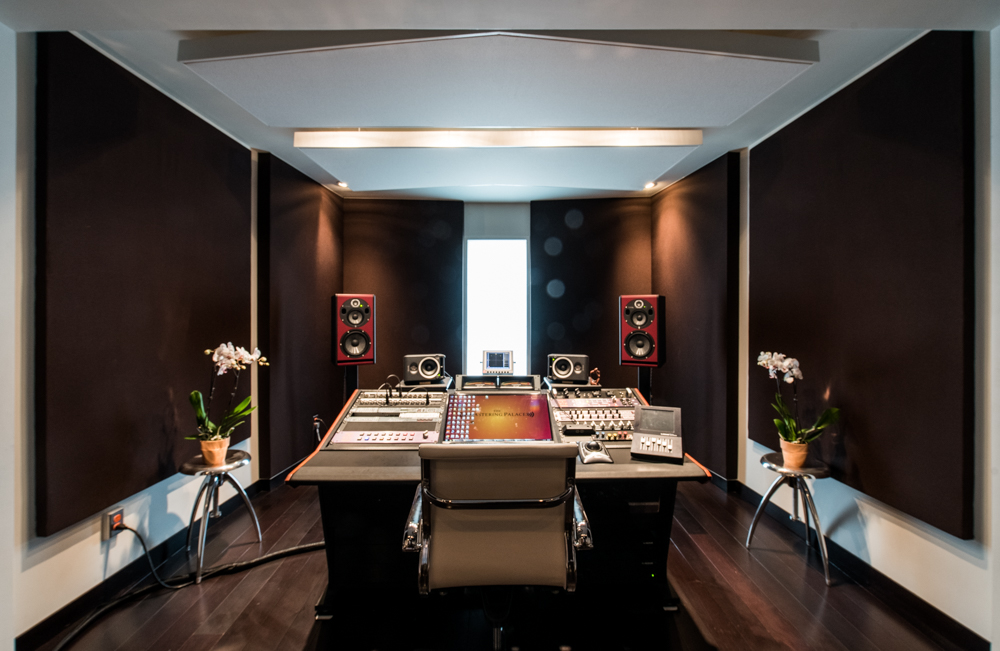
Audio Nightlife: Scenes from “Demystifying Mastering” at FLUX
May 16, 2012 by David Weiss
FLUX Studios and a Friday night proved to be a killer combination once again, as the “Demystifying Mastering” event went down last week.
A full house of producers, engineers, mixers, artists and – of course – mastering engineers kicked off their weekend with knowledge and networking at the always-buzzing East Village recording/mixing facility.
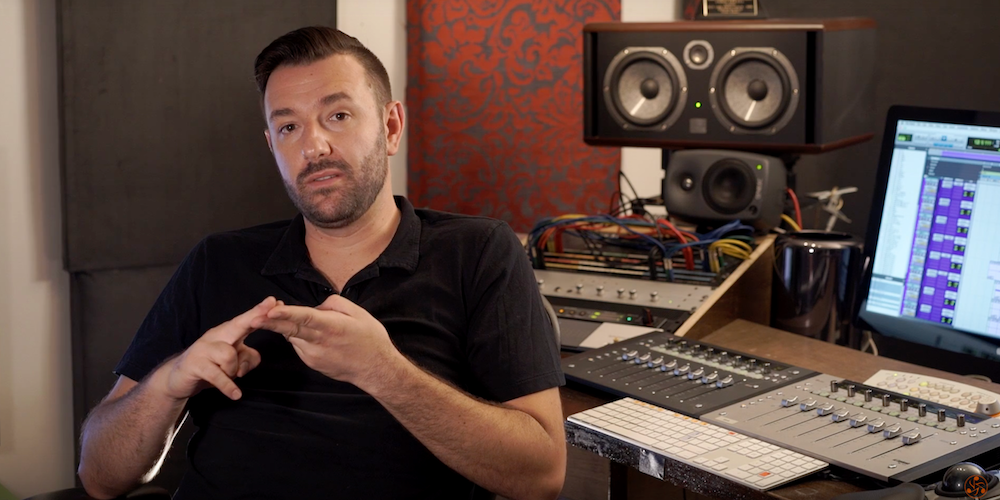
The center of attention was top NYC mastering engineer Dave Kutch of the Mastering Palace, who led a clinic presented by Dangerous Music, Manley, Focal Professional, and Alto NYC.
Kutch’s presentation in FLUX’s “Dangerous” live room captivated the crowd’s attention, as he shared the considerable wisdom he’s gained in mastering for the likes of Alicia Keys, The Roots, John Legend, Jennifer Hudson, MNDR, Natasha Bedingfield, and many more.
In addition to covering advanced mastering techniques such as mid-side processing and parallel processing, Kutch went over file labeling protocols, gave career/life advice (“Hang out with people smarter than yourself!”) and fielded some high-quality questions from the crowd.
In the meantime, demos of Dangerous, Focal, and Manley gear went down in the artfully appointed “Fabulous” suite. And as per FLUX’s most hospitable tradition, champagne and snacks fueled musical conversations before, during and after in the lounge and on the roof.
Check out Kutch’s essential segment on mid-side mastering techniques.
For dance music producer Matt Verzola, “Demystifying Mastering” was a highly informative experience. “I’m doing my own mastering on my dance tracks,” he noted, “so when this clinic came up I said, ‘I’d love to hear more about how the real pros do it.’ I really liked how open Dave was – he wasn’t keeping any secrets. He explained how he’ll use parallel compression for mastering, for instance, which I never thought to do.
“Dave offered up a lot of good resources to go to later, and the crowd was really good,” Verzola continues. “I think only people that understand what mastering is were there, so there weren’t any questions that weren’t great. It was a really good forum.”
Also in the audience was Heba Kadry, Mastering Engineer/Project Coordinator at The Lodge, who was more than happy to learn from one of their accomplished colleagues. “It’s terrific to have someone like Dave Kutch – with all his experience – demonstrate some material pre- and post-mastering, and illustrate the difference that mastering can make on your record,” she said. “He showed the progression of mastering over the years, and talked about the best way for mixers to approach their mixes with the mentality that the material will be mastered later on.
“Just beyond the geek talk, its great to get out of your studio bubble and see what other people are doing in a relaxing environment,” Kadry adds. “FLUX is a great studio. It’s really fun to talk to people and see what they’re doing.”
Now see more for yourself! (BTW, SonicScoop, FLUX, and our friends will be holding more audio-centric events throughout 2012 — if you want to be notified about future happenings, drop us a line at info@sonicscoop.com with the word “events” in the subject line. Thanks! See you soon.)

(l-r) Producer/Engineer Andy Baldwin and Simon Cote of Focal Professional, with the Focal SM9 making its NYC debut.

Alto NYC was most assuredly, without a shadow of a smidgen of a hair of a fraction of a single solitary doubt — in the house!!!

(l-r) Andrew Maury and Michael Duncan. Their eyes don’t usually glow demon-red, BTW. Just that particular night. At that particular moment.
– Text by David Weiss, photos by Janice Brown and David Weiss
Event Alert: “Demystifying Mastering” – with Dave Kutch of The Mastering Palace, Dangerous, Manley, Focal & Alto NYC, 5/11
April 26, 2012 by Janice Brown
Join us for “Demystifying Mastering,” an evening event presented by SonicScoop and Flux Studios on Friday, May 11 – for engineers, producers, musicians and mastering engineers who want to gain a deeper understanding of the mastering process, and hear modern tools and techniques in a studio environment.
The event will run from 6PM-9PM and will feature a clinic led by top NYC mastering engineer Dave Kutch (The Roots, Alicia Keys, John Legend), listening stations for demoing gear by Dangerous Music, Manley and Focal Professional, and a fun Friday night mixer with drinks/snacks.
Kutch’s clinic (7-8PM) will be a Q&A-driven discussion and demonstration of:
- Best engineering practices leading up to mastering
- Best production practices to optimize your mastering experience-
- How to break bad habits that limit what can be accomplished in mastering
- Tools and tips for sonic problem solving
- Effective mastering chains and techniques
Before, during and after the clinic – throughout the rest of Flux – Dangerous Music will have stations setup where you can demo the Dangerous Master, Monitor, Liaison and Bax EQ; Manley will be on hand with their Pultec EQ, Mastering SLAM! and Mastering Massive Passive; and Focal will be showing – for the first time in NYC – their new SM9 monitoring speakers, which are now available. Alto NYC’s Shane Koss will be in the house as our retail/technologist partner in the event.
Not sure when/where else you’ll be able geek out this hard on mastering. So, come through! RSVP to Janice@sonicscoop.com and we’ll put you on the list!
Full Coordinates:
Demystifying Mastering Clinic & Social
Friday, May 11, 6-9PM
Flux Studios
154 East 2nd St, NYC
Free with RSVP: Janice@sonicscoop.com

The Focal SM9 (3-way + 2-way monitor in one cabinet) will make its NYC debut at "Demystifying Mastering".
2012 Winter NAMM Tech Highlights
January 26, 2012 by Bo Boddie
While Anaheim is most famous for attracting hoards of children to Disneyland each year, this past weekend the “adults” of the music world got to take over for a long weekend.
The enormous Anaheim Convention Center was absolutely packed with virtually every gear and instrument manufacturer that one could imagine. As I had never been to a Winter NAMM show this was a great treat for me, and I had an awesome day walking around and chatting with representatives from some of my favorite companies. My only complaint was the fact that, pathetically, my legs were sore the next day!
This year at NAMM there were quite a few big announcements from some major players in the audio world, along with the typically exciting spread for musicians, so without further ado… let’s discuss:
In the past ten years, Universal Audio (UA) has a come a long way, not only continuing to make their classic hardware products, but also creating one of the best lines of plug-ins that’s out there right now. They’ve really embraced the DAW age, and in the process have created what most engineers and producers now consider an essential part of their creative toolset. This year there was a lot of buzz surrounding UA’s release of their first foray into the world of multi-channel audio interfaces: Apollo.
The Apollo interface is feature-packed: Offering 18×24 inputs and outputs, it will work at sample rates up to 192 kHz and connects to the user’s CPU via either Firewire 800 or Thunderbolt. Perhaps the most exciting aspect of Apollo’s functionality is that it is also loaded with either the UAD DUO or QUAD DSP cards, so you’ll also be able to run the full complement of UAD plug-ins when using the interface.
Apollo can also be completely software controlled, and UA has built a fantastic software interface that works seamlessly with most DAWs. For the first time, UAD users will be able to use their coveted plug-ins with near zero latency! Not only that, but you are now able to track with as many DSP-powered plug-ins as you like, and you also have the option to print the processed tracks as you record; with less than 2 ms of input latency. The system is naturally instantly recallable, and in the demos that I saw, is very solidly incorporated with the user’s choice of DAW.

Apollo w/ laptop. Available in both DUO CORE ($1,999) and QUAD CORE ($2,499) processing in this first quarter of 2012.
In addition to the Apollo interface, UA also announced a new Direct Development partner for their UAD-2 platform: Sonnox. As with other third-party developers like Brainworx and SPL, this partnership means that Sonnox will be able to directly create software for the UAD platform, and to sell these plug-ins via UA’s online store.
I was also assured by Lev Perrey, UA’s Director of Product Management, that AAX and 64-bit versions of all of the UAD plug-ins are a top priority, and that they should be ready by the end of the year.
Slate Pro Audio / Slate Digital
I was excited to see some big surprises here! Steven Slate was on hand to announce three big new products, two of which were completely unexpected. First of all, the new Raven X1 Production Console was introduced.
The Raven is a unique console and control surface solution for DAW users. It is, essentially, a monitor and cue section loaded into a 32-channel frame. Along with racks for favorite gear, the Raven also ships with 4 Avid Artist Mix controllers pre-loaded, as well as an LCD monitor, metering, and a unique set of laptop-style monitors built into the surface. This is definitely a cool (and more cost effective) alternative to Avid’s D-Control and Command control surfaces.
While price is still TBD on the Raven, and the model on the show floor was just the prototype, Slate Pro Audio assures the first consoles will start shipping in 60 days.
Next up from Slate was the new Siren D3 Monitoring system. The Siren is a 1,000 watt 3-way monitor speaker with a phase-linear DSP-powered crossover. The coolest thing about these monitors is that the user can alter the crossover settings remotely using an iPhone app; different speaker response characteristics can be easily emulated by changing the way the crossover works. This feature essentially gives the user several different types of monitors all in the same package.
Last but not least was Slate’s new tape emulation plug-in, called the VTM (Virtual Tape Machine). Although tape emulations have been a bit de-rigueur over the past few years I’m definitely excited to hear what this one sounds like. The VTM models two machines, a 16 track 2”, and a 2 track 1/2”, and according to Slate, every aspect of the machines’ characteristics were gone over. In fact, Slate’s CTO, Fabrice Gabriel went as far as to say that the algorithm they used was “bloody” in its complexity: sounds good to me!
Pricing/availability on the Siren D3 and Slate Digital VTM plug-in have not yet been announced. Stay tuned!
Over at Dangerous Music, the major news was their brand-new monitor controller called the Dangerous Source.
Dangerous designed the Source with portability in mind, incorporating the components and build quality of their other monitor controllers into a smaller box. This is a desktop or rack installable unit providing monitor control for up to two pairs of speakers and headphones with digital, analog and USB sources. Especially notable here is that this is a “Dangerous”-ly well-crafted product at a sub 1k price point!
The Source has two headphone outs, a USB-in for use of Dangerous’ superior D/A converters in place of a traditional I/O interface, and multiple digital and analog inputs (including an 1/8’ in). An especially interesting feature, which you’ll be hard-pressed to find in another small-footprint monitoring solution, is the inclusion of four monitor outputs that can all be used at the same time if desired; users can monitor on two sets of different speakers, or incorporate a subwoofer as a supplement to one set of speakers. The Source will begin shipping in the 2nd quarter of 2012.
Perhaps the biggest news Moog had at NAMM this year was the introduction of the Minitaur, a new analog synth based on their classic Taurus foot pedals. I got to spend some time with it and it sounds incredible! Equally appealing is the Minitaur’s low price: $679.00 MSRP.
The Minitaur has a small footprint, but really sounds enormous; definitely a great addition to the Moog line.
Cyril Lance, a senior engineer at Moog was nice enough to show me some of the other newer Moog products as well, including the Anamoog iPad app, their 500-series Ladder Filter, and the Cluster Flux Moogerfooger pedal. As per usual with Moog products, all three designs sound incredible and are incredibly musical in their orientation and usability. A really inspiring visit!
Line 6 debuted a surprising new product this year called the StageScape M20d. The StageScape is an all-in-one digital mixer for live sound, targeting bands and musicians who want great sound and ease of use.
The most remarkable thing about this product is the touchscreen interface and GUI. All functions of the mixer can be accessed by a 7” color touchscreen that controls easy-to-use software; all mixing is done using a graphical representation of instruments on a stage. For the technically uninitiated this makes the live sound mixing process incredible simple; just orient what’s on the screen to match what you see in front of you and you have the beginnings of a solid live mix.
Of course, the user can go deeper, incorporating easy-to-use effects and recording capabilities as well. There are 12 mic pres/inputs built-in, as well as 4 line inputs, 4 monitor outputs, USB, and two main speaker outs. Additionally, the StageScape can also be controlled by iPad!
As noted above under the Universal Audio heading, one of the more notable pieces of news with Sonnox this year is that their full line of plug-ins will now run on the UAD Powered Plug-Ins platform. However, this is definitely not the only news. Sonnox is one of the first plug-in developers to offer their full line of products in not only 64-bit code, but Avid’s AAX format as well! This is great news, as these plugs are so well-loved and used!
Additionally, I got to see a demo of the Sonnox Fraunhofer Pro-Codec. Although it isn’t brand-spanking new, I have to say that it is an invaluable tool! The Pro-Codec allows the user to hear their mix in multiple codec formats in real-time within the DAW; you can instantly hear exactly what an mp3 or m4a version of your material will sound like. Definitely a unique piece of software and great to have around!
Shure’s news this year is on the wireless front, specifically with their new ULX-D Digital Wireless system. Given that the FCC has shrunk the bandwidth available for wireless networks, new efficiency is needed, and the ULX-D is Shure’s answer. The ULX-D system converts incoming signal digitally, and broadcasts the digital signal to the receiver. This system not only allows for greater accuracy, but allows a full 14 streams per channel, maximizing the narrow bandwidth currently available.
The ULX-D1 sports a rugged build, and uses lithium-ion batteries which provide a 12-hour life per charge. Click for more details and pricing.
Additionally this year, Shure is getting into the professional open-backed headphone market with two offerings, the SRH-1440, and SRH-1840. Open-backed headphones are prized because of their naturalistic sound, depth of field, and wide imaging characteristics.
Sennheiser also has a wireless offering this year, but on the more affordable end of the spectrum with their XS Series. Designed for ease-of-use, the XS series offers true diversity reception, 8 frequency banks with 12 coordinated channels each, up to 10-hour operation using AA batteries, and a scan function which easily identifies all available frequencies.
The XS series comes in several different configurations (Instrument, Vocal, Presentation), all around the $400.00 range which makes it a powerful and affordable solution for most budgets.

XS Wireless line includes two systems for vocalists (like the one pictured here) and one instrument set for guitarists.
On the live and installed sound tip, Harman introduced a new version of HiQnet system configuration and control protocol. The new Crown HiQnet Band Manager 2 is a simplified version of the software designed for smaller systems, giving musicians, DJs and venues control and monitoring for Crown Audio’s XTi 2 product lines. Users will be able to manage up to eight XTi 2 amplifiers via intuitive USB interface. Click for more details.
Lexicon’s news was that its PCM Native Effects and PCM Native Reverb plug-ins will now available individually. Starting in February, the 14 PC- and Mac-compatible plug-ins, including Pitch Shift, MultiVoice Pitch, Chorus, Resonant Chords, Stringbox, Vintage Plate, Concert Hall and Chamber, will be available individually at prices ranging from $199 – $699 a pop.
So Much To See
Beyond what I’ve outlined above I was able to see a myriad of other wonderful offerings, including Peavey’s Auto-Tune guitar, some stellar mic amp and summing options from Phoenix Audio, and Arturia’s fantastic new analog synth – the MiniBrute.
I also saw some great offerings from Blue Microphones for musician-recordists and discriminating consumers, including the Spark Digital iPad mic, the Mikey Digital iPhone mic and interface, and the new Tiki USB mic.
Looking forward, I am hoping to give more in-depth reviews of some of these new products in the near future, and in the meantime, I’ll be bathing my aching legs in Epsom salts!
Bo Boddie is a Grammy winning engineer/producer and composer who has worked with Santana, Everlast, Korn, Reni Lane, and many others. He just completed work on Imperial Teen’s second release on Merge Records, as well as composition work on HBO’s 3rd season of Hung.
2011 AES Tech Highlights
October 27, 2011 by admin
NEW YORK CITY: As SonicScoop editor David Weiss states in his Op-Ed story this week, the 2011 AES convention was less about innovation and more about survival. At least on the surface.
Between the most troubled economy since the Great Depression and allegations of fiduciary mismanagement by the AES’ outgoing Executive Director, the 131st convention saw lower levels of manufacturer enrollment than in recent years.
But if there a smaller exhibition floor than in the past, it didn’t stop the crowds from coming. The first two days saw especially heavy traffic through all nine rows of booths, and the convention’s flagship panels made their presentations to a packed house.
Underneath the surface of the show were a smattering of innovations. One of the largest players in pro audio made a surprising announcement, and a handful of dark horses brought promising new designs to market. While huge developments from major manufacturers were few and far between, seemingly everyone had a new little trick for the 500-series lunchbox. Here’s a small a handful of the most notable designs from this year’s convention:
AVID LAUNCHES PRO TOOLS 10 AND HDX
Whenever the industry leader in Digital Audio Workstations makes an announcement it’s hard not to notice.
For anyone in the market for a new commercial-grade studio system, Pro Tools 10 and HDX should be a welcome development. The latest cards and software allow studios to harness more power at a lower price point than ever before.
In the new software, session-loading speed has increased, editors can slide around cross-fades and pre-fader gain in real-time, the system architecture and mix bus have both been improved, and a powerful new Channel Strip plug-in has been thrown in for good measure.
But the announcement of PT 10 hasn’t made everyone happy. Longtime users who upgraded to PT 9 less than a year ago will have to shell out $300 if they want to upgrade immediately, while HD studios could pay upwards of $999 to make the switch in software.
While this release may not have all studio owners jumping out of their seats for an immediate upgrade, the new feature-set may appeal to some of the busiest commercial facilities, and new installations could benefit from the lower cost-of entry.
Whether an upgrade is right for your studio, and what Avid’s change in system architecture and plug-in protocols will mean for users in the long run is enough fodder for a whole separate article. Stay tuned for that story soon.
Aside from the introduction of PT 10, many of the most innovative new designs came from smaller operators, some of whom are new to the scene.
THE DARK HORSE DEVELOPERS OF AES
One of the most striking new standouts was the Pegasus large-diaphram tube condenser microphone from Ronin Applied Sciences.
With an eye-catching mother-of-pearl inlays and a power supply the size and shape of a high-tech toaster from the Jetsons, it was a difficult piece to ignore.
If you were willing to wait on line for the opportunity, you may have had the chance to talk to the limited-edition mic’s sharp young designer, Dimitri Wolfwood.
How does it sound? Initial impressions from engineers on the showroom floor suggest “pretty damn good.” We’ll have the whole story, and a more comprehensive review for you, in the coming weeks.
A veteran designer who recently struck out on his own had several new pieces to announce. Dennis Fink of Fink Analog Audio worked with UREI and Universal Audio on some of their best-selling designs before building his own designs.
Adding to his recent CS2-FA Vacuum Tube Dual Channel Strip are fresh new units including a 4-channel limiter, and an 1176-style compressor with a tube signal path, all of which are built right here in New York and New Jersey.
THE BOUTIQUES ARE BACK
Vintage King Audio and Studios 301 Manufacturing showcased their new Custom Series 75 Console, a Neve-powered desk that promises to deliver both clean and classic-sounding signal paths in the same frame.
This analog desk is available in 16 through 64-channel configurations with a powerful automation system.
The designers at Dangerous Music have been hard at work on a new product called the Liaison, an inventive new box that might change the way many of us think about analog routing.
This new box helps users to audition, compare, and recall complex signal paths at with the flick of a switch. For the first time, engineers can directly compare hardware effects chains without having to patch and re-patch several pieces of gear, and even recall analog routing “presets”.
We also saw the introduction of the Black Box Tube Pre the first release from Black Box Audio. This tweak-friendly all-tube design features continuously variable triode and pentode stages, which puts the tonal character of the preamp in the user’s hands.
SWEDES KNOW AUDIO
Sweden is one of the world’s eminent producers of finely-honed pop music, and now, one of the major players in Pro Audio.
Lindell Audio’s new line of 17X Compressor/Limiters sound unbelievable, according to a rep from the company’s Suffern, NY-based U.S. distributer, RAD.
This FET-based unit is a fresh new take on the classic 1176, and includes a wet/dry mix knob and 5-position electric guitar-style switches that the select between finely tailored attack and release settings.
The Swedish-based Golden Age Project has expanded their line of affordable 1073-inspired preamps by announcing their new PRE73-DLX. This version adds a 5-position high-pass filter, Active DI input and an output attenuator that allows users to milk additional overdrive out of the unit when desired.
Also new to the Golden Age line is the half-rack EQ73 new selections for 500-series users.
500 SERIES MODULES. PEOPLE STILL LIKE THEM.
Also on display at AES this year were a slew of handy new 500 modules, priced to give gear-fiends a quick and affordable fix in a sluggish economy.
Even Moog got into the game. Along with the Animoog, the first “professional-level iPad synthesizer”, this veteran company revealed their first 500-series offering, a flexible analog resonance filter called The Ladder.
Neve too had an unexpected 500-series module on display – its 2264A compressor/limiter is now available in the Lunchbox format (2264ALB) via Vintage King.
al.so expanded its line with the new “British-style” Q5 EQ and the Komp5 compressor (which comes complete with a miniature 500-series VU meter).
The Sennheiser-distributed True Systems announced the pT2-500D Precision Dynamic Preamp, while Chandler debuted Little Devil 500-series preamp.
John Klett’s nonlinearaudio announced two new 8-channel preamp designs – the FlexiGuy and the Orson - both which should be available in 500-series soon. He also revealed an esoteric and inventive module called the Blenda 500 which uses the auxiliary i/o in Purple Audio’s Sweet Ten rack to “give the user a split to any external processor and a reblend function, with phase reverse, for parallel additive or subtractive re-blend within your outboard rack.”
WIRELESS WITHIN REACH
Earlier this year, Shure introduced the PGX Digital Wireless series which promises to bring new levels of fidelity and stability to the field.
And while the PGX series makes digital wireless mics affordable, Earthworks decided to make them upgradeable. During AES, they announced the WL40V, a wireless microphone capsule based on their recent SR40V handheld vocal mic design.
This high-definition capsule can be quickly screwed onto any handheld transmitter that receive a 31.3mm/pitch 1.0mm threading, like the ones from Lectrosonics, Line 6 and Shure.
HOLDING STEADY
Plenty of older products were worth playing with. Who can resist putting together an impromptu mix on an API 1608 or listening to the entire line of ADAM monitors?
While there were new and recent products to be seen and heard, for many attendees the biggest highlight of the convention was the people.
Even when the pickings are slim, AES represents a meeting of the minds that’s rarely seen the rest of the year. We met some of my favorite designers and mixers, walking the floor, speaking on panels, eating dinner, and hitting the after-party circuit for the better part of a week.
At AES everyday engineers meet the people who build their favorite tools, write their favorite stories, and make their favorite records. New relationships inevitably form. Some of them can last a lifetime.
- The SonicScoop Staff
Picture This: Sightings from The Flux Studios “Fabulous” Party, AES 2011
October 26, 2011 by David Weiss
EAST VILLAGE, NEW YORK: The festive spirit of AES 2011 stayed strong on Saturday night, as aisle-dwellers transformed into party-hoppers after sunset.

Flux was the center of attention on Saturday night at AES 2011. (photo: Christopher Wells Kpictures.com )
For many, the post-Javits evening began with a packed gathering at Electric Lady Studios. Later on, those with the inside track got to an intimate event at Germano Studios. From there, it was just a hop, skip and a cab ride to the reigning emperor of East Village recording, Flux Studios.
The stylish three-room facility is the HQ for producer Fabrice Dupont (PureMix.net, Santigold, Mark Ronson, Les Nubians, Toots & the Maytals, Sean Lennnon, Babyface, Brazilian Girls, Bebel Giberto). It’s also legendary for being the former home of the Dangerous Music genius team, which originally founded the studio and served as a sponsor for the evening’s activities. Joining Dangerous in making it all happen was Focal, Lauten Audio, Vovox and Sterling Modular.
Visitors arrived in waves, greeted with champagne at the door and more on each floor, including Flux’ luscious rooftop. Audio luminaries and their entourages stayed laaaaate – the perfect crossfade into AES’ final day.

SonicScoop's Janice Brown and David Weiss surround Steve Massey. (photo: Christopher Wells, Kpictures.com)

Real time music rang out in the live room: Cyrille Aimée on vocals, Shawn Connely on the bass, Koran Hagan and Adrien Moignard on guitar (photo: Christopher Wells, Kpictures.com)
Sneaky Studios Opens Upstate — Duncan Sheik’s Residential Recording HQ Available to Artists
October 10, 2011 by David Weiss
GARRISON, NEW YORK: Sometimes the siren call of New York City crossfades into the call of the wild, and upstate tracking and mixing begins to beckon. At those naturally inspired moments, audio havens like upstate’s Sneaky Studios become a logical location to look to.
SonicScoop first made mention of Sneaky Studios in our June article on the facility’s founder, Duncan Sheik (“Barely Breathing”, Spring Awakening). While the studio was fully functional then, there was still an incognito feel when it came to the Garrison, NY hideaway’s commercial availability.
But lately, with multiple projects completed and all systems totally go, Sheik and his talented Chief Engineer, Michael Tudor, have been making it clearer: Artists interested in booking time at Sneaky should get in touch. For those who make the one-hour drive up the Pallisades Parkway, it’s a safe bet they’ll find that this residential music destination was worth the trip.
Blessed with space, light, views, and the ambiance of the Appalachian Trail passing through the backyard, Sneaky provides its clients with a musician-centric workflow, designed as it was around Duncan’s multi-instrumentalist skills and impulsive creativity.
“The fact that it’s owned by an artist is the first thing that distinguishes this place,” says Tudor, Sheik’s longtime engineer. “There’s so many toys there: probably 30 guitars, tons of pedals, percussion instruments, keyboards. There’s a huge pallet of stuff to work from there, as opposed to a studio in the traditional sense — where you go in and the room is kind of zeroed out, and anything you want to use has to be unpacked and put together by an assistant.
“At Sneaky Studios, all the guitars are hung out on the wall, and everything is within reach,” Tudor continues. “Also, Duncan’s always looking for what’s new and interesting, in terms of software and synths — he’s loves going into Rogue Music and swapping for gear he’s just heard about.”
For Tudor, who cut his teeth working at sound-for-picture houses like duotone early in his career, the ability to quickly capture a great live sound for guitars, drums and keyboards is paramount.
“Having spent small amounts of time to get good sounds, and letting the mics do the work – I’ve found that’s the way to go,” he explains. “It keeps the clients interested if you can immediately pull up something that sounds great. We designed the studio so that as many of the toys that you have your disposal can be hooked up in the shortest amount of time. We thought ahead about how we should design the patch bays, and what cables we would need to loop everything back out of the computer.”
During tracking and mixing, Sneaky employs an extensive Dangerous Music setup, using the Dangerous 2-Bus analog summing mixer, Monitor ST speaker switching system, and DAC ST D/A converter to cut out the console and work with the Logic/Pro Tools DAW at maximum efficiency.
“The new music industry paradigm is that the budgets are smaller, which means you need to be able to work quicker and make revisions fast if you’re working partially in the box like we are,” says Tudor, who runs a parallel setup in his own Woodstock studio, Mama’s Place. “The Dangerous gear really helps me trust that every time. Whenever I have to come back to a revision, or A/B against other commercial records, I feel like the Dangerous gear is there to do that job for me, and in a very transparent way.”
Via the Dangerous setup, Sheik and Tudor have established a highly dependable system for checking their mixes via Sneaky’s Focal and NS-10 monitors – a workflow that aided them in the completion of recent projects like Sheik’s outstanding Covers ‘80s album. An Apogee Symphony A/D D/A system is also in the signal flow, along with Neumann and Royer microphones, and Telefunken and Urei 1176 mic pre’s/outboard. It’s all the better to capture the 1917 Steinway Upright, 1911 Steinway (Happy 100!) O Grand Piano, Fender Rhodes, Wurlitzer, Hammond organs, mandolins, banjos, ukuleles, acoustic/electric guitars, marimba and more that are onsite.
With all of that going on inside, Sneaky’s setting can’t help but to elevate the music that’s made within. “The pastoral environment takes you out of your everyday head, and it’s sort of otherworldly to be surrounded by all that beauty,” Tudor relates. “Artists can be here and be completely focused: The day can be about recording, meals and going on hikes. It gives you protection and isolation from the everyday world, and creates a safe environment where you can get away and create.”

A highly thoughout out patch bay, multiple Dangerous Music units, and a tight collection of outboard make up the toolkit.
While singer/songwriters will be obviously attracted to Sneaky with its pedigree and amenities, Tudor points out that its natural appeal is wider than that. “As I said, Duncan is also a great collector of synthesizers, and very much plugged into the tools that are more electronica-oriented. So Sneaky could easily serve the new crop of young bands that are combining synths and acoustic instruments. It really has a pretty broad pallet, because Duncan’s interests and his obsession with new technology drive the design of the studio.”
The studio is adjacent to a large house with four sleeping areas, making longer-term creative stays a logistically smooth proposition. But if all this loveliness sounds like something meant just for the upper crust artist, think again.
“The way we think about it is developing relationships,” Tudor says of Sneaky Studios’ flexible rate structure. “We’re sensitive to the realities of the music business as it is. We want to make good records, and obviously we want to pay the bills, but we’re most interested in creating opportunities for people. Duncan and I are both writers/producers/engineers. We’re doing all of those things, all the time, and this is a natural extension of that.”
Track next to Washington Square Park – or cross the George Washington Bridge? As Michael Tudor observes, area facilities located off the city grid have an important function in the region’s constantly evolving audio production ecosystem.
“I think that the upstate studio fulfills a need that the NYC facilities can’t,” he says. “I spoke before about the idea of being a sort of a safe haven and a real inspiring environment creatively. An artist can come up to one of these upstate studios and feel like they’re really spreading out — go for walks, breathe the air. We go out shopping and cook in a kitchen, and there’s something therapeutic about it.
“I’m definitely a lover of NYC studios,” Tudor continues, “but you’re still in the rat race and hustle/bustle there. When you come upstate, you’re coming to an environment that will serve your every creative impulse, You enter a comfort zone that you can’t get in the city.”
– David Weiss
Event Alert: German Audio Gear Launch, Demo, Schmooze at Flux Studios, 3/18
March 14, 2011 by Janice Brown
Cologne, Germany-based MasteringWorks Europe will be launching its new products at NYC’s Flux Studios this Friday, March 18, from 4-9PM. Come on down to Flux for some German beer (and potato fritters!) and new, never-before-seen audio gear!
Attendees will have the opportunity to hear the RockRuepel compressor, Comp.One, and the Roger Schult 500 EQ W2377 (check out Roger Schult on YouTube). Special pricing will also be offered exclusively at this event.
This will also be a great opportunity to experience the full range of Dangerous Music gear and Flux Studios, a top-notch recording, mixing and mastering facility located in the East Village.
Beyond the gear demos, this will also be a cool hang and networking event, so go ahead and RSVP to MasteringWork’s Stefan Heger at stefan [at] masteringworks [dot] com and we’ll see you there!
Full Coordinates:
MasteringWorks Product Launch
Friday, March 18; 4-9PM
Flux Studios
154 E 2nd St 4A
www.fluxstudios.net
RSVP to stefan [at] masteringworks [dot] com
Stadium Red Expands: Just Blaze and the Science of NYC Studios
December 15, 2010 by David Weiss
HARLEM, MANHATTAN: As artistic as the purpose of New York City recording studios may be, it’s fair to compare these houses of sound to modern-day warriors. Every one goes into battle with the belief that they’re invincible. Many fall – but some grow stronger.
Uptown, the facility known as Stadium Red became convinced that there was only one sure strategy for thriving in the battle-scarred landscape of NYC: expand, and you’ll be in demand. Marking steady gains since its inception in 2007, when Stadium Red owner Claude Zdanow took over the highly respected but troubled former studio of jazz legend Ornette Coleman at 125th and Park, 2010 sees Stadium Red placing a bold bet that bigger really is better – even when paying NYC prices for your real estate.
The result is a recently completed 2,500 sq. ft. Frank Comentale-designed expansion that sees big names and powerful new capabilities added to the facility. A focused new B-Room is home to hip hop super producer Just Blaze (Jay-Z, Eminem, Saigon, Fabolous, Jamie Foxx, Talib Kweil, Kanye West) and an SSL AWS 900, Augspurger mains, and a digital/analog hybrid production/mix approach. A world-class mastering suite has also been added to house Herb Powers-protégé Ricardo Gutierrez (Justin Timberlake, Usher, John Legend, Jill Scott).
Meanwhile, Stadium Red’s accommodating A-room has gotten its own facelift, swapping in the classic SSL G+ board from Baseline Studios (RIP). Another pair of Augspurger mains with dual 18” subs, a custom Dangerous designed 7.1 surround monitoring system, 24-track tape machine and more are all in there. Mix engineer Tom Lazarus (Ray Charles, Bjork, Yo-Yo Ma, Chicago Symphony), mix engineer Ariel Borujow (T.I., Black Eyed Peas, Puffy, Kanye West), engineer Joseph Pedulla (Thursday, The Mighty Mighty Bosstones, Mos Def, Kid Cudi) and producer Sid “Omen” Brown (Ludacris, Mya, Drake, Fabolus) also maintain their respective residencies throughout the studio. A host of old skool elite amenities – from upgraded lounge to private chef/spa services – are in the mix for good measure.
While the idea of an all-encompassing studio environment of writing/tracking/mixing/mastering is not new, Zdanow believes that it’s the rare human resources he’s gathered – and what they’re on board to do – that will make the Stadium Red expansion stand out. “The idea is that more heads are better than one,” he says. “In studios it can become a stale environment, where the engineer is just a button pusher. What we take pride in is something the artists and labels don’t offer anymore, which is artist development.
“Artists come in here, and when they walk out our brand is attached to them. It’s about letting them know that all these ears are around, whether it’s Yo-Yo Ma, Eminem, or the emerging people we work with. We want to make records here that matter, and the idea is to bring back that creative community — we’re a growing team of NYC engineers and producers that care about NYC and the music scene.”
Zdanow’s energy – driven equally by his spirit of adventure and copious amounts of caffeine – was enough to convince Just Blaze to relocate to Stadium Red after closing his beloved Baseline. “I had known Ariel from before, and he said, ‘You should come look at this space and have a conversation with Claude,’” Blaze relates. “Claude explained his vision, what he wanted to build, and I said, ‘Maybe we can make something work.’ It made sense: The overall vision of the place and the appeal is that it’s a one-stop, end-to-end solution, from recording to mixing to mastering, even doing surround 5.1-7.1.
“So he physically expanded the space, and we combined our resources. It’s a win/win I get a little bit of the stress off my shoulders from running the day-to-day. That allows me to be more creative, but at the same time I have my own space.”
Whether for intensive writing sessions or serious mixing, the new B-room that Just Blaze inhabits was designed to be distinctively accommodating. “It’s gotta be something special — if it’s going to be this meeting of the minds, then it’s got to be something worthwhile,” he emphasizes. “It can’t just be a Pro Tools setup. The way I work, I need all the resources available all the time – I couldn’t go from a G+ to a writing room. And if we’re talking about partnering up and joining our resources to build a business, there’s no point in building something that’s just a production room. That’s something people can put in their houses these days. So you’ve got to take a step further and make it a destination.
“My room is the best of both worlds. If you want to walk in and get down to business in the box, you can do so: We have every plug-in, plus Augspurgers and other monitors. But if you’re a little more old school, you have the SSL and all the gear to go out of the box. Or you can go the third route, in that the AWS can go in and out of the digital world.
“By keeping it smaller we could keep it more affordable. Clients have the SSL, a full suite of plug-ins, Augspurgers – everything that would usually cost you $2500 or more a day, at the fraction of the cost. I think we really hit that sweet spot in terms of sizing. Sometimes you just need a room for production, with a controller or a laptop, but if you’re in this big huge room that’s a waste of money. Or it’s the other way around, and you’re feeling cramped. This place is small enough to feel like a production room, but big enough to feel like a room you can mix comfortably in.”
Arguably, the Stadium Red formula was working already: The studio and its personnel had a part in ten 2010 GRAMMY-nominated projects including Eminem’s Recovery (Album of the Year, Best Rap Album), Drake’s Thank Me Later, (Best Rap Album, Best New Artist), and Steven Mackey’s Dreamhouse (Best Classical Album, Best Orchestral Performance, and Best Engineered Album, Classical).
A good year, all right, but that’s already in the past. Although he’s young – still just in his early 20’s – Zdanow understands that part of moving forward is understanding what didn’t work before, and making adjustments. In that regard, the difficult decision to swap out the A-room’s ICON for the SSL G+ dovetailed with the concept of adding new faces, spaces and capabilities at Stadium Red.
“We’re in an ever-changing industry,” he observes. “When we started out I had a very strong opinion about being versatile and trying to do it all in one room. People appreciated the ICON, but over time we weren’t doing anything as good as we could have been doing it.
“By adding these two rooms, we’ve come to critical mass. People want a lot of options. The ‘A’ room has a big live room where people can track through the console, and mix with tons of outboard gear. Just Blaze’s ‘B’ room is its own environment for production, with the SSL AWS. If you want a powerful controller-based system, you have that in the ‘C4’ room where Ariel Borujow works. So what we realized was that it wasn’t just about one room. There are certain things that need to be in place to do everything — and do it well.”
– David Weiss
Living Room Recording: Producer Nic Hard Makes The Perfects Feel Right at Home
November 14, 2010 by David Weiss
PROSPECT LEFFERTS GARDENS, BROOKLYN: No slave to the studio, Nic Hard. For this in-demand indie producer/engineer/mixer (The Bravery, Aberdeen City, The Church, The Kin), professional recording often means a move away from controlled conditions into creatively comforting confines.
Hard’s latest project, capturing the arresting rock/new wave/electronic concoctions of Baltimore’s the Perfects, bear out his current preference for recording world-class albums in the living room, as opposed to the live room. A former Philadelphia DJ, Hard had meshed well with the Perfects’ love of synths, electronic drums and ‘80’s influences, first on their 2005 self-titled debut EP and subsequently on the 2009 full-length future automatic.
Collaborating on the Perfects’ upcoming (Spring 2011) album, Hard recently had the band come up to a Bushwick loft where his own personal “Living Room Studio” workflow could be effectively deployed. Recording in sonically informal environs happens every day, of course, but Hard’s approach – borne out of an unexpected set of sessions with the Bravery – shows that there’s always another spin.
Tell us about your take on the “Living Room Studio”. How do you go about it?
Basically, the idea is taking the recording process away from a traditional “pro studio” setup with the big desk, the glass, the sweet spot and the perfect listening environment, and forcing yourself to listen in a more casual way. Instead, we set up a room — rehearsal space, warehouse, house or living room — with whatever gear is needed centered around a couple of couches, coffee tables, and maybe a nice rug.
For most of my career I’ve worked primarily with independent bands. Most bands don’t have unlimited funds, and therefore booking Electric Lady for three months isn’t usually in the cards. I’ve always leaned towards working at less expensive studios so that more time could be spent. To me time is by far the most valuable thing in the recording process: If it came down to it, I’d rather have a month with a Mackie and 57’s than a week at a studio like the Hit Factory (RIP). That’s not to say I don’t use good stuff, but the time means more to me.

Hard and The Perfects made a musical bastion in a Bushwick loft. Note the drumkit in the upper rear.
That seems like a sound theory and a music-first approach. When did it start to take shape for you?
I’ve done a bunch or recording where gear has been brought into an ordinary space, like The Kin’s “Rise and Fall” record which was done in an old farmhouse out in Pennsylvania. Even with that record there was still somewhat of an attempt to have a “control room” type situation.
It wasn’t until I was working with the Bravery on their most recent record that I got the idea to take it one step further. I ended up cutting almost all of the vocals for that record in the singer’s apartment — oh — and a couple of hotel rooms and on their tour bus! This was done mostly so that (vocalist/guitarist) Sam (Endicott) could be totally comfortable, and take as much time as he needed in an environment that he was used to listening in.
The record was mixed by Michael Brauer, but when it came time to pass the tracks off we still had stuff to finish, so we setup in Brauer’s lounge, which also happened to be a live room. There was a couch, a TV, nice rug and a pair of ProAc loudspeakers. As I sat on the couch and kicked back with my laptop finishing things up I realized that not only it was way more comfortable, but that I wasn’t listening as much to the quality of each individual thing — not focusing in on the technical aspects — but more just listening to the song. Since then I’ve done a handful of records where I’ve gone out of my way to setup in a way that was non-traditional.
I think personal workflow innovations are always best when they’re discovered like that, organically. When it came to the Perfects, where did you and the band work, and what kind of rig did you take with you to the space?
For the last round of songs I did with the Perfects we sublet a loft in Bushwick. Logistically this ended up being more convenient than Baltimore for me, because I was also doing a couple other projects and needed to be close.
The rig consists of a 192, a tower with three Pro Tools cards and a Dangerous Music D-Box. The D-Box has been great in a tracking situation, because one of the things I’ve missed about tracking with a console is the ability to blend mics on guitars or keys down to one track — you know, commit! Using the sum inputs on the D-Box has been great for that.
Typically in these situations I have a friend who I’ll rent mic pres, compressors and mics from as-needed. In the case of the Perfects we had a couple of Vintechs, a pair of Distressors and an LA-2A. We were also lucky enough to have been loaned a couple of BAE pres and a Burl B2 bomber by Audio Power Tools to test out. For this project, a lot of the drum sounds were a hybrid of live and electronic, so I opted to track minimal mics on the kit, sometimes just the Royers as a pair of “kit mics”.
You told me that you’ll also mix in the band’s gear where appropriate…
Since Pro Tools and Logic became “consumer” products i.e. cheaper, it’s allowed artists to have the ability to track themselves. When this began I remember being worried that I’d be out of a job, but it has actually turned out to be great: I get tons of demos that people have put together in their bedrooms or sometimes I’m mixing something that has been tracked entirely in that way.
What I’ve found is that it’s led to is a level of creativity that is unobstructed by technology, and people can come up with some crazy shit when they are up at all hours of the night with the ability to multi-track. The advent of these bedroom room studios also means that a bunch of bands also buy lots or recording gear, and this can always be used in the process and keep the budget down.
The “Living Room” approach sounds like it would be perfect – no pun intended – for a straight-up rock band. How does recording the Perfects’ many electronic/programmed elements live work in this scenario?
With the Perfects it’s a lot of synths, heavily-effected guitars and electronic stuff. I’ve recently been getting into Ableton Live and found that it allows me to do more on the fly, because when searching for sounds it’s just so fast to tweak/add/destroy things, all without having to stop and add a plug-in. Sometimes I’ll loop Pro Tools on my rig and run Ableton on a laptop, synced with MIDI through an Ethernet cable just to have more fluidity in the process of finding a sound.
Moving on to the mix, where did you take the tracks after the recording? What’s your own personal approach to mixing?
As of the beginning of 2009 I’ve had my own mix room in my house, which has been awesome! It has by far been the smartest thing that I’ve done for my mixing — about half the work I get is straight-up mixing, so it has really enabled me to hone my skills because of the ability to gain perspective. I’ll mix for as long as I feel fresh, then I’ll do something else, then later on come back to it. I’ve been way happier with the mixes I’ve been turning out.
Another great advantage has been that the feedback given by the band seems way more useful. I think for a lot of people, listening during a mix session on speakers and in a room they aren’t used to can be less objective than if they listen in their own house, or on whatever they usually listen on. It really takes the pressure out of the situation, and allows me to work on something until the band and I are happy with it.
What did the band think of the workflow?
Given the music’s electronic core and the need to mess around with sounds and parts to find the right stuff, it just seemed like a good way to do it…Oh, that and they don’t have a bazillion dollars!
It seems pretty clear that you like working the “Living Room” way as well — what makes it good for an engineer/producer like you? Do you think this is especially good for NYC recording, or is this a universally useful technique?
The main reason I like this has to be the more relaxed atmosphere and comfort in knowing that I have time to play around. I’m not sure how it will progress or if it will even last for me, but right now it seems to work.
I think that there are probably huge numbers of people all over the place doing very similar things. I think many “pro” engineers and producers still prefer the safety and control of a studio, and the living room thing definitely has its disadvantages — but they’re ones that I am willing to concede.
– David Weiss
Alto Presents An Evening With Dangerous Music At Flux, 11/10
November 2, 2010 by Janice Brown
Alto and Dangerous Music will be putting on an evening of incredible audio at Flux Studios next Wednesday, November 10, from 7PM.
Join us at Flux for food, drink and a night of audio geekery with your engineer, producer and musician peers.
This will be a great opportunity to hear how Dangerous gear can “dramatically improve your mixes,” be privy to some exclusive special pricing (offered only at this event) and giveaways, as well as networking and schmoozing in a top-notch recording studio.
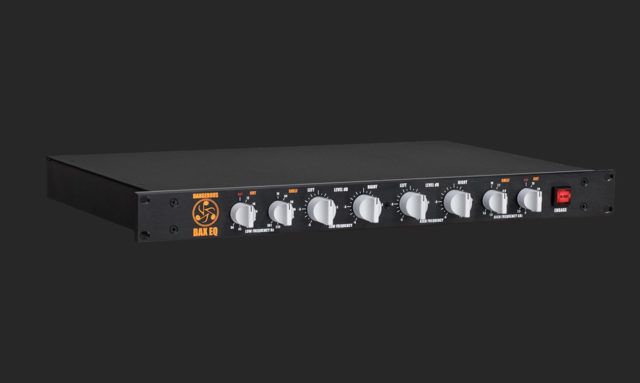
At this event, you’ll experience the monitor switching systems — Dangerous Monitor ST and the D-Box — learn how summing really improves your sound with the Dangerous 2-Bus, 2-Bus LT, & D-Box — and bask in the warm glow of the new Dangerous BAX EQ.
See you there! And please be sure to RSVP to Alto NYC’s Shane Koss at shane@altomusic.com.
Flux Studios is located in the Lower East Side. Visit www.fluxstudios.net for more info!