Beat 360: Much More than Just a Music Studio for Mark Saunders

August 10, 2010 by  

HELL’S KITCHEN: Dig Art Deco? Most definitely, and we could always do worse than to be in the majestic polychromed lobby of The Film Center Building on Ninth Avenue – especially if we’re visiting Beat360.

Beat360 mission control

Evolution is the solution at this extra-comfy facility founded by the busy English music producer Mark Saunders in 1997. He was in town then to produce Cyndi Lauper’s Sisters of Avalon, and never really left. With a production/mixing/programming discography that includes The Cure, Neneh Cherry, Shiny Toy Guns, David Byrne, Tricky, and A-Ha, Manhattan has been more than happy to take him.

The addition of Ollie Hammett as Director came in 2007, and Beat360 has grown out beyond just being a great place to track and mix. Today, this flexible sound concern takes on everything that touches artists and producers – management, synch, publishing, distribution and more. Corporate clients have been attracted too, including Nike, Reebok, L’Oreal, Chevy, Motorola and Microsoft.

With all that going on, they seem as eager as any of us to see what’s next, as Hammett made abundantly clear in a recent convo.

What kind of group are you and Mark working with at Beat360?
It’s essentially just the two of us, and we have a pool of assistants who help with the day-to-day running of projects. As a small team we cover as much as we can in-house and for larger projects we outsource to additional engineers as and when needed.

Mark came up in the industry as an engineer, producer and mixer. Recently he has been establishing a name for himself as an exceptional co-writer working with artists/writers such as Teddy Geiger, Cathy Dennis and PNAU (production duo behind Empire Of The Sun).

My time is equally split between studio work as an engineer/mixer and project management/business development. Projects I’ve worked on include Idris Elba’s High Class problems v1 (engineer/mixed), The SoundsCrossing the Rubicon (engineer), A-Ha’s upcoming Farewell single (engineer & additional production), and So So Glos‘ self-titled debut album (mix engineer).

That’s a small but diversified and accomplished core team. From there, how would you explain Beat360 as a business today? Is it a recording facility? Mix facility? Producer/songwriter haven? All of the above, or is it something else entirely?
I would say we’re all of the above. We market ourselves as a “full service music and audio solutions company.” It was originally established as a private recording, production and mixing facility for Mark’s projects. We now work with a whole array of different clients – bands, brands, digital interactive agencies, management companies, record labels — less and less — and independent artists more and more.

Mark Saunders

While diversifying, it’s really important for us to continue to try and bridge the artist development gap we now see in the music industry, so I think this is something that’s integral to everything we do. We’re always looking for opportunities for the artists we work with through our network of contacts and relationships.

I’ve had a couple visits to your studio HQ in the landmark Film Center Building, and it seems like a very productive place to work. Can you fill us in on the design philosophy, plus the hardware and software goodies?

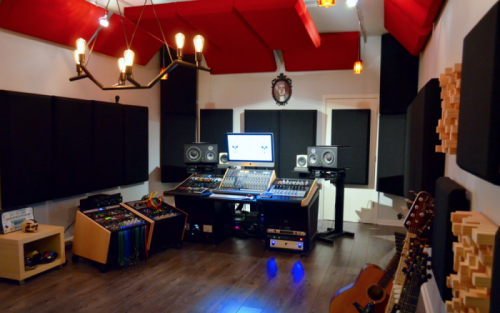
Beat360 is a 2000 sq. ft. facility with two mix/production suites, one live room, a kitchen, lounge and chill out area. Our philosophy is for artists/clients to feel as comfortable and creative as possible.

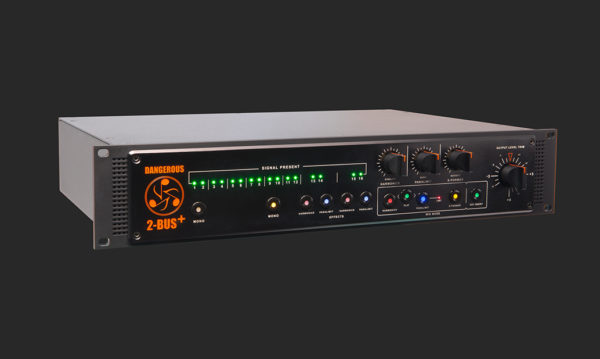
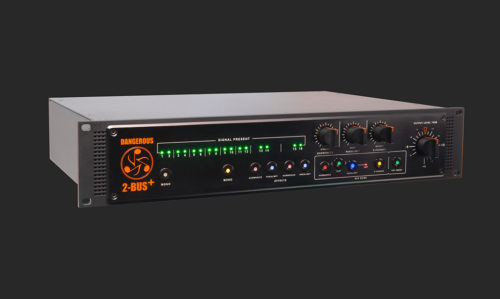
Our main production/suite is a hybrid system – no mixing board in sight. The main DAW is an Apple Quad Core/Logic/Apogee symphony system with X series converters, and a Mackie Control. We have a Dangerous 2-Bus summer and a selection of outboard gear that can be integrated into Logic sessions as insert plugins. We both use Pro Tools but prefer Logic so we have a Pro Tools LE system for converting projects that come to us in that format.

We have software, hardware and musical instrument toys in serious supply. See the full list here. But here’s a taste: Logic 9, Waves Platinum v7 bundles, Sonnox plugins, Arturia Collection, a Ludwig 1968 Drumkit, Soundelux U95S, Neumann U67 (1960’s), Telefunken SM2 stereo (1960’s), Urei 1176, Manley ELOP leveling amp/compressor, Night Nt3 mastering EQ, Telefunken V72 (2 channels) racked by Dave Marquette, John Hardy M-1 (4 channels), Neve 33122 (2 channels), Neve 33115 (2 channels) and API 312 (5 channels) racked by Brent Averill.

Ooooo, tasty. So what niche does Beat360 fill in the NYC spectrum of facilities? And globally for that matter, since you’re doing international services like FTP mixing.
I would characterize our studio as a full-service professional recording, production and mixing facility. In addition to the hiring the studio and services out to NYC clients, we also offer remote mixing and mastering solutions for independent artists all over the world through www.beat360-master-mixing.com.

Clients upload sessions to our server and we mix/master the tracks working closely with them on revisions to make sure they’re 100% happy with the end results. More than just an online service, it’s an artist development vehicle. A number of these artists we have gone on to help find management, legal representation, sync placements, TV show appearances, etc…

Our niche is that we are centrally-NYC-located with a great-sized space by today’s standards, have a diverse client base and work with both high-profile established clients, as well as helping to build the careers of indie artists.

The Beat360 live space...where stuff sounds good.

I think that sounds like a real indication of where “music companies” are going. The model is comprehensive but light on its feet. But would you say you’ve been high-profile or under the radar? Is this by accident, by design, or a little bit of both?

I would say we’re in the process of establishing ourselves. As of September, I will be managing a small producer/writer management division of a new international music group, rocketmusic.com. The starting roster in the US is Mark Saunders, Dan Romer and a couple of others to be determined — if you’re the next Quincy Jones feel free to get in touch! This exciting new venture will be integrally linked to BEAT360 and will no doubt help to put us more on the radar. I think the next few years should see our business become a more visible part of the New York studio facility and music production landscape.

Ambitious – we LIKE. Can you tell us a few projects you’ve got in the hopper right now?

We have been working with phenomenal talent Teddy Geiger for the last few months, Mark is producing his new album. I can’t tell you how excited I get when I hear his work. It reminds me why I followed a career in music. He really is a prodigious talent.

Mark is in the process of mixing music in surround sound for a forthcoming Luc Besson film. We’re beginning production of French singer/songwriter Emilie Gassin’s debut E.P this month. We’ve been recording Idris Elba’s features for several UK artists including Ty and recent XL signing Giggs. Also, we’ve been producing/recording audio assets for a multinational brand website.

That sounds like a solid spread. Would you agree you have to be a constant innovator in this business today?
Yes, I think you have to be creative with how you approach business and you have to pay attention to the market forces/technological advances that affect us all and try to stay one step ahead. Technology aside I think there’s something to be said for consistency: If you do something consistently really well, people will hopefully pay attention.

I’m a big believer in good old-fashioned customer service, the value of genuine win-win relationships and being proactive.

Aye! On the growth tip, how do you strive to publicize/promote Beat360, and successfully diversify your revenue streams?
A lot of our business is word of mouth and referrals. Luckily we get to work with some very cool talent that automatically creates visibility and awareness for what we’re doing in the right circles.

We promote our facility and services through various mediums, the obvious ones being Google/Facebook and relevant local business and directory listings. We normally attend events such as SXSW, NMS, Billboard and CMJ helping us keep up-to-date, hearing great new music and building relationships with potential partners and clients.

What or who is keeping you motivated right now?

I’m inspired that the music industry — as unstable and tough as it is seems to be – is moving towards a more transparent place where there is less room for monopolies. It’s more about passionate people doing stuff really well and building authentic relationships around it.

Beat 360's Ollie Hammett

I’m inspired by independent artists doing it for themselves without record label backing. April Smith just made an awesome album independently and has had several significant TV placements after raising $13,000 through Kickstarter.com, and Jenny Owen Youngs has raised over $30,000 through the same platform to record her next album. Wow!!

I’m inspired by tech companies such as Pandora, Echospin and SoundExchange who create great digital services and platforms for artists and fans alike.

Some key influences for me are entrepreneurs such as Richard Branson, and Chris Blackwell who have managed to enrich lives through brilliant music and art-based ventures. Thought-provoking writers/bloggers such as Chris Anderson, Seth Godin and Bob Lefsetz help me get perspective and try to stay on top of what’s relevant to the ever-changing business we’re in.

How would you characterize the overall studio scene in NYC today? What’s making you determined to be a part of it?
It’s difficult for me to characterize the scene in NYC today, actually, but it’s certainly great to see a website like SonicScoop helping to build a community around the facilities and professionals who work in them. I just try to stay in the loop with people, companies, technologies and music that excites me.

Thanks for those props, Ollie! Last off, what makes Beat360 an only-in NYC story?
I think we’re probably one of the only 100%-British-run music studios in NYC – I could be wrong! — and as you would expect we make a killer cuppa tea!

The advantages of being in NYC surrounded by so much talent, ambition and competition is that it drives us to constantly better ourselves. The main disadvantage is that there are not enough hours in the day to stay on top of any reasonably sized to-do list.

We know how you feel, OLD CHAP.

David Weiss

Blue Wilding Launches Audio Power Tools — Proven, Better, Reliable Gear Outta Brooklyn

July 8, 2010 by  

WILLIAMSBURG, BROOKLYN: Chances are, Blue Wilding has something you need. Under his brand-spankin-new, Brooklyn-based joint, Audio Power Tools, Wilding is repping the select audio brands BAE (Brent Averill Enterprises), BlueSky, Burl Audio, Dangerous Music, Mojave Audio, Royer Labs and more to be announced soon — something (awesome) for everyone.

Audio Power Tools reps 'next-level' product from BAE, BlueSky, Burl, Dangerous, Mojave and Royer Labs

“We represent makers of premium hardware for recording, mixing, post and mastering,” Wilding describes, further qualifying, “No do-it-all cheap boxes, ‘just-like’ plug-ins, clunky vintage or frilly boutique. Just quality product with great support right here in NYC.”

Wilding has been consulting users and dealers of top-level pro audio gear for over 15 years. During his recent role with Audio Agent (with previous time served at GC Pro NY and Dale Pro Audio), Wilding helped develop a new representation model designed to create a stronger symbiosis between the manufacturers of high-end audio gear, their dealers and end-users.

With Audio Power Tools, Wilding has now further customized these concepts specifically for the NY and Northeast market. Here’s the pitch, straight from Wilding to you:

“You wouldn’t use a $29 cordless drill to build a house…conversely, you don’t need an $800 imported drill with 400 different bits to do it either — you’re gonna grab that trusty, dust-covered Skil Saw™ that you’ve had for the last 10 years.

I noticed that the common thread between these brands was that that though they cost a bit more than the generic, ‘over-the-counter’ stuff, they represent the best of the “next level” that the user needs to stretch to to truly achieve top level performance and make a good investment without wasting money on unnecessary extras. These products get you there. These are what we feel are the audio power tools.

Also, the products we represent all compliment each other perfectly… People that contact us for one thing will often end up upgrading their whole rig. I’ll take a guy a BAE mic pre to demo, he’ll start talking about mics and out comes my Mojave MA-200, arguably the best mic for a hard-earned grand (please don’t argue with me, you’ll probably lose). Then we’ll discover that the 45-cent volume knob in his $299 monitor controller isn’t allowing him to hear how good the combo is and the Dangerous D-Box clears the ‘lens’ and saves the day!

Dangerous D-Box

Suffice to say, we understand the needs and strengths of each party, (manufacturer, user and dealer) and act as matchmaker in every regard. We create ideal conditions and provide solutions to make “the good stuff” accessible for clients and salespeople right away.

Working on the inside of many of the local dealerships we know the pitfalls first-hand. Though there are exceptions, it can take months before a hot “underdog” product becomes available for display, demo or purchase at a local dealer. When this is the case, pro users should not be banished solely to web-based ‘hearsay’ shopping for these highly personal investments.

Knowing this, we don’t wait for the products to take off on their own…we reach out to our 15+ year pro user client base to try out the gear. These initial demos stimulate local awareness and interest and everyone benefits.

We offer the salesguy that’s buried behind his desk or counter a convenient and simple way to sell this otherwise difficult to obtain gear to their clients. We can facilitate almost any local ‘right away’ need. It’s a ‘stop, drop, and fetch’ system and it works great!”

PRODUCT AND STUDIO CONSULTATION, TRIALS & RENTALS

During his tenure with Audio Agent, Wilding also worked directly with hardware manufacturers, even helping conceive tools, such as BAE’s new DMP Desktop Mic Pre.

BAE's Desktop Mic Pre (DMP)

“The power supply for a  BAE unit was sitting open on my coffee table and I thought, is there enough space in there to fit just one channel of pre? Just that simple, and the  owner of BAE and I got to sussing it out,” Wilding explains. “Every since my studio rat days, I always wished I could just have the same sound of the pre from the old Neve in a box, to go!”

“It seemed to make good sense for  many users…those setting up a smaller “B” rig that still want  a 1073 pre for track building …the musician that loves the sound he got in the ‘Neve’ room, that records one track at a time at home…maybe the guy that wants to  toss the pre right in the booth for a short cable run, or take it to a live gig andsit it on stage.

“What makes it different from other brick-style pres we’ve seen is that it simply delivers that sound (you know the one) with no shortcuts or constrained headroom at a price everyone can afford.”

Audio Power Tools also offers system design, integration and upgrade consultation, as well as 5.1 / 7.1 surround consultation and optimization.

“Whether you’re looking to expand an existing system with the least change to your workflow, or build a new, correct playback or production monitoring system, we can help eliminate the mysteries and get you listening and mixing with confidence and superb translation,” Wilding assures.

Now what if you need to do 5.1 and don’t want to expand your system permanently yet? Audio Power Tools offers surround rentals! They’ll deliver, and  setup a turnkey or expansion system that works with your existing gear, then take it away when you’re done!

In fact, rentals are available on much of Audio Power Tools’ stock. There’s the “try before you buy ” program through which you can demo gear in your own studio environment for a day or two. Then, there’s a rental program, which can extend the trial period (costs may even be applicable towards purchase). Or you can straight-up rent the piece, if it’s available. Contact APT for details.

An audio engineer and musician himself, Wilding genuinely believes in the products he represents and wants to spread the good word. Based in Williamsburg, Audio Power Tools takes on this mission guerilla-style, getting equipment into the hands of local engineers and doing it’s part to improve NYC sound — one set of ears at a time.

For more information, visit www.audiopowertools.com!

Free Jazz and Improvisational Recording at The Vision Festival

June 30, 2010 by  

LOWER EAST SIDE, MANHATTAN: As Brooklyn-based experimental-jazz quartet The Fay Victor Ensemble took to the Abrons Art Center main stage Friday night at the Vision Festival, we sat down backstage with Stefan Heger, the festival’s recording engineer.

The Fay Victor Ensemble at the Vision Festival, Friday June 25.

Heger has been recording the 15-year-old Vision Festival since ’02, making improvements to the system he assembles each year to capture the avant-garde jazz performances at ever-higher quality.

Now based in Cologne, Germany where he’s a recording and mastering engineer with Fisheye Music and Supow Studio, as well as Dangerous Music’s European distributor, Heger will leave NYC at the end of the Vision Festival with 300 – 400 GB of recorded audio.

Artists, labels and estates will get in touch when the opportunity arises for a live release and Heger will mix and master the high resolution recordings at his studio in Germany.

With all this in mind, Heger records the Vision Festival at the highest possible quality his resources will allow and captures the performances in surround should a 5.1 mix be ordered up. His recording approach combines studio techniques with — quite appropriately — live on-the-spot, improvisational engineering.

“I want to act like I’m in a recording studio as much as I possibly can,” Heger says of his approach to recording the Festival. “At the same time, this is momentum music. It’s so far outside of the pop genre I usually work with (and listen to) and it forces me to look at music in a different way.

Stefan Heger with his recording rig backstage at the Vision Festival. Photo by Nobu Awata.

“I’m always interested in figuring out how to get the best sound, but with this music, it’s more about capturing [the energy of] these amazing moments where — all of a sudden — everything is in sync, the musicians are grooving like nothing you’ve ever seen and then, before you know it, it goes off in every direction again.”

On a stage where anything is possible, Heger comes very well prepared, combining the house mics on stage with recording microphones and using studio mic pre-amps and converters.

This year, he doubled most of the instruments with Mojave studio mics, on top of the house mics. “For example, a double bass recorded with a tube mic in front can be a great choice,” he notes. “If the bass player doesn’t move a lot or if the bass is loud. And for horns, a tube mic can be a wonderful addition if it’s placed a couple feet away, etc. I’m using Mojave’s large diaphragm tube MA-200 and the smaller MA-100, their FET version, and some dynamic mics as well. These mics have that warmth, that studio character.”

Each year, Heger assembles his rig through endorsements from select manufacturers. This year, the system consisted of the Mojave microphones, a Soundfield B-Format microphone for surround sound ambiance recording, ShinyBox mic preamps, Apogee converters and Dangerous Music monitoring and summing. He records into Logic Pro.

The Vision Festival, 2010. Photo by Nobu Awata.

“I also need visual control due to the constantly changing setup,” Heger points out, noting the visual component of the ShinyBox preamps, which he hadn’t used prior to this year’s Festival. “The ShinyBox visuals are great for me — I can easily see the level and adjust accordingly. [And sonically,] they’re very convincing. They almost have a Siemens character.”

“From the pre amps we go straight into the Apogee AD-16x with Soft Limit, which is my safety-belt for high levels. So, it’s safe for me to leave the system while it’s in record,” he explains. “The Apogee converters sound great, are compact and easy to use. I’m doing 32 tracks at 24-bit / 96 kHz and don’t have to sweat it.”

“On the back-end, I’m using the Dangerous D-Box so I have several monitoring options including speakers and if a quick ref mix is needed, I can use the 8-channel summing on the spot.”

Then there’s the Soundfield B-Format microphone. Positioned at the top of center stage, and pointed towards the back of the stage, the B-Format’s four capsules capture sound from every direction. “I’m recording six channels of that mic — two are stereo for a rough mix and the others you can zoom in on individual instruments, you can use the back capsules for the audience,” he explains.

Vision Festival 2010. Photo by Nobu Awata.

“You can change the patterns while you listen, from omni all the way to figure-8 and you can change the stereo width. It even does Mid-Side. And the bottom end is unbelievable.”

More important than the amazing sound quality of the Soundfield B-Format for the Vision Festival is the freedom it affords Heger in post-production. “Why not decide later how much room you want?,” he poses, noting that he’s now making so many other decisions in the moment.

“As an engineer I can’t help but be inspired by the musicians on stage, and make decisions on the spot as I go,” says Heger.

“I really get creative and give myself the freedom to experiment, try different things. When a new band comes on, there may suddenly be two sax players and they didn’t mention this…so I decide on the spot I want to bring up a completely different mic than the FOH.  I might even have a plan starting out, but then I’ll change my mind and do things differently in the moment. The spirit of experimentation and improvisation is infectious!”

For more on the Vision Festival, visit www.visionfestival.org and get in touch with Stefan Heger through his website, www.fisheyemusic.com. Photo by: Nobu Awata

On The Record: Laurie Anderson, Mario J. McNulty On The Making Of “Homeland”

June 25, 2010 by  

SOHO, MANHATTAN: Iconic NYC artist and sonic adventurer Laurie Anderson released her amazing new album, Homeland, earlier this week. Years in the making, Homeland emerged after a challenging and at-times vexing process in the studio, and very nearly never emerged at all.

Laurie Anderson

“It’s this very, very weird hybrid,” says Anderson, struggling to pinpoint what ultimately makes up Homeland. “I’ve never worked on something this odd before: it was sort of a bunch of filters, a bunch of live [recordings] and a bunch of studio ideas. I’m not even sure what to call it because it’s such a bizarre collection of things.”

It started with sonic scaffolding. Anderson is credited as an engineer on Homeland, and would have to be for the way the songs are composed: they are, in effect, engineered.

“I start with many different rhythmic riffs — even though Homeland doesn’t sound particularly rhythm-driven, it really is,” she describes, when asked of her sonic palette. “By that I mean most of the songs are built on these scaffolds that get removed, and they are mostly violin filters that I’ve been building myself with a software designer named Konrad Kaczmarek. They were based originally on Eventide filters but we went further afield in building our own.”

These became the building blocks for Homeland — movements both ominous and euphoric built up underneath and around an epic narrative. And Anderson toured the work, developing it on the road, recording performances of her constantly evolving Homeland live show all over the world for three years. “That’s various versions of the show, in various tempos, in various keys,” she points out.

Along the way, she recorded with a variety of collaborators, including Tuvan throat singers and igil players of Chirgilchin, and captured improvisational sessions with NYC experimental jazz and rock musicians including Rob Burger (keyboards), Omar Hakim (drums), Kieran Hebden of Four Tet (keyboards), John Zorn (saxophone) and Antony Hegarty (vocals).

Laurie Anderson performing "Homeland"

“I wanted to make a record that would really relate to the live shows,” Anderson shares. “My live rig incorporates so many tools now — soft synths, homemade pedals, vocal processing, different vocoders, the homemade software we call ‘Tide’ in homage to Eventide” — to where I can do almost anything in the live show. It’s really, really exciting and I wanted to get that feeling into the record.

“So it’s like I ‘wrote the record on the road,’ and then came back to the studio and tried to ‘record’ it, but all of those terms were sort of meaningless by that point. I thought, OK now I’ll take some of these live files and paste them together into these songs in the studio and get that live feel. And, that was beyond hard! We took some of those rhythmic elements, printed them and then tried to make a studio version and the air went out of the whole thing.

“And, I thought, No!! I really didn’t want to do something that pristinely goes from my box to your box. I [found myself] sitting there working with all these clean files thinking now what? I’m going to put fake air around them? No! That kind of air to me feels like air-conditioned air — stale air from a hotel in Tokyo that’s never been aired out. I wanted to use air that had been pumped through real places; waves that had been somewhere.

“At that point, the record budget was pretty much over and it was just me sitting with like 100,000 sound files. Here I’d been thinking I’m going to make this spontaneous live thing, and now I was digging through and labeling all these files. I truly would never recommend this to anyone. (laughs) Do not try this at home!”

HOMELAND EXCAVATION: DIGGING, COMPILING, MORE RECORDING

It’s somewhat unsurprising, for an artist who’s always so embraced technology, that the infinite possibilities of today’s methods of music production might tip the scales into the overwhelming. “I got super-depressed looking at all those files and I actually stopped working on it many times,” Anderson admits. “At that point, I was only working on it as a hobby, a couple days a month. I thought I would never finish it. And it was because of Lou [Reed] that I finished it and because of Mario [McNulty] too. Mario really hung in there, and he said it is possible to do this. He was really willing to dig into those bins, and he was really patient.”

Mario J. McNulty

A NYC-based engineer/producer, Mario J. McNulty had worked with Anderson before. He mixed sound for a short film she directed in ‘05. “The first time I ever spoke to Laurie, we had a really nice chat about mixing,” McNulty recalls.

“And it was so great because it was abstract and artistic — the ultimate way I like to approach things, in a totally non-conformist sense. It wasn’t ‘this is a rock mix’ where the kick drum does this, etc. It’s not of the mainstream world at all, it’s of this world that I really admire, of Laurie and Eno and Gabriel and Bowie and Talk Talk and all of these records that I’m really passionate about.”

“That’s maybe the only talk we’ve ever had about mixing, and we’ve worked on and off ever since,” he continues. “So, on Homeland, we never had to talk specifically about what the album should sound like, because I already have a good sense of what she wants: she wants beauty. And, her vocal needs to be in the right place and really only she knows where that is. I mixed the record, but she’s very, very involved in the process.”

McNulty went into Anderson’s studio in SoHo and began the process of compiling Homeland, with the expectation of beginning to mix it. “There had been a lot of different people working on it, so the material was all over the place, literally,” he describes. “On different hard drives, in different studios. Neither of us realized how spread out the project was. I consolidated it all into one location, so something could be played back that made sense to her. And by that point, she was realizing she had more work to do. It just wasn’t moving her the right way.”

Anderson put mixing on hold to do some more recording, editing, and arranging at her studio, which has been her workspace since the 80s. “She has a lot of equipment, but the main recording system there is a Pro Tools HD2 rig,” McNulty describes. “And she has a series of laptops with soft synths, vintage and modern keyboards and racks of time-based effects like her Eventide Harmonizers, which she uses in the recording process as well as in mixing.”

Fenway Bergamot, "Homeland" narrator

“Pretty much any time we would need an effect, we’d go to the Harmonizer,” says McNulty. “She’s one of the pioneers of the Harmonizer so she’s very familiar with it and even the software emulations of the Harmonizer, so we would get into all kinds of sounds with them. She’ll record violin through this really awesome stereo delay patch that she made — and she also has patches that Brian Eno made for her stored in her Harmonizer.”

As she has throughout her career, Anderson used filters to essentially create new instruments, new voices. Homeland’s “Another Day in America” uses one of her classic vocal filters to voice her male alter-ego, “Fenway Bergamot,” the darkly comic storyteller, the omniscient narrator of the Homeland live show.

“Mario’s the reason I added Fenway Bergamot to the record — we just put up a mic and improvised for awhile to see what would happen,” Anderson recalls. “And that became ‘Another Day in America.’ I’m very glad I included that because my music is about words and their rhythm, so to have that very stripped-down [piece] in the middle is kind of what I was going for as well.”

THE MIX OVERLAY: UPGRADING THE SIGNAL PATH

By the end of the summer of ’09, Anderson had finally finished recording and decided she wanted to mix the record in her own studio. “I proposed that we rent some equipment, basically do an upgrade to the studio,” says McNulty. “So I called Jim Flynn Rentals and explained how I wanted to mix analog but that I wanted to avoid all the old analog gear that I wasn’t liking in her space, like her Mackie consoles which she mainly uses for monitoring.

“We did what Jim called a “mix overlay,” McNulty relays.  “We upgraded to an HD3 system and added a Dangerous 2-BUS for analog summing, and a series of compressors — Urei, LA2As, 1176s. We also had some gear from Lou Reed. He brought over his LA2A, which is the best LA2A I’ve ever heard, and some Avalon compressors and EQs. We were able to basically bypass her patch bay and patch all of our analog compressors and EQs by hand. So it was a totally custom setup.”

McNulty also rented an A-Designs Hammer. “I used one side of this stereo EQ on Laurie’s voice, and it’s just a fantastic sound,” he adds.

They also rented an arsenal of plug-ins. “Laurie had a good collection of plug-ins but I also needed some other tools that I find really useful when mixing, like the McDSP Emerald bundle, the Crane Song tape saturation plug-ins and the Sound Toys bundle — TimeBlender, PitchBlender, and Echoboy is my favorite. They’re really useful and really fast — sometimes you need to just pull things up quickly, especially in a mix scenario. I also used the Waves SSL plug-ins and EQs, which Laurie owns, and the Sonnox EQs. For effects, I’ll use ReVibe, Waves and the Eventide Harmonizer plug-ins as well.

“We also used her hardware Harmonizers on the mix — she has special reverbs, cave reverbs, all kinds of de-tuned stuff that won’t be found in any other H3000 because they are patches that were designed either by Laurie or by Brian Eno. So that was a real treat!”

HOME-STRETCH: LOU REED, HI-FI- MONITORING, KILLER BASS!

Though Homeland had involved many people’s contributions along the way, including Roma Baran who’s credited with Reed as a producer, by the end, it was Anderson, Lou Reed and McNulty finishing the project in the mixing stage.

Laurie Anderson. Photo by Tim Knox.

“That was, in a way, the hardest stage,” says Anderson. “In the beginning of a project, it’s all experimentation and great and at the end, you realize ‘oh, but we do have to eventually make something and present it to someone.’ Lou said he was going to come in and sit here in the studio with me until I was done. And I thought, ‘oh, that’s a bad idea for a couple!” (laughs) but I would truly, literally be working on it today, without that.’

“Lou is a great producer,” Anderson continues. “I’d play something and he’d say that’s done, let’s move on. And I’d say ‘No, no! It needs horns, background vocals, etc…I can’t leave that vocal on there.’ Lou is a really fascinating blend of perfectionist and purist and somebody who’s just really loose. He’d say, ‘Leave that raggy stuff in! Why would you take that out?’ And ‘This doesn’t need 17 more parts. Air can be part of it. Air can be rhythmic.’

“Every writer I know is indebted to their editor if they have a good one and same with a musician to their producer. And Mario in a lot of ways worked as a kind of producer. He wasn’t just the engineer — he would definitely express himself in a way that was so well-timed, he understood the process so well that he was never intruding but he had this way of putting his opinion in.’

They monitored Homeland on a few systems. “Laurie has her ProAc speakers that she’s used to listening on in the control room and then I added NS10s, which Lou and I would listen on,” says McNulty. “We also wanted a really hi-fi monitoring setup we could listen on, so Lou brought these huge ATC monitors over from his studio. We set them up in the live room — on foam on the floor — and there was a couch and blankets, and people would sit in there and listen on these huge 3-way monitors, which have this incredible frequency response.

“That was great — to be in the control room with the nearfield monitors and then be able to clear our minds, take two minutes and go in the other room and crank it on the big guys — see where the bass is sitting, see where the vocal is sitting.”

What was Anderson listening for? “We conceived it with a very wide sonic range,” she describes. “And I wanted scary bass. I wanted the bass to jump out and kill you! I’m so sick of hearing MP3s coming through people’s laptop speakers and you hear this tinny thing…and you think, ‘That’s the song?’ Why did I spend more than two minutes on the song if it was going to sound like that? So, I wanted to make something where if you wanted to crank it up on a huge system, you’d hear tons of colorful details and all these little things.”

Nonesuch Records released Homeland on June 22. Buy it HERE! The album is available as audio-only and as a CD+MP3+DVD (which includes the 40-minute documentary “Homeland: The Story of the Lark.” Anderson will perform “Another Day in America: Songs from Homeland & other stories” at Le Poisson Rouge, July 13. Tickets here!

Mario J. McNulty is represented by Joe D’Ambrosio Management.

Party Pics! NYC Music Producers Gather at Flux for Vintage King, Dangerous and Focal Showcase

March 14, 2010 by  

Vintage King was in residence at Flux Studios last weekend. The guests of honor were…everyone in attendance, as the present and future of NYC music minds packed the East Village studio to meet up, check out some new gear and learn a thing or two.

Fab running Dangerous and Focal demo sessions

Fab running Dangerous and Focal demo sessions

A crowd of artists, producers and engineers tuned into Flux founder and musician/producer/mixer Fabrice “Fab” Dupont as he led them through the inner workings of systems from Dangerous Music and Focal Professional.

Vintage King’s East Coast sales representative, Peter Kehoe, as well as Dangerous and Focal reps, were on hand to answer additional questions about the Dangerous Music 2-Bus / 2-Bus LT, ST/SR and S&M, and D-Box, and the Focal Solo6, Twin6 and CMS50 monitors.

Also at the showcase, New York songstress Yeshiva captured the coveted Focal XS 2.1 Speaker System for iPod, the evening’s raffle prize.

Splash in some nice French red, and the evening was an ideal mélange of knowledge and networking. Plus, Vintage King offered special deals to those in attendance. Pretty sweet!

For those of you who couldn’t make it, we tried our best to document the fun — see video courtesy of Vintage King and pics courtesy of SonicScoop!

Vintage King – Dangerous Music – Focal Professional at Flux Studios: Friday, March 12, 2010 (click thumbnails to enlarge)

Event Alert: Dangerous, Focal & Vintage King Showcase at Flux Studios, NYC

February 24, 2010 by  

Vintage King Audio will present an evening of discussion and hands-on demos featuring Dangerous Music and Focal Professional equipment at NYC’s Flux Studios on Friday March 12. Musician, producer, mixer and all-around audio guru FAB will be demonstrating the power of the Dangerous and Focal lines.

The event will start at 6 pm and run until 9 pm, offering a rare occasion for both networking and tech talk inside a true state-of-the-art hybrid analog-digital recording/mixing/mastering facility in the East Village. For more on Flux, check out our technical and creative profiles.

You must be registered to attend, space is limited. Online registries will automatically be entered in a drawing for a chance to win a Focal XS 2.1 Speaker System (valued at $599)!

REGISTER NOW, HERE.

SonicScoop hopes to see you there!

WHEN: 
Friday March 12, 2010

TIME:
6:00 – 9:00 pm

WHERE: 
Flux Studios NYC

154 East 2nd Street

New York, NY 10009

Flux Studios An East Village Atelier

October 7, 2009 by  

EAST VILLAGE, MANHATTAN — Earlier this year, we reported on the new Flux Studios, highlighting its Dangerous Room and several of the records cut there since the studio’s opening in January. Much of Bebel Gilberto’s new record, released last week, was recorded at Flux, with Didi Gutman of Brazilian Girls, producing. And, another NYC-based Brazilian band — Forro In The Dark — has made a new record entirely at Flux, with owner Fabrice “Fab” Dupont producing/engineering for Nat Geo Records.

Scoop_Flux_BebelFlux sounds worldly, right? Indeed, Fab’s world-pop production credits draw much of the studio’s clientele. “The world music scene is very active in New York,” Fab mentions. “Lots and lots of South American musicians land in NYC one way or the other and choose to stay.

“It’s fun to work with them because the musicianship level is very high. It takes a lot of talent to uproot and go live in one of the most expensive cities in the world as a full-time musician.” A transplant from Paris, Fab sees the city as a filter for international artists. “Those who make it here are the best ones,” he says, adding that as a producer/engineer, “I have consistently found that the most accomplished musicians have the best outlook and attitude and I find that particularly true with foreign musicians who live here, which makes these sessions a blast.”

Fab produces and plays keyboards/electronics with a French band called Mam, who also recently tracked a record in The Dangerous Room.  On our last visit to Flux, Fab played us several tracks recorded live in the studio to demonstrate the studio’s acoustics for live instrumentation as well as its heavy integration of computer-based music technology. Listen to MAM’s track, “Penthème”:

Audio clip: Adobe Flash Player (version 9 or above) is required to play this audio clip. Download the latest version here. You also need to have JavaScript enabled in your browser.

FOR THE UNINITIATED…

A studio once run by the guys who started Dangerous Music and thereby named, the Dangerous Room has hosted sessions with The Rolling Stones and The Black Crowes. So there’s a total legacy in its design and vibe, but Fab and the Flux team have fully spruced up the studio for today’s music business.

“This room has been restored to what it was when the Stones recorded here, but it’s actually more controlled now, and has zero street noise, where there was a lot of noise before,” says Fab. “There’s really no classic analog room, built and equipped at this level, in this phenomenal location, at the prices I’m asking.” [Call Meredith at 917-512-3489 for a quote.]

An 1895 Steinway Model A Parlor Grand Piano sits in the center of the naturally-lit live room, notably accompanied by an upright piano “that sounds so Beatles-y it’s almost painful,” 50s, 60s and 70s-era Rhodes, a Wurlitzer, a Hammond B3 with Leslie, and a collection of classic amps. Baffles stand tall near the windows, symbols of the room’s multiple configurations. “We record bands 100 percent live in here, with no editing and no overdubs, and it really sounds amazing,” notes Fab.

MAKING RECORDS FROM A-TO-Z

An 1895 Steinway Model A Parlor Grand Piano sits in the center of The Dangerous Room.

An 1895 Steinway Model A Parlor Grand Piano sits in the center of The Dangerous Room.

With full-up facilities and engineering staff, Fab has been producing records from start-to-finish at Flux. “I did a record with a British singer named Will Knox, which is really beautiful,” he says, describing, “It’s like this gorgeous, ornate and fragile equilibrium of music — we recorded it here and I’m mixing it now.”

Jazz bands and producers, like Com Voce with producer Matt Pierson, can check into Flux and leave a few days later with a fully-mastered album.

“We did a ten-song record with Com Voce, recorded, mixed and mastered in three days,” Fab explains. “Meredith tracked them in the Dangerous Room, and as she finished songs, I’d get the files over our network, open in my room and mix and master them. So, when the musicians were leaving at night, they’d pass by my room and hear songs they recorded that morning, mastered.

“We’re doing another record with Matt Pierson and an artist named David Caceres this month,” adds Fab. “David’s an unbelievable singer and alto sax player from Texas. And we’re doing it the same way: 10 songs in 3 days.”

Artists such as R&B singer Chester Gregory, Pharoahe Monch, Duncan Sheik, Joan Osborne and Afrika Bambaataa have also recorded at Flux since it’s opening.

QUEST FOR A BETTER WORKFLOW

The uniquely tailored equipment setup at Flux, including one-of-a-kind mods and custom gadgetry courtesy of in-house technician Joe Russo, adds to the personality and technical reliability of these studios.

Flux's newly refurbished Gates AC70 preamp

Flux's newly refurbished Gates AC70 preamp

As previously reported, the Dangerous Room’s Neve 55-series broadcast console is retrofitted with a Euphonix DAW control surface and a Dangerous Monitor ST. Dangerous analog summing, Mytek Cue system, Lynx A-D-A converters and racks of specially selected processors form Fab’s ultimate analog front- and back-end for the DAW (Pro Tools HD3 or Logic) or tape machine of the client’s choosing.

Flux also recently expanded to include a proper client lounge and audio restoration workstation, manned by Mike Comparetto. “We also added a tunnel FTP system, which is a hybrid between an FTP and a VPN,” Fab adds, “So uploaded files land directly on our desktops, saving a lot of time.

“I’m always on the quest for a better workflow,” he concludes.

We think that as more and more producer/engineers and artists experience Flux, awareness of “better workflow” systems and indeed, better sound, will spread.

“We’re also designing gear here,” Fab concludes. “Someone in Paris gave me an old Gates AC70 preamp — basically two transformers and a very dirty circuit board with broken everything and no tubes. Joe restored it, extended the functionality, put it in a box and made it look cool, and now it’s the best sounding thing I’ve ever heard.”

For more information on Flux Studios, visit www.fluxstudios.net.

« Previous Page