Robert L. Smith Records/Mixes for “Burma Soldier” Score with U2, Notches Hits with “Glee”
May 7, 2011 by David Weiss
/* Filed under News */
NYC-based producer/engineer Robert L. Smith, founder of Defy Recordings, has been involved in a pair of recent high profile film/TV projects.

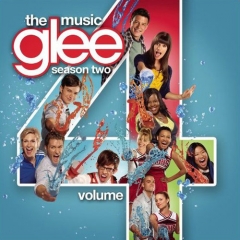
Robert L. Smith of Defy Recordings helped power the new "Glee" album to the toppermost of the poppermost.
Smith worked with film composer Paul Brill on the score for HBO’s upcoming film, Burma Soldier. Smith and Brill recorded a string quartet at Avatar Studio G to accompany an acoustic version of the classic U2 song “Walk On”. Smith mixed the song, which will serve as the music for the end credits, at Defy Recordings’ studio in Hell’s Kitchen.
In addition, the album Glee: The Music Presents the Warblers was released on April 19, entering the Billboard 200 at #2, as well as the iTunes album charts at the same position. Smith recorded/mixed four songs on the accapella collection, including the first (and so far only) #1 “Glee” hit “Teenage Dream”, along with “Silly Love Songs”, “Bills Bills Bills”, “Hey Soul Sister” and “When I Get You Alone”.
Glee Hit Covers of “Teenage Dream”, “Hey Soul Sister” Recorded/Mixed by Robert L. Smith of Defy Recordings
December 8, 2010 by Janice Brown
/* Filed under News */
Robert L. Smith of NYC-based Defy Recordings recently helmed the record and mix for two hit singles for The Fox show “Glee”. His work on the choral cover of Katy Perry’s “Teenage Dream” helped to score “Glee” it’s first #1 single on iTunes, and the choral version of “Hey Soul Sister” by Train also went to the iTunes Top Ten.
Working with producer Tommy Faragher, Smith recorded Tufts University’s Beelzebubs men’s choir and Glee’s Darren Criss at Avatar’s Studio G, and mixed on that room’s SSL 4000G+.
See Glee’s performance of “Teenage Dream”.
Stacie Rose: On Fearless Songwriting, Sharp Synch Licensing, and her ALTER EGO
July 5, 2010 by David Weiss
/* Filed under Music Biz */
RUTHERFORD, NJ: When an insatiable appetite for songwriting collides with a quest for success, artists like Stacie Rose are the result. You could say this career-focused New Jersey native is fast-emerging, except there’s a lot to suggest she’s already arrived.

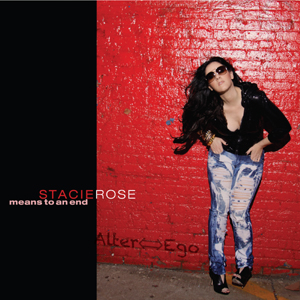
A young but oft-licensed songstress with a clear ear for hooks, her cuts have already garnered synch uses from clients including MTV’s “The Hills”, VH1′s “Tough Love”, Paste Magazine’s “SONGS FOR HAITI” compilation, amc, FX, ABC, Escada fragrance campaign, American Airlines Radio, and FUSE TV. Those tracks, several off of her Shotgun Daisy! album, are about to get a run for their money from her dual ALTER EGO EP releases of Raw Sugar and Means to an End (Enchanted Records), going first to her Pledge Music supporters on July 20, and then to the big ole’ world on August 17th.
She’s no calculating bean counter, though. Rose’s approach to creativity and collaboration are what keep her energized, as she revealed in the SonicScoop interview. Listen to what she lays out here — we say this is How to Make it in Music, 2010 style.
You’re a pretty prolific writer. How does a song get started for you?
My approach to songwriting varies a little. It generally starts with a lyric, a gut feeling or story that leads to a lyric, or sometimes I just grab the guitar and start strumming, and humming, and then it’s racing around looking for a pen and something to jot ideas on, like junk mail or the back of a magazine, and then my digital recorder to sing into.
Then, it’s Demo One, followed by Demo Two, many versions, verse and chorus — sometimes days in between, then a bridge might emerge.
Maybe that’s more my process: My approach is really capturing the essence of the moment, or concept, I’m writing about. I try to bring my perspective to things, my metaphors, and create a mood, a picture, or emotional landscape. Sometimes I try to teach myself a lesson, work through a personal challenge, or celebrate an epiphany.
I used to feel very evolved, but I seem to be going through a new phase where I am suddenly tripping upon survival skills, questioning things, reacquainting myself with my inner strength and writing through it all. Sometimes I don’t try to do anything at all, no goals — and the songs/words pour out.
That lines up with the very thing that I’m trying to relearn this week – that change is GOOD. So how does that songwriting approach reflect how you see yourself as an artist?
I view myself as a unique, pop songwriter, both fiery, and feminine. I’m almost always in motion, even when I am still.
I’m not an anarchist, but certainly do not conform to anything or anybody. I don’t follow the pack. I do take my work/songs very seriously, but don’t take myself tooooo seriously. I have dark comedy tendencies and the deepest love of melody and words. I’ve come to accept my own dichotomies. I can rock out pretty well, but can also turn a shy side. I’m part late-night, acoustic singer-songwriter girl, who sometimes likes to mash and trash it up!
That’s multiple personalities! But at SonicScoop, it’s not a disorder. What’s been your approach or strategy for developing your musical career?
My goals are to continue to create music on my terms with people whom I respect, and enjoy sharing the process with. I always want to give myself the room to grow and experiment. It’s important for me to be true to my heart, my vision and to stay in the moment as much as possible, enjoying, or at least feeling the process even when it’s more difficult.
I really make a grand effort to help these songs out into the world, so that they can have a life, and hopefully work their way into people’s homes, hearts, heads, and iPods.
You’ve built up a great track record all ready with synch placements – MTV, VH1, FX, FUSE TV. How did you get started on this track? What role have music-to-picture placements had in your artist development?
The Orchard managed to place my song “Here’s Looking at You” in an ESCADA “Sunset Heat” Webisode. When I saw the footage, it felt really fitting. The song is up tempo and free-spirited. The episode was summery, sexy, & beachy.
I’ve actually had two songs in racy bathroom scenes, which I think is kind of funny and interesting. My good friend and filmmaker, David Kittredge, used my song “Promised Land (remix)” in his award-winning film, “Pornography: A Thriller”. The song pumps in a club as two guys size each other up in the men’s room. Another song of mine called “Back to Life” made it into an episode of the FX show, “The Riches” (with Minnie Driver and Eddie Izzard). That song played in a bathroom scene in which Minnie got groped at a neighborhood house party by her husband’s colleague. Good stuff!
Then the placements in MTV’s “The Hills” and VH1’s “Tough Love” got a lot of buzz since those hit shows are such guilty pleasures! I had a song called “Find Your Way” in an amc movie spot, and it was wonderful because it aired just before my last record Shotgun Daisy! was released.
The movies being promoted were stellar and stories within the spot really meshed well with the lyrics and melody. The characters in the movies were in fact “finding their way” A really great spot, and good match! And, amc was super cool and artist-friendly, including an artist/song/label credit, which helped with record sales. The spot is on YouTube and gets a lot of love from fans, and made new people aware of my music.
In general, the licensing is a really great way for artists to earn money and to continue creating. The consistent placements have really helped me to build buzz, gain momentum, and get people’s attention.
Licensing PROPS. So does it get hard NOT to think of synch-ability as you continue to write? Do you find yourself wondering if a song is going to work for picture as you write it?
I usually don’t think about synch when I write. I might just have a knack for finding a universal way to convey things. I like being poetic, and crafty in my writing but I also want people to get it — I believe in the power of a good pop song!
It may sound obvious, but why do you think having an understanding of synch licensing is important for emerging artists?
You want to be able to market yourself and bring your songs to the surface, reaching the masses. You’ve got to know the game if you want to play. People are watching TV, webisodes, and films. They won’t always seek you out, so you need to find ways to bring the music to them.
This is a sneaky and savvy way of getting your music to be heard and felt. It’s quick and painless. And, if they dig it, they might come back for more, seek you out, purchase your music, stalk you, blog about you, etc…
Well put. Switching gears, do you have your own studio in NYC, or do you record at other people’s facilities? Where do you like to work?
I demo all my songs at home on a digital Sony mini recorder. If I’m on the run, with no guitar on hand, I will sing into my iphone(recorder ap). If I mean business and am going for a real recording or even a pristine demo, I will work at Defy Recordings with Robert L. Smith. He gets beautiful sounds. I work on a lot of arrangements with Jeff Allen at his place in the Bronx, and often bounce around to various studios (mostly in NYC) to work on various side projects.
When someone works with a variety of producers like you do, how do you decide who to work with?
I guess I mostly work with the people I love and trust the most because it’s like home. Robert and Jeff have really been constant collaborators. Both of them have introduced me to a myriad of amazing singers, musicians, and writers.
David Patterson and Rob McKeever (both guitar players) have consistently helped me find a voice for my songs through the years, so I often turn to them as I write.
I am really loyal to those who have been on board since the get-go and, at the same time, incredibly open to meeting new artists and melding my music with others. I feel as if I’ve been collecting new friends and building momentum mostly because of the exciting energy that comes from good, soulful, collaborating. It’s the key to my success as an artist.
That’s BIG. Did that work go into your new EPs – two different projects — that are about to come out simultaneously?
I’m about to release the most exciting project of my musical career thus far: The Alter-Ego EPs, officially due on on August 17th. I raised a good portion of the budget for this through PLEDGE MUSIC. I have been sharing the process, and progress through PLEDGE, Facebook, my website, Twitter, blogs etc…
This is really the first of many concept projects for me. The Alter-Ego EP: MEANS TO AN END is a bit more raw than my other records, and veers off on an edgier, live-ish path.
The sound and approach is mostly influenced by some of my classic rock heroes. Jeff Allen ( the producer of this EP) and I got our dream band together, did two long rehearsals and then went right into the studio and recorded six tracks in one long day, so that the ideas would be slightly rough around the edges and possess that raw, unaffected energy that comes with the initial creation of something.
We recorded with Oliver Straus at Mission Sound in Brooklyn. He got stellar sounds, and the day is one of my favorite memories. Since then I’ve been finishing my vocals, and we’ve been adding a few exiting overdubs –The icing! It’s being mixed right now!
The Alter-Ego EP: RAW SUGAR is pretty dancy. It’s pop at its clubbiest for me and has been really exciting to make.
Robert L. Smith has produced this EP with me. It’s been intensely collaborative, constantly evolving and there are so many exciting people involved. It’s a departure for me in a way, but feels totally natural. I’ve worked with Robert to corral and empower the various producers, mixers, programmers and singers involved, to help shape, and make these songs a sensation.
In doing so, I have felt new sides of myself emerge. I see neon, champagne, and many costume changes in my future. So, I guess I would describe the overall project as gritty and pretty, pop and pow, sugary and savory, thunder and lightning. They go together but are totally different.
On another musical side of you — you introduced me to a really interesting project involving the Beatles and some ukuleles…
Well I’m sort of late to the party, but happy to have been invited nonetheless. This whole thing happened pretty organically. I had the good fortune to have been introduced to the amazing singer-songwriter/vocal producer Mike Harvey. My friend/producer/collaborator Robert L. Smith hooked us up for the ALTER-EP project I am currently working on.
Mike’s soulful voice has become a key ingredient in the dance/pop songs. He introduced me to David Barratt who founded the high-concept art project THE BEATLES COMPLETE ON UKULELE with Roger Greenawalt. It’s like “Where’s Waldo?”, but with ukulele. You’ve got these amazing, intricate, arrangements, and exciting incarnations of beloved Beatles songs, and somewhere within each track there is a UKULELE! How fun is that?!!!
Sometimes the instrument plays a large roll, sometimes it’s a bit more discreet, but it’s the common thread that binds this project together. I loved having the opportunity to pick the song I wanted to approach in my own way. When I got the list of available songs, my eyes raced down the page, searching for I ME MINE (written by George Harrison)… it was free! It was MINE! once I declared it so, David built the most gorgeous, hypnotic track for me to sing to and the rest is history. The track should make its way into the world this summer! It’s quite a unique and exiting project, with so many amazing artists lending their voices.
The track we heard was indeed awesome — although the latest post (July 2) on the blog makes note of “irreconcilable differences” between Roger and Dave. Intrigue! Anyway, so you’re off to a good start: What advice do you have for songwriters/artists who are just getting started now? And in that vein, what do you know now that you wished you had known a few years ago as you were getting started?
WOW — I wish I had known so many things when I got started and I really knew nothing. It was a blessing in many ways because it taught me to be resourceful, organized and creative.

I made countless mistakes, and made astonishing waves by being fearless, and stepping up to things. I always acted like I had it going on, and this confidence seemed to draw others into my orbit. Sometimes I wish I possessed the same brand of moxie now. Ignorance is bliss, to a point. Knowledge is power, always–and some place in between that–if you can remain open, stay focused. learn from mistakes, trials and errors, and hold onto that raw, gutsy, mojo… that’s magic!
I would also tell a newbie, to do things on your own terms. There’s no fast track, no tricks, and no finite way to make or promote music today. Find what works for you. Define your own sense of success. It’s ok if you don’t have all the answers, but you have to be willing to learn, ask, and try.
You don’t know? Draw from your heroes and influences but always try to be unique, authentic and GOOD! Persistence often pays off. Put good energy out into the world, treat others as you wish to be treated, seriously, and don’t do it if you don’t love it and burn for it.
Thanks for some inspirational insights. Lastly, why do this in NYC and not LA, Nashville or Nairobi?
Because NYC is still the best place in the world, with the best pulse, the hottest vibe, and an intangible energy force-field! There will always be a certain artistic history, and edge about NYC that reminds you that you’re alive and that anything is possible. There’s both a toughness and friendliness about it. There’s an infinite amount of inspiration, beauty and grit, swirling about to draw from!
It might be the BIG apple, but when you’ve done the circuit for a bit and start to see how small certain circles really are, it’s quite a cozy, comfy place to be writing, recording and performing music. And that street cred thing about making it in NYC is still something to shoot for.
– David Weiss
Defy Recordings: Robert Smith is the Ultimate NYC Hybrid
October 27, 2009 by David Weiss
/* Filed under Music Biz */
HELL’S KITCHEN, MANHATTAN: You want state-of-the-art? Here it is: Defy Recordings. Founder Robert Smith personifies the flexible strategies and sonic acumen needed to make it as a musical-you-name-it in NYC today. Wanna get smart in a hurry? Sure you do! Read forth and conquer.

Home. Studio.
A: Defy Recordings is the summary of companies I’ve had in the past. As the music industry I immersed myself in changed, so have I. It’s not enough to be good at one task, flexibility is the key. Categories I’ve been in have been producer, engineer, artist, composer, musician, sound designer, sound man, manager, photographer, director, videographer, and video editor. If I was going to compare Defy to any other business model, it would be those that always keep the big picture in mind: Ideas are key and being able to make the most of them is the goal.
Q: That’s a lot to keep track of! How do you see music and sound production evolving in NYC right now, and how is Defy Recordings set up to take maximum advantage of that?
A: We’re at a very interesting time in music and sound. The song will always be king, but its delivery has never been more skewed. On the one hand, we still idolize the tones and technology from 50 years ago, such as vacuum tubes and vinyl, and on the other hand we have mp3s and microphones on laptops. The beauty is no one cares, as long as the song is great. At Defy, we’ve played both sides willingly.
Q: Can you explain what you mean by that?
A: The common element is knowing when to stay out of the way and conversely knowing when to go in and give a shove. We have the usual HD system http://www.digidesign.com/, the tubes and the ribbons, as well as the Dictaphones and mics from my first stereo when I was a kid. What’s fun about this approach is it challenges people’s ideas of what’s right. It’s hard to get in a rut if you don’t know where to stand.
Some fun examples are the story Phil Ramone told in a session where he set up a pencil-type condenser mic for a vocal — the singer was expecting the usual classic U47, and was very confused what was happening. I got the same reaction from a “guitar hero” who was wondering why I was clipping a lavalier mic on to one of the speaker wires in the back of his speaker cabinet to record his solo.
Q: Wild! Shifting gears, which revenue streams do you see opening up most strongly for NYC-based artists and music professionals? How are you involving yourself with those streams?
A: That’s a great question, and one whose answer is proving elusive. As more “non-professionals” record and mix their own music, many of the usual processes are falling by the wayside. I started mastering my own projects originally out of self-preservation, because sometimes there isn’t a budget left for mastering indie albums. I was finding my mixes were getting killed by some kid dialing up a mastering preset and calling it a day. I’ve had the experience of having all the big mastering guys master records of mine over the years, so I know what the result should be and decided to do it myself. I’ve done it enough now that I have clients coming to me just for mastering, so I must be doing something right.

Analog 4 you.
We get calls in a similar way for films. We call this “audio sweetening”. This is a sort of premixing that ultimately saves the client time when they’re doing the real film mix of marrying dialog, FX, and music. Everything from adding room tone, fixing noise problems, matching dialog recordings from different sources…you name it.
Q: How would you describe your studio right now? Tell us about the technical highlights, and how it was built to accommodate the way you like to work.
A: The studio is set up for exactly the way I work. Sound quality and speed are the primary concerns. It’s based around a Pro Tools HD system with a Mac G5 Pro. I spend much of my time mixing and mastering, and this system allows me to switch between projects and roles very quickly. I live on the site YouSendIt. Most days I’ll be uploading files to a client while I’m already working on something else.
I’m a big fan of the API sound — I love the sound of the API Legacy summing gear. Just running digital audio through those transformers does the trick. I also have two API Lunchboxes loaded with 512c’s, 550b’s, 560’s, and 525’s. Essentially I have a 6x8x2 API console. Mixing is a hybrid; I’ll split out tracks to the API 8200/7800. A few great boxes live on the mix insert, such as Manley Massive Passive equalizer, Avalon 747 compressor, and the Empirical Labs Fatso. My gear choices were based on what I find lacking on projects that come in. Rather than going for “pristine”, I chose gear with a little soul.
Q: Sounds like an ideal mix of digital and analog, and yet your setup is also very compact. Give us one or two great production/mixing/mastering/recording tip that you’ve learned recently.
A: This one isn’t very recent, but it still holds true and sees use every day. What people miss about tape is the distortion. Adding in a little — with Dave Derr being the master of this via Fatso and Distressor — instantly gives a sound more character. Instead of cranking all kinds of eq, I’ll add a bit of grit and I’m done. Steve Massey’s Tapehead plug-in is great for this as well.

Sum fun.
Q: Which piece of gear or plug-in is your “secret weapon”? Give it up!
A: My secret weapon is going to be the most boring one ever: It’s the Yamaha MS101 monitor speaker. I listen to it in mono, and it’s very much like the Auratone vibe. I’m always amazed at how any problems with my mix are identified instantly, and I always get the vocal and bass levels perfect.
One common thing I find is mixes that are not the best were done using one set of speakers. It’s all about the comparison between different speakers. The goal is to have the relationships within your mix be the same on any speaker — this way you know it will translate from an SUV to a laptop.
Q: Solid advice! Love it. Tell us about a couple of different recent projects that you did that exemplify what you’re being asked to do now. What made them fun?
A: Perfect example would be the film Under The Desert Sun. This was songwriter Craig Wilson’s first film score. He has his own studio, but needed someone like myself who has experience working on films, such as Waitress and The Devil Came on Horseback to make the process as efficient as possible.
Writing a song for and music for a film are two different things, and when it’s a two hour feature, there’s a lot of ground to cover. To add to the fun, Craig had nothing written! We set up his keyboard and an acoustic and electric guitars and just went for it. As a testament to Craig’s musical mind, we did the whole score in 12 hours. Adding flavors such as Ebow, and being creative with a Voodoo Labs Tremolo and Zvex Seek-Wah pedal worked perfectly. Ambience with a Thingamagoop plugged into a Moogerfooger lowpass filter pedal completed the process.
Q: What’s rewarding, and conversely what’s challenging about being a music professional on your level today?
A: Recognition for being a professional is nice, and my experience has been a key marketing tool. I have a manager, but still have to do everything I can to always be out there. The sense of community we all had at a multi-room studio facility can’t be replicated on Facebook or Myspace. No matter what your skill level, if you’re not connecting with people, you’re not working. I hope the recording schools are teaching kids about marketing as much as they are about the latest plug-in.
Q: I don’t know if they are… How does the fact that you’re choosing to do this in NYC make your job either easier, or harder, or both?
A: Being in NYC is both: easy and hard. Lots of competition keeps you on your toes. I’ve found first hand that the old phrase, “If you can make it here you can make it anywhere” really applies. Anytime I work outside of New York, it’s quickly apparent that the standards we’re used to stay in town. But that could just be the combination of being a lifer and a New Yorker too!
Q: Please name any other recent projects you’ve been involved in that you want to make sure we know about, plus any relevant links.
A: Plenty of cool projects: Stacie Rose, Jennifer Haase, Tall Tall Trees, Asa Ransom.
I also would like to give a shout for my friend David Patterson, a great guitar player here in NYC who is part of many of my projects. He just makes artists sound better.
Q: Wow, you’ve given us a ton of great info here. Anything else?
A: Last thing…I’ve started this Recording Collective. The purpose is to trade ideas with fellow engineers and producers and come up with new solutions, being a music industry professional in New York City. As fun as those mercenary-like years were, it’s been helpful to compare notes with others who make their living making music.
One of our methods is to team up with studios that may not have the bookings they once did, and work with them in providing us with reasonable rates in exchange for a significant increase in the traffic they see at their studio. One of our partnerships is with a performing rights organization (PRO) that sees this as just the right thing to allow their artists to pursue a career and build their craft, while supporting those that know how to get the job done properly. The irony of all this is music is everywhere and needed more than ever. The trick is to position yourself so it all goes through YOU.