Carter Burwell: On Scoring Twilight, Breaking Dawn & Other Works and Workflows
November 23, 2011 by Janice Brown
/* Filed under NYC Spotlight */
TRIBECA, MANHATTAN: It was like a scene out of a movie. Film score composer Carter Burwell wrote the final cue to The Twilight Saga: Breaking Dawn (Part I) at his piano in the country by the flickering light of an oil lamp.
“I was out at my place in Amagansett trying to finish up the score when Hurricane Irene hit and took out my power,” Burwell describes. “And it stayed out for four days. So I ended up writing the ending in this darkened, boarded up house.
“It was interesting and painful at the same time,” he says, with a laugh. “But it worked out.”
Being forced to compose the old-fashioned way is not as extreme an exercise for Burwell as it might be for another composer; he does write most of his themes at the piano. And the storm made a perfectly dark and romantic setting in which to conjure the final scene’s music, where Burwell reprises the soaring “Bella’s Lullaby” theme from the first Twilight, with liturgical sounds. Without spoiling the ending, it’s a heavy, most climactic scene.
We met up with Burwell during Breaking Dawn mixing sessions at his studio in Tribeca – by contrast a very well-lit, and highly technical environment. He’d been to record the score with an orchestra at Abbey Road, and was now working through the final stages with his longtime mixer Mike Farrow and his assistant Dean Parker.
Burwell may be best known for his work with the Coen Brothers, having scored every film they’ve made since Blood Simple (1984).
Between the Coen Brothers films – including, most recently True Grit – and a number of other standouts such as And The Band Played On, The Spanish Prisoner, Being John Malkovich, Adaptation, Where the Wild Things Are, Before the Devil Knows Your Dead, The Kids Are Alright and Mildred Pierce – Burwell’s scores span many eras of music, genres of film, and decades of critical acclaim.
Through it all, there is an authenticity to Burwell’s music that distinguishes his scores from the typical Hollywood fare. And as artists like Trent Reznor, Daft Punk, and Phoenix are signing onto score films nowadays, being an artist – living and working outside of the traditional movie studio system – may be coming more into favor. Directors want to collaborate with an artist. And Carter Burwell is an artist.
He took some time away from the mix to chat with SonicScoop about scoring for Twilight, and scoring in general…
Looking over your filmography, it seems like you haven’t scored a sequel before. You did the first Twilight but not the second and third. Can you tell me about how you came to do Breaking Dawn, the fourth of the Twilight films?
It’s true, I’ve never scored a sequel. But it’s pretty simple – I’ve worked with this director – Bill Condon – before [on Kinsey]. Bill wanted me to do the scores, but he wasn’t sure I would want to because they’re such huge melodramas, and that’s really very different than what I normally do. But he is entirely a pleasure to work with so I definitely wanted to do it.
When I was composing music for the first Twilight, I don’t think any of us knew that it would be that popular… that it would have this cultural resonance. There was such an enormous response. There have been thousands of emails people have written me, wanting to know how to play the themes on piano. And that has been really nice.
Oh that’s really cool – the fans genuinely engaging with the film’s score. Wow. So, in scoring this latest film, did you reprise any of those themes from the first? How did you continue that work you’d done on the first one, or did you not approach it like that at all?
Well, I did to some extent. The intervening two films were directed by different people and composed by different people and they didn’t use any of the musical themes from the first one.
But there’s this one love theme called “Bella’s Lullaby” that was on the Twilight soundtrack album and that’s the one that most people respond to from the first movie. And when I first talked to Bill Condon, he was excited to bring back “Bella’s Lullaby” – so we have brought it back, judiciously. There’s a hint of it here and there, and then in the last scene of this movie, we actually play it out. And it’s pretty dramatic.
Having worked with Bill Condon before, and having scored the first of this insanely successful series…how much actual direction did you get at the start of this project? How does it get started?
Well first we have the spotting session, where – on the one hand – we’re talking technically about where the music starts and ends. But honestly in a movie like this, it turns out that it really never ends. There’s 80 minutes of score in this movie, so the “where it starts and stops” conversation hardly entered into it. Really we spent that time talking about what is the point of this scene? What can the music say? What kind of theme can we use for this? There’s a lot of give and take in a conversation like that.
And for one thing, in a movie like this – there are (especially in the second half) a lot of special effects so when I’m looking at the screen, I won’t necessarily know what’s going on. So I have to depend on the director to say, ‘OK, here there are going to be wolves coming down this hill,’ because I cannot always tell what the important dramatic impact is when there are all these unfinished effects shots.
And from there, do you just start working? You have the job, so you’re not exactly pitching music…
That’s right. As soon as I talked to Bill and we agreed I would do this, I started thinking about themes and melodies. It’s a very different story than the first Twilight. In the first one, you begin in what seems like a normal environment for a high school girl and it becomes supernatural and very intense emotionally.
Here, by this point, there’s no pretense of anything being normal. So you begin in an already a heightened emotional state, with supernatural qualities and it just gets more so…so it’s much more melodramatic. And I knew that I would need a lot more thematic material than I did in the first one. In this movie, Edward and Bella get married. They’re becoming grownups. They face different challenges. The score has to take that into account. And so their music is really pretty different.
I began working as soon as I found out I had the job because I knew that it was a huge job and I wouldn’t have that much time to write all 80 minutes of music.
Did you tap any special musicians to play on this score? I know David Torn played a role on the first Twilight, contributing a lot of that characteristic electric guitar that worked so well. Since you are based in NY, it’s cool to think there’d be some NY influence on the sound of your stuff, just based on who you get to play on it.
Well, I like to think there is. This particular score is not as guitar oriented as the first. And that’s part of the tone that’s shifted from they’re being high-schoolers to them living an adult life. This score has a little more of the flavor of a traditional melodrama in the sense that we went to Abbey Road and recorded it with a larger orchestra than what we had on the first one. We did have, in London, this guitarist Leo Abrahams play on it – and he’s a very interesting guitarist.
Cool. What about the fact that Breaking Dawn is a two-parter? Knowing you’re also going to be scoring Part II, does where the story goes from here enter into the picture at all for you? When you’re thinking of these themes?
Well, I’ve read the script, but I haven’t seen any of Part II yet. But I did have to write a theme that Edward plays on camera in Part II. Bill wanted to echo the “Bella’s Lullaby” scene from the first Twilight in the last part, and so I had to write a lullaby for that well in advance so Rob Pattinson could learn the fingering – he’s a musician and prides himself on being able to do that.
So we know that’s an important part of Part II. And we hint at that theme in Part I. But honestly, it was quite a challenge for me to get my head around the 80 minutes of music for this one. My scores are usually half that. So I didn’t give very much thought to Part II while I was doing Part I.
That brings me to my next question – when you’re writing, how do you budget your time? Reading the project notes on your website, I’ve been so amazed by how quickly you seem to write and record these scores. And some of the projects you work on, like Mildred Pierce or True Grit, must require significant time in research to get your footing in a particular genre or era of music. Do you have some uniform way that you approach each project?
Well, the deadline does drive this work. That’s the nature of it. You have to make sure the music is all done in time for the film mix. So I have to work backwards: if the film mix is happening on this date, we have to have mixed the music by this time, which means we need to have recorded by this time, and written by this week, etc.
And I actually keep a spreadsheet to remind myself of how many minutes I can typically write-per-day. It sounds ridiculous to mechanize it like that, but the fact is when people come to me and say ‘it’s this much music but we’ve only got 2 weeks – can you do it?’ the only way I can answer that question is to go back and look at all the things I’ve written and then I can say for sure – well, I’ve never successfully written that much music in that time – or – sure, I can do that.
Based on my spreadsheets, I figure out when I have to start writing, and then I can figure out how much time I can spend doing research or more free association – thinking up themes. The more of that time I have, the more enjoyable it is…
On True Grit, while they were shooting, I spent that whole time researching 19th Century Protestant hymns, going through Hymn books one after another. On Breaking Dawn, there was no historical reference, so that time was spent thinking of themes. I needed a Jacob theme, a theme for their marriage, etc. I made a list of all the themes I’d need and got to work.
Also developing a sonic palette is important. Even though the score for Breaking Dawn is largely orchestral, there are still decisions: what kind of orchestra is it? Does it need brass or not? In this case there’s a lot of percussion. So we’re deciding what the percussion sounds will be. And I often mix in some electronics on what I’m doing, some sound design. In this case, there are some weird, unsettling parts of the story and those are the parts of the film I score with more sound design.
The sound design and more electronic composition and experimenting that you do – is that ever part of developing the themes? When do you switch over to writing at the computer?
It varies. In this one, it’s so emotional and intimate most of the time that I didn’t find that experimenting with sound design was helpful for themes. That all basically happened at the piano. But there are certainly other scores I do where developing sound design lends itself to developing themes. That does happen.
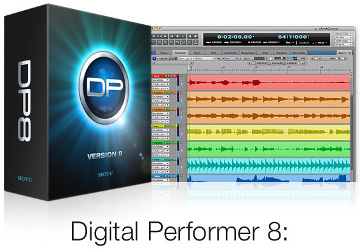
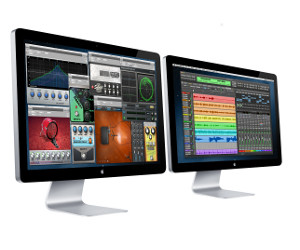
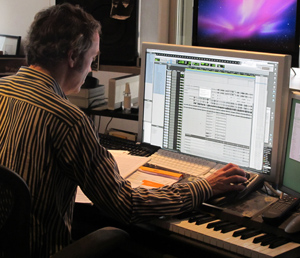
My first, thematic ideas usually happen at the piano. And then I take them over to the computer to see what’s it like against the picture. And then I start to arrange it on the computer. I work in Digital Performer. It was one of the first MIDI programs for the Mac, and I’ve been using it since like 1985!
The loft space outside the control room here at The Body Studio looks like it’d be a great place to record music. Do you ever record here?
Yes well when I built this place, I thought of that. There are tie-lines in the different rooms, all over the house. But also… soon after I built this place, I started having kids, and they take up a lot of sonic room themselves. (laughs)
I do record in the control room though, and in the booth. For Twilight we recorded David Torn and Kaki King in there.
And it seems you’re able to mix most of your projects here …was that the goal in building it? To be able to keep as much of the process here, kind of under your control?
You know, at that time there weren’t that many 5.1 mix rooms in NY. There were almost none 12 years ago, or none that we were happy with. So we figured let’s build our own and we can control everything about it. John Storyk did the acoustical design and Ted Rothstein did all the speaker and tech work.
It really still feels like a new room. How has the room held up and what has evolved technically?
I think that we got something like the 10th Euphonix System 5, which when we were designing the room had just been shown at AES. This purchase was what determined that we were going to be a digital room. Euphonix had incorporated this new multichannel digital interface called MADI. At the time, no one else was really using it yet, so we just crossed our fingers that it would catch on and fortunately it has, and now Avid and SSL (etc.) have MADI interfaces. So now, more and more we can just plug MADI cables directly in, vs. going through converters to get to the board, which is helpful.
And Mike pretty much mixes everything you do…so that’s another thing you can keep consistent project to project.
Oh yeah, and he engineers all the recordings as well. There have been a couple of cases where I’ve used a different engineer – since Mike lives in LA depending on the budget I may not be able to bring him in – but 95 percent of what I do, he engineers and mixes.
So you have your own studio and a consistent engineer and assistant, and composing platform. Is there anything new, technology-wise, that has changed the way you work? Made things easier, more efficient, etc.?
Well it’s not specifically an audio technology, but for someone who lives in NY, or as I do now – out in Amagansett – things like Skype and Video Chat make such a huge difference. If you look at it from the point of view of the LA industry – the studio system is a conservative, slow moving thing – so I still have to bend over backwards to convince them to hire me on certain projects. I say “Don’t’ worry I’ll fly out every week!” But there are many projects like Breaking Dawn, where I’ve been able to just fly out to LA once or twice, and all my other meetings happen over Skype. And that’s fantastic because I have small kids so to be able to stay at home is just an amazing thing.
And for any NY-based composer looking to get into film work, the increased acceptance of video conferencing and the fact that it costs nothing now, is just great.
And the distance is no hindrance to submitting work and the review and approval process? How does that tend to go down?
It comes in a series of stages – I do synth mockups of everything and deliver that on MP3s to the editing room so the director can hear that and give me feedback within a few minutes. And sometimes I can do several (revision) roundtrips within a day, and that wouldn’t be any easier or faster if I were in LA.
So that’s how I get a basic approval on a composition…that I have the right structure, the right instrumentation. Then it’s good to put on paper. And usually the director is present at the recording, so he/she gets to approve things as we are recording live.
With the mixes, we post the Pro Tools sessions of each reel to a server as we finish them (movies usually come in five or six 20-minute reels), and the people in LA download it as they need it.
Last question, about your creative process overall: what inspires you? Is there anything you do to stay in the creative headspace? Or to get inspired as you’re getting started on a film? Do you listen to music? Do you go to museums? What?
Actually – and I find this is true with a lot of composers I know – I really don’t listen to a lot of music because I’m writing all day long and there’s just not much listening time, or down time at all for that matter. If there is down time between projects, I’ll try to seek out things that I haven’t heard that I think might be interesting. Sometimes I’ll load up my iPod with stuff I want to listen to and do that in the car.
But I will say this: you have to be able to find inspiration in the film itself. Otherwise, you probably shouldn’t be working on it. There always comes a point where you’re sick of watching the film, but hopefully for the first month, you can watch it and find things there. Or in this case, you could read the book to find other aspects of the story.
For myself, it’s also really useful to be able to get away from the pressure cooker part of the business…however that’s possible. And that’s one reason why I moved out of the city. I moved out to Long Island, and I now do most of my writing out there…though I still record and mix here in Manhattan.
I like NYC, I’ve lived here for 30 years, but by going out to a place where there’s nature, where I can step out of my studio and look out at the infinity and forget about what I’m doing for a bit…I used to have to travel to do that, now I can actually do it at home. And that’s worth a lot.
For more on Carter Burwell, samples of his music and extensive notes on his projects, visit www.thebodyinc.com.
MOTU Releases Their Universal Sampler – MachFive | 3
September 10, 2011 by Gabriel Lamorie
/* Filed under Deli Feed, Deli NYC Feed, News */
MOTU is a company known worldwide in professional audio production for their high-quality hardware interfaces for studio and mobile purposes. MOTU is also well known for their intuitively designed DAW – Digital Performer 7. Now, with the release of MachFive | 3, MOTU will be known for their software sampler that has features that other samplers currently cannot compete with.
Just one feature to share, as you wait with bated breath, is that MF3 is a universal sampler. What does “universal sampler” mean exactly? Well, my fellow audionauts, it means that it can support ANY major 3rd-party hardware/software sample format from Apple Loops and ESX24 to Kontakt 1, 2, 3 and 4.
MachFive | 3 is available now for Mac OS X 10.5.8 or later (Lion too!) and PC for Windows Vista or 7. MF3 comes in AU, RTAS and VST Plug-In formats (standalone as well) and can be purchased for £395/$565 MSRP. As an interesting offer from MOTU, MF3 can also be upgraded from a competing product for a discount price of $295 MSRP and as a cross-grade for $179 MSRP. See which products are eligible here.
Now, I present you with details of the new universal sampler from MOTU themselves:
“Within minutes after you begin using MachFive 3, you’ll appreciate the years of user interface design and engineering that have gone into this 3rd-generation release. From the configurable part list to the full-screen envelope editor, MachFive 3 has been designed to spur your creative muse while delivering state-of-the-art virtual instrument technology in a streamlined, efficient environment. After all, music, sound design, and audio production are creative endeavors that deserve a worthy partner in creativity.
• Scripting engine – Instead of guitar presets, you get a guitar player…
• A universe of sounds – 45 GB of included instruments, loops and phrases
• Powerful new synth engine – Twelve forms of synthesis that span music history
• IRCAM Technology.
• Automation and modulation – Twist, morph, and pulsate.
• New flexible effects architecture.
• New filters and effects.
• Convolution reverb.
• Enhanced sample library support – Load anything. Directly, with no conversion.
• Event processors.
• Preset browsing and searching.
• LoopLab beat slice editor.
• Full-screen operation.
• Unlimited everything – Oscillators, layers, parts, effects — add all you want
• Oscillator Editor – It’s way more than just a sample editor
• Mapping Editor – Keygroup mapping so intuitive, you’ll never have to stop and ask for directions
• Tree Editor
• List Editor – If you are a list person, this editor is for you
• Effects Rack – Comprehensive effects processing throughout
• Performance View – Transform MachFive into the ultimate live performance instrument
• Mixer – A complete, self-contained mixing environment
• 3rd-generation UVI Engine XT. – Acclaimed worldwide for its sound quality.
• Multiple outputs. – Submix to 17 stereo output pairs.
• Disk streaming. – Conserve RAM and quicken load times.
• Unlimited polyphony. – With ultra-low software latency.”
Studio Stories: Galuminumfoil Upgrade, Part I “Before”
August 7, 2011 by David Weiss
/* Filed under NYC Spotlight, SPARS Feed */
This summer, Chris Cubeta set out to raise his game: As the multitasking/muli-instrumentalist co-founder of the busy Williamsburg recording/mixing/mastering facility Galuminumfoil, he and his staff have embarked on a serious upgrade of the studio, all the better to grab big sounds from their 400 sq. ft. live room.
Here, Cubeta — whose credits include John Hammond Jr., Tony Levin, Golden Earring, Ahmad Jamal, producer Bob Johnston, Eddie Kramer, Augie Meyers, David Hidalgo and Oz Fritz — gives us a look at the “Before” side of the situation. Find out how a solid start for Galumimumfoil made evolution essential after 10 years in business, and how he’s tackling this tough task of renovation – while he keeps the studio up and running. When it’s all said and done, rest assured we’ll circle back for the “After” to see if it turned out like he planned. Now heeeeeer’es Chris!
I Am:
I’ve been writing, playing, recording music in one way or another for the last 20 or so years. I started out playing piano at a young age, but around 12 or so I started fiddling with other instruments and tape recorders that my Dad had laying around the house. I guess it’s only natural that I ended up incorporating all of those things into my adult life. I’ve been very fortunate to make my living for the last 10 years just doing music.
The majority of my professional life is producing and engineering. My songwriting and performing career has allowed me to tour a bit and perform on some wonderful stages like Bowery Ballroom. My band, The Liars Club, has headlined and done several support shows there. We’ve built a small but loyal fan base here in NYC and are hoping to expand that in the future. At this point, though, the studio side of things is what supports me financially.
Why I Started Galuminum Foil:
Galuminumfoil started about 10 years ago in Poughkeepsie, NY. My best friend and novelist/spoken word artist Danny Lanzetta and I started it to join together our shared love of music and literature. Our vision was and is to have a company that ideally could release both literary and musical projects — kind of a record label/publishing house of sorts. Although Danny and I both have strong visions for Galuminumfoil, we are both constantly working on our own crafts and are admittedly (and proudly) not good businessmen. The hope at some point is that our work will lead us to a place financially where we can complete our original vision and afford to hire the right people to run things from a logistical standpoint.
In the meantime, Galuminumfoil, the studio, has been able to somewhat take on the financial burden of getting our work out there. In 2011 we have released Danny Lanzetta’s new novel, Gadfly, and his spoken word EP, The Declaration of Us, and we also just released my new self-titled record, Chris Cubeta and The Liars Club. Everything except the manufacturing of the books and CD’s was done in house by Danny and me, and some very good and talented friends.
Jeff Berner, John Passineau and Gary Atturio are three really talented guys who work with Danny and me in many facets. Jeff is the guitar player in my band and is also a wonderful engineer/producer at Galuminumfoil Studios. Gary Atturio often plays bass in the Danny Lanzetta spoken word project. He is also a fantastic engineer and an up-and-coming producer. My other good friend of 20 years is John Passineau. While playing bass in The Liars Club for eight years, he also handles all of our graphic design. Everything from our websites to album art and book design goes through him. If you know anyone who wants to throw some money at a few dedicated artists to help get this thing off the ground, please send them our way!
The Original Idea:
The studio was designed mostly based on the following idea: “How can I make this space do what I need it to for as little as money as possible?” I had a very small amount of money saved to build the place, and I had some of the equipment from a small basement studio I started when I lived in Poughkeepsie.
We use Digital Performer on a Mac computer as our main recording device. I had a small but really nice collection of mic pre-amps and compressors from API and Geoff Daking and a few decent mics. We built a 180-square-foot control room and a 400-square-foot live room. In February 2008, we added a 24 channel Toft ATB console which has served us very well. In December of 2009, we added an isolation booth and amplifier closet to give us more flexibility when recording live bands.
Now I’m Changing It:
Thankfully, the studio has gotten busier every year, which is why we feel the need to upgrade things. We are making three big changes.
The first is bringing in a new console. While the Toft has been great up until now, we feel the need for a large format console that will be much easier to repair, sounds better and also looks much more impressive. I grew up working on all analog gear and have always missed having a “real” console at my own place. Replacing the Toft will be a 32-channel Neotek Elan with a master section built by Purple Audio. Although I’ve embraced the computer audio world of today, I’m still an analog guy at heart.
The second upgrade is to our digital converters. We are moving up from MOTU HD 192 converters to the Lynx Aurora system. We hope this will ultimately make for better-sounding records.
The final piece of the puzzle is we are completely re-doing our control room both aesthetically and sonically. We will be installing new carpet, repainting, and hanging a series of diffusers, bass traps and sound absorbers to make our room a more accurate listening environment.
The Buildout:
I’m approaching the redesign the way I’ve approached the studio from Day One. I gather information from experiences and from friends and peers in the industry. For example, the studio we are purchasing the Neotek from is a great place here in NYC called Mavericks Recording. The owner, Robert Lurie, gave me some great tips on building my own inexpensive but effective diffusers. Other than these methods there is always the Internet!
See You Soon!
We got the Neotek and the new converters in mid-July, but we won’t be installing everything until the end of August as we are currently in the middle of quite a few records.
Stay tuned for Galuminfoil Upgrade, Part II “After”, coming up!
– Chris Cubeta, Co-founder, Galuminum Foil
Geeking OUT to Melodyne and Roland Space Echo with Jamin Gilbert of ishlab Music
March 29, 2011 by David Weiss
/* Filed under NYC Spotlight */
DUMBO, BROOKLYN: On the 6th floor of 10 Jay Street in DUMBO, a hub for multiple businesses in the creative industries, you’ll find an inviting gem at ishlab music, a professional yet relaxed music studio and music licensing company that has embraced the truly diverse and eccletic arrays of music on the NY scene since it first opened its doors in 2001 to be a springboard for soul, funk, electronica, jazz, rock, drum & bass, classical, hip hop, world music, and so much more.
We recently caught up with ishlab’s President and CEO Jamin (pronounced with a long a) Gilbert to learn about what he’s been geeking OUT to at ishlab, past and present, and future of course!
Career Inspiration:
“Passion and fascination with music, ideas, problem solving, working with people, the creative process, building things, and the power of music as an instrument of change.”
Geeking OUT Back in the Day:
“It all began with good ol’ fashioned instruments, my papa’s drum kit, and my mom’s piano. Then in ’92 I was enraptured by the Tech 12 direct drive turntable, and four track tape recorder combo; perfecting musical collages and DJ mixes was a laborious task compared to the tech today (and it was only eighteen years ago!). In ’96, the Boss Dr. Sample, Roland DJ 2000, and Alesis ADAT brought a whole new world of possibilities. I could sample with the Dr. Sample, add effects with the DJ 2000, and record up to sixteen tracks on the ADAT. I could make real songs!
“Then in ’98 I got a Mac computer, Digital Performer recording and sequencing software, a Emu 5000 sampler, MIDI controller keyboard and a JP8000 synth. I spent nearly all my free time making music. All of the creative possibilities became so fascinating that I opened a full on recording studio, ishlab, in 2000. A creative home where all could express their creative genius and geek out to the max.”
Geeking OUT in 2011:
“On the DJ tip, software like Serato and Traktor are getting better and better — my back is especially thankful, no more crate carrying — and it opens up DJing to almost anyone.
“On the production side, I’m amazed by the Melodyne isolating and tuning software, and the capabilities of the compact and robust NeKo and MiKo production stations. There are more companies creating software/hardware combos which provide so much functionality without the price of buying each facet individually. This is beneficial to anyone wanting to do a lot in a small space, or a lot with a small budget. I still love the classic vintage stuff though, like the Roland Space Echo, that’s a popular one at ishlab.
“And nothing has replaced the sound of analog instruments, amps and processors. The digital stuff is great, but I find recordings that mix analog and acoustic elements with digital to be the most compelling, interesting and undeniable. I also find that technology can make one lose focus on the basics of texture, color, timbre, etc; it’s important to keep the basics in mind – you can accomplish a lot with a little old technology. The concepts will always be the same. We’ve been having a blast with vintage synths – totally geeking out on synth layered with live guitar or bass or strings. And programmed drums layered with live drums – the energy of the live kit coupled with the definition of the programmed sounds is sick.”
The Here & Now & What’s NEXT:
“We’re launching our retail business background music styling/music curation service with some really talented and acclaimed DJs. We’re also expanding our multimedia music licensing services — indy and artists and labels can contact us as ishtracks@ishlab.com. A few recent notable placements include music licenses for ten reality TV shows, Production Glue and Huge. On the Ishlab artist production side, Betty Black, Leo Coltrane and Marc Griffin are slated for a few releases this year – they are sounding amazing.”
Words by Shamita Carriman – Entertainment lawyer, founder/ managing partner of Carriman Law Group PLLC, Board of Directors of Women In Music, and music tech enthusiast. She can be contacted at info@carrimanlawgroup.com.
Review: The McDSP 6030 Ultimate Compressor by Zach McNees
January 25, 2011 by Zach McNees
/* Filed under Tech & Reviews */
In the world of music and audio production, the nature of dynamic compression can mean many different things to many different engineers. From subtle level riding to drastic bone-crunching limiting, a compressor’s job is as varied as the genres of music that we tackle on a daily basis.
In the real world, we’re limited by the hardware that we (or the studio) own. Inside our DAWs however, there is a seemingly endless supply of choices. Often times we come back to certain plug-ins over and over again not just because they sound great, but also because we’re able to dial in the sound we want quickly and move on to the next task.
This brings me to McDSP’s newest creation: The 6030 Ultimate Compressor. McDSP is one of the original third party plug-in manufacturers for Pro Tools and certainly one of the best. Plug-ins such as FilterBank are standards in the industry, and the new 6030 Ultimate Compressor will surely be joining this illustrious group of go-to plug-ins in the future.
Tech Specs: The 6030 Ultimate Compressor is available in an HD and Native version. McDSP HD plug-ins support the TDM, RTAS, and Audio Unit (AU) plug-in formats. The McDSP Native plug-ins support the RTAS and Audio Unit (AU) plug-in formats. The newly added Audio Unit (AU) support means all McDSP plug-ins can be used in Logic, Garage Band, Digital Performer, Ableton Live and other AU compatible DAWs in addition to Pro Tools. The 6030 is available for purchase as a stand alone HD ($449) or Native ($249) plug-in, or as part of the McDSP Emerald Pack HD ($2,995) or McDSP Emerald Pack Native ($1,495) bundles.
What It Does: The 6030 Ultimate Compressor is in actuality, ten different compressors housed inside one unit. Each type of compressor within the plug-in has a distinctly unique algorithm and sound. Some algorithms are emulations of existing classic gear (but with unique McDSP twists) while others were designed from scratch exclusively for use with the 6030.
The Interface: Designed to emulate the popular lunchbox style module format, the 6030 is a sleek, yet simple interface with large buttons and knobs that allow for easy mouse access. The first module on the left side of the plug-in displays buttons for ten different plug-in styles which are labeled: U 670, MOO TUBE, iCOMP, OPTO-C, OPTO-L, BRITISH C, OVER EZ, SST ’76, FRG 444, D357.
The middle section displays metering for input and output along with an overall make-up gain knob. Additional buttons for keying in a side-chain signal and listening to the side-chain are also available here. The final module on the right changes based on the user’s compressor style selection.
The sharp graphical design of the plug-in modules and the labeling of their button counterparts will make many of 6030 Ultimate Compressor’s flavors seem very familiar to most engineers. McDSP has done an excellent job on the graphics. Everything is well labeled and easy to use.
In Use: Over the past few weeks, I put the 6030 Ultimate Compressor to the test on several different mix projects and at least half a dozen sound sources. Out of the ten emulations available, I found myself coming back to five specific ones on a regular basis. Let’s dig in a bit on what each of these unique modules has to offer…
- U670: Immediately recognizable as a Fairchild 670 look-alike, the U670 was originally conceptualized for the Compressor Bank CB4 Plug-in. New attack ballistics and a “warmth” factor were tweaked in this version for the 6030. The 6070 offers a commendable emulation of a legendary unit. Controls for Threshold and Time Constant (release) are available. The U670 performs accurately on bass and vocals smoothing out transients and really achieving that milky Fairchild sound without of a lot of “compressor sound.” Even with the time constant knob set fast, the release time of the U670 is relatively slow which is accurate to the original hardware. This unit is not for everything, but will do the job quite nicely when a mellow type of compression is needed particularly on slower tempo tunes or instruments with lots of decay such as piano or bass.
- MOO TUBE: This is an all-tube design with a number of sounds reworked from the ground up by McDSP, such as mid-range sensitivity and output frequency response. There are controls for Attack, Recovery and Threshold along with a hilarious cowhide background to compliment its name. MOO TUBE picks up where the U670 leaves off in its ease-of-use and warmth factor but was a little too transparent for me overall. On female lead vocals for instance, I found it difficult to find a good balance with the threshold where the compressor could level everything out evenly without the meter pegging too much. Certain notes would hit the compressor much harder than others. The controls are very easy to use and the attack and release points do allow for a wide variety of sounds.
- iCOMP: iCOMP is the black sheep in this family. A blue, techno-like background with only two controls for Threshold and Ratio left me unsure of what I was in for. McDSPs website offers only that iCOMP “Sounds great and is good for songs heading to iTunes.” adding even more to my curiousness. They also state that “Attack and release are automatically updated based on user-selected threshold and ratio control values.” Listening tests proved pleasantly surprising, however. As a drum bus compressor, iCOMP does an excellent job at leveling things out with a surprisingly pleasant amount of grit and dirt. Relatively fast attacks and release times make this a great go-to compressor for rock drums, bass and guitar. This compressor has the most “sound” to it of the three units I’ve touched on thus far and really surprised me on the depth of what can be achieved quickly.
- OPTO-C/OPTO-L: With the look and feel of the classic Teletronix LA-2A and a sound just as close, the OPTO Compressor and Limiter blew me away. One simple peak reduction knob is all you need along with the makeup gain to do the job every time. On a recent mix for Philadelphia-based R&B singer Ali Hoffman, the OPTO compressor became my drug of choice for lead vocals. The response characteristics are stunningly similar to its hardware counterpart providing just the right amount of added warmth and softening in the vocal chain. The OPTO compressor can be cranked up a healthy amount just like an LA-2A without having to worry about that squashed compressor sound. Finished off with a fair bit of make-up gain this compressor is good to go in record time. The OPTO C is in major competition with some of my former go-to standards for vocals and bass guitar. The OPTO L limiter also follows suit on everything mentioned above but with even more of that classic, dirty brick-wall limiter sound. The OPTO Limiter works very well as a “sub squeeze” limiter when blending a heavily limited sound on rock drums, guitars and even horns with the original uncompressed sound sources. A+ on the OPTO Compressor/Limiter.
-
BRITISH C
: Anyone who’s ever used a Neve 33609 will notice the familiar design of this British emulation. Traditional Brit-style settings for Threshold, Ratio, Attack and Recovery provide surgical control over the sound. McDSP’s website points out that great care went into the design of the algorithm to emulate a distortion-free sound even at high compression levels like the original and they’re right on. The BRITISH C is one of the best representations of what one would hope for in a 33609 replica. The controls allow for a very sharpened and specific sound which works very well on acoustic guitars and piano taking the edge off and adding some snap in a way that I’m used to hearing from a British style compressor. Lead vocals also shine with the ability to focus the attack for any kind of singer’s dynamic range.
- OVER-EZ: This module features controls identical to the BRITISH C, but with a softer knee response, which provides a drastically smoother and more leveled sound. As I tend to like compressors that add something new sonically to the sound, the OVER-EZ felt a little too smooth for me. On acoustic guitars and lead vocals for instance, the compression, even at fairly substantial levels above 5dB was almost invisible. With a very gentle sound source like classical strings or nylon guitar however, I can see this compressor shining through very well. Although this isn’t a go-to sound for me, when packaged around the rest of the units in this plug-in the OVER-EZ adds yet another distinct flavor to the palette.
- SST ’76: The SST ’76 is a fast reactive Solid-State circuit design. This unit is one of the first that I go to for big rock guitars. It seems to add just a hint of grunge-y ness and reacts very well to drums and percussive sources. This compressor is all over a pop rock mix I’m doing for Boston artist Jamie Lynn Hart. On kick drum it really pops well giving my drums more bite and attack even with the meter just nudging around 2dB of gain reduction. On acoustic and electric guitars, this unit also does a terrific job adding a healthy amount of character depending on how much compression is added.
- FRG 444: The FRG 44 is one of the more moderately aggressive sounding units in this package so naturally it ends up on a lot of my mixes! The key to this kind of compressor is to really beat it up and crank the output and see how it reacts. Standard controls for Attack, Release, Threshold and Ratio allow for lots of experimentation. The FRG 444 sounds brilliant when pushed to the max. As a “Sub Squeeze” unit and for anything needing a real kick in the face sonically, this unit does the trick. On a drum bus with ultra fast attack and release, the 444 stands up against some of my favorite brick-wall, smash-it-up compressors in hardware or software form. Heaps of harmonic distortion make for a creamy smooth, yet aggressive sound that can really transform an otherwise lifeless sounding instrument be it close drums, room mics, guitars or keys.
- D357: McDSP jokingly warns to use the D357 with caution. According to their website, this is their most aggressive unit in the package. With LED-style metering and a ratio control labeled as “Some,” “More,” and “Tons,” the D357 clearly isn’t your dad’s Sunday morning compressor. Like the FRG, the D357’s Attack, Release and Ratio knobs allow plenty of control over the sound and generally is best used when you really want to punish something. In my tests I tended to prefer the FRG’s aggressive sound but the D357 certainly holds its own as a dirty compressor. Typical rock instrument sounds like room mics and attack-heavy piano came out sounding a little too smooth and slightly digital to me and without as much character as some of the other units above.
To Be Critical: A numeric dB read out would be very helpful on the output knob as I have no mathematical way of calculating the precise make-up gain of one “click.” This is often useful when wanting to bump up the level of something in my mix in dB increments.
Although controls seem to stay relatively close to each other once set from unit to unit, the ratio varies greatly. For instance, a ratio of just below 4:1 on the British compressor comes up as just over 6:1 on the Over EZ, around 10:1 on the SST 76’ and over 12:1 on the FRG 444. I would like to see the ratios leveled out a bit more from unit to unit. Also, the gain reduction metering on each unit can sometimes be a bit hard to read. Perhaps if the plug-in overall took up a bit more screen real estate these things would be easier to view?
Wrapping up: Writing this review, I felt like I was reviewing a plug-in bundle instead of just one individual unit! McDSP has put together one of the most comprehensive, unique and remarkable sounding compressor plug-ins I’ve ever used. With a very affordable price tag, the 6030’s quality and quantity to price ratio is outstanding. A strong case could be made for picking up this unit over a dozen others that will only give you one flavor of the ten offered here.
Two of the four mix projects I used the 6030 on were at 88.2 khz and the other two were at 44.1. The 6030 sounds excellent at both standard and hi-res sample rates which is more than I can say for other similar compressors in its class. At least five of the ten emulations here get an A from me on quality and the rest are close behind. I raise my glass to you McDSP! - Zach McNees
Click for more information or to request a demo of the McDSP 6030, and to purchase the plug-in stand-alone or as part of the Emerald Pack bundle, visit the McDSP store.
Zach McNees is a Brooklyn-based producer/engineer/mixer and live recordist who’s worked with Bjork, Rob Thomas, The Gregory Brothers, Pixies, Liars and Alice Cooper. Get in touch with Zach via www.zachmcnees.com.
Recording Wynton Marsalis and Vitoria Suite: A Jazz Journey from Basque Country to Manhattan Valley
January 5, 2011 by David Weiss
/* Filed under NYC Spotlight */
HARLEM, MANHATTAN: Who are the lighthouse keepers for New York City’s brilliant musical beacon? The giant of jazz known as Wynton Marsalis surely stands as one such sentry, an adventurist and nine-time GRAMMY winner radiating original sound experiences from our musical epicenter out to the world.

Jeff Jones (seated) and Wynton Marsalis were on a musical mission with the making of "Vitoria Suite" (photo credit: JoanneLeveyPhotography.com)
The master capped off 2010 with the release of Vitoria Suite, an epic 12-part sound voyage recorded over three days in June, 2009 with the Jazz at Lincoln Center Orchestra and a world-class roster of guests — including virtuoso flamenco guitarist Paco de Lucía – at the Jesus Gundi Conservatory in Vitoria, Spain. A tribute to the city and its storied jazz festival headed by Inaki Anua, Vitoria Suite is a nonstop sonic odyssey – from its fiery takeoff to the dizzying climax, the opener “Mvt. I: Big 12” takes listeners to such a breathtaking place, one can only imagine what lies ahead.
Richness and musical dimensions of every color, shape and size define Vitoria Suite, a record that represents a true journey for the listener, musicians, and – naturally – its impassioned producer/engineer/mixer/editor. The latter is Jeff Jones (thejedimaster@mac.com), the self-proclaimed “Jedi Master” whose versatile discography includes Public Enemy, Talking Heads, Slick Rick, Willie Nelson, Norah Jones and scores more. The Jedi Master takes recording very, very seriously, as we shall soon see.
Motivated to match and build on the legendary recording contributions of Rudy Van Gelder, the Harlem-based Jones watched over every detail of Marsalis’ years-in-the-writing masterpiece, while allowing its warmth and excitement of discovery to come shining through. For Vitoria Suite’s mind-blowing meld of jazz, blues, Basque music, and flamenco, our talk with Jones confirmed that nothing less than an obsession with perfection would do.
You’ve said that you want to be the “Rudy Van Gelder of tomorrow”. That’s a bold statement. What do you mean by that?
I have been studying records and record-making — and film-making — since I was a kid. I always checked out articles, books, documentaries…anything I could get my hands on. When mixing I explore each style of music, learn its stylistic center and way of being recorded. Since I’ve been studying, apprenticing under Wynton Marsalis and veteran producer Todd Barkan I’ve gotten a deeper understanding about the center of jazz music.
If you study jazz, you have to study Rudy. He developed his own unique sound partly by taking control of the process from recording through mastering at a time when very few people did that sort of thing. He built his own studio and bought a lathe to cut masters. As a result his sonic vision was consistent because he did everything himself. I’ve taken on wearing all the hats now from recording through mastering. You have to do that to make the artistic vision consistent.
Dr. John called me the next Tom Dowd — both Tom and Rudy were inventors. You have to be a bit of a scientist to come up with new stuff when melding such deeply complex worlds as music and recording technology. Those two guy just did so many records that are now considered classics: It’s impossible to be a music listener and not hear their work. Their records have stood up to the test of time. That’s the kind of records I make also.

Vitoria: The heart of Basque Country and a source of inspiration for Wynton Marsalis (photo credit: JoanneLeveyPhotography.com)
Nothing half-way about that philosophy! So how do you go about actually accomplishing your approach, in actually practice?
I’m looking to bridge the core elements of historic recordings with new techniques, used with today’s technology to make something new and unique.
Doing something that’s never been done before is really, really difficult. It requires a lot of shedding and a lot of thought. The questions I ask myself are, “Conceptually how do I bridge the gap from the old to the new? What was the old? What equipment? How was that equipment used then? Who manufactured that equipment and how was it built? What were the limitations? And how did they work around them? What were the mediums used? How do they differ from the mediums used today? What are the strengths and weaknesses of yesterday’s mediums and the same for today’s? In total how do I make something new with today’s tools, that is grounded in the history of all recorded mediums that existed before now?”
With such deep musical thinking, it’s little wonder that you and Wynton Marsalis would eventually work together. How did you and Wynton first meet, and what made you really connect as artist/producer?
I first met Wynton when I recorded him at a small Lower East Side benefit concert at the House of Tribes. I was asked to make the recording by the producers of the concert — I suggested we also bring video cameras. I had seen a short amateur clip from the previous year’s concert, and I knew the music would be outstanding.
I made an eight track recording and asked my friend Chuck Fishbein to bring his cameras. After the concert I spent the next five months editing, color-correcting, mixing and mastering to make an hour-long pilot which I hoped at the time would eventually become a television show. The audio from that recording was released on Blue Note and nominated for a GRAMMY and the video played on BET Jazz — you can find clips from that original concert on YouTube.
I think Wynton Marsalis and I pair well because we’re both all about making history and classic purists. He demands excellence from anyone that he works with, and he totally respects the art. My background has both classical and jazz in it — that also makes us a good match.
Fast forward to Vitoria Suite – the origins of this project are pretty interesting…

The JLCO had room to maneuver in the Jesus Gundi Conservatory. (photo credit: JoanneLeveyPhotography.com)
The head of the Vitoria Jazz Festival asked Wynton to write a piece of music for him, and Wynton ended up writing a twelve-movement piece that took him 10 years to complete. Wynton started the project long before I met him. The recording, editing and mixing process took a full year to complete.
Vitoria Suite was recorded in a music Conservatory theater in northern Spain. The Pro Tools recording equipment package came out of Madrid — I knew that we couldn’t record at 96/24 because the equipment supplier didn’t have enough AES inputs, so the master session was recorded at 48 kHz/24-bit.
My basic approach was to ultra mic everything. The reed players alternately picked up flutes and clarinets so they had double mics top and bottom. In some movements there was extra percussion and a flamenco dancer, plus the arrangement called for the band to add handclaps. I figured I would pick through the mics and use the best combinations in the mix.
Before the recording sessions I saw portions of this twelve-movement piece performed at a jazz festival in Canada, I realized there was no way to separate any of the band members acoustically. Wynton usually records without using headphones anyway, so I set up the risers on the stage to facilitate the normal live setup of the band. It’s a challenge to record so many instruments in an acoustically live room. I recorded 50 channels of individual microphones plus a live stereo reference mix simultaneously.
Why do a live mix? That seems like a stresfful undertaking on top of an already huge undertaking.
I like the energy of a live mix — it’s a kind of Holy Grail that you never get back at any other point during a project. The live mix serves as a template for doing the massive amount of editing needed on Wynton’s projects. I do all my editing on the two-track before editing the multitrack, and each of the 12 movements in Vitoria has at least 15 edits across a 50-track multitrack. There’s no such thing as isolation of the instruments because it’s all played in one room.
In some cases, takes were time-stretched to three different lengths to tempo match. All this kind of work is calculated first with the live mix before executing it with the multitrack. Then once the edit decisions are finalized, I use the edited live mix like a cookie-cutter to edit the multitrack.
That’s a meticulous method, but I can see how, ultimately, it would be the more efficient approach. When it came time to mix, where did you mix and on what system? What was your approach there? You indicated that Wynton had a lot of detailed communication with you on that phase as well.
I edited, mixed and mastered the record in my studio in a Harlem brownstone, in an area known as Manhattan Valley, where I use an Intel Mac Pro with four monitors and a combination of programs including Digital Performer, Pro Tools, and Peak. My signal path has analog summing through a Neve 8816, Apogee and Mytek A/D filters. My system is set up so that I monitor a 44/16 signal, no matter what the frequency rate of the master session. I’m a Mac Geek: I have four towers of different vintages and three laptops, and I use them all in conjunction depending on what’s needed at any given time.
Mostly, I started the mix process by doing a lot of listening. All kinds of records, all styles — even the Bose demo CD you get when you purchase one of their CD players. I like to stop mixing at times and listen to other artists’ records. It gives me a sense of perspective
I received 250 pages of music score for Vitoria Suite, where Wynton communicated with me in musical terms, bar numbers and musical sections. All my session markers were bar numbers or letters as related to the score — there is no other way to communicate about a piece of music which may be eight minutes long with no lyrics or singer, without working directly from the conductor score. Wynton and I communicate about the raw takes first in minutes and seconds based on the track time of the reference CDs. Then, after we assemble the master, our communication with musical score is in bar numbers, beats and so on.
Complex, but the attention to detail definitely shows in the final product. You said that while Wynton is bridging cultures, you are bridging the old and new technically speaking. Can you expand on those parallels?
Wynton is all about family, education, the art, hard work and integrity. He bridges cultures with that message at each show. He always combines other cultures and styles of music with American Jazz with the intent to bring people, their families, their tribes together. He bridged classical and Jazz early on, being the only cat in history to win GRAMMYS in both categories in one year. The first record I produced after “Live at the House of Tribes” was “Two Men with the Blues“. He and Willie Nelson bridged country and jazz on that one.
Since recording Vitoria which bridges flamenco and Jazz he has done shows overseas with the Berlin Philharmonic mixing classical and Jazz, to Havana, Cuba melding Afro-Cuban and Jazz. He is the Jazz ambassador of the United States.
The place where Wynton and I connect is that we are both willing to go “all the way” to make history. He instructs the musicians in his band to think of ways to play something that no one else has ever played….that, my friend, is a deep, deep statement! That is exactly the kind of recordings I have been looking to make: Recordings where not only are the musicians playing in ways that no one ever did before, but also where the recording is unique and timeless.
– David Weiss
Producer/Remixer David Sisko Opens Min Max Studios in Midtown
October 27, 2010 by David Weiss
/* Filed under News */
Producer and Remixer David Sisko (David Siskovic), one-half of the songwriting team and recording artist Disco Pusher, announced that he has opened Min Max Studios in Midtown Manhattan.
Sisko and his electronic duo Disco Pusher are just coming off a number of projects, including remixes and songs for Roxy Music, Richard Morel, Cut Copy, Toots Hibbert and Au Revoir Simone. Together, Sisko and Disco Pusher specialize in producing, remixing and writing global pop and electronic music – current projects include songs for Ninjasonik, Dangerous Muse, Chloe Flower and Ferrari Snowday.
The facility will be used for in-house projects, and is also commercially available for sessions where Sisko is engineer or producer. “The goal of Min Max was to find a space suitable not only for Disco Pusher songs and remixes, but also writing/producing tracks for all types of artists: from singer songwriters to bands to rappers,” says Sisko. “Also to find a space suitable for working on video game projects for Pitstop Productions in the UK who is also a tenant in the space. If the band is too large for this room, there is a large live room down the hallway that we can expand into in order to track, as this is a floor of studios and engineers.”
The Min Max studio is built around a 12-core Macintosh Computer running Digital Performer and an array of synths, effects and drum machines from the 80’s onwards. The entire fully-floated studio suite includes a 14’x20’ control room and a 6’x9’ vocal booth, large enough to accommodate a string quartet, multiple singers or a full drum kit.
According to Sisko, the new space provides him and his clients with the ideal combination of size, ambience and equipment. “Everyone feels comfortable: from the Flatbush rapper to an advertising exec to a pop star, all of whom are clients,” he says. “It’s located in the high 30’s near 5th avenue near all subways and train stations. It’s also very private – there’s not a lot of activity on the floor so artists/clients can come, chill out and make music at their own pace.”
Avatar Opens New Studio W
August 23, 2010 by David Weiss
/* Filed under NYC Spotlight */
HELL’S KITCHEN, MANHATTAN: Avatar Studios announced that it has opened Studio W, a new 160 sq. ft. Pro Tools/Logic writing room. Acoustically designed by renowned Avatar engineer/mixer/producer Roy Hendrickson (Avatar Studio E, Studio G), the second floor studio was launched to provide an inexpensive but functional room for songwriters/artists to work out song ideas.
Studio W gives users access to the long list of vintage analog gear available at Avatar, and is also equipped with an adjacent vocal booth to make writing, pre-production and vocal overdubs all possible.
“Technically, Studio W has everything you need to write and produce songs at a very high level,” says Tino Passante, General Manager of Avatar Studios. “Aside from the standard Pro Tools, Logic, and Digital Performer DAW’s, there is a nice array of very powerful standalone keyboard workstations from Korg, Yamaha, and Roland.
“But it turns out the strongest feature of the room is the room itself! Anyone can buy a bunch of software and an interface and get to work, but not everyone has the privilege of working in a sonically accurate acoustic environment with proper isolation and treatment. Besides providing a properly acoustically designed professional studio, we took great pains to make sure the vocal chain was of really high quality.”
With the addition of Studio W, Avatar takes advantage of its ability – increasingly unique in NYC due to it’s size and multi-floor layout — to provide clients with “all under one roof” services. “Now there’s no reason to ever leave Avatar,” Passante explains. “You can come here from the ‘idea’ stage and take it right up to mastering with Fred Kevorkian.”
– David Weiss