Booking Wiz Khalifa: Five Questions for Peter Schwartz on Hip Hop Touring

March 27, 2011 by  
/* Filed under Music Biz */

MIDTOWN, MANHATTAN: The massive motivation of hip hop artists like Wiz Khalifa is only half the story of how they storm the world’s stages: Behind every live touring success is a booking agent that knows their territory.

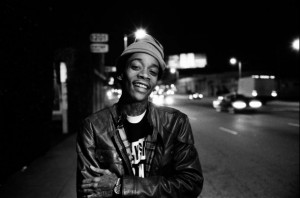
Wiz Khalifa is on the road again as "Rolling Papers" launches. (photo credit: Darren Ankenman)

Khalifa is about to kick off the Campus Consciousness Green Carpet Tour, running March 31-April 22, followed by the rapper’s first brief European tour from May 16-24. Along the way, he’ll be benefiting from the sage experience of Peter Schwartz, NYC-based VP of international booking specialists The Agency Group: his nearly 20 years of experience have had him plotting out live jaunts for the likes of Jay-Z, Method Man & Redman, De La Soul, A Tribe Called Quest, Run DMC and Wu Tang Clan, Big Sean and Big Boi.

Khalifa is on a hot streak: his single “Black & Yellow” hit #1 on the Billboard charts, and his new album Rolling Papers drops on March 29th – the same day he’ll grace the Roseland Ballroom stage right here in NYC.

In 2010, 135 of Wiz’ 140 shows sold out: our five questions with Schwartz explains why, and provides sharp touring advice for the next round of hip hop upstarts.

What about being a booking agent gets you out of bed each morning?
I truly enjoy being an agent, so getting going each day is really not that hard. Success is no doubt a driving force, especially when working with clients like Wiz Khalifa with such exciting growth and potential. It really makes the job fun, and I look forward to waking up just to see how well tickets sold overnight or where a client is charting that day.

His upcoming show at the Roseland Ballroom in NYC sold out in 16 minutes – that kind of thing fires me up for sure. Of course, it’s very rewarding to be standing at a sold-out show, watching the crowd go bonkers and seeing all the hard work pay off and come together in the end.

Bonkers is always the objective, we agree. How would you describe Wiz Khalifa’s live show?
Wiz’s live show is amazing: He puts his heart and soul into every performance — usually shirtless and drenched in sweat by the end of the show. His work ethic is unreal. His set is always fun and energetic, with his Taylor Gang team jumping around him to create even more hype. And the fans are always going insane!

We’ve been slowly growing his production with each tour, so his fans should expect to see him develop in that respect as well. They definitely get their money’s worth.

Each tour has a specific objective for the artist: Why is the Campus Consciousness Green Carpet Tour important for Wiz?

Peter Schwartz, VP at The Agency Group's NYC office, is the wizard of Wiz -- booking him live, that is.

The Green Carpet Tour is basically a college tour, which made sense to do for a variety of reasons. It timed well within our plans for the year and the album release, and the college market is one of Wiz’s largest demographics.

The “Campus Consciousness” – environmental — tie-in was really a nice perk. The last “CCT” tour featured Drake and the one prior had Passion Pit headlining, so it seemed like a good brand had been established there.

Our main goal for this tour is pretty much the same as always…sell it all out! Ticket sales look incredible already. We’re going to follow this up with a summer headlining tour to support the new album.

You’ve booked a lot of hip hop tours. What are the differences between booking for hip hop and rock? What makes booking for hip hop and rock the same?
There are some small differences in booking hip hop and rock, but I really approach all my bookings the same way: good old “rock’n’roll style”.

The goal is to build the artist a long-lasting touring career by plotting the right moves and developing them to larger venues and guarantees. Each move should be made for a reason, with the next step already in mind. It is really important to know your fans and be very conscious of picking the right size venue, ticket price and other details like age restriction on the show.

That definitely makes sense – for a lot of business avenues besides just touring! Lastly, What tips do you have for emerging hip hop artists who want to bolster their careers with a live tour?
If an emerging artist has a strong live show, going on tour is a great way to promote themselves and build a fan base.

That’s really the key to success: building a fan base and a faithful following. This can be done through social networking, good press, releasing great music and of course touring is a great vehicle as well. Try and deliver the best performance you can. Keep your set short and sweet in the early stages. Network with any of your fans before or after the show. Connecting with your fans — old or new — is very important. And stay connected too!

Wiz Khalifa plays Roseland Ballroom on Tuesday, March 29th.

– David Weiss

Stadium Red Expands: Just Blaze and the Science of NYC Studios

December 15, 2010 by  
/* Filed under NYC Spotlight */

HARLEM, MANHATTAN: As artistic as the purpose of New York City recording studios may be, it’s fair to compare these houses of sound to modern-day warriors. Every one goes into battle with the belief that they’re invincible. Many fall – but some grow stronger.

A legendary SSL G+ and Augspurgers are just the beginning of the Stadium Red expansion.

Uptown, the facility known as Stadium Red became convinced that there was only one sure strategy for thriving in the battle-scarred landscape of NYC: expand, and you’ll be in demand. Marking steady gains since its inception in 2007, when Stadium Red owner Claude Zdanow took over the highly respected but troubled former studio of jazz legend Ornette Coleman at 125th and Park, 2010 sees Stadium Red placing a bold bet that bigger really is better – even when paying NYC prices for your real estate.

The result is a recently completed 2,500 sq. ft. Frank Comentale-designed expansion that sees big names and powerful new capabilities added to the facility. A focused new B-Room is home to hip hop super producer Just Blaze (Jay-Z, Eminem, Saigon, Fabolous, Jamie Foxx, Talib Kweil, Kanye West) and an SSL AWS 900, Augspurger mains, and a digital/analog hybrid production/mix approach. A world-class mastering suite has also been added to house Herb Powers-protégé Ricardo Gutierrez (Justin Timberlake, Usher, John Legend, Jill Scott).

Meanwhile, Stadium Red’s accommodating A-room has gotten its own facelift, swapping in the classic SSL G+ board from Baseline Studios (RIP). Another pair of Augspurger mains with dual 18” subs, a custom Dangerous designed 7.1 surround monitoring system, 24-track tape machine and more are all in there. Mix engineer Tom Lazarus (Ray Charles, Bjork, Yo-Yo Ma, Chicago Symphony), mix engineer Ariel Borujow (T.I., Black Eyed Peas, Puffy, Kanye West), engineer Joseph Pedulla (Thursday, The Mighty Mighty Bosstones, Mos Def, Kid Cudi) and producer Sid “Omen” Brown (Ludacris, Mya, Drake, Fabolus) also maintain their respective residencies throughout the studio. A host of old skool elite amenities – from upgraded lounge to private chef/spa services – are in the mix for good measure.

Claude Zdnaow's got a secret: How to successfully navigate NYC's intense studio scene.

While the idea of an all-encompassing studio environment of writing/tracking/mixing/mastering is not new, Zdanow believes that it’s the rare human resources he’s gathered – and what they’re on board to do – that will make the Stadium Red expansion stand out. “The idea is that more heads are better than one,” he says. “In studios it can become a stale environment, where the engineer is just a button pusher. What we take pride in is something the artists and labels don’t offer anymore, which is artist development.

“Artists come in here, and when they walk out our brand is attached to them. It’s about letting them know that all these ears are around, whether it’s Yo-Yo Ma, Eminem, or the emerging people we work with. We want to make records here that matter, and the idea is to bring back that creative community — we’re a growing team of NYC engineers and producers that care about NYC and the music scene.”

Zdanow’s energy – driven equally by his spirit of adventure and copious amounts of caffeine – was enough to convince Just Blaze to relocate to Stadium Red after closing his beloved Baseline. “I had known Ariel from before, and he said, ‘You should come look at this space and have a conversation with Claude,’” Blaze relates. “Claude explained his vision, what he wanted to build, and I said, ‘Maybe we can make something work.’ It made sense: The overall vision of the place and the appeal is that it’s a one-stop, end-to-end solution, from recording to mixing to mastering, even doing surround 5.1-7.1.

“So he physically expanded the space, and we combined our resources. It’s a win/win I get a little bit of the stress off my shoulders from running the day-to-day. That allows me to be more creative, but at the same time I have my own space.”

Whether for intensive writing sessions or serious mixing, the new B-room that Just Blaze inhabits was designed to be distinctively accommodating. “It’s gotta be something special — if it’s going to be this meeting of the minds, then it’s got to be something worthwhile,” he emphasizes. “It can’t just be a Pro Tools setup. The way I work, I need all the resources available all the time – I couldn’t go from a G+ to a writing room. And if we’re talking about partnering up and joining our resources to build a business, there’s no point in building something that’s just a production room. That’s something people can put in their houses these days. So you’ve got to take a step further and make it a destination.

Just Blaze made the move uptown to the ferocious Studio B.

“My room is the best of both worlds. If you want to walk in and get down to business in the box, you can do so: We have every plug-in, plus Augspurgers and other monitors. But if you’re a little more old school, you have the SSL and all the gear to go out of the box. Or you can go the third route, in that the AWS can go in and out of the digital world.

“By keeping it smaller we could keep it more affordable. Clients have the SSL, a full suite of plug-ins, Augspurgers – everything that would usually cost you $2500 or more a day, at the fraction of the cost. I think we really hit that sweet spot in terms of sizing. Sometimes you just need a room for production, with a controller or a laptop, but if you’re in this big huge room that’s a waste of money. Or it’s the other way around, and you’re feeling cramped. This place is small enough to feel like a production room, but big enough to feel like a room you can mix comfortably in.”

Arguably, the Stadium Red formula was working already: The studio and its personnel had a part in ten 2010 GRAMMY-nominated projects including Eminem’s Recovery (Album of the Year, Best Rap Album), Drake’s Thank Me Later, (Best Rap Album, Best New Artist), and Steven Mackey’s Dreamhouse (Best Classical Album, Best Orchestral Performance, and Best Engineered Album, Classical).

A good year, all right, but that’s already in the past. Although he’s young – still just in his early 20’s – Zdanow understands that part of moving forward is understanding what didn’t work before, and making adjustments. In that regard, the difficult decision to swap out the A-room’s ICON for the SSL G+ dovetailed with the concept of adding new faces, spaces and capabilities at Stadium Red.

Just Blaze: He is officially on board.

“We’re in an ever-changing industry,” he observes. “When we started out I had a very strong opinion about being versatile and trying to do it all in one room. People appreciated the ICON, but over time we weren’t doing anything as good as we could have been doing it.

“By adding these two rooms, we’ve come to critical mass. People want a lot of options. The ‘A’ room has a big live room where people can track through the console, and mix with tons of outboard gear. Just Blaze’s ‘B’ room is its own environment for production, with the SSL AWS. If you want a powerful controller-based system, you have that in the ‘C4’ room where Ariel Borujow works. So what we realized was that it wasn’t just about one room. There are certain things that need to be in place to do everything — and do it well.”

– David Weiss

NYC Hip-Hop’s Next Wave: Brooklyn’s DotDaGenius on Kid Cudi, HeadBanga Muzik, and Genre-Bending Production

August 19, 2010 by  
/* Filed under Music Biz */

WILLIAMSBURG, BROOKLYN: New York City hip-hop is no longer dominated by the mixtape artist / major label dichotomy. Flourishing in that space between the artist selling tapes out of his trunk and the international corporate superstar are rising multi-hyphenate artists like Brooklyn native DotDaGenius.

Dot Da Genius @ The Brewery in Williamsburg

A classically trained pianist and obsessive beat-maker with a thirst for new sounds, Dot personifies the industry-wide shift away from the traditional label model. While most well known for his imaginative production on Kid Cudi’s “Day ‘N’ Nite,” to confine Dot to a label such as ‘producer’ would be to severely undermine his impact.

Ranging from television scoring on hit series such as HBO’s Entourage or MTV programming, to the creation of his own label and production company, HeadBanga Muzik, Dot has been able to take advantage of these recent changes. “I feel like the business model is changing in the music industry period,” Dot stated in a recent interview at The Brewery Studio in Williamsburg. “A lot of people won’t really need to go through a major label to do certain things anymore. People can do it by themselves, maybe not on a level that a major label can, but eventually, it’s going to get to that level.”

When an artist walks into The Brewery — the full-service studio Dot owns with engineer/producer Andrew Krivonos, and HeadBanga HQ — the environment is collaborative and consistent as far as production talent and support. The goal is to create the most effective environment in which artists will thrive.

Dot’s partnership with Kid Cudi serves as the consummate example of how a consistent relationship helps breed success. Instead of sending out demo tracks to low-level A&Rs and trying to hustle together some local momentum, Dot and Cudi worked together in Dot’s home studio while he attended NYU Polytechnic.

Rather than distribute the track to some label (whereat an executive might assign producers to craft more ‘hit’ tracks) in hopes of eventually receiving a release date for physical album sales, Dot and Headbanga provide a more updated approach. In the case of Cudi and “Day ‘N’ Nite,” after two years spent perfecting the track, the two worked together to share their vision online, through Myspace and other social media outlets, allowing the music to speak for itself.

“The internet plays a huge part,” Dot allows. “Literally, without anybody behind us pushing the music, we were putting songs up on Myspace and getting immediate feedback from people all over the world.”

It’s this multi-dimensional approach that Dot sees as the future of the industry: “I feel like, creatively everybody has their direction, and once a couple people create a synergy together where they are in sync creatively, that’s where the best music is made.”

INTER-NETWORKING & TALENT SCOUTING

With the rise of the internet age, artists and producers like Dot, Cudi, Freddie Gibbs, and Drake have been able to utilize online resources to their advantage, pushing their newest work on Myspace and genre-specific blogs in 2DopeBoyz and NahRight.

Dot on his choice production tools: "I always start my beat off in Logic and finish in Pro Tools."

As Dot explains: “It’s going to get to that point where just through the internet and networking online, you can set up opportunities to tour and link up with other established artists.”

As a result of his web networking, Dot has been able to expand his artist and producer rolodex: “I linked up with [producer] Benny Blanco, he reached out over the internet. I linked up with the Clipse in Hawaii. Even with producers, on a day to day basis I get hit up by producers that, say, ‘Oh you inspired my music, can you check me out?’”

From a business standpoint, this attention to personal relationships is a stark contrast from the model that some major labels have followed, where producers are often chosen for efficiency or name-recognition over quality. Rather than purchase contracts of established artists with an already developed sound, HeadBanga is looking to the greater community for young, raw talent.

Between local showcases and quality internet mixtape artists, Dot and his crew are constantly on the lookout for potential: “I have an A&R team, we’re fully stacked like most labels have, but we’re young. We’re looking for whatever we like, not so much the industry standard.”

GENIUS LOVES COMPANY: HEADBANGA & BLURRING GENRES AND PRODUCTION STYLES

Dot sees HeadBanga’s defining characteristic in its versatility, from both a sonic and business standpoint — serving as more than just a production studio or hip-hop record label. Stocked with photographers, directors, and a public relations team, HeadBanga is essentially able to handle any need relative to entertainment, beyond music production and scoring.

HeadBanga @ The Brewery

“We are also a media company: we do film, photography, event marketing and promotions,” he points out. “It just doesn’t stop at the music; we’re definitely trying to take over most aspects regarding the entertainment industry. I feel like we need that in order to be the entity that stands out from everybody else.”

Dot also brings this versatility to his sound production, exhibited in the minimal-electro production on “Day ‘N’ Nite.”

Asked about this sound, Dot relays: “If you listen to Cudi’s album, it’s definitely not like most hip-hop albums; I think it’s more musical. Being classically trained, and having the knowledge of theory and music contributes to it. The other producers that we work with all have their different levels of musical knowledge that blend, and there’s no area [of music] that’s not covered.”

Arranging music that lends itself to other genres has quickly become the trend in hip-hop, with rappers like Kid Cudi and Kanye West, as well as hybrid DJs like A-Trak blurring the lines between hip-hop and other genres, especially electronic music. Dot’s ability to produce an eclectic sound can be equally attributed to his classical training as well as the use of feedback mechanisms.

As evidenced by his approach with Cudi, the expanding social media market is an extremely useful tool in reaching out to large, young audiences, many of whom are willing critics: “People from Paris, people from Germany just responding [on Myspace] saying, ‘I really like your song, is there anywhere I can download it?’ That immediately told us that were on to something.”

Kid Cudi's debut album "Man on the Moon: The End of Day" was released on Universal Motown Records.

Due in large part to his willingness to look to the internet for commentary and inspiration, Dot developed “Day ‘N’ Nite” into a track that can be appreciated by fans of all types of music, from all over the world. The amount of international remixes of “Day ‘N’ Nite”, spanning a number of genres, is ultimately what propelled it to its chart-topping position. This merging of genres has resulted in an influx of new sounds, with hip-hop at the forefront of the experimentation.

As a result, the other members of the Headbanga staff also infuse myriad styles into their work, making it difficult to define a distinctive feature in their sound, other than simply its quality.

“I pride myself and my team on being able to tackle all genres, not just hip-hop,” Dot shares. “Most people would just expect me to come out with a hip-hop artist or an R&B artist, but honestly if I come across a good alternative group or rock group, I‘m with it, because I appreciate all that music and it’s definitely something I want to tackle more of.”

Dot’s business partner, Brewery co-owner Andrew Krivonos, voiced a similar sentiment about their ability to diversify the sound of their work, which ranges from rappers like JoJo Pelligrino and Raekwon, to pop singer/songwriter Brian Hong and Latin band Junior Rivera: “We are all kind of young dudes who are very much in it, so we are able to service a broad range of needs. That’s why I think we get so much variety in our clientele.” This unique ability to cloud the lines between genres has been a huge factor in both the Headbanga group and Dot’s personal success.

With his current work on the upcoming Kid Cudi sophomore album, Man on the Moon: The Legend of Mr. Rager (tentatively due out October 26), Dot has yet again found a way to work with an artist on developing a new sound, rather than settling for the status quo:

“The album is different from Man on the Moon, the music is really going to speak for itself. I feel like Cudi has really stepped it up himself; as an MC, he’s always working, always trying to make something better. When you have somebody who doesn’t settle for ‘let’s just rock with this,’ it’s better for the music. The process is tedious, sometimes it can get a little hectic, but it’s always rewarding when the music comes out, and the music is sounding great.”

From his first hit with “Day ‘N’ Nite” to his scoring for television and advertising to the upcoming Kid Cudi follow-up release, we can continue to look forward to the one constant in Dot’s work: unique and quality sound production.

“I pride myself in trying to diversify,” he explains. “If I have a beat CD with ten tracks, I want somebody to listen to it and think all ten tracks came from somebody different, but with the same quality. I think with the influences of New York and the other genres of music, I’m just trying to implement it and make it my own.”

– Alex Edelstein