How to Make a Best-Selling iPhone and iPad App: Jordan Rudess & the Creation of MorphWiz
December 21, 2010 by David Weiss
/* Filed under Music Biz */
MIDTOWN, MANHATTAN: As if becoming a master of your craft weren’t challenging enough, now in the world of apps we must invent entirely new crafts to master.
Not surprisingly, Jordan Rudess, virtuoso mad-science keyboardist of cornerstone NY prog-rockers Dream Theater, is always up for just such a task. To that end, he’s created an ongoing series of music/media apps for the iPhone and iPad, each one more successful than the last.
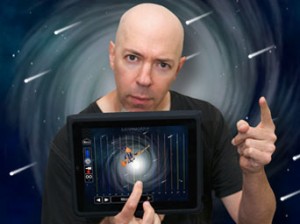
With his latest effort, the mind-bending MorphWiz, he’s set a standard he may meet but never beat – it was a #1 seller on iTunes and has taken in a load of awards since then, including Billboard’s “Best Music Creation App”. Inspired by Rudess’ experience with helping to design the Haken Continuum Fingerboard MIDI instrument, MorphWiz ($9.99) is a vertical-grid-based musical instrument that allows a great deal of expressive control with real-time, highly organic, animated visual feedback.
As creative and intuitive as it is to use, however, pulling MorphWiz together was an arduous task – as the construction of most quality apps are. In this interview, Rudess took the time to break down the A-Z of how an app is born, from inspiration to conception, partnership to programming, marketing plan to a place on the iTunes store. To learn how to get your own iPhone/iPad app together, just read on.
What first got you thinking about creating iPhone apps?
Well, the light really came on as soon I realized that music was possible on the iPhone. It was one of the original piano apps I saw a couple of years ago that sparked my imagination – I just touched a key on the iPhone, it made a sound and I thought, “This is cool.”
From there, what made you go from enjoying other people’s iPhone apps to thinking you needed to create one of your own?
The iPhone world is something that exploded rather quickly, and when it became clear that you could do creative things with it, a lot started happening. I was very much on top of all the developments, I started to realize the full potential of the device and it got my mind somewhat soaring.
I started to think of a lot of creative ideas, and I reached out to some of the people doing the coolest things in the iPhone world. One company was Amidio, based in Moscow, so I reached out to them and they were interested in working with me. Funny enough, I had a trip to Russia planned with Dream Theater, so I met with their programmer Toyo Bunko, and he and I made plans to release an app which ended up being called JR Hexatone.
JR Hexatone is an app that was really a sound-sequencing app, which lent itself very much towards the whole electronica/glitchy type of movement. That came out in 2009, and was really the beginning of apps that had my name associated with it.
From there, one of the popular apps that I worked on is Bebot, which is a vertical controller in some ways similar to MorphWiz where the note is spread across the screen in vertical lines. That kind of control is something I’ve been interested in for quite a long time, and also because of my Continuum designed by Lippold Haken.
Somewhere along the line I discovered an app that was called 4D Synth, and that inspired me too. I wrote a letter to the guy who programmed it, Kevin Chartier, that started a conversation, and we decided we wanted to work together to write a brand new app that really demonstrated my vision.
Sounds like it pays to keep your eyes open, and find people who have a track record. After you connected with Kevin, what guided you to the exact type of app you would produce first?
A primary thing about MorphWiz was that it would have this kind of Bebot/Continuum note grid and vertical line control design, where each line had the ability to have some expression on them. But beyond that I wanted to have an instrument that was a combination of visual and audio. It’s been my desire to bring together the world of audio and video as one. I think they are one, and this app technology allows us to have as little separation as possible.
Kevin and I worked very hard on merging these two worlds, and we came up with MorphWiz. The idea was, “How could we morph from one sound to another, and also morph from one image to another, and have them really correspond?” The basic waveforms of MorphWiz are sine, triangle, sawtooth and square, so we gave each waveform a visual image, then experimented with how we would not only morph audio but the visuals. So when you put your hand on the playing surface of MorphWiz, you can have the waveforms morph from one to another and at the same time get a visual representation of what they’re doing.
Although MorphWiz only shows you a visual representation of the last note you hit, sonically it’s morphing every note you play independently. That’s the very deep foundation of the program – too deep for most people to even realize what’s happening. On a traditional synth, for example, if you’re bending one note, you’re going to bend them all. But with MorphWiz the idea is that every note is an independent voice and each note can be expressed on its own, in that you could play three notes, bend one and not the other, bend one up and the other down…things like that in real time.
Sounds like it helps to be ambidextrous!
Sure. You can play two notes at the same time, bending one in with one finger, and bending the other while the first is fading out.
So once you have an app concept, what kind of team and resources are actually needed to design it and test it?
That’s a good question. My company is very, very small – it basically stared out as two people. One of us is a professional programmer/musician/music lover, and the other is a professional musician — that’s me – who’s very interested in technology, controllers, and different ways to make sound and visuals. We’ve found ours is a great combination to bring apps to the world because we can successfully conceive of them, make them and then market them.
In MorphWiz’s case, I have a musical career and people know me as someone who plays a lot of interesting sound-controlling devices. That along with my other complementary careers presenting technology, educating – all of that combined with Kevin’s immense programming skills make this work.
But there’s a lot of ways people can make this work. A lot of companies have people that they can assign the tasks more easily among them so that one person does coding, the other does marketing, and the does the demo, etc… Our organization is very small, but between us we have the parameters that we need.
As far as funding is concerned, in a lot of companies someone will come up with an app, and then need money to hire a programmer from the outside to make it happen. In our case, it was a work of passion: This was something we wanted to do, and make this vision happen. Kevin has a full-time job working for the government, and every spare minute he’d program. I have my full time job working with Dream Theater as a musician, and in my spare time I’d be talking with Kevin, conceptualizing, testing, playing it, and after it’s out calling the media for interviews and going to conventions.
The reason we didn’t need any funding in the beginning was that we were almost possessed with the joy of what we were creating. So either this thing will proceed to the next level and we’ll keep having fun with it, or we’ll get funding and it will expand that way.
Can you give us a deeper look at the workflow between creative and programming – or you and Kevin, in this case?
I generally have a fairly strong vision of what I want, and as soon as I present something to Kevin, he’s generally right there with me. Kevin is not just a programmer – he loves music and graphics, and we’d have a great time online when we’d pick the visuals to represent the waveforms. We’d look at something and say, “Maybe those colors aren’t rich enough. Can you make it a little more angular? A little more opaque?” Once there’s something on the screen to look at, then we can make changes from there.
After that, how is an app actually brought to market/onto the iTunes store?
From my experience, it seemed very complicated putting things into the store. We had to make these special builds, type in a lot of information, get very accurate descriptions together, put up special graphics, make a Website, put it up on Facebook, and make sure all the bases are covered.
It’s not that easy. Apple requires you to have a full support system in place – you even need to make a video. There’s a lot of required elements that go into making the app. It takes a lot of patience. MorphWiz from start to finish was about a nine-month ordeal.
Don’t try to market your app without the assistance of YouTube!
Apparently it was worth it: Morphwhiz went to #1 on the iTunes store within a few days of its release. What do you think allowed you to attain such quick success?
Well, two things, one of which is that I think it’s a really together app. It’s an app that’s very fun for young people to play because it looks really colorful and it’s playful. There’s a lot of different patches, they all look different, and it’s a really good time. But even for a pro musician, it offers some very unique features that you just don’t find on any other instrument. So we had an app that captured all ages, all different levels, and different interests in music.
Of course, it can happen that the product is amazing and no one even knows about it. But we were very aggressive about making sure the world knew about it, contacting all the music press, putting it up onstage with Dream Theater, talking about it in every interview. It all keeps things in motion.
Six months later after MorphWiz came out, what would you identify as the challenges and rewards of creating an app? What’s easy about it, and what’s proven tougher than you expected?
There’s a lot of upkeep. If you want your app to continue to be successful, then you have to work it. I go to shows like the San Francisco MusicTech Summit, before that I was at the San Francisco App Show, and prior to that I was at the Billboard Awards where it was voted the #1 Music Creation App. I play it whenever I can in public, and I just think it’s the kind of app that can be around for a long time.
We get to upgrade it as well, and we have some cool upgrade paths for MorphWiz to go down. Just to make sure it remains vital is a big job. That’s maybe the tough part – to keep the business running and not lose the momentum.
The rewarding part is that once you do all the work, get it submitted, it’s good, and people know about it, then people buy it and enjoy it. That part’s cool.
That sounds very cool! So in short, what advice would you give to people reading this who may be thinking about their first app?
Good luck! (laughs) If it’s a music app then you have to make sure that it’s going to really sound good. I tell people, “Make sure it sounds good and looks good, even if it’s really simple.” It’s fine if it can only do one thing, but it has to be quality. If its buggy that would be a problem, but if it does what it says it does, and is entertaining/fun/useful, that’s all you need.
I would also say that there’s two level of apps, in the sense you can make something very deep, complex and powerful, or you can make something that’s very straight-ahead, and that’s OK as well. A good example of how one thing can lead to another is my newest app, SketchWiz. It’s not a music app, but it’s something that stemmed out of developing MorphWiz – it’s caught on and become a big thing in the photography area.
Ready for a Scoop? We have an app that we’re releasing at NAMM called MorphWiz MIDI. It’s a MorphWiz engine that can run any MIDI synth.
That’s juicy! Listening, everybody? Shifting gears, do you think NYC is a particularly good breeding ground for app developers, in your opinion?
Well, I don’t know. I’m from NYC, but my partner’s from Florida. I know that there’s a lot of very creative people in NYC, and programmers from NYU with a great technology education. NYC has always been a hub of creativity and technology, as well, just like San Francisco or L.A.
I’m watching the world come into the whole app thing, like Korg, which is doing some stuff now that’s kind of cool. I’m just very aware of these bigger organizations that are trying to play this game, like ReBirth coming out for the iPhone and iPad. It’s about to become a whole different animal where big companies take over. But at the same time, you have a lot of seeds coming out of New York.
On the other hand, you’ve teamed up with programmers from Moscow to Florida. When it comes to the app world, it seems like it doesn’t matter where anybody is located, as long everyone’s on the same page.
Absolutely, I didn’t even meet Kevin in person until we were six months into the project. We did everything over Skype, phone, and email. It all worked out, and we met after we submitted the app — it’s a new world out there.
– David Weiss
NYC Author Greg Prato Publishes New Book “MTV Ruled the World: The Early Years of Music Video”
December 19, 2010 by David Weiss
/* Filed under News */
NYC-based author Greg Prato has two new titles that are now available for purchase.
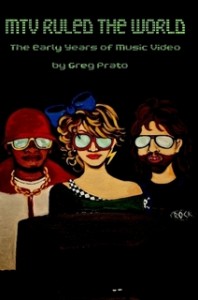
The first, “MTV Ruled the World: The Early Years of Music Video,” (427 pp, $24.99) is the first-ever book to focus solely on the channel’s important building-block years, specifically from the launch of NYC-based MTV to when its original group of VJs left the channel. Comprised of over 70 all-new interviews (“Weird Al” Yankovic, Daryl Hall, John Oates, Joe Elliott, Phil Collen, Rob Halford, Stewart Copeland, Rick Springfield, Jerry Casale, Geddy Lee, Ann Wilson, Chuck D, Alan Hunter, Nina Blackwood, and more), the book is an account of the early years of MTV and the stories behind its biggest videos, and also of the music industry, important music developments/events, and the “Big ’80s” in general.
The second, “The Eric Carr Story,” (256 pp, $19.99) is the first-ever book to tell the life story of the late Kiss drummer Eric Carr. Comprised of all-new interviews, the book also doubles as a study of 1980′s era Kiss. Readers will find insight into all of Kiss’ albums that featured Carr (from producers Bob Ezrin, Michael James Jackson, and Ron Nevison), as well as those closest to him (sister Loretta Caravello, girlfriend Carrie Stevens, Kiss guitarist Bruce Kulick), and music-related friends (Eddie Trunk, Dream Theater’s Mike Portnoy, Anthrax’s Charlie Benante).
Also included is one of the last-ever interviews conducted with Kiss’ original manager, Bill Aucoin, and for the first time ever, Kiss fans will be able to learn what the real story line to Kiss’ controversial release “(Music From) The Elder” was all about, via an explanation from Ezrin.
Both books are set up in an “oral history” format and have a multitude of rarely seen/never-before-seen photographs.
Previous titles from Prato include the author of “Grunge is Dead: The Oral History of Seattle Rock Music,” “Touched By Magic: The Tommy Bolin Story,” and “A Devil on One Shoulder and an Angel on the Other: The Story of Shannon Hoon and Blind Melon.”
Rob Shore: Maximizing Music Business Management
June 8, 2010 by David Weiss
/* Filed under Music Biz */
MIDTOWN, MANHATTAN: How do YOU manage? If you’re a band or solo artist working above a certain level, then you do it with a business manager like Rob Shore.
Straight from Madison Avenue, Rob Shore and his team oversees monetary matters for a diverse roster of 35 artists, including As I Lay Dying, Flyleaf, K’naan/, LCD Soundsystem, New Found Glory, Portishead, Slipknot, The XX, and Wolfmother.
Shore opened his own practice after spending 16 years – 1988-2004 – handing the business management for all the acts on Sanctuary Management. During that time, Shore saw the Power of Metal firsthand with juggernauts like Guns N’ Roses, Iron Maiden, Poison, and Dream Theater to look over.
SonicScoop got a reminder of why they call it the music biz – as in business – when we sat down with Shore.
Q: You’re quick to stress that you’re a business manager, as opposed to a creative manager. What do you mean by that?
A: Although Business Managers and Creative Managers work closely together, they’re two totally different jobs. Creative Management is 24/7, there’s a lot of guiding the artist and Creative Managers weigh in on every decision in the artist’s career. Most of these are grey areas, with no absolute right or wrong choice, like deciding which producer to use for a record, or which singles, what video director, or what record label to sign with. These are primarily a Creative Manager’s job, and none are particularly easy choices.
That’s the thing I like about business management: There’s not a lot of grey area, it’s mostly black and white. We work within the deals that have already been made, so, for example, when money is due from a merch company or publisher, the Business Manager makes sure that the funds collected and spent are contractually correct and in the best interest of the artist. The Business Manager oversees the finances of touring, merchandising, publishing royalties and keeps artists’ financial interests in their mind at all times.
Q: What are some additional differences between business and creative managers?
A: My analogy is that a creative manager is like a heart surgeon, and a business manager is like a dentist. It’s not as exciting to be a dentist — but no one calls a dentist at 4 AM to have their teeth cleaned. A heart surgeon gets called 24/7.
Unlike the Creative Manager, the role of business manager in most industries isn’t necessary, because the owners are usually the ones who look after their money. In our case, it’s often not in the interests of an artist to oversee what we do because it’s not an efficient use of their time – and can be almost impossible while on tour.
For example: Is it more important that an artist find the proper insurance, or focus on songwriting, which will probably lead to more success than making sure his insurance is in place? Both are important, but many artists find the best use of their time is to hire someone else to deal with things like insurance, so they’re free to create. This defines what we do, why we’re necessary.
Nothing we do is brain surgery, but there are tricks of the trade: every country has different touring laws for different bands, and unless you know how to minimize taxes, you’ll pay full rate everywhere you go, and it makes it almost impossible to tour on a tight budget.
Q: So, in contrast, what are some of the things that a business manager handles?
A: That includes artist royalties, merchandising, reviewing deals, and making sure the tour runs smoothly so the artist is not missing out on any revenue that’s coming to them.
We make sure that taxes are paid properly, from the IRS to foreign states. We basically protect the artist from any kind of financial situation. It’s incredibly humbling that we’re trusted with tens of millions of dollars belonging to these artists. But we’re certainly not a bank. My practice is a word-of-mouth boutique, more user-friendly and service-oriented.
Q: If I’m an artist reading this, my question would be, “At what point do I require a business manager?”
A: What usually happens is that we are brought in when a record deal is signed. The creative manager may have brought them to the record company level, but a business manager isn’t needed until there’s money to manage. So in the band’s early days, where they’re playing for $200 a night, my services probably aren’t necessary.
I’m usually brought in after manager and lawyer are in place when either a record deal or tour is about to happen. The lawyer has worked on the deals, the deals go through and entities, like a LLC or partnership are set up, depending on the individual’s need. After that, we usually get involved. The point of doing this in this way is to get bands in the right position.
It’s not a bad place to get involved. It could be two to three years into the process, when the artist is ready to go to the next level. But there’s definitely times when it would have been better for us to get called in sooner. For example, if a band has been signed, and if they’ve done a tour already, things may have gotten messy. Tours happen, funds are distributed, years go by and tax records get confusing. It’s difficult to recreate what happened in a business after the fact. That’s why I’d rather be involved from the first tour on.
Q: Can you give us some specific examples of mistakes like that made by young bands?
A: Here’s what not to do: Sometimes you go into a club and get paid $200, and they ask for the lead singer’s Social Security number, so they can say they paid someone. After two years there’s a ton of 1099’s with this guy’s Social Security number, and the perception in the eyes of the IRS is that he’s earned tens of thousands of dollars.
The reality is that 99% of those tours are losing money such that no taxes would be due. It’s important to keep track of expenses so they’re not stuck with a large tax bill. In that way, it’s never too early to set up a partnership or an LLC because it’s much easier from a tax standpoint for those things to flow through an entity. Keeping track of receipts and being organized is a good thing to do from Day One.
Another mistake made by young bands is trying to negotiate deals without the input of a lawyer or business management. These people are just licking their chops when they’re dealing with a band that’s not represented well. As exciting as it is to have a record deal it could be an albatross for many years if executed improperly.
Q: That’s very valuable. How about another piece of advice?
A: My personal pet peeve is that people don’t protect themselves with insurance. Once a crew person had an insurance policy finish on a Friday and a new one start on a Monday. He was doing carpentry work on a Saturday, got a small sliver of wood in his eye, and that ended up costing him tens of thousands of dollars for that lapse of coverage. We just make sure that all of our bands are covered for health insurance, because I’ve seen too many people – both in my personal and professional life – who were in the hospital not thinking about their health but thinking about their health bills.
In a similar vein, the majority of young band’s biggest asset is there equipment. For a minimum of cost they can purchase equipment insurance, ensuring their gear is safe from water damage, theft, you name it.
Q: Since you’re minding the money coming in, what are you seeing as the increasingly dependable streams of revenue for artists?
A: The obvious one, and the reason I lucked out having so many metal acts to manage is that in the metal genre touring and merchandise can still be very lucrative. My son’s in high school; his friends wear Slipknot t-shirts, however, that‘s not necessarily the case for a pop artist like Ke$ha.
Unfortunately, artist royalties from record sales is a 180-degree turn. In my earlier days, people would tour to sell records, and now it’s become more and more prominent that people make records to tour. The reason to tour is because that’s where profit is made, and that lends itself to merchandising. Endorsements and synch licensing are big, as well. It’s hard for an artist to make money on record sales when anyone can download their music for free.
Q: That sounds like an incredible amount of detail that you have to keep track of.
A: I have an incredible staff I work with, and we associate ourselves with great people: great insurance people, great lawyers, great tour managers; it’s a lot to keep track of, but when you work with great people it’s not as difficult.
Part of my job at Sanctuary was the survival of bands, and allowing them to live long enough to break. If RSA has a forte, it’s taking bands, and extending their life longer than other people might be able to.
I think part of this is managing tour support, for example. As record companies make less and less money, it’s tougher to get tour support out of them. So we work hard to maintain budgets, get what’s really agreed upon, and receive what’s needed to extend the band’s life.
That’s true not just for emerging bands, but ones that are perceived as successful as well. A platinum artist may want to have a baby next year, so they’d ask us what they need to live next year without touring. We might say, “The money runs out next November, so that’s when you’d have to go out and tour again.”
Q: You mentioned the intricacies of working financially outside the US, as well.
A: Most countries used to not have a clue as to how to tax bands coming in and out, but now everyone seems to be on top of it. In the US, it used to be a relatively easy process to get taxes waived, and now it’s nearly impossible. We’ve become experts on the intricacies of what the IRS really expects now, and that knowledge can make a huge difference for an artist at tax time. We have a good working relationship with people at the IRS and close ties to professionals who handle taxes with bands overseas. In many cases, the ability to minimize taxes in the US allows foreign bands to go on tour here.
Every country has their own game that needs to be played, and we know how to play the game while working within the legal limits and paying what’s owed – without paying more than necessary.
Q: We ask this a lot, but I’m particularly interested in your perspective: How do you see the music business in 2010?
A: I’m not sure if this is an answer to your question, but it is that bands can still be successful and earn a living in the music business. If my experience can inspire anybody, it’s that I’ve seen bands go from a $500 gig to a $100,000 gig in a year. I’ve seen really poor bands seriously considering taking a $50,000 publishing advance, holding out a little longer, and then landing an $800,000 publishing deal less than 8 months later.
I admire people who have the guts to stick it out. People who took a big chance on music careers, and then got to the point where a record company is willing to put hundreds of thousands of dollars into them to make them successful , then playing in front of thousands of people. I’ve seen it happen that way: People didn’t give up, and they found success. That’s an amazing process.
– David Weiss