AES Preview: AEA Ribbon Mic, Novation UltraNova, PMC Monitors, D.W. Fearn VT-12 and More!
October 29, 2010 by Janice Brown
/* Filed under News */
AES is next week in San Francisco, November 5-7. You going? Here’s a preview of some of the new products we’ll be ogling:
- Audio Engineering Associates (AEA)’s new KU4 unidirectional ribbon microphone, a modern interpretation of the original RCA KU3A (considered one of the best ribbon microphones ever made).
- Vintage King Audio will be showcasing gear from Barefoot Sound, Inward Connections, Digital Audio Denmark, Acme Audio, ProAc, Electrodyne, Helios and Endless Analog, in addition to official product launches from Neve Classic Series and Shadow Hills Industries. Wonder what?
- Sonnox is introducing two Oxford plug-in collections geared towards the broadcast and post-production sectors and aptly named Sonnox Broadcast and Sonnox Post Collection. Sonnox Broadcast bundles the Oxford EQ and Dynamics plug-ins along with the Limiter, the Inflator and the Oxford SuprEsser. The Sonnox Post Collection includes the Sonnox Restore suite, which features the DeClicker, DeBuzzer and DeNoiser plug-ins, along with Oxford EQ, Dynamics, Limiter, Reverb and the SuprEsser dynamic EQ.
- PMC has a new AML2 Active Reference Monitor, based on the AML Series design and adding an EQ tilt, an enhanced power supply, and a revised cabinet structure with additional internal damping. Key design features include a PMC 6.5-inch/16.5 cm flat piston woofer constructed from a carbon fiber/Nomex honeycomb that allows for large, controlled linear excursions and which ensures linear response down to 33 Hz. The amplifier’s true analog circuit design is licensed from Bryston.
- Also want to check out Allen & Heath’s new GS-R24 analog console. This is a 24-channel ‘studio recording mixer’ with analog or Firewire/ADAT interface modules, motorized faders for automated mixing, and MIDI controllers for your chosen DAW or recording device.
-
We’re excited to check out Novation’s new analog-modeling synthesizer, UltraNova, the next generation of Novation’s “Nova” synth family, which includes SuperNova and SuperNova II. It is a single-part synth taking the Supernova II synth engine as a starting point and packing it with the latest technology. Brand new features include wavetable synthesis, more powerful filters, a software editor and a revolutionary new touch-sense performance mode.
- Phoenix Audio will be showing its 8-channel solid-state class A discrete mic pre amp, the DRS8. Each channel on the DRS8 has its own dedicated level control, -30db pad, phantom power, phase reverse, high pass filter and mute buttons. The unit has an 8-channel monitoring output facility so all 8-channels can be sent directly to a monitor controller or a patchbay as well as having individual channel outputs.
- Definitely swinging by the Ultrasone Inc. booth to try on the company’s first open back (also limited edition) headphones — Edition 10 — made with Zebrano wood ear cup inlays, Ethiopian sheepskin leather ear cup pads, Titanium plated drivers, Kevlar coated cables. Love the Ultrasones!
-
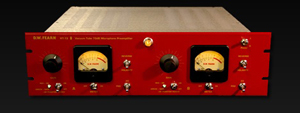
And on to D.W. Fearn who’ll be debuting the new 70dB VT-12 Vacuum Tube Mic Pre, designed to accommodate the low output level of ribbon and dynamic microphones. To make the VT-12 more versatile, a provision for phantom powering condenser microphones is also included. Since many engineers are concerned about possible damage to ribbon mics if phantom power is accidentally applied, the VT-12 has a rear panel switch that disables all possibility of applying phantom power.
- SSL is presenting its newly updated AWS 900 console. Still in a 24-fader footprint, the new AWS 900 is now available in 24 Input (AWS 924) and 48 Input (AWS 948) variants and has new features including Dual Path Channels with stereo EQ & Insert, 8 fader bay Digital Scribble Strips and ‘A-FADA’ (Analogue Fader Accesses DAW Automation) automation where motorized analog faders follow DAW automation data. For more on the new AWS, visit SSL. As we reported earlier this week, the newly launched Nucleus — SSL’s new DAW Controller and SuperAnalogue audio hub for professional project studios — is also something we’re eager to check out!
What else? We’ll keep you posted as we get additional previews leading up!
John Agnello: Dinosaur Jr. & Sonic Youth Producer On New Indie Rock Sounds, Classic Techniques
September 23, 2010 by Justin Colletti
/* Filed under NYC Spotlight */
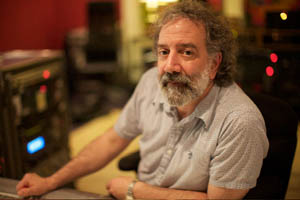
JERSEY CITY: In 1979, a Brooklyn teenager and avid record collector named John Agnello landed an internship at one of Manhattan’s most prominent music studios. Thanks to some hard work and genuine affability it wasn’t long before he found himself assisting on major releases from contemporary heavyweights like Aerosmith, Cyndi Lauper and Twisted Sister.
It’s an unexpected beginning for a Producer most known for his involvement with classic Indie Rock darlings, many of whose records still pepper the favorites lists of young fans. Success on early releases with Dinosaur Jr, Screaming Trees and Buffalo Tom made way for work with The Breeders, Sonic Youth, The Hold Steady and Nada Surf.
We grabbed a quick bite with John near his Jersey City home between sessions with Kurt Vile at Williamsburg’s Headgear Recording Studio.
Looking through your early discography, we see you listed as an assistant on some pretty mainstream releases. It’s interesting to see your credit list take a left turn in the early 90s toward more bold and unique artists, branded back then as “Alternative Rock.” It looks like you’ve never turned back. I’d like you to take us through that journey a little. How did you get your start?
I started assisting at the Record Plant in ’82, and started engineering in ’84. I was engineering for a long time, all through the 80s and into the early 90s. It took a while to really get considered to produce records. And with good reason! (laughs) I wasn’t really a “Producer” at first.
What changed? Were there any seminal records that acted as a turning point for you?
The first Dinosaur Jr. record was a really great experience. I was credited as an engineer, and I wouldn’t say I was a “producer” on those records. But I definitely helped J. [Mascis] get to a different sonic level. When we worked on together, Dinosaur Jr. records started to sound like classic records, not just gnarly discs with great songs covered in “Ka-Kssshhhhh” (makes sound effect of gnarly midrangey goodness). Once those records were doing really well and A&R guys noticed what I was starting to contribute to the process, things began to change.
How does your approach as a producer differ from that of your engineering days? Is there a learning curve?
Over the years I’ve learned a lot about what a producer can do, and pushed the envelope a lot more. When I started producing, it was in the middle of this Indie/Alternative Rock explosion. Things were really open. What a producer had to do was create a vibe, get the bands to perform, and let them do their thing. You might help with an arrangement here or there, but that was it. Bands were being signed because somebody somewhere liked them.
The attitude was: if a band like Spacehog or Nada Surf or Jawbox hit the charts, great! And if they didn’t… they didn’t. In that way it was a totally different world.
Today, I spend a lot more time in rehearsals with bands really working through arrangements and giving them actual direction. Things these days are so much tighter. There are so many records coming out, indie-wise at least, and it’s so much more competitive because everyone posts their songs online.
For an unknown band to have a chance of getting noticed, it’s really important for the record to be concise and bring out the best of what they do. Sometimes we’ve got to leave out all the extra filler that makes listeners go: “Boring!” Attention spans have gotten to be…miniature.
So do you find yourself working more as a musical gatekeeper than you would have in the past?
Absolutely. I’m in pre-production rehearsal with bands right now, and you have to bring these things up: ”The song’s too long, let’s cut the chorus here in half here,” or “The key’s not right for your voice, let’s try modulating there.” When you’re making good suggestions, bands are really receptive. And it’s fun too. You feel like you’re even more a part of the band and a part of the record. It’s great to notice: “Hey the verse… It’s really this song’s chorus, isn’t it? Let’s build around that.”
Let’s face it: anyone can be an engineer these days. That’s no slight against the guys who are great engineers, because there are some really good ones. The point is: Any one of these bands *could* stay at home and make their own record. These days just being an engineer isn’t enough to separate yourself from everyone else out there. You’ve got to bring something else to the table.
So here you are being hired for your ability to filter and to make perceptive musical choices… but you didn’t even start out as a musician?
No, not at all!
How did that happen? Did you become a player as things wet along?
I didn’t. That’s another thing that’s interesting to think about: when I first started assisting, I really had no concept of pitch. I was just a kid who loved listening to records. I wasn’t a musician, I wasn’t trained. I had to learn to listen and understand what pitch was and to focus on it. It’s just another one of those things that you learn to do well through repetition.
You’ve done a lot of work with promising bands as they’re discovering their sound. But you’ve worked with established artists as well. The last two Sonic Youth records you’ve worked on have featured some really masterful sounds.
Considering how long they’ve been around and how long I’ve been around, it’s been really great to finally work with them. It made me feel really good about my station in life, to be able to make two really wonderful records with a band I’ve always loved.
Sonic Youth are a band known to have a lot of vision and often share production credit on their records. How is your role different with a band like that?
Oh, they know what they’re doing. A big difference between working with a Thurston Moore or a J Mascis and all the other bands we’re talking about, is that you don’t need to tell either of those guys anything about songwriting (laughs). What’s the point?! What a band like Sonic Youth really requires is that we’re on time delivering the record, and I can help keep them on track while they have so many other projects going on.
Rather Ripped in particular made some waves for helping put the band back on the map after some rare time away from critical acclaim. That album took a distinctly punchy and muscular sonic direction compared of their prior records. The guitars in particular command an unusual amount of power and clarity. Can you tell us anything about your approach there?
Rather Ripped (2006) and The Eternal (2009) both have Lee on the left and Thurston on the right. That’s how they stand on stage. I just love the clarity of stereo. It’s great to hear each dude doing their part, and it’s really cool to hear that in headphones, especially when one part steps out a bit from either side.
Definitely. It leaves a lot of room for power in the drums too. I hear that kind of spread on one of your newest releases as well. Dead Confederate’s Sugar came out this past month, and in some places the guitars are also really wide, but much more textured and layered sounding.
They have a cool sound. I joke that’s almost like “Freedom Grunge.” You know? Like Freedom Rock + Grunge, with some shoegaze mixed in. It combines a lot of things I like.
I’ve heard you tend to use the same mics a lot on guitars: a classic combination of [Shure] SM57, [Neumann] U87 and [Sennheiser] 421 mixed together. Is that true of those two records, even though they have such different sounds?
Yeah, a lot of it comes from the amp, and the player. That’s the first place to change things. If there’s something that ties those sounds together it’s that I really like my guitars close-miked, even if they have a lot of effects on them. If your amp is really blowing and you have the mic right on it, that’s where you get a lot of intensity. If you start to move it back, sure you can get some more air and some room maybe, but you sacrifice that intensity.
When you use a blend of mics like that, which mics are you listening to in the control? What about the players?
I’m old school. I’ll blend them together and print it to tape or to Pro Tools. If I’ve got a great sound that’s moving me, I don’t want to have to think about how I got it ever again. When I’m producing, I want to shut up the Engineer-guy in my head as much as possible so the Producer-guy can take the wheel. Sometimes I’ll even print my snare top and bottom on one track.
What about kick drums? Some of your records have a powerful-yet-organic sound you don’t hear a lot these days.
I think both those Sonic Youth records and a lot of the Dino stuff is a double-headed kick drum, no hole. It’s really hit-or-miss though. If you put a mic up on either side and it sounds good, you’ll have an amazing sound. If it doesn’t, you could struggle with mics and anything else for hours and you’ll never get there.
What else are you excited about? I hear you’re in the studio with Kurt Vile now, making a record for Matador.
He’s great. Really quirky, unique stuff while also being classic and beautiful. My daughter Bella is in love with him and sings his songs in the car all the time!
Have the digital and home studio revolutions changed the way you work much?

Agnello often works out of Headgear in Williamsburg, Magic Shop in Manhattan or Water Music in Hoboken. Photo by Andrew Kesin.
Not a lot in my niche. Every once in a while I’ll get a record to mix that was recorded by a new band at home. You wouldn’t get projects like that years ago. And sure, I use Pro Tools and edit digitally, but other than that, I pretty much work the same way.
I feel like you can’t make the same record all the time, and each album should be unique, but I use the same tools a lot. I pick my favorite studios like Water Music, Headgear and Magic Shop because they have tape machines that work and the monitoring is great. It’s almost embarrassing to admit, but I’ve been using the same stereo bus compressor for almost 24 years! (Laughs.)
— Justin Colletti
For more on John Agnello, visit his website at www.johnagnello.com and follow him on Twitter @John_Agnello.
Justin Colletti is a Brooklyn-based audio engineer and music producer who’s worked with Hotels, DeLeon, Soundpool, Team Genius and Monocle, as well as clients such as Nintendo, JDub and Blue Note Records.
Endless Analog Demos Its Dream-Come-True CLASP at Avatar
August 5, 2010 by Janice Brown
/* Filed under Tech & Reviews */
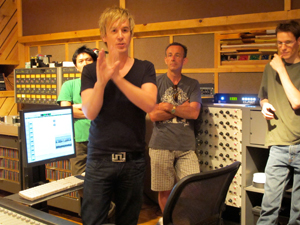
MIDTOWN MANHATTAN: Nashville-based producer/musician/inventor Chris Estes demonstrated his revolutionary Endless Analog CLASP system in Avatar’s Studio G on Monday. The session featured ace-of-bass and producer Jerry Barnes laying down some of his thick, low-end goodness to Pro Tools HD via 2” tape and the CLASP.
Since the CLASP is such a newfangled, first-of-its-kind product, there’s a lot to understand about what it does and how it works. There are several great reviews and testimonials on the system here and plenty of information to answer any and all questions you may have. But here’s the gist:
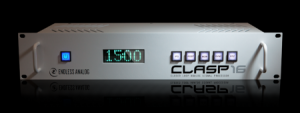
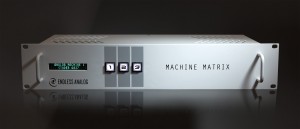
CLASP (Closed Loop Analog Signal Processor) consists of a hardware unit that is installed between your mic pre’s, DAW and tape machine (pictured), and the native Bridge plug-in (RTAS and VST), which you open on any track in your DAW session and use to control the tape transport.
These days, most recordings being done to tape are then dumped into the digital realm for editing and mixing. CLASP allows for a totally hybrid workflow, where analog recording and overdubs are done in real time, controlled with the speed and efficiency of digital, and all audio is stored in your DAW, minimizing tape usage. You can use one reel of tape to record an entire record, or several records for that matter.
CLASP essentially allows the tape machine to be used like a plug-in. You control the tape machine and switch between tape speeds stored in the CLASP right from your DAW. And you can monitor analog in repro mode. [See the CLASP connection diagram here.]
The elevator pitch to engineers via Endless Analog’s website: “CLASP provides sample accurate tape synchronization with zero latency analog monitoring while delivering a true analog front end recording solution for Pro Tools.”
Seeing the CLASP in action, its functionality seems instantly essential. It totally streamlines a process that needs streamlining and will allow so many more people to utilize analog tape as part of their production.
At Avatar, the CLASP hardware unit was connected via MIDI to the Pro Tools HD rig and through an Endless Analog proprietary cable to the 24-track Studer A800. Once the tape machine was aligned and synchronized to the Pro Tools session at both 15 ips and 30 ips recording speeds via CLASP, Barnes tracked a bass line and then monitored off the repro head to select his preferred speed.
During playback, Estes pointed out: “Being able to monitor in repro is a really great thing for getting drum sounds, for example, because you can make judgment calls about what tape speed you want to use for a particular song.”
“You can have it on whatever speed and then have the drummer play, mute his headphones, and then listen off the tape in Pro Tools. And you can make decisions about levels and EQ and things like that based on what you’re hearing.
“You can have the tape rolling while the drummer’s playing and, starting with the kick drum, you can bring the level up to find the sweet spot — right where we get just the right amount of tape compression — and dial it in so when you go to do your recordings, there are no surprises.”
CLASP stores information for up to three different recording speeds. Estes relayed to the group: “In a lot of sessions we’ve done so far, people will record the drums at 30 ips, then they’ll go back and re-cut the bass at 15. Then they’ll cut electric guitars at 7½, which sounds really great if the machine is aligned properly. With this [A800] machine, you’d vari-speed it down as far as you can get it and then do an alignment for that.”
“And if you wanted to use varispeed to overdub just a Tom Fill at 15IPS and have the rest at 30?” engineer Roy Hendrickson asked.
“You’d use the sync I/O in Pro Tools and vari-speed Pro Tools up,” says Estes. “So to make the toms sound bigger you’d vari-speed Pro Tools up and do the tom fill, put it back normal, and then the toms would be huge.”
Estes also points out you can daisy-chain up to three CLASP hardware interfaces and synchronize three 24-track tape machines for a total of 72-channels of recording. You can use CLASP with 24, 16, 8 or even 2-track machines, you can combine different machines and tape speeds for different tones. In addition to Pro Tools, CLASP also works with Nuendo and Cubase.
But there’s even more to know…here’s Estes on-the-spot rundown of CLASP’s main functions and features:
1) First of all, the CLASP is a precision measuring instrument, which functions as a sample-accurate synchronization device, so it’s able to profile the tape machine, analyze the ballistics of the machine, calculate to the sample what the latency of that machine is — taking into consideration the transport, the flutter, etc. Then, it’s telling Pro Tools to change the time stamp of the audio that’s coming into the converters.
So, while you’re recording, the meters are actually late but then when you watch the wave forms as they’re going down, Pro Tools is drawing them in relationship to the grid in the correct time. So it’s an actual time stamp, you can take the session to another studio and you don’t have to have the CLASP. You only use the CLASP when you’re cutting tracks.
2) The CLASP is seamlessly controlling the tape transport for you invisibly in the background. It works a lot like the Quick Punch mode — it looks at the track-arming status and as soon as you have tracks armed and you start the Pro Tools transport, the CLASP, analog machine and Pro Tools Quick Punch all start recording simultaneously in the background. It’s extrapolating from the Pro Tools transport and track-arming status. So even though you might have punched in late, you can peel back audio with tape now. Which is impossible otherwise.
3) You don’t have to rewind the tape until you reach the end of the reel. In this case, it’s counting down from 30 minutes (@15 IPS), so you’d only have to rewind every half-hour or so.
4) You now have latency-free analog monitoring. We’re monitoring here through the master-grade analog hardware of the CLASP, not Pro Tools.
5) CLASP compensates for the converter delay times. If you’re using Apogee 16X converters with Pro Tools, for example, that’s 62 samples of converter latency at 44.1, so you simply type in 62 samples in the offset and then everything you play is perfectly in time with where it’s supposed to be when you play it back.
After the demo at Avatar, engineer Roy Hendrickson shared his impressions with us:
“I think what Chris has done here is quite brilliant. The fact that he is getting Pro Tools to record these files into the DAW with an adjusted time stamp is genius.
“And once you’re finished using CLASP and you go back to using Pro Tools normally, there are no side effects, there’s nothing you have to change about your workflow. You don’t have to move your files and it does all those little tweaks that you’d normally have to do — like re-compensating for things like delay manually — this takes care of all that for you in a really elegant manner so you don’t have to worry. You can concentrate on the performance.”
On the Endless Analog website, Chris Estes and Endless Analog VP Amy Becker Estes ask us to: “Imagine experiencing analog tape recording as fast, effortless and timesaving as Pro Tools.” The CLASP system, which Estes started developing out of his garage in Nashville over five years ago, makes this idea – once Estes’ daydream – a reality.
Endless Analog’s CLASP system is available now from Vintage King for $7,495.
Visit www.endlessanalog.com and www.vintageking.com/Endless-Analog-Clasp for more information!
Vintage King Carrying The CLASP By Endless Analog
June 29, 2010 by Janice Brown
/* Filed under Tech & Reviews */
Vintage King Audio is now the exclusive U.S. retailer of the CLASP (Closed Loop Analog Signal Processor), a hardware and software system by Endless Analog that integrates analog tape recorders with digital audio workstations.
We were first introduced to the CLASP last October at AES in NYC and have been eager to see it in action ever since. Vintage King will have a unit setup for demos at Media Right Music on W. 27 Street in NYC.
The CLASP “seamlessly integrates” tape machines and DAWs using a proprietary method called SST (sample synchronization technology).
The unit delivers a true analog front end recording solution with the character of your tape machine, while at the same time eliminating the delay associated with digital AD/DA converters. Record analog tape with digital speed!
“The CLASP’s revolutionary technology bridges the gap between classic analog recording and modern digital workflow,” says Mike Nehra, Vintage King co-owner and Sales Director. ”It’s a cutting-edge innovation that our clients will undoubtedly jump at the chance to work with.”
The CLASP is compatible with over a dozen tape machines, including Studer A80, 800, A827, Otari MTR, MX5050, Ampex ATR 102 and the MCI JH Series. For a complete list, click HERE.
For more information, visit http://www.vintageking.com/Endless-Analog-Clasp. To schedule a demo, contact the Vintage King sales department at 248-591-9276.