Producer Gordon Raphael (The Strokes, Regina Spektor) Launches Gordotronic.com – Eclectic Music, Art & More

February 7, 2012 by  
/* Filed under News, SPARS Feed */

Gordon Raphael, who established himself as one of New York City’s most influential music producers during his relatively short residency here, announced that he has launched www.gordotronic.com, the “World Headquarters” for all things Raphael.

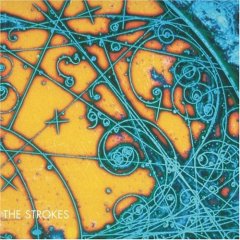
Gordon Raphael's original sounds are worldwide now on the Gordotronic (artwork by Fabrizio Moretti of the Strokes).

Raphael left a huge imprint on rock by producing The Strokes’ 2001 album Is This It in his Lower East Side studio Transporterraum NYC, and their 2003 follow up Room On Fire. (See the 2009 SonicScoop interview with Raphael about Is This It here.) He also produced NYC artist Regina Spektor’s brilliant 2004 album Soviet Kitsch (which was included in NME’s list of the decade’s Greatest 100 Albums in 2009).

Visitors to the site will be greeted and treated with a mélange of ear/eye-popping aesthetics from Raphael, who is now based in Berlin. The site contains choice video and art curated by Raphael, and his first 7 albums of his own music, none of which had ever been released before now.

Lovers of sonic discovery will especially appreciate his “Silhouette Shack” podcast that streams from the site – an eclectic and essential listen.  “When I was a kid, I had a little transistor radio that I’d put under my pillow, and before I slept I’d hear a very atmospheric, psychedelic show called Silhouette,” Raphael told SonicScoop. “I was always transported by this show — the discussions and music were very special to me – dealing with how important young people are to the future, and also how music has the power to affect world change in a positive way.

“So I’ve made ‘Silhouette Shack’ as my own kind of psychedelic radio show, and put it on the front page of the Gordotronic World Headquaters. In aiming for my own music website, I had the chance to dig through my entire surviving music archive — my first decade of work was destroyed in a fire at my church studio in Seattle — and decided that the first radio show would feature a sampling of my favorite self-made songs, and things I produced that featured other artists, such as Miss Machine and Sarah Maguire.

“Analog Poodle and Black Light were two different bands I was in, and even though these albums aren’t out yet — I wanted to give a taste of our future releases. Since I literally spent about 2 1/2 decades composing and recording my own songs, the process of digging in the archives has led to re-discovering many songs, such as ‘Solina Space’ and ‘Queens Echo Two,’ which I had lost track of. As you can imagine, releasing my first seven albums on the same day has been unbelievably exciting and artistically satisfying!”

Raphael is now back in Berlin after a year in the USA, producing approximately 30 bands in San Antonio, Texas and California.

Studio Tour: North Brooklyn, Part 2

April 14, 2011 by  
/* Filed under Deli Feed, NYC Spotlight, SPARS Feed */

NORTH BROOKLYN: Our neighborhood studio tour continues with four more decidedly uncommon studios in North Brooklyn. We talked to the owners of Strange Weather, Headgear, Metrosonic, and the Fort about sessions, toys, and building an active niche in this teeming slice of the city.

STRANGE WEATHER
South Williamsburg (Coming Soon: Williamsburg/Greenpoint)
www.strangeweatherbrooklyn.com

Room Rate: $450/day

Those familiar with the SonicScoop blog-roll may recognize the name of Marc Alan Goodman, who’s been recounting the saga of building Strange Weather’s new, full-service tracking studio on the Greenpoint/East Williamsburg border. In the meantime, it’s a small secret that his current location already hosts one of the most impressive collections of hand-picked ear candy in the city.

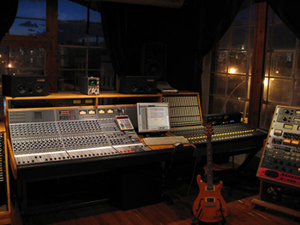
Strange Weather is built around a 24-channel API 1608 console

More than anything, this is a studio for artists and engineers with boutique tastes. No summary can do justice to the extensive selection of gear that includes names like Neve, API, Purple, Gates, Federal, ADL, Neumann, Coles, dbx, RCA, and Bricasti. Strange Weather is also home to a startling collection of guitars, drums, and keyboards at the ready for capturing any sound musicians can imagine.

Most surprising of all, according to Goodman, is the price, and the fact that all his vintage treasures are in prime working condition.

“I wanted to build a studio where people can walk in and use world-class gear at an affordable price in a functioning atmosphere,” Goodman says. “There’s nothing worse than booking a day at a studio where nothing works. I feel like that’s the rule rather than the exception in the commercial studios I’ve worked in.”

In the interest of full disclosure, this reporter has recently been in for some sessions at Strange Weather, and this kind of attention to detail has it fast-becoming one of my favorite places to work. Owning a studio has begun to turn Goodman into a capable tech in his own right:  his racks are over-stuffed with impeccably maintained vintage gear, and  handmade re-creations of studio classics like the LA2A, LA3A and 1176.

Built around a new 32-channel API 1608 console brimming with the choicest EQs, Strange Weather turns out to be an ideal room for overdubs, mixing, or any sessions that don’t require a cavernous live room.

When asked about his niche in the studio scene Goodman says: “Ideally everyone would complete their records from start to finish in a studio, but today it seems more common for musicians to combine studios with smaller at-home or portable rigs. We’re focused on making that process as seamless as possible; to give musicians and engineers used to working at home a place they can walk in and use great, often rare equipment in a functioning environment.”

HEADGEAR RECORDING
Williamsburg, Brooklyn
www.headgearrecording.com

Rates: Click for Room + Engineer Rates
Room Rate: $600/day; $550/day for blocks of 3 days or more.

If there’s any truth behind the idea that Williamsburg is a great place to make music, a lot of responsibility for that would have to fall on studios like Headgear Recording. Since opening in 1998, Headgear has been the birthplace of seminal records from  TV On The Radio, Massive Attack, Lee “Scratch” Perry, Animal Collective, CocoRosie, Nada Surf, My  Morning Jacket, Son Volt, the Yeah Yeah Yeahs, Moby and Santigold.

Although the “Room For Rent” model of studio has waned as competent owner-operators create their own personal oases of sound in every corner of the city, Headgear remains one of the most accessible and freelance-engineer-friendly studios in New York.

Headgear boasts one of the largest live rooms in the 'hood, plus two iso booths.

In addition to house engineers Alex Lipsen, Scott Norton, and Dan Long, Headgear has been home to projects from a who’s who of hip and distinctive producers and engineers, including John Agnello, Peter Katis, Dave Sitek, John Hill, Chris Moore Gordon Raphael, TJ Doherty, and Chris Coady.

Headgear is also no stranger to Film and Television Post. Recent clients include “Grey’s Anatomy,” MTV’s “Skins,” “CSI: Miami” and the Columbia Pictures comedy Walk Hard: The Dewey Cox Story.

According to studio manager Jackie Lin Werner, the studio’s appeal is personal as much as it is technical: “ We’re not stiff or pretentious. We’re down to earth and like to be helpful. Beyond the gear and the size of our rooms, I believe people trust Headgear as an established studio with a respectable client list.  Headgear probably appeals most to indie bands and major label bands looking for an affordable, high quality studio in a space that has a creative vibe. “

Headgear’s A-room houses an automated Trident 80C console and offers a choice of Pro Tools HD and 24-track 2-inch tape. A well-equipped B room is also available for mixing and overdubs.

METROSONIC
Williamsburg, Brooklyn
www.metrosonic.net

Contact for rates.

Neve Console. Pro Tools HD. Ampex 2”. Engineers who know what they’re doing. What more could you need to know?

Metrosonic's vitals = Neve 5315, Pro Tools HD, Ampex 2”

According to Metrosonic’s Pete Mignola, it’s the people who make a studio: “The people who built it, the people who run it, the people who use it,” he tells us.

“Everyone who comes to Metrosonic talks about the vibe. Of course they like the great gear, the affordable rates, the windows & city views, but they always say that they love the vibe here. There’s human element to this that makes each studio unique and special in its own way.”

Metrosonic has always had a large, comfortable control room. More recently, the studio’s originally modest live room underwent significant renovations in 2008, and now, Pete and the crew are excited to bring a new 850 square-foot live room into the fold.

THE FORT
Bushwick, Brooklyn
www.thefortbrooklyn.com

Rates: $40/hr, including Jim Bentley as Engineer.

Over the past decade, North Brooklyn’s Bushwick neighborhood has filled up with enough small private studios to fill an area twice its size. In that time, Jim Bentley’s studio The Fort has stood as one of the neighborhood’s active mainstays.

Mission control at The Fort, equipped with a Neotek Elan console

Persevering in this competitive new territory since 2003, owner/operator Bentley has hosted noteworthy clients including Brit Daniel of Spoon, Doug Gillard and Kevin March of Guided by Voices, James McNew of Yo La Tengo, Jennifer O’Connor, John Agnello and  Jemina Pearl.

This especially affordable studio is equipped for both analog and digital sessions, offering a Neotek Elan console, Tascam 1” 16-track, and a 24-channel MOTU/Apogee system. The studio bills at $30/hr on weekdays from noon to 6pm and at $40/hr 6pm-midnight or weekends, and includes Bentley’s services as engineer.

Bentley is most proud of his live room, a large, vibey space with vaulted, heavy-timber ceilings: “I love to track full bands in the room live for feel and then sauce it up and make it sound supernatural from there,” he says.

Bentley’s down-to-earth approach is made clear in his parting words to us. The Fort, he says, “appeals to the clients who realize making records is more about the man and the performance than the machine or the media buzz behind it.”

Justin Colletti is a Brooklyn-based audio engineer and music producer who’s worked with Hotels, DeLeon, Soundpool, Team Genius and Monocle, as well as clients such as Nintendo, JDub, Blue Note Records, and the Metropolitan Museum of Art. Visit him at www.justincolletti.com.

Fountains of Wayne’s Jody Porter to Release Solo Album on Engine Room Recordings

April 28, 2010 by  
/* Filed under News */

scoop_porter_webJody Porter, guitarist/keyboardist for Fountains of Wayne, will release his new solo album Close to the Sun via Engine Room Recordings, on May 11, 2010.

Recorded at various studios in the NYC-area — including TMF Studios in Manhattan and The Carriage House in Stamford, CT — Close to the Sun was produced by Porter and Michael Tudor (Ryan Adams, Moby), with Chris Feinstein, producer Gordon Raphael (The Strokes, Regina Spektor) and engineering by Mark Owen and Peter Block (Porter Block).

Mark Christensen mastered Close to the Sun at Engine Room Audio.

Check out the first single from the album, “Aurora,” below:

Audio clip: Adobe Flash Player (version 9 or above) is required to play this audio clip. Download the latest version here. You also need to have JavaScript enabled in your browser.

Engine Room Recordings is the NYC-based independent record label behind artists such as The Bloodsugars, Middle Distance Runner, Locas in Love and Tracy Bonham among others.

The Strokes Still Rule the Decade: “Is This It” Explained by Gordon Raphael

December 22, 2009 by  
/* Filed under NYC Spotlight */

EAST VILLAGE, MANHATTAN: Why did The Strokes album Is This It change the world? Raw aggravations and melodic mastery were set free by five wizened Manhattan youths whose instincts were apparently dead on about…everything that had anything to do with music.  

Is This ItRough rough rough when so much else in 2001 was sounding slick slick slick, the 11 tracks of Is This It seemed to have a magical effect on almost everyone who heard them. Arriving at a time when reality was, apparently, desperately needed by all, the landmark album was recently named “Album of the Decade” by NME and landed the coveted #2 on Rolling Stone’s own Decade list.  

The unmistakably downtown songs were played by five very energetic young guys, headed by the vision of Julian Casablancas, but it was producer Gordon Raphael who was key in somehow setting their music free. The Strokes made their way into Raphael’s Lower East Side basement studio, Transporterraum, on their way to signing with RCA in search of anything except the conventional approach to recording records at the time. In a cosmically fortunate turn of fate, they had their man. 

“I’ve mulled it my head a thousand times,” the always-mellow Raphael reflected from his current home base of Berlin, on Is This It’s nonstop impact. “All I can say is that when people heard the authentic sound of people enjoying playing music together, rather than this manufactured, ‘This-is-what-music-is’ product – with all these people programming beats and technology and assembling it – they appreciated it.”     

Raphael was famously directed by Casablancas to make the album, which would include the hits “Someday”, “Last Nite”, and “Hard to Explain”, sound like it was by “a band from the past that took a time trip into the future to make their record”. The Seattle-bred producer, who had cut his teeth on the industrial scene, knew exactly what to do – and what not to do — with his limited recording resources. 

Gordon Raphael

Gordon Raphael

“They wanted to sound like something different from anything that was going on then,” he explains. “I thought, ‘Well, we’ve only been using Pro Tools instead of tape for four years, and all the producers are going nuts over the fact that they can do 64 tracks of audio.’ Everyone was pasting together five samples to make a snare drum sound. So what’s the opposite of that? No samples. Everyone is playing to a click track, and isolating drums from the guitar. So let’s have everyone in the room at the same time, live. There was something about The Stooges that they liked, something not really in control, but exciting. Out of balance. Chaotic, but fun.” 

The recording techniques – or lack of same – that Raphael applied to what came next is well-documented. A punk rock, three-mic approach to Fabrizio Moretti’s drumkit, with bleed from the guitars of Nick Valensi and Albert Hammond, Jr., plus the bass of Nikolai Fraiture, very much allowed to live. No EQ after the preamp for the guitar amp mics. Casablancas vocals recorded through a miniscule Peavey practice amp. When it came to fidelity, the open-minded Raphael willingly took the lo road, all the better for The Strokes’ starkly honest rock songs to just come on through the speakers.   

Gordon steadfastly watches over Julian

Gordon steadfastly watches over Julian

For Raphael, one quintessential Is This It song is the extra-brash track “Take It or Leave It” that ended the U.S. album. “Just recording it and the guitar solo – it was a giantly expressive piece,” says Raphael. “It just jumped out of the speakers with no politeness whatsoever, and cleared your ears in the most delightful way. But I think a lot about ‘New York City Cops’. It rounded off the album and was forced to be taken after the American pressing after 9/11. Taking that piece of music off of it was like shooting a foot off, and then going on the hike. It wasn’t quite as powerful without that little gem on the record.” 

Released in the US on October 9, 2001, the response to Is This It was immediate and explosive, a musical salve for the incredibly deep emotional wounds that so many in NYC and beyond were feeling at the moment. The people (that’s us) embraced it. Critics – for what they’re worth – gave the record the most massive props they could, with album-of-the-year (or equivalent) honors coming from the likes of Billboard, CMJ, Time and more.   

Now with album-of-the-decade accolades coming in, and 3.5 million copies sold since release, it’s clear that Is This It was not just a knee-jerk reaction to the times: It’s a true classic. Small wonder that it caused an almost overnight change in the NYC music culture. “I lived in NYC in the ‘90’s and into the 2000’s,” says Raphael. “When I was there, it was all about guys with chains and backwards baseball hats. Every club was spinning acid music, focusing on a DJ up on a platform being worshipped like the Messiah. That was the scene.

The July/August 2001 cover of "Is This It"

The July/August 2001 cover of "Is This It"

“The year after Is This It, I came back to the East Village and the entire scene was guys in leather jackets carrying guitars on their backs. That’s my kind of music. I’ve gotten so much from rock music my whole life. It’s been my best friend, and it seems like something I was involved with brought back the idea of guys playing guitars together. It was like a little payback.” – David Weiss