Vaudeville Park, Keith Abrams Hold Drum Tuning Workshop on Thursday, 9/15

September 12, 2011 by  
/* Filed under Deli NYC Feed, News */

Drums will take center stage at Williamsburg-based community arts center Vaudeville Park with a drum tuning workshop this Thursday, September 15th, 7-9 PM.

Hands-on honing of drum tuning skills are to be had at Vaudeville Park on Thursday, 9/15.

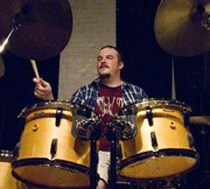
Created to benefit both recording engineers and drummers, the workshop features Keith Abrams, (Tzadik Records, Pak, Kayo Dot, Time of Orchids, i.e. John Zorn). Abrams stands as one of the most influential and noted drummers now in NYC’s art rock, doom metal, and counterculture music scene. Admission is $25.

As SonicScoop writer Justin Colletti observed in his recent article, drum tuning is an invaluable but often-overlooked skill. Vaudeville Park previews this essential event thusly:

”For engineers recording a popping single, or drummers wanting to get their sound noticed, drum tuning just makes that satisfactory ‘pop’ on your tom and snare for impacting and memorable music.

Create snapping snare pitches, make sounds more professional on recordings, and tune a drum kit to chords with tonal harmony.

Workshop includes head set up, head choice, and one on one proper tuning techniques.
Also when to change you drum heads, and basic drum maintenance and care.

Please bring a snare drum, and new drum head, bottom and top if possible to get the most out of this affordable, and truly worthwhile class.”

Marc Urselli Sounds OFF: Who Killed the Electric Singer?

May 15, 2011 by  
/* Filed under NYC Spotlight */

Who remembers being electrified by great singers and their great performances? We all do. They were all around us at least until 1997 when Antares’ Auto-Tune showed up: the license to sing out of tune and still find the courage to release a record!

Something is making Marc Urselli mad!

Advances in digital music technologies have been amazing and exciting but undoubtedly they have also lazy-fied musicians worldwide (the “we’ll fix it in the mix attitude”) and contributed to the dropping levels of musicianship. One used to have to put in hours of practice to deliver a great performance, and a mistake or two might even have contributed to the character of the song.

Now we live under the tyranny of perfection, everything needs to be fixed… I’m not immune myself, been there, done that. It’s what the client wants — because supposedly it’s what the listener expects.

The problem with Auto-Tune is that people rely too much on it. They don’t want to rehearse longer to avoid using it, and they’d rather go into the studio knowing they just will fix their mistakes.

Do You Guys Have Auto-Tune?

I’ve gotten calls to my studio (EastSide Sound) where one of the questions was: “Do you guys have Auto-Tune?” What’s wrong with that picture? They used to ask about drums, mics, board… now they ask if we have Auto-Tune!!! What the hell? You lazy bastards, get up an hour earlier in the morning and sing your butt off… and if after a year (that’s 365 hours of singing practice, by the way) you still can’t sing, then maybe it’s time you get the hell out of the way and make room for somebody with far greater skills than yours!

Then came Cher (and whoever in her team twisted all the Auto-Tune knobs) who in 1998 released the hit single “Believe”. To their credit, that was probably the only artistic and creative way AutoTune was ever used, but they also created a monster we now all have to run from. Every other R&B singer abuses that so-called “Cher effect” (trying to be cool or trying to make up for lack of singing abilities) and it makes me sick! Enough of that, it’s been 13 years, get over it. MOVE ON.

Thanks Cher!

But it goes beyond that. What drives me crazy is that nowadays you can hear Auto-Tune everywhere… Besides the annoying “Cher-effect”, the use of the plug-in on vocal performances is ubiquitous. The untrained might not hear that, but those of us who spend some time with music and computers can. And it’s awful.

Later came Melodyne (by the German company Celemony), a pitch correction software that takes tuning vocals to a whole new level (closer to the graphical mode in Auto-Tune, as opposed to the ubiquitous Automatic mode) and so the floodgates of untalented’s crap have opened even wider! Although Melodyne allows for greater control, you can still hear the pitch correction at work on soooo many records, it’s just sad.

Be Like Mike…PLEASE

A few weeks ago I did a session with one of the greatest singers of our time — Mike Patton — for an upcoming Christmas record by John Zorn. We recorded a version of “The Christmas Song” and Mike’s first take was just gold! I thought about how refreshing it was not to have to even think about opening the Auto-Tune plugin.

Patton sings with the confidence, pitch, skill and attitude of those who came before the Auto-Tune generation and learned the craft of singing by… (can you guess?) Singing! I even told Mike after his first take: “Thank you for not making me use Auto-Tune”! He smiled.

Learn Something Here

For those who are reading my first SonicScoop column and would rather read about the nitty gritty than hearing me rant, I’ll let you in on how I do things to minimize the damage — assuming I am not being rushed by the client.

The mixers...united...will never be defeated...The...mixers....united...

I listen down to the vocals and manually pitch shift (without Auto-Tune) the really offending notes. Only when all the notes of the performance are in the ballpark I might open Auto-Tune. This way the adjustments Auto-Tune needs to do are a lot smaller and you’ll hear those artifacts a lot less, or not at all. The goal for me is to hear a vocal that’s in tune and not to hear Auto-Tune.

Auto-Tune has unfortunately become a necessary evil. When people hire me as a producer or engineer they want me to make them sound perfect, and I’m good at that. It’s what I do.

But guess what? Even if I get paid more for sessions where I have to spend hours Auto-Tuning or Melodyning vocals, the sessions I love and remember the most are the ones where the use of talent surpasses the use of technology!

Marc Urselli is a three time GRAMMY Award winning engineer and producer. He is chief house sound engineer at New York’s EastSide Sound studios and he does live sound for major artists as well.

Studio Sweet Spot: EastSide Sound

April 19, 2011 by  
/* Filed under NYC Spotlight, SPARS Feed */

Facility Name: EastSide Sound

Website: www.eastsidesound.com

Location: Lower East Side of New York, since 1972!

Neighborhood Advantages: The LES is the heart of live music; there are musicians everywhere, rehearsal spaces, venues etc so musicians are very familiar with the area and feel right at home… no uptown traffic hell and office scene…plus EastSide Sound is in on the ground floor and right in front of a park so you can avoid elevator gear load ins and you can go take a break surrounded by greenery, shoot some hoops, throw a football or kick a soccer ball in the nearby courts.

Date of Birth: We’ve been in business since 1972 when Lou Holtzman opened the original EastSide Sound on Allen St. In 2001 Lou Holtzman partnered up with Fran Cathcart and we moved to Forsyth St, just a few blocks away.

Facility Focus: We are primarily a tracking and mixing facility although we occasionally do mastering sessions and we do have a production suite often used as a writing room. We are also set up for audio post and to sync audio to video for film/TV work.

Panoramic EastSide Sound live room

Mission Statement: EastSide Sound believes that your music and your vision come first and we are committed to working hard until you are satisfied with the results. Many Gold, Platinum and Grammy award winning records have come out of EastSide Sound which shows how many artists have made EastSide Sound their home.

Clients/Credits: Gold and Platinum records, 5 Grammy Awards; clients include Les Paul, Lou Reed, John Zorn, Santana, Sting, Joss Stone, Eric Clapton, Pat Metheny, Jeff Beck, Laurie Anderson, Luther Vandross, Sevendust, Mariah Carey, Cindy Lauper, John Leguizamo, ZZ Top’s Billy Gibbons, Buddy Guy, Keith Richards, Joe Perry, Goo Goo Dolls, Edgar Winter, Chico Freeman, Peter Frampton, Beyonce, Herbie Hancock, Toni Braxton, Hanson, MeShell Ndegeocello, Joe Claussel, Steve Torre, Robin Eubanks, Isaac Mizrahi, Randy Brecker, Frank London, Violent Femmes, Twisted Sister, Gravity Kills, System of a Down, Leela James, Lila Downs, Estelle, MTV, VH1, HBO, BBC, Comedy Central, Target, Grupo Latin Vibe and many, many more.

Key Personnel: Lou Holtzman (owner/engineer/the oracle), Grammy-winning Fran Cathcart (owner/producer/engineer), Grammy-winning Marc Urselli (producer/chief engineer/studio manager), Eric Elterman (producer/engineer/multi-instrumentalist)

System Highlights: EastSide Sound is the perfect hybrid between analog and digital. We believe in and offer the best of both worlds. We have a fantastic Harrison Series Ten B board, a warm and punchy sounding 96 channel true analog board with total digital recall and full automation (no converters, the sound stays analog but you can automate anything and everything: faders, EQs, sends, inserts etc). The Harrison is complemented by a 64 output Pro Tools HD system and by a vast amount of analog outboard gear (LA2, LA3, LA4, 1176, Altec’s etc) and pre-amps (API, Neve, Trident, Ampex, Universal Audio, TF Pro, Summit, Altec’s etc).

EastSide Sound control room: Click for full equipment list.

We have analog reverbs (Lexington 480′s, 300, MasterRoom II, Demeter, PCM60) and of course have loads of plug-ins for any need and any sound. Our mic collection spans from the early ’50es to today’s best microphones (Neumann, Coles, RCA, Sennheiser, Telefunken, Microtech Gefell, Shure, AKG, Rode, Oktava, JZ Microphones, Electro Voice, etc).

We also have a beautiful 1977 Steinway B grand piano, a Fender Rhodes electric piano, vintage Rogers drums, bass and guitar amps, guitars and basses available for anyone to use.

Distinguishing Characteristics: The single most distinguishing characteristics of EastSide Sound is the fact that we are the only studio in NYC and, to our knowledge, the only or one of very few studios in the world that has 6 isolation booths in addition to a good sized live room which means we can have up to 7 musicians (or just their amps) completely isolated, with good line of sight and headphone mixers in every booth. If the musicians want to all play live in the same room that is also possible. The studio is cozy and welcoming, with comfortable chairs, a lounge, a fridge and freshly brewed free coffee all day!

The building is on fire, you only have time to grab ONE thing to save, what is it?

EastSide Sound chief engineer Marc Urselli

Is this a trick question? Of course I will risk my life throwing water, milk, coffee and juices at the fire to save everything! …but if in the fire I were to spot a wild dragon running at me I guess I’ll grab the hard drives with all the sessions and get the hell out!

Rave Reviews: When people keep coming back, record after record, it must mean something, right? John Zorn has made hundreds of records and the last 30 or so were done at EastSide Sound. He also said that his records have never sounded so good, and others have said the same thing.

Everyone that comes by EastSide Sound always comments on what a cozy and relaxed vibe there is and everyone that records at EastSide comes back for more. They love the ability to choose between recording in the same space or being isolated in different booths so that they can later edit all the tracks without leakage. They love the ability to have total recall to instantly continue working on something unfinished a month later, with no downtime. They also love our professional, award-winning, cool and down to earth staff. And last but not least they LOVE the sound we get!

Most Memorable Session Ever: Too many… but one I recall is when Les Paul was over for some tracking and we were about to order in some pizza and he said something like “1947, Corona NY, First Pizza: I was there!”

Session You’d Like to Forget: The no-shows, the guys that think they own the world and arrive 4 hours late, the singers who can’t sing for the life of them but think that Autotune and capable audio engineers are an excuse for them to attempt a career in music anyway!

Dream Session (if you could host ANY session with any client, living or dead, what would it be?): Some of my personal favorite sessions are the ones with John Zorn, an incredible composer, genius and fantastic personality. Every session is always populated with incredible musicians.

Living or Dead? Would love to have worked with Hendrix, The Beatles and a… how about a Led Zeppelin reunion? But I guess we can’t complain considering many of the other giants have worked here (Les Paul, Eric Clapton, Sting, Lou Reed and many others). – Marc Urselli

Visit www.eastsidesound.com for more information and to get in touch!

Martin Bisi: Producing Music from the Belly of the Brooklyn Beast

April 13, 2011 by  
/* Filed under NYC Spotlight */

PARK SLOPE, BROOKLYN: Despite its neighborly demeanor, it’s known that Park Slope has an industrial backbone. Step off the R train at the Union Street stop, walk a few blocks down, and suddenly you’re in something like no-man’s land. Welcome to BC Studio.

Right this way...Bisi bids you descend into his audio heaven. (Photo: David Weiss)

Martin Bisi will see you know. The administrator of this otherworldly recording warren since 1979, one of New York City’s most progressive music producer/engineers is steadily advancing his craft. Today he’s recording strictly when and with whom he chooses, a meditative phase for a man who’s discography includes many of music’s no-holds-barred risk takers: Brian Eno, Bill Laswell, Herbie Hancock, John Zorn, Afrika Bambaataa, The Golden Palominos, Sonic Youth, Iggy Pop, Cop Shoot Cop, Ginger Baker, Bootsy Collins, Swans, Alice Donut, Helmet, Cibo Matto. More.

Things continue to sound very interesting to Bisi, as is evident from his current projects. Experience the noxiously charged drag of Woman, the marching ska punk of The Stumblebum Brass Band, and the huge drums he recorded for Boston epic experimentalist rockers Face of the Sun. Or why not check out the man himself? He records plenty of his own tense, heady music with guest stars like the Dresden Dolls’ Brian Viglione.

Explore the massive live spaces of his studio – the inner walls of some chambers date back to the 1840’s birth of this former warehouse – then sit down with him, the glowing controls of his early 1970′s MCI board close at hand. And buckle your seat belts, because when the topic is music, Martin Bisi’s mind moves fast.

You seem to have an uncomplicated philosophy about recording.
What I say is, “Ears over gear.” What that means is that I use ears as the guide and the actual tool. I’ve found that for either beginning engineers, or engineers that aren’t very good, the actual issue isn’t skill so much – the issue is hearing.

Seeing what I do versus what other people do, that’s really the way I’ve begun to understand it more. It’s hard for me to explain to you what role the board has versus the electronics of the tape machine, or the monitoring, or the carpeting in the room. Until you actually start comparing variables back to back, you don’t really know.

For instance, I’m afraid of changing the color scheme in here. Because God forbid I do and something’s off, and I can’t think in the same way. That goes for a lot of things in music: engineering, production, bands in general. You don’t understand the chemistry that’s there. People come here, get a certain result with me, and they think they know why – maybe it’s me, the gear, or something else.

Then they try it in a different context and – surprise! – it’s different and they don’t know why. People may say then that there’s a problem with the other engineer on their project, so I’ll talk to that engineer and I find out they don’t think there’s a problem. That’s the problem. Because if the engineer thought there was an issue with the gear or the converters, he’d do everything it takes to fix it.

When I think I know what the problem is, I just start trying shit to fix it – the qualities of the gear don’t have to dictate the results. So that’s why I say “ears over gear”. It’s about having a sonic vision in mind. If that sonic vision isn’t there, you’re kind of lost a little. Within that, however, a reference point is important. That’s why I’ve kept NS10’s since the 80′s in addition to other monitors, and I’m generally afraid of changing monitors. Something has to be an absolute.

Martin sez: Think about it.

Sometimes I kind of have a sonic vision, and I just start trying different things. I move the mic a little bit, and I’m constantly surprised at how it sounds. It’s a big room here, there’s 300 places you can put an amp, and so far I’m only up to #200. When I’m mixing, people will say, “What are you doing?” and I’ll say, “I’m just fishing around.” I’ll try a hundred things in three minutes. Sometimes I know what I’m looking for, sometimes I don’t – I just know when something starts clicking for me.

For example, I don’t say, “Everyone who records here will get the same drum sound!” although my ears obviously often take me to a point that I like, and sometimes I get similar results. Ironically, I’m actually not proud of the fact that there’s a signature drum sound that I get, but you can hear it on projects like Face of the Sun.

But if musicians have a distinctive sound, doesn’t it make sense that engineers and producers would as well?
Naturally, we’d all like to be specialists AND jacks-of-all-trades. But that’s not how things work. To quote Dirty Harry, “A man’s got to know his limitations.”

Actually, I think a lot of professionals realize that they start working well in a niche, a specialty. I think there’s a lot of things I can do, but the places I’m going to shine and add something a little indispensable are in small niches. I’ve discovered that I’m not that exceptional with quiet music – not that I like it or dislike it. And some of these things take decades to understand the chemistry of what’s going on – you spend your whole life trying to understand why that is.

What’s a recent example of how your own approach shows up in the music that you work on?
How I affect the sensibility can be heard in my work with the band Face of the Sun. The drum sounds do sound like me – a vibe, a social thing, happens there. The guitarist and drummer came from Boston, and they wanted to work with me, and maybe there was a same-page situation thing happening. We got tuned into a sort of sound, and maybe that informed the overall quality of the project a little bit.

It’s another example of how it’s hard to know why things turn out the way that they do, but it’s definitely not just the gear. I roll my eyes when people say, “I want to record on your MCI board to get the Philly sound.” Forget it! It’s surprising to me that people think that if you work on certain gear, you’ll get a certain sound. It also comes down to the musicians: Jimi Hendrix always sounded like Jimi Hendrix. He was famous for taking guitars off the rack in music stores and sounding 100% like himself on instruments he’d never touched before.

Your collaborations include some of the most eclectic, pioneering and successful names in modern Western music: Brian Eno, Bill Laswell, Herbie Hancock, to name a few. How did you get on the same page with these hard-to-classify pioneers?
I think that musically, I’m not a purist – that’s a very common thread between me and those names you just mentioned. It’s a big deal: There’s really a big separation between purists and non-purists.

I’m very much in the Sgt. Pepper tradition. The recording is a piece of art, and the engineer should screw around and experiment in the studio. So I generally tend not to do projects, or draw projects to me, that involve a lot of just capturing a performance. That to me sounds average.

There’s a big difference between me and Steve Albini. He has an attitude that’s almost like jazz: He feels an engineer is there to capture a performance – that a band has a sound, and an engineer should be transparent almost. In his case, I feel it’s a little disingenuous, because his stuff does have a sonic signature. The project goes a certain way just because of his presence. I could even go in to work with Steve Albini and come out sounding like Jesus Lizard!

I tend to draw people who want me to massage a certain something into the music when I’m mixing. It’s funny because it sounds so normal to you and me that you would want that from an engineer. But I mentioned Steve Albini, because there’s a lot of people who don’t want that. That cuts out half of the people who might be interested in working with me.

So what projects wind up having a mutual attraction for you?

His sounds will grab your attention.

I’ve said that a producer should be a little trendy. For better or worse, I respond to trends, and I’ll be like, “We can’t have this project associated with this other thing.” Let’s say it’s hard indie rock, I’ll say, “Whatever we do, it can’t sound like metal.” Then I’ll do whatever it takes, like I’ll distort the vocals, so it won’t sound like metal.

When I start a project I’ll say, “What does it sound like? What are we going for?” If it’s indie rock, I go out of my way to make sure that’s what’s conveyed. A lot of people I work with have the same outlook, they just may not say it as shamelessly as I do. People are sometimes more caught up in scenes than they care to admit.

A lot of what I’ve worked on is connected with a social happening. I’m down with that. Laswell is smart enough to understand that social energy is important in the music. It causes people to say, “We’re angry about this music. We hate pop music, so we do everything we can to undermine it. We’re going to be lo-fi because we hate hi fi.” That’s good creative fodder.

Not to have a chip on my shoulder, but why I got into music is social happenings. Social trends. A lot of that was informed by the 60’s. I grew up in the ‘60’s – I was informed by the time and the music. I’m more enamored with “punk” than with punk music. I respond to the message. I think that spirit is what ties me into people for really effective collaborations.

In your opinion, what does a music producer do? That’s another topic I know you have distinct ideas on.
Process is a big part of it. One thing I say to all kinds of creative people is that an artist is only as good as their process. Without a good process, what the hell will come out?

Process involves understanding creativity as a sort of opportunism: Something presents itself, and I better jump on it, rather than fishing around. I think creativity requires a certain amount of subconscious screwing around. It’s good that I don’t know what this will lead to — that allows me to make mistakes, go up wrong alleys, and then a part of that is me jumping on opportunities. And a part of that is respecting the time-and-budget policeman. That’s why process is a good thing for a producer to have.

The other reason a producer is important is in the context of a recording studio. An artist might be used to their process, but here, for example, there is no audience:  Part of what’s compelling about the performance is missing in the studio. So the producer’s processes help make the most of the recording time.

Another place where a producer is important as a creative component is mixing. A musician is used to playing on a stage, and managing their levels, or arranging. It’s very different being in a room and having all the amps and instruments coming from different points. Try cramming that into two speakers, where things are on top of each other. Try having a snare drum on top of a vocal, all things coming from the same point. Maybe you can do a little panning, but that’s it.

So in terms of arrangement, I think arranging for a recording is quite different from arranging for live. Live, things come from different points: A drummer might wail, but a vocalist is over there, so imagine putting the vocalist right over the snare drum: When you’re mixing, that’s what you gotta do. And to do that takes years, and hundreds of hours of engineering, to get right.

I get the impression from some of the things you’ve said and done – like the videos on your site where you took your prized records off the wall in 2008 – that you’re interested in consciously evolving.

Connect with yourself deep down in BC Studios (click through for the big picture).

That’s really very true with me. I tend to jump ship a lot. I’ll say, “I’m sick of the attitudes of people who do free jazz. I’m sick of indie rock attitudes.” That happened. So I say, “I’m going industrial.” After five years of certain attitudes, I just get sick of it. I can only function if I’m reasonably happy on a day-to-day level. So having an agenda, or doing things for too much of a long range, careerist attitude – it doesn’t work well for me.

So it’s about the scene, and the right people with the right spirit and the right kind of energy – I’m drawn to that like a fly to shit. I’ve had a good social instinct, and I’ve been in the right place. I’m not sure if that would apply in Kansas, but it’s part of what’s good in NYC. Here’s there’s a lot happening. Overlapping. Big turnover. Things move fast. NYC is definitely a destination that people are drawn to.

You’ve been a prolific member of the NYC recording scene for a long time – working out of the same Brooklyn studio since 1979 – how would you describe the current condition of the music scene?
I’m generally quite happy with the way things are in Brooklyn. I am of the scene and the scene is of me. I’ve come to appreciate it from touring. There’s a lot more boring music out there – I’m surprised how much more straight and boring things can be in a lot of towns. You can make weird music anywhere, so why aren’t they?

Right now in Brooklyn, if you want to get a leg up: Be weird. Be twisted. That’s at a higher premium, and I’m all for it.

– David Weiss

Jesse Harris: The (Not So) Secrets of a Successful Singer/Songwriter

December 5, 2010 by  
/* Filed under Music Biz */

SOHO, MANHATTAN: Whether you know it or not, you’ve been listening to Jesse Harris a lot. For this NYC music man, the song — sung by him or somebody else — really is the thing, and his songs get around.

Jesse Harris: The right writer for artists across the musical spectrum.

It was Harris’ pen that produced one of the most enduring singles of the millennium in Norah Jones’ three-time GRAMMY-winning “Don’t Know Why”, from the 2002 album Come Away with Me. Not surprisingly, he’s been busy ever since with a body of work applied to film, theater, TV campaigns and an esteemed list of singers for his songs that include Smokey Robinson, Willie Nelson, Cat Power, Solomon Burke and Emmylou Harris.

While it seems Harris could simply wile away the hours churning out song ideas and checking in on his royalty statements, the fact is that he remains a prolific performer and solo artist in his own right. The end of the summer saw him releasing two albums with the nocturnally-themed Through the Night, his ninth full length, alongside of the instrumental Brazilian-folk-soul of Cosmo. He’s been touring globally in support of both of his latest babies, and two NYC shows are on the docket this week (December 10th at Zebulon playing Cosmo, followed by December 12th at Rockwood Music Hall’s Stage 2).

Unassuming about himself and his consistent success, our conversation with Harris provides a state-of-the-art update on top-tier songwriting careers. Do you have what it takes to get there? Before you make another sound yourself, listen up.

You’re wearing multiple hats with your activities. Do you identify yourself as a singer/songwriter? Producer? Performer? All of the above?
I’m all those things, although I usually say I’m a singer/songwriter, a producer, and a performer.

The term “singer/songwriter” is thrown around so often now that I think it’s worth taking another look. In your opinion, what does it actually mean today to be a singer/songwriter?
I think traditionally it connotes somebody who plays mostly acoustic guitar, and writes songs with lyrics that are in the folk rock traditions — and sings them in usually small clubs (laughs).

But a singer/songwriter these days can be into so many types of music. It’s not like the 1970’s where if someone said “singer/songwriter” you knew they were coming off of folk music like Bob Dylan, although there were a lot of them then who were influenced by jazz. Today Beck is a singer/songwriter and raps. Cat Power and Feist are singer/songwriters that are something else. There are a lot of different styles to a singer/songwriter now.

I think many people would see your career and say that you epitomize the possibilities of what a singer/songwriter can accomplish in the 21st Century. Where has being a singer/songwriter taken you, personally?
It’s taken me into a lot of different experiences — it’s taken me all over the world. But I think you mean in terms of having my songs performed by a lot of other artists, and that’s something I always wanted to do. In my first group (the duo Once Blue with Rebecca Martin) I wrote songs for the singer, and from early on I made that a criteria for my songs in writing them, that they would be flexible in that way.

Jesse Harris' "Through the Night"

Whether I epitomize something, I don’t know. It’s like anything else: certain things go well, other things are more difficult. I can’t say anything is perfectly ideal. A lot of songwriters write songs that only sound good when they sing them, but what I’m referring to is writing songs that can be covered, and have a life of their own.

How do you do accomplish that – create a song that you think might do well when it’s covered by someone else?
I think a lot is in the lyrics. But then it’s also in the melody — if there’s a concrete enough melody. There are a lot of people who are good enough singers, that write songs that don’t have a distinct melody, but they can pull them off because they’re good singers. A song that other people can sing has a melody that’s solid and discernable.

For example, on Through the Night, there’s one song that already has been covered. It’s a tune called “Way to Be,” a singer in Argentina translated it into Spanish. That’s a recent one in particular that I think can be sung by another person.

How were you approaching getting your songs covered when you got your publishing deal with Sony, in the 1990’s?
Nobody was really pitching my songs — I was pitching them myself to singers after Once Blue broke up. I met Norah Jones just on my own, we started a group together, and she started singing my songs in her group. That didn’t happen as a result of a business plan, and most of my songs that are sung by other people are from personal connections. That’s recently changed over the past year: More people know who I am, so they approach me and ask me.

And then you write something custom for them?
I’ve done that. But now people mostly want to co-write. In the ‘60’s, they’d call a writer and say, “Do you have a song for this artist?” Now people want to cowrite it. In order for me to say, “Yes”, I have to feel a connection to their music so we can do something good together. People want to co-write today because it’s so hard to make money – they want to have a co-share in the publishing.

What’s the business that goes up around a song once its been recorded, and becomes a hit or semi-hit?
It’s simple. You need someone to collect your publishing, and have your songs registered with BMI, ASCAP or SESAC. That’s about it. These days, people try to license songs off of commercials for films – it’s a good way to make money off songs, because record sales and mechanical royalties are down. You can make money if a song gets played on the radio, but only certain songs get played on the radio. You can also make revenue if your songs are played in live performances, but that’s only in certain circumstances.

The current Corona TV campaign features “The Secret Sun” from Jesse Harris’ Through the Night.

What are the big things that you’d say you’ve learned as your career has continued to evolve?
I don’t know, I figure it out as I go along. I really do. I take it as it comes.

In the past four years, I’ve been producing a lot more albums. It seemed kind of natural, since I always produced my own records. I’ve found myself in situations where artists asked me to produce records because if people get a sense they like working with me via songwriting, they might get a sense that they want me to produce their music.

You put out two albums together at the end of the summer – Through the Night and the instrumental Cosmo – both of which we really enjoyed. Why do a simultaneous release like that?
Again, I didn’t plan it that way. I was going to make “Through the Night”, and in the midst of that when John Zorn asked me to make an album on his Tzadik label, I figured I’d make it instrumental. As it happened, those came out at the same time. I thought, “What’s the difference? Just let them come out together.”

"Cosmo" is all-instrumental.

In retrospect, did it make a difference?
Actually, it has! It’s been interesting, because I’ve been dividing my time between instrumental music and playing the songs from “Through the Night”. I promoted them together and made a couple of videos myself for them.

You’ve stayed true to NYC, remaining based in Manhattan. Are you set up to record in your home?
I don’t have a personal studio. For a demo, I don’t need anything more than to sing it and play it on guitar. I only need Garageband. In NYC, I like to record at the Magic Shop in SoHo: It’s close to my house, it’s got a great-sounding Neve board, and it’s got a great vibe.

In a certain sense, the NYC music business is healthy right now. There’s more opportunities for people to get their music out there, but it’s harder to make money from music, and artists have to really tour a lot – more than ever. I think the business is narrowing and it’s difficult, but at the same time it still seems to be flourishing, and NYC is absolutely a good place to be based out of. There are so many musicians here, clubs to play and people to work with that there’s a lot going on in NYC, absolutely.

That’s good to hear. Circling back to where we began, what timely advice would you like to leave your fellow singer/songwriters with?
I think that anybody who wants to do music just has to be able to immerse themselves in it, and be open to possibilities: You end up going in directions you didn’t think you would go in. If young singer/songwriters really want to do it, they can do it – it’s a matter of dedicating.

See Jesse Harris live, December 10th at Zebulon performing Cosmo. He plays the songs from Through the Night December 12th at Rockwood Music Hall’s Stage 2.

– David Weiss

On The Record: Laurie Anderson, Mario J. McNulty On The Making Of “Homeland”

June 25, 2010 by  
/* Filed under NYC Spotlight */

SOHO, MANHATTAN: Iconic NYC artist and sonic adventurer Laurie Anderson released her amazing new album, Homeland, earlier this week. Years in the making, Homeland emerged after a challenging and at-times vexing process in the studio, and very nearly never emerged at all.

Laurie Anderson

“It’s this very, very weird hybrid,” says Anderson, struggling to pinpoint what ultimately makes up Homeland. “I’ve never worked on something this odd before: it was sort of a bunch of filters, a bunch of live [recordings] and a bunch of studio ideas. I’m not even sure what to call it because it’s such a bizarre collection of things.”

It started with sonic scaffolding. Anderson is credited as an engineer on Homeland, and would have to be for the way the songs are composed: they are, in effect, engineered.

“I start with many different rhythmic riffs — even though Homeland doesn’t sound particularly rhythm-driven, it really is,” she describes, when asked of her sonic palette. “By that I mean most of the songs are built on these scaffolds that get removed, and they are mostly violin filters that I’ve been building myself with a software designer named Konrad Kaczmarek. They were based originally on Eventide filters but we went further afield in building our own.”

These became the building blocks for Homeland — movements both ominous and euphoric built up underneath and around an epic narrative. And Anderson toured the work, developing it on the road, recording performances of her constantly evolving Homeland live show all over the world for three years. “That’s various versions of the show, in various tempos, in various keys,” she points out.

Along the way, she recorded with a variety of collaborators, including Tuvan throat singers and igil players of Chirgilchin, and captured improvisational sessions with NYC experimental jazz and rock musicians including Rob Burger (keyboards), Omar Hakim (drums), Kieran Hebden of Four Tet (keyboards), John Zorn (saxophone) and Antony Hegarty (vocals).

Laurie Anderson performing "Homeland"

“I wanted to make a record that would really relate to the live shows,” Anderson shares. “My live rig incorporates so many tools now — soft synths, homemade pedals, vocal processing, different vocoders, the homemade software we call ‘Tide’ in homage to Eventide” — to where I can do almost anything in the live show. It’s really, really exciting and I wanted to get that feeling into the record.

“So it’s like I ‘wrote the record on the road,’ and then came back to the studio and tried to ‘record’ it, but all of those terms were sort of meaningless by that point. I thought, OK now I’ll take some of these live files and paste them together into these songs in the studio and get that live feel. And, that was beyond hard! We took some of those rhythmic elements, printed them and then tried to make a studio version and the air went out of the whole thing.

“And, I thought, No!! I really didn’t want to do something that pristinely goes from my box to your box. I [found myself] sitting there working with all these clean files thinking now what? I’m going to put fake air around them? No! That kind of air to me feels like air-conditioned air — stale air from a hotel in Tokyo that’s never been aired out. I wanted to use air that had been pumped through real places; waves that had been somewhere.

“At that point, the record budget was pretty much over and it was just me sitting with like 100,000 sound files. Here I’d been thinking I’m going to make this spontaneous live thing, and now I was digging through and labeling all these files. I truly would never recommend this to anyone. (laughs) Do not try this at home!”

HOMELAND EXCAVATION: DIGGING, COMPILING, MORE RECORDING

It’s somewhat unsurprising, for an artist who’s always so embraced technology, that the infinite possibilities of today’s methods of music production might tip the scales into the overwhelming. “I got super-depressed looking at all those files and I actually stopped working on it many times,” Anderson admits. “At that point, I was only working on it as a hobby, a couple days a month. I thought I would never finish it. And it was because of Lou [Reed] that I finished it and because of Mario [McNulty] too. Mario really hung in there, and he said it is possible to do this. He was really willing to dig into those bins, and he was really patient.”

Mario J. McNulty

A NYC-based engineer/producer, Mario J. McNulty had worked with Anderson before. He mixed sound for a short film she directed in ‘05. “The first time I ever spoke to Laurie, we had a really nice chat about mixing,” McNulty recalls.

“And it was so great because it was abstract and artistic — the ultimate way I like to approach things, in a totally non-conformist sense. It wasn’t ‘this is a rock mix’ where the kick drum does this, etc. It’s not of the mainstream world at all, it’s of this world that I really admire, of Laurie and Eno and Gabriel and Bowie and Talk Talk and all of these records that I’m really passionate about.”

“That’s maybe the only talk we’ve ever had about mixing, and we’ve worked on and off ever since,” he continues. “So, on Homeland, we never had to talk specifically about what the album should sound like, because I already have a good sense of what she wants: she wants beauty. And, her vocal needs to be in the right place and really only she knows where that is. I mixed the record, but she’s very, very involved in the process.”

McNulty went into Anderson’s studio in SoHo and began the process of compiling Homeland, with the expectation of beginning to mix it. “There had been a lot of different people working on it, so the material was all over the place, literally,” he describes. “On different hard drives, in different studios. Neither of us realized how spread out the project was. I consolidated it all into one location, so something could be played back that made sense to her. And by that point, she was realizing she had more work to do. It just wasn’t moving her the right way.”

Anderson put mixing on hold to do some more recording, editing, and arranging at her studio, which has been her workspace since the 80s. “She has a lot of equipment, but the main recording system there is a Pro Tools HD2 rig,” McNulty describes. “And she has a series of laptops with soft synths, vintage and modern keyboards and racks of time-based effects like her Eventide Harmonizers, which she uses in the recording process as well as in mixing.”

Fenway Bergamot, "Homeland" narrator

“Pretty much any time we would need an effect, we’d go to the Harmonizer,” says McNulty. “She’s one of the pioneers of the Harmonizer so she’s very familiar with it and even the software emulations of the Harmonizer, so we would get into all kinds of sounds with them. She’ll record violin through this really awesome stereo delay patch that she made — and she also has patches that Brian Eno made for her stored in her Harmonizer.”

As she has throughout her career, Anderson used filters to essentially create new instruments, new voices. Homeland’s “Another Day in America” uses one of her classic vocal filters to voice her male alter-ego, “Fenway Bergamot,” the darkly comic storyteller, the omniscient narrator of the Homeland live show.

“Mario’s the reason I added Fenway Bergamot to the record — we just put up a mic and improvised for awhile to see what would happen,” Anderson recalls. “And that became ‘Another Day in America.’ I’m very glad I included that because my music is about words and their rhythm, so to have that very stripped-down [piece] in the middle is kind of what I was going for as well.”

THE MIX OVERLAY: UPGRADING THE SIGNAL PATH

By the end of the summer of ’09, Anderson had finally finished recording and decided she wanted to mix the record in her own studio. “I proposed that we rent some equipment, basically do an upgrade to the studio,” says McNulty. “So I called Jim Flynn Rentals and explained how I wanted to mix analog but that I wanted to avoid all the old analog gear that I wasn’t liking in her space, like her Mackie consoles which she mainly uses for monitoring.

“We did what Jim called a “mix overlay,” McNulty relays.  “We upgraded to an HD3 system and added a Dangerous 2-BUS for analog summing, and a series of compressors — Urei, LA2As, 1176s. We also had some gear from Lou Reed. He brought over his LA2A, which is the best LA2A I’ve ever heard, and some Avalon compressors and EQs. We were able to basically bypass her patch bay and patch all of our analog compressors and EQs by hand. So it was a totally custom setup.”

McNulty also rented an A-Designs Hammer. “I used one side of this stereo EQ on Laurie’s voice, and it’s just a fantastic sound,” he adds.

They also rented an arsenal of plug-ins. “Laurie had a good collection of plug-ins but I also needed some other tools that I find really useful when mixing, like the McDSP Emerald bundle, the Crane Song tape saturation plug-ins and the Sound Toys bundle — TimeBlender, PitchBlender, and Echoboy is my favorite. They’re really useful and really fast — sometimes you need to just pull things up quickly, especially in a mix scenario. I also used the Waves SSL plug-ins and EQs, which Laurie owns, and the Sonnox EQs. For effects, I’ll use ReVibe, Waves and the Eventide Harmonizer plug-ins as well.

“We also used her hardware Harmonizers on the mix — she has special reverbs, cave reverbs, all kinds of de-tuned stuff that won’t be found in any other H3000 because they are patches that were designed either by Laurie or by Brian Eno. So that was a real treat!”

HOME-STRETCH: LOU REED, HI-FI- MONITORING, KILLER BASS!

Though Homeland had involved many people’s contributions along the way, including Roma Baran who’s credited with Reed as a producer, by the end, it was Anderson, Lou Reed and McNulty finishing the project in the mixing stage.

Laurie Anderson. Photo by Tim Knox.

“That was, in a way, the hardest stage,” says Anderson. “In the beginning of a project, it’s all experimentation and great and at the end, you realize ‘oh, but we do have to eventually make something and present it to someone.’ Lou said he was going to come in and sit here in the studio with me until I was done. And I thought, ‘oh, that’s a bad idea for a couple!” (laughs) but I would truly, literally be working on it today, without that.’

“Lou is a great producer,” Anderson continues. “I’d play something and he’d say that’s done, let’s move on. And I’d say ‘No, no! It needs horns, background vocals, etc…I can’t leave that vocal on there.’ Lou is a really fascinating blend of perfectionist and purist and somebody who’s just really loose. He’d say, ‘Leave that raggy stuff in! Why would you take that out?’ And ‘This doesn’t need 17 more parts. Air can be part of it. Air can be rhythmic.’

“Every writer I know is indebted to their editor if they have a good one and same with a musician to their producer. And Mario in a lot of ways worked as a kind of producer. He wasn’t just the engineer — he would definitely express himself in a way that was so well-timed, he understood the process so well that he was never intruding but he had this way of putting his opinion in.’

They monitored Homeland on a few systems. “Laurie has her ProAc speakers that she’s used to listening on in the control room and then I added NS10s, which Lou and I would listen on,” says McNulty. “We also wanted a really hi-fi monitoring setup we could listen on, so Lou brought these huge ATC monitors over from his studio. We set them up in the live room — on foam on the floor — and there was a couch and blankets, and people would sit in there and listen on these huge 3-way monitors, which have this incredible frequency response.

“That was great — to be in the control room with the nearfield monitors and then be able to clear our minds, take two minutes and go in the other room and crank it on the big guys — see where the bass is sitting, see where the vocal is sitting.”

What was Anderson listening for? “We conceived it with a very wide sonic range,” she describes. “And I wanted scary bass. I wanted the bass to jump out and kill you! I’m so sick of hearing MP3s coming through people’s laptop speakers and you hear this tinny thing…and you think, ‘That’s the song?’ Why did I spend more than two minutes on the song if it was going to sound like that? So, I wanted to make something where if you wanted to crank it up on a huge system, you’d hear tons of colorful details and all these little things.”

Nonesuch Records released Homeland on June 22. Buy it HERE! The album is available as audio-only and as a CD+MP3+DVD (which includes the 40-minute documentary “Homeland: The Story of the Lark.” Anderson will perform “Another Day in America: Songs from Homeland & other stories” at Le Poisson Rouge, July 13. Tickets here!

Mario J. McNulty is represented by Joe D’Ambrosio Management.

Remix Laurie Anderson’s “Only an Expert” Via Indaba Music

April 19, 2010 by  
/* Filed under News */

Laurie Anderson, Nonesuch Records and Indaba Music have created an opportunity for collaborators to remix Anderson’s song “Only an Expert” from her upcoming album Homeland.

anderson-homeland_webThe remix will be featured on iTunes Edition of her new album, set for release on June 22.

Anderson developed many of Homeland’s songs while on the road, constantly re-working them and creating or improvising new and different versions. Instead of hiring a producer to remix the song, a remix from Indaba Music’s community seemed fitting of Anderson’s innovative album process.

Through May 13, Indaba has provided a special link for those who wish to craft and remix their own version of “Only an Expert.”

The remix submissions will be reviewed by a jury of experts, including Anderson and Lou Reed, from May 13 to May 27. Afterwards, Indaba will announce the jury’s choices of Grand Prize Winner, two Runners-Up, and the public’s choice of ten Honorable Mentions.

Those chosen will receive prizes:

(1) Grand Prize: $1,000 / Remix will be included on iTunes edition of Homeland / One year free Platinum membership to Indaba Music

(2) Runners-Up: One year free Platinum membership to Indaba Music

(10) Honorable Mentions:
One year free Pro memberships to Indaba Music / Remix streamed on Anderson’s official site / Signed deluxe package: 12-inch “Only an Expert” single and Homeland CD

Homeland is Anderson’s first studio album in ten years. She produced the album with Lou Reed and Roma Baran, working alongside engineers Mario McNultyPat Dillett and Marc Urselli.

Homeland features Anderson on vocals, playing the keyboard and percussion, as well as performing newly fashioned violin sounds. Her vocals can be heard through one of her many musical device inventions; this one is called “audio drag” where she reveals her male alter ego, Fenway Bergamot. He appears on the album’s cover and narrates the song “Another Day in America.”

The album also includes Tuvan throat singers and igil players of Chirgilchin; New York experimental jazz and rock players including Rob Burger (keys), Omar Hakim (drums), Kieran Hebden of Four Tet (keys), Shahzad Ismaily (percussion) Eyvind Kang (viola), Peter Scherer (keyboards), Skúli Sverrisson (bass), Ben Wittman (percussion/drums) and founder of Tzadik, John Zorn (saxophone). Antony Hegarty sings additional vocals on the album.

Indaba Music offers online tools for artists around the globe to collaborate together as a community through the web. The site offers memberships where musicians and artists can record, edit and mix tracks online while in various parts of the world through its digital audio workstation. Featured contests can be found here.

Borne of John Zorn: Marc Urselli Records NYC’s Marathon Man

November 10, 2009 by  
/* Filed under NYC Spotlight */

The free flow of creativity from New York music force John Zorn never ceases to inspire. If he can create what must be thousands of recordings by now, and head up the extremely productive Tzadik label, then you should be able to get your own catalog moving as well.

Along for the learning right now is NYC engineer/producer Marc Urselli. This is one of the guys that’s always busy, a three-time GRAMMY winner with credits that include Les Paul, Lou Reed, Laurie Anderson, Sting, Joss Stone, Lila Downs, Eric Clapton, Jeff Beck, Mike Patton, Keith Richards, Buddy Guy, Richie Sambora, Johnny Rzeznick (Goo Goo Dolls), ZZ Top, Sam Cooke, Aerosmith’s Joe Perry, Simply Red’s Mick Hucknall, Luther Vandross, Simple Minds and a bunch more (www.marcurselli.com/music).

Being a go-to guy for Zorn, whose nonstop contributions to jazz, world sounds, and experimental music just keep on coming, keeps Urselli’s schedule even busier.

Marc Urselli is no dummy

Marc Urselli is no dummy

Q: I kind of think of you as having an audio “practice”. Is this correct? What are the different things you do professionally?
A: Ha ha., the doctor will see you now! Well, sometimes I do feel like a doctor. Some of my patients have serious illnesses, such as “I-suck-but-I-wanna-be-a-star”-itis or “I-can’t-sing-and-you-need-to-fix-my-voice”-it is. Or hallucinations such as “Yo-this-is-gonna-be-a-hit-man-so-you-should-work-with-me-for-free”.

Luckily, I am also blessed to work with some of the most incredible artists of our time who don’t require much or any doctoring of that kind at all. But if you like the doctor-metaphor, I guess I can say that I use my tools to make people be as healthy as possible. There must be a reason why “healthy” is synonymous with “sound”!

To answer your questions exactly, though, I do a lot of things professionally: Primarily I engineer, mix and produce records — which of course includes all the editing that is necessary to make everyone sound perfect. I also do quite a bit of live sound and touring, I do sound design for commercials, I compose, I write for some music magazines, I run my own music website and do a few other things.

Q: Seems like everyone I know these days is doing either just one thing, or a wide variety of projects. Are you primarily based out of East Side Sound, where I first met you? Why do you like to work at that facility?
A: I am a freelancer and have worked in several studios, but if the client leaves the choice to me I always choose to work at EastSide Sound because it’s just the best studio in town.

I’ve worked at other studios in NYC and outside NYC, and there is no place I know of that has the amount of isolation – seven isolated rooms with line of sight — and the amount of gear that EastSide has. Plus. EastSide has a super cool and chill vibe that musicians respond very well to. The combination of recording spaces and quality (and quantity) of gear is unique.

EastSide Sound's Harrison console is a standout.

EastSide Sound's Harrison console is a standout.

Also EastSide Sound has a Harrison board, which is one of the most amazing and best- sounding boards I worked on, which lets me do mixes in the analog domain with total automation — beyond just faders, I’m talking EQs, pans, reverb sends, dynamics etc… and total digital recall — so that I can recall an analog mix a year later within seconds).

In addition to all of that I have some of my gear there — Focal monitors, JZ microphones, Rode microphones, McDSP plugins, IK Multimedia plugins, etc… — so I’m comfortable and I feel at home. It’s just a great hybrid of vintage gear, modern technology as well as old-school studio design and new-school philosophy. EastSide has been around since 1973 and is doing OK considering the times we are in and all the studios closing, So obviously we’re doing something right over there, you know?

Q: I agree about that Harrison board, I really enjoyed mixing two Impossible Objects songs through it with Fran Cathcart over there. So how would you describe the musical space that John Zorn currently occupies? What kind of artist is he, and what does his body of work represent in the canon?
A: Zorn to me is one of the most interesting composers and musicians of our time — I absolutely love his music and love working with him. He’s a true genius, and his work ethic is second to none. He is eclectic, prolific, focused and dedicated to the music. Everything he does, from his own music, to the Tzadik label he runs to his music venue, The Stone, he does with love and out of love for the music. His body of work is incredible — hundreds of records to his name — and his strength is probably in the variety of his composition.

What I love about working with him is that it is always different, always exciting. He writes jazz in its many variations and flavors, rock/metal, classical music, avantgarde/ experimental music and more often than not his music is a mixture of all of the above, which is incredibly interesting.

I’ve recorded and mixed more than a dozen of his albums now, and in doing so have found myself employing tried-and-true mic techniques on jazz quartets, recording chamber-like string trios, doing vocals-only albums, capturing rare and out-of-the-ordinary percussion instruments and other sound-making devices. Or I’ve been bouncing my head up and down in the control room while tracking double drum sets, a distorted bass, screaming vocals and Zorn’s incredible sax playing.

On top of that Zorn uses some of the most incredible musicians out there and it’s a pleasure for me to even just watch them play, let alone record them. I love the fact that there’s so much variety because I grew up listening to all sorts of different music, and I’m always excited about every record I get to do with him. Zorn’s simply the man!

Q: When you first told me you had worked recently with John Zorn, I thought you had worked on a finished album. But you referred to your recordings with him as an “ongoing collaboration”. Can you explain how it’s working?
A: Well, like I said, John is very prolific and we enjoy working together very much. We first worked together on his album The Dreamers – one of my favorite to this date — and we’ve worked together ever since, which means about 15-20 records now.

You have to understand: the man is totally dedicated to his music and the musicians he uses have incredible amounts of talent. This translates into relatively short sessions. I think the longest session I did with him was three days of tracking and two days of mixing, and the shortest session was one 12-hour day of recording and mixing 10 songs!
The average is around 1-2 days for tracking and one day for mixing.

We’ve got the system down and we work fast, no breaks, no food, no messing around. I know what he wants and what he likes and I strive to make it perfect. I get there hours before he comes in to set up everything so that he can come in, sit down and get to work teaching the first song to his musicians. By the way, they never get to practice the music before they come in for the session. They learn it on the spot, try it a few times and then record it in one or two takes, sometimes three… and all of this sight-reading extremely difficult sheet music and soloing on top of crazy time signatures!

John is surrounded by talented people and we are kind of a team and everyone in the team cares about the music and takes it seriously. Kaz does the label, Heung Heung does the artwork etc… Everyone gives their 200% and when I work for him I give my 200%, because those are some of the sessions I really look forward to doing.

John Zorn

John Zorn

Q: How does such a high volume of consistent output affect the way you engineer and produce? Both working with him, and in turn working with other artists?
A: I would say it affects it very positively when working with him because there is a level of trust, knowledge and comfort that might not be there with an artist you never worked with before. In other words, with John I know what he wants, so I can give him what he wants very quickly and efficiently. If he had to work with a new engineer every time it most likely wouldn’t be as fluid and smooth as it is.

Other artists are unaffected by all of this, but needless to say, the more I work with any artist the better I get at what I do and the faster I get at what I do. EastSide has become second nature so it’s really easy for me to get good sounds there, because I know the rooms, the outboard, the mics, so well.

It goes without saying that my Pro Tools chops are sharp and I can fly on the machine doing all the transport operation, editing and automation at lighting speed, which clients love, because it saves them time, which equals money and makes them sound good. I hate to say this, but speed has become an important factor in today’s industry — but this plays to my advantage because of how fast I am.

Q: What are some highlight duets/musical collaborations of Zorn’s from recent sessions? Tell us about recording the vocal four-piece, Mycale.
A: There’s been many. He always uses amazing players like bassists Greg Cohen, Trevor Dunn and Shanir Blumenkranz; guitarist Marc Ribot; drummers Joey Baron, Ben Perowsky, Kenny Wollesen, also a vibraphonist; percussionist Cyro Baptista; pianists Rob Burger, Jamie Saft and Uri Caine, and so many more: Erik Friedlander, Carol Emmanuel, Ikue Mori, Fred Frith and the list goes on. We did a record with Phantomas/Faith No More singer Mike Patton, which was pretty amazing too.

The Mycale record was an interesting one — it was one of two vocals-only CDs of John’s music that I recorded. Mycale is a group of four talented young women who took some of Zorn’s music and arranged it for their voices, on their own, over the course of a year. It’s a very interesting record that brings together four different voices, styles and even languages!

We recorded another similar record with a different group of singers that became the music for French director Arno Bouchard’s film The Last Supper. John does a lot of soundtrack work and this latter group of amazing singers is the same that does the live performance of “Shir Ha-Shirim/The Song of Songs”, which is one of Zorn’s many musical projects for which I had the pleasure of doing live sound in a few occasions.

Q: Do you also work with the artists on his label? What kind of music does he distribute?
A: I have worked — as in recorded and mixed — several albums for Tzadik. Mostly it was artists based in New York, except in one or two cases. John releases and distributes the music he likes, which is how it should be for every label out there.

Q: Do you still maintain Chain D.L.K.? What is that, and how did it inform your work as an audio pro?
A: I do still run it. Chain D.L.K. is a music magazine for electronic, industrial, avantgarde, experimental music. I founded it in 1994 as a paper magazine and now it is online only at www.chaindlk.com and has over 30,000 visits per month.

Chain D.L.K. has really nothing to do with my work in the audio field. It is not about technical information, but rather music news, reviews, interviews, forums etc… It is a completely non-profit venture — in fact I lose money every month out of my pocket — but I do it to support the music and the artists, and to offer exposure to artists who otherwise might not get as much. I do it out of pure love for the music.

Q: You are originally from Switzerland, and then grew up in Italy before making it to American shores. Why do you enjoy being NYC-based? What makes this a great place to work, and what’s also making it challenging?
A: NYC is the greatest city on earth. Just walking down its streets inspires me. There are a few other cities I feel that strongly about, but NYC is at the top of my list and I don’t think I could live anywhere else.

Obviously it is a great place to work populated by some of the most amazing artists out there. Of course it is also challenging, it’s a tough city, it makes you or breaks you, and there’s competition for everything. But I like the challenge, it keeps me sharp and keeps me moving forward.

Q: Word. Is it true you can go kite surfing in Brooklyn? What’s it like to kite surf? Inquiring minds want to know.
A: Ha ha, I love kitesurfing! We go to several places in Brooklyn and also Long Island. Kitesurfing is equal part rush of adrenaline and equal part zen-like experience. You are out there alone with the elements, which can be very relaxing and spiritual in a sense, but you can also rip great air, pull off air and board tricks, surf waves, explore the canals between the grass islands of Long Island’s Great South Bay and hurt yourself in more ways than you can imagine!

Q: OK, I really want to come with you sometime. What’s next for you?
A: A kitesurfing trip to Brazil, a new record with Zorn (for which we start tracking four hours after I land at JFK airport from my 17 hour redeye return flight from Brazil), two other Tzadik records in December, a possible second half of tour with Marianne Faithfull in January (we did a first leg two months ago), a Masada live marathon and hopefully more interesting records of beautiful music for the world to enjoy!

Q: Gee, sounds awful. Anything else you want to add?
A: You tell me, I feel like I bored you and everyone else enough with my chatter. I am just enthusiastic about music, I love music deeply and I care about what I do and do it as best as I can. I wish there were more amazing artists like Zorn out there and that more people were into music for the right reasons and with the right attitude. Music is
the only universal language and I wanna learn to speak all of its dialects! – David Weiss