Inside the Juilliard Music Technology Center: Shaping the “Beyond The Machine XI” Multimedia Event
March 20, 2011 by David Weiss
/* Filed under NYC Spotlight */
LINCOLN CENTER, MANHATTAN: What do you think of when you hear the word “Juilliard”? I personally always pictured something like a scene out of the movie “Fame” taking place on campus: tomorrow’s star performers in every hallway, their collective talent taking on a palpable charisma.

The Juilliard Music Technology Center keeps advancing: Technical Director William David Fastenow in the studio.
When I finally took a walk through the school’s artistic entrance on my way to their totally renovated Music Technology Center, it all materialized – at this legendary performing arts conservatory founded in 1905, tomorrow’s star performers are in every hallway. Their collective talent gains an electric life of its own, intensifying as you traverse the corridors.
Inside Juilliard’s Music Technology Center (MTC), which was created in 1993 by MTC Director Edward Bilous, a major update has continued to bolster its offerings to Julliard’s students, courtesy of a new three-room recording studio/rehearsal studio/mix room suite, complete with Euphonix System 5-MC console.
In addition to its day-to-day role, the department also hosts the annual Beyond the Machine festival of electronic music and multimedia, which features new works by Juilliard students and faculty, plus commissioned artists from outside the school. Those lucky enough to score seats leave with their preconceived notions of sensation temporarily torn apart.
SonicScoop sat down with William David Fastenow, Technical Director, Juilliard Music Technology Center, for more on the MTC and Beyond the Machine XI, taking place in two installments, Thursday March 24-27 at Juilliard’s Rosemary and Meredith Wilson Theater.
Why was the Music Technology Center significantly expanded last year?
This is an important thing we’re doing. The students are getting a lot out of it, learning how to interact with technology as musicians with the current music industry. The administration and Juilliard’s donors understood we needed to expand this facility to help the students succeed.
A lot of our students are interested in being session players, film composers or interactive musicians. The MTC helps them to know a little more about technology so they’re not so blind when they enter into these pro situations, after they leave Juilliard.
When Ed Bilous, the Director of Music Technology at Juilliard, started the department in 1993, he knew that this center was something that really needed to happen. Otherwise, students would go into the world and be lost in a studio. Not knowing how to adapt to a facility like this would affect their ability to act in the world as a professional musician. It’s been great working with him in this space – it’s a launching pad and a milestone for the school and this department.
The growth here has been extraordinary, and interest among the students has never been higher. Classes here are ongoing, and the studio is filling up with students that are using it every single day. They’re recording music in session, editing, composing, writing film scores, recording overdubs, making electronic music…it goes on and on.
This is definitely our kind of classroom! How are the studios within the MTC designed specifically to help achieve those goals?
I think that the technology that we’ve put into these rooms really supports this. This Euphonix console is helping students to get a handle on things, and pushing them a little bit about what technology exists.
There’s a specific purpose for each room here: There’s a recording scenario, a film production room, a MIDI room, and a new-instrument room. So we have different areas that are focused on helping students learn more about all these various aspects.
What made the Euphonix System 5-MC a good choice for the Juilliard MTC?
This surface is able to change at the push of a button to reflect a new student project. It can store everything so that once a student gets used to this board, they can start tweaking and getting into all the different settings it has. When someone else sits down, they can do a recall and have a completely different board layout. Since it can switch between users at the drop of a hat, it really increases productivity.
That pushes students in a direction they wouldn’t naturally go, to learn new technology aspects before they get out into the real world. They’re pushed here to learn things that can be applied to many situations professionally. To be witness to such a prestigious institution as Juilliard paying such attention to music technology is fantastic.
I had the privilege of being at Juilliard’s annual Beyond the Machine show 10.0, last year and it was an astounding night of music and visuals. How does Beyond the Machine show fit into the Big Picture at the school?
Beyond the Machine (B.T.M.) has been so successful for the past 11 years as something that the students, the Juilliard community, and the people in NYC are all interested in. The shows always sell out, and that interest has helped spark classes in the Music Technology program. It’s generated a lot of buzz and excitement about what can be done with technology and music, and involves students in activities and music performance in a way that they weren’t exposed to before.
You have string players that have never played anything other than traditional string music, coming into B.T.M. and they’re playing with electronics and being processed, along with interactive lighting and video. They’re being filmed, and that film is affecting their performance. All these components coming together in B.T.M. gets students to do things they never even dreamed of.
B.T.M. is an alumni concert as well. Past alumni come back, have key roles in the show, and they’re mentoring current students and helping them to get more acquainted with these new techniques and procedures
Tell us what to expect in B.T.M. 11. The first program on March 24-25 features a multimedia staging of Stravinsky’s “L’Histoire du Soldat,” directed and conceived by Yara Travieso (B.F.A. ’09, dance).
That’s not so much a musical as a play with music. It combines film, stage design, and choreography, and it’s a re-imagined version of this classic tale. It’s very theatrical, and the visual art is fantastic.
The other B.T.M. program (March 26-27) is “Nightmaze” by Juilliard alumnus Sebastian Currier (M.M. ’87, D.M.A. ’92, composition), which is a multimedia work scored for live instrumental ensemble, spoken voice, digitally processed sound, and film.
In the second program, we’ve gone even further into this visual aspect in a collaboration with the Streaming Museum. They’re an online community that’s a collection of visual artists. Since Juilliard is music, drama and dance, for visual art this provided a great opportunity to team with an entity that specializes in that. We’ve selected three works from the Streaming Museum that are the first half of the second program, and for each there’s a Juilliard person or team that’s collaborated with the elements.
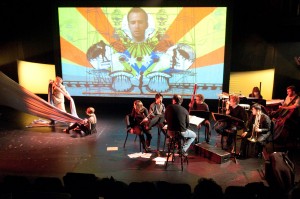
First there’s “HD Traffic”, which is based on an installation by artist John Simon, accompanied by original music by John Chin for jazz quartet with interactive electronics – it creates this narrative dialogue with a futuristic/camp environment that constructs an intelligent commentary. A piece called “Mission Eternity” by Etoy follows, and then “Inventing Wonderland” is based on a digital text visualization called “Alice’s Adventures in Wonderland Text-Arc” by the artist W. Bradford Paley, with original music by Michelle Ross for string quartet with electronics and dramatic interpretation. It’s a marriage of on-screen visuals and prop manipulation. Brendan Spieth is the co-creator on this work.
Sebastian Currier’s “Nightmaze” is about a man driving through the night. It’s a dream he’s having while he’s taken on this ride. It’s a really stunning visual display, an orchestra piece with electronic elements — it’s a cool new direction for B.T.M.
All this sounds avant garde to the power of 10 already! So what is that new direction you’re referring to?
We’re further exploring multimedia and how to interact between each different medium. For a long time, having the dramatists, dancers and musicians get together was the point of B.T.M. But having visual elements is the way to make all these things combine, and we’re going to keep pushing the envelope.
– David Weiss
Music Unites: Inspiration and Music Education in Motion Across NYC
June 27, 2010 by David Weiss
/* Filed under Music Biz */
MIDTOWN, MANHATTAN: Charged up is a good way to describe the onset of Music Unites. A non-profit focused on bringing music education to underprivileged children in underfunded inner city school systems, Music Unites is one of many emerging organizations with an ambitious agenda.
A classically-trained pianist, Michelle Edgar launched Music Unites in mid-2009, after looking extensively for a charity that she would be thrilled to donate $1000 to. But lacking a match, she moved fast to start her own philanthropic program. Just a year later, Music Unites has made itself heard quickly by hosting innovative events, then following up with a star-powered style of community outreach that appears to be resonating.
The founder filled us in on the eve of two notable events in one week. First they’re teaming with Rolling Stone to present InTune with the Fiery Furnaces and DJ Alexandra Richards downtown on Tuesday, 6/29. The next day, Wednesday 6/30, Music Unites will be the sole charitable beneficiary of an anticipated Culture Project production, the performance of “Twin Spirits” with Sting and Trudie Styler at Jazz at Lincoln Center.
Why did you kick off Music Unites?
I wanted to create a community that supported emerging and established musicians across all genres of music, and broke down traditional barriers between classical, rock, hip hop and jazz—bringing that music to underserved communities and funding music education programs.
I also wanted to give artists a chance to develop and build a philanthropic outreach program tailored to what they’re passionate about. We work closely with the artists and their teams to develop long-term initiatives, and fundraise on the artists’ behalf to make their initiatives and programs come to life, so they’re proud of their initiatives which are personally tailored to what they stand for.
The community of artists and the showcases are meant to inspire artists of different genres to collaborate with one another, and expose people to new types of music across all genres that they traditionally might not be used to.
This seems to be a concept that’s gaining steady steam, city-wide. Why do you think the focus of Music Unites — bringing music education to underprivileged children in inner city school systems – seems to have such a sense of urgency?
An investment in music education is an investment in both our children and in our society: Our mission is to foster and nurture the next generation of young artists.
Regardless of age, race, gender, or ethnicity, music has the ability to transcend barriers between people and effect positive social change. Music provides children with a creative outlet that promotes the development of self-discipline, self-esteem, cross-cultural understanding, teamwork, critical thinking, and problem solving skills. In adults, music can help strengthen the connection to our local community and society at large.
It’s well documented that the skills learned through musical training and education are critical to both scholastic and future workforce success. Music Unites strives to build a platform for emerging artists – one that connects with under-privileged youths to engage them in music education.
That’s a big mission to take on. So tell us about the approach you take to accomplishing your goals: How are you spreading the Music Unites message and helping it to take effect?
Started only one year ago, Music Unites has garnered much acclaim by raising $55,000 to support our first major initiative — The Music Unites Youth Choir, an inner city choir bringing together under-privileged children from the five boroughs of New York City together with our partners from the Young Audiences of New York.
Launched in fall 2009, this free after-school program allows young people to develop their musical, vocal and performance skills under the guidance of professional vocalists, musicians and theater artists, while exploring a variety of musical styles. The kids made their debut at Carnegie Hall in a Who tribute back in March and we’ve brought our artists, including John Forte and Jaicko, to do workshops and speak to the children. Back in May, we also brought the kids into a studio to record their first song they wrote.
On the educational outreach front, we’ve brought our services to inner city schools in Harlem and Brooklyn by doing programs with our artists where they go into the schools and share and inspire the children through their stories on how they got where they are today—teaching them the right lessons as well as their struggles and challenges along the way.
You do a lot of public events as well, including a dynamite duo this week: first InTune with the Fiery Furnaces and DJ Alexandra Richards on Tuesday, followed by benefitting from a a production of “Twin Spirits” with Sting and Trudie at JILC. Wow.
The charity continues to grow in leaps and bounds as we’ve produced successful events and gotten a diverse community of artists to support our cause from Sting, Joshua Bell, Lang Lang, Melanie Fiona, and Peter Bjorn and John, Fiery Furnaces to Alexandra Richards and more. Through these events and many others, we’ve worked with prestigious venues including Lincoln Center, the U.N. and Carnegie Hall which has helped us garner a certain level of respect in the industry, being such a young grassroots organization.
We are currently at a pivotal point in our organization’s growth to help support of our music education initiatives, which include a nationwide instrument drive and the creation of an all-scholarship-based Music Unites Summer Camp, similar to that of Tanglewood but for children who would traditionally not have the opportunity to go to such a camp.
Those are some fast achievements, and tantalizing possibilities. But what differentiates Music Unites from other non profits out there?
We’ve built a dynamic and culturally diverse community of artists that are committed to our mission, and we give our artists an opportunity to create their own programs tailored to their passions — so they can feel strongly for what they represent and stand for.
There’s consistency and regularity with our artist showcases which happen on a monthly basis. We’ve created a community where musicians across genres come and support one another
In less then a year, we’ve been able to partner with major companies like OK magazine, Rolling Stone and Lancome which has been tremendously exciting to such a young charity.
What’s rewarding about working with a musical non profit? Let us in on a memorable moment or two.
There are so many—it’s hard because they’re all very special for different reasons and a labor of love. I would have to say the UN peacekeeping concert with the UN, Lincoln Center Fall Masquerade with the Young Patrons, The Who Tribute at Carnegie Hall where the kids made their debut and the HIGHLIGHT- our December event with Sting and Trudie premiering their Twin Sprits project, a classical music project which I really think speaks to what we stand for.

Trudie Styler and Sting screened Twin Spirits with Music Unites in December. They're back on Wednesday with a live performance at JILC.
And now, being involved with the live production of the music on the 30th at Lincoln Center with our Music Unites artists including Joshua Bell and Natasha. Sting and Trudie’s Rainforest Foundation gala was the inspiration of Music Unites and it has been such a true privilege and honor to work with them.
Those are some serious privileges. On the flipside, what makes this initiative a bigger challenge than you expected?
The desperate need for this kind of thing. With budgets being cut every single day we need to raise significant funds to service the schools and communities, to keep music alive. We have the artists who are willing to do whatever it takes: Now the focus is on fundraising and helping take this organization to the next level.
We all need mentors. Who are people that have been inspiring you along the way?
Gustavo Dudamel, Conductor of the LA Philharmonic, Julie Greenwald, Atlantic Records President, and Sylvia Rhone, the President of Universal Motown. I’ve been inspired with the work Gustavo has done tied to El Sistema orchestras and want to be part of the work he is doing here in the US with building these orchestras. Also, he works hard in bridging the gap and looks to do things out of the box by pushing the envelope. This is needed, especially right now to attract new audiences to classical music.
Julie and Sylvia are women I look up to. They are leaders and innovators in the music business who inspire the next generation. If I can do half of what they’ve contributed to the music community over my lifespan, I’d be content with myself.
If people or companies want to get involved with Music Unites, what are the different ways they can help?
We’re always looking for strategic partnerships and are always open to new ideas across a multitude of industries from music, fashion, technologic, entertainment. We build platforms and look to 360 marketing integrations that are mutually beneficial for the organization since they help raise money, in addition to being mutually beneficial for the brand and company.

The Music Unites Youth Choir debuted at Carnegie Hall with a Who tribute. (Photo by Bobby Bank/WireImage)
Finally, we say: Why must you be in NYC?
We were born here and NY will always be home. It’s the melting pot—uniting people and music!
– David Weiss
Fresh Developments: Young Patrons of Lincoln Center Launch After Hours @ The Atrium
May 26, 2010 by David Weiss
/* Filed under NYC Spotlight */
LINCOLN CENTER, MANHATTAN: A fun new phase in Lincoln Center’s history unfolded last Friday. The debut of After Hours @ The Atrium, held at the wide open David Rubenstein Atrium at Lincoln Center, made for a highly stimulating evening.
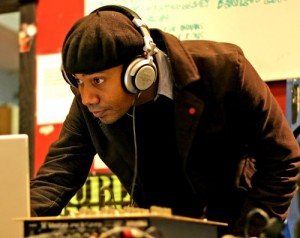
Paul D. Miller aka DJ Spooky was on hand with two string specialists (cellist Claire Bryant and violinist Sarah Whitney), an iPad, plus powerful new ideas about music and how it’s made. The debut installment in a series, Arts & Technology 101, was put on by Young Patrons of Lincoln Center, allowing Spooky to explore the connection between iPhone/iPad apps and string ensembles. The pioneering music came in between ample time to socialize.
A membership group for arts enthusiasts in their 20’s through 40’s, the YPLC’s mission is to introduce a new, diverse, audience to Lincoln Center, bridging the “uptown/downtown divide” through events like Arts and Technology 101 — part of a larger 101 series that acts to demystify various art forms — and also through community outreach and volunteer work with young people who wouldn’t typically get exposed to Lincoln Center.
“The curatorial process of YPLC’s 101 events is very hands-on,” explains Andrew Kalish, Manager of Executive Strategy and Business Development for Lincoln Center. “Lincoln Center staff and YPLC members provide a framework that allows the artist the creative freedom to design a truly exceptional, and one-of-a-kind event that provides both an educational component and a unique insight into their art form. This is the same regardless of the venue, as YPLC’s 101 series take place all over the Lincoln Center campus including at the Kaplan Penthouse and the Hauser Patron’s Salon in the new Alice Tully Hall.
“The case with Arts and Technology 101 was no different. We approached Paul Miller due to his unique ability to mix ‘uptown’ classical style with ‘downtown’ avant-garde and his use of technology in his performance. He was the perfect artist to tell the story of the David Rubenstein Atrium at Lincoln Center, a place that not only serves as a gateway to all the various art forms at Lincoln Center, but also illustrates the democratization of the arts through technology and public performance.” — David Weiss
- In the Atrium
- On the seen
- (l-r) A friend joins YPLC Co-Chair June Wu
- Ladies, please…Just let me DJ.
- Music is her passion
- The beat goes on
- On the seen
- (l-r) Jay Spears of Euphonix and Akinwale “A.K.” Adams of Howard University’s GADGET Center
- In the Atrium
- In/Out
- Glad they made it!
- Stephanie Wang of YPLC After Hours Committee flanked by friends
- Inside the atrium
- Telos Ensemble violinist Sarah Whitney and YPLC’s Andrew Kalish
- String Action
- iPad nerve center
- Visualize THIS
Event Alert: After Hours @ The Atrium with DJ Spooky, Friday 5/21
May 19, 2010 by David Weiss
/* Filed under News */
On Friday, May , 21, at 9:00 PM, Young Patrons of Lincoln Center and the 101 Committee are presenting what promises to be a landmark event:
After Hours @ The Atrium
Arts and Technology 101
with Paul D. Miller aka DJ Spooky
A MULTI-MEDIA ART AND MUSIC EXPERIENCE
INCLUDING DIALOGUE WITH THE ARTIST
DJ Spooky’s show will be followed by music, food and drinks (open bar), 10 PM until midnight
Food, champagne, specialty cocktails, wine and beer generously provided by ‘wichcraft, Moet Chandon, Belvedere Vodka, HobNob Wines & Stella Artois beer.
Admission: $75 per person. Purchase tickets at www.lincolncenter.org/DJSpooky
Location: David Rubenstein Atrium at Lincoln Center, Broadway at 62nd
100% of the ticket proceeds will benefit the new David Rubenstein Atrium at Lincoln Center, which provides programming information, discount tickets and free performances to the public.