On The Record: The Madison Square Gardeners’ “Teeth of Champions”

March 24, 2011 by  
/* Filed under Deli Feed, NYC Spotlight */

LOWER MANHATTAN: While so many Brooklyn bands are trying to figure out new ways to distort, drown and fuzz out their sound in the studio, the Madison Square Gardeners are crafting hi-fi records in the spirit of their favorite 70s rock and roll albums by Tom Petty and the Heartbreakers, CSNY, David Bowie and T. Rex.

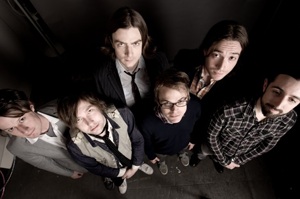
Ladies and Gentlemen...The Madison Square Gardeners!

On their latest EP, Teeth of Champions, the Madison Square Gardeners achieve better-than-ever results on this mission. With Tomek Miernowski tracking the band at Grand Street Recording in Williamsburg, and mixing by Mario J. McNulty at his own Incognito Studio in Lower Manhattan, this band of well-oiled rock-n-rollers have made a record that stands up to their live show.

Accomplishing this has been a process, says bandleader and singer/songwriter Aaron Lee Tasjan.

“What we do translates really well in our live gigs but recording has been a bit of an uphill battle for the band,” says Tasjan. “Because there was so much reverence built early on for the live shows – people were comparing it to The Replacements, the kind of music you have to see live because it’s so energetic and engaging. And we’ve struggled trying to capture that on record.”

Considering their instant chemistry on stage – doing classic rock-and-roll covers and eventually playing house band for a few select artists and venues around the city – the Gardeners naturally expected to breeze through their first studio sessions. They figured…pick a good room, a good engineer, and track four or five songs live. Don’t overthink it.

“We made our first EP at Headgear with Scott Norton, who’s a really great engineer that we knew through his work with Son Volt,” says Tasian. “We also really liked some of the records that have been made there – a couple in particular by the Yeah Yeah Yeahs and The Hold Steady. We totally went in with the mindset of tracking live, but it was weird — even though we were all playing in the same room together, somehow it just didn’t have the spark of energy that we so easily have in our live show.”

It took an unusual recording assignment to set the band on the right track. “Engine Room Recordings asked us to do Poison’s ‘Nothin’ But A Good Time’ for their [upcoming] Guilt By Association compilation,” Tasian shares. “We spent the whole day just working on this one tune, and it became obvious to us that we were being too jock about the way we were going about making our own records – trying to go in the studio and track 5 songs all live and make it all about the vibe… We hadn’t been thinking enough about what we were trying to create sonically.

“What world did we want the band to sit in? Did we want to make super hi-fi big radio sounding records? Or did we want to be more ‘indie’ about it and make cool, garage rock sort of records? Each one is an art form. In working on that one song, and really pulling it apart, we realized we hadn’t been carefully considering the way in which we’re making our recordings. Once we got through that and turned it in (and Engine Room really liked it) then it was time to go back and reinvestigate.”

Refining The Process, Quarterly EPs, Big Sounds

That first Madison Square Gardeners EP, recorded at Headgear, came out in March of ’10. At that point they’d already been playing together for a few years, but had only just begun writing original material.

Rock and roll.

The band had always been a side project for Tasjan, who was lead guitarist in Semi-Precious Weapons, and his band-mates – all active sidemen for artists such as Ben Kweller, Justin Townes Earle, Roseanne Cash and Dar Williams. They all still play in multiple bands, but with no shortage of new material and enthusiasm for the project, they have been working through a series of Gardeners EPs and mini-tours over the last year.

“Instead of doing one record that would cost us a lot of money and time, our plan was to do a bunch of EPs over the course of a year or two,” Tasjan explains. “We figured we could put out another EP every 4 months or so – that way we always have fresh material, and we’ll always be able to tour and get press because we always have something new.”

Their experience producing the Guilt By Association cover led to a new approach on the Gardeners’ second EP, Taste the Thunder (January 2011). “This was our first attempt at working on each song until it was totally done, and I think it was definitely a marked improvement over the first EP,” Tasjan notes.

“And then in producing this new, third EP, we were refining that idea even more – [I think you always have] to make a record that’s even better, and that means across the board: that is, in the songwriting, the performances and sonically. So when we got to the point of mixing this one, I knew I wanted to get someone really serious. Mario had produced one of the Semi-Precious Weapons records, and I just knew he was going to have the right feel for this new record. It was like intuition.”

And, in recording, a process Tasjan refers to as “somewhat mysterious,” where one’s success is not always determined by practical know-how and flawless execution, intuition is often your guide. Especially when the project is not afforded tons of studio time in the great big room of its choice.

“If I could make one record like [Tom Petty & The Heartbreakers’] Damn The Torpedoes, I think I wouldn’t care about anything anymore,” he shares, in a half-kidding tone. “In a way, it seems like that should be simple to do, but even when you know what you’re doing, and you’re in Avatar Studio A, the record you start out making is not necessarily the record you end up with.

Aaron Lee Tasjan and Mario J. McNulty in Incognito, Lower Manhattan.

“Hopefully, if you’re doing it right and open to people who can help you, you’ll end up with a record that’s even cooler than what you set out to make.”

The Gardeners were not going to get weeks in Avatar Studio A, but this did not change their objective just the process by which they would get there.

“We really wanted this record to sound as big and wide as the topics that we’re talking about in the music. Sonically, there’s obviously some 70s influence there…all our favorite records – Bowie and T. Rex, Tom Petty and the Rolling Stones. We really wanted to make songs that you’ll sing along to when you come to the show.

“So in the studio, we were focused on figuring out how to create that mood and that vibe, those big sounds and textures [without being in a huge room],’” Tasjan shares.

“There’s a lot of energy and passion that comes through on this record and part of it is that we really stepped up the material. But a lot of it was also that when we were tracking it, we really considered how we were recording each part. And then the mixing aspect – I knew that was going to be a big part of getting it to sound huge.

For this, McNulty’s part, the mission was clear: “The drums had to be big and powerful and the guitars had to sound thick. The vocal has to be thick and meaty sounding and the band is not the supporting cast – this is a real rock and roll sound, and I approached mixing it with that rock sensibility.”

In the sweet spot at Incognito Studio, where we previewed some final mixes, Teeth of Champions was sounding pretty epic indeed and refreshingly discernible to these ears.

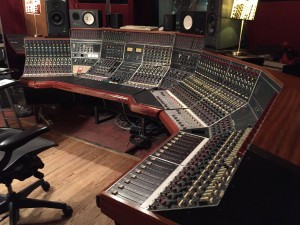
McNulty mixes in Pro Tools on an HD3 rig through a Dangerous 2-Bus — a 16 channel analog summing mixer — with fader control via a Euphonix MC Mix control surface. Looking around his studio, he points out a few other important components: “the Pendulum ES-8 tube compressor is my main bus compressor, and I use a Dangerous Monitor, switching between the Focal‘s, NS-10′s and headphones.”

The care and consideration the band brought to the tracking sessions translated all the way through to the mixes, according to McNulty. “The playing was fantastic and everything was recorded really well by Tomek at Grand Street. He’d sent me some notes on what he did which was really helpful, so once I got started, I was able to approach it really organically. The songs really lend themselves to what they’re going for sonically.”

Check out our favorite track “Miracle Mile” off the new EP for a dose of the Madison Square Gardeners’ sweet Americana folk and rousing arena-sized rock-out jams all in one song!

And given the band’s ambitions, as summarized by Tasjan – “to make great records and go play gigs that people walk away from 100% satisfied” – you really ought to catch them live sometime.

Stream or buy the Teeth of Champions EP at the Madison Square Gardeners’ Bandcamp page. http://themadisonsquaregardeners.bandcamp.com. And follow them on Facebook and Twitter.

On The Record: Laurie Anderson, Mario J. McNulty On The Making Of “Homeland”

June 25, 2010 by  
/* Filed under NYC Spotlight */

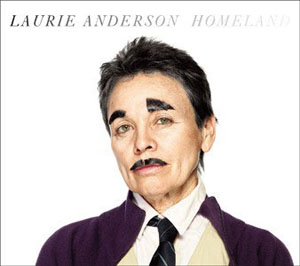
SOHO, MANHATTAN: Iconic NYC artist and sonic adventurer Laurie Anderson released her amazing new album, Homeland, earlier this week. Years in the making, Homeland emerged after a challenging and at-times vexing process in the studio, and very nearly never emerged at all.

Laurie Anderson

“It’s this very, very weird hybrid,” says Anderson, struggling to pinpoint what ultimately makes up Homeland. “I’ve never worked on something this odd before: it was sort of a bunch of filters, a bunch of live [recordings] and a bunch of studio ideas. I’m not even sure what to call it because it’s such a bizarre collection of things.”

It started with sonic scaffolding. Anderson is credited as an engineer on Homeland, and would have to be for the way the songs are composed: they are, in effect, engineered.

“I start with many different rhythmic riffs — even though Homeland doesn’t sound particularly rhythm-driven, it really is,” she describes, when asked of her sonic palette. “By that I mean most of the songs are built on these scaffolds that get removed, and they are mostly violin filters that I’ve been building myself with a software designer named Konrad Kaczmarek. They were based originally on Eventide filters but we went further afield in building our own.”

These became the building blocks for Homeland — movements both ominous and euphoric built up underneath and around an epic narrative. And Anderson toured the work, developing it on the road, recording performances of her constantly evolving Homeland live show all over the world for three years. “That’s various versions of the show, in various tempos, in various keys,” she points out.

Along the way, she recorded with a variety of collaborators, including Tuvan throat singers and igil players of Chirgilchin, and captured improvisational sessions with NYC experimental jazz and rock musicians including Rob Burger (keyboards), Omar Hakim (drums), Kieran Hebden of Four Tet (keyboards), John Zorn (saxophone) and Antony Hegarty (vocals).

Laurie Anderson performing "Homeland"

“I wanted to make a record that would really relate to the live shows,” Anderson shares. “My live rig incorporates so many tools now — soft synths, homemade pedals, vocal processing, different vocoders, the homemade software we call ‘Tide’ in homage to Eventide” — to where I can do almost anything in the live show. It’s really, really exciting and I wanted to get that feeling into the record.

“So it’s like I ‘wrote the record on the road,’ and then came back to the studio and tried to ‘record’ it, but all of those terms were sort of meaningless by that point. I thought, OK now I’ll take some of these live files and paste them together into these songs in the studio and get that live feel. And, that was beyond hard! We took some of those rhythmic elements, printed them and then tried to make a studio version and the air went out of the whole thing.

“And, I thought, No!! I really didn’t want to do something that pristinely goes from my box to your box. I [found myself] sitting there working with all these clean files thinking now what? I’m going to put fake air around them? No! That kind of air to me feels like air-conditioned air — stale air from a hotel in Tokyo that’s never been aired out. I wanted to use air that had been pumped through real places; waves that had been somewhere.

“At that point, the record budget was pretty much over and it was just me sitting with like 100,000 sound files. Here I’d been thinking I’m going to make this spontaneous live thing, and now I was digging through and labeling all these files. I truly would never recommend this to anyone. (laughs) Do not try this at home!”

HOMELAND EXCAVATION: DIGGING, COMPILING, MORE RECORDING

It’s somewhat unsurprising, for an artist who’s always so embraced technology, that the infinite possibilities of today’s methods of music production might tip the scales into the overwhelming. “I got super-depressed looking at all those files and I actually stopped working on it many times,” Anderson admits. “At that point, I was only working on it as a hobby, a couple days a month. I thought I would never finish it. And it was because of Lou [Reed] that I finished it and because of Mario [McNulty] too. Mario really hung in there, and he said it is possible to do this. He was really willing to dig into those bins, and he was really patient.”

Mario J. McNulty

A NYC-based engineer/producer, Mario J. McNulty had worked with Anderson before. He mixed sound for a short film she directed in ‘05. “The first time I ever spoke to Laurie, we had a really nice chat about mixing,” McNulty recalls.

“And it was so great because it was abstract and artistic — the ultimate way I like to approach things, in a totally non-conformist sense. It wasn’t ‘this is a rock mix’ where the kick drum does this, etc. It’s not of the mainstream world at all, it’s of this world that I really admire, of Laurie and Eno and Gabriel and Bowie and Talk Talk and all of these records that I’m really passionate about.”

“That’s maybe the only talk we’ve ever had about mixing, and we’ve worked on and off ever since,” he continues. “So, on Homeland, we never had to talk specifically about what the album should sound like, because I already have a good sense of what she wants: she wants beauty. And, her vocal needs to be in the right place and really only she knows where that is. I mixed the record, but she’s very, very involved in the process.”

McNulty went into Anderson’s studio in SoHo and began the process of compiling Homeland, with the expectation of beginning to mix it. “There had been a lot of different people working on it, so the material was all over the place, literally,” he describes. “On different hard drives, in different studios. Neither of us realized how spread out the project was. I consolidated it all into one location, so something could be played back that made sense to her. And by that point, she was realizing she had more work to do. It just wasn’t moving her the right way.”

Anderson put mixing on hold to do some more recording, editing, and arranging at her studio, which has been her workspace since the 80s. “She has a lot of equipment, but the main recording system there is a Pro Tools HD2 rig,” McNulty describes. “And she has a series of laptops with soft synths, vintage and modern keyboards and racks of time-based effects like her Eventide Harmonizers, which she uses in the recording process as well as in mixing.”

Fenway Bergamot, "Homeland" narrator

“Pretty much any time we would need an effect, we’d go to the Harmonizer,” says McNulty. “She’s one of the pioneers of the Harmonizer so she’s very familiar with it and even the software emulations of the Harmonizer, so we would get into all kinds of sounds with them. She’ll record violin through this really awesome stereo delay patch that she made — and she also has patches that Brian Eno made for her stored in her Harmonizer.”

As she has throughout her career, Anderson used filters to essentially create new instruments, new voices. Homeland’s “Another Day in America” uses one of her classic vocal filters to voice her male alter-ego, “Fenway Bergamot,” the darkly comic storyteller, the omniscient narrator of the Homeland live show.

“Mario’s the reason I added Fenway Bergamot to the record — we just put up a mic and improvised for awhile to see what would happen,” Anderson recalls. “And that became ‘Another Day in America.’ I’m very glad I included that because my music is about words and their rhythm, so to have that very stripped-down [piece] in the middle is kind of what I was going for as well.”

THE MIX OVERLAY: UPGRADING THE SIGNAL PATH

By the end of the summer of ’09, Anderson had finally finished recording and decided she wanted to mix the record in her own studio. “I proposed that we rent some equipment, basically do an upgrade to the studio,” says McNulty. “So I called Jim Flynn Rentals and explained how I wanted to mix analog but that I wanted to avoid all the old analog gear that I wasn’t liking in her space, like her Mackie consoles which she mainly uses for monitoring.

“We did what Jim called a “mix overlay,” McNulty relays.  “We upgraded to an HD3 system and added a Dangerous 2-BUS for analog summing, and a series of compressors — Urei, LA2As, 1176s. We also had some gear from Lou Reed. He brought over his LA2A, which is the best LA2A I’ve ever heard, and some Avalon compressors and EQs. We were able to basically bypass her patch bay and patch all of our analog compressors and EQs by hand. So it was a totally custom setup.”

McNulty also rented an A-Designs Hammer. “I used one side of this stereo EQ on Laurie’s voice, and it’s just a fantastic sound,” he adds.

They also rented an arsenal of plug-ins. “Laurie had a good collection of plug-ins but I also needed some other tools that I find really useful when mixing, like the McDSP Emerald bundle, the Crane Song tape saturation plug-ins and the Sound Toys bundle — TimeBlender, PitchBlender, and Echoboy is my favorite. They’re really useful and really fast — sometimes you need to just pull things up quickly, especially in a mix scenario. I also used the Waves SSL plug-ins and EQs, which Laurie owns, and the Sonnox EQs. For effects, I’ll use ReVibe, Waves and the Eventide Harmonizer plug-ins as well.

“We also used her hardware Harmonizers on the mix — she has special reverbs, cave reverbs, all kinds of de-tuned stuff that won’t be found in any other H3000 because they are patches that were designed either by Laurie or by Brian Eno. So that was a real treat!”

HOME-STRETCH: LOU REED, HI-FI- MONITORING, KILLER BASS!

Though Homeland had involved many people’s contributions along the way, including Roma Baran who’s credited with Reed as a producer, by the end, it was Anderson, Lou Reed and McNulty finishing the project in the mixing stage.

Laurie Anderson. Photo by Tim Knox.

“That was, in a way, the hardest stage,” says Anderson. “In the beginning of a project, it’s all experimentation and great and at the end, you realize ‘oh, but we do have to eventually make something and present it to someone.’ Lou said he was going to come in and sit here in the studio with me until I was done. And I thought, ‘oh, that’s a bad idea for a couple!” (laughs) but I would truly, literally be working on it today, without that.’

“Lou is a great producer,” Anderson continues. “I’d play something and he’d say that’s done, let’s move on. And I’d say ‘No, no! It needs horns, background vocals, etc…I can’t leave that vocal on there.’ Lou is a really fascinating blend of perfectionist and purist and somebody who’s just really loose. He’d say, ‘Leave that raggy stuff in! Why would you take that out?’ And ‘This doesn’t need 17 more parts. Air can be part of it. Air can be rhythmic.’

“Every writer I know is indebted to their editor if they have a good one and same with a musician to their producer. And Mario in a lot of ways worked as a kind of producer. He wasn’t just the engineer — he would definitely express himself in a way that was so well-timed, he understood the process so well that he was never intruding but he had this way of putting his opinion in.’

They monitored Homeland on a few systems. “Laurie has her ProAc speakers that she’s used to listening on in the control room and then I added NS10s, which Lou and I would listen on,” says McNulty. “We also wanted a really hi-fi monitoring setup we could listen on, so Lou brought these huge ATC monitors over from his studio. We set them up in the live room — on foam on the floor — and there was a couch and blankets, and people would sit in there and listen on these huge 3-way monitors, which have this incredible frequency response.

“That was great — to be in the control room with the nearfield monitors and then be able to clear our minds, take two minutes and go in the other room and crank it on the big guys — see where the bass is sitting, see where the vocal is sitting.”

What was Anderson listening for? “We conceived it with a very wide sonic range,” she describes. “And I wanted scary bass. I wanted the bass to jump out and kill you! I’m so sick of hearing MP3s coming through people’s laptop speakers and you hear this tinny thing…and you think, ‘That’s the song?’ Why did I spend more than two minutes on the song if it was going to sound like that? So, I wanted to make something where if you wanted to crank it up on a huge system, you’d hear tons of colorful details and all these little things.”

Nonesuch Records released Homeland on June 22. Buy it HERE! The album is available as audio-only and as a CD+MP3+DVD (which includes the 40-minute documentary “Homeland: The Story of the Lark.” Anderson will perform “Another Day in America: Songs from Homeland & other stories” at Le Poisson Rouge, July 13. Tickets here!

Mario J. McNulty is represented by Joe D’Ambrosio Management.