Video: Inside Sessions at The Fred Perry Artists Lounge + Insound Mixtape
December 1, 2011 by Janice Brown
/* Filed under Deli Feed, Deli NYC Feed, News */
Our second “Inside Sessions” comes at you from The Fred Perry Artists Lounge at Stratosphere Sound – an event we co-sponsored with Just Managing, SoundToys, Blue Microphones, Insound and Brooklyn Brewery.
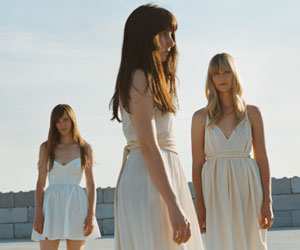
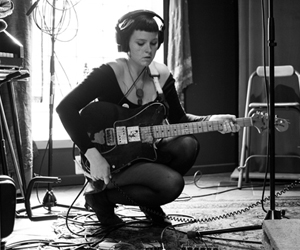
See the video, featuring three of the day’s bands – Tall Ships, 1, 2, 3 and Widowspeak – and engineer Geoff Sanoff, here:
During this live recording event, Sanoff tracked seven bands (also, Caveman, Waters, Weekend and Gauntlet Hair) over eight hours at Stratosphere, and mixed the best recordings by each band in the days following.
Matt Shane mastered the material for an Insound digital mixtape you should download today. The mixtape also features interviews with the bands by the hilarious David Rees. Click to download.
Thanks to our sponsors! Sanoff used Blue Microphones’ Dragonfly, Reactor, Woodpecker and Mouse mics on drums, Vox and AC30 amps, and glockenspiel. Blue encore 200 or 300 mics captured all the vocals. SoundToys EchoBoy, Decaptitator and FilterFreak plug-ins were instrumental in the mixing of these tracks.
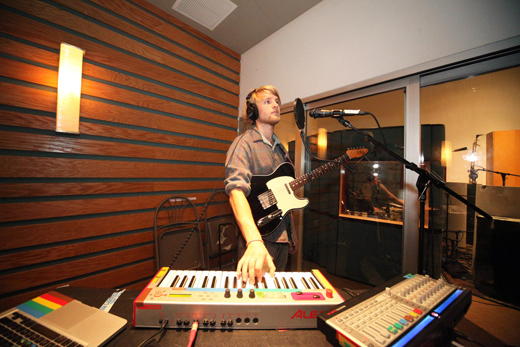
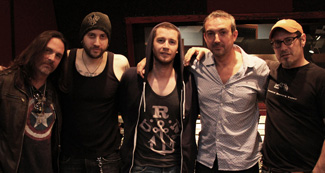
Check out some photos from the event (by Diana Wong) and live recording sessions…
Session Buzz: Who’s Recording In & Around NYC — A Monthly Report
May 31, 2011 by Janice Brown
/* Filed under NYC Spotlight, SonicSearch News, SPARS Feed */
GREATER NYC AREA: As always, there are a number of interesting recording projects underway in studios throughout the NYC area. The following is but a sampling of recent sessions, and works in progress…a snapshot of what’s going on around town:
We’ll start at Great City Productions in Chelsea, where Anand Wilder of Yeasayer has been producing a musical called “Coal Into Diamonds,” an homage to the hard rock and psychedelia-inspired musicals of the 1960′s and 70′s
Co-produced and co-written by Wilder and pianist Max Kardon, “Coal Into Diamonds” features performances by members of Vampire Weekend, MGMT, Dirty Projectors, Chairlift, Man Man, Suckers, and Dragons of Zynth. Engineered by Britt Myers and Geoff Vincent, and mixed by Britt Myers at Great City, the 11-song LP will be released on Secretly Canadian.
Next stop – Fluxivity in Williamsburg, where Brooklyn-based singer/songwriter Colin McGrath recently mixed several songs with producer William Berlind, and engineer Brian Thorn, and Flight of The Conchords’ Jemaine Clement and engineer/producer Matt Shane worked on some new songs for an upcoming film project. John Agnello also visited Fluxivity to overdub and mix songs for an upcoming release for Barton Stanley David. The sessions were mixed to ½” tape on Fluxivity’s Ampex ATR100 recorder.

During sessions at Mission Sound (l-r): Jack Daley, Steve Wolf, Jay Picton, Mike Peden and Mission owner/engineer Oliver Straus.
Universal artist Jay Picton was in town from London, recording his debut release at Mission Sound in Williamsburg. Oliver Straus tracked an assortment of New York’s “A” team musicians for this album including Jack Daley, Steve Wolf, James Poyser of The Roots and Clifford Carter. Mike Peden produced.
And at The Buddy Project in Astoria, Julia Nunes tracked a new album with producer/engineer Zach McNees, Pipe Villaran (former lead singer of Los Fuckin Sombreros) recorded his debut solo EP with producer/engineer Kieran Kelly, and Nate Campany recorded some finishing touches for his solo album, with Kelly engineering.
Meanwhile at Vacation Island Recording in East Williamsburg, indie cult hero R. Stevie Moore “and some friends” recorded a song for a benefit compilation. Jorge Elbrecht from Violens produced the tracks and Matt Boynton engineered.
And, bouncing around, up at the Carriage House Studios in Stamford, CT, Johnny Winter has been working on a new record, his first studio album in 7 years. The record was tracked and mixed by engineer Brendan Muldowney on Carriage House’s SSL 4000 E series console and produced by Paul Nelson. Guest guitarists include Warren Haynes, Derek Trucks, Vince Gill, and Sonny Landreth.
Back in town, Avatar Studios has been hosting Ingrid Michaelson recording her upcoming album with producer David Kahne and engineer Roy Hendrickson; VHS or Beta mixing an upcoming release with Martin Brumbach engineering; Vince Giordano & The Nighthawks recording with Regina Spektor for HBO’s Boardwalk Empire, with Stewart Lerman producing/engineering; the Baby It’s You cast album recording with producer Richard Perry and engineer Frank Filipetti; and New York Yankee Nick Swisher recording a kids album with producer Loren Harriet and engineer Danny Bernini.
And as previously reported, Sear Sound hosted Sting composing and recording on the 1973 Steinway “D” grand piano, with Rob Mathes arranging and co-producing; Foreigner tracking with original frontman/producer Mick Jones co-producing, Jeff Pilson, Tom Gimble and Kelly Hansesn completing the band, and Wyn Davis of Total Access Recording engineering; and the Gipsy Kings working with engineer James Farber mixing to RMGI 1/2″ 900 tape using Sear Sound’s ATR 102. Bernard Paganotti produced and supervised the Gipsy Kings mixes from France.
Also previously reported, Manhattan Center Studios hosted the recording of a 52-piece orchestra for Tony Bennett’s Duets Album 2. The all-star team on the sessions included Producer Phil Ramone, Conductor and Orchestrator Jorge Calandrelli and Engineer Dae Bennett.
Renee Fleming was recorded singing live with a 69-piece orchestra in Manhattan Center’s Grand Ballroom and adjacent Studio 7, equipped with the 108-input Neve VR, for Steven Speilberg’s animated film Tintin.
Two video crews were present at the sessions, one for a polycom set up allowing Speilberg and composer John Williams to attend the session from LA. The second crew performed motion capture, which will allow the film’s animators to capture Fleming’s facial expressions exactly for her animated character. Todd Whitelock was the engineer on the session.
Back in Brooklyn — at Grand Street Recording — owner/producer/engineer Ken Rich has been working on new records with NYC singer Deborah Berg and Nashville singer-songwriter David Mead. And S-Curve artist Diane Birch spent a week at Grand Street with English producer Ant Whiting. The pair began production on her next record, with Tomek Miernowski engineering.
Miernowski also produced and engineered “Dress and Tie,” a single for singer/songwriter Charlene Kaye and Darren Criss of Glee. Ken Rich has also been working on The Compulsions’ newest project, with Hugh Pool co-producing. And actor/artist Michael Pitt mixed a live recording from Paris with Miernowski.
And we know there’s so much more going on out there! If you’d like to be featured in “Session Buzz,” please submit your studio news to submissions@sonicscoop.com.
A Rubber Tracks Teaser: Converse Building A Context For Its New Recording Studio In Brooklyn
November 10, 2010 by Janice Brown
/* Filed under News */
While we haven’t been able to find out too much more about the new “state-of-the-art” recording studio Converse is building in Williamsburg, a new short video provides another teaser to the “community-based studio” said to be opening in early 2011.
As we previously reported, Converse Rubber Tracks will “provide emerging artists with the opportunity to record music in a high-quality studio alongside a team of experienced local engineers at no cost.”
The following video, “Maximizing Time,” features interviews and testimonials with musicians and producers — including The Bodega Girls, Dan Black, Algernon Quashie of Miniature Tigers, producer K-Salaam (Beatnick & K-Salaam Productions), and producer/engineer Matt Shane — all discussing how they in advance to maximize and utilize each moment recording.
Musicians can visit www.converse.com/rubbertracks to receive more information about Converse Rubber Tracks studio, details on the registration process and updates for the official date when applications open. Check out the short film here:
5 Questions for Hamacide: An Electronic Music Inventist Releases His Mighty Little Machine
July 14, 2010 by David Weiss
/* Filed under NYC Spotlight */
WILLIAMSBURG, BROOKLYN: We could tell you a whole lot of blah blah background about Hamacide, but maybe it’s better if you just read a little and listen a lot.
The Williamsburg-based artist aka Yusuke Hama dropped his new digital download album, Mighty Little Machine, this week, and that’s a welcome development for adventurous ears. It’s an existentially experimental blend of sounds with a lot of everything you want more of anyway – perfect beats, searing basses, instant hooks, ouija calls, intergalactic static and much imagination.
Your first listen of Hamacide could very well prove to be a memorable moment – it certainly was for us.
What lured you to Brooklyn?
I was born and raised in Atlanta. My parents are from Japan, so I think I was required to play classical music at an early age. Brooklyn was supposed to be a pit stop before moving to Manhattan — back in the day, living in Bushwick/Williamsburg was actually cheaper than living in the East Village. Imagine THAT. After seven years, I’m still in Brooklyn. I think it worked out well.
You have multiple musical personas, but it seems like you’re concentrating pretty heavily on Hamacide these days…
It takes up most of my free time. I’ve just finished my first record as Hamacide titled Mighty Little Machine that will be available for digital download on July 13th. There are a whole bunch of guest collaborators on it: To name a few there are songs with a folk singer from Michigan, a rapper and R&B singer from Japan, and a singer/songwriter from Chicago who sings in a bizarre fictional language. It’s pretty wild.
Our mutual friend, “Grammy Award-Winner” Matt Shane — he does not make me call him that! — mixed it, and I’m super excited about it. It will be a digital-only release, and it’ll be available for download on July 13th.
I’m also releasing a limited, vinyl-only remix EP of one the songs off of Mighty Little Machine. Remixers will include Prefuse 73, LebLaze, Epstein, and others. A little later, I’ll be releasing a Hamacide remix EP of songs by LEYODE, my previous project. It is actually done, but I just have to get Matt Shane to master it at Masterdisk. He’s a busy man, you know.
Oh YES, we can barely keep up with the guy! The new sounds of Hamacide are a mind-altering substance. How do you put it together?
I mainly work in a tiny room with whatever gear and software I can get to work, and I grab sounds from wherever I can. Everything ends up in Pro Tools where either I or Matt Shane will mix it.
My approach is pretty different from song to song. I guess a lot of it depends on whether I work with a vocalist, and how they’re most comfortable working. Sometimes I start out with a cool sample, a melody, or just a drum beat. Other times, I’ll just compose something on guitar and leave it at that — whatever works.
I thought it was interesting that you double as a live sound rat, doing FOH for bands. How does that sharpen your instincts?
Well, the greatest thing for me is that it puts in perspective how stuff will sound super loud. Since Hamacide is one guy doing a lot of electronic/beat-oriented stuff, I think, “If a DJ plays my songs, will it bump in a live environment?”
If I see a band perform and the crowd is super-hype, no matter what genre of music it is, I think about how I can get my tunes to bring that reaction based solely on what’s coming out of the speakers.
What? I can’t hear you! This darn music is too LOUD!!! Just kidding. So what makes you glad that you settled down in our fair city, instead of moving on?
I think NYC is just as good a place as any to be a musician — I guess it depends on what you’re into. There’s tons of everything in this city, and I’m inspired by all kinds of stuff whether it’s concerts, food, people, or just walking around.
However, I do wonder how nice it would be to live somewhere quiet and beautiful, and to work on music all day without having to worry about quickly going broke. I guess that’s how I imagine Boards of Canada makes music. I feel like time is money, and time seems to fly by in NYC.
– David Weiss
Brooklyn’s Fluxivity Adds Tracking Room, Hosts The Abrams Brothers, Rob Wasserman
June 21, 2010 by Janice Brown
/* Filed under News */
Williamsburg’s Fluxivity, the Neve 8048-equipped studio owned/operated by technician and custom tube equipment manufacturer Nat Priest, now has a tracking room. Check out the Fluxivity website for more information.
Recent sessions at Fluxivity have included The Abrams Brothers, a folk/bluegrass trio working on their new release, Northern Redemption. The album’s first single, “Mermaid Town,” was produced for video release by Chris Brown (Bourbon Tabernacle Choir, The Barenaked Ladies), with engineering at Fluxivity by Brian Thorn. The video can be viewed on CMT.com
Musician/composers Gordon Minette and Mark Grandfield were in the studio working on their project of standards, with a band that included Tony Garnier, Marc Ribot, and Danny Kortchmar. Engineer/producer Matt Shane mixed five songs for the upcoming release at Fluxivity.
And bass player Rob Wasserman (Lou Reed, Bob Weir) recorded a song for his next CD, “My Name Is New York,” to be released soon. A collaborative project with The Woody Guthrie Foundation and Archive, it features Rob in duet with an incredible cast of singers interpreting unreleased Woody Guthrie lyrics. Rob was accompanied by Tony Trishka on banjo. The session was produced by Steve Rosenthal and engineered by Brian Thorn.
SXSW Tour Diary: Matt Shane On The Road With Dan Black
March 25, 2010 by Janice Brown
/* Filed under NYC Spotlight */
NYC-based engineer/producer and all-around audio renaissance man Matt Shane (Flight of the Conchords, John Garrison, Robbers on High Street) handled FOH/monitors for electro-pop artist Dan Black at SXSW this year. Shane, who also tours on monitors for Flight of the Conchords, has assumed all technical and production duties for Black’s 2010 shows. Given the artist’s mass-appeal, accelerated by the popularity of his emo-hop single, “Symphonies” (featuring Kid Cudi), it’s going to be a busy year.
Shane met Black through his label, The Hours, when he was hired to compile and sequence the U.S. version of Black’s album ((Un)). “I really loved the songs and production,” says Shane. “I met with Dan briefly and we discussed music and what his live approach was like and how he wanted to change it.
“Last year the band was touring as a five-piece with a drummer and sample/loop person, and now it has been streamlined to a trio with Dan running all the tracks and loops off laptops and Frédéric Pruchon and Nick Peill handling guitar, bass and backing vocal duties. Costs of touring and travel prevented having the drummer and auxiliary member come to the States, so it became a trio somewhat out of necessity, although it’s evolved nicely into a really tight and powerful package.”
Dan Black played 6 shows over four days at SXSW. Here, Shane fills us in on the rigors of the road, the venues, the gear and the high and low points of the SXSW whirlwind… from the sound guy’s perspective.
PRE-SXSW: Getting Acquainted
We did a few days of rehearsals in NYC and then had a short tour in February playing clubs in NYC, Toronto, Montreal, San Diego, Los Angeles, and San Francisco. Feedback on the shows was great and more importantly the band and I developed a great working relationship.
When you are walking into different clubs and venues every day with limited time to sound check and you’re subjecting yourself to varying quality levels of PA’s, venues, and backline; it’s very important that the band trusts their engineer. They asked me to continue and work on this run of SXSW shows for Dan, and I was very excited to mix his shows in Austin!
One of the things I love about this gig is we are very self-contained, so between myself and the tour manager and the three band members we can carry everything we need for a show in our hands. We rent bass and guitar amps or borrow them when we can. I do not have to deal with poor quality drum kits or pushing amps around; just the laptops, controllers and stand, 2 guitars, bass, keyboard stand, and a bag of tricks.
Dan Black controls all the tracks and loops and sings, Fred plays bass, synthesizer, cowbell, and sings; and Nick plays guitar and sings backing vocals.
THE TOURING RIG: Laptops, Live, Launch Pads & Loops
Dan has a very cool rig that I worked with him to streamline and make extremely manageable and portable, with SXSW in mind. Most of our SXSW shows had only 10-15 minute changeovers scheduled. This meant 10-15 minutes to setup AND line check. I usually was guessing on monitors and using the first song to try to read the band to dial those mixes in better based on the band’s preferences for their wedges.
I setup the sampler rig so I could build it off stage then just carry it up and plug in power and signal lines and be ready to go. It’s a 2 RU rack containing an 8-channel M-Audio Interface for connecting to Ableton Live and an 8- channel Radial DI rack mount unit. Dan uses 2 USB Novation Launch Pads to control all his songs in Ableton. One pad is setup as the clips for each song, so he can do arrangement and sequencing. The second pad is all mutes, filters, and FX. Dan can create a vocal loop and turn it on and off. Mute the drums, filter any of the elements with up to 8 stepped filters, or crunch them up with distortion or another effect.
We currently use 4 outputs from Live for our streamlined SXSW/Club setup: Stereo Loops and track, mono synthesizer, and mono vocal FX looper. These four channels patch out of the M-Audio interface and patch into 4 of the Radial DI’s. I give the house sound guy a 4 4-channel XLR snake to patch right into the stage box. Fred plays a small USB keyboard controller that he velcros to his belt to control the Synthesizer instrument track in Ableton. He is also wearing headphones in one ear containing track and click for several songs. Dan and band sing through standard Shure SM58s.
Dan routes his mic through an active BSS DI to split it to me at FOH and to the Looper input in Ableton. Dan has 2 laptops running: one is running Live and the other is running just song notes for arrangements and the set. I gaff tape the rack to a X-folding keyboard stand and the laptops velro side by side to the top of the rack. I have the BSS DI and the Euro powerstrip and our main power plug attached to the leg of the keyboard stand with Velcro and gaff tape. All my cabling folds up into the 2 2-space SKB euro rack and travels easily.
SXSW: DAY ONE – MOHAWK’S INDOOR STAGE
Our first show was at Mohawk’s indoor stage right after we landed in Austin. The room we were playing was roughly a 30×30’ box with 12-14’ ceilings and a stage approximately 2 feet off the ground. Right before we were going on they stuck another band in and cut everyone’s sets back. Welcome to SXSW!
I was mixing on a small Mackie ONYX board with 24 inputs. Basically I had just enough time to have the guy tell me where our 10 inputs were coming up (which he managed to tell me wrong, of course). It was still a fun show despite the difficulties of the small room and only 2 monitor mixes (when we have less than 3, Dan gets one and Nick and Fred share the other). This is when a band having their own sound engineer helps a ton.
I know what the guys all want in their wedges and can dial up a working mix quickly, which matters a lot when the set length is limited to 20 minutes for some of these shows.
SXSW: DAY TWO – BEAUTY BAR, SPEAKEASY & DIRTY DOG BAR
Day two was the craziest day! We started around 10am with a load in for our noon gig at the Beauty Bar (Palm Door). This gig was in a nice room and it was a beautiful day. It looked like an old summer camp rec hall with vaulted ceilings, all made of wood. The PA was nice and backline was quality as well. Marshall JCM 900 and 4×12’’ cabinet and an Ampeg SVT-2 with an 8×10” cab for the bass. Nice new Soundcraft Spirit console at FOH. Quick simple flexible console with workable EQs and plenty of head room.
These quick turn-around gigs frequently don’t afford much time to dial in dynamics or fiddle with FX, I only use a very short hall/plate on the vocals usually somewhere around .9-1.2 seconds depending on the room. No time to dial in compressors on anything so I do a lot of vocal riding to keep Dan sitting nicely on top of the mix. Knowing the songs helps when there aren’t available dynamics processing because I know where the big moments are and can ride the vocal(s) accordingly.
Trouble in most of these venues is that the bass and guitars are loud on stage, so getting the track pumping in the wedges and maximizing vocal clarity without too much foldback problems is the toughest part. The PA company did a good job ringing out the wedges and system so I was able to get Dan plenty of vocal level on stage and give the band plenty of the tracks in all the wedges. The show was definitely a good show to kick off Day 2.
Our second day in Austin continued with some last minute changes. Due to a problem with the stage our second show’s venue was changed last minute from Buffalo Billiards to Speakeasy. This was a very difficult venue to mix because FOH is a tiny room up a 12’ ladder in a small cave and well out of any range of coverage that the high end will have in the PA. There were some small subs and only 2 high boxes (old EAW I think).
The console was an old Allen & Heath, and wedges were the big, carpeted Yamaha wedges. They are not very clear and have quite a bit of honk in the mid-range without much bottom; definitely not a top choice for wedges. All the other acts were small acoustic bands so they had no problem. For us, however, it was difficult to get the tracks and vocals above the bass and guitar volume in the space, and I was guessing as far as mix balances went.
I could only climb down the ladder once or twice, and after that it was a guessing game. I had the house guy breathing over my shoulder too in this tiny little room watching the amps and telling me his way of doing it. The gigs with no sound check, line of sight, or working talkback can definitely ramp up the challenges of mixing a solid show. It was a tough one for the band and myself, but the end result was good. Folks enjoyed it and we keep on trucking.
We had some time to kill after this show and relaxed before our third show of the day. Heard a couple youtube clips from fans down in the audience and those sounded well balanced so I think I did my job.
Last show on Day 2 was closing the night out at Dirty Dog Bar. This bar was fun, and had a decent size stage for the guys. Thanks to The Constellations for letting us share their bass amp and guitar amp! The house rig were nice JBL boxes for the tops hung above the stage and JBL subs under the stage. The house engineer had the system setup well and we definitely got every ounce out of the rig that was possible. Mixed on an old Yamaha console, with 8 VCAs.
Mixing this show was a real breeze and the band really played well — there were available comps patched on all the vocal inputs already so that was great to have. He also already had the vocal channels multed for separate EQ for monitor sends, which is something I like to do when I have the available channels and I am mixing monitors from FOH. The venue had those same lousy Yamaha wedges, but there were 3 mixes of 6 boxes across the front so the coverage was adequate.
This was a fun gig to end the night and even though we had been up since 9am and this gig started at 1am.There was a tremendous amount of energy.
SXSW: DAY THREE – EMO’S
The next day was a lot of press for Dan. Acoustic 2-3 song set for a small audience and an outdoor Billboard.com interview and song set. Dan is a great guitar player and really performs well on his own with just an acoustic guitar, which makes doing press gigs painless, because Dan can walk in with just an acoustic guitar, sit down and play. He has great mic technique and knows how to work an SM58 to get a great vocal without much fuss or EQ on my part.
Dan’s guitar was busted up by the airlines so we called the folks at Gibson and they lent Dan a gorgeous hummingbird acoustic to play all weekend.
Our only show on Day 3 was at the outdoor stage at Emo’s. We were the first band of the night so we actually got a soundcheck (long line check). Emo’s has a really professional staff that was very accommodating to the band and myself as an outside engineer. FOH console was the 8 VCA Yamaha desk like at Dirty Dog, but there was a separate Soundcraft desk for monitors right next to the FOH desk. The house guy drove the monitors based on my “cheat sheet” for the band while I dialed in my mix.
I have a fairly specific “cheat-sheet” for the monitor mixes for the band that works as a starting point for the band when there’s the luxury of having a separate monitor engineer. The Emo’s PA really pumped and we shook the place, having full range sidefills was a nice touch for the band. I could give Fred all the bass he needed and fill the stage a bit more with the track and Dan’s vocal. This was the most relaxed show of the week. Bit of a bass trap at FOH mix position, but it was centrally located so stepping away from the desk to get the “audience’s” perspective was easy.
SXSW: DAY 4 – POWER PLANT, OUTDOOR GIG, AND OUT
On day 4, we went out to an old power plant for MTVu Promo video shoots. The band setup and shot a 30-second clip of one song for use on MTVu. The band was being tracked to Pro Tools HD through a Midas Heritage 3000 with 1176s and ADL 1000 compressors on the vocals and bass. Really sounded full and warm, definitely looking forward to the day when we can carry that level of production.
Later, we had an outdoor show, which would have been great the previous 3 days as the weather in Austin was perfect. Unfortunately the weather had gone from 70 and sunny the days before to 50 and cloudy on this day. Staying warm prior to the gig was key, fortunately the green room for bands was indoors.
Nomad Sound had brought in a PA last minute after the original setup was removed due to weather concerns. Meyer Subs and QSC top boxes, 2 per side. Radian wedges that sounded great and Yamaha LS9 digital console at FOH and another at monitor world. This was the first show we had in Austin where subs were fed off an aux.
Most of the time I prefer the sub feed to be handled in the processing and crossover, but I was happy to have this added control even if it was an outdoor gig. Depending on the rooms, some of the sub bass for different tracks will bloom and compound quickly, and without sound checks it is easier for me to pull down the feed to the sub a couple dB on tracks that have heavier sub bass, rather than reach for the graphic and just grab the offending frequency and try to isolate it and pull it down.
LS9’s are easy compact desks that are light and durable, but the lack of touch screen really slows down fast adjustments on the fly. I tend to do lots of little things as they arrive and go from element to element shaping the sound, so having to arrow over and select stuff is a big time waster, I find. Also, I don’t find the Yamaha digital compressors very usable, they tend to “shred” the top end a bit instead of controlling the peaks of the full range of signal.
Despite the cold, the crowd was great and the show sounded great. Mix position was ideal and the PA was dialed in nicely with plenty of power on the bottom end for the tracks, kicks and basses.
All in all, SXSW was a really great experience. I saw a lot of great bands perform, and Dan had 6 great shows in 4 short days. We just played a show at the Fillmore at Irving Plaza supporting Julian Casablancas (last night) and we have Ultra Fest and the IDMA Awards at the Winter Music Conference in Miami coming up. And many more dates will be added this summer!
For more on Matt Shane, visit his website and get in touch via his Dan Backhaus at Just Managing.
Gig Alert: John Garrison at The Living Room 3/9/2010
March 5, 2010 by Daniel Sieling
/* Filed under News */
Singer/songwriter John Garrison is playing The Living Room on the Lower East Side this Tuesday, March 9. Garrison’s set will feature songs from his acclaimed, Matt Shane-produced/engineered second solo album Departures.
The show starts at 7 PM, with Garrison first to hit the stage. Other artists to perform that night include Daphne Willis and Chris Garneau.
For more information on John Garrison, formerly of the band Budapest and bass player for James Blunt, see our ’09 feature on the making of Departures: www.sonicscoop.com/?p=1881
Arrivals & Departures In The Making Of John Garrison’s Latest Record
October 27, 2009 by Janice Brown
/* Filed under NYC Spotlight */
It’s a crisp October night, and British singer/songwriter John Garrison’s playing Rockwood Music Hall. The intimate showcase venue on Allen Street is a far cry from the 50,000-capacity arenas he’s been playing on tour with James Blunt. But that’s just fine with Garrison.
“I’ve realized I have no interest in being a global megastar,” Garrison says humbly, in a post-show interview. “Of course, if that’s what I have to do to make my music than I’ll do it, but that’s not the goal. I just want to make records and sell enough copies of each to make more. I don’t need a Ferrari, I just want to make music. It’s what makes me tick.”
Of course, Garrison’s already done the major label thing and survived the highs and lows of getting a record deal and getting dropped with his band, Budapest, who had a record out in the U.S. via Universal back in ’02. He’s also supported other major label artists — in the studio, playing bass for Leona Lewis among others, and on the road, as Blunt’s bassman.
Garrison’s recent work has been as a solo artist. He will release his latest record, Departures, through AWAL (Artists Without A Label) in the UK (and digitally, worldwide), and independently in the U.S. on November 10.
“If a label steps in, I’m open to it,” he says, “But what I’ve learned is I’m never going to go on a major again and not know what’s going on. Right now, I have management looking after me, a publicist and licensing companies representing my music. I’m doing everything I’ve ever done, I’m just not running it through a major label, I’m doing it myself.”
TO NYC AND BEYOND
A singer and multi-instrumentalist, Garrison moved to NYC after Budapest broke up in ’06 and began his solo career. He’d already recorded the material for his first record, Above The Cosmos, when he hooked up with producer/engineer Matt Shane to mix it. The two hit it off, and Garrison — who’d played all the instruments on the record himself — invited Shane to plunge deeper into the project as a co-producer.
“It’s very rare to find someone with the same kind of musical brain,” says Garrison, of Shane. “We don’t even need to discuss things so much, I don’t even have to say what I want, he just knows it.”
Naturally, when writing and pre-production on Departures began somewhat early in ’08, Shane came onboard as producer from the start. The tunes were written mostly in NYC, but when Garrison got the gig to go out on tour with Blunt, the writing and production of his record went with him.
“The first few songs I wrote for Departures were about moving to New York, but then it was just about ‘moving,’ in general,” describes Garrison. “And realizing that no matter where you live, you have to be at home within your own skin. You don’t realize that until you start moving around. And when I left to go out on tour with James Blunt, all I was doing was moving. We did 188 shows all over the world.”
THE MAKING OF DEPARTURES
On break from the Blunt tour, Garrison and Shane met up in London to record basics at Sleeper Studios, the magnificently-equipped studio of songwriter/record producer Guy Chambers. (see in video below) Departures would be produced quite differently from Above The Cosmos.
“The first record was really more meat and potatoes — drum, bass, guitars, piano, keyboards,” says Shane, to which Garrison interjects, “And it was all played by me, and you can hear it. It sounds like one person playing everything and that is not a good thing.”
Departures opener, “Let’s Run,” demonstrates just how far away Garrison’s moved from ‘meat-and-potatoes’ instrumentation. It’s a brilliant, soaring track, of anthemic Eno-produced Coldplay proportions. “Where we recorded most of the instrumental tracks was any musician or producer’s dream studio,” Shane qualifies.
“And the beauty of it was that everything is setup and ready to go, with all of it running through an EMI desk that recorded the Beatles and Pink Floyd. Every day we’d go in at like 10-11am and the next thing we knew, it was 8pm before we broke for lunch.”
“Let’s Run” was the first song they cut their first day in the studio. “It started out like a basic band track — bass, drums and guitar based on this arpeggio that John laid down on piano,” says Shane. “We added parts here and there until we thought we’d finished it, but it only ever sounded only about 75% there. So, we gave the load of tracks to John’s buddy Tom Visser, a musical mad scientist, and told him to go nuts with it. He sent us back a whole bunch of files, re-recorded drum and bass parts, and additional sounds. We added from that and created the final arrangement.”
Electronic patterns and textures build out the big rock sound in “Let’s Run.” It’s a totally lush arrangement but with just enough space built in to hear everything. Ultimately, says Shane, “We ended up having to rush through the mix, and Richard Flack who mastered the record, asked if he could do another mix of ‘Let’s Run,’ where he stripped it down a little. It had been a bit too sweet, there was actually too much ear candy. Richard nailed it and also mastered the rest of the tunes.”
“Let’s Run” (video below) sets the stage for the rest of the album, as far as sound and production, adds Shane. “Everything else that happens on the record can be traced back to what we do in that song. We use a lot of really organic sounds, and you’ll hear that they’ve been really cleanly recorded, but you also hear loops and production elements and tricks. It all blends together really well.”
Another Departure, “I Leave on Friday,” goes down more of a straight-ahead alt-rock road and the blend of cleanly recorded tracks with a dirtier electric rock guitar sounds keeps it from sounding too polished and pretty.
Garrison’s craft is sentimental pop songwriting, and he does it really well. To that, his and Shane’s combined sonic aesthetic adds interesting and certainly commercially appealing dimension. And, if a James Blunt comparison happens to come to mind, on a tune like “So Close,” for example, it’s not because of a sappy sound or vocal. (In fact, if anything, hearing all of these tracks performed solo on acoustic guitar or piano at Rockwood, I hear more of a Glen Hansard or Fran Healy.) Garrison’s a talent and the sound that grew up around these songs seems to add conviction to the material.
“The sound really kind of evolved naturally,” says Garrison. “It’s really organic. We wanted everything to be authentic, so if we’re going to have some synth sound, let’s find the actual vintage synth and use that. At Guy’s you can do that. Want a Moog sound? It’s all ready to go!”
“The record is pretty sonically (as opposed to stylistically) diverse though,” assures Shane. “It goes from really giant roomy rock-and-roll drums to really dead 70s drums and we incorporated all these great synths and live strings and percussion.”
BACK TO NYC, BACK ON THE ROAD
From Sleeper, Garrison and Shane flew back to NYC to record vocals, strings and other overdubs at One East in Manhattan. Then, with Garrison heading back on tour between recording and mixing, they kept the project alive via email, sending edits and ideas back and forth.
Shane mixed the record when Garrison came over on a couple breaks — the first sessions went down at Looking Glass just before it closed and the second leg of the mix happened at Fluxivity in Williamsburg, a uniquely well-equipped facility (owned by Nat Priest, a studio equipment technician: www.musicvalve.com) that Shane calls “a treasure.”
“NYC still feels like home to me,” says Garrison, of working in New York over London, “I just don’t live here at the moment. But something about this place brings out the best in me. Plus, I admit it was also more economical with the pound vs. the dollar.”
And, the studio hopping and intermittent production schedule may have worked to the record’s benefit. “It was cool that we had the time between sessions because we really got to look at it from every possible angle and work out all the kinks,” says Shane. “We tried everything and ended up with exactly what we wanted.”
Garrison adds, “There were some songs we were loving at one point, but then they died. By the next time we’d picked back up, we weren’t into them anymore. You get that benefit when you have the gaps.”
Though it stretched out over several months, the team kept a brisk pace when actually in the studio. “There was nothing we couldn’t try and no idea that was a bad one, but it never felt like we were stretching too far because John and I think so much alike in how we approach music,” says Shane. “So, it was all productive.”
Garrison concludes, “It was such an amazingly enjoyable experience, much more so than any of my band records. I remember when we finished mixing and I was flying back to the UK, I didn’t want it to end! I was so happy, waking up in NYC, getting a coffee and going into the studio, and Matt would already be there an hour listening back to my music and it’s sounding absolutely amazing because I’ve left it in his hands and he totally understood it.”
On The Road With Flight of the Conchords
September 8, 2009 by Janice Brown
/* Filed under NYC Spotlight */
New York, NY — Fans of the HBO series Flight of the Conchords might have a hard time imagining slacker-heroes Bret McKenzie and Jemaine Clement racing between the show’s stage in Greenpoint, Brooklyn and recording studios city-wide to get all of the show music fully written and produced and albums of it recorded and mixed. But, that’s exactly what they did during both seasons of the award-winning series.
Their second full-length record, I Told You I Was Freaky, comes out on Sub Pop in October, produced by Mickey Petralia and recorded by NYC-based engineer Matt Shane: the production team responsible for capturing all of FoTC’s musical antics for TV. It’s a compilation of songs from season two — including the R. Kelly-inspired “We’re Both In Love With A Sexy Lady” and club anthem “Too Many Dicks (On the Dance Floor)” written/produced during the show’s production.
Shane describes, “As opposed to season one, most of the songs for season two hadn’t been performed live, so instead of starting out with two guitars, we were starting out with these full-up beats they worked up in the studio with Mickey, and then they’d add elements later to make it fit or change genres. The guys would do 12-hour days shooting during the week and then we’d be in the studio at nights and on the weekends. We split the work between a handful of studios — Mission Sound and Metrosonic in Williamsburg, One East, Looking Glass and Chung King in Manhattan, and Bloody Good Record in Long Island City.”
In appropriate contrast to their TV persona, Flight of the Conchords is a highly active band, releasing singles via iTunes during the seasons, albums post-season (including a Grammy-winner) and touring in support of all. For their U.S. tour last Spring, the Conchords tapped Shane and My Morning Jacket FOH engineer Ryan Pickett to help them take the show on the road
BIGGER SHOWS, BIGGER PRODUCTION
“We were going to be doing way bigger houses than we did on their first, smaller tour last year, so they stepped up the production as well,” explains Shane. “They share management with My Morning Jacket, who happened to not be on the road at that time, so Ryan and Marc (Janowitz), MMJ’s lighting designer, were available to get involved.”
Being so familiar with the material, having recorded all the music, Shane took on monitor duties on the road. Orientation took place at Soundcheck in Nashville, where the crew staged the show and Shane and Pickett put their heads together on how to best present this unique act, live.
FoTC enlisted fellow kiwi and multi-instrumentalist Nigel Collins to fill in musically on cello, background vocals, keyboards and percussion. “The second season had just finished airing and the songs had been created in the studio and never played live,” says Shane. “With only a few days of rehearsal, the guys used the first couple weeks of the show, during sound-checks and even the actual concerts, to sort of reverse-engineer some of these fully produced tracks and bring it back down to two guitars and vocals.”
Technology helped them genre-hop and do their best Prince falsetto or T-Pain croon. “They use a lot of effects in some of their songs — like in hip-hop tunes where they copy the AutoTune effect, and they wanted to be able to do that, live,” says Shane. “So, we researched and found the new ElectroHarmonix Voicebox, a vocal synth processor pedal that matches whatever reference signal you send to it. With that, they were able to do all kinds of things — harmonies, vocoder, etc.”
RULE ONE OF COMEDY CONCERT: EVERYTHING IS MATERIAL
Though rehearsal got everyone in gear, the FOTC shows were largely dictated by band-audience interplay and therefore quite unpredictable. “It was very common that songs would not be done the same way twice,” explains Shane. “Jemaine would play an Omnichord on a song in sound-check and then during the show, he’d stay on guitar for that song.”
Pickett adds, “I’ve never had to be on my toes quite so much; for having such few musicians on stage, it was pretty intense. I never knew where they might go, because of dark-outs and things like that, which kept it fun.”
The variable set-list became a joke with the crew. “It was just a list of 30 songs, but they hardly ever went in order and rarely played them in the same order twice,” describes Shane. “That improvisation added to the comedy routine. So, if Marc didn’t bring the lights up or didn’t change the colors in time for a sad song, they’d ask, ‘Can you make it look like we’re inside a tear?’ They’d make us part of the show. I’d become part of the bit if I had to run out and fix something. Everything is material.”
RULE TWO: THEREFORE, EVERYTHING HAS TO BE HEARD
Allowing for audience interaction in large halls, Pickett had the band on wedges. “In-ears just wouldn’t have worked for this show, since every song came out so different each night, in terms of tempo and instrumentation,” he explains. “And sometimes one of the guys would lay out and then come back in — if they were on in-ears and the levels were locked in, and there were no ambient levels or they couldn’t hear the other guy’s wedge or bleed, etc. they’d be alone, out in space.”
Diction and comic timing were key show elements that needed to come across as much as the music in these large halls. “I’ve done a few acoustic arrangements, but the whole comedy factor of this show really adds a whole new element to what we’re doing,” adds Pickett. “Every little corner of the room needs to hear what’s being said, and their accent is a bit of an obstacle for the audience to begin with, so you really had to be on your mark.”
Shane elaborates, “It took a lot of tricky microphone placement and EQ to give us the most headroom before feedback possible. We never knew where they were going to go during any given song, so we had a lot of mics open all the time and since they were on wedges, there was a lot of foldback that Ryan had to deal with.”
Never a dull moment during this tour, Shane also ran sessions with the guys on days off to finish the next album. “We’d be doing vocal overdubs in dressing rooms so that we could send stuff off to Mickey who was re-mixing the songs for the record.”
Look out for the Flight of the Conchords’ record, I Told You I Was Freaky, in October.
Matt Shane lives and works in NYC and is currently working on a new record by Robbers On High Street and on mixes for Hamacide and The Woods. Get in touch with him via www.mshane.com.
A live sound and recording engineer based in North Carolina, Ryan Pickett is often on the road, mixing FOH for My Morning Jacket and, most recently, The Decemberists.