The Unforgettable Tribute: MLK, U2, and the Making of “Pride (In the Name of Love)”

January 20, 2013 by  

MLK, among so many other things, was music.

With his voice alone, Martin Luther King, Jr. made music.

The rhythm and melody that permeated Martin Luther King, Jr. was evident not only in the way that he moved and spoke, but in the way that he inspired musicality in others. One of the greatest orators of our time – or any other – King’s mastery of language made his speeches lyrical as well as life-affirming.

In his non-violent pursuit of civil rights equality, an a cappella delivery of MLK’s words were sufficient to stir deep passions – he didn’t sound like bagpipes or a cavalry bugle, but hearing his voice makes you immediately electrified, and once more strong for the fight.

It was an instrument that rightly won him the Nobel Peace Prize, and helped solidify his legacy as an intellectual leader for the ages via landmark speeches like “I Have a Dream”, and so many more.

“Pride” – An Emotional Ride

It’s no surprise, then, that his influence is imprinted within what people traditionally refer to as music – songs with singers, guitars, beats, bass, and keyboards. On the sampling front from Michael Jackson to Paul McCartney and Common, the Orb to Linkin Park and scores of others, MLK has served as a powerful sound source.

Arguably, one of the greatest-ever musical tributes to MLK stands out in the form of “Pride (In the Name of Love)”, U2’s masterpiece from the 1984 album The Unforgettable Fire. Riveting from Moment One, “Pride” is one of those cosmic confluences that defines a classic: the beautifully rhythmic  guitar work of the Edge, drummer Larry Mullen, Jr.’s big beat is simultaneously complex and simply satisfying, Adam Clayton’s musing bass foundation. And then Bono’s incomparable voice comes, starting off in the verse’s quiet awe before soaring to the hair-raising heights of the chorus.

“Pride” is a structurally simple song, and this upward spiraling cycle gets broken only by the bridge. At the 1:40 mark appears what is certainly the most uncomplicated guitar solo arrangement ever recorded in the history of rock: eight consecutive repetitions of the same single note, exquisitely energized by the Edge’s unique battery of delay pedals and other effects.

If “Pride” is up your alley, then your experience of the song is 3:49 of perfection. Anywhere your ears land at any moment – vocals, guitar, bass drums – what you hear is deeply moving, and builds momentum as the song surges forward. The gang vocals that appear in the third chorus are the perfectly imperfect element that somehow takes “Pride” even higher, connecting band and listeners to the song’s history-changing hero – a campfire singalong where 1,000,000 people can easily join hands.

As did MLK himself, the song accomplishes so much in such a short span of time. And in yet another parallel, rather than diminishing, the power of “Pride” only grows with repeated exposure.

View from the Studio

Engineer/mixer Kevin Killen was there — and then some — for the recording of “Pride”.

One person with a unique perspective on U2’s musical monument to MLK is the New York City-based engineer/mixer Kevin Killen. Working alongside The Unforgettable Fire co-producers Brian Eno and Daniel Lanois in his native Ireland, Killen was present for the numerous recording sessions that brought the song together.

As part of the engineering team that had recorded U2’s War record and Under a Blood Red Sky mini-LP live album, Killen had already been treated to a front-row seat of the band’s considerable capabilities. As is well-documented, The Unforgettable Fire’s first set of sessions took place at County Meath’s picturesque Slane Castle, enabled by a portable 24-track recording system supplied by Randy Ezratty’s mobile recording company Effanel Music. After a month of work at Slane, U2 and the rest of their crew relocated to the more controlled conditions of Dublin’s Windmill Lane Studios to finish the record.

Before it could reach the pristine state we hear today, Killen reminds that “Pride” had to overcome some serious struggles before its completion at Windmill Lane. “There were two issues,” Killen recalls, taking a break from a mix session at Ezratty’s studio in NYC’s Chelsea neighborhood. “Bono hadn’t settled on finished lyrics for the song, and so we were constantly looking at the arrangement to see if there was something about it that was preventing him from getting the words finalized. And Larry’s drum part was proving to be tricky, especially getting the roll right going into the chorus.

“But then Bono was finally able to get the lyrics the way he wanted, and execute the track. It wasn’t one particular word that was a problem, so much as he was just trying to get the exact sentiment to express. He knew what he was trying to say, but he was challenged just trying to get the right thing.”

The gestalt moment – when Bono found what he was looking for – was instantly apparent to everyone at Windmill Lane. “The first time he sang the finished lyrics everyone in the control room looked at each other and said, ‘That was definitely it,’” says Killen. “It was so obvious that he felt comfortable singing that lyric.”

The poetic final lines had arrived. They were written about the great Martin Luther King, Jr., but they could have been said by him just as easily (and indeed three of them were), in one of his unforgettable speeches: “Early morning, April 4/Shot rings out in the Memphis sky/Free at last, they took your life/They could not take your pride.”

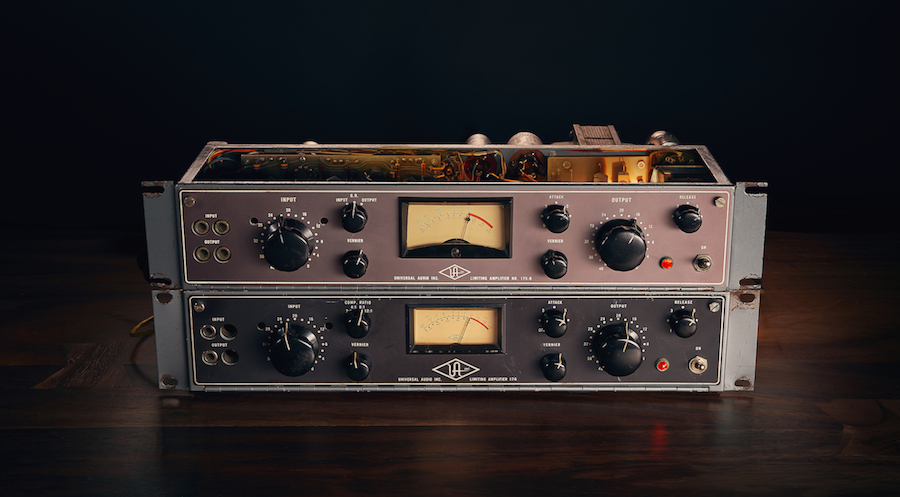
Much of “Pride” had already been recorded to that point – suddenly the moment had arrived to launch it to the next level. An AKG C12 mic was waiting for Bono, connected to the preamp of an SSL E Series console with an LA-2A compressor inserted across the buss output.

As the singer was approaching the mic in the live room, Killen stepped up to the proverbial plate in the control room, one hand at the ready on the remote for the Otari MTR 90 tape machine – the young engineer was poised to pop a punch-in that he’d never forget.

“He sang it in one take,” Killen says. “I remember punching it in on the tape machine: Every hair on my body stood up. It was such a spine-tingling moment. He said something so concisely, so perfectly, about MLK’s life.”

Lasting Impact

Killen had the extreme privilege that only an engineer, producer, and an artist’s bandmates can experience: to be there for the magic moments of a classic song’s studio recording, getting the very first listen of a sound that will reach millions of ears for years upon years.

And, of course, Killen wasn’t the only one whose spine tingled at the sound of “Pride (In the name of Love)”. Released as the lead single for The Unforgettable Fire in September 1984, it was the biggest hit yet for U2, breaking the top 5 in the U.K. and the Top 40 in the U.S. While its peak position on the Billboard Hot 100 was only #33, “Pride” was inexorably connected to turning U2 in what it is now – a very, very, very big rock group.

“Pride (In the Name of Love” was released in September, 1984.

“When the band got here in 1984,” says Killen, “there was a very positive reaction to that track. And that was a very special period, stemming from the fact that the band were trying to do something different from their previous three releases.

“On that tour, they went from playing small 2,500-seat theaters to 4,000-seat theaters. Six months after that, they were playing arenas, so U2 saw their own career take off from that album release, up to a different level. And when you see them play ‘Pride’ live, you realize that it’s bass, drums, guitars, vocals, and no embellishments. It just works very well — very powerful, and very emotional.”

Being There

When great leaders emerge, their power to inspire action and art is a gift uniquely theirs to give the world. Growing up in Ireland, it’s reasonable to expect that Kevin Killen had no inkling that the life of Martin Luther King would help fulfill the aspiration held by so many in the music industry – to have a role in the making of a timeless song.

“At the time that we work on them, most engineers hope for songs to become classics,” says Killen, whose GRAMMY-winning career continues on, with hit records for clients including Peter Gabriel, Elvis Costello, Kate Bush, Jewel, Bon Jovi, Shawn Colvin, Shakira, Sugarland, Bryan Ferry, and Duncan Sheik. “When you get to be a part of one of them, or a number of them, it becomes pivotal in your career. You’re forever associated with the project, and that can never be taken away from you. Whether your participation was large or small, you’re always connected to it.

“When I sit and listen to ‘Pride’,” he continues, “I can remember that pivotal sequence of events that occurred when the song went from being difficult to record, to being realized. You look around the room, and realize you’ve captured a very special moment. That moment stays with you forever.”

Engineers and producers who crave that sensation need no small amount of luck to be in that right place, at the right time. But Kevin Killen knows that audio pros who are focused on the music can also turn their quest for a classic into a self-fulfilling prophecy.

“Obviously, we all want to work with an artist that has something to say,” he points out. “Our job is to somehow set the stage so they can truly express themselves in that environment, without judgment, and convey what they’re trying to get out there. If you can be a part of that process, it can be incredibly rewarding not just for yourself, but for the artist.”

Sound Out

In a magic case of things coming full circle, one light that made MLK shine so brightly was that he enabled many millions to express who they truly were, as well.

Equipped with his voice and views – and often aided by a microphone – Martin Luther King, Jr. engineered a movement that unequivocally impacted the world. U2 were among the many who have heard his call. They went on to reflect that spirit forever in a song.

No matter what your walk of life, the chance to somehow have a hand in a timeless work — or even an Earth-changing attitude — may be closer than you think. You too may create something that qualifies. All of us should certainly try.

– David Weiss

Remote Recording Launches “Taxi” – Small Footprint Mobile Audio Vehicle

December 14, 2012 by  

Next time you see a London taxi on the streets, get ready to do a mic check.

That’s because it just may be the new Taxi from NYC-based mobile specialists Remote Recording. The company recently rolled out the Taxi, the newest addition to their fleet, by capturing a live perfomance by the band One Love at Lower East Side venue the Living Room.

All hail! The new Remote Recording Taxi has arrived.

Taxi Engineers Matt Scheiner and Fernando Lodiero were on hand to record and give tours of the Taxi, which was designed to feature full professional recording in a small package using Pro Tools HD, fiber optic mic pre interface (48 Ch.). Quick setup, minimal crew, small footprint, low travel cost, and access to Remote Recording’s experienced crew are all part of the package.

Personal drive-by tours of the Taxi are available – contact Karen Brinton, President of Remote Recording, at www.remoterecording.com.

Remote Recording Taxi features include:

  • ProTools HD/PC Backup
  • Riedel Rocknet Remote Controller
  • Fiber optic Mic Pre Interface (48 Ch.)
  • Quick Load In/Load Out
  • Minimal Crew
  • Small Footprint
  • Lower cost per mile
  • Standard audience and ambience microphones included
  • Non-invasive compared to fly pack system
  • Professional Post Production available via Remote Recording’s Silver Studio


The Sound Shop Mobile Recording Relocates to NYC

October 4, 2012 by  

While the studio scene has been seeing a healthy expansion in New York City this fall, the mobile audio space is also on the upswing.

Welcome Sound Shop Recording to NYC!

The latest development is the relocation of The Sound Shop Mobile Recording to Brooklyn.

Previously based in North Carolina, The Sound Shop is helmed by Bonnaroo Webcast veteran Todd Fitch, who brings a full slate of mobile recording and live HD webcasting services to the region.

An in-demand mobile recording company, The Sound Shop’s location recording and live broadcast client list includes Lollapalooza, Austin City Limits Festival, Coachella, Pitchfork Festival and the aforementioned Bonnaroo. Additional credits for The Sound Shop include Paul McCartney, Questlove, and Alabama Shakes.

The Sound Shop is self-described as a professionally experienced “Fly Pack” i.e. a smaller satellite recording studio that does not require a truck on-site. This mobile recording studio is coupled with their proprietary H.E.R. (High Engagement Release) encoding system, which allows him to efficiently carry high track count (48 ch.) recording capabilities, as well as HD encoding for live webcasts.

Born to roll — a Sound Shop mobile configuration.

“I see a lot of smaller two to eight microphone laptop recording systems, and then there are the guys in trucks that are recording and mixing broadcasts out of Madison Square Garden,” Fitch notes, on the timing of the move. “What I don’t see in New York right now  are mobile recording systems that integrate a track count that accommodates an entire band, but has a small enough physical footprint to nullify the overhead of bringing in a truck.  With The Sound Shop Mobile Recording, we bring the benefits of a broadcast truck, but make it financially feasible.”

The Sound Shop Mobile Recording available to Websites, bands, or venues for broadcast, live webcasting, album recording, and mixing.

“For your band, I can think of no better way to promote a new album than to webcast a live performance to a website like RollingStone.com,” Fitch adds. “For RollingStone.com, live webcasting a band performing new material once or twice a month, not only gets new fans to their site, it keeps the regulars coming back.

“Layoffs at traditional media outlets, like the recent events at Spin, are constant reminders that the distribution of media continues to shift online,” he continues. “What will continue to keep outlets profitable is dramatically different content than what the industry, and what our consumers are used to. High quality live content will be imperative for engaging viewers on any successful website.”


Rabbit Ears Audio (NYC) Launches “Mi-24 Hind Helicopter” Royalty-Free Sound FX Collection

May 5, 2012 by  

Rabbit Ears Audio(REA), Brooklyn’s boutique creator of royalty-free sound effects, is proving to be admirably prolific.

Elevate your sound designs with THIS baby, thanks to Brooklyn's Rabbit Ears Audio.

The latest release from REA founder Michael Raphael takes flight in the form of “Mi-24 Hind”, an intensive collection created by recording a Soviet-era helicopter gunship.

All files on the 6.69 GB collection are available at 24/96 and are embedded with Soundminer Metadata. “Mi-24” can be purchased directly from the REA website for $129.

Everyone who agrees that the sounds of a helicopter are uniquely compelling, don’t hesitate to check out the audio samples on the Website. Now, here’s more information, straight from REA:

“One Soviet-era helicopter, four recordists, and plenty of fuel brings you REA_010 Hind. The Mi-24 Hind is a Soviet gunship that was introduced in 1969 and saw action in Afghanistan and throughout the Cold War.

This collection features a series of pass-bys and maneuvers from a number of perspectives, as well as onboard recordings from the crew compartment of the aircraft. This library also offers meticulous recordings of all the switches and the electrical system of the aircraft. The internal workings of the machine are full of character and, at times, sound downright possessed.

Gear Used -  Schoeps MK4, Sennheiser MKH 40, MKH 60, Sennheiser 8020, 8040, and 8050.  Onboard: MKH 30/40. Sound Devices 7-Series Recorders. Interior Switches and Exterior Electrical Systems were recorded with a Schoeps MK4 + MK8 and a Sennheiser 8060. All tracked to Sound Devices 7-Series recorders.”

Psyched on Sonics! Live Jazz Album Recording in the NYC Subway

November 1, 2011 by  

Every month, Matt McCorkle of EqualSonics.com brings you a day in the life of a New York City recording engineer.

An album in motion tends to stay in motion.

THE MISSION: Capture a Jazz Band’s Subway Performance

NYC artist Jonathan Batiste and I had been working together for quite some time before embarking on this latest endeavor. Our most notable project thus far was holing up for a week at a beautiful Upper West Side apartment and recording on a 7-foot Steinway piano, while another was recording grand piano and double bass overdubs on the Rubin Museum’s downstairs stage.

Both Jonathan and I are very eager and open to trying new and unique recording methods, particularly those that capture the magic between performer and environment.

This leads us to this entry of “Psyched On Sonics:” Recording Jonathan Batiste and the Stay Human Band late night in the subterranean caverns of New York City’s subway system. The concept for this piece of work was to create an album to capture an experience and take the listener on a sonic adventure. If you’re not familiar with Jonathan and his work, be sure to visit his Web page for more info on his travels: his M.O. is for him and his “marching band” of tuba, tambourine, harmonabord, saxophone, electric guitar, and vocals is to play while staying constantly in motion around NYC.

All these recordings became part of the artist’s new album, “MY NY.” The Record Release Party is tonight, November 1st, 10:30-11:30 at Rockwood Music Hall (no cover). Come by!

THE EQUIPMENT:

The setup was very similar to the one used in my nature recordings. The microphones were a matched stereo set of AKG C414 XLS. I can’t stress enough how the stereo matched set allows for phenomenal-sounding stereo recording. The nine polar patterns on the new XLS models allow for great control over how tight or wide your source requires the stereo image to be.

The recording device was the Sound Devices 702 battery-powered digital recorder. The recording sample rate was set at 192 KHz with a 24bit depth resolution. The playback on the 702 at 192 KHz is simply stunning. Of course, this would later be down sampled, but for the time being I was in pure audio bliss.

The headphones were the same as I used in the nature recordings, the Audio Technica ATH-M50. An extremely comfy fit and, so far, the best isolation-to-sound-quality ratio I have come across in professional headphones.

THE STRATEGY:

The plan was to follow Jonathan Batiste and the Stay Human Band around on their routes performing for lucky, late night commuters. It was a run-and-gun operation. Hop on one car, record, get out, hop on another car, and repeat. Since this was a one-shot stereo recording with no overdubs, and “no fixing it in the mix,” it was important to mix acoustically by picking my spot in the car according to my position in relation to all of the instruments.

We also wanted to make sure to capture lots of commuters as they added the key element to these tracks – laughter, applause, and impromptu backing vocals. Once on the subway car I had to be quick to note my surroundings and place my microphone setup appropriately. I didn’t want to be moving around, as it would smear the stereo image and ultimately yield a strange recording.

THE BAND:

The band featured Jonathan on the melodica but boasted a number of other fabulous performers. It  consisted of a tuba (Ibanda Ruhumbika), saxophone (Eddie Barbash), electric guitar w/portable amp (RyLand Kelly), tambourine (Joe Saylor) and accordion (Sam Reider). I stayed as far away from the tambourine player as possible, since this instrument cut through the entire subway car! My plan was to stick close to the melodica while keeping the tuba and saxophone in close proximity. The electric guitar also needed to be in close range because the amp was unable to overpower most of the other instruments and subway noise.

THE ROUTE:

We planned to meet up at 11pm on a Friday night, record for a two-hour duration, and take various routes on the A and 1trains through Manhattan. It was a beautiful summer night and New York City was bursting with nightlife energy. This was a perfect time to capture not only the performance, but also the city’s buzz.

Subway relay!

Starting out at Columbus Circle we headed downtown and back uptown again. Everything was captured, from the band playing on the platform waiting for trains, getting on and off the subway cars, and of course while performing in the train. I was always recording because “you never know what you might be missing” in an unscripted situation and uncontrolled environment such as this!

Take note: When recording in the field you’re likely carrying expensive gear, so be mindful of who’s around you at all times! Keep a clean field kit to ensure your personal well-being and your gear’s safety. Making sure all cables are neatly tucked away, your headphones have a short lead as to not get tangled up in a door, rail, etc… The less gear you carry the better.

In the event you are presented with some sort of dangerous situation it’s best to be able to fold your tripod and get to safety. Having to deal with loose cables, tangled mic lines and fumbling around with your recorder could be potentially dangerous.

Remember, when you are out field recording, you have to maintain perspective: You look very, very weird walking around with a bag full of cables, headphones strapped to your head, and a gun-looking device with two ends. Be considerate of people and their space, and don’t get upset if people ask you to leave or ask you questions about what you’re doing.

GROUND LEVEL:

After 90 minutes of recording underground the group decided it would be nice to finish the night off recording some on ground level. Emerging off the Christopher Street stop on the downtown 1 train in the West Village, wandering around for a bit, they came upon a great spot at a busy intersection bustling with clubgoers, traffic, and passers by doubling as backup singers.

(On a side note – as the band was setting up and discussing it’s course of action I took it upon myself to capture some electric NYC nightlife ambience for my ever growing sound effects library!)

Setting up on the street corner, facing my microphones away from the street, they began to perform for the city. It was a great vibe and an even richer experience as musician friends of the band began to show up and hopped right in the performance!

BEDTIME:

After the band performed a whole set on the West Village street corner we broke down our equipment, shared some of the night’s best experiences and parted ways. The next step was to go through the entire night’s worth of recordings and compile Jonathan Batiste’s latest album “MY NY.”

See for yourself — the band in their underground element.


MIX:

Sorting through the many recordings from the evening we were listening for recordings that showcased the experience of the night. We wanted to provide the listener with a sonic journey through New York City on that beautiful summer eve. The band had been cycling through the same set of 11 songs throughout the night so we had multiple takes in various environments to choose from to help curate the listeners’ experience.

One pleasant surprise upon playback was the amazing ambience on the subway car. The full cars are a bit dead sounding, but the vibe is just right for a live recording. The intimate sound of the crowd getting into the performance, the screeching of the subway cars blazing down the track and of course the B-roll of New Yorkers comments and sounds as they pass by.

Once we had the recordings that we wanted to use for the album we began to mix within Pro Tools. Now this was a different mixing than I usually encounter, since the tracks were to remain mostly raw and untouched, but we were mixing the individual song tracks together with one another.

We wanted the listener to have a seamless blend between each track, to create the experience. Mixing only the stereo two-track recordings, I mostly used filters to eliminate the extreme low-end rumbles of the subway. No noise reduction was used, but some slight EQ was used to tame the tuba and some high-end.

Interestingly, I ended up using a Lo-Fi plugin on some of the tracks to dirty up the sound with some slight distortion. I found that some of the recordings were TOO clean and had too much clarity, you would normally not experience listening to a full band in a subway car with that clarity.

By clever use of fades and track placement Jonathan and I were able to make the album play like initially envisioned. For all of the songs I would layer the end of one song on top of another songs beginning in Pro Tools. Then I would play with long cross fades swooping from one song into another seamlessly.

After that, I printed the whole album to one stereo track. On this new stereo track I would go in and snip certain parts between songs — these snips would be the start of each track.

END:

This was truly a unique and incredible recording experience. It proved to be a very solid challenge in the world of field recordings. It was a great treat to be able to record these fabulous musicians. If you ever see them on the subway you’ll be greeted with a pleasant sonic treat.

The MY NY Record Release Party is tonight, November 1st, 10:30-11:30 at Rockwood Music Hall (no cover).

As the owner and operator of his own mobile recording studio, Matt McCorkle of EqualSonics.com is capable of bringing professional audio to anyone, anywhere, anytime. His specialties involve acoustic instrumental recordings, vocal productions, live tracking sessions, sound design, electronic music production and mixing. Whether in the studio or out in the field, Matt’s goal is simple: To create new music and sounds with passionate artists. To contact Matt, please visit EqualSonics.com.


Roland Announces R-26 Six-Channel Portable Field Recorder

September 12, 2011 by  

Roland has announced a new entry into the competitive portable field recorder sector, with its new R-26.

The Roland R-26 six-channel field recorder will be available in mid-October.

Scheduled for release in mid-October with an MSRP of $599, the R-26 provides six channels of recording for mobile audio applications including location sound design, event production, legal court regarding, event videography, and musical performances.

Highlight features of the R-26 include:

6-Channels of Recording with Built-in Mics
The R-26 has both omnidirectional and XY stereo mic types built-in, plus two XLR / TRS combo jack with phantom power to connect high quality external mic or line-level devices, plus a stereo-mini jack for a plug-in powered mic providing numerous recording options.

The R-26 is equipped with Roland’s proprietary IARC (Isolated Adaptive Recording Circuit) on the inputs for the built-in mics and external inputs.  This analog circuit is completely isolated from the digital circuitry and has its own power supply, to help reduce digital noise and achieve clear sound.

Touch Panel Control
The R-26′s large touch screen provides detailed level metering and convenient fingertip control over many functions, and is equipped with a high-luminance backlight for perfect visibility in any situation. Hardware controls are ergonomically organized and clearly labeled, with large input level knobs for precise adjustments and dedicated buttons for often-used functions.

Standard Tripod Mount Threading
With the threaded rear-panel mount, the R-26 can be mounted on any standard tripod stand, which provides a clean sound away from table vibration or handling noise.

Standard AA batteries or the included AC adapter can power the R-26. Standard package components include the R-26, an SD Card, a windscreen, Cakewalk SONAR LE (for Windows), USB cable and AC power adapter.

Psyched on Sonics: Remote Recording for a Sound Effects and Sample Library

July 24, 2011 by  

Every month, Matt McCorkle of EqualSonics.com brings you a day in the life of a New York City recording engineer.

Wisconsin: Home of the original floated floor.

THE MISSION: Build A Sound Effects and Sample Library

For this entry, I’ll be taking you on a journey far away from any type of man-made structure, much less a recording studio. We’ll be venturing into the deep wilderness of the north woods of Wisconsin. This adventure marks the beginning of a massive sound effects and sample library that I’m building.

This library will include everything from environmental ambience recordings, thunderstorms, engine noises, dishwashers cycling, kick drums, trumpet licks and pretty much anything I encounter with my equipment. It will be a sonic playground for music and sound design creatives alike, and it will be royalty-free. All of the samples will be captured at 192 KHz Sample Rate and 24 Bit Depth to try and ensure future-proofing.

THE LOCATION

The north woods of Wisconsin are vast temperate forests surrounded by hundreds of miles of wilderness. This was the perfect place to gather sounds for the initial chapter of my library: environmental. I was here to look for forest sounds, rainstorms, animals, streams and any type of environmental ambience I could capture.

THE EQUIPMENT

I often utilize the saying “less is more” and it couldn’t have a better guide than in this scenario. I was only making day trips or night trips before I returned to my temporary headquarters, so camping equipment was unnecessary. I needed to return to civilization to charge batteries, and dump/backup captured material. Traveling light was essential.

Choose your mobile recording weapon: the AKG C414 XLS.

The Microphones
The microphones are a stereo matched pair of AKG C414 XLS. These are excellent microphones and two of them together provide very defined spatial details. The new XLS models allow 9 polar patterns. In one such pattern, which I found extremely clever, you can place the microphone in omni and wide cardioids. It allows the microphone to operate like an omni but it places more emphasis on the front of the pickup pattern than the back. This was perfect for what was needed.

My intention was to capture an XY stereo image to place the listener in the natural setting. However, I wanted sound cues from behind the microphone to still be heard, but not as much as the ones coming from the front. The recordings must put you in the forest and that’s exactly what these microphones allowed me to do.

The Recorder
I use a Sound Devices 702 battery-powered digital recorder for field recording. This is one of the most powerful, feature-packed digital recorders. It employs a file-based recording system so you can easily arrange your recordings on the go. The pre-amps and A/D conversions are top notch, yielding crystal clear audio!

The Headphones
My choice of headphones was the Audio Technica ATH-M50. These headphones are great and fit comfortably. However, more importantly for this situation, they provide excellent isolation. This is highly desirable when recording outside, because you need to make sure that you are hearing just what the microphones are hearing.

I packed my recording equipment, cables, snacks and an 8-inch military issued combat knife. The knife, thankfully, was never used.

DISTURBANCE

During some testing recording in the backyard of my temporary headquarters I realized the stock windscreens for the AKG would not make the cut for the fieldwork ahead. I needed a “buffer zone” that would allow air to flow freely around the microphone, but provide a strong shield from the wind. Otherwise, my recordings would have been engulfed by the wind.

I created a wire frame out of chicken wire that would be attached to the microphones’ shock mount. This frame allowed an inch of “windless air” between the shield and the microphone, providing the required buffer zone. Once I had the chicken wire cut and formed to fit the shock mount, I began searching for fabric to wrap around the wire frame.

5 steps to the perfect mobile audio windscreen.

To test the various fabrics I put them in front of the microphones and blew lightly into the mics, listening to which fabric minimized the harsh, moving air. I also tested the fabrics on my voice and a few other subjects listening to the high frequency attenuation. I found a perfect balance of great wind protection and minimal high frequency attenuation. Surprisingly, it was a fabric that landscapers use to put under the bed of a garden to prevent weeds from growing — it’s “Economy Weed Control Landscape Fabric” from the company Yardworks (NOTE: Be sure get the variety that only lasts 5 years. The longer-lasting kind is thicker and not usable for this application.)

To construct the windscreen: I wrapped the fabric around the wire frame, and stabilized it by weaving the wire in and out of the fabric. Once the shield was in place I put the microphones in front of a box fan in order to test out my contraption. I blasted the fan at various speeds directed at the microphones. Not only did it rid the recording of the harsh moving air, I could clearly hear the motor inside the box fan!

ACTION

Marshland
My first venture was a swampy, marshland and my focus was bullfrogs. Bullfrogs are loud and with a whole marsh full I knew the recording would be extremely rich. I loaded up my gear and went out into the marsh seeking a good spot to setup. I walked around listening for the most action, once I found my spot I began to setup.

I opened the tripod, fixed the stereo microphones to the top, plugged them in, turned on the recorder and set my levels. Setting levels for this type of work can be tricky… you never know exactly what’s going to happen. I set them relatively low with my pre-amp gain anywhere from 25 dB to 45 dB. This allows for great dynamic range flexibility: For example, if a little bird were to come chirp next to my microphones, I would still have adequate headroom without fear of clipping the internal A/D converters. Most of the recorded material was hitting peaks around -40 dBFS to -15 dBFS in the digital domain.

I was able to capture some great bullfrog belches and to my surprise was greeted by some wrens, blue jays, herons, and some buzzing horseflies. The next trip was venturing deep into a dense forested area.

I have included a little snippet of this and each subsequent scenario in 44.1 KHz /16 Bit Mp3 format.

Marshland:

The Marsh

Dense Forest
Upon arrival at the forests edge I tested my equipment quickly then submerged myself into the thickness of the forest. I began listening to my surroundings hearing birds, such as the distinctive wren, the rustling of leaves, buzzing insects and crickets. I kept moving until I reached a point where I felt there was enough commotion to make a great recording. I turned on my equipment and started listening to the microphones through the headphones. I rotated the stereo pair in a 360-degree circle honing in on the direction in which to point the microphones.

I setup the microphones 6-7 ft off the ground and recorded for a minimum of 15 minutes at each location throughout the forest. This ensured that I would have plenty of material when it came time to editing.

Dense Forest:

Dense Night Time Forest

Thunder & Rain
Periodically checking the local radar seeking out thunderstorms and to my luck I was provided with a 5 hour-long boomer! I setup my microphones under a large canopy of trees, to provide my microphones cover from the rain. Setting my Pre-amp levels low. The rain would be quiet, but the thunder would be loud and I had to be prepared. Nothing would be worse than getting an amazing convergence of clouds only to have my recording distort.

Anticipating the storm, I was setup and ready. I set my equipment to record and waited. The results were stunning.

Thunderstorm:

ThunderStorm

Man-Made
Before leaving, I wanted to capture a few trains passing by intersections in the small towns outside the forests. It is here where the trains sound their extremely loud horns. I set out into the dead of night setting up the microphones at a train crossing. Once again I must be cautious how I set my levels: I was 8 ft in front of the tracks. Things were going to get very loud, very quickly. I settled on 18 dB of pre-amp gain.

Train passing:

Train


BREAKING CAMP

This was an exciting adventure. Combining my love of recording and nature, it provided a challenge that isn’t offered in the day to day of a recording studio. The world is full of sounds. Perhaps you’ll notice how certain sounds can trigger memories that may have been long forgotten!

As the owner and operator of his own mobile recording studio, Matt McCorkle of EqualSonics.com is capable of bringing professional audio to anyone, anywhere, anytime. His specialties involve acoustic instrumental recordings, vocal productions, live tracking sessions, sound design, electronic music production and mixing. Whether in the studio or out in the field, Matt’s goal is simple: To create new music and sounds with passionate artists. To contact Matt, please visit EqualSonics.com.

A Blue Mic For Your iPhone

January 4, 2011 by  

Blue Microphones has put out the second generation of Mikey ($99 list), a stereo condenser mic built solely for the iPod and iPhone.

Mikey turns your iPod into a proper mobile recording device.

With the ability to record 44.1kHz/16bit audio to your Apple device with its dual cardioid condenser capsules, Mikey is a high-quality device for field recording, interviews, lectures, or getting some song ideas recorded with minimal fuss.

The newest generation features new circuitry for better recording quality, a mini USB port that allows you to charge your iPod during recording, and a 3.5mm stereo input jack which allows you to record audio from another device.

Mikey rotates 230 degrees and has seven different locking positions, as well as a three-way sensitivity switch to select the appropriate gain setting for your source.

While the Mikey can be used without additional software, Blue has a free recording app called BlueFiRe, which allows you to record at full CD quality and functions with the iPod rightside up or upside down, depending on how the mic is positioned.

Paired with Primacoustic’s Telepad ($29 street, pictured below), Blue’s iPod mic makes it easy to sketch out some audio ideas with minimal setup required. While Mikey is only compatible with iPod and iPhone 3G and earlier, Blue is feverishly working for functionality with the newest models of Apple products, including functionality with the iPad. For multiple audio clips and examples click here.

-Mike Bauer

This piece originally ran on Delicious Audio, The Deli Magazine’s pro audio blog.

E-MU Begins Shipping 0204 USB Digital Audio Interface

December 15, 2010 by  

E-MU Systems announced the release of their new 0204 USB, 24-bit digital audio interface for the Macintosh and PC. The 0204 USB is the successor to E-MU’s 0202 USB 2.0, adding another pair of 24-bit outputs and improving the audio specifications.

E-MU has released the 0204 USB digital audio interface.

The headphone outputs are of the same high quality as the main outputs and can be used as two completely separate channels for a total of four.

The E-MU 0204 USB (MSRP: $129.99) is compatible with Macintosh OS X, Windows 7/x64, Windows Vista/x64, Windows XP.

– Premium 24-bit/192kHz A/D and D/A converters deliver unmatched USB audio fidelity (A/D: 113dB SNR, D/A: 117dB SNR, THD+N = .0008%).

– Compatible with all popular audio/sequencer applications

– ASIO2 and WDM ultra-low latency USB drivers offer accurate timing and playback of your recorded audio and software instruments

– Record and playback for a multitude of sample rates: 44.1k, 48k, 88.2k, 96k, 176.4k, 192kHz

– Headphone output can be used as separate stereo output with analog volume control

–Studio-grade headphone amplifier

– Hardware zero-latency direct monitoring (mono/stereo) allows you to record and overdub with no delay

Acoustica Mixcraft LE 4 is also included, providing musicians with all the tools needed to record and produce music.

Lavry Engineering Debuts AD11 A to D Converter

November 2, 2010 by  

Lavry Engineering has introduced their latest addition to the LavryBlack line, the AD11 stereo A to D converter. The unit offers USB connectivity, which makes it ideal for portable recording systems. Other key features of the AD11 include:

Lavry Engineering has announced the LavryBlack AD11.

– built-in microphone preamplifiers with phantom power
– large wide-range LED meters
– Lavry’s exclusive Digital Tape Saturation Emulation (“Soft Saturation”)

All settings on the AD11, which is designed to deliver substantial value at an affordable price, are controllable from its front panel using a system similar to that of the companion D to A converter- the DA11.

According to Lavry, the AD11’s converter and microphone preamplifier performance exceeds other manufacturer’s stand-alone units, combining musicality with functionality. The USB output is available in parallel with both XLR and RCA AES/SPDIF digital audio outputs, meaning that more than one recording or monitoring device can be fed directly from the AD converter. The MicPre function andphantom power are selectable on each channel, as well as the Soft Saturation and +4/-10 level functions.

Like the previous LavryBlack model AD10, the AD11 has “XLR-TRS combo jacks” for the analog inputs. When a balanced or unbalanced ¼” plug is inserted, 12 dB’s of fixed gain is automatically added to the front panel adjustable gain, to boost “-10” consumer level signals to “+4” professional level. Front panel line level input gain adjustment is available for each channel in 12 precise one dB steps. Additional gain in the range of 20 to 65 dB’s is provided for balanced low-impedance sources (typically microphone).

As a result, it is possible to record the “direct” signal from a guitar effects unit or keyboard at the same time as a vocal mic, using only the AD11 and a laptop. In addition to “dual monaural” recording, extremely precise matching between channels makes the AD11 equally well suited to high quality stereo mastering applications or “true” stereo recording.

LavryBlack AD11 features also include:

-    Recording at 44.1, 48, 88.2 or 96 kHz
-    Super-stable internal clock
-    External clocking via word clock or AES sync
-    BNC Word Clock output for synchronizing other gear to the AD11
-    Digital output format selectable between AES/EBU and IEC (SPDIF)
-    Peak hold selectable on large wide range LED meters
-    Soft Saturation for peak level control without time constants (allows signal to be compressed or limited without undesirable     interaction due to different attack and release times)
-    Optional Rack Mount Kit (can be used to mount any combination of two LavryBlack units)

Next Page »