Comedy Central Records: Serious Lessons from a Label That Means Business
November 27, 2011 by David Weiss
/* Filed under Music Biz */
TRIBECA, MANHATTAN: Quick quiz! Which NYC record label
• Has won three GRAMMY awards and been nominated for five more in the last five years,
• Has had 11 albums by five different artists certified RIAA Platinum or Gold since 2002,
• Signs its artists based on their talent, not the size of their YouTube following?
If you guessed Epic Records, well, you may be right — frankly, we haven’t done that much research for this article. What we’re actually talking about here is Comedy Central Records (CCR), the label arm of the Viacom/MTV Networks channel of the same name. And it turns out that by studying the evolution of this indie within a mega-major communications company, you can get a serious tutorial on record business success.
Before CCR’s Founder/Vice President in Charge Jack Vaughn, became a magnate responsible for signing elite funnypeeps like Mitch Hedberg, Daniel Tosh, Jim Gaffigan, Dane Cook, Lewis Black, Demetri Martin, Bo Burnham, Aziz Ansari, and Nick Swardson, he was overseeing another indie-label-on-the-rise story – one that quickly fell flat as a pancake. But he was blessed with resiliency, drive, and a genuine talent for niche marketing, and he would need all three to bring CCR into existence, and then deliver on the big promises he made to Viacom.
Run – don’t walk – to the sharp insights available as Vaughn deconstructs CCR’s rise, its adaptation from a physical to a digital market, what they really look for in an artist recording, the shockingly simply A&R philosophy employed by him and CCR Label Manager Ian Stearns, why specializing is a dual-edge sword, and more.
Comedy Central Records has an interesting story of how it came into being. How did you get the idea to start the label in the first place?
In the mid-to-late 1990s, I was running a label called Slimstyle that was the independent label of the modern swing movement. In many respects, swing at the time was a reaction to grunge and the tired alternative rock scene. It was a cool underground movement, with a distinct dance style and dress code and great music, and it happened to be so good that it was irresistible to the press.
The media got ahold of it and it exploded, then went supernova, and burned out in under three years. In fact, by the time it went mainstream, the burnout took less than 18 months. In mid-1999, the phone stopped ringing and we couldn’t sell another swing record. For the next couple of years I was at loose ends and couldn’t figure out what to do next.
I had been a huge fan of comedy for years, and as I was growing up, amassed a large collection of comedy albums that I played over and over. I had also been a fan of Comedy Central and had watched it basically since its inception. The clincher, though, was around 1998 when I saw a clip of Mitch Hedberg doing a few minutes on television. I was blown away and tracked down his self-released CD, Strategic Grill Locations.
After memorizing it, it hit me that it was crazy that something this good wasn’t being properly released and marketed. That was when the idea crystallized that it was time to start a comedy label, and instead of trying to raise funding for it, the obvious home would be Comedy Central.
That is what we call an A HA moment! So how did you get Comedy Central on board to back it from there?
It may seem like a no-brainer, but back at the time — 2001 — it was a little out there. Every so often you’d see a comedy album released by a big star, but there were almost no small-to-mid-level comics releasing CDs, there was no comedy section in record stores, and comedy albums really hadn’t sold since the late seventies or early eighties.
I had a friend who knew how to get in touch with the head of Comedy Central and I flew out and pitched them the idea for the label. They had already been in talks to license the Comedy Central brand to majors, but my take on it was to do it all internally- signing artists, producing the albums and handling all aspects of the label in-house. It was a tenuous uphill battle, and I flew to New York with improvements to the plan for about nine months until it was to a point where they decided to give it a shot.
The nice part about having so little competition was that the list of possible comics to sign was almost limitless. In the first year I signed Dave Attell, Jim Breuer, Lewis Black, Dane Cook, Bobcat Goldthawait, and Mitch Hedberg. We also released the audio from a new show on the network called “Crank Yankers”.
The downside was convincing artists that doing a comedy record was a good idea, convincing record stores to take them, and reintroducing the public to the idea of buying comedy records. To this day most people don’t walk into record stores looking for comedy albums. In fairness, most people don’t walk into record stores anymore period, but you get the point.
That sounds like a good way to start. As the label opened for business, what parts of your original business plan were confirmed? And on the flipside, what were the surprises that you discovered in the first few years?
I recently took a look back at the old plan I first pitched to Comedy Central and shockingly, it was about 80% on target, from the artists signed to the profit margins. The sales projections that I had which were largely blind guesswork and in my mind even a little ambitious, but they turned out to be way below where we netted out.
As far as surprises, there weren’t too many. Some artists I thought would do better didn’t and some I thought would take a very long time to develop turned into stars in relatively short order.
The really interesting part was how the industry as a whole changed from the start until now. For example, we did exactly zero digital sales in the beginning (2002), and today, I’d estimate we’re 85% digital. There’s a good chance we won’t be manufacturing physical CDs two years from now.
On that note, wow would you describe Comedy Central Records today? It is it an indie label? A major label? Or is it a hybrid of both? What are the advantages and disadvantages of having that mixed status?
It really defies description, because it’s not set up as a traditional label. In many ways it’s a perfect hybrid — backed by the marketing and financing, not to mention prestige, of Comedy Central, and the top-notch distribution of ADA, but still small enough to have a personal touch and everyone here is doing it for the love of comedy.

CCR artist Dane Cook's "Retaliation" debuted at #4 on the Billboard charts, and has sold 650,000 copies since 2005.
For example, unlike majors there is no constantly shifting bureaucracy and executive team- no one gets orphaned by a fired regime. And if any artist, manager, or agent has a problem that needs resolving or has an idea or a need, they can get me right on the phone and it gets taken care of if there’s a viable solution.
The artists get advertising on the network and robust off-network marketing, we use the best royalty accounting firm in the business to make sure artist royalties are paid accurately, and hopefully there is none of the same terror and frustration having to deal with the machinations of a major.
Plus, our catalog generates a good amount of revenue so we don’t have to desperately try to grasp for the next immediate hit and can focus on development and what we think is funny — even if the artist hasn’t built up a big fan base yet. And in the Internet age, quality tends to get found.
It seems like there are many interesting comparisons of running a comedy label, as opposed to a music label. What are the most striking ways in which a comedy label operates differently from a music label? In what ways are they the same?
One of the major drawbacks is that we can’t license our audio to TV, film, commercials, video games, etc… because it’s by and large spoken word standup as opposed to music. Another is that our sales are limited to English speakers.
But there are some big positives. With spoken word standup, people tend to buy the whole album as opposed to just singles, which is a big problem with music. Of course there are those out there who just want Jim Gaffigan’s “Hot Pockets” joke, but for the most part, the comedy album is a piece of whole cloth.
Another plus is that, as opposed to musical acts who tend to be comprised of numerous players and prone to breaking up, comedy is almost always just one person with no equipment who just tends to get more famous. With Slimstyle, the costs and logistics of getting an eight-to-ten piece swing band on a bus and touring were almost insurmountable.
For those who just want Jim Gaffigan’s “Hot Pockets” joke — instant gratification:
Who makes it on to CCR? When it comes to your A&R process, how do you discover talent?
We have an absolutely amazing talent department at Comedy Central who identify talent for the network early on. The normal process is that comics with a strong ten minutes of material perform on our TV shows like “Live At Gotham” which will showcase a few up-and-coming acts every episode.
Then, comics who have at least a strong half hour of material are invited to perform on their own “Comedy Central Presents” special. This is the point where the label typically becomes interested for two reasons- one, because the comics are close to or at the point at which they have an album’s worth of material, and two, because we can now advertise the comedian’s CD every time their “CC Presents” airs on the network.
This is how we deal with a lot of emerging talent, but there are also other ways we work. For example, I often sign established acts who want to work more closely with the label or network, or are leaving another label. CCR also brings talent to the network- Bo Burnham is a good example of this. He got his start producing and starring in web videos that became a sensation, we released those videos commercially in a DVD accompanying his debut album and he ended up doing a “CC Presents” and hour special (that also ended up as a DVD) with Comedy Central.
Ultimately, there are basically two criteria for who we sign to the label:
1. You have to be really funny.
2. You have to have a distinctive voice or point of view.
That’s it. Things like having a strong following or being on TV or in movies is great, but those two criteria are the main things we look for.
Now that you’ve been doing this for a while, what comedians have you found are a good fit for CCR, and on the other hand, who isn’t?
Again, really funny people with distinctive voices or points of view are the best fit. I realize that sounds glib, but that’s the real answer. This is what we look for. Ideally, we try to deal with talent who have or want to have a relationship with the network as a whole.
Are there things that CCR can do for your artists careers that a typical music label can’t? What kind of comedians stand to most benefit from working with CCR?
I could go on for a while on this one, and a lot of it was outlined earlier, but one of the major factors is that we can advertise the records at little to no cost on the network- typically running lower third ads contextually during the comedian’s programming- and promoting the releases on comedycentral.com.
This is, of course, the perfect audience to be in front of, and also represents tens of thousands of dollars worth of promotion that no one else can come close to duplicating. That’s in addition to the significant off-network campaigns we do.
The bottom line is that we make, sell, and promote nothing but comedy records 24/7/365 which gives us and our artists significant obvious advantages.
When it comes to production and distribution of the records, how do you work? Do you record only live shows? Record in studios? And are your costs for production high or low?
The vast majority of our records are spoken word standup, which necessitates recording in a live setting. We will typically send out a mobile recording engineer to the venue (typically a comedy club), and record a weekend’s worth of shows. Usually there is one standout show of the bunch that we will use as the body of the album, then cut in additional material or jokes that worked better in the other sets.
One of the quirks of this genre is that the audience tends to be the most important part of the recording, and how the audience reacts can drastically change how the jokes are perceived by the listener. Jokes seem funnier the harder people are laughing at them — this is the reason sitcoms customarily use laugh tracks — which may seem obvious, but you’d be surprised just how important it is.
By the time of the album recording, the comic has gotten so good at doing the material that the differences in delivery among the sets are usually minimal. But the difference between an intelligent, raucous audience in a packed room, and a sober one in a half-empty club is staggering. We’ll re-record shows if the audience isn’t good enough.
Our costs of recording, as one might imagine, aren’t high. We can spend a lot in editing and post, making sure everything is just right, and we put a lot into the artwork. But in the end, we like keeping the production costs low, because those costs are recoupable, and as such the artists start seeing royalties sooner. It also allows us to put more money into marketing which benefits everyone.
Also on the business tip, how is your sector changing, and how do you expect it to continue to evolve? As record company executives how do you keep pace with the changing business environment?
The biggest change is the switch to digital — both from a distribution and marketing perspective. There are always new platforms cropping up that sell or stream audio, and it’s a challenge to keep up with it all, but it’s exciting to find these new ways to get our albums out, and we’re always up to experiment.
On the marketing side, we now have to reevaluate the ways we market every three or four months as the different outlets change and get more sophisticated. A lot of the time we have to make money on smaller numbers of units, so marketing effectiveness is key.
I expect to see a complete shift to digital albums very shortly with its requisite benefits and pitfalls. On the one hand, we will no longer have to manufacture, warehouse, ship, take returns on, and destroy physical product, but the downside is that piracy is becoming more prevalent and increasingly difficult to stop. Luckily, people are still willing to support comedy and pay for good content.
Let us peer inside your head: Are there music business mentors that have been particularly inspirational to you?
I grew up with the Washington, DC punk rock scene of the late eighties and early nineties, and Dischord Records and its bands were hugely inspirational to how I do business in terms of ethics and production value.
And Sub Pop, Moon Records, and all of the other genre-focused labels highlighted the need to specialize in one type of music or audio. There are a number of benefits to specialization in that you can really connect with your audience, and it makes marketing easier and more effective when you don’t have to reinvent the wheel every time you put out an album of a different genre by figuring out how best to get to the target listeners. Ideally, we want someone who will buy every album on the label, just by nature of it being a CCR release- because they know it will be good.
There are cautionary tales in these labels as well, though, because if you are the main label of a popular genre, the tendency is to want to put out records by everyone in that genre, focusing on quantity over quality, which inevitably leads to a burnout and dropoff in interest by the audience.
I see CCR as, among other things, a comedy filter. Recording and distributing comedy albums is relatively inexpensive and easy — they’re released and disappear all the time — but great records with strong marketing campaigns behind them are much fewer and farther between. We are acutely aware of this, and as such sign and release a limited number of artists and albums every year in order to try to maintain that quality.
It looks like you’re really in a groove. Lastly we ask, what makes NYC a seriously good place for Comedy Central Records to run its business?
For the most part, the comedy industry is in New York City and Los Angeles. We love the city and its amazing comedy scene – from Upright Citizens Brigade and the small alternative rooms to Saturday Night Live. The comedy heart beats strongly here.
– David Weiss
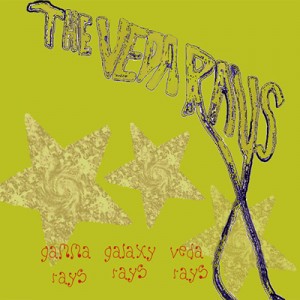
Mixing in the Face of Danger: The Veda Rays Release “Gamma Rays Galaxy Rays Veda Rays”
September 25, 2011 by David Weiss
/* Filed under Deli NYC Feed, NYC Spotlight */
WILLIAMSBURG, BROOKLYN: You don’t have to know all the heartache that went into the making of the album Gamma Rays Galaxy Rays Veda Rays to appreciate it. But there’s something about understanding the bitter joy that pulses through one of 2011’s most intoxicating rock albums that makes it all the sweeter.
The debut full-length from Brooklyn four-piece The Veda Rays, Gamma Rays is the artful application of music as a saving source. For the band — guitarist/vocalist/keys James Stark; bassist Tyson Reed Frawley; guitar/keys/vox Jimmy Jenkins; and drummer Jason Gates (aka Jason Marcucci) – the intense production events of the album were just one more reflection of the urgent songs that it comprises.
You can hear it in the frantic guitars and time-shifting howl of “Our Ford”, the delicious tension and release of “Long May She Roll”, and the haunting psychedelia of “This Time Tomorrow”. Sweeping six strings, emotional vocals, and driving drums are everywhere, courtesy of a band determined to deliver on the promise of its dense melodies.
With everything from immediate family suicide and South Florida black magick practitioners fueling their dark sides, The Veda Rays went to equally painful lengths to complete Gamma Rays. With a highly accomplished producer/mixer in residence via drummer Gates/Marcucci (White Stripes, Dean & Britta), the band raced to complete guerilla tracking and mixing sessions, frantically completed as Marcucci’s studio moved amidst the massive blizzards of late winter, 2010.
Released last week, Gamma Rays Galaxy Rays Veda Rays is arresting from the first millimoment. Here, Stark and Gates went deep – truly deep – in their recounting of the record that brought them all back from the brink.
Q: Your bio says: “The Veda Rays began in late 2008 when Stark and Gates, who had been hatching plans, playing gigs and making 4-track recordings since grade school, resumed their collaboration via long-distance after a several year span of inactivity.” What was the creative spark and mutual inspiration that was rediscovered when you guys got back together?
James: It was not really so much rediscovered as it was re-enlivened — from a cryogenically frozen dormancy. But with us I think it has always been something very natural and complementary, this most likely being the case due to us having grown up playing together, making 4-track demos and collaborating on this whole vision for so long and through such formative phases.
The period of inactivity was simply due to a case of “life happening”, as they say. And the way we came back ‘round to working together was largely due to the same. There is a lot of back-story here… Suffice to say, the gist of it involved heavy drug use, obsession, suicide, accidental death and the westernmost point of the Bermuda Triangle. Seriously.
For me, I feel like I had finally whittled out an authentic voice. My own particular brand of “distilled spirits”. What I mean to say is that the “me” in my personal hodge podge of influences finally asserted itself and I started recognizing something that went beyond mere pastiche.
I guess some people are gifted — or maybe seriously deluded — but for me it took a long time to feel like what I was doing was legitimate. So, just recognizing and being comfortable with a bona fide identity was a great boon. That is the plainest way I can explain how I feel I had evolved as an artist/singer/songwriter during our hiatus.
Jason: I’m not sure either of us were ever inactive. I’m a real busy body, crazy energy kind of person when it comes to working on music — we both are really. We were just separate for a bit, after playing pretty much daily, growing up and into musicians together. When we were unable to work together, we both kept going. I know Jim was working his craft as a songwriter and he put together some great bands. I kept busy playing and wound up doing a great deal of engineering and mixing here in NYC.
In 2009 there was a period that I was very busy. I had just finished mixing a few tracks for Dean & Britta, which would later appear on their Warhol record. I was also producing two records at the same time, both completely opposite ends of the spectrum in every musical and vibe type sense. One was Bloody Panda’s Summon and the other Scott Hardkiss’s Technicolor Dreamer. At that time it hit me, “Fuck, I really need to start doing my own thing!”
I reached out to Jim. It didn’t take long for us to discuss how we could work on a project together. That was probably the first seed of The Veda Rays.
Hear the single “Our Ford” from Gamma Rays Galaxy Rays Veda Rays right here:
Audio clip: Adobe Flash Player (version 9 or above) is required to play this audio clip. Download the latest version here. You also need to have JavaScript enabled in your browser.
Q: Jason, what got you into production and the NYC studio scene?”
We had been living down in South Florida working on music, we had our own little 4-track studio and we were constantly recording. Jim had some troubles and all hell really started breaking loose down there.
I took off to NYC to have a little break. That was supposed to be a three-day trip, but a cousin of mine convinced me to stay a few extra days and see some family. I spent most of my time bumming around the village, and after a week I met up with Judah Bauer (Jon Spencer Blues Explosion, Cat Power). We became friendly, started jamming together, and I wound up making a record with him in his apartment which was absolutely crammed with gear. At first he had an Otari MX 5050, moved on to a Tascam 1” 16-track, and eventually we had a Studer A80 16-track 2-inch, all in this tiny studio apartment.
I played drums on a few tracks and did most of the engineering. He had a bunch of people coming through to play on tracks — the late Robert Quine (legendary guitarist of Richard Hell & The Voidoids), Matt Verta-Ray, and many others.
From there I worked at a bunch of studios working my way up the ranks. I got to briefly work at and witness Greene Street just before they shut down. I worked at Excello in Williamsburg for years, and really made a home at Dubway. I started doing live sound a bit around the city and got very into remote recording. I think I’ve recorded/mixed over 300 bands for MTV and all the while working on sessions in the studio. Anyway I think I just really got lucky and fell into it. I also just went nuts, I mean, there were a few years straight that I was in a control room probably 350-360 days a year!
Q: Are the Veda Rays part of something new, something old, or something in between? Where does the music of this band sit in the time continuum?
James: Something in between would probably be most accurate. We are endeavoring to help evolve a particular current, and to do this well I believe it must be done in an attitude of reasonable reverence for and acknowledgement of what has come before. I would most optimistically state that we, in fact, aspire toward sitting at the “zero point” of the space-time continuum!
In plainer language, we are first and foremost about the songs. And the songs are set in the context of modern rock and roll music which is strongly informed by post-punk, shoegaze, dark psych, electro and many other micro-genres past and present. We try to have it never be boring, trite, redundant or otherwise sucky in any way. We want to be one of the ones trying to push the collective envelope. As in, how experimental can a pop song be and how “pop” can modern experimental rock get? And note: when I say “pop” I most definitely, in no uncertain terms, do NOT mean anything resembling modern mainstream drivel!
Jason:The music is rather cinematic. I would feel good if this was perceived as being here and now, traveling future-forward with some connections to the past.
Q: The new album is a real journey. To you, what is the sound and feeling of this trip?
James: For me, the intention of this record was to sort of provide a context and framework for future output. I feel like it is an attempt to claim certain lands, cultivating the fields for what will grow, showing some of the soil, the roots and seeds.
What I mean more specifically is that it unabashedly references many influences, in its own way, sitting them as the bricks that make up the road upon which the rest of the journey will take place. It starts off pretty densely layered but progressively strips things back eventually arriving at the last track which is an acoustic version of the opener.
I’d say lyrically and emotionally it is a bit of a roller coaster ride, in that a lot of it accurately reflects the personal circumstances from which it was borne out of. One of my best friends — and bass player — died of an accidental overdose, another was forced out of the band by his family and sent half-way across the country to a rehab — I am talking about Slo Club, the band I began in South Florida in 2007. Jason’s (Gates) sister committed suicide after many years of battling psychological problems and substance abuse, a five year relationship I had been in fell apart in the worst and most dramatic sort of ways, I had legal issues…things seemed really fucking grim, to say the very least. I literally lost everything during that time. Slo Club House, my former band’s HQ was over after my mate Jason Vargo passed.
Next I shared a place in Palm Beach with a Guyanese pothead who suffered from PTSD and a former skinhead whom I met through my loose association with an errant quasi-masonic black magick sect. I believe the place was under the influence of a malevolent entity. Lucky for me the bottom fell out when it did.
Wow…
My long-time friend Matthew Ian ( brother of famed hip hop producer Scott Storch) took me in and I stayed with him in Bal Harbor (Miami Beach) for awhile. We were both slumming as he was basically waiting to be evicted. His world was going south at that time, as well. Those were troubled times.
I started writing a lot of what ended up on this album there. We were contemplating the end of the decade, the ends of a lot of people we knew, the ends of many naive and misguided ideas we had about things having grown up in the insulated, drug-drenched suburbs of South Florida, the ends of a many great and varied things…
These songs really came out of a weird sort of twilight world of so many things ending and dying, and such uncertainty as to what the inevitable “new beginnings” would actually turn out to be. In the end The Veda Rays still turn it into a party though, for sure.
Q: Amazing, but true. What’s unique about the way these songs were recorded?
James: Damn, some of the bits on a few of these tracks started off as entirely different pieces, some from years ago. There’d be musical bits that Jason remembered and wanted to bring out, but I’d say, “No way, that song was shite!” but then I’d think, “Well, actually the guitar figure or drumbeat or whatever is quite good, it just needs to live in a new song…”
Jason: The technical stuff will bore most people, but for the folks that like that kind of thing, lets just say we weren’t afraid to run a signal through any piece of gear we could get our hands on and there was a fair deal of experimenting.
One thing I can say that might be unique, though the bulk of it will have to do with our next release(s), is that as we were mixing, the studio where I worked was moving. It is a huge ordeal to move a four-room recording studio. It’s terrifying really.
Anyway, everyone who works there was getting fried and it was holiday season so people were taking a break. We spent a few days during Thanksgiving, and then again during Christmas when no one was around, basically living in the studio. Occasionally trekking back and forth through the crazy snow storms and blizzards. We tracked drums to something like an additional 23 songs. We even had Julee Cruise stop by and sing on one! I guess that’s all talk for the future, but it comes to mind because during this same time we were finishing mixes on Gamma Rays.
See the video for The Veda Rays’ “All Your Pretty Fates”.
Q: If you slogged through that December 26th blizzard, that was true dedication! Jason, what was your philosophy/approach for mixing this record?”
Jason: The only philosophy for me would be to try to make a great-sounding record. Try to keep it in check and have it sound unique. The approach was to do it in a way that we could recall quickly and easily: We had to be ready in case we got kicked out of the studio and had to return later. We would print back any analog effects and we summed with a Dangerous 2-Bus rather than use a big console.
Q: How would you say all your mix experience informed your work on Gamma Rays Galaxy Rays Veda Rays? What are some good habits you picked up, and conversely what are some of the ‘rules’ you decided to ignore when mixing this album?
Jason: Well I’ve made enough mistakes that I don’t want to repeat so experience probably helped us avoid a few pitfalls.
A lot of the projects I’m on, I have to finish within a certain budget and deadline. I am often kinda keeping everybody feeling good about things and I’m ready to solve problems. There was some of that for sure, but it is hard to do that when it’s your band.
Q: Understandable. In the tracking and mixing, what are a couple of examples of creative engineering that you did?
James: I’ll chime in here being that I did a lot of processing on the fly, which I printed during tracking at mine and Tyson’s home studio in Atlanta. We were using a Digi 003 with a Black Lion Sparrow ADC as a front end.
On the song “Just Dust” I had two vocal passes for the lead verses which were both good takes. I piped one out to my ‘71 Fender Deluxe and re-amped it with a little of the amp’s spring reverb, as well as a bit of nice tube amp scuz for good measure. I used the other, un-re-amped take as the main vocal for the lead verses but took the re-amped track and nudged it slightly behind which created a really nice, resonant, almost tape-like doubler effect but cooler, since the “double” or echo is actually derived from a different take. I think I nudged it to the relative milliseconds of a dotted 64th note value. That is the vocal effect that is heard on the verses of that track.
I did a lot of experimenting throughout the whole tracking process…before, during and after. We tried it: whether it was trying multiple stereo mic configurations to achieve the perfect dimension for that ultimate atmospheric guitar tone, or using MIDI thru to write MIDI on a track, trigger patches from synth modules like a Roland JV-1080 or Novation A-Station AND trigger soft synths like Reaktor or Arturia Moog in order to create the ultimate, layered sounds I was after.
Another part of my treatment process for electro elements included sending stuff through stuff like the Lexicon LXP-15 for a certain ethereal, “cascading octaves” delay effect I’m fond of, or through my old PC rig where I have a few secret weapons like Kantos and tons of other older, now obscure VST effects that I don’t have in Pro Tools.
BTW, the huge, wall of sound guitar tones heard on the second half of the track “Deleted” were played by guest Juan Montoya (formerly of Floor and TORCHE, now of Monstro). We came out of his pedalboard stereo into two old tube amps, ‘71 Deluxe and ‘50-something Gibson Explorer. I mic’d both cabs close to cones but slightly off-axis (with a Shure SM57 and a Sennheiser 421), I set up a pair of Rode NT1-A’s in an ORTF configuration, and I used two other room mics: an AKG 414about six feet back from the amps and another about 12 feet back, both set to omni-directional.
Jason: We also did some nice things running effects returns into effects returns into other effects returns. We have a Roland Dimension D and sending the plate and a couple delays back into that really made things start swaying.
As for tracking, there’s a track named “Ellipsis” that I really love what we got with drums. I have some old cassette decks that have lo-fi omni mics and insane compressors built in them. We had them setup out on the floor in front of the kit — thanks to Michael Judeh from Dubway who helped me record a lot of the drum tracks. The tempo of that track really locked in perfectly with the release time, and the attack clamps down like an alligator! At the mix I panned them opposite to the rest of the kit and rooms, and it has this effect of subtly moving side to side throughout.
Q: That is a PLETHORA of recording and mixing tips – were you listening boys and girls? You seem like thoughtful guys, so switching gears from the technical to the philosophical…Why is music important?
James: For me, it is important because it has the capacity to convey otherwise indefinable subtleties…to affix moments in time…nuances of impression. It provides a means to render something tangible from ones’ own unique experience, in a way that others can interact with and proliferate creatively…a way for these vagaries to take on a lives of their own.
Q: Heavy! And why is it important to you to be the ones making the music?
James: My life just doesn’t work at all without it. I tried to stop for a while…thought maybe I’d just write. I walked around in a daze for a few years with a leather-bound journal and a pen…thought I was Rimbaud. Ended up insane and thoroughly depressed. For me, there is only the hoosegow, the madhouse or death…unless I am walking this road.
Jason: Not to sound silly, because I’ve heard others say this and I’ve kinda rolled my eyes, but honestly I have to fucking do this. I’ve been obsessed with music-making and production my whole life. It’s probably just completely selfish and a bit of a safety mechanism, because if I’m not working on music, I start to go crazy. I know what kind of trouble I’m capable of getting into and this keeps me preoccupied. I have a very addictive personality and I’m very hyper. Literally I bounce around like a top, so this is good for me: Our hellbent path.
– David Weiss
Gamma Rays Galaxy Rays Veda Rays is available now on iTunes and all digital outlets, or at www.thevedarays.com.
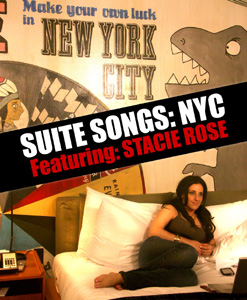
“Suite Songs: NYC: Episode 2: ‘Alter Ego’” from Stacie Rose Launches on SonicScoop
August 15, 2011 by David Weiss
/* Filed under News */
Episode 2 of SUITE SONGS NYC — an original series about the personal and collaborative process of song making featuring songstress/series creator Stacie Rose – has launched exclusively on SonicScoop.
As the day continues with NYC singer/songwriter Stacie Rose and collaborators David Patterson and Mike Harvey, another guest arrives at the same NYC hotel suite where the first episode began, and the road map for the song Alter-Ego comes into focus. The song Alter-Ego and title track from Rose’s most recent release Alter-Ego Ep’s has been featured on Channel One and E!’s Keeping up with the Kardashians.
This is an intimate and vibey musical hang — an insider’s look at crafting pop songs on the fly. The series is presented by Enchanted Records.
Rose is a rising NJ/NYC songwriter who released the well-received Alter Ego EPs in 2010, and whose songs have been frequently licensed by the likes of MTV’s “The Hills”, VH1’s “Tough Love”, Paste Magazine’s “SONGS FOR HAITI” compilation, amc, FX, ABC, Escada fragrance campaign, American Airlines Radio, and FUSE TV.
“Suite Songs” is a series about the personal and collaborative process of song making. Each episode features Stacie Rose as the creator and MC, with a myriad of guest musicians she invites to a New York City hotel suite for some impromptu music making. Personas are revealed, and lyrics/melody come to life, as viewers enter a secret world of creating songs from the ground up.
The HD series is directed by Patricia Chica, edited by Carol Butrico, and Mixed by Robert L. Smith (Defy Recordings).
CREDITS for SUITE SONGS:
Filmed and directed by Patricia Chica
Produced by Stacie Rose
Edited by Carol Butrico
Mixed by Robert L. Smith at Defy Recordings NYC
Title animation by Paul Gardener
Words & music for Alter-Ego, and Sucking up to the Saints
by Stacie Rose ASCAP 2010 © (P)
Enchanted Records/ BIGPICNIC Publishing
Alter-Ego (DJ Reverend Soul mix) and Standby (Caffeinated-Procrastination mix) produced by Thomas Hutchings & Stacie Rose
Special guest appearances by:
David Patterson
and
Mike Harvey
Field Technician David Deïas
Hair by Monet Moon
Makeup by Alyne Halvajian
Additional makeup and styling by Christine Karantais
Photos by www.angelshots.com
Thanks to Zoom and Michael Joly/OktavaMod
Rob McKeever
Ashley Martorana
AKG Adds NYC Producer/Engineer Steve Pageot to Endorser Lineup
August 14, 2011 by David Weiss
/* Filed under Deli NYC Feed, News */
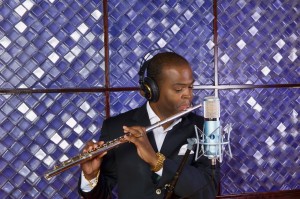
AKG announced it has added GRAMMY-winning engineer and Platinum producer Steve Pageot as the latest endorser of its professional microphone line.
The NYC-based Pageot (Aretha Franklin, Snoop Dogg, Talib Kweli, MTV) is an expert multi-instrumentalist on guitar, piano and jazz flute, playing and engineering/producing in multiple genres from classical to hip-hop. Pageot makes frequent use of the AKG P820 tube microphone for recording vocals and instruments.
Learn more about Steve Pageot and his recording techniques here.
Studio Sweet Spot: EastSide Sound
April 19, 2011 by Janice Brown
/* Filed under NYC Spotlight, SPARS Feed */
Facility Name: EastSide Sound
Website: www.eastsidesound.com
Location: Lower East Side of New York, since 1972!
Neighborhood Advantages: The LES is the heart of live music; there are musicians everywhere, rehearsal spaces, venues etc so musicians are very familiar with the area and feel right at home… no uptown traffic hell and office scene…plus EastSide Sound is in on the ground floor and right in front of a park so you can avoid elevator gear load ins and you can go take a break surrounded by greenery, shoot some hoops, throw a football or kick a soccer ball in the nearby courts.
Date of Birth: We’ve been in business since 1972 when Lou Holtzman opened the original EastSide Sound on Allen St. In 2001 Lou Holtzman partnered up with Fran Cathcart and we moved to Forsyth St, just a few blocks away.
Facility Focus: We are primarily a tracking and mixing facility although we occasionally do mastering sessions and we do have a production suite often used as a writing room. We are also set up for audio post and to sync audio to video for film/TV work.
Mission Statement: EastSide Sound believes that your music and your vision come first and we are committed to working hard until you are satisfied with the results. Many Gold, Platinum and Grammy award winning records have come out of EastSide Sound which shows how many artists have made EastSide Sound their home.
Clients/Credits: Gold and Platinum records, 5 Grammy Awards; clients include Les Paul, Lou Reed, John Zorn, Santana, Sting, Joss Stone, Eric Clapton, Pat Metheny, Jeff Beck, Laurie Anderson, Luther Vandross, Sevendust, Mariah Carey, Cindy Lauper, John Leguizamo, ZZ Top’s Billy Gibbons, Buddy Guy, Keith Richards, Joe Perry, Goo Goo Dolls, Edgar Winter, Chico Freeman, Peter Frampton, Beyonce, Herbie Hancock, Toni Braxton, Hanson, MeShell Ndegeocello, Joe Claussel, Steve Torre, Robin Eubanks, Isaac Mizrahi, Randy Brecker, Frank London, Violent Femmes, Twisted Sister, Gravity Kills, System of a Down, Leela James, Lila Downs, Estelle, MTV, VH1, HBO, BBC, Comedy Central, Target, Grupo Latin Vibe and many, many more.
Key Personnel: Lou Holtzman (owner/engineer/the oracle), Grammy-winning Fran Cathcart (owner/producer/engineer), Grammy-winning Marc Urselli (producer/chief engineer/studio manager), Eric Elterman (producer/engineer/multi-instrumentalist)
System Highlights: EastSide Sound is the perfect hybrid between analog and digital. We believe in and offer the best of both worlds. We have a fantastic Harrison Series Ten B board, a warm and punchy sounding 96 channel true analog board with total digital recall and full automation (no converters, the sound stays analog but you can automate anything and everything: faders, EQs, sends, inserts etc). The Harrison is complemented by a 64 output Pro Tools HD system and by a vast amount of analog outboard gear (LA2, LA3, LA4, 1176, Altec’s etc) and pre-amps (API, Neve, Trident, Ampex, Universal Audio, TF Pro, Summit, Altec’s etc).
We have analog reverbs (Lexington 480′s, 300, MasterRoom II, Demeter, PCM60) and of course have loads of plug-ins for any need and any sound. Our mic collection spans from the early ’50es to today’s best microphones (Neumann, Coles, RCA, Sennheiser, Telefunken, Microtech Gefell, Shure, AKG, Rode, Oktava, JZ Microphones, Electro Voice, etc).
We also have a beautiful 1977 Steinway B grand piano, a Fender Rhodes electric piano, vintage Rogers drums, bass and guitar amps, guitars and basses available for anyone to use.
Distinguishing Characteristics: The single most distinguishing characteristics of EastSide Sound is the fact that we are the only studio in NYC and, to our knowledge, the only or one of very few studios in the world that has 6 isolation booths in addition to a good sized live room which means we can have up to 7 musicians (or just their amps) completely isolated, with good line of sight and headphone mixers in every booth. If the musicians want to all play live in the same room that is also possible. The studio is cozy and welcoming, with comfortable chairs, a lounge, a fridge and freshly brewed free coffee all day!
The building is on fire, you only have time to grab ONE thing to save, what is it?
Is this a trick question? Of course I will risk my life throwing water, milk, coffee and juices at the fire to save everything! …but if in the fire I were to spot a wild dragon running at me I guess I’ll grab the hard drives with all the sessions and get the hell out!
Rave Reviews: When people keep coming back, record after record, it must mean something, right? John Zorn has made hundreds of records and the last 30 or so were done at EastSide Sound. He also said that his records have never sounded so good, and others have said the same thing.
Everyone that comes by EastSide Sound always comments on what a cozy and relaxed vibe there is and everyone that records at EastSide comes back for more. They love the ability to choose between recording in the same space or being isolated in different booths so that they can later edit all the tracks without leakage. They love the ability to have total recall to instantly continue working on something unfinished a month later, with no downtime. They also love our professional, award-winning, cool and down to earth staff. And last but not least they LOVE the sound we get!
Most Memorable Session Ever: Too many… but one I recall is when Les Paul was over for some tracking and we were about to order in some pizza and he said something like “1947, Corona NY, First Pizza: I was there!”
Session You’d Like to Forget: The no-shows, the guys that think they own the world and arrive 4 hours late, the singers who can’t sing for the life of them but think that Autotune and capable audio engineers are an excuse for them to attempt a career in music anyway!
Dream Session (if you could host ANY session with any client, living or dead, what would it be?): Some of my personal favorite sessions are the ones with John Zorn, an incredible composer, genius and fantastic personality. Every session is always populated with incredible musicians.
Living or Dead? Would love to have worked with Hendrix, The Beatles and a… how about a Led Zeppelin reunion? But I guess we can’t complain considering many of the other giants have worked here (Les Paul, Eric Clapton, Sting, Lou Reed and many others). – Marc Urselli
Visit www.eastsidesound.com for more information and to get in touch!
Video Exclusive: “Suite Songs: NYC” Featuring Stacie Rose Debuts on SonicScoop
January 23, 2011 by David Weiss
/* Filed under NYC Spotlight */
The new video series “Suite Songs: NYC” featuring the artist Stacie Rose and presented by Enchanted Records, is debuting globally on SonicScoop.
Rose is a rising NJ/NYC songwriter who released the well-received Alter Ego EPs in 2010, and whose songs have been frequently licensed by the likes of MTV’s “The Hills”, VH1’s “Tough Love”, Paste Magazine’s “SONGS FOR HAITI” compilation, amc, FX, ABC, Escada fragrance campaign, American Airlines Radio, and FUSE TV.
Shot in HD by award-winning film/TV director Patricia Chica, “Suite Songs” is an intimate series about the personal and collaborative process of song making.
The first edition, “Episode 1: Sucking Up to the Saints”, features special guest appearances by vocalist Mike Harvey and guitarist David Patterson. Each episode features Stacie Rose as the creator and MC, with a myriad of guest musicians she invites to a New York City hotel suite for some impromptu music making. Personas are revealed, and lyrics/melody come to life, as viewers enter a secret world of creating songs from the ground up.
“’Suite Songs’ is a lively hang, a poetic journey that defies the myth that cities are impersonal, while illustrating the cozy, breeding ground a hotel suite can be, for intimate, soulful, collaborations,” Rose says of the inspiration to produce “Suite Songs”. “Each city has its pulse; each hotel suite has its vibe, and every group of musicians bring a unique spirit and sensibility to the process of song making. The party begins in NYC and is destined for other cities.”
Check out “Suite Songs” NOW!
CREDITS for SUITE SONGS:
Filmed and directed by Patricia Chica
Produced by Stacie Rose
Edited by Carol Butrico
Mixed by Robert L. Smith at Defy Recordings NYC
Title animation by Paul Gardener
Words & music for Alter-Ego, and Sucking up to the Saints
by Stacie Rose ASCAP 2010 © (P)
Enchanted Records/ BIGPICNIC Publishing
Alter-Ego (DJ Reverend Soul mix) and Standby (Caffeinated-Procrastination mix) produced by Thomas Hutchings & Stacie Rose
Special guest appearances by:
David Patterson
and
Mike Harvey
Field Technician David Deïas
Hair by Monet Moon
Makeup by Alyne Halvajian
Additional makeup and styling by Christine Karantais
Photos by www.angelshots.com
Thanks to Zoom and Michael Joly/OktavaMod
Rob McKeever
Ashley Martorana
MTV “Skins,” Diamondsnake, Chromeo Recording at Stratosphere
January 19, 2011 by Janice Brown
/* Filed under News */
Catch MTV’s latest teen docu-drama-style show, Skins, this week? The chiptune theme song, by Brooklyn-based duo Starscream was tracked at NYC’s Stratosphere Studios, with producer/engineer Gabe Liberti. The cast of the show also joined Liberti in the studio to record vocals.

Pictured at Stratosphere (l-r): Assistant Engineer Atsuo Matsumoto, Starscream's George Stroud & Damon Hardjowirogo, Skins' Daniel Flaherty & Britne Oldford and producer/engineer Gabe Liberti.
Stratosphere has also welcomed songwriter and former Epic Records president, Amanda Ghost (Beyonce, James Blunt, Shakira), producer Dave McCracken (Depeche Mode, John Legend, Ian Brown) and engineer Andros Rodriguez (Justin Timberlake, Ben Folds, Leona Lewis) as the new long-term clients in Studio B. They will reportedly be working on a variety of projects over the next few months. Stay tuned….
In other recent Stratosphere sessions, Diamondsnake — Moby’s metal band project with Dave Hill, Phil Costello and Chris “Tomato” Harfenist — tracked and mixed new material in Studio A with engineer Ruddy Cullers; Brooklyn trio Menage à Twang tracked and mixed an album with engineer Reed Black (formerly of Saves the Day) in Studio B; engineer Thom Leinbach recorded tracks by composer John Angier for the upcoming animated series Jolly Rabbit; Chromeo worked out of Studios A and B, tracking and mixing with producer Sonjay Prabhakar and engineer Michael Nesci; and producer Tony Visconti tracked backing vocals and strings for Welsh singer Debbie Clarke.
For more on Stratosphere, visit www.stratospheresound.com!
Recreate My Night: Building an Effective Social Platform for Music Promotion
January 12, 2011 by David Weiss
/* Filed under Music Biz */
MIDTOWN, MANHATTAN: There’s more than one way to socialize, but as the Web continues to expand, determined entrepreneurs must dig deeper to create new group experiences.
Its hard work for these thought leaders, but when they make a discovery, everyone else – especially those of us in the music sector — benefits with new ways to connect to audiences. At the NYC-based online startup RecreateMyNight (RMN), the aim has been to build a business with their own twist on the social media platform.
Created by President/Founder Tejpaul Bhatia and a roster of social media experts culled from ESPN and MTV, RMN allows its users to gather their photos, videos, and posts from a specific experience and stream them online to a central gathering place. Record companies are already seeing the potential: EMI’s Astralwerks label recently tapped it to promote David Guetta’s song “Memories” featuring Kid Cudi, adding up to a montage of fan-sourced media that play out along with the song (see the result at http://guetta.recreatemynight.com).
A free-to-use site, RMN provides the same opportunity to everyone from indie bands to ballgames to the bar mitzvah set. It’s a good enough idea, but there’s more than enough good ideas out there, competing like mad for the attention of individuals and investors. Will the market bite and turn RMN into a real breadwinner? Tejpaul and his team are betting – with every ounce of their blood, sweat and tears – that the answer is yes.
How do you define RecreateMyNight – is it a social platform?
One thing that we’re not is a social network. The big difference between us and sites in the social networking space is that we’re not a system of record – you don’t have to setup a username and password with us and you don’t have to upload any files to us. Users don’t have to change their behavior at all. They can upload to Twitter, Facebook, and RMN goes to all those social sites/platforms, and brings all those points in time into one place – in a comprehensive and meaningful way.
So if I’m using RMN, how do I share my images?
Say you upload images to Facebook from your phone. Then, you’ll connect RMN with Facebook, and RMN will automatically pull in anything tagged with that timeframe. It works amazingly well with FB’s mobile application. So you take a picture at a concert and upload it from your phone, boom – it’s in. Or if you just take it with a digital camera, you upload it to FB later and tag it with that time, RMN will then get them into that event.
Alternatively, five friends will pull in all the media they generated around it. Take that to the next level, with 30,000 people at a concert pulling in all their media. It gets extremely complex and interesting.
What niche would you say RMN is filling with what you offer?
What a lot of other solutions are providing is answering the question, “What’s happening right now?” Everything about Twitter and Facebook is right now – with phones and broadband you can upload it and it’s immediately broadcast to everyone.
We do a different take, asking the question, “What happened? How do you look at an event in a time-synched way?” With RMN, you can take all the images from an event that you didn’t know existed, and show what people were thinking in a way that was tied together with photos and videos. So we’re different in the way that we take media, and present them back to the user, but also because we don’t change people’s behavior in the ecosystem – we just take what they’re doing and make it exponentially more valuable.
Why is that particularly useful in the music arena?
When we launched the product, we knew there were a couple of verticals that were a slam dunk, with music/concerts being one, and weddings being another.
When we launched, we were approached by EMI Records – they said, “We have a new band, The Constellations, and we want to see if you can help promote them.” So we recreated every concert of their summer tour, and EMI said, “This is cool, can we do it with a larger artist?” David Guetta is a natural: He’s got a ton of followers, he’s very active in the social space, and the song is “Memories”. Labels are great because they have resources, and we can customize campaigns for them, but what matters is how to get this to the local artist.
For an artist that sells a couple thousand tickets, there was an in-between need that we thought needed to be met. At CMJ, for example, some bands used RMN to showcase the events. When you go to our site, you’ll see there’s a band called The Wellington Papers that used RMN. People were taking photos and videos, and these guys did a recreation for each of three shows in a week. You can see all the posts and Tweets, some photos look pro while others are raw, and all this took this upstart band and made them look even better.
There was so much fan participation, but it wasn’t a hurdle. We didn’t ask them to do anything – they did it on their own. Then other fans see it and say, “I was there!” and their media gets pulled in. So even though the concert was one night, three or four weeks later it’s still living. It’s a local band using the site to promote themselves, and it worked really well.
Recreate My Night is free for users — what’s the revenue model?
Currently, RecreateMyNight earns revenue through licensing agreements with other companies. Our customers brand, white label or embed our platform inside theirs. Looking forward, we see revenue generating opportunities in the area of consumer goods like photo prints, customized/personalize merchandise and music downloads. We also see a lot of opportunities in the area of contextual advertising once we figure out a seamless way to integrate it into our products.
You’re based in NYC. What’s good and bad about being an online startup here?
Let’s start with the good: NYC is a microcosm of the world. With 8 million people here, whatever your product is, there’s an audience in NYC for it. Music and media is an obvious play – there’s a lot of people, companies and energy around. In NYC, I can have as many meetings in a day as I can possibly fit in. We could always be busy selling with business development people, if I had enough of them. And on the user side, to recruit local bands I don’t have to do major outreach to test something new: I can just call a couple of friends and get quick feedback.
From a challenge sense, NYC is a tough place. With so much competition, getting the word out isn’t easy. And for startups, NYC is particularly tough. We don’t have much capital. We’re putting our lives into this, making a big investment not necessarily with cash, but with our time and the hope that this will pay us back at some point. NYC is evolving to be more supportive of that type of dream, but if you look at a startup breeder like Silicon Valley, it’s not like that.
However, if you look at this as a place for starting up and succeeding, NYC has a lot of history like that. The city is doing a ton of stuff to support entrepreneurs, and the mayor and his different departments have played a huge role in our ability to stay alive right now. A couple of programs include The Levin Institute and the NYC Economic Development Corporation, they both do a ton of programs for startups.
There’s a scene, a support structure, and people just have to believe — that the positives of NYC can outweigh the difficulties, and make it a truly great place to get started.
– David Weiss
Elie Maman Productions Secures Synch Licensing Placements with E!, Oxygen, MTV
December 29, 2010 by David Weiss
/* Filed under News */
NYC-based publisher/original music house Elie Maman Productions has had a busy December, securing several synch licensing placements for tracks in its catalog. They include:
E! Entertainment: “Keeping Up With the Kardashians,” Episode — “Kris ‘The Cougar’ Jenner”
E! Entertainment: “Kourtney and Khloe Take Miami,” Episode — “Scotts-O-Phrenia”
E! Entertainment: “The Spin Crowd”, Episode — “Should I Stay Or Should I Go?”
Oxygen: “The Bad Girls Club,” Episodes — “Departures and Arrivals” and “Reunion Part 1”
MTV: “The Real World: New Orleans,” Episodes — “Fired” & “Getting Down, Blowing Up”
MTV: “10 On Top,” Episodes — 103 & 108
“EMP’s main focus is supplying music supervisors and production companies with top notch instrumentals/songs for their projects,” says Maman. “The music licensing business right now is booming. Think about how much content there is on TV alone, besides all of the other media outlets that require music. I think it’s a very lucrative business, provided you have the right ‘product’ and the right connects.
“EMP has a constantly growing catalog with literally every type of genre you can think of, these tracks were specifically selected for TV and every other media outlet. They are all at the disposal of the decision makers at a TV network or production company.”
Music Unites Youth Choir at Bronx Zoo’s “Sing for Wildlife” Thursday, 12/30
December 27, 2010 by David Weiss
/* Filed under News */
NYC-based non-profit Music Unites is closing off a successful 2010 with a featured performance on Thursday, Dec. 30th at the Bronx Zoo’s “Sing for Wildlife” competition.
The Music Unites Youth Choir will close the year as the featured performance on December 30th, 12:45 PM, at the Bronx Zoo’s Sing for Wildlife competition. Presented jointly by The Wildlife Conservation Society and the Hard Rock Café, this opportunity gives student choral groups from the five boroughs the chance to compete for the title of “best” choral group in New York. The final round of competition will feature a special cast appearance from Green Day’s American Idiot on Broadway.
The Music Unites Youth Choir, in partnership with Young Audiences New York, has been selected as one of the groups to represent local cultural institutions, and will appear as a special guest with a performance during the competition.
Now in its second academic year, the Music Unites Youth Choir consisted of 40 students has been exposed to unique performance and mentoring educational opportunities such as a Carnegie Hall performance in Michael Dorf’s The Music of The Who, this fall’s workshop with artist Reni Lane, and “Careers in Music” night which featured panelists from Epic Records, MTV and Bowery Presents.
According to Music Unites Founder Michelle Edgar, “In less than two years, Music Unites has grown exponentially and expanded a number of its programs. The New York-based non-profit has grown from an idea for an organization that would connect people through music and performance, to a boutique organization that is simultaneously supporting music education programs in urban student communities, helping musicians from diverse genres get their music heard, introducing audiences to new artists, and providing unique partnering and branding opportunities for a variety of organizations.
“The organization’s first initiative grew from the launch of the Music Unites Youth Choir to multiple initaitives including Empowering Women Through Music, ASCAP Night School series and a nationwide instrument drive.”
Also, mark your calendars for a Neil Young tribute from Music Unites, coming up on February 10th. You can read more about Music Unites in this previous SonicScoop feature.