Neumann Launches KH 810 and KH 870 Active Studio Subwoofers

January 3, 2012 by  
/* Filed under Deli Feed, Deli NYC Feed, News */

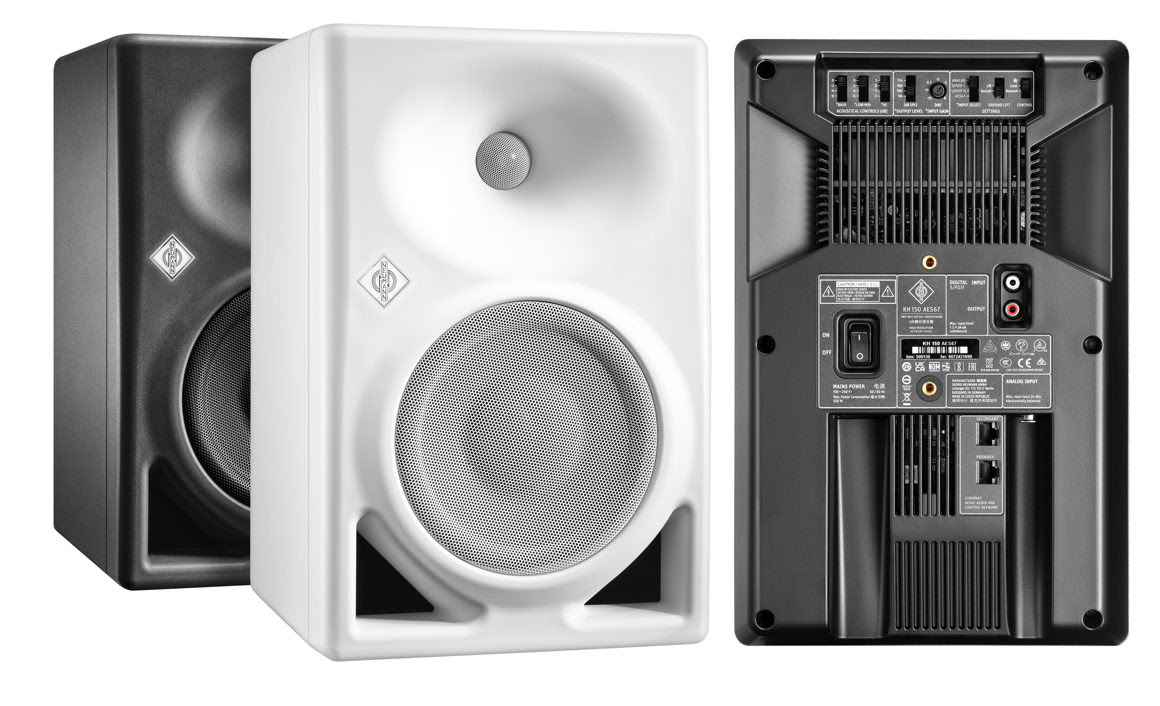
Neumann has announced the launch of two new active subwoofers: the KH 810 ($1,999) and KH 870 ($3,199).

The Neumann KH 810 active subwoofer

Both subs feature Neumann’s 7.1 High Definition Bass Manager technology, which is designed specifically to work well with high-definition video and accompanying 7.1 formats.

According to Neumann, the comprehensive 7.1 High Definition Bass Management system is an ideal complement to the Neumann KH 120 nearfield two-way monitor, introduced last fall. It can be used either as a subwoofer dedicated to reproducing the LFE channel, or as a means of providing low frequency extension with an increased maximum SPL.

The combination of KH 120 and KH 810 was created for music tracking, mixing and mastering, as well as broadcasting, project and post-production studios.

With the KH 810, facilities can assemble flexible monitoring systems for studios of different sizes, with a smooth, uniform response that ranges from below 20 Hz to above 20 kHz.

Additionally, the integrated 7.1 High Definition Bass Manager is compatible with all formats, from mono to 7.1 high definition systems such as Blu-ray. Eight electronically balanced analog XLR inputs are provided for flexible interconnectivity for modern studios.

Features of the KH 810 and KH 870 include:

The Neuman KH870 makes it happen down to 18 Hz.

•    Four-mode LFE channel processing for maximum compatibility across all formats
•    4th order crossovers and flexible acoustic controls for seamless system integration
•    Built-in volume control permits centralized system adjustment of replay levels, independent of the source
•    Electronics can be located remotely to reduce cabling, and to allow the cabinet to be mounted flush to a wall
•    State-of-the-art amplifier technologies and acoustic components have been used to ensure maximum accuracy of sound reproduction
•    Robust 10-inch driver, solid cabinet, and carefully-designed ports guarantee tight, articulate, distortion-free low frequency reproduction down to 18 Hz; even at high playback levels
•    By using sum output, Plane Wave Bass Array (PWBA) techniques can acoustically improve lateral consistency in the listening area and further increase low frequency linearity
•    System flexibility is further enhanced by an extensive range of accessories

Neumann Intros Three Digital Mics and a Portable, Two-Channel Digital Interface

August 10, 2011 by  
/* Filed under Deli NYC Feed, News */

Neumann has just announced four new digital products: the KMS 104 D and KMS 105 D vocal microphones, the KMR 81 D shotgun microphone and the portable DMI-2 digital converter.

The KMS 104 D and KMS 105 D (MSRP: $1,398) are the digital counterparts to Neumann’s KMS 104 and KMS 105 dynamic vocal microphones.

Neumann KMS 104 D digital microphones in nickel and matte black

Equipped with the core features of the existing models, the KMS 104 D (with its cardioid pattern) and the KMS 105 D (with its super-cardioid pattern) reportedly offer additional digital advantages such as an extended dynamic range, more robust operation and integrated peak limiters that prevent clipping.

When used alongside either the new DMI-2 or DMI-2 portable digital microphone interfaces and the Remote Control Software (RCS), pre-programmed settings can reportedly be stored inside the microphones, making it flexible and adaptable to different performance applications.

Neumann specs out the sound characteristics and features of the KMS 104 D and KMS 105 D as follows:

- Exceptionally clean sound transmission
- Very low self-generated noise (16 dB-A) and exceptionally high dynamic range (125 dB)
- Handles high sound pressure levels (141 dB SPL/159 dB SPL with 18 dB pre-attenuation/RCS)
- Optimized for speech and vocal miking at extremely close proximity
- Built-in high pass filter (-3 dB @ 80 Hz)
- Effective isolation from structure-borne sound
- Distinctive directivity of the capsule even in the bass range
- Integrated peak limiter/compressor/de-esser prevents overloads and/or clipping

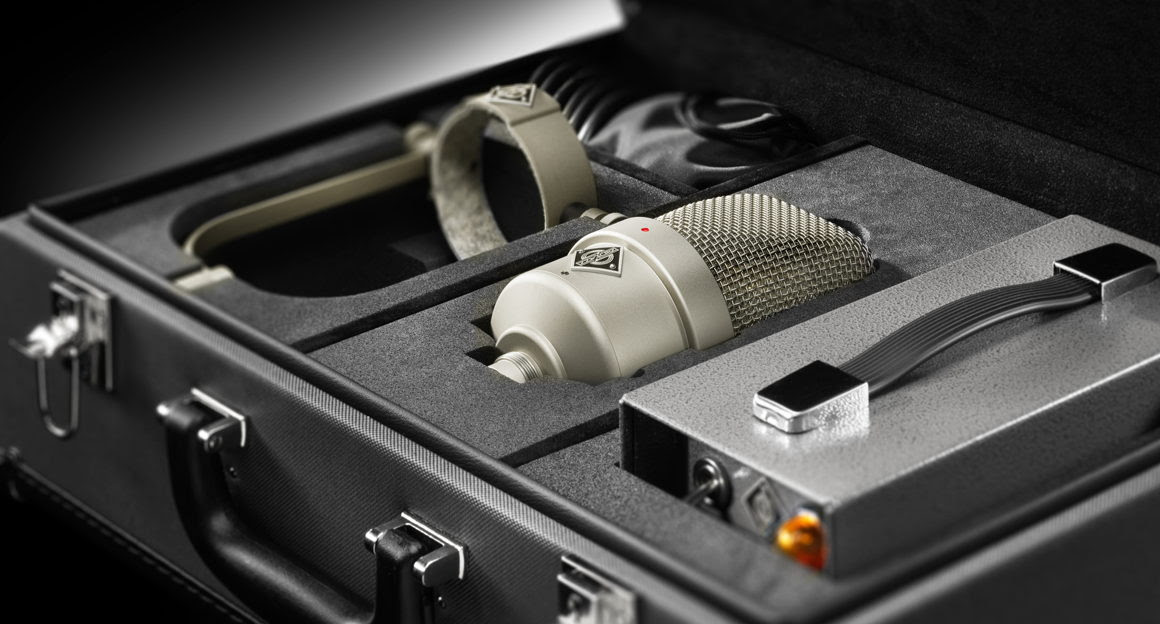
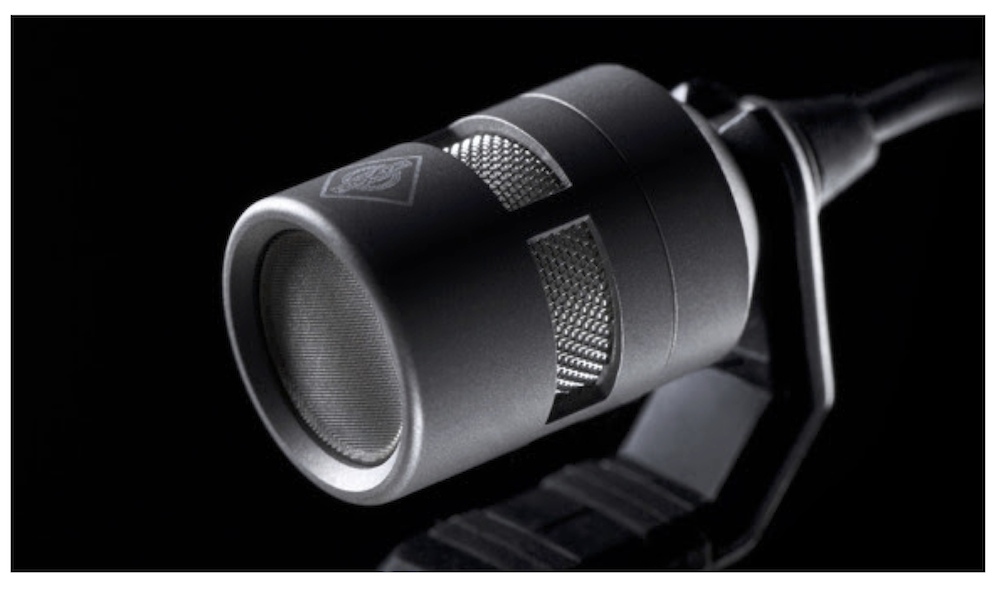
Neumann’s new KMR 81 D digital shotgun microphone has been designed to deliver “stunning audio quality that complements the detailed visuals of HD and widescreen formats while, at $2,298 MSRP, being sensitive to broadcasters’ budgets.”

Neumann KRM 81 D digital shotgun microphone

Suitable applications for the KMR 81 D include recordings for broadcasting/ENG, film and video productions, long-distance recordings requiring high directivity (such as nature recordings and sports games) and medium-length shotgun spot mic applications in noisy surroundings

According to Neumann: The KMR 81 D is equipped with the features of its non-digital counterpart — the successful KMR 81i — that have made it a favorite of sound engineers in movie and documentary productions. Its digital advantages include an extended dynamic range, more robust operation and integrated peak limiters that prevent clipping. The settings for all functions can be recalled, set and stored in the microphone by using one of Neumann’s digital microphone interfaces making it extremely adaptable and flexible.

Sound characteristics and features of the Neumann KMR 81 D:

- Exceptionally transparent and high detailed sound transmission
- Very low self-generated noise (9 dB-A) and high dynamic range (114 dB)
- Handling of high sound pressure level (123 dB SPL/141 dB SPL with 18 dB pre-attenuation (RCS)
- Integrated peak limiter/compressor/de-esser prevents overloads and/or clipping
- Extremely light weight of just 3.2 oz., ideal for handheld and boom/fishpole operations
- High lateral and back attenuation
- 90-degree recording angle (independent from frequency)

Finally, the DMI-2 portable is suitable for ENG and other field recording applications such as creating professional-quality sound recordings for sport, film and documentary. It is also an ideal tool for journalists, camera operators, directors and producers.

Neumann DMI-2 portable digital interface

The unit supports two digital microphones and allows adjustment of gain, pre-attenuation and low cut filter settings at the device. The front panel display shows the selected gain, current signal level and any gain reduction; microphone presets can be stored inside the DMI-2 portable and recalled for use in the field, making it extremely adaptable for different applications.

Sound characteristics and features of the Neumann DMI-2 portable:

- Offers direct access to GAIN, PAD and low-cut microphone settings
- Stores up to 8 presets for all digital microphone parameters
- Power supplied via DC 10-18 V or AC/DC converter
- Integrated peak limiter prevents overloads and/or clipping
- Includes (2) AES 42 inputs, (1) AES EBU output, word clock
- Menu-driven control of the connected digital microphone via two push-switch rotary encoders with a data display (permitting the setting of microphone parameters like gain, pad and pre attenuation and the uploading of preset parameters)

“Walk This Way”: Rap & Rock Icons Revisit A Classic Track

April 26, 2011 by  
/* Filed under NYC Spotlight, SonicSearch News */

MIDTOWN MANHATTAN: We bump into Darryl “D.M.C.” McDaniels in the elevator at Manhattan Center Studios. Though not exactly a shocking encounter, as we’re our way to visit his session in Studio 7, the meeting is no less thrilling: “You’re D.M.C.!” we gush. “Awesome!”

DJ Johnny Juice with D.M.C. freestyling

We’re about to flash back to 1986, the year of that famous Rick Rubin produced worlds-collide moment that is Run-D.M.C. doing Aerosmith’s “Walk This Way” with Steven Tyler and Joe Perry.

Inside Studio 7, as Aerosmith producer Jack Douglas greets D.M.C., Public Enemy DJ Johnny Juice is already going on the turntables – that classic “Walk This Way” beat and iconic riff pumping through the studio monitors.

They’re all here to work on a “Walk This Way” remake to benefit The Felix Organization / Adoptees For Children, the charity D.M.C. co-founded with Sheila Jaffe. A new lyrical spin on the classic tune will help them promote the cause and raise the funds to send 200 foster kids to Camp Felix, the organization’s Putnam County summer camp.

Public Enemy bassist and producer Brian Hardgroove is co-producing the session with Douglas, the producer of the original Aerosmith track and the 1975 album, Toys in the Attic. Tommy Uzzo (L.L. Cool J, Method Man, Redman) is engineering. And we’ve got a front row seat on the action, as D.M.C. is freestyling with Johnny Juice on the decks.

“Man, the original sounds so incredible,” says D.M.C. “It’s funny, when we did this originally, we had never even heard the vocals – never heard it past the first guitar riff because the DJ would never let it play that far! Rick Rubin said ‘take the record, go sit in the basement, and learn the lyrics.’

“When we finally heard the lyrics, we got on the phone with Rick and said “Nah, you’re taking this rock-rap stuff too far. Africa Bambaata won’t understand one word he’s singing! But Jay knew what to do, he was like ‘Don’t do it like Steven and them, do it like it’s a rap written by Run-D.M.C.’ Me and Run, we weren’t getting it yet…”

And they weren’t necessarily sold on the idea. “We didn’t even know who Aerosmith was,” D.M.C. emphasizes. “I remember when we first met them in the studio, I was like “The Rolling Stones are here!” Because we knew who Mick Jagger was, but we didn’t know Steven Tyler.”

Listening back to the Aerosmith version in Studio 7, D.M.C. muses, “When you think about it, Steven is rapping on this song.”

Here, Douglas interjects, “Yeah, we didn’t know what else to do with it. We had the track and then we got the title from the movie Young Frankenstein. We’d all gone to see the movie one morning, and you know how the hunchback says [read in Igor voice] ‘Walk this way…’ Well, we came back to the studio and tried that line as the chorus! That’s how it all came together.”

Adaptation of a Classic: “Walk This Way” Anew

Referencing both the Aerosmith and Run-D.M.C. versions of the track in Studio 7, Douglas, Hardgroove, D.M.C. and DJ Johnny Juice work out a slightly new arrangement for the Camp Felix-inspired take off. Then D.M.C. walks everyone through the Camp Felix lyrics before taking to the booth to lay down his verses, emphatic and strong.

D.M.C. in the vocal booth

Later, they track the musicians – including Andy Bassford on guitar, and singer Jean Beauvoir on the chorus – via the studio’s Neve VR console into Pro Tools. This is a highly capable room, with access to one of the largest tracking spaces in Manhattan (the Grand Ballroom) as well as microphones and gear of most every flavor.

Douglas notes, “I’ve worked out of Manhattan Center many times. I did the Supertramp record [Some Things Never Change] downstairs! We also mixed Aerosmith’s A Little South of Sanity here.”

With only one day to get the entire piece done in NYC, Hardgroove tracked the bass parts for “Walk This Way” ahead of time on his Pro Tools 9 system at home in Santa Fe. “I made the effort to get the bass as ‘classic’ sounding as possible,” he explains. “I used my Steinberger Synapse XS-1FPA-Custom with a little compression. When Jack and Tom Uzzo heard it, they dug it. No need to re-track it.”

When Hardgroove began producing sessions out of Manhattan Center’s Studio 4 (aka The Fuse Box) last year, he brought in manufacturer sponsors, including Sennheiser, to enhance the studio’s recording capabilities. So the mic cabinet here runs deep with Sennheiser and Neumann models – including Neumann U47s and 47 FET, U67s, U87s and TLM mics and Sennheiser 421, 441, MKH 8000 and 800 series and Evolution 900 series mics.

Tracking “Walk This Way,” Uzzo describes, “We used the Sennheiser MKH800 on D.M.C.’s rap, as a distance mic on the electric guitar, and to record the cowbell. We used a 421 as a close mic for the electric guitar. The singers (other than D) were recorded with a Neumann U-67, all through the Neve mic pre’s.

“The interesting thing about the session was the sound of the MKH800. I had never used one before. We compared to the U-67, and of course it sounded a little different, but the quality was very high, as you hear on D’s vocal. The pad also worked well, and didn’t destroy the sound, making it useful for the loud things like the cowbell.”

Co-producers Jack Douglas and Brian Hardgroove

But gear aside, this session was about old friends coming together to revisit a classic track for a worthy cause.

Says Hardgroove: “This project is close to me for a few reasons: first, my parents adopted three girls when I was a young boy, second – back in the day, I could hear Run-DMC spinning “Walk This Way” in Jamaica Park (Hollis, Queens) from my bedroom and third, I got a chance to bring some of my best friends together to work for a terrific cause.”

Manhattan Center chief engineer Darren Moore was gladly on hand to assist. “This is putting me back in junior high school in Brooklyn,” he said. “I totally remember the first time I heard this track. The first time hip-hop went pop.”

For more information on The Felix Organization / Adoptees For Children, and to donate to this cause, visit www.adopteesforchildren.org.

Studio Sweet Spot: EastSide Sound

April 19, 2011 by  
/* Filed under NYC Spotlight, SPARS Feed */

Facility Name: EastSide Sound

Website: www.eastsidesound.com

Location: Lower East Side of New York, since 1972!

Neighborhood Advantages: The LES is the heart of live music; there are musicians everywhere, rehearsal spaces, venues etc so musicians are very familiar with the area and feel right at home… no uptown traffic hell and office scene…plus EastSide Sound is in on the ground floor and right in front of a park so you can avoid elevator gear load ins and you can go take a break surrounded by greenery, shoot some hoops, throw a football or kick a soccer ball in the nearby courts.

Date of Birth: We’ve been in business since 1972 when Lou Holtzman opened the original EastSide Sound on Allen St. In 2001 Lou Holtzman partnered up with Fran Cathcart and we moved to Forsyth St, just a few blocks away.

Facility Focus: We are primarily a tracking and mixing facility although we occasionally do mastering sessions and we do have a production suite often used as a writing room. We are also set up for audio post and to sync audio to video for film/TV work.

Panoramic EastSide Sound live room

Mission Statement: EastSide Sound believes that your music and your vision come first and we are committed to working hard until you are satisfied with the results. Many Gold, Platinum and Grammy award winning records have come out of EastSide Sound which shows how many artists have made EastSide Sound their home.

Clients/Credits: Gold and Platinum records, 5 Grammy Awards; clients include Les Paul, Lou Reed, John Zorn, Santana, Sting, Joss Stone, Eric Clapton, Pat Metheny, Jeff Beck, Laurie Anderson, Luther Vandross, Sevendust, Mariah Carey, Cindy Lauper, John Leguizamo, ZZ Top’s Billy Gibbons, Buddy Guy, Keith Richards, Joe Perry, Goo Goo Dolls, Edgar Winter, Chico Freeman, Peter Frampton, Beyonce, Herbie Hancock, Toni Braxton, Hanson, MeShell Ndegeocello, Joe Claussel, Steve Torre, Robin Eubanks, Isaac Mizrahi, Randy Brecker, Frank London, Violent Femmes, Twisted Sister, Gravity Kills, System of a Down, Leela James, Lila Downs, Estelle, MTV, VH1, HBO, BBC, Comedy Central, Target, Grupo Latin Vibe and many, many more.

Key Personnel: Lou Holtzman (owner/engineer/the oracle), Grammy-winning Fran Cathcart (owner/producer/engineer), Grammy-winning Marc Urselli (producer/chief engineer/studio manager), Eric Elterman (producer/engineer/multi-instrumentalist)

System Highlights: EastSide Sound is the perfect hybrid between analog and digital. We believe in and offer the best of both worlds. We have a fantastic Harrison Series Ten B board, a warm and punchy sounding 96 channel true analog board with total digital recall and full automation (no converters, the sound stays analog but you can automate anything and everything: faders, EQs, sends, inserts etc). The Harrison is complemented by a 64 output Pro Tools HD system and by a vast amount of analog outboard gear (LA2, LA3, LA4, 1176, Altec’s etc) and pre-amps (API, Neve, Trident, Ampex, Universal Audio, TF Pro, Summit, Altec’s etc).

EastSide Sound control room: Click for full equipment list.

We have analog reverbs (Lexington 480′s, 300, MasterRoom II, Demeter, PCM60) and of course have loads of plug-ins for any need and any sound. Our mic collection spans from the early ’50es to today’s best microphones (Neumann, Coles, RCA, Sennheiser, Telefunken, Microtech Gefell, Shure, AKG, Rode, Oktava, JZ Microphones, Electro Voice, etc).

We also have a beautiful 1977 Steinway B grand piano, a Fender Rhodes electric piano, vintage Rogers drums, bass and guitar amps, guitars and basses available for anyone to use.

Distinguishing Characteristics: The single most distinguishing characteristics of EastSide Sound is the fact that we are the only studio in NYC and, to our knowledge, the only or one of very few studios in the world that has 6 isolation booths in addition to a good sized live room which means we can have up to 7 musicians (or just their amps) completely isolated, with good line of sight and headphone mixers in every booth. If the musicians want to all play live in the same room that is also possible. The studio is cozy and welcoming, with comfortable chairs, a lounge, a fridge and freshly brewed free coffee all day!

The building is on fire, you only have time to grab ONE thing to save, what is it?

EastSide Sound chief engineer Marc Urselli

Is this a trick question? Of course I will risk my life throwing water, milk, coffee and juices at the fire to save everything! …but if in the fire I were to spot a wild dragon running at me I guess I’ll grab the hard drives with all the sessions and get the hell out!

Rave Reviews: When people keep coming back, record after record, it must mean something, right? John Zorn has made hundreds of records and the last 30 or so were done at EastSide Sound. He also said that his records have never sounded so good, and others have said the same thing.

Everyone that comes by EastSide Sound always comments on what a cozy and relaxed vibe there is and everyone that records at EastSide comes back for more. They love the ability to choose between recording in the same space or being isolated in different booths so that they can later edit all the tracks without leakage. They love the ability to have total recall to instantly continue working on something unfinished a month later, with no downtime. They also love our professional, award-winning, cool and down to earth staff. And last but not least they LOVE the sound we get!

Most Memorable Session Ever: Too many… but one I recall is when Les Paul was over for some tracking and we were about to order in some pizza and he said something like “1947, Corona NY, First Pizza: I was there!”

Session You’d Like to Forget: The no-shows, the guys that think they own the world and arrive 4 hours late, the singers who can’t sing for the life of them but think that Autotune and capable audio engineers are an excuse for them to attempt a career in music anyway!

Dream Session (if you could host ANY session with any client, living or dead, what would it be?): Some of my personal favorite sessions are the ones with John Zorn, an incredible composer, genius and fantastic personality. Every session is always populated with incredible musicians.

Living or Dead? Would love to have worked with Hendrix, The Beatles and a… how about a Led Zeppelin reunion? But I guess we can’t complain considering many of the other giants have worked here (Les Paul, Eric Clapton, Sting, Lou Reed and many others). – Marc Urselli

Visit www.eastsidesound.com for more information and to get in touch!

Studio Tour: North Brooklyn, Part 2

April 14, 2011 by  
/* Filed under Deli Feed, NYC Spotlight, SPARS Feed */

NORTH BROOKLYN: Our neighborhood studio tour continues with four more decidedly uncommon studios in North Brooklyn. We talked to the owners of Strange Weather, Headgear, Metrosonic, and the Fort about sessions, toys, and building an active niche in this teeming slice of the city.

STRANGE WEATHER
South Williamsburg (Coming Soon: Williamsburg/Greenpoint)
www.strangeweatherbrooklyn.com

Room Rate: $450/day

Those familiar with the SonicScoop blog-roll may recognize the name of Marc Alan Goodman, who’s been recounting the saga of building Strange Weather’s new, full-service tracking studio on the Greenpoint/East Williamsburg border. In the meantime, it’s a small secret that his current location already hosts one of the most impressive collections of hand-picked ear candy in the city.

Strange Weather is built around a 24-channel API 1608 console

More than anything, this is a studio for artists and engineers with boutique tastes. No summary can do justice to the extensive selection of gear that includes names like Neve, API, Purple, Gates, Federal, ADL, Neumann, Coles, dbx, RCA, and Bricasti. Strange Weather is also home to a startling collection of guitars, drums, and keyboards at the ready for capturing any sound musicians can imagine.

Most surprising of all, according to Goodman, is the price, and the fact that all his vintage treasures are in prime working condition.

“I wanted to build a studio where people can walk in and use world-class gear at an affordable price in a functioning atmosphere,” Goodman says. “There’s nothing worse than booking a day at a studio where nothing works. I feel like that’s the rule rather than the exception in the commercial studios I’ve worked in.”

In the interest of full disclosure, this reporter has recently been in for some sessions at Strange Weather, and this kind of attention to detail has it fast-becoming one of my favorite places to work. Owning a studio has begun to turn Goodman into a capable tech in his own right:  his racks are over-stuffed with impeccably maintained vintage gear, and  handmade re-creations of studio classics like the LA2A, LA3A and 1176.

Built around a new 32-channel API 1608 console brimming with the choicest EQs, Strange Weather turns out to be an ideal room for overdubs, mixing, or any sessions that don’t require a cavernous live room.

When asked about his niche in the studio scene Goodman says: “Ideally everyone would complete their records from start to finish in a studio, but today it seems more common for musicians to combine studios with smaller at-home or portable rigs. We’re focused on making that process as seamless as possible; to give musicians and engineers used to working at home a place they can walk in and use great, often rare equipment in a functioning environment.”

HEADGEAR RECORDING
Williamsburg, Brooklyn
www.headgearrecording.com

Rates: Click for Room + Engineer Rates
Room Rate: $600/day; $550/day for blocks of 3 days or more.

If there’s any truth behind the idea that Williamsburg is a great place to make music, a lot of responsibility for that would have to fall on studios like Headgear Recording. Since opening in 1998, Headgear has been the birthplace of seminal records from  TV On The Radio, Massive Attack, Lee “Scratch” Perry, Animal Collective, CocoRosie, Nada Surf, My  Morning Jacket, Son Volt, the Yeah Yeah Yeahs, Moby and Santigold.

Although the “Room For Rent” model of studio has waned as competent owner-operators create their own personal oases of sound in every corner of the city, Headgear remains one of the most accessible and freelance-engineer-friendly studios in New York.

Headgear boasts one of the largest live rooms in the 'hood, plus two iso booths.

In addition to house engineers Alex Lipsen, Scott Norton, and Dan Long, Headgear has been home to projects from a who’s who of hip and distinctive producers and engineers, including John Agnello, Peter Katis, Dave Sitek, John Hill, Chris Moore Gordon Raphael, TJ Doherty, and Chris Coady.

Headgear is also no stranger to Film and Television Post. Recent clients include “Grey’s Anatomy,” MTV’s “Skins,” “CSI: Miami” and the Columbia Pictures comedy Walk Hard: The Dewey Cox Story.

According to studio manager Jackie Lin Werner, the studio’s appeal is personal as much as it is technical: “ We’re not stiff or pretentious. We’re down to earth and like to be helpful. Beyond the gear and the size of our rooms, I believe people trust Headgear as an established studio with a respectable client list.  Headgear probably appeals most to indie bands and major label bands looking for an affordable, high quality studio in a space that has a creative vibe. “

Headgear’s A-room houses an automated Trident 80C console and offers a choice of Pro Tools HD and 24-track 2-inch tape. A well-equipped B room is also available for mixing and overdubs.

METROSONIC
Williamsburg, Brooklyn
www.metrosonic.net

Contact for rates.

Neve Console. Pro Tools HD. Ampex 2”. Engineers who know what they’re doing. What more could you need to know?

Metrosonic's vitals = Neve 5315, Pro Tools HD, Ampex 2”

According to Metrosonic’s Pete Mignola, it’s the people who make a studio: “The people who built it, the people who run it, the people who use it,” he tells us.

“Everyone who comes to Metrosonic talks about the vibe. Of course they like the great gear, the affordable rates, the windows & city views, but they always say that they love the vibe here. There’s human element to this that makes each studio unique and special in its own way.”

Metrosonic has always had a large, comfortable control room. More recently, the studio’s originally modest live room underwent significant renovations in 2008, and now, Pete and the crew are excited to bring a new 850 square-foot live room into the fold.

THE FORT
Bushwick, Brooklyn
www.thefortbrooklyn.com

Rates: $40/hr, including Jim Bentley as Engineer.

Over the past decade, North Brooklyn’s Bushwick neighborhood has filled up with enough small private studios to fill an area twice its size. In that time, Jim Bentley’s studio The Fort has stood as one of the neighborhood’s active mainstays.

Mission control at The Fort, equipped with a Neotek Elan console

Persevering in this competitive new territory since 2003, owner/operator Bentley has hosted noteworthy clients including Brit Daniel of Spoon, Doug Gillard and Kevin March of Guided by Voices, James McNew of Yo La Tengo, Jennifer O’Connor, John Agnello and  Jemina Pearl.

This especially affordable studio is equipped for both analog and digital sessions, offering a Neotek Elan console, Tascam 1” 16-track, and a 24-channel MOTU/Apogee system. The studio bills at $30/hr on weekdays from noon to 6pm and at $40/hr 6pm-midnight or weekends, and includes Bentley’s services as engineer.

Bentley is most proud of his live room, a large, vibey space with vaulted, heavy-timber ceilings: “I love to track full bands in the room live for feel and then sauce it up and make it sound supernatural from there,” he says.

Bentley’s down-to-earth approach is made clear in his parting words to us. The Fort, he says, “appeals to the clients who realize making records is more about the man and the performance than the machine or the media buzz behind it.”

Justin Colletti is a Brooklyn-based audio engineer and music producer who’s worked with Hotels, DeLeon, Soundpool, Team Genius and Monocle, as well as clients such as Nintendo, JDub, Blue Note Records, and the Metropolitan Museum of Art. Visit him at www.justincolletti.com.

Psyched On Sonics: How to Record Strings

January 26, 2011 by  
/* Filed under NYC Spotlight */

Matt McCorkle of EqualSonics.com brings you a day in the life of a New York City recording engineer.

Matt McCorkle (seated) is serious about strings.

The Mission: A String Tracking Session At Tainted Blue Studio NYC
Producer Andrew Koss, owner of Tainted Blue Studio, requested my services tracking string overdubs for Maxine Linehan‘s version of the Leslie Gore hit “You Don’t Own Me” for her new album release, dropping near the end of this year. The session called for overdubbing a string trio on to pre-existing tracks.

Tainted Blue Studio is an amazing facility for tracking strings, with its all wood live room and tasty microphone collection. It’s a playground for engineers, producers and musicians alike.

The Challenge
String recording can be a tricky and challenging process. The goal is to capture the instruments in their purest form, highlighting each instrument’s sonic range while avoiding the masking of individual instruments. To ensure that the players sound good in the room together, you can “acoustically mix” just by moving a couple of chairs and players around in the physical room.

Patience and listening to various microphone placements are key to a good recording. If you’re unsure about how your microphone placement will sound, listen to it! Poor string recordings come from microphone phase cancellation at certain frequencies and ugly reflections from various surfaces. I enjoy the challenge string recordings bring, as the approach for this type of recording is much different than any other instrument.

The Arrival
Once at the studio, I began examining the tracks in Pro Tools listening for how to blend these string overdubs together.  Then I approached the producer, Andrew Koss, inquiring into the type of sound he was looking to capture with today’s string tracking. “Intimate and warm,” was the answer.

My plan was to mike the instruments individually, to get the warmth. To get the intimacy, I planned to use an XY stereo configuration to capture the instruments playing together in their natural environment of the live room.

The Quest for Intimacy
First, I positioned three seats equally apart from one another, in a semi-circle facing the glass in the live room. Next, I picked two AKG 414′s to be used in my XY stereo configuration. Also, I wanted to make sure that the cellist will be in the center of my XY stereo configuration, as to not throw off either side of the stereo spectrum later on in the mix.

Then I proceeded to make the angle at which the microphone capsules will be positioned to form the XY configuration. My focus here was to make sure that both the violin and the viola would be in the pickup zone of their respective 414, which were both set in cardioid polar pattern. My goal with the XY setup is to have the violin to the left, the cello in the center, and the viola to the right in the stereo spectrum.

Intimacy obtained!

The Quest for Warmth
Warmth! The second half of the producer’s request. This called for getting up close and personal with each instrument.  I began with the cello, and chose a Royer 122 for this task, a phantom-powered ribbon microphone.

It’s strange because when I was first learning audio the golden rule was “Never apply phantom power to ribbon microphones!”  This is because applying 48 volts to a ribbon microphone will normally blow up the ribbon element. But, what am I doing today? Applying phantom power to ribbon microphones!

There are exceptions to rules and the Royer 122 is one of those exceptions. This ribbon microphone has an amazing tone and accepts phantom power to enable a much higher output gain.

A control room view of the "You Don't Own Me" string session.

Cello -
I listened to the cellist play her instrument for a few minutes. After listening carefully to the way this particular cello acts and responds to her bowing, I grabbed my mic and went to work.

I positioned the Royer just above the bridge of the cello pointing near the body and the F Hole. This was to capture the bowing of the strings and body of the cello. However, I had a problem with this microphone placement – not enough low end was going to be captured. I remedied this with a large capsule dynamic Audix D6 microphone. (What a mouthful!) I directed this microphone towards the body of the cello pointed around the F Hole. These two microphones together will produce a full-bodied cello while capturing the players’ nuances.

Viola –
Next up for treatment, the viola. This instrument sits between the cello and the violin in the sonic spectrum. Listening for a microphone placement, too close to the body will produce too much low end that will compete with the cello for sonic space. Too far away from the body will make the instrument sound thin. The viola can be a tricky placement as you want to make sure it doesn’t compete with either the cello or the violin.

I choose a Royer 122 for this instrument as well.  I had the violist play some of the chorus for me as I leaned over the instrument to have a listen, and sure enough found my spot for the microphone placement! I positioned the microphone over the viola about 15 inches, encompassing the instrument in the microphones entire pickup pattern. The Royer 122 is a slim, elongated microphone so I was able to position it parallel with the viola to get a warm, natural sound. Along the way, I was primarily focused on picking up the strings and body of this instrument.

Violin -
Finally… the violin. I took the same approach with the violin that I had with the viola. However, I opted for a switch in microphones, choosing to go with a Neumann U87. I like the voicing of this microphone as it tends to be nice and pleasant on the violin, bringing its high-mid frequency nuances to life. This microphone choice also helps out the stereo panorama later in the mix, as it will provide a different texture from the Royers when the close mics are mixed together with the 414′s in their XY stereo configuration.

Hear “You Don’t Own Me” and witness the behind the scenes video (complete with string session footage) right here:

Did You Double Check?
After wrapping up my microphone placements, I made sure that all my stands were tight, the cables were looking neat and secure, and the artists were comfortable. My assistant, Michael Thurber, was finished getting every artist their own cue mixer and cans – this was so each player could personalize their own cue mixes while tracking. With one quick glance around the live room to make sure all was well, we headed to the control room.

What do You Know of Signal Flow?
In the control room I went to the patchbay to start my signal flow. First up to get piped through some TT cables were the 414′s into an Avalon 2022, a stereo pre-amp. These two play very nice together, as they produce a nice smooth top end that is very appealing for strings. The 414′s as drum overheads coupled with the Avalon 2022 is simply amazing as well!

The two Royer 122s and the Neumann U87 were sent through a Grace 801 unit – I was very confident in my microphone placement and was not looking for much coloration on the pre-amp side of my signal flow.

Lastly, I patched up the Audix D6 through a vintage Neve 1073 pre-amp to pump it full of low-mid silkiness to give the cello a smooth and rich body. After my pre-amp patching I patched the line level signals straight into the studio’s Apogee converters, which are directly linked to Pro Tools HD. We were ready to set pre-amp gain levels!

How Healthy Are Your Levels?
I kindly asked each player to give me a range of expressions on their instrument, adjusting the close microphone pre-amp’s gain accordingly. After I was satisfied with my close microphones’ pre-amp levels, I had them play together as a trio. I then set the gain levels on the Avalon 2022 for the 414′s XY stereo configuration.

With the pre-amp gain levels set, I panned my channels corresponding to the string players’ placement in the live room and then made some quick monitoring level adjustments.

Time to begin tracking!

The Moment You’ve Been Waiting For!
The producer, who also created this amazing string arrangement, started speaking with the musicians prepping them for various parts in the song.

We took a pass from start to finish. After some kinks were worked out and the musicians felt comfortable, we started taking full passes at the song, layering. Layered a few passes of the string section on top of each other to get a nice, full sound. After the initial layering we went on to add accent tracks of various expressions throughout the track, with the trio still playing together.

The producer had some final parts for each instrument to add depth and nuance to the string section. To accomplish this we had each player take individual passes in various parts of the song. (This was the only time each instrument was playing solo.)

Tracking complete!

The Final Touches
My assistant went to begin breaking down the live room, waiting for the capacitors in the condenser microphones to dissipate their 48 volts. If one were to disconnect the microphone cable immediately after turning off phantom power, damage could occur to the condenser microphone. This is extremely important, and forgetting this is a sure way to get fired on your first assisting gig! Wait a few minutes, to be safe, if you are not sure of how long your particular condenser microphone takes to discharge its capacitors.

While the live room breakdown was being completed, I began to listen back to the recorded tracks in order to start making a quick, rough mix. Then printed the rough mix, labeled our session, backed up our file and gathered our notes.

The arrangement was beautiful and the string tracks came out wonderfully. For the main, accent and individual passes the mixer will have plenty of choices on which microphone tracks to use. They could use the XY stereo configuration, just the close microphones, or a mixture of both depending on what sound they are trying to achieve at that particular moment in the mix.

It was a successful tracking session at Tainted Blue Studio. It’s always a pleasure to track great musicians, in a great room, with great a big selection of audio toys.

As the owner and operator of his own mobile recording studio, Matt McCorkle of EqualSonics.com is capable of bringing professional audio to anyone, anywhere, anytime. His expertise involves acoustic instrumental recordings, vocal productions, live tracking sessions, electronic music production and mixing. Whether in the studio or out in the field, Matt’s goal is simple: To create new music and sounds with passionate artists. To contact Matt please visit EqualSonics.com.

Equal Sonics (NYC) Launches, Providing Full-Service Mobile, In-Studio Music and Audio Production

January 21, 2011 by  
/* Filed under News */

NYC-based audio engineer/mixer Matt McCorkle announced that he has officially launched Equal Sonics, a full-service audio and music production provider for both studio and mobile situations.

Equal Sonics has officially launched, servicing NYC and the planet.

“We encourage people to embrace the recording and mixing process,” McCorkle says. “Our mobile recording studio is the bridge between high-end recording rooms and the home recording studio scene. We saw a need for high-quality audio anywhere, not just in recording facilities.

“We created our mobile studio around the latest cutting edge digital platforms, while still retaining a high-quality front-end with professional microphones and pre-amps. Equal Sonics is here to provide exceptional quality with recordings and service for your productions, no matter how big or small. Whether you’re cutting a record, mixing a voice-over, capturing a live performance or recording rain in the wilderness, the business of getting it completed can often be confusing. Equal Sonics encourages clients to start where all productions should: pre-production.”

Equal Sonics’ mobile recording studio is a full-feature recording and mixing platform, equipped with an Apogee digital clocking and converter system, and a front-end made up of API, Grace Design, Audient, Avedis Audio, and Shadow Hills pre-amps. AKG, Shure, Sennheiser, Heil, and Neumann microphones are all available, along with an 8-channel cue system for custom headphone mixes.

The company is available for clients in NYC, nationally and globally.

EastWest to Release Quantum Leap Ministry of Rock 2 Virtual Instrument on 1/11/11

January 2, 2011 by  
/* Filed under News */

EastWest has announced that QUANTUM LEAP Ministry Of Rock 2, a modern rock toolkit produced by Nick Phoenix, will be released January 11, 2011.

QUANTUM LEAP Ministry of Rock 2 will arrive on January 11.

According to EastWest, Ministry Of Rock 2 is a virtual (software) instrument capable of producing sounds that can produce a hit record or film score without any live drum, bass, or guitar overdubs. The articulations and programming were all reverse
engineered from actual performances — the 57 gigabyte collection featuring live technology which makes multi-sampled drums sound like a live performance.

Recorded at EastWest Studios in Hollywood, CA, by Phoenix, Doug Rogers, and Rhys Moody, Ministry Of Rock 2 features some of the industry’s top players like Shane Gibson, guitarist with Stork/Schwarzenator/KoRn, Greg Suran, guitarist with Goo Goo Dolls/Avril Lavigne/Glee, Doug Rappaport, guitartist with Edgar Winter/Potent, and Tal Bergman, drummer with Billy Idol, LL Cool J, Rod Stewart, Terence Trent Darby and Joe Zawinul.

The drums for Ministry Of Rock 2 were recorded in East West Studio 1 on three large rock kits from DW, Gretsch, and Ludwig, along with six additional snares. Vintage and modern gear from Neve, Neumann, Telefunken, AKG, Manley, Fairchild, Royer, Chandler and Meitner were employed as well.

Repetition samples were recorded for everything as well as extreme dynamics and three mic positions for drums (close + room, or close + compressed room) to dial in the desired sound and a highly realistic performance. Any drum from any kit can be selected to create a custom kit, plus there are six additional snare drums to choose from.

Ministry Of Rock 2 guitars were recorded on Fender Jaguar, Fender Telecaster Thinline, Carvin 7 String, Baritone, Gibson Les Paul, and Schecter 7 String through Fender, Divided By Thirteen, Marshall, Mesa Boogie, Bogner and Vox Amps. Samples feature round robin, hammer on and pull off legato, sliding legato and dozens of other techniques. Dual channel recordings let users pick a real amp sound or use the direct signal with popular plug-ins.

The GUI of Ministry of Rock 2 will amaze and astound you.

Ministry Of Rock 2 includes all of the remastered content from Hardcore Bass and Hardcore Bass XP plus an all-new 5 string Musicman Stingray bass with 7000 samples and true legato. Fender, Hofner, Gibson, Silvertone, Rickenbacker, Musicman and Lakland basses were recorded through large bass rigs.

QUANTUM LEAP Ministry Of Rock 2 will be available on 1/11/11 for $395 MSRP. A $295 upgrade price is available for Hardcore Bass and Hardcore Bass XP users.

Career Engineering: Allen Farmelo on Recording Cinematic Orchestra, & That Post-Pink Floyd Sound

November 3, 2010 by  
/* Filed under NYC Spotlight */

CHINATOWN, MANHATTAN/FORT GREENE, BROOKLYN: What headspace are you in? For a music producer/engineer/mixer like Allen Farmelo, getting your talents to that sought-after place is all about finding yourself.

Allen Farmelo settles in for a chat in Mavericks' "open concept" studio.

In the process of doing that, of course, people will find you — that explains why one of Farmelo’s fans is an artful outfit like Cinematic Orchestra, the engrossing British jazz/electronic/soul influenced outfit led by Jason Swincoe. The ever-evolving group recently called on Farmelo to engineer their upcoming release for Ninja Tune, a project that he executed in the semi-exclusive confines of Chinatown’s intriguing Mavericks Studio.

Whether working at Mavericks or mixing/mastering at his rapidly evolving Fort Greene facility, The Farm, Farmelo’s primary angle – a sound he gravitates to that he calls “Post-Pink Floyd” – and artist-centric philosophy shows how an NYC audio pro gets on the map. As his list of credits grows (The Loom, Second Dan, Cucu Diamantes, Jonah Smith, Ian Gillan, The Cabriolets, Jesus H. Christ), so does his insight on what makes today’s music, and the business of it, tick.

You’ve been working a lot with Cinematic Orchestra the last few weeks. How would you describe that workflow?
I wouldn’t say it’s improvisational, but I would say it’s a very grand project that operates on a lot of different levels and that there’s a lot of exploration happening. Jason’s done a lot of writing beforehand, and he brings in musicians to flesh out the ideas. The writing is extremely intentional, and harmonically/melodically very plotted out. He knows the goal of those songs.

He’s an amazing producer because he manages to get people to do stuff that works for the song, without telling them what to do. Is he micromanaging? No. But is he getting the micro-details he wants out of people? Yes. So I’m watching him closely and learning from him.

Cinematic’s not like the Beatles where you have the same four members, and without one of them you’re done. Jason’s brought in people he feels will contribute to that particular song in the way he thinks it will happen best. Different singers for different songs, that kind of thing. So far it’s a bit of a different-sounding record than the previous one, and I think the lineup will reflect those changes.

Things are getting experimental...Cinematic Orchetra.

So what’s it like coming into the project as an engineer? Do they let you do your thing, or is it a collaborative process?
Jason knows what he wants to hear, he is extremely good at communicating it, and he lets me achieve that. He can sometimes get right down to the gear. They were working at Livingston Studios in London, using those Coles 4038s as the overheads. He described that setup, and I did that here to get the specific sound that worked well when he tracked in England.

So sometimes he’s very specific, other times he’ll describe a vibe or metaphor to get what he’s looking for, and then the way I achieve that is up to me. Mixing the Grey Reverend record that Jason produced was a lot like that, where both Grey and Jason would articulate well what they wanted from the record. Then I sent them home, said, “Let me do this,” and then let them come back.

My first stab was good on about 70% of the material — and then fell on its face on the other! We talked about that, and they were very good at articulating what they wanted changed. So we freed up some things in the mix, found the center of the record, and let those things happen. As the record went on, I was able to take more ownership of the aesthetic. So the collaboration is very easy and open.

So is it easier to go into this project now that you’re in the same headspace? Are there traditional references to other records he’s listening to as far as the approach, or is it like you’re already aware of what he likes based on the past experience?
Jason has written amazing, amazing music that is dictating everything about what follows. The songwriting is so strong and beautiful that everybody else is just there to serve that song – including Jason. I don’t feel any references to anything outside of those songs happening at all. Instead we’re coming from the center of those songs. And when you hear them, they all have their own character, life, logic, feel, tonality and beauty that’s obvious from the get-go, even when they’re just played on acoustic guitar. You say, “That’s freakin’ beautiful. Let’s make it more beautiful.”

How do you go about taking the song further at that point?
So everything from changing a mic to subdividing a beat to figuring out how to lay a crash down is there to serve that inner logic. Jason makes sure we’re there to serve that inner logic and the inner beauty of the song, and he communicates it very easily. You have the songwriter, the vision, and the songs are giving you tons of information from that.

You don’t have to do that much to know how to get the studio to sing properly for the song, and that’s where I feel I’m trusted to make some good choices along the way. It can be something as simple as, “Wow, slow tempo – let’s raise the overheads and let the drums sing a little more,” or for more complex patterns I might think, “Let’s get things a little tighter.”

Air to breathe.

For me, setting the tone on the guitar amp is instinctively informed by the guitar pattern. Since we feel very much in tune with the music, we all kind of trust each other aesthetically and say, “OK, let’s make this happen.” There’s not a lot of discussion about this stuff. It’s kind of obvious when things are working or not, everyone’s got great ears.

The thing that’s refreshing about working with these guys is that there’s no ego to get in the way of this discussion, so it’s an aesthetic conversation at all times – a really clean and artistic conversation.

That sounds like a rewarding way to be recording. Why is this studio a fit for this band and record?
Well, Maverick’s fits any project really well, as long as you don’t need to record forty musicians here. I had thirteen here once – that worked surprisingly well. That was a big, amazing, raucous New Orleansy anti-war album. So Maverick’s can kind of do that. We did the strings for Grey Reverend’s upcoming album here – we had a quartet in the main space. I did the whole Loom record, Teeth, which was a six-piece band all playing in the room together. A lot of people come to just do drums. It’s a very versatile space, and as long as your mics are in phase, you’ll sound good. There’s really no crappy-sounding place in here. For the Cinematic record, there’s just something wonderful happening between the songs and the room sound. They match beautifully.

It feels that way. What do you think about the “open concept” (studio in the round) format here?
I’ve been on two Tape Op Conference panels with other people talking about open concept studios, so I’ve thought a lot about it. And of course the most famous reference is Lanois. The number one benefit of it is being able to speak face-to-face with the people you’re working with and not through a talkback system. The alienation of a talkback system is apparent as soon as it’s taken away. It’s so nice to pull off the headphones and talk to the person you’re speaking to.

The drawback is there’s no room for bullshit. Everyone has to be reverent to the music happening. You can’t rattle your keys, text your boyfriend, read Vogue – a lot of what normally happens in the control room can’t happen here. So if you’re not into being reverent, you have to go into the back room where there are no speakers. You’re either in or out.

I didn’t realize I was paying so much attention to what was coming out of the speakers – instead of to the musicians – until I started working in an open studio. It’s a positive for me, but not for everyone – my friend Joel Hamilton jokingly calls us a bunch of hippies that like to sit in the same room together, and he’s kind of got a point as it can be pretty touchy-feely. But the other most obvious benefit is the amount of space I have. We have one of the biggest control rooms in NYC, because we have all this space, and when we’re tracking we can subdivide it any way we want.

If we’d had a separate control room, we’d be like a lot of little studios, but instead we’re like a good midsize studio here. For a facility our size, we have a really big control room and a really big live room. They just happen to be the same space – it’s an incredible way to take advantage of small spaces.


Good things come in twos at Mavericks.

That makes sense. What guides the gear choices here?
First and foremost, we have pairs of everything in the studio: Coles 4038’s, Royer 121’s, RCA BK 5As, Beyer M 160’s, Shure SM7’s, Elux 251s, 87s, 84s, 441s…a pair of everything. The point being that we are really ready to put up a pair of anything on any source, so we are really versatile when recording drums. We can get any flavor stereo overhead and room sound we want.

We used to have a mishmash of preamps, and then came to realize really quickly that we love API, and miss the glue/consistency of having the same preamps working off of a console. So we have 16 of the API 512s. We do have other pres – the Chandler, a pair of original 1073 Neves racked up by Brent Averil…but we have far fewer flavors then we used to, and we love it. We’re thrilled to have the same preamp on everything, because when you bring up the faders it all sits together tonally. We went through the “We could have a little of everything phase” and grew out of it.

We have a lot of really interesting compressors, and a lot of really standard standbys. We have two Purple MC77s, two 1176s, and a pair of DBX 160’s that used to belong to Johnny Cash! We have a pair of Distressors. Where we deviate is the API 2500 – I mix through that 2500 almost exclusively. I have one in my studio in Brooklyn, The Farm, and I have one here that’s always strapped onto my two buss. It reminds me not to over compress and to cascade from the individual channel compressors into that bus compressor. I work with it on all the time, so I know where I’m going to land compression-wise when it comes time to mix.

And there are other non-standard compressors here. We just got the Airfield Audio Liminator Two, which is a beautiful piece of kit, and this Gyrotek Varimu Tube Compressor is stunning – handmade in Denmark. So we have a lot of neat flavors on the compression side, and again, everything is stereo. We have two of everything, so you can run any pair of mics through any pair of pres/compressors.

Do you also mix here, or at The Farm?
I used to mix here, and then I had to mix back at my place because of a scheduling thing – this was like in 2006. So I recorded a record for Rachel Z., which featured Tony Levin, and other great musicians, and due to scheduling and some technical issues I ended up with mixes done on the console here at Mavericks, some summed in Pro Tools here, and some mixed in my room in Brooklyn. When we got to mastering, there were definitely differences – and the analog summed mixes were way better – but my mixes done at home were sounding really good. They were right up there. It was weird: I went to the news stand across the street from my Brooklyn apartment and saw that Rachel’s record was charting in Billboard, then I looked up at my window where my mix room is and said, “Wow, a new era.” So I did what everyone else did: I put together a mix room.

And now my studio, The Farm in Fort Greene, is a serious mixing situation. I have a lot of outboard gear, the Crane Song HEDD which I’m using to print my mixes off a Studer A-80 1/2” machine; a fully acoustically treated room. It’s pretty ideal and I’m doing pretty much all of my mixing there. That allows me to work within the budgets that are coming my way, allowing me to offer better deals to my clients and make a living at it.

The legendary brownstones of Fort Greene, home of The Farm, beckon.

That said, mixing here at Mavericks is a wonderful experience. We’ve got the Studer two-track, the center section of the Neotek, which is modified by Purple Audio, sounds wonderful. That console is like the mid-size luxury touring sedan with a badass racing engine in it.

We hear you’re putting together an interesting new console for The Farm. What was the concept, and how is it coming together?
The concept is to have an API Legacy console built from their amazing 7600 channel strips, which each have a 550A EQ, 225L compressor and 212L preamp along with four busses, four aux sends and infinite routing possibilities.

I realized after working on the big Vision console up at NYU’s Clive Davis school and then, days after, tracking at Mavericks with all API 512 preamps that API was a sound I could very happily commit to. But I couldn’t afford, nor did I really need, nor did I want to maintain, a full-on Legacy or Vision console.

The API 7600’s all connect to the 7800 Master Module to form a true, discrete Legacy console with as many channels you want or can afford. So I bought a pair of 7600s to try on a mix session and within about three minutes I knew I’d found my channels, and when I summed through the 7800 Master Module, I knew I’d found my console. Problem was I had to get it built.

Francois Chambard of UM Project in Greenpoint came on board, and our goal was to defy the look and feel of traditional consoles – which to my eye look like either Cold War-era military equipment, a dentist’s office, or some leather bound thing you’d expect Ron Burgundy to tell you he mixed his jazz flute on. I’m a really visual guy, and none of those inspire me, nor did I really want to spend the rest of my career behind one.

Instead we found a great blend between Francois’s sense of modern design and my own fascination with the landscape, architecture and design of Iceland. It’s going to look really different, yet it has the ergonomics of my favorite consoles all bundled together with space for over twenty-four channels, eventually. I couldn’t be happier, and Francois is a bad-ass designer. There’ll be racks and diffusors to match, I’m sure.

Sounds amaaaazing. Switching gears, let’s talk about the NYC recording scene. How would you describe what’s happening here?

Drums at the end of the rainbow.

There is an incredible energy around making records in NYC right now. Specifically in Brooklyn, there’s an incredibly good, positive foundation of recording happening.

Five years ago we were in distress a little bit, we were watching the big studios close. Now Avatar is still there, Sear Sound is still there – Walter RIP – they’re booked solid. Magic Shop is still there. These amazing rooms that really held close to their missions are still operating and they’re there for us to go in and use as needed. The new era is here, and we’re all relaxing into it.

The market crash happened in 2008, which was a grim year for everyone, but we got used to it. Now it’s a community of people making records. I see NYC as a place that adapted swiftly to a new model, and everyone’s got a room with an increasing amount of gear in it. Between the bigger studio and your own space, records are being made wonderfully that way. There are fewer places to get an orchestra recorded, but a hell of a lot of places for an acoustic guitar overdub!

The big loss is community. That’s not an original thought, but I do miss the community of being with a lot of people doing what you do. Writing for Tape Op helps, being on Facebook helps – when you have status updates, you feel like you’re in a conversation. I find I have to make an effort to find people who do what I do. It’s an effort, but it’s worth it.

So there’s a lot of obstacles to overcome, but musically I think NYC is bringing together the sophistication of indie, jazz and “new” classical music with the street levelness of the rock scene – now it’s almost the norm to have a string quartet on your record. I like seeing those worlds coming together. Maybe because no one can make a living at it anymore, we’ll all play on each other’s records! That cross-pollination is really exciting: Grizzly Bear and Arcade Fire used a lot of NYC string players on their last records, and you can feel a new kind of sound emerging nationally that has a particular stamp on it that, to my ears, says “Brooklyn.”

You’re from Buffalo originally, right? How did you work your way up as an engineer in the NYC studio scene?
I’m very much a self-taught guy. I had a bit of experience working at Trackmasters in Buffalo, now called Inner Machine and owned by the Goo Goo Dolls. It’s an amazing room, designed by John Storyk, and the Goo Goo Dolls are currently packing it with amazing gear. That studio is absolutely iconic in Buffalo’s music scene, and my first time in there I was playing keyboards in my highschool jazz band. We were badass that year, and then all the great players went off to college. It’s funny, I heard that recording recently and thought, “whoh, that’s amazing.”

Anyways, that first experience in a real studio had me hooked, and I soon after got a four-track and had at it. But where I really learned was in the DIY hardcore scene of the late ‘80’s. I did a record at Trackmasters in 1989 with my band RedDog7, then helped some friends make records there. I was kind of producing, but I had no idea that’s what I was doing. We made some seriously good sounding records, actually, and I was obsessed with getting good sounds – I knew guitars, amps, drums, cymbals, strings and even obsessed over sticks and picks. My head was way up in it from an early age, and I was thinking from the player to the instrument to the mic, which I now know is the right way to think.

Then we had a band house for a while, and and then this whole basement situation with the Mackie board and DAT machines. We made deals and acquired gear, recording, doing live sound and playing gigs, and then running this little DIY studio. That’s where I really cut my teeth as a recording guy, struggling to get a decent sound outside of Trackmasters. Over time in Buffalo I had the chance to become a bigger fish in a small pond, which is a nurturing environment, but that pond got too small. It was time to move on, so I came to NYC.

What’s your take on producing? You seem to have a studied approach to that role.
My philosophy of producing is that I try not to carry around any pre-ordained philosophy, but instead to generate a philosophy for the project in collaboration with the artist. I call that “guiding principles” – a very intentional guiding philosophy I try to lock in on and externalize for the project, in case we get lost.

Could these be the coveted Guiding Principles?

For example, I’m doing a children’s record with the Brooklyn-based artist Shelley Kay, and we have two guiding principles. One is, “Fuck Romper Room”, and the other is “Playful Minimalism.” Fuck-Romper-Room is easy – that means that whenever we’re getting into the mamby-pamby kindergarten shit, hit the red STOP button. And “Playful Minimalism” means that when we’re confronted with a decision we ask: Is it playful? It is minimalist? Those two words show us the choice to make. Between two drum patterns for example, if one is more minimalist, that’s typically the one to go with, and the result comes back closer to our original artistic intentions to keep the production clean.

Another artist that I’m working with, the guiding principle is “Sincere Otherworldliness.” I’m putting him through the paces as a songwriter. He’s been struggling to get his sincerity out, and the otherworldliness is an outwardly-stated goal of his to create a sonic world that’s very different from reality, another world one can enter into. To bring those two together is difficult – if you’re too sincere, you can’t get it spacey and amazing, but if you’re too otherworldly, you can miss being right there with the listener, making it sincere. These principles are meant to be challenging.

In production it’s very hard to stop saying, “I like that, I don’t like that.” If that’s going on in the conversation, you’ll never get to the heart of the matter. If you get past “I like that, I don’t like that” and closer to stating what you want to achieve, something like a guiding principle starts to open up, and you have much more productive conversations about what’s happening.

In my work, that’s the best thing I can give to their project: an open, comfortable dialogue about things, but with structure instead of just being completely wide open. One of the functions of the producer is to help the artist specify what they’re doing, and not be all over the place. Not everyone is making their fifth record and bringing all that experience to the table. A lot of people are making their first or second, and I have to be intentional about my role, because if I don’t we get sloppy.

How did you get to be like that as a producer? It sounds like you’ve evolved in that role, just as an artist does with their music.
It’s not a new idea to find artistic growth as a producer, I don’t think. I have to attribute my own growth partly to Bob Power, one of my mentors. He always says it’s about getting to a place where you’re letting the music make decisions, and I know exactly what he means. That idea inspired me to ask, “Well, how do you get to that place?” Like most great ideas, it’s not complex, but it can be a real bugger to achieve. There are so many things that can get in the way, like ego, fear, imagined or real audiences, commercial pressure, well disguised self-sabotage tendencies – basically anything external to the actual crafts of writing, performing and recording music. For me, to get to that place where the music is speaking clearly requires a pretty intentional approach to how I talk about the work being done, and that’s where the guiding principles idea kind of came from.

More and more of us producers are doing the A&R job of developing artists and their material. If we don’t have record labels, who will do all the development work? It turns out to be the record producer in a lot of cases. It’s a big part of the job. So if I can obsess about a compressor as an engineer, I hope I can also obsess about the dialogue that’s going to shape decisions about the album as a producer. That’s been a big area of growth for me, to enter into dialogue about the work with more and more clarity. It’s really fucking hard work, but when it pays off it’s amazing. I even read books about collaborating, about creativity – whatever I can get my hands on that I think might help. Right now it’s where I’m focusing my professional growth.

That sounds like amazing guidance to be able to provide throughout the process…
Yes, although I should also state that all of that development of the guiding principles, and doing the artist and material development, happens long before we hit record. It’s like pre-pre-production. It goes on long before I’m getting things ready for the actual recording date. It’s more of trying to figure out what the vision of the artist is, and helping them shape it. I’ll say it again, it’s not easy. It’s not the easy path of just saying “I like this, I don’t like that.”

Catch a Waveform: Chinatown's Mavericks pays homage to the famed Northern California surfing mecca of the same name.

The other thing is the kind of music I’m working on can call for this kind of approach. I’ve more recently committed as a mixer/engineer/producer to this specific vibe within modern rock music that I call post-Pink Floyd. Don’t take that term too literally, but one day someone asked that inevitable question “what kind of music do you work on” and I just said it – “post-Pink Floyd.” What I meant by it is this thread of really innovative, beautiful, spacious, compassionate music.

Pink Floyd had incredible empathy, beautiful spaces, beautiful sounds, and brought in influences of jazz and classical without doing them overly in the music. The ideas they brought in were so involved in empathy – it wasn’t, “Let’s go shake our butts and hump each other and party all night long.” Instead, they were dealing more directly with the human condition, and I just wind up working with a lot of artists who seem to have somewhat similar goals lyrically and thematically. So it’s not really about Pink Floyd in particular, but if I had to point to a moment in rock history where this compassionate, open, spacious music began, I’d say “Dark Side of the Moon.”

Cinematic Orchestra exemplifies it. Radiohead and Sigur Ros exemplify it. Elbow’s got it. Peter Gabriel’s work with Lanois has it. In fact, Lanois seems to get it out of people in general – he got it out of Dylan, perhaps for the first time. I work with a lot of artist who seem to want to work towards the aesthetic that are embodied by those examples, even if those records aren’t particular influences. Cinematic Orchestra is an honor to work with, because I feel that they’re harmonically, musically, thematically within that realm. I think they’re masters of space and compassion, and I think the record they’re making is going to blow people away. But that post-Pink Floyd thing comes in a lot of flavors. In American bands I’d include The National, Grizzly Bear, Fleet Foxes, Wilco does it do a degree, and especially Band of Horses. The Loom, whose record I produced, fits under that umbrella for me, even thought they sound nothing like these other bands, really. Again, it’s not really a particular sound, but a set of harmonic and thematic threads that run through the music.

It’s a hard and awful thing to have to put into the limitations of language something you feel and know so intuitively, but I guess that’s the exact challenge I’m putting on the artists I work with when trying to get positive dialogue happening about projects. In a way, post-Pink Floyd is my own kind of guiding priciple as I try to intentionally steer my career in a specific direction. I should probably work harder on clarifying that!

That sounds like an expansive genre to hang your hat on – what else is on the Post-Pink Floyd horizon for you?
I’m currently producing two records that are definitely going to carry some of that vibe. One is with Austin Donohue, who is writing some amazingly beautiful stuff, really finding his themes. He’s the Sincere Otherworldliness guy. The other is with Diana Hickman, who I think is writing some of the most innovative material I’ve heard in a while – like Joni Mitchell and Bjork go SCUBA diving together and surface with a record. Both of them are working their asses off, doing a ton of development work with me. Those will get done this winter.

I’ve also become inspired by Iceland as a place for music and making records. It’s a very sparsely populated, lovely place that just doesn’t go to war or pollute very much, and their landscape and relative remoteness lends itself to music that is really quite unique. When people settled Iceland, they didn’t colonize anybody, and it just doesn’t have this scarred past which so many other places rife with conflict have. It’s quieter. You can feel that lack of conflict and that quiet, and a sense of expansiveness in much of the music there, even when it’s erupting like a volcano.

At least that’s what my tired NYC ears hear. I just went back there in October to the Airwaves Music Festival in Reykjavik and saw amazing bands every night. I’m talking to one in particular about working together, and I really hope it starts to happen for me over there. I’m very interested in putting my foot on that other piece of land.

– Interview by Janice Brown and David Weiss

The Good Listeners Bring “Don’t Quit Your Daydream” To Woodstock

October 14, 2010 by  
/* Filed under NYC Spotlight */

Woodstock, NY: Couple weeks back, we had the opportunity to attend one of Levon Helm’s Midnight Rambles up at his studio, “The Barn,” in the woods of Woodstock, NY. It was the weekend of the Woodstock Film Festival, and Don’t Quit Your Daydream, a documentary about LA-based duo The Good Listeners, was a featured film making its East Coast premiere.

At The Midnight Ramble (l-r): The Good Listeners' Clark Stiles, Josh Crawley, Nathan Khyber and Levon Helm

Helm, legendary drummer for The Band, invited The Good Listeners to open the Ramble on Saturday night and they fit right in, bringing the rowdy, music-loving audience to their feet with tunes from the Don’t Quit Your Daydream album.

The story of The Good Listeners and the making of their latest record is an odyssey wherein band-mates Nathan Khyber and Clark Stiles pack up all their instruments and studio equipment, jump in an RV, and head out on a month-long, cross-country trip stopping to record a song-a-day in 10 different locations.

The Good Listeners make a kind of alt-pop music that fuses acoustic and electric indie roots-rock sounds with experimental studio sonics. Both are multi-instrumentalists, but Khyber is the singer/songwriter and Stiles is the producer who builds their sonic world, a pastiche of live playing and looped guitars, sampled sounds, pedal FX and analog synths. If David Byrne and Brian Eno hopped in an RV with some choice equipment, and gave themselves similar restrictions, the result might not be so far off from Don’t Quit Your Daydream.

The key to The Good Listeners’ sound is spontaneity, and they’ve been inventive about how to enforce that in their recordings. Their first record, Ojai, was made from scratch in ten days in a home studio in Ojai, CA; their second, Crane Point Lodge, was written and recorded over a month in a lodge in the Adirondacks; and their third album, Don’t Quit Your Daydream, was recorded on the road in ten non-studio locations around the country with a collaborator in each port. This is the process documented in the film.

The Good Listeners and Bingo Richey experience the acoustic magic of The Integratron

“We approach each record as a blank canvas,” says Khyber. As for Don’t Quit Your Daydream, in particular, he shares, “We really didn’t have a game plan starting out. We write the songs in a stream-of-consciousness kind of way — very quickly and on a daily basis. But one thing we did plan in taking it out on the road was to get some local flavors and indigenous styles on the recording.”

Stops along the Don’t Quit Your Daydream trail included “The Integratron” dome out in the Mojave desert where they teamed up with musician/songwriter Bingo Richey, a Bayou Swamp Tour boat in Louisiana where they hooked up with Cajun musical tour-guide Ron Black Guidry, and a horse barn in Louisville where they met up with friend and actor/musician Adrian Grenier.

On the East Coast, they tracked songs at the Paul Green School of Rock in Philly with teenage rocker Gina Gleason and on a Brooklyn rooftop with college athlete and musician Christian Strekely. In each location, they wrote and recorded a song in one day with their collaborators, totally from scratch.

Lyrically, the album channels a kind of peripatetic spirit, and a longing for connection that’s literally being played out in the production process as the guys find a way to connect creatively to people whom (in most cases) they’ve never met. Even with the diverse locations and flavors, there’s a real cohesiveness to the sound of the record overall; it’s both real and cinematic in how it documents what happened in that location, on that day, the songs building like stanzas in a modern-day epic poem.

“A lot of that is Clark’s doing,” says Khyber of the album’s cohesive sound. “He’s a really good producer. And our process is organic in that a lot of what we do is based around the hiccups that we stumble across, and artifacts that are left over in the looping process.”

Tracking A Record Cross-Country

Stiles had been working as a producer in Los Angeles, engineering records for The Dandy Warhols and Pink Martini among others, when he and Khyber formed The Good Listeners. He’d been burning out on producing with other bands, and decided it was time to retire from the studio grind.

Stiles + Khyber

“I found myself working on other records thinking about how great it would be to be putting as much effort into my own records,” says Stiles. “So I found new ways to make money and let my work be my work and let music be fun. Nathan and I have a really strong skill-set and it’s so nice to be doing it for ourselves.” As a result, this band has the benefit of a fine-tuned production process, conceptualized by a skilled recording engineer.

“We subscribe to the point of view, based on our experience, that the things that you don’t deliberate on, the unintended things, are the best,” says Stiles. “We like to let things happen, and unfold and the accidents are greatly welcome because the most exciting thing about music is when it’s unpredictable and you can’t think your way into unpredictable, it just has to happen.”

To make Don’t Quit Your Daydream, the guys and their roadie musician buddies unpacked and setup a full-fledged studio in each location. “We arrange all of our gear in such a way that we can just bounce around to the different stations and not have to think too much about making special patches for anything we might want to do,” says Khyber.

The Don't Quit Your Daydream cross-country wheels

And it’s an impressive assemblage of musical equipment they carted around. “We have a mishmash of gear we’ve been collecting since the 80s,” Stiles notes. “I have some old Neumann microphones, an awesome drum set from the 80s, we’ve got a Rhodes and a Wurlitzer, but then we’re also using Pro Tools and we have a new Moog. We hang onto gear we love and buy a few new things every time we make a record.

“For pre-amps, I have some APIs, GMLs and Manleys. I don’t use any outboard compression — we basically record everything flat, I go straight from the mic pre to the Apogee converter into Pro Tools and the majority of what we do in Pro Tools is really just hi-pass filtering, very little EQ’ing. I try to keep everything as natural sounding as possible. It’s nice because then we like to mix in miscellaneous sounds and we have a lot more fun trying to get the sound in the room as opposed to over-tweaking in Pro Tools.”

The production of a song is about capturing the new environments, nuances, musical and lyrical gems of each day. “We want the outside noises to leak into the music a bit, so that we feel like we’re wrangling the sound more than creating it in a lot of cases.”

Actor/musician Adrian Grenier meets up with The Good Listeners in Louisville.

In this way the method of production becomes an intrinsic aspect of the band’s identity, their sound. “It really works for us,” Khyber allows.

“It’s really refreshing for both Clark as a producer and musician and for me as a writer to kind of do this so quickly that we’re not second-guessing ourselves to a degree and belaboring something when your gut instinct is typically the right move anyway.

So a lot of the record is first passes, first vocal takes. I think the process has enabled us to keep it fresh and fresh sounding.”

And Stiles mixes as they go. “It shouldn’t take that long to write, record and mix a song and that’s kind of our theory,” says Stiles. “If you listen to our end of day mix as opposed to the album versions, they’re not that far off. I typically mix while I record and we’re editing while we’re writing; we’re doing all the work that day.”

The Journey Is The Destination

At the end of the month-long trip from Los Angeles to NYC, The Good Listeners had an album, amazing footage for their documentary and a great, human story to tell. “I think what we learned through making this record is that we actually have something to share,” says Stiles.

Outside "The Integratron," Joshua Tree.

“We’ve spent years developing our skills and craftsmanship and that is something that’s really nice to go out and share with other musicians. We learned a lot from our collaborators and we tried to give something back to them as well.”

As for the fans, well, the DVD + CD experience of Don’t Quit Your Daydream is super-engaging. Watch the movie, listen to the finished record, and you feel you’ve traveled the road with them and you’re that much more connected to their songs. Or at a film-screening event, hear them live and it completes the journey.

“I think it’s quite nice to see the genesis of the songs and then see them come to fruition on stage,” says Khyber…as in The Midnight Ramble, a perfect epilogue for those who caught the film. And it was a high point for the band.

Don't Quit Your Daydream

“It was very intimidating, we were actually kind of terrified,” says Khyber. “We’re certainly no hacks, but we also don’t feel we’re virtuoso instrumentalists. And there we were playing in a room with guys like the musical director for Bob Dylan’s band!

“But it went over quite well and people did really seem to enjoy it. And you always have to remind yourself that, at the end of the day, you’ve written these songs and if you’re able to perform them and people are into it then you’ve done your job!”

For more on The Good Listeners and Don’t Quit Your Daydream, visit www.thegoodlisteners.com and www.dontquityourdaydream.com. Download the movie and album on iTunes!

Next Page »