Arrivals & Departures In The Making Of John Garrison’s Latest Record

October 27, 2009 by  
/* Filed under NYC Spotlight */

It’s a crisp October night, and British singer/songwriter John Garrison’s playing Rockwood Music Hall. The intimate showcase venue on Allen Street is a far cry from the 50,000-capacity arenas he’s been playing on tour with James Blunt. But that’s just fine with Garrison.

Scoop_Garrison“I’ve realized I have no interest in being a global megastar,” Garrison says humbly, in a post-show interview. “Of course, if that’s what I have to do to make my music than I’ll do it, but that’s not the goal. I just want to make records and sell enough copies of each to make more. I don’t need a Ferrari, I just want to make music. It’s what makes me tick.”

Of course, Garrison’s already done the major label thing and survived the highs and lows of getting a record deal and getting dropped with his band, Budapest, who had a record out in the U.S. via Universal back in ’02. He’s also supported other major label artists — in the studio, playing bass for Leona Lewis among others, and on the road, as Blunt’s bassman.

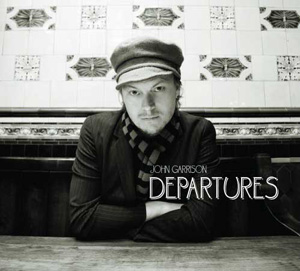
Garrison’s recent work has been as a solo artist. He will release his latest record, Departures, through AWAL (Artists Without A Label) in the UK (and digitally, worldwide), and independently in the U.S. on November 10.

“If a label steps in, I’m open to it,” he says, “But what I’ve learned is I’m never going to go on a major again and not know what’s going on. Right now, I have management looking after me, a publicist and licensing companies representing my music. I’m doing everything I’ve ever done, I’m just not running it through a major label, I’m doing it myself.”

TO NYC AND BEYOND

A singer and multi-instrumentalist, Garrison moved to NYC after Budapest broke up in ’06 and began his solo career. He’d already recorded the material for his first record, Above The Cosmos, when he hooked up with producer/engineer Matt Shane to mix it. The two hit it off, and Garrison — who’d played all the instruments on the record himself — invited Shane to plunge deeper into the project as a co-producer.

“It’s very rare to find someone with the same kind of musical brain,” says Garrison, of Shane. “We don’t even need to discuss things so much, I don’t even have to say what I want, he just knows it.”

Naturally, when writing and pre-production on Departures began somewhat early in ’08, Shane came onboard as producer from the start. The tunes were written mostly in NYC, but when Garrison got the gig to go out on tour with Blunt, the writing and production of his record went with him.

“The first few songs I wrote for Departures were about moving to New York, but then it was just about ‘moving,’ in general,” describes Garrison. “And realizing that no matter where you live, you have to be at home within your own skin. You don’t realize that until you start moving around. And when I left to go out on tour with James Blunt, all I was doing was moving. We did 188 shows all over the world.”

THE MAKING OF DEPARTURES

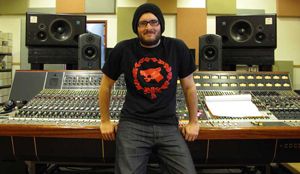
On break from the Blunt tour, Garrison and Shane met up in London to record basics at Sleeper Studios, the magnificently-equipped studio of songwriter/record producer Guy Chambers. (see in video below) Departures would be produced quite differently from Above The Cosmos.

“The first record was really more meat and potatoes — drum, bass, guitars, piano, keyboards,” says Shane, to which Garrison interjects, “And it was all played by me, and you can hear it. It sounds like one person playing everything and that is not a good thing.”

Departures opener, “Let’s Run,” demonstrates just how far away Garrison’s moved from ‘meat-and-potatoes’ instrumentation. It’s a brilliant, soaring track, of anthemic Eno-produced Coldplay proportions. “Where we recorded most of the instrumental tracks was any musician or producer’s dream studio,” Shane qualifies.

“And the beauty of it was that everything is setup and ready to go, with all of it running through an EMI desk that recorded the Beatles and Pink Floyd. Every day we’d go in at like 10-11am and the next thing we knew, it was 8pm before we broke for lunch.”

“Let’s Run” was the first song they cut their first day in the studio. “It started out like a basic band track — bass, drums and guitar based on this arpeggio that John laid down on piano,” says Shane. “We added parts here and there until we thought we’d finished it, but it only ever sounded only about 75% there. So, we gave the load of tracks to John’s buddy Tom Visser, a musical mad scientist, and told him to go nuts with it. He sent us back a whole bunch of files, re-recorded drum and bass parts, and additional sounds. We added from that and created the final arrangement.”

Electronic patterns and textures build out the big rock sound in “Let’s Run.” It’s a totally lush arrangement but with just enough space built in to hear everything. Ultimately, says Shane, “We ended up having to rush through the mix, and Richard Flack who mastered the record, asked if he could do another mix of ‘Let’s Run,’ where he stripped it down a little. It had been a bit too sweet, there was actually too much ear candy. Richard nailed it and also mastered the rest of the tunes.”

“Let’s Run” (video below) sets the stage for the rest of the album, as far as sound and production, adds Shane. “Everything else that happens on the record can be traced back to what we do in that song. We use a lot of really organic sounds, and you’ll hear that they’ve been really cleanly recorded, but you also hear loops and production elements and tricks. It all blends together really well.”

Another Departure, “I Leave on Friday,” goes down more of a straight-ahead alt-rock road and the blend of cleanly recorded tracks with a dirtier electric rock guitar sounds keeps it from sounding too polished and pretty.

Garrison’s craft is sentimental pop songwriting, and he does it really well. To that, his and Shane’s combined sonic aesthetic adds interesting and certainly commercially appealing dimension. And, if a James Blunt comparison happens to come to mind, on a tune like “So Close,” for example, it’s not because of a sappy sound or vocal. (In fact, if anything, hearing all of these tracks performed solo on acoustic guitar or piano at Rockwood, I hear more of a Glen Hansard or Fran Healy.) Garrison’s a talent and the sound that grew up around these songs seems to add conviction to the material.

“The sound really kind of evolved naturally,” says Garrison. “It’s really organic. We wanted everything to be authentic, so if we’re going to have some synth sound, let’s find the actual vintage synth and use that. At Guy’s you can do that. Want a Moog sound? It’s all ready to go!”

“The record is pretty sonically (as opposed to stylistically) diverse though,” assures Shane. “It goes from really giant roomy rock-and-roll drums to really dead 70s drums and we incorporated all these great synths and live strings and percussion.”

BACK TO NYC, BACK ON THE ROAD

From Sleeper, Garrison and Shane flew back to NYC to record vocals, strings and other overdubs at One East in Manhattan. Then, with Garrison heading back on tour between recording and mixing, they kept the project alive via email, sending edits and ideas back and forth.

Shane mixed the record when Garrison came over on a couple breaks — the first sessions went down at Looking Glass just before it closed and the second leg of the mix happened at Fluxivity in Williamsburg, a uniquely well-equipped facility (owned by Nat Priest, a studio equipment technician: www.musicvalve.com) that Shane calls “a treasure.”

“NYC still feels like home to me,” says Garrison, of working in New York over London, “I just don’t live here at the moment. But something about this place brings out the best in me. Plus, I admit it was also more economical with the pound vs. the dollar.”

And, the studio hopping and intermittent production schedule may have worked to the record’s benefit. “It was cool that we had the time between sessions because we really got to look at it from every possible angle and work out all the kinks,” says Shane. “We tried everything and ended up with exactly what we wanted.”

Garrison adds, “There were some songs we were loving at one point, but then they died. By the next time we’d picked back up, we weren’t into them anymore. You get that benefit when you have the gaps.”

Though it stretched out over several months, the team kept a brisk pace when actually in the studio. “There was nothing we couldn’t try and no idea that was a bad one, but it never felt like we were stretching too far because John and I think so much alike in how we approach music,” says Shane. “So, it was all productive.”

Garrison concludes, “It was such an amazingly enjoyable experience, much more so than any of my band records. I remember when we finished mixing and I was flying back to the UK, I didn’t want it to end! I was so happy, waking up in NYC, getting a coffee and going into the studio, and Matt would already be there an hour listening back to my music and it’s sounding absolutely amazing because I’ve left it in his hands and he totally understood it.”

On The Road With Flight of the Conchords

September 8, 2009 by  
/* Filed under NYC Spotlight */

Scoop_FOTC_FreakyNew York, NY — Fans of the HBO series Flight of the Conchords might have a hard time imagining slacker-heroes Bret McKenzie and Jemaine Clement racing between the show’s stage in Greenpoint, Brooklyn and recording studios city-wide to get all of the show music fully written and produced and albums of it recorded and mixed. But, that’s exactly what they did during both seasons of the award-winning series.

Their second full-length record, I Told You I Was Freaky, comes out on Sub Pop in October, produced by Mickey Petralia and recorded by NYC-based engineer Matt Shane: the production team responsible for capturing all of FoTC’s musical antics for TV. It’s a compilation of songs from season two — including the R. Kelly-inspired “We’re Both In Love With A Sexy Lady” and club anthem “Too Many Dicks (On the Dance Floor)” written/produced during the show’s production.

Shane describes, “As opposed to season one, most of the songs for season two hadn’t been performed live, so instead of starting out with two guitars, we were starting out with these full-up beats they worked up in the studio with Mickey, and then they’d add elements later to make it fit or change genres. The guys would do 12-hour days shooting during the week and then we’d be in the studio at nights and on the weekends. We split the work between a handful of studios — Mission Sound and Metrosonic in Williamsburg, One East, Looking Glass and Chung King in Manhattan, and Bloody Good Record in Long Island City.”

In appropriate contrast to their TV persona, Flight of the Conchords is a highly active band, releasing singles via iTunes during the seasons, albums post-season (including a Grammy-winner) and touring in support of all. For their U.S. tour last Spring, the Conchords tapped Shane and My Morning Jacket FOH engineer Ryan Pickett to help them take the show on the road

BIGGER SHOWS, BIGGER PRODUCTION

“We were going to be doing way bigger houses than we did on their first, smaller tour last year, so they stepped up the production as well,” explains Shane. “They share management with My Morning Jacket, who happened to not be on the road at that time, so Ryan and Marc (Janowitz), MMJ’s lighting designer, were available to get involved.”

Matt Shane at the Neve 8048 in Williamsburg's Fluxivity Recording.

Matt Shane at the Neve 8048 in Williamsburg's Fluxivity Recording.

Being so familiar with the material, having recorded all the music, Shane took on monitor duties on the road. Orientation took place at Soundcheck in Nashville, where the crew staged the show and Shane and Pickett put their heads together on how to best present this unique act, live.

FoTC enlisted fellow kiwi and multi-instrumentalist Nigel Collins to fill in musically on cello, background vocals, keyboards and percussion. “The second season had just finished airing and the songs had been created in the studio and never played live,” says Shane.  “With only a few days of rehearsal, the guys used the first couple weeks of the show, during sound-checks and even the actual concerts, to sort of reverse-engineer some of these fully produced tracks and bring it back down to two guitars and vocals.”

Technology helped them genre-hop and do their best Prince falsetto or T-Pain croon. “They use a lot of effects in some of their songs — like in hip-hop tunes where they copy the AutoTune effect, and they wanted to be able to do that, live,” says Shane. “So, we researched and found the new ElectroHarmonix Voicebox, a vocal synth processor pedal that matches whatever reference signal you send to it. With that, they were able to do all kinds of things — harmonies, vocoder, etc.”

RULE ONE OF COMEDY CONCERT: EVERYTHING IS MATERIAL

Though rehearsal got everyone in gear, the FOTC shows were largely dictated by band-audience interplay and therefore quite unpredictable. “It was very common that songs would not be done the same way twice,” explains Shane. “Jemaine would play an Omnichord on a song in sound-check and then during the show, he’d stay on guitar for that song.”

Pickett adds, “I’ve never had to be on my toes quite so much; for having such few musicians on stage, it was pretty intense.  I never knew where they might go, because of dark-outs and things like that, which kept it fun.”

The variable set-list became a joke with the crew. “It was just a list of 30 songs, but they hardly ever went in order and rarely played them in the same order twice,” describes Shane. “That improvisation added to the comedy routine. So, if Marc didn’t bring the lights up or didn’t change the colors in time for a sad song, they’d ask, ‘Can you make it look like we’re inside a tear?’ They’d make us part of the show. I’d become part of the bit if I had to run out and fix something. Everything is material.”

RULE TWO: THEREFORE, EVERYTHING HAS TO BE HEARD

Allowing for audience interaction in large halls, Pickett had the band on wedges. “In-ears just wouldn’t have worked for this show, since every song came out so different each night, in terms of tempo and instrumentation,” he explains. “And sometimes one of the guys would lay out and then come back in — if they were on in-ears and the levels were locked in, and there were no ambient levels or they couldn’t hear the other guy’s wedge or bleed, etc. they’d be alone, out in space.”

Diction and comic timing were key show elements that needed to come across as much as the music in these large halls. “I’ve done a few acoustic arrangements, but the whole comedy factor of this show really adds a whole new element to what we’re doing,” adds Pickett. “Every little corner of the room needs to hear what’s being said, and their accent is a bit of an obstacle for the audience to begin with, so you really had to be on your mark.”

Shane elaborates, “It took a lot of tricky microphone placement and EQ to give us the most headroom before feedback possible. We never knew where they were going to go during any given song, so we had a lot of mics open all the time and since they were on wedges, there was a lot of foldback that Ryan had to deal with.”

Never a dull moment during this tour, Shane also ran sessions with the guys on days off to finish the next album. “We’d be doing vocal overdubs in dressing rooms so that we could send stuff off to Mickey who was re-mixing the songs for the record.”

Look out for the Flight of the Conchords’ record, I Told You I Was Freaky, in October.

Matt Shane lives and works in NYC and is currently working on a new record by Robbers On High Street and on mixes for Hamacide and The Woods. Get in touch with him via www.mshane.com.

A live sound and recording engineer based in North Carolina, Ryan Pickett is often on the road, mixing FOH for My Morning Jacket and, most recently, The Decemberists.