Soundgarden Sign Worldwide Publishing Agreement with BMG Chrysalis US

March 28, 2013 by  

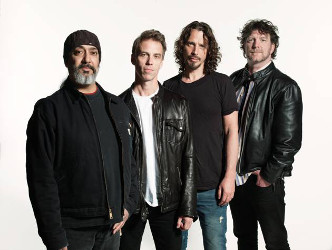
They like THE ROCK at BMG Chrysalis US: The multinational music rights management concern – which maintains offices in New York City and Los Angeles — just made a big addition to its million-plus-song repertoire, with the signing of Soundgarden to a worldwide administration agreement.

BMG Chrysalis has toughened up with Soundgarden on board.

BMG Chrysalis has toughened up with Soundgarden on board.

The deal covers Soundgarden’s entire catalog. Seattle’s famed Chris Cornell-fronted rock four-piece brings a formidable collection of hits to BMG Chrysalis US, which include the GRAMMY Award-winning “Spoonman,” and “Black Hole Sun”, along with pioneering songs like “Rusty Cage” and  “Outshined”.

Highlights for Soundgarden include the 1994 album Superunknown, which debuted at Number One on the Billboard charts and yielded the aforementioned singles. The band took a 12-year hiatus in 1998, then reassembled in 2010 to record and tour, including a headlining slot at the Lollapalooza Festival. The band’s Fall, 2012 release, King Animal, was their first in 16 years — the second leg of their North American tour begins in May 2013.

Imagem Music Opens LA Office – Industry Veterans Join Indie Music Publisher

March 5, 2013 by  

There’s no letup in the thickening competition of music publishing.

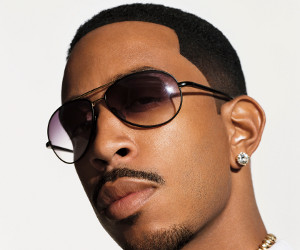
Ludacris is one of the many high-profile songwriters on Imagem Music's roster.

Ludacris is one of the many high-profile songwriters on Imagem Music’s roster.

The latest development comes from Imagem Music, the pop music division of the Imagem Music Group and the world’s largest indie music publisher, which has just expanded with new Los Angeles offices at 9165 West Sunset Blvd. in West Hollywood.

The West Coast location is strategically located to be close to the heart of the film and TV community, and will be staffed with some serious experience. The Imagem catalog includes works by Elvis Presley and Sammy Cahn, in addition to songwriting talent that includes Ludacris, Phil Collins, Genesis, Anna Nalick, Steve Robson, Jens Gad, Temper Trap, Hesta Prynn, and Bombay Bicycle Club.

Here are additional details on the California crew, as provided by Imagem:

Joining the Imagem Music LA team is Shari Reich, Director of A&R. Shari comes to Imagem from Warner Bros. Records in Burbank where she was Director of A&R. At Warner Bros. Records, Reich contributed to albums from artists such as The Veronicas, Jason Derulo, Cher, and Josh Groban and worked closely with the licensing and sync department for song placement pertaining to Warner Bros. catalog in film, television, advertisement and web content. In her new role at Imagem, Reich will be working on acquisitions and song plugging.

Robert Thomas has been named Manager, Creative Services for Imagem’s West Coast office. Previously, Thomas was a Licensing Accounting Manager at Rumblefish. His other work experience includes a Coordinator role in the Film & TV department of BMG/Universal Music Publishing in LA and a Consultant at Creative Control Music Supervision in LA. At Imagem, Thomas will be working in the synch department with a sharp focus on Film & TV.

Steve King, who is based in LA for Imagem Music, has been promoted to Director, Creative Services. He was formerly Manager, Creative Services. Before starting with Imagem, King owned an artists and brand development company. Among many projects, he worked on music for global Coca-Cola campaigns such as the 2008 Beijing Olympics, “Open Happiness” song and 2010 South African World Cup. In King’s almost 4 years with Imagem, he has been instrumental in procuring opportunities in film, television and gaming. He will now oversee the U.S. Creative Services team, across all media types for synch.

Imagem has promoted Brian Suh, based in LA, to Director, Business & Legal Affairs. He was formerly Associate Director, Business & Legal Affairs. Suh will continue to handle Business Affairs matters for Imagem Music.

In addition, Lauren Shulkey-Barker will be joining Imagem’s West Coast office and supporting the team as Creative Assistant.


TuneCore Expands Global Royalty Collection For Songwriters — Adds Four Sub-Publisher Agreements

February 1, 2013 by  

To make the most of musical revenue, tapping into the global marketplace is more important than ever.

TuneCore’s Music Publishing Administration Group has extended its international reach.

TuneCore (NYC)  has just increased worldwide royalty access for its Music Publishing Administration Group clients, with the announcement that it has signed four new strategic Sub-Publisher agreements.

The four agreements and the territories they cover are expansive. They include:

Schubert Music Europe – France, Spain, Portugal, Poland, Romania, Bulgaria, Czech Republic, Slovakia, Croatia, Serbia & Montenegro, Bosnia & Herzegovina, Albania, Kosovo, Macedonia, Slovenia, Luxembourg, French Polynesia, New Caledonia, Andorra, Monaco, and Lebanon;

ROBA Music Verlag GMBH – Germany, Austria, and Switzerland;

Native Tongue Music Publishing PTY LTD. – Australia, New Zealand, Fiji, and Papua New Guinea;

Cafe Concerto International S.R.L. – Italy, Vatican City, and Republic of San Marino.

The new agreements come in addition to territories already covered, which include TuneCore Japan KK’s representation of Japan, Hong Kong, South Korea, Malaysia, Philippines, Singapore and Taiwan, along with direct society affiliations with MCPS/PRS – UK, Ireland; NCB/KODA – Denmark, Norway, Sweden, Finland, Estonia, Latvia, Lithuania, Iceland; BUMA/STEMRA – The Netherlands; SABAM – Belgium; CMRRA and SOCAN – Canada.

TuneCore Publishing Administration was launched by the digital distributor TuneCore in November of 2011. It provides an integrated service that allows TuneCore artists to collect the revenue from their music downloads and streams, and also allows them to receive their songwriter/publisher royalties from hundreds of societies, digital stores, and other sources, through one entity which acts as their Worldwide Publishing Administrator. The result is significantly streamlined global publishing administration for independent artists and publishers.

TuneCore Publishing Administration currently has 10,000 songwriters signed up for its service, representing 125,000 compositions. The service is available to all songwriters and publishers not currently represented by a Publishing Administrator.

Synch Focus: Public Enemy’s “Harder Than You Think” for the 2012 London Paralympics

November 19, 2012 by  

Who’s In Focus: www.reachmusic.com

We Are: Reach Music Publishing, Inc. — a music publisher based in Burbank, CA.

The Project: Paralympics – “Meet the Superhumans” :90 commercial for Channel 4 (UK), produced in-house

Check it out: The video is directly below –


Creative Brief: 90-second spot, promoting the 2012 London Paralympics (which was held after the regular Olympics) from Aug 29 through Sept 9.  It was directed by Tom Tagholm and produced in-house by Channel 4.

The concept of the advertisement was to show the Paralympians using high-level sporting events as redemption to overcome their lifelong challenges and disabilities. The tagline is: “Meet the Superhumans.”

Magic Track: The director wanted a song that builds with a powerful crescendo, with impactful vocals to signify the struggle, drive and superhuman accomplishments of the Paralympians.

Public Enemy’s “Harder Than You Think,” with Chuck D leading on vocals provided the ideal accompaniment, which was personally chosen by Tagholm, a lifelong Public Enemy fan.

Synchro Nicety: Goosebumps! It was incredible to witness how impactful a song could be to drive home a message to an audience and to show the Paralympians as driven athletes, not deterred by disasters or disabilities.

The Payoff: The song synched with the commercial, which was repeated continually during the Paralympics, helped raise the visibility of the Paralympics within the UK, leading to sold-out nights in the Olympic arena and continual press coverage within the UK. Most importantly, it showed the Paralympians as triumphant heroes, not limited by circumstances. This is why the campaign was a success.

On a business level, “Harder Than You Think” immediately started selling during the Paralympics, rising to #3 on the UK iTunes download charts, #4 on the UK national sales charts and #1 on the UK independent singles and urban download music charts. It became the highest charting single ever by Public Enemy in its 25-year career. Additionally, the promo was recently awarded six PROMAX Awards in the UK, which reward the very best in creative TV marketing.

– Michael Closter, President, Reach Music

Public Enemy was more than on board with this usage of “Harder Than You Think.” (Photo by Robert Downs)


Opportunities, Challenges & Threats: Production Music at a Crossroads

September 24, 2012 by  

In the media world, production music is a vital component of sound-for-picture. These sonic libraries – which can range from specialized boutiques to all-encompassing collections numbering in the thousands – provide music supervisors, music editors, producers, and other media pros with a ready-to-go availability that composers and licensed artist tracks are hard-pressed to match.

The PMA will tackle possibilities and obstacles alike head-on in NYC, October 11th.

Last month, Randy Thornton was named Chairman of the Production Music Association (PMA), the non-profit organization which promotes and protects the rights and interests of publishers and composers of music for use in film, television, radio and new media. But Thornton, who is also CEO of Warner/Chappell Production Music – a versatile conglomerate of multiple independent libraries – knew that being the Big Cheese wouldn’t be a cakewalk.

Put simply, the pressure has been turned up in production music, a sector which had enjoyed relative stability for years even as the rest of the music industry turned chaotic around it. Just as the number of production music catalogs and creators are proliferating, their customers have less to spend. Meanwhile, the retitling of tracks – a legal technique that allows rights holders to place the same song in multiple non-exclusive libraries – often creates confusion in step with revenue.

Thornton spoke with SonicScoop on the eve of the PMA’s NYC meeting taking place on Thursday, October 11th (open to members and non-members alike, see the full details here). Entitled “The Future of Production Music:  Opportunities, Challenges & Threats,” the event will pull no punches regarding the current crossroads for the organization and its members – in this interview, the Chairman clarified what’s on the table for the PMA today.

It’s one thing to be a dues-paying member of an organization, but another to take part in its leadership: What first made you decide to take an executive role in the PMA, starting as a board member?  

I have always felt that the PMA was a much-needed organization, and since the early days of its inception have been a huge supporter of its initiatives.

Over the past 4+ years, having served as a member of the board of directors, I feel even more strongly that the PMA is uniquely positioned to bridge the gap between the needs of our industry and our clients.  When the board of directors asked me to step up and accept the position of Chairman, I was happy to do so knowing that I would be able to continue to work closely with our membership and board of directors.

Taking that one step further, what will having the position of chairman allow you to do for the organization and its membership?

Randy Thornton, Chairman of the PMA

I feel that the biggest challenge currently facing the production music industry is that of maintaining the value of our music in the marketplace.  If I can contribute to that goal in some small way, I feel that I will have successfully served our membership!

Looking at the landscape right now, how would you describe the current professional environment that production music professionals work in?

The current environment is one of increasing competition for ever-dwindling budgets.  The upside is that there are more potential clients than ever.  The downside is that many clients are being squeezed financially and are therefore pressured to look for “alternative sources/practices” for production music, many of which are detrimental to the sustainability of the industry as a whole.

And how is that different from the way things worked five or ten years ago?  

The PMA now represents over 450 catalogs, representing a 10-fold expansion of our industry from just 10-12 years ago.  Financial pressures brought about by fragmented TV, film and New Media industry segments have caused an environment where both music suppliers and consumers are struggling to understand consequences of differing licensing models while trying to analyze the cost/benefit advantages of each.

You said in your press statement upon being named Chairman, “I look forward to working with our membership to help bring about positive change”.  Can you elaborate on what some of these positive changes would be?

I feel that it is critical that we strive to maintain or elevate the value of our music, thus enabling a viable financial future for our industry as a whole.

The PMA works to accomplish this through education of our membership, our clients, and the next generation of production music professionals looking to make their mark in the marketplace.  Education and a commitment to understand current needs on both sides of the fence are crucial to ensuring real progress for our industry.

You also advocated “awareness of critical issues impacting our industry’s long-term sustainability.”  Can you please elaborate on what the most pressing issues are in this respect?

The PMA has been very active in working with the performing rights organizations to adopt digital recognition software in order to more accurately identify broadcast performances as well as insuring the fair distribution of performance royalties.

Additionally, we have worked to support the PRO model for the licensing of performing rights.  We have been very vocal about the destructive nature of “retitling” of musical works, and have worked tirelessly to uphold the integrity and value of copyrights.  We look forward to working more closely with our international counterparts to help ensure the viability of our industry on a worldwide basis.

Lastly, aesthetically, how do you feel production music is evolving?  In other words, in what ways is production music sounding better/worse/more creative/more diverse in 2012?  

The production music industry has consistently grown in both size and quality over the past 10 years:  Long gone are the days of clients bemoaning the fact that they “had to use a library cue”.  The creative and production values of current production music works are leading the world in many segments of the market, including the work of many GRAMMY and Emmy award-winning composers and producers.

Clients have a huge choice these days when it comes to choosing music, and their choice more often than not centers around creativity and production values — both of which are good news for our industry!

– David Weiss is the Founder/Editor of SonicScoop, and co-author of the book Music Supervision: Selecting Music for Movies, TV, Games & New Media.


Mick Mars Signs Publishing Deal With Imagem Music (NYC, LA)

August 22, 2012 by  

The world’s largest independent music publisher now has the perfect complement to its catalog of Rodgers & Hammerstein classics: Mick Mars.

Mick Mars will rock forth with Imagem for years to come.

Imagem Music USA (IMU) announced today that is has signed a worldwide, multi-year administration agreement with songwriter and Mötley Crüe member Mick Mars, whose signature guitar sound is undeniably a staple of American rock music. Mars co-wrote some of Mötley Crüe’s greatest hits including “Girls Girls Girls,” “Don’t Go Away Mad (Just Go Away),” and “Dr. Feelgood.”

Imagem Music is the pop music division of the Imagem Music Group, co-founded by André de Raaff.  The company is home to the Elvis Presley and Sammy Cahn catalogues as well as Ludacris, Phil Collins, Genesis, Anna Nalick, Steve Robson, Jens Gad, Temper Trap, Hesta Prynn, Bombay Bicycle Club and more. Imagem Music has offices in New York, Los Angeles, London, Berlin and the Netherlands, and exclusive agents all over the world.

Secret Road Music Services Names Joshua Sarubin Head of A&R/Publishing

August 10, 2012 by  

The LA-based music licensing, publishing and management company Secret Road announced this week that Joshua Sarubin has been named head of A&R/Publishing.

Joshua Sarubin’s path has led him to Secret Road.

Sarubin will be New York-based in his newly created role, where he will work with artists and songwriters that are already on the Secret Road Music Publishing roster. In addition, he will be responsible for signing and developing new writers and artists to the company.

Previously, Sarubin built up his A&R portfolio at Columbia, Arista and Island Def Jam. In his most recent position, he was VP of A&R at Sony ATV Music Publishing. He has signed or worked with Avril Lavigne, Pink, Santana, Presidents of the United States of America, Lionel Richie and Lady Gaga, among others.

Secret Road was founded by Lynn Grossman in 2007, has launched the career of platinum-selling, indie pop artist Ingrid Michaelson, and has grown to represent more than 80 artists and a catalog in excess of 4,000 songs for licensing. The company offers clients a one-stop shop by instantly clearing both mechanical and synchronization rights.

Secret Road TV synch placements include “Grey’s Anatomy,” “Parenthood,” and “Pretty Little Liars,” and films such as What to Expect When You’re Expecting, Something Borrowed, and No Strings Attached. Commercial music synch placements include Chevrolet, Target, and Google.

The company expanded into publishing in 2011 with the creation of Secret Road Music Publishing, in addition to launching a Latin music division.


Sony/ATV Completes $2.2 Billion Purchase of EMI Publishing

July 2, 2012 by  

For a quick but essential update about the high end of music publishing, read Ben Sisario’s Q&A in the New York Times with Martin N. Bandier.

Over 1.3 million additional songs are now under the control of Sony/ATV, courtesy of its just-completed acquisition of EMI Music Publishing.

Bandier is the NYC-based chairman of Sony’s publishing arm, Sony/ATV, which completed its $2.2 billion purchase of EMI Music Publishing on Friday, June 29th.

Inside the “NFL Business of Music Boot Camp:” An Athletic New Alchemy is Launched

March 5, 2012 by  

GREENWICH VILLAGE, MANHATTAN: Under the helmet of each man who ever competes in the NFL is a future ex-player. While the heart of a lion may beat inside, another life awaits them all – some sooner, some later.

The NFL had an unusual mission downtown.

As these gladiator-like athletes learned their game, the sound of music was a constant companion. At the high school and college level, marching bands set the soundtrack, with increasingly sophisticated musical cues becoming a big part of the fan experience. By the time these 22-year old warriors – quarterbacks, offensive tackles, linebackers, safeties, and kickers – make it to the hallowed stadiums of the National Football League, music has become an essential source of inspiration.

So while the announcement of the first-ever NFL Business of Music Bootcamp, hosted downtown this past week by NYU’s Clive Davis Institute of Recorded Music (part of the Tisch School of the Arts), may have raised some eyebrows, the bedfellows were not so odd as at first glance. An extremely intensive four-day breakdown of the music industry in 2012, the camp saw a who’s-who of business executives instructing 20 current and former NFL players on how to survive and thrive in the recorded sound sector.

There was talent to go around on both side of the ball. Big names like cornerback Al Harris, wide receiver Torry Holt, and safety Antoine Bethea lined up to face the likes of Downtown Records’ Josh Deutsch, Sony ATV Music Publishing’s Danny Strick, Bob Dylan manager Jeff Rosen, Bank Robber Music’s Lyle Hysen, Spike Lee, and Clive Davis himself.

Player Engagement: Keeping Athletes Connected

There are several reasons why this decidedly innovative convergence of music and athletics just took place in New York City.

Every year, the 32 teams of the NFL launch their seasons with 53 players on their roster – a 1,696-person pool right there. Mix in the hundreds of players that come and go from these lineups in the course of the year due to injury and sub-par performance, and you have an ever-growing mass of athletes that will eventually be leaving the league.

The NFL assumes some level of responsibility with assisting players – both current and retired – on their next careers via what they call player engagement. “The mission of NFL Player Engagement is to empower players to reach their highest potential both on and off-the-field through guidance, support, and resources provided before, during, and after their NFL experiences,” says Troy Vincent, NFL Vice President of Player Engagement. “We continue to look for ways to educate players and develop their skills for post-NFL experience. The NFL Business of Music Boot Camp builds upon the successes of our Business Management & Entrepreneurial program, and Broadcast Boot Camp in catering to players’ interests in new disciplines.”

The need to look ahead to their job after football is a concept most players get their heads around early on. Jon Dekker, a three-year tight end for the Pittsburgh Steelers and part of their Super Bowl XLIII-winning squad, was one of the 20 players accepted into the program – out of 100+ applicants. Dekker, who officially left the league after the 2008 season, took a one-week break from his MBA studies in the applied securities analysis program at University of Wisconsin’s Wisconsin School of Business, to take part in the Music Boot Camp.

NFL Music Boot Camp participant Jon Dekker is a former tight end for the Pittsburgh Steelers.

“It’s such a short shelf life in the NFL,” he points out. “I think the average career comes out to about 3 or 3 ½ years, and that’s one reason I applied to business school right after that career. It’s awesome and you want to extend it as far as possible, but the reality is that before you know it, it’s over.”

Justin Fargas was drafted in the third round by the Oakland Raiders in 2003, and spent his entire seven-season playing career with the team. While still technically a free agent (as opposed to being officially retired), Fargas’ attendance at the Boot Camp signified an acceptance that his playing days are over.

“I’m content with moving on,” says Fargas. “Every player — that plays or is no longer playing – still has a love and a passion for the game. I feel mentally and physically that I can still play the game, but I’m ready to move on.”

Fargas first learned of the Boot Camp via an email update from the NFL Player’s Association (NFLPA). A rapper and lyricist with a longtime dream of starting his own record label, Fargas’ interest was immediately piqued. “When I saw the music industry was a program being offered, it caught my eye,” he recalls. “Then when I saw what it would entail, it seemed perfect for me.

“As an athlete with an interest in the business, you can spend a lot of money and a lot of time, and waste a lot of money and a lot of time. Music can become a very expensive hobby. My goal was to turn my passion — and what I do in my free time — into a business.”

The Shoe Fits: Athletes and Music Go Way Back

There are many obvious parallels between the NFL and music industry: They both stand as potentially huge-profit-making entertainment sectors where artists, athletes, labels and teams become formidable franchises. But the interweaving of sound and sport go deeper than just an obvious continuing-education concept.

Music is a massive inspiration to athletes as they prepare to do battle. “Before the games, the guys were on their headphones,” says Dekker, who plays three instruments and routinely charged up with Pearl Jam’s 10 and Vitalogy. “Music is a way for them to focus, or get their energy flowing before the game. The same way music moves a non-athlete before the game, it does for the athlete. Motivation is the key.

“A lot of NFL guys, like who you saw at the Boot Camp, have outside interests, and music’s a big thing. A lot of guys who come up have played guitar or piano. That’s a hobby of theirs, and they appreciate the value of music. In the pro stadiums, the big thing I remember from Pittsburgh was the Styx song ‘Renegade’ – they’d play it before the fourth quarter set video of defensive highlights, and every time the crowd would get up. Here in Wisconsin they traditionally play ‘Jump Around’ by House of Pain, that’s a Madison tradition.”

The power of music and sport — “Renegade” has a visceral impact on the Steelers crowd:

The league’s players are well attuned to music’s role in their competitive environment. So it starts to make sense why NFL linemen would be qualified to spot talent, run a label, oversee a recording session, or music supervise a movie – all fundamentals which were explored in the course of the Boot Camp’s curriculum.

Dekker says that when it comes to the work ethic required for today’s music business – an increasingly competitive arena where supply is growing exponentially, margins are falling, distribution is open to everybody, and new technologies are invented and converged daily – professional athletes have an edge.

“I think an athlete definitely has the understanding of how much has to go into it,” he observes, “and obviously all those players at NYU this week didn’t get into the NFL without putting in a lot of time and a lot of work. I think they realize how much of that has to be replicated if they’re going to accomplish that in music.

“You also have a lot of different athletes from different backgrounds that have varied musical tastes. You can bring your own unique musical tastes to the forefront. In addition, athletes are also entertainers. That’s why I love to go to concerts, and why musicians love to go to a sporting event. It’s an appreciation for the other’s craft.”

Fargas readily acknowledges he’s trading one rough road for the other with his career choice. “Neither one is an easy job — it’s not easy to make it in the music business, and it’s definitely not easy to make it in pro sports.

“I’ve probably been writing and being creative in music longer than I knew I was going to play professional football. I’ve never wavered from my passion for music. I’ve never pursued it consistently because I was playing football. But now I’m moving into a new phase of my life, and putting 100% percent of my energy into realizing my creative dreams.”

Up Close with Clive

The 20 players who arrived at NYU kicked off the Boot Camp via an intimate keynote Q&A with iconic Sony Music Chief Creative Officer Clive Davis, who shared career highlights and lessons with a rapt audience. In the 90-minute session, questions from the players were numerous and Davis was frank on all fronts with them.

Clive Davis began the Boot Camp in fast fashion. (Photo Credit: Esther Nisanova/NFL)

He stressed at one point that “new companies with the right creative leadership, and executable insight, can grow;” outlined his simple evaluation process for hit potential as “gauging melody, hook, lyric;” and saw in a young Sean Combs someone “who understood the importance of finding headliners.” In response to repeated questions, Davis reiterated that NFL players would have no easier time scoring hits as artists than myriad rock star-aspiring Hollywood actors had, and also underscored the global reach of today’s music business.

“You always have to think worldwide,” Davis said. “The big artists today, like Mariah Carey and Celine Dion, have a worldwide arena. Alicia Keys went everywhere. (The business) is half in the U.S., and half outside the U.S.”

Following the keynote, the congenial group of players – which also included pros like Minnesota Vikings punter Chris Kluwe, hard-hitting Buffalo Bills safety Bryan Scott, the imposing offensive tackle L.J. Shelton (Arizona Cardinals, Cleveland Browns, Miami Dolphins, San Diego Chargers), and wide receiver Brandon Lloyd (now with the St. Louis Rams, his fifth team) – were whisked off to a micro-MBA on music. Their schedules went from 6:30 AM until 8:30 or 9:00 PM daily, with itineraries planned to the minute, insuring maximum information and connectivity with the 19 expert-led panels and workshops that would follow in the four days to come.

“With many current and former players interested in the business of music, we developed this program with NYU’s Clive Davis Institute of Recorded Music to assist those players in determining whether music is a potential career for them,” Vincent said of the course design. “For those players who decide to pursue the music industry as a career option, we’re hopeful that the skills and contacts from this program will serve as a springboard into the industry.”

Four Days of Music Business Immersion

Just like on game day, the players had an early breakfast, then got on a bus together at the hotel – only this time they were taken to a no-nonsense slate of crash courses starting at 8:00 AM. “Finding the Hit Song” was run by Rob Stevenson (Executive VP of A&R, Universal Republic Records), Sean Stevenson (Founder, 0260 Group) and Imran Majid (Senior Director of A&R, Universal Republic Records). “Artist Development & The Power of Social Media” was headed by Jonathan Daniel (Manager, Fall Out Boy, Train) and Sam Hollander (Songwriter and Record Producer for O.A.R., Gym Class Heroes, Kelly Rowland).

Primary Wave was one of many NYC innovators onsite.

After a 15-minute break, they dove in to the likes of “Music Publishing 101” from Danny Strick (Co-President, Sony ATV Music Publishing), Seth Faber (Partner & Director, marketing/Artist Development, Primary Wave Music) and Juan Madrid (Vice President of Urban A&R, Warner/Chappell LA). Following a Business Plan Workshop and lunch, synch supervision took center stage with “Music in Today’s Film, TV and Advertising” via Errol Kolosine (Business Area Lead, The Clive Davis Institute of Recorded Music), Lyle Hysen (Founder, Bank Robber Music), and Jeff Rosen (Manager, Bob Dylan).

Later, perhaps “Music Distribution: Target, iTunes, and the International Marketplace” was presented by Ron Spaulding (General manager, Fontana Distribution Group). Maybe Spike Lee drops in. Then into the studio for “Making the Record, Part 1”, where Nick Sansano (Head of Production Studies, the Clive Davis Insitute of Recorded Music) and Ryan Leslie (Recording Artist, producer, Social Media Entrepreneur, Founder of NextSelection Lifestyle Group) reviewed the principles of digital vs. analog, and recording basics.

Cap all that (and much more) with a one-on-one session with an industry mentor (Note: Your author served in this capacity to one of the players), and the result is a comprehensive course that concludes in a highly customized consultation for the player. Along the way, ongoing connections between all parties – players, speakers, panelists, mentors — are highly encouraged.

In the process, the Boot Camp created a much needed “safe zone” where players could learn from trusted sources that were there strictly to help them solve problems, and not become part of their posse. “Out there in the real world, you meet a lot of people who tell that they can do this – if you pay this much money, they can do it for you,” says Fargas. “A lot of it is not tangible. What we’re learning here is from professionals, that are actively doing it and don’t have anything to gain on the surface from us.

“The Boot Camp has really exceeded my expectations. I can’t even really put a value on the experience, just from the contacts I’ve made, the people I‘ve heard speak, the wealth of experience – from Clive Davis to Spike Lee, to Ryan Leslie and more music executives who are telling you how it is.”

For Dekker the result was twofold: a better understanding of the music industry, and tips on the best way of going about things – provided this was a dream he wanted to pursue. “A lot of us are wondering, ‘What does it really take to get into this business, and what do I have to put in?’ This clarified a lot I didn’t know.

“I think it was Rob Stevenson who said at the Boot Camp, ‘You bet on the artist,’ and that was really an interesting point. You can hear a song, but at the end of the day the artist is the sustainable part of the equation. One song may be an artist’s only hit, but if you have a better artist, you have a better chance of making more hits.”

The Right Time

It’s particularly important for the NFL to be launching this initiative now. The league is defending itself against a growing number of lawsuits blaming the NFL for concussion-related dementia and brain disease – plaintiffs number in the hundreds, and include big names like Super Bowl champ Jim McMahon, Jamal Lewis, and Dorsey Levens.

When the Player Engagement department gets creative and offers relevant new initiatives, the players receive tools they can use from the league. With Vincent’s background as a first-round draft choice player who competed with four different clubs, its unlikely there’s anything PR-ish behind it – the Music Boot Camp is a logical extension of what the NFL can offer to its current and former players.

It will be interesting to track the cultural impact of the NFL Business of Music Boot Camp – this one and hopefully ones to follow. The program introduces a complex new synthesis: Many possibilities are created when people with clout, a deep sense of commitment, teamwork, and discipline, are invited into a creative industry that would benefit from their presence.

Back at NFL HQ, Troy Vincent and his staff will assess the first Boot Camp, relying heavily on feedback from players and faculty. “We will review the pre- and post-program comments to determine how to model the program in future years,” Vincent explains. “We had more than 100 applicants for the program this year and only 20 slots. With such an extremely high level of interest, we will have to consider offering the program multiple times per year. We know that there will be interest moving forward — our challenge is to innovate and improve everything we do.”

From Vargas’ perspective, the Music Boot Camp is off to a strong start. “I definitely have more of a focused vision on what I need to do, how to go about it, and how to address the things that I’m not good at,” he says. “There’s a lot more to the music business than creating good music. As far as promotion, marketing, utilizing resources, leveraging your relationships, I learned there’s a lot of things you can do in ways where you can save time or money. Or, if you are going to spend money, how to spend it in the right ways with the right people.”

Robin Yount and Pearl Jam -- united.

The Stars Align for Music and Sports

A three-sport star in his Wisconsin high school, Jon Decker grew up equally inspired by All Star Milwaukee Brewers shortstop/centerfielder Robin Yount, and the band that is Pearl Jam.

“Robin Yount was the consummate professional,” Decker states. “He came to the ballpark every day, and made spectacular plays on the field. That inspires you to want to go out and make similar plays: have the clutch hit, make the big play on the football field.

“Pearl Jam just had their 20th anniversary. They’re a group of guys who have been together for a while, and came together to make great music. The sustainability of Pearl Jam is unheard of. Rock bands are like NFL teams – they don’t last that long. And look at their commitment to their fan base: They’re putting out great music and keeping a tight relationship with their fans.”

As the NFL pioneers initiatives like this, it’s interesting to think about whether America’s other major other leagues – the MLB, NBA, and NHL – are creating similar programs for its players. We already know how Shaq raps, but how else would everybody roll? The possibilities of pro baseball, basketball, and hockey players leveraging their status, relationships, and – in some cases – considerable wealth, in the music arena are extremely intriguing .

“I think anytime you have athletes wanting to diversify, then that’s desirable, and it’s another great thing that could come to the table for music,” says Jon Dekker. “Nobody knows who will write the next hit. We may lead everyone to a great song or artist that otherwise wouldn’t get heard.”

David Weiss

Audio Network (NYC) Launches $500 Filmmaker Annual License

October 4, 2011 by  

NYC-based music library Audio Networkannounced that it has launched a $500 Filmmaker Annual License.

The Audio Network makes an audacious offering with its new $500 annual license.

The annual license is intended to provide new and aspiring filmmakers with an easy path to score their films, with one year of unlimited access to Audio Network’s 45,000-track, pre-cleared, cross-genre library.

Audio Network synch licensing clients include HBO, MTV Networks and the BBC. Its extensive music library is pre-cleared and ideal for use in media content including film, advertising, reality shows and documentaries.

The company also supplies original scoring, audio branding, sound design services, and works as a creative partner alongside over 200 composers.

Next Page »