“Suite Songs: NYC: Episode 2: ‘Alter Ego’” from Stacie Rose Launches on SonicScoop

August 15, 2011 by  
/* Filed under News */

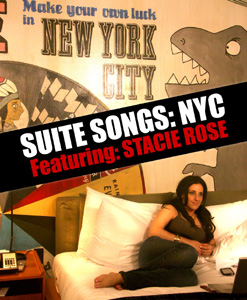
Episode 2 of SUITE SONGS NYC — an original series about the personal and collaborative process of song making featuring songstress/series creator Stacie Rose – has launched exclusively on SonicScoop.

Episode 2 of Suite Songs has just dropped on SonicScoop!

As the day continues with NYC singer/songwriter Stacie Rose and collaborators David Patterson and Mike Harvey, another guest arrives at the same NYC hotel suite where the first episode began, and the road map for the song Alter-Ego comes into focus. The song Alter-Ego and title track from Rose’s most recent release Alter-Ego Ep’s has been featured on Channel One and E!’s Keeping up with the Kardashians.

This is an intimate and vibey musical hang — an insider’s look at crafting pop songs on the fly. The series is presented by Enchanted Records.

Rose is a rising NJ/NYC songwriter who released the well-received Alter Ego EPs in 2010, and whose songs have been frequently licensed by the likes of MTV’s “The Hills”, VH1’s “Tough Love”, Paste Magazine’s “SONGS FOR HAITI” compilation, amc, FX, ABC, Escada fragrance campaign, American Airlines Radio, and FUSE TV.

“Suite Songs” is a series about the personal and collaborative process of song making. Each episode features Stacie Rose as the creator and MC, with a myriad of guest musicians she invites to a New York City hotel suite for some impromptu music making.  Personas are revealed, and lyrics/melody come to life, as viewers enter a secret world of creating songs from the ground up.

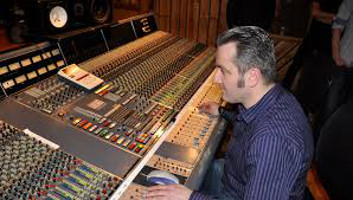
The HD series is directed by Patricia Chica, edited by Carol Butrico, and Mixed by Robert L. Smith (Defy Recordings).

CREDITS for SUITE SONGS:

Filmed and directed by Patricia Chica

Produced by Stacie Rose

Edited by Carol Butrico

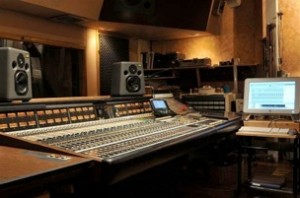
Mixed by Robert L. Smith at Defy Recordings NYC

Title animation by Paul Gardener

Words & music for Alter-Ego, and Sucking up to the Saints

by Stacie Rose ASCAP 2010 © (P)

Enchanted Records/ BIGPICNIC Publishing

Alter-Ego (DJ Reverend Soul mix) and Standby (Caffeinated-Procrastination mix) produced by Thomas Hutchings & Stacie Rose

Special guest appearances by:

David Patterson

and

Mike Harvey

Field Technician David Deïas

Hair by Monet Moon

Makeup by Alyne Halvajian

Additional makeup and styling by Christine Karantais

Photos by www.angelshots.com

Thanks to Zoom and Michael Joly/OktavaMod

Rob McKeever

Ashley Martorana

Robert L. Smith Records/Mixes for “Burma Soldier” Score with U2, Notches Hits with “Glee”

May 7, 2011 by  
/* Filed under News */

NYC-based producer/engineer Robert L. Smith, founder of Defy Recordings, has been involved in a pair of recent high profile film/TV projects.

Robert L. Smith of Defy Recordings helped power the new "Glee" album to the toppermost of the poppermost.

Smith worked with film composer Paul Brill on the score for HBO’s upcoming film, Burma Soldier. Smith and Brill recorded a string quartet at Avatar Studio G to accompany an acoustic version of the classic U2 song “Walk On”. Smith mixed the song, which will serve as the music for the end credits, at Defy Recordings’ studio in Hell’s Kitchen.

In addition, the album Glee: The Music Presents the Warblers was released on April 19, entering the Billboard 200 at #2, as well as the iTunes album charts at the same position. Smith recorded/mixed four songs on the accapella collection, including the first (and so far only) #1 “Glee” hit “Teenage Dream”, along with “Silly Love Songs”, “Bills Bills Bills”, “Hey Soul Sister” and “When I Get You Alone”.

The Pyramid Recording Collective Expands with New Staff Additions

February 17, 2011 by  
/* Filed under News, SPARS Feed */

The Pyramid Recording Collective announced that it has made a number of staffing additions. Headquartered in Koreatown, Pyramid was founded in 1976 and is home to a vintage custom API console, among other technical highlights.

Pyramid boasts the vintage custom API from Seattle's Bad Animals.

The Collective’s founding members, Head Engineer Denise Barbarita, Mathew Leland, and Robert L. Smith, have been joined by producer/engineer Matt Weiss and PR/Marketing/Music Supervision specialist Stephanie Levine. Assistant engineer Annie Halo has also joined the staff at Pyramid.

“Matt Weiss is our ‘urban music specialist’”, Barbarita says. “He’s a young, hungry and super-talented producer/engineer who works out of Philadelphia primarily, but also has a client base here in NYC. He has worked with a host of well known rappers and producers – Arrested Development, Royce Da 5’9″, Random (Mega Ran), Ohene, The JustUs League (Joe Scudda, 9th Wonder) just to name a few. Matt is exactly the guy we need to fill out our writing/production/engineering team. Robert, Mat and I lean towards the Rock/Pop/Alternative/Acoustic world, and Matt is Hip Hop to the core. He’s an MC himself and has his pulse on the city club scene, and he has an outstanding knowledge of Hip Hop music and aesthetic. He’s also very good with sound for film – which is a nice bonus. He’s been a super addition to the team.

Stephanie Levine has been added to the Pyramid team.

“Stephanie runs Lovebrand Entertainment Group which specializes in marketing, promotions, label management, music supervision and management consultation,” Barbarita adds. “Some of her past and present clients include Ari-Up of The Slits, Stanley Brown (Island/Black Music); New York Ska Jazz Ensemble and Boukman Ekeryspans (Island Mango). The merge with The PRC is a wonderful collaboration that allows all of us to focus on the things we’re good at: The creative team can focus on the act of creating, and Lovebrand Entertainment Group will market and promote alongside The PRC as an active member, soliciting new business.”

In addition, Barbarita notes that while Pyramid’s midtown location is the Collective’s home base, they have also formed alliances with other studios in NYC. “This has given us the opportunity to provide clients with the ideal space for their various needs, regardless of their budget,” she says. “We will still be working with independent/label artists, but we have widened our focus to include custom music composition for Film/TV, as well as provide remixing, music supervision services and sound-alike recordings with the ‘house band’ we put together.

Weiss guys rock! Matt Weiss proves it at the Pyramid Recording Collective.

“Our house band is unique, in the sense that we can provide any kind of music needed for any given project. We handpicked some of the best session players in town specifically for this purpose. An example: Client A needs 70′s funk for a scene but can’t afford the huge sync fee for the original song. We can either re-record or write/produce a similar song in that style flawlessly and within budget. With the house band, we can help singer/songwriters find the right musicians for album projects, and also help composers find the talent to finish their jobs. It’s a win-win really!”

Video Exclusive: “Suite Songs: NYC” Featuring Stacie Rose Debuts on SonicScoop

January 23, 2011 by  
/* Filed under NYC Spotlight */

The new video series “Suite Songs: NYC” featuring the artist Stacie Rose and presented by Enchanted Records, is debuting globally on SonicScoop.

Stacie Rose checks into SonicScoop with the world premiere of "Suite Songs".

Rose is a rising NJ/NYC songwriter who released the well-received Alter Ego EPs in 2010, and whose songs have been frequently licensed by the likes of MTV’s “The Hills”, VH1’s “Tough Love”, Paste Magazine’s “SONGS FOR HAITI” compilation, amc, FX, ABC, Escada fragrance campaign, American Airlines Radio, and FUSE TV.

Shot in HD by award-winning film/TV director Patricia Chica, “Suite Songs” is an intimate series about the personal and collaborative process of song making.

The first edition, “Episode 1: Sucking Up to the Saints”, features special guest appearances by vocalist Mike Harvey and guitarist David Patterson. Each episode features Stacie Rose as the creator and MC, with a myriad of guest musicians she invites to a New York City hotel suite for some impromptu music making.  Personas are revealed, and lyrics/melody come to life, as viewers enter a secret world of creating songs from the ground up.

“’Suite Songs’ is a lively hang, a poetic journey that defies the myth that cities are impersonal, while illustrating the cozy, breeding ground a hotel suite can be, for intimate, soulful, collaborations,” Rose says of the inspiration to produce “Suite Songs”. “Each city has its pulse; each hotel suite has its vibe, and every group of musicians bring a unique spirit and sensibility to the process of song making. The party begins in NYC and is destined for other cities.”

Check out “Suite Songs” NOW!

CREDITS for SUITE SONGS:

Filmed and directed by Patricia Chica

Produced by Stacie Rose

Edited by Carol Butrico

Mixed by Robert L. Smith at Defy Recordings NYC

Title animation by Paul Gardener

Words & music for Alter-Ego, and Sucking up to the Saints

by Stacie Rose ASCAP 2010 © (P)

Enchanted Records/ BIGPICNIC Publishing

Alter-Ego (DJ Reverend Soul mix) and Standby (Caffeinated-Procrastination mix) produced by Thomas Hutchings & Stacie Rose

Special guest appearances by:

David Patterson

and

Mike Harvey

Field Technician David Deïas

Hair by Monet Moon

Makeup by Alyne Halvajian

Additional makeup and styling by Christine Karantais

Photos by www.angelshots.com

Thanks to Zoom and Michael Joly/OktavaMod

Rob McKeever

Ashley Martorana

Glee Hit Covers of “Teenage Dream”, “Hey Soul Sister” Recorded/Mixed by Robert L. Smith of Defy Recordings

December 8, 2010 by  
/* Filed under News */

Robert L. Smith of NYC-based Defy Recordings recently helmed the record and mix for two hit singles for The Fox show “Glee”. His work on the choral cover of Katy Perry’s “Teenage Dream” helped to score “Glee” it’s first #1 single on iTunes, and the choral version of “Hey Soul Sister” by Train also went to the iTunes Top Ten.

Robert L. Smith recorded and mixed Glee's first #1 single on iTunes.

Working with producer Tommy Faragher, Smith recorded Tufts University’s Beelzebubs men’s choir and Glee’s Darren Criss at Avatar’s Studio G, and mixed on that room’s SSL 4000G+.

See Glee’s performance of “Teenage Dream”.

Stacie Rose: On Fearless Songwriting, Sharp Synch Licensing, and her ALTER EGO

July 5, 2010 by  
/* Filed under Music Biz */

RUTHERFORD, NJ: When an insatiable appetite for songwriting collides with a quest for success, artists like Stacie Rose are the result. You could say this career-focused New Jersey native is fast-emerging, except there’s a lot to suggest she’s already arrived.

A young but oft-licensed songstress with a clear ear for hooks, her cuts have already garnered synch uses from clients including MTV’s “The Hills”, VH1′s “Tough Love”, Paste Magazine’s “SONGS FOR HAITI” compilation, amc, FX, ABC, Escada fragrance campaign, American Airlines Radio, and FUSE TV. Those tracks, several off of her Shotgun Daisy! album, are about to get a run for their money from her dual ALTER EGO EP releases of Raw Sugar and Means to an End (Enchanted Records), going first to her Pledge Music supporters on July 20, and then to the big ole’ world on August 17th.

She’s no calculating bean counter, though. Rose’s approach to creativity and collaboration are what keep her energized, as she revealed in the SonicScoop interview. Listen to what she lays out here — we say this is How to Make it in Music, 2010 style.

You’re a pretty prolific writer. How does a song get started for you?

My approach to songwriting varies a little. It generally starts with a lyric, a gut feeling or story that leads to a lyric, or sometimes I just grab the guitar and start strumming, and humming, and then it’s racing around looking for a pen and something to jot ideas on, like junk mail or the back of a magazine, and then my digital recorder to sing into.

Then, it’s Demo One, followed by Demo Two, many versions, verse and chorus — sometimes days in between, then a bridge might emerge.

Maybe that’s more my process: My approach is really capturing the essence of the moment, or concept, I’m writing about. I try to bring my perspective to things, my metaphors, and create a mood, a picture, or emotional landscape. Sometimes I try to teach myself a lesson, work through a  personal challenge, or celebrate an epiphany.

I used to feel very evolved, but I seem to be going through a new phase where I am suddenly tripping upon survival skills, questioning things, reacquainting myself with my inner strength and writing through it all. Sometimes I don’t try to do anything at all, no goals — and the songs/words pour out.

That lines up with the very thing that I’m trying to relearn this week – that change is GOOD. So how does that songwriting approach reflect how you see yourself as an artist?

I view myself as a unique, pop songwriter, both fiery, and feminine. I’m almost always in motion, even when I am still.

I’m not an anarchist, but certainly do not conform to anything or anybody. I don’t follow the pack. I do take my work/songs very seriously, but don’t take myself tooooo seriously. I have dark comedy tendencies and the deepest love of melody and words. I’ve come to accept my own dichotomies. I can rock out pretty well, but can also turn a shy side. I’m part late-night, acoustic singer-songwriter girl, who sometimes likes to mash and trash it up!

That’s multiple personalities! But at SonicScoop, it’s not a disorder. What’s been your approach or strategy for developing your musical career?

My goals are to continue to create music on my terms with people whom I respect, and enjoy sharing the process with. I always want to give myself the room to grow and experiment. It’s important for me to be true to my heart, my vision and to stay in the moment as much as possible, enjoying, or at least feeling the process even when it’s more difficult.

I really make a grand effort to help these songs out into the world, so that they can have a life, and hopefully work their way into people’s homes, hearts, heads, and iPods.

You’ve built up a great track record all ready with synch placements – MTV, VH1, FX, FUSE TV. How did you get started on this track? What role have music-to-picture placements had in your artist development?

The Orchard managed to place my song “Here’s Looking at You” in an ESCADA “Sunset Heat” Webisode. When I saw the footage, it felt really fitting. The song is up tempo and free-spirited. The episode was summery, sexy, & beachy.

I’ve actually had two songs in racy bathroom scenes, which I think is kind of funny and interesting. My good friend and filmmaker, David Kittredge, used my song “Promised Land (remix)” in his award-winning film, “Pornography: A Thriller”. The song pumps in a club as two guys size each other up in the men’s room. Another song of mine called “Back to Life” made it into an episode of the FX show, “The Riches” (with Minnie Driver and Eddie Izzard). That song played in a bathroom scene in which Minnie got groped at a neighborhood house party by her husband’s colleague. Good stuff!

Then the placements in MTV’s “The Hills” and VH1’s “Tough Love” got a lot of buzz since those hit shows are such guilty pleasures! I had a song called “Find Your Way” in an amc movie spot, and it was wonderful because it aired just before my last record Shotgun Daisy! was released.

The movies being promoted were stellar and stories within the spot really meshed well with the lyrics and melody. The characters in the movies were in fact “finding their way” A really great spot, and good match! And, amc was super cool and artist-friendly, including an artist/song/label credit, which helped with record sales. The spot is on YouTube and gets a lot of love from fans, and made new people aware of my music.

In general, the licensing is a really great way for artists to earn money and to continue creating. The consistent placements have really helped me to build buzz, gain momentum, and get people’s attention.

Licensing PROPS. So does it get hard NOT to think of synch-ability as you continue to write? Do you find yourself wondering if a song is going to work for picture as you write it?

I usually don’t think about synch when I write. I might just have a knack for finding a universal way to convey things. I like being poetic, and crafty in my writing but I also want people to get it — I believe in the power of a good pop song!

It may sound obvious, but why do you think having an understanding of synch licensing is important for emerging artists?

You want to be able to market yourself and bring your songs to the surface, reaching the masses. You’ve got to know the game if you want to play. People are watching TV, webisodes, and films. They won’t always seek you out, so you need to find ways to bring the music to them.

This is a sneaky and savvy way of getting your music to be heard and felt. It’s quick and painless. And, if they dig it, they might come back for more, seek you out, purchase your music, stalk you, blog about you, etc…

Well put. Switching gears, do you have your own studio in NYC, or do you record at other people’s facilities? Where do you like to work?

I demo all my songs at home on a digital Sony mini recorder. If I’m on the run, with no guitar on hand, I will sing into my iphone(recorder ap). If I mean business and am going for a real recording or even a pristine demo, I will work at Defy Recordings with Robert L. Smith. He gets beautiful sounds. I work on a lot of arrangements with Jeff Allen at his place in the Bronx, and often bounce around to various studios (mostly in NYC) to work on various side projects.

When someone works with a variety of producers like you do, how do you decide who to work with?

I guess I mostly work with the people I love and trust the most because it’s like home. Robert and Jeff have really been constant collaborators. Both of them have introduced me to a myriad of amazing singers, musicians, and writers.

David Patterson and Rob McKeever (both guitar players) have consistently helped me find a voice for my songs through the years, so I often turn to them as I write.

I am really loyal to those who have been on board since the get-go and, at the same time, incredibly open to meeting new artists and melding my music with others. I feel as if I’ve been collecting new friends and building momentum mostly because of the exciting energy that comes from good, soulful, collaborating. It’s the key to my success as an artist.

That’s BIG. Did that work go into your new EPs – two different projects — that are about to come out simultaneously?

Alter Ego awaits...

I’m about to release the most exciting project of my musical career thus far: The Alter-Ego EPs, officially due on on August 17th. I raised a good portion of the budget for this through PLEDGE MUSIC.  I have been sharing the process, and progress through PLEDGE, Facebook, my website, Twitter, blogs etc…

This is really the first of many concept projects for me. The Alter-Ego EP: MEANS TO AN END is a bit more raw than my other records, and veers off on an edgier, live-ish path.

The sound and approach is mostly influenced by some of my classic rock heroes. Jeff Allen ( the producer of this EP) and I got our dream band together, did two long rehearsals and then went right into the studio and recorded six tracks in one long day, so that the ideas would be slightly rough around the edges and possess that raw, unaffected energy that comes with the initial creation of something.

We recorded with Oliver Straus at Mission Sound in Brooklyn. He got stellar sounds, and the day is one of my favorite memories. Since then I’ve been finishing my vocals, and we’ve been adding a few exiting overdubs –The icing! It’s being mixed right now!

The Alter-Ego EP: RAW SUGAR is pretty dancy. It’s pop at its clubbiest for me and has been really exciting to make.

Robert L. Smith has produced this EP with me. It’s been intensely collaborative, constantly evolving and there are so many exciting people involved. It’s a departure for me in a way, but feels totally natural. I’ve worked with Robert to corral and empower the various producers, mixers, programmers and singers involved, to help shape, and make these songs a sensation.

In doing so, I have felt new sides of myself emerge. I see neon, champagne, and many costume changes in my future. So, I guess I would describe the overall project as gritty and pretty, pop and pow, sugary and savory, thunder and lightning. They go together but are totally different.

On another musical side of you — you introduced me to a really interesting project involving the Beatles and some ukuleles…

Well I’m sort of late to the party, but happy to have been invited nonetheless.  This whole thing happened pretty organically. I had the good fortune to have been introduced to the amazing singer-songwriter/vocal producer Mike Harvey. My friend/producer/collaborator Robert L. Smith hooked us up for the ALTER-EP project I am currently working on.

Mike’s soulful voice has become a key ingredient in the dance/pop songs. He introduced me to David Barratt who founded the high-concept art project THE BEATLES COMPLETE ON UKULELE with Roger Greenawalt. It’s like “Where’s Waldo?”, but with ukulele. You’ve got these amazing, intricate, arrangements, and exciting incarnations of beloved Beatles songs, and somewhere within each track there is a UKULELE! How fun is that?!!!

Sometimes the instrument plays a large roll, sometimes it’s a bit more discreet, but it’s the common thread that binds this project together. I loved having the opportunity to pick the song I wanted to approach in my own way. When I got the list of available songs, my eyes raced down the page, searching for I ME MINE (written by George Harrison)… it was free! It was MINE! once I declared it so, David built the most gorgeous, hypnotic track for me to sing to and the rest is history. The track should make its way into the world this summer!  It’s quite a unique and exiting project, with so many amazing artists lending their voices.

The track we heard was indeed awesome — although the latest post (July 2) on the blog makes note of “irreconcilable differences” between Roger and Dave. Intrigue! Anyway, so you’re off to a good start: What advice do you have for songwriters/artists who are just getting started now? And in that vein, what do you know now that you wished you had known a few years ago as you were getting started?

WOW — I wish I had known so many things when I got started and I really knew nothing. It was a blessing in many ways because it taught me to be resourceful, organized and creative.

I made countless mistakes, and made astonishing waves by being fearless, and stepping up to things. I always acted like I had it going on, and this confidence seemed to draw others into my orbit.  Sometimes I wish I possessed the same brand of moxie now.  Ignorance is bliss, to a point. Knowledge is power, always–and some place in between that–if you can remain open, stay focused. learn from mistakes, trials and errors, and hold onto that raw, gutsy, mojo… that’s magic!

I would also tell a newbie, to do things on your own terms. There’s no fast track, no tricks, and no finite way to make or promote music today. Find what works for you. Define your own sense of success. It’s ok if you don’t have all the answers, but you have to be willing to learn, ask, and try.

You don’t know? Draw from your heroes and influences but always try to be unique, authentic and GOOD! Persistence often pays off. Put good energy out into the world, treat others as you wish to be treated, seriously, and don’t do it if you don’t love it and burn for it.

Thanks for some inspirational insights. Lastly, why do this in NYC and not LA, Nashville or Nairobi?

Because NYC is still the best place in the world, with the best pulse, the hottest vibe, and an intangible energy force-field! There will always be a certain artistic history, and edge about NYC that reminds you that you’re alive and that anything is possible. There’s both a toughness and friendliness about it.  There’s an infinite amount of inspiration, beauty and grit, swirling about to draw from!

It might be the BIG apple, but when you’ve done the circuit for a bit and start to see how small certain circles really are, it’s quite a cozy, comfy place to be writing, recording and performing music. And that street cred thing about making it in NYC is still something to shoot for.

– David Weiss

Pyramid Recording: One Studio’s Collective Solution to the NYC Puzzle

April 7, 2010 by  
/* Filed under NYC Spotlight */

KOREATOWN, MANHATTAN: NYC recording studios used to need a big console and a big enough live room to stay in business, and the rest was gravy. Today, those basic assumptions are so out the window, it’s not even funny.

One fabulous study in the evolution of NYC recording facilities is Pyramid Recording. Smack dab in the middle of Koreatown, this warm room was founded by sonic craftsman Todd Hemleb (Michael Kamen, Whitney Houston) in 1976, and is powering forward today with a custom API console (a rarity in NYC), a natural vibe and non-stop street smarts.

For evidence of the latter, read on about the collective approach in operation at Pyramid. This group survival/success strategy sees Hemleb looking to a diversified gathering of in-demand producer/engineers to keep business flowing for both his room and themselves. For Mathew Leland (Asa Ransom, Sharon Kenny), Denise Barbarita (Mary J. Blige, Herbie Hancock, Arto Lindsay), Robert L. Smith (Aerosmith, Bon Jovi), and James Cargill (Asa Ransom), Pyramid forms a group that’s worth the effort.

front row: Denise Barbarita, Todd Hemleb, Mathew Leland; Back row: Robert L. Smith, James Cargill

front row: Denise Barbarita, Todd Hemleb, Mathew Leland; Back row: Robert L. Smith, James Cargill

Q: What’s the brief history of Pyramid Recording Studios? Why did Todd found the studio, and when?

A (Todd Hemleb): I opened in 1976, I was working in bands and thought it would be a great way to stay in the business. I started with a 4-track and a small board, and I’ve worked my way up to Pro Tools HD and a great vintage API console. Over the years I’ve worked for every major record label and have done projects for artists such as Whitney Houston, ABBA, MOP, Michael Kamen, Al Green, Mary J. Blige and others.

Q: That’s a good progression! Who else is in the picture now that makes Pyramid not just a studio, but a collective?

A (Mathew Leland): In a lot of ways we are in different worlds of the music scene in New York, and we all have our own projects and goals we are constantly working towards.

I would say that James and myself are much newer to the business than Denise and Robert, so on any given night you can find us in any number of DIY venues, and the scene in and around Williamsburg. Robert and Denise are veterans in studios like Avatar and Kampo. Both of them came up through the ranks, which was normal for such a long time. Nowadays people start as serious hobbyists and go from there.

You could almost say that in a lot of ways these neighborhoods reflect how we came through the ranks to make this a career. And in a way, James and I have found a chance to work with more experienced people. And although we all partner in this endeavor, I feel as though we’re lucky to have people who can help us fill in the gaps as we try to perfect our process and knowledge base.

Q: It seems like a positive arrangement, all around. I can see that this studio has some interesting technical highlights — fill us in on the API console and other goodies.

A (Denise Barbarita): The API came from Bad Animals in Seattle. I don’t know all of the details on how Todd was able to get it — maybe he should answer that?

TH: The 1976 API console is a custom-built model, originally built for Danny Kaye and then bought by Heart and placed in Bad Animals Studio.  The console was not only used for Heart recordings, but it saw action with the likes of The Spinners, REM, and Soundgarden, to name a few, and has been used by many great engineers.

We also have great outboard gear! LA-2As, Neve 1073 PRES/EQs, Neve 2554A Stereo Compressor Limiters, Pro Tools HD2, Otari MTR 90, Otari 2-track MTR1211H and a full compliment of vintage and contemporary microphones. We also have a Hammond B3 Organ with Leslie and a 1923 Baldwin Grand Piano.

DB: Don’t forget the echoplexes…

ML: For me, walking into the control room, I couldn’t help but notice the console. It really symbolizes the care and time companies used to take building their products. Todd has been very diligent about maintaining its appearance and functionality. The more I work on it the more I fall in love with its character and charm. It’s one of a kind.

The other great part of the console is the ability to throw up the Neve 1073′s on eight extra faders on the API. I can only describe it as this electric feeling of having the best vintage gear right at your fingertips. And that’s just the console. From vintage LA-2A’s and DBX compressors, all the way to Cooper Time Cubes and a huge spring reverb, the studio is filled with gear that my favorite plug-in’s are based on. And that’s not even getting into the ability to go between Pro Tools and analog tape.

An A+ API

An A+ API

Q: I think every room in NYC has its own character. How would you characterize the type of studio Pyramid is?  What niche does Pyramid fill in the NYC spectrum of facilities?

A (DB): Pyramid is a mid-sized, one-room facility. The live room is wood paneled and has a lovely rich tonal quality. Just enough “air” but not too live. A producer I work with who did a session there recently said “I want to do jazz here! Its perfect for jazz.” I would agree with that, it’s perfect for any medium-sized ensembles or singer/songwriter projects.

It’s also great for overdubbing live instruments like a string quartet or horn section. There are two booths, both roughly the same size, one filled with a myriad of amps that a client can choose from. There are also two in-house drum kits with all hardware and brass.

I think we fill a very important niche. We’re the perfect choice for artists or producers who are looking for a private room with “old school” amenities, great gear, mic selection, and vintage and modern outboard gear but don’t have the budget for the larger rooms in the city.

(James Cargill): It’s definitely large enough to do full sessions, but doesn’t have the overhead of larger spaces.

I see it as part of my role to help artists balance their time and budgets between the most appropriate locations. I definitely work more in the indie-pop-rock world, so I try to bridge the gap between the Brooklyn DIY mentality and making a professional-sounding record—so a conversation might be along the lines of, “Sure, work out your demos on an M-Box, we can even use some of those tracks with the mix, but here’s why we’re going to the studio to record your drums… this is what great mics and preamps sound like, etc…”

So Pyramid is a great place to start a record, getting drums and initial tracks down. Then the band may work on overdubs in another space and then return to mix or even sum stems, depending on the budget and if the mix took place in the box at another location.

ML: I think that the first thing you have to say about Pyramid is that it’s a labor of love. Todd built this himself, and continues to maintain and run it.

I would say that the studio is the type of room ideal for mixing and tracking for groups of 4-5 people. It’s interesting to notice though that 10 years ago Pyramid would have gone into a list of smaller rooms. As time goes on and more studios close, it has the potential to offer as much, if not more, than most rooms around.

Q: That’s an interesting point about the evolution of room sizes and the expectations attached to them. Pyramid seems to be a studio that’s flown below the radar for the last several years. Is this by accident, by design, or a little bit of both? Why?

A (TH): A bit of both. It would be safe to say that self-promotion and marketing has never really been a joy for any of us, but is, of course, a necessary aspect of any business. Pyramid has always been a labor of love. The amount of promotion necessary to keep a room working used to be far less because more people were using rooms as opposed to doing it themselves.

ML: As time has passed and home studios have become more prevalent, there’s less of a need for artists to continually go into larger studios, but the need for professional studios and gear has certainly not gone away. As some of the larger studios have closed, we’re in a position to offer artists another viable alternative.

Moving forward, we’re adapting our business model to better serve the needs of our clients, and provide a place for where artists can realistically make music without having budget concerns compromise quality.

Q: I think the most interesting aspect of Pyramid is the “collective” approach it represents. How did this idea develop? How does it work?

A (ML): Simply put, there is strength in numbers. This is what brought us all to the table in the first place. I would also say it works differently on a daily basis. There has to be a certain flexibility to any collective approach.

DB: Again, we’re all freelancers. More importantly, we’re all friends. I personally worked out of Kampo studios for years, but what I kept running into were clients who said, “I want to work with you but I can’t afford the studio” And because they assumed I ONLY worked there, it started to become a personal problem.

So, I was in search of a room that gave me what I needed in terms of gear complement but at a more affordable price point. As a group, we chose to call Pyramid a home base of sorts specifically for that reason. We have all worked together in the past in various capacities and we respect/love what each of us brings to the table.

I can’t speak for Robert, but I really miss the days of having a place to go where you know everyone, the interns, the assistants, the other engineers… I miss the camaraderie and the personal dramas (well sort of) and I miss the give-and-take of ideas, tips or tricks. Listening to each other’s horror stories, and solutions to problems, talking to the various musicians who come and go about his/her new snare drum or new guitar amp purchase. To me, this is what we are creating, Really re-creating! A community for like-minded individuals who want to make a difference, who see “the artist” not as someone who has no clue about anything and needs to be “molded” but as someone who wants to do their best work, and we fill that role in helping them to facilitate that goal.

Perhaps Mat wants to concentrate on producing an artist and doesn’t want to deal with engineering, he’ll call Bob or I to fill that need. Perhaps I’m in a session and one of the musicians doesn’t show, I may ask Mat or James to play on a track, or ask their opinion about whom I should call. Maybe I don’t want to fill the producer role for a date, I can call James or Mat. If I need mastering done, or, maybe I’m working on my own music, and I don’t want to worry about my kick drum capture while I’m recording vocals! Go figure? I’ll call Bob.

Q: Makes sense. Are there clear advantages and challenges of the collective approach?

A (ML): As I said before there is strength in numbers. There is also at times compromise. Decisions have to be made for “the greater good”, which means that every time we sit down we all have to agree on what “the greater good” is. To me it’s completely worth the extra step because in the end a few good ideas lead to one great idea or even a new and completely different one.

I think in this case, you start with the basics. All of us bring our own client base. So, first you make sure that every experience is positive. Then they come back, and since the business is small people want to tell others. Then others come. Then they leave happy…so on and so forth. We’re currently working to make a few additions to accommodate post work as well.

DB: I can’t really think of any disadvantages at this point. There are challenges in any relationship — all of us have good days and bad days. The trick is to keep each other focused on what’s important “in the moment”. As Mat said, concentrate on “the greater good”. There will be, and have been, times were we “agree to disagree” on certain ideas or opinions. But that doesn’t stop us from moving forward.

Q: Om. How do you strive to publicize/promote Pyrmaid, and successfully diversify your revenue streams?

A (JC): As far as promotion, we attend industry events as a group, pass out post cards, take turns with the task of online marketing, etc. As far as revenue streams, we each have our strengths, be it post-production, mastering, artist development or orchestration and we each steer potential clients towards the best match in the collective.

DB: Postcards, parties, Internet social networking, networking events, word of mouth. The same thing everyone else is doing. Again, as a freelancer I wear many hats. I’m a composer and a songwriter and I generate income through those avenues.

As an engineer, I choose the studio that best fits the needs of any given project rather than trying to make a project fit a room. We will work together whether a project is tracked at Pyramid or, for whatever reason, the choice is made to track elsewhere. That’s going to happen from time to time. It’s the nature of the beast. Buuuut, perhaps we’ll do overdubs at Pyramid? Perhaps the client can’t afford to mix in a commercial facility and opts to mix at one of our home studios? We can mix stems at home, and finish the mixes off at Pyramid, running the stems through the API and opt to use the outboard reverbs or whatever other sexy gear that’s there? Options are limitless.

Q: It sounds like you guys are committed, to say the least. What makes you determined to be a part of the NYC studio scene today?
A (DB): I love music. I love making music. I will do whatever I need to do to continue making music in any way, mixing, tracking, composing, writing, performing, Whatever!

I HAVE to do it; otherwise I’m a big depressed waste of oxygen. In terms of the overall studio scene, well, it’s tough for a lot of rooms to keep going. It’s tough for a lot of studio staffers whose hours are getting cut, engineers or assistants who have more lag time between projects, or who need to cut their day rates or hourly rates in order to accommodate a project.

This is the whole reason why we chose Pyramid as a workspace. This relationship gives me, personally, another option. Does the client want a room with high-end gear but doesn’t have a high-end budget? Well, I can make it happen. I work, our assistant works, the studio is booked, the client is happy. At the end of the day, that’s all that matters, everyone is happy and making music. Mischief managed.

JC: Like everywhere, the NYC studio scene has been reshaped by the proliferation of home recording and the general slump in music sales. Obviously a lot of previously big name studios have shut down, but a number of them have hung in there. I’m very happy that Pyramid is one of them. Why I’m so excited to be working in the recording industry these days is ANYONE can begin recording themselves with a very minimal investment in gear, throw it online and it can be heard worldwide. The idea that we can step away from the model that you can only afford to record your album, because a label that thinks you are sellable picked you up is great. Have an idea—record it—get it out there. Great.

That said, go to MySpace and there are a million bands all going this route and obviously not all of it sounds great. I want to be there, to help talented people hone their ideas and get above the noise of everyone else out there. Why is it that anyone can make a record at home now, but the new American Idol is still on my radio? I want to be there when that puzzle gets solved.

ML: It’s no secret that it’s harder and harder everyday to keep studios open. It seems to me studios are being forced to charge less and offer more. So, the model becomes, “How do you stay lean and efficient without affecting the quality of the work environment?” I personally came to a point where I realized that if I wanted to see the space I work in change, then why not do it myself? When the space works I work better, when I work better, I work more, and when I work more the space does better. It’s a win-win situation. I am really excited to explore that model. — David Weiss

www.aerosmith.com