Lou Reed, Kurt Elling, Bobby McFerrin Recording at Avatar
February 14, 2011 by Janice Brown
/* Filed under News */
Who’s been recording at Avatar Studios recently? Check it out:
Lou Reed recently recorded “Peggy Sue” for a Buddy Holly tribute project in Avatar’s Studio A with engineer Mark Urselli assisted by Fernando Lodeiro. And Bobby McFerrin recorded in Studio G with longtime producer and manager Linda Goldstein, engineer Bob Power assisted by Rick Kwan.
Songwriter and producer Paul Brill booked Studio C to record new material with engineer Robert Smith assisted by Charlie Kramsky.
Rock ‘n’ Roll Fantasy Camp was held at Avatar recently, with producers Mark Hudson, Rudy Sarzo; engineers Steve Greenwell, Robert Smith assisted by Bob Mallory and Charlie Kramsky. Roger Daltrey came in to record with the campers.
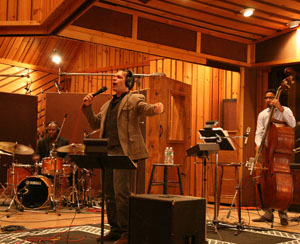
A performance by Kurt Elling was recorded in front of a live audience in Avatar Studio A for broadcast on WFUV. The session was produced by Dave Einstein and engineered by Brian Montgomery assisted by Aki Nishimura and Charlie Kramsky.
The Christian McBride Big Band recorded and mixed at Avatar with engineer Joe Ferla assisted by Rick Kwan, Michel Camilo recorded with engineer Phil Magnotti and Fly recorded and mixed with producer Manfred Eicher and engineer Aya Takemura.
Music for Fox’s Glee continues to be recorded and mixed at Avatar with producer Tommy Faragher, engineer Bryan Smith assisted by Charlie Kramsky. And Carter Burwell continued recording his score for HBO’s mini-series Mildred Pierce with engineer Todd Whitelock. Vince Giordano and the Nighthawks also recorded for the show in Studio A with producer and music supervisor Randy Poster and engineer Stewart Lerman.
Visit www.avatarstudios.net for more information, and booking.
“Mildred Pierce” Score, Jazz, Big Band, Pop & Soul Sessions at Avatar
December 21, 2010 by Janice Brown
/* Filed under News */
Music for HBO’s upcoming five-part miniseries Mildred Pierce has been recorded at NYC’s Avatar Studios.
Vince Giordano and the Nighthawks supplied the period music for the show, recording in Studio A with producer and music supervisor Randy Poster and engineer Stewart Lerman, assisted by Charlie Kramsky. And NYC-based film composer Carter Burwell (True Grit, Twilight, The Kids Are Alright) recorded the score in Studio C with engineer Todd Whitelock, assisted by Rick Kwan.
Recording sessions with Ricky Martin continued in Avatar’s Studio B, with Desmond Child producing and Kevin Killen engineering. The Linda Eder Big Band also recorded at Avatar with producers Frank Wildhorn and Jeremy Roberts, engineered by Todd Whitelock.
And in other recent Avatar sessions: jazz artist Charnett Moffett recorded with engineer Anthony Ruotolo, Fox’s Glee was back recording and mixing with producer Tommy Faragher and engineer Robert Smith, and Sister Sparrow and the Dirty Birds recorded with producers Patrick Ermlich and Eshy Gazit for Modern Vintage Recordings, with engineering by Anthony Ruotolo.
Clara Lofaro also recorded at Avatar with engineer Robert Smith. And Erin Barra worked in Studio W with engineer Ari Raskin. The Young People’s Chorus recorded in Studio C with producer Nancy Bloom and engineer Bryan Smith, assisted by Aki Nishimura. Jessye Norman and Lynn Harrell recorded in Studio C with producer Allan Abrams, engineer Fred Vogler. And Grammy Awards nominee Chandrika Tandon was recording in Studio B and G with producer/engineer Jeffrey Lesser.
For more on Avatar Studios, visit http://www.avatarstudios.net
Who’s In The Studio: Avatar, NYC
November 24, 2010 by Janice Brown
/* Filed under News */
Avatar Studios has been plenty busy this Fall, once again hosting sessions for all manner of media — radio tapings, music for television and video games, and album production. Here’s a rundown of recent sessions:
Prince Royce and Ben E. King recorded “Stand By Me” in Studio C and mixed it in Studio G for the Latin Grammy Awards. The session was produced by Sergio George and engineered by Roy Hendrickson, assisted by Aki Nishimura.
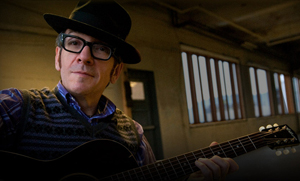
Elvis Costello performed live in Studio A for the top donors of [our favorite local radio station!] WFUV. The performance was recorded and produced by Dave Einstein, engineered by Brian Montgomery assisted by Aki Nishimura. Click to listen to the performance on NPR.
Josh Groban’s live performance was videotaped for “Walmart Soundcheck” in Studio A. Charles Gant produced the session and Allen Sides engineered, assisted by Fernendo Lodeiro and Aki Nishimura.
Lenny Kravitz recorded in Studio C with engineer Tom Edmunds assisted by Bob Mallory.
Ricky Martin recorded in Studio G with producer Desmond Child and Hendrickson engineering, also assisted by Mallory.
Imelda May recorded with Lou Reed and mixed in Studio C. The session was produced by Tony Visconti with engineer Mario McNulty, assisted by Charlie Kramsky.
Trans Siberian Orchestra recorded and mixed in Studio B with producer Paul O’Neil and engineer Dave Wittman. And Esperanza Spalding mixed in Studio C with engineer Joe Ferla assisted by Rick Kwan.
Avatar also hosted projects for ABC, NBC, CBS and Fox within a span of a few weeks — first with Glee‘s Darren Criss into record and mix “Teenage Dream” in Studio B and G with producer Tommy Faragher and engineers Robert Smith and Bryan Smith. The episode aired on November 9 and the single hit #1 on iTunes.
ABC’s Nightline did a story called “The World on Autotune” in Studio G with reporter Jeremy Hubbard, and engineer Roy Hendrickson. The show was produced by Dan Przygoda and engineered by Hendrickson. The “Sign of the Times” segment aired on October 22.
Mike Tompkins, an a capella artist who became famous for his YouTube viral videos covering popular songs, assisted Today Show anchors Matt Lauer, Meredith Vieira, Ann Curry and Al Roker with the singing and beat boxing to make a “Dynamite” viral video. The process was recorded and taped in Studio B and the resulting video was aired on November 15. It was produced by Robin Sindler and engineered by Rick Kwan. Check it out here!
Bill Cosby recorded the winning giggle for a press event by Kraft for Jell-O’s “Give It A Giggle” tour in a session produced by Greg Lederer and engineered by Bob Mallory.
Finally, THQ recorded music for an upcoming video game Homefront in Studio A with producer Frank Di Minno and engineer Gary Chester.
Defy Recordings: Robert Smith is the Ultimate NYC Hybrid
October 27, 2009 by David Weiss
/* Filed under Music Biz */
HELL’S KITCHEN, MANHATTAN: You want state-of-the-art? Here it is: Defy Recordings. Founder Robert Smith personifies the flexible strategies and sonic acumen needed to make it as a musical-you-name-it in NYC today. Wanna get smart in a hurry? Sure you do! Read forth and conquer.

Home. Studio.
A: Defy Recordings is the summary of companies I’ve had in the past. As the music industry I immersed myself in changed, so have I. It’s not enough to be good at one task, flexibility is the key. Categories I’ve been in have been producer, engineer, artist, composer, musician, sound designer, sound man, manager, photographer, director, videographer, and video editor. If I was going to compare Defy to any other business model, it would be those that always keep the big picture in mind: Ideas are key and being able to make the most of them is the goal.
Q: That’s a lot to keep track of! How do you see music and sound production evolving in NYC right now, and how is Defy Recordings set up to take maximum advantage of that?
A: We’re at a very interesting time in music and sound. The song will always be king, but its delivery has never been more skewed. On the one hand, we still idolize the tones and technology from 50 years ago, such as vacuum tubes and vinyl, and on the other hand we have mp3s and microphones on laptops. The beauty is no one cares, as long as the song is great. At Defy, we’ve played both sides willingly.
Q: Can you explain what you mean by that?
A: The common element is knowing when to stay out of the way and conversely knowing when to go in and give a shove. We have the usual HD system http://www.digidesign.com/, the tubes and the ribbons, as well as the Dictaphones and mics from my first stereo when I was a kid. What’s fun about this approach is it challenges people’s ideas of what’s right. It’s hard to get in a rut if you don’t know where to stand.
Some fun examples are the story Phil Ramone told in a session where he set up a pencil-type condenser mic for a vocal — the singer was expecting the usual classic U47, and was very confused what was happening. I got the same reaction from a “guitar hero” who was wondering why I was clipping a lavalier mic on to one of the speaker wires in the back of his speaker cabinet to record his solo.
Q: Wild! Shifting gears, which revenue streams do you see opening up most strongly for NYC-based artists and music professionals? How are you involving yourself with those streams?
A: That’s a great question, and one whose answer is proving elusive. As more “non-professionals” record and mix their own music, many of the usual processes are falling by the wayside. I started mastering my own projects originally out of self-preservation, because sometimes there isn’t a budget left for mastering indie albums. I was finding my mixes were getting killed by some kid dialing up a mastering preset and calling it a day. I’ve had the experience of having all the big mastering guys master records of mine over the years, so I know what the result should be and decided to do it myself. I’ve done it enough now that I have clients coming to me just for mastering, so I must be doing something right.

Analog 4 you.
We get calls in a similar way for films. We call this “audio sweetening”. This is a sort of premixing that ultimately saves the client time when they’re doing the real film mix of marrying dialog, FX, and music. Everything from adding room tone, fixing noise problems, matching dialog recordings from different sources…you name it.
Q: How would you describe your studio right now? Tell us about the technical highlights, and how it was built to accommodate the way you like to work.
A: The studio is set up for exactly the way I work. Sound quality and speed are the primary concerns. It’s based around a Pro Tools HD system with a Mac G5 Pro. I spend much of my time mixing and mastering, and this system allows me to switch between projects and roles very quickly. I live on the site YouSendIt. Most days I’ll be uploading files to a client while I’m already working on something else.
I’m a big fan of the API sound — I love the sound of the API Legacy summing gear. Just running digital audio through those transformers does the trick. I also have two API Lunchboxes loaded with 512c’s, 550b’s, 560’s, and 525’s. Essentially I have a 6x8x2 API console. Mixing is a hybrid; I’ll split out tracks to the API 8200/7800. A few great boxes live on the mix insert, such as Manley Massive Passive equalizer, Avalon 747 compressor, and the Empirical Labs Fatso. My gear choices were based on what I find lacking on projects that come in. Rather than going for “pristine”, I chose gear with a little soul.
Q: Sounds like an ideal mix of digital and analog, and yet your setup is also very compact. Give us one or two great production/mixing/mastering/recording tip that you’ve learned recently.
A: This one isn’t very recent, but it still holds true and sees use every day. What people miss about tape is the distortion. Adding in a little — with Dave Derr being the master of this via Fatso and Distressor — instantly gives a sound more character. Instead of cranking all kinds of eq, I’ll add a bit of grit and I’m done. Steve Massey’s Tapehead plug-in is great for this as well.

Sum fun.
Q: Which piece of gear or plug-in is your “secret weapon”? Give it up!
A: My secret weapon is going to be the most boring one ever: It’s the Yamaha MS101 monitor speaker. I listen to it in mono, and it’s very much like the Auratone vibe. I’m always amazed at how any problems with my mix are identified instantly, and I always get the vocal and bass levels perfect.
One common thing I find is mixes that are not the best were done using one set of speakers. It’s all about the comparison between different speakers. The goal is to have the relationships within your mix be the same on any speaker — this way you know it will translate from an SUV to a laptop.
Q: Solid advice! Love it. Tell us about a couple of different recent projects that you did that exemplify what you’re being asked to do now. What made them fun?
A: Perfect example would be the film Under The Desert Sun. This was songwriter Craig Wilson’s first film score. He has his own studio, but needed someone like myself who has experience working on films, such as Waitress and The Devil Came on Horseback to make the process as efficient as possible.
Writing a song for and music for a film are two different things, and when it’s a two hour feature, there’s a lot of ground to cover. To add to the fun, Craig had nothing written! We set up his keyboard and an acoustic and electric guitars and just went for it. As a testament to Craig’s musical mind, we did the whole score in 12 hours. Adding flavors such as Ebow, and being creative with a Voodoo Labs Tremolo and Zvex Seek-Wah pedal worked perfectly. Ambience with a Thingamagoop plugged into a Moogerfooger lowpass filter pedal completed the process.
Q: What’s rewarding, and conversely what’s challenging about being a music professional on your level today?
A: Recognition for being a professional is nice, and my experience has been a key marketing tool. I have a manager, but still have to do everything I can to always be out there. The sense of community we all had at a multi-room studio facility can’t be replicated on Facebook or Myspace. No matter what your skill level, if you’re not connecting with people, you’re not working. I hope the recording schools are teaching kids about marketing as much as they are about the latest plug-in.
Q: I don’t know if they are… How does the fact that you’re choosing to do this in NYC make your job either easier, or harder, or both?
A: Being in NYC is both: easy and hard. Lots of competition keeps you on your toes. I’ve found first hand that the old phrase, “If you can make it here you can make it anywhere” really applies. Anytime I work outside of New York, it’s quickly apparent that the standards we’re used to stay in town. But that could just be the combination of being a lifer and a New Yorker too!
Q: Please name any other recent projects you’ve been involved in that you want to make sure we know about, plus any relevant links.
A: Plenty of cool projects: Stacie Rose, Jennifer Haase, Tall Tall Trees, Asa Ransom.
I also would like to give a shout for my friend David Patterson, a great guitar player here in NYC who is part of many of my projects. He just makes artists sound better.
Q: Wow, you’ve given us a ton of great info here. Anything else?
A: Last thing…I’ve started this Recording Collective. The purpose is to trade ideas with fellow engineers and producers and come up with new solutions, being a music industry professional in New York City. As fun as those mercenary-like years were, it’s been helpful to compare notes with others who make their living making music.
One of our methods is to team up with studios that may not have the bookings they once did, and work with them in providing us with reasonable rates in exchange for a significant increase in the traffic they see at their studio. One of our partnerships is with a performing rights organization (PRO) that sees this as just the right thing to allow their artists to pursue a career and build their craft, while supporting those that know how to get the job done properly. The irony of all this is music is everywhere and needed more than ever. The trick is to position yourself so it all goes through YOU.