Sony Creative Software Launches 3 New Loop Libraries: Steve Ferrone Drums, DNA Bass, VertuStudio Guitars

November 27, 2011 by  
/* Filed under Deli Feed, Deli NYC Feed, News */

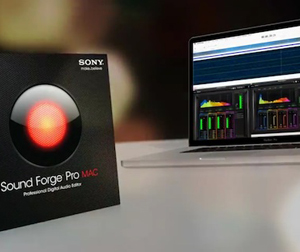
Sony Creative Software has announced the availability of three new Sony Sound Series Premium Collection, Artist Integrated (AI) loop library titles for making rock, pop, jazz, R&B and reggae music.

DNA Bass anchors the new AI trio.

The Artist Integrated line is exclusive to the Sony Sound Series exclusive, and is made up of sets of sample libraries that are designed to work seamlessly with each other. Starting with Steve Ferrone’s “Drums from the Big Room,” each loop library title builds on top of the other. The result is tightly focused sets that work together to generate original, royalty free music. The loops work in ACID, as well as any host that can accept a .wav file.

The three new Artist Integrated loop libraries can be purchased online at www.sonycreativesoftware.com for $99.95 each (MSRP). Between now and Dec. 15, 2011, users buying “DNA Bass” and “VertuStudio Guitars” will receive “Drums from the Big Room” free.

The new Artist Integrated trio includes the below — click on the links for more information and to hear samples:

Drums from the Big Room – Drum loops performed by legendary timekeeper Steve Ferrone (Eric Clapton, Duran Duran, Tom Petty) and produced by Grammy® winner Greg Ladanyi (Jackson Browne, Don Henley, Toto).
DNA Bass – Bass lines generated over “Big Room” drums. Great tone, superb editing, and a generous supply of variations will allow producers to fashion tight rhythm sections instantly with “Big Room” drums.
VertuStudio Guitars – Versatile electric guitar parts crafted directly over “Big Room”/”DNA Bass” combinations. Features custom and vintage guitars and tube amplifiers as well as 100% analog in-line effects chains.


Brooklyn’s Newest Studio: Anthony Gallo Opens Virtue and Vice for Production, Tracking, Mixing

August 22, 2011 by  
/* Filed under Deli NYC Feed, NYC Spotlight */

GREENPOINT, BROOKLYN: There’s no substitute for experience, a fact that Anthony “Rocky” Gallo is taking firmly into account as he expands the buzzing Brooklyn studio scene by another degree. His addition to the Broken Land’s soundscape: Virtue and Vice, a just-right room that he’s growing in Greenpoint.

Virtue and Vice Studios has launched in Greenpoint.

Gallo has set up shop as he exits his position of Chief Engineer at Manhattan’s Cutting Room Studios, his professional home since 2003 (he was also briefly partnered in Williamsburg’s 1.6 studios, before it changed ownership and became Three Egg). In the process of working with major names like John Legend, Carrie Underwood, Jon Bon Jovi, Yeasayer, The XX, and KRS1, along with scores of indie artists, Gallo became convinced that there was a need for a New York City tracking/mixing room that wasn’t too big, and wasn’t too small.

Instead of investing in a massive gear list, Gallo has stocked Virtue and Vice with a tight but superior inventory of the components he knows best, and wired them into a naturally light space that facilitates comfort and creative flow. Filling out 800 sq. ft. in a Greenpoint commercial loft building close to the L train, Rocky G believes V&V can excel and succeed in NYC.

What kind of space were you looking for to go into business?
The big thing to me was creating an accurate, great-sounding listening environment. I was looking for windows with good light, a very clean design and affordability. This building had all of those things — and I spent two or three years looking for a room before I settled on one.

My theory is that the old way of making records is completely dead: control rooms, live rooms, machine rooms…the way they did it for 40 years isn’t working any more. I wasn’t trying to create this super-isolated environment with a control room and a live room – instead there’s a large vocal booth with a large control/main space. I was talking to a colleague who said he thought that around $500 a day with engineer is the magic number, and that was my main goal.

In Brooklyn, that approach can work out well for my clients and for me – you can break even without having to be booked every day of the month. I also have two or three other guys that come in, and they can charge a little less if I’m working in Nashville. It’s a flexible thing.

What niche did you design Virtue and Vice to fill?
The reality is that artists spend a day or two doing drums — that’s what it’s been for most of the records I’ve done. So why spend money for a buildout and treatments for a room you’ll use one or two days a month? For the gear, it’s the same thing: I’m buying pres and compressors that will never go down in value. If you’re going to buy something, you should never have to say later on, “That was stupid.”

So really the idea is to get as clean of a signal as you can get for overdubs and guitar tracking. This is a place where you can set the amp up, run the speaker cable and actually hear what you’re doing — all the things you should be capable of that a lot of people ignore, as far as the indie market goes.

Go live at V&V.

Good feng shui was obviously on the top of your mind when laying this studio out.
A mentor of mine told me once that a great couch can mean more than a $15,000 microphone. As sad as that is for me as a gear head, I’ll realize that that’s true, and I’ll stop myself from buying a new compressor all the time.

As soon as you can make a client feel that they’re not in a recording studio, and feel like they’re in a living room instead and completely relax, they can focus on doing work. The studio environment freaks people out. Back in the day, that was the office for studio musicians, but now it’s a rarity. Making records might happen more often, but a lot less time is spent in the process.

So I was going for a more comfortable environment, rather than saying I had three Telefunken microphones — it’s the reality that it doesn’t matter as much as the feel of the place. Not to say the equipment can’t be good, but I realized that where to put your energy was in a really clean, comfortable environment. Because 90% of the time the project will require one microphone – three tops – for overdubs.

You expect to be doing a lot of mixing here as well, right?
Mixing is most of the work that I do, as far as my clients go, but production, mixing, and overdubs are all my main personal workload. When it comes to mixing, for me the Dangerous 2-BUS has definitely added a huge dimension to the stereo image. I come out of Pro Tools HD3 into the Neve 1081 channels or compressors – which I use like a strip of the console — then back into the Dangerous again. The amount of clarity and overall fatness the combination creates was a huge, noticeable difference.

You’ve been steadily building up an impressive portfolio in NYC and beyond. What would you say is driving your evolution as an engineer/mixer?
The whole Manhattan music production scene has changed more in the last in the last year or two than in the previous twenty years. The way people are releasing and recording records is transforming: Now you can work in Pro Tools on your laptop without an interface. Five years ago that was never even thought of – you were carrying around an Mbox at least.

As far as my approach, I figured out how you can make a record for very little overhead, and still make it sound really great. You should be able to make a major release for $10-15K. Those live KEXP sessions at the Cutting Room really opened my eyes. Great bands like Yeasayer were coming in and saying, “This sounds better than the record,” and I was thinking, “I just spent 25 minutes on this, and you must have spent at least two months making your record. What’s wrong here?”

So you don’t need everything in the world — just experience and doing it time and time again. The theory is just you knowing what you want to hear in the end. I would love to work on a big console today, but I just started to realize you don’t need it. It’s really not important. And time after time I found myself using the desk less and less, based on the short amount of time I had with the client.

On that note, what type of clients are you appealing to with Virtue and Vice?
Pretty much any stage of their project. If someone’s looking to do a record and they hit us up, we’ll find a place to do the drums for the day. We take a strategic approach to production, rather than saying, “Show up for your first day, we’ll set mics up, and see what happens.”

As a staff engineer, for example, I was constantly seeing that people were coming in with problematic drums – they didn’t have their time signature noted, their tempos weren’t set, etc…. I’d rather go over that with my clients in advance, because it will make things challenging for me if I’m the one mixing it down the road. I think the best thing to do is spend some time before you come in, so you make the right decisions before you go in to work.

The equipment s about quality -- not quantity -- at Virtue and Vice.

Overall, the target audience is someone working on a budget, but who still needs to make something really great. I know I’m not the cheapest, but I definitely have the experience and probably work faster than most people, being the product of a Manhattan studio. When your client is getting charged up to $175 an hour you have to be fast and not think twice about what you’re doing. And that’s how I was trained.

You had your choice of boroughs and neighborhoods to set out a shingle. What’s going on in Greenpoint that made you select  it as the home for Virtue and Vice?
A lot of my colleagues are in Manhattan and they’re saying to me, “You’re going to have trouble getting people out here (in Greenpoint).” Some of them say it’s like going to New Jersey, but I tell them that all my clients live out there.

The only people still living in Manhattan are label heads, and how much longer will they be working at that label? The clientele has really moved out here, and the people that have been making music here for the last ten years are growing up, and getting much more developed in what they’re creating. The people doing this for a living are not afraid to spend money to get the right person to do the job. Young guys see how it’s going, and how records as are being made.

Brooklyn’s Greenpoint and Bushwick areas are becoming a mecca for making music: The artists are there, and the studios are there because it’s less expensive to operate. The whole Manhattan recording scenario to me seems bizarre: high rent and a small room to work in. The people who are doing volume recoding are out in Brooklyn. There’s a lot of great places coming up, with guys coming from Manhattan studios who are super-experienced and putting together really tight rooms, like Kevin Blackler who came from Sony (and established Blackler Mastering in Brooklyn). I think the mastering guys like him have it the best, because they can be anywhere.

There are a lot of options already for artists and producers working at that level you just mentioned, as we’re sure you aware. What made you decide to look past that and open another NYC audio facility?
My next door neighbor across the hall is doing the same thing in his off-time, and when I moved into this building, he basically said the same thing, “Another studio?” I said, “I know…”  But this is not a hobby for me. This is the way I live. It’s the way I purchased my equipment: I didn’t give up my old job and make a bunch of miscellaneous purchases with my severance package. I learned how to make records from guys doing it for 20 years, and then I made records in order to buy this gear.

Yes, it seems like the market is flooded with studio choices. and I know a lot of great guys are getting out of doing it, because its flooded with more kids coming out of recording school than there are bands to record, and the young kids are the ones doing it for a six-pack and a pizza. It’s a funny thing, how many people are opening up studios: They think it’s affordable –  that they can charge $300 a day in exchange for making an investment of $15,000 and make it right back.

But it’s not an easy job, and it’s not for somebody who’s in it for the short term. I think I’m finally getting a real grasp of what to do and how to do it, and I’m talking to people who have been doing it for 25 years who are getting their minds blown with the recent developments, and changing what they’re doing.

There’s always been people who are good talkers and will get the gig, but this is a long, slow, steady course. The more you put in, the more you’ll get out of it, and the better records you’ll make. That’s the best way to approach it.

– David Weiss

Sony Creative Software Launches New Sound FX Series from The Detroit Chop Shop

April 15, 2011 by  
/* Filed under News */

Sony Creative Software has released a new series of broadcast-quality sound effects from production studio The Detroit Chop Shop. The new collection, officially titled “The Detroit Chop Shop Sound Effects Series”, comprises 10 complete volumes of ready-to-use sound effects.

Sony is introducing a new series of Sound Effects from The Detroit Chop Shop.

Features of The Detroit Chop Shop Sound Effects Series:

Broadcast-Ready – Recorded and produced by founder Ric Viers and The Detroit Chop Shop team, sound effects are delivered in broadcast-standard 24-bit/48 kHz sound.

Extensive Range - The series includes sounds that span 10 categories, including: General Sound Effects, Action, Horror, Science Fiction, Production Elements, Transportation, Nature, Fire, Explosions & Impacts, and Industrial.

Searchability – Sound effects are encoded with metatdata that is compatible with all popular music search engines.

Price and Availability
The Detroit Chop Shop Sound Effects Series is now available at www.sonycreativesoftware.com in several product configurations: individual titles for $99.95; Volumes 1-5 or 6-10 for $399.95; Volumes 1-10 for $799.95 (MSRP).

Thwak! Music Does Original Music & Music Supervision for Sony “Surgeon” Super Bowl Spot

February 7, 2011 by  
/* Filed under NYC Spotlight */

NYC-based Thwak Music! , an original music/sound design and music supervision company led by founder Tony Verderosa, did all original music for the cinematic :60 Sony spot, “Surgeon”. The commercial was shot by director Noam Murro and debuted Sunday, Feb. 6 during Super Bowl XLV.

The Android is all thumbs in "Surgeon".

Thwak! worked within a tight time frame to deliver a rhythmic, tense original score and dramatic sound design for the spot, which promotes the upcoming Xperia Play android phone from Sony Ericsson. Thwak’s tense drums, eerie sound effects, and precise orchestral hits pace the film-like spot, which shows the back-alley creation of a robot – complete with human thumbs – that rises up, ready to use the new Xperia Play.

Verderosa worked with McCann Worldgroup Executive Music Producer Mike Boris on “Surgeon”, recording at Avatar Studios with fellow Thwak! composer Mark Petrie. Verderosa created several different options for Murro and McCann Worldgroup, experimenting with varied layers of ethnic drums, strings, and sound effects — the final score builds gradually to an emotional climax that reinforces the story’s visual impact.

“The music helps to illustrate this heroic, epic moment when the robot’s thumbs are revealed,” notes Verderosa, who also served as Music Supervisor on the project. “For a project on this level, it’s really important to be able to deliver multiple creative ideas. Multiple looks and variations gave the agency team points of reference comparison when making their final decision on which musical selections to go with. So its my job as music supervisor and composer to give them different options and flavors, all within a compressed amount of time.

“Communication is made easier between Mike and I for a project like this,” Verderosa continues. “He’s a very seasoned pro, way on top of his game, and it’s easy for the two of us to get very focused on what’s going to be needed to support this picture, in the initial phase of music supervision, strategy, and executing. Mike is also a drummer so we speak the same language!”

The massive ambitions of “Surgeon” apparently gave Thwak! and crew plenty of creative fuel. “We drew inspiration from the unique challenge of this spot,” says Verderosa.  “It’s cinematic, it looks like a short film, and so narrative has to be approached delicately. You can’t give too much away, or fight what that character is going through up to the surgeon. For us at Thwak!Surgeon’ was a film project — a really intense scene from a feature film.”

See the spot here:

You can also see Tony Verderosa’s live drum remixing techniques here — shot in NYC at Avatar Studios.

Full credits for Sony “Surgeon”
Agency:  McCann Worldgroup
Executive Producer : Greg Lotus
Copy/ creative director:  Sean Bryan
Art director / Creative director: Tom Murphy
Exec. Music Producer:  Mike Boris
Production Company: Biscuit
Director: Noam Murro
DP: Simon Duggan
Editor: Gavin Cutler,  Mackenzie Cutler
VFX:  Method
Sound Engineer: Joe O’Connell , Blast Digital (NYC)
Sound Design: Sam Shaffer, MacKenzie Cutler
Music Company:   Thwak! Music
Composers:  Tony Verderosa & Mark Petrie
Music Supervisor: Tony Verderosa

Jesse Harris: The (Not So) Secrets of a Successful Singer/Songwriter

December 5, 2010 by  
/* Filed under Music Biz */

SOHO, MANHATTAN: Whether you know it or not, you’ve been listening to Jesse Harris a lot. For this NYC music man, the song — sung by him or somebody else — really is the thing, and his songs get around.

Jesse Harris: The right writer for artists across the musical spectrum.

It was Harris’ pen that produced one of the most enduring singles of the millennium in Norah Jones’ three-time GRAMMY-winning “Don’t Know Why”, from the 2002 album Come Away with Me. Not surprisingly, he’s been busy ever since with a body of work applied to film, theater, TV campaigns and an esteemed list of singers for his songs that include Smokey Robinson, Willie Nelson, Cat Power, Solomon Burke and Emmylou Harris.

While it seems Harris could simply wile away the hours churning out song ideas and checking in on his royalty statements, the fact is that he remains a prolific performer and solo artist in his own right. The end of the summer saw him releasing two albums with the nocturnally-themed Through the Night, his ninth full length, alongside of the instrumental Brazilian-folk-soul of Cosmo. He’s been touring globally in support of both of his latest babies, and two NYC shows are on the docket this week (December 10th at Zebulon playing Cosmo, followed by December 12th at Rockwood Music Hall’s Stage 2).

Unassuming about himself and his consistent success, our conversation with Harris provides a state-of-the-art update on top-tier songwriting careers. Do you have what it takes to get there? Before you make another sound yourself, listen up.

You’re wearing multiple hats with your activities. Do you identify yourself as a singer/songwriter? Producer? Performer? All of the above?
I’m all those things, although I usually say I’m a singer/songwriter, a producer, and a performer.

The term “singer/songwriter” is thrown around so often now that I think it’s worth taking another look. In your opinion, what does it actually mean today to be a singer/songwriter?
I think traditionally it connotes somebody who plays mostly acoustic guitar, and writes songs with lyrics that are in the folk rock traditions — and sings them in usually small clubs (laughs).

But a singer/songwriter these days can be into so many types of music. It’s not like the 1970’s where if someone said “singer/songwriter” you knew they were coming off of folk music like Bob Dylan, although there were a lot of them then who were influenced by jazz. Today Beck is a singer/songwriter and raps. Cat Power and Feist are singer/songwriters that are something else. There are a lot of different styles to a singer/songwriter now.

I think many people would see your career and say that you epitomize the possibilities of what a singer/songwriter can accomplish in the 21st Century. Where has being a singer/songwriter taken you, personally?
It’s taken me into a lot of different experiences — it’s taken me all over the world. But I think you mean in terms of having my songs performed by a lot of other artists, and that’s something I always wanted to do. In my first group (the duo Once Blue with Rebecca Martin) I wrote songs for the singer, and from early on I made that a criteria for my songs in writing them, that they would be flexible in that way.

Jesse Harris' "Through the Night"

Whether I epitomize something, I don’t know. It’s like anything else: certain things go well, other things are more difficult. I can’t say anything is perfectly ideal. A lot of songwriters write songs that only sound good when they sing them, but what I’m referring to is writing songs that can be covered, and have a life of their own.

How do you do accomplish that – create a song that you think might do well when it’s covered by someone else?
I think a lot is in the lyrics. But then it’s also in the melody — if there’s a concrete enough melody. There are a lot of people who are good enough singers, that write songs that don’t have a distinct melody, but they can pull them off because they’re good singers. A song that other people can sing has a melody that’s solid and discernable.

For example, on Through the Night, there’s one song that already has been covered. It’s a tune called “Way to Be,” a singer in Argentina translated it into Spanish. That’s a recent one in particular that I think can be sung by another person.

How were you approaching getting your songs covered when you got your publishing deal with Sony, in the 1990’s?
Nobody was really pitching my songs — I was pitching them myself to singers after Once Blue broke up. I met Norah Jones just on my own, we started a group together, and she started singing my songs in her group. That didn’t happen as a result of a business plan, and most of my songs that are sung by other people are from personal connections. That’s recently changed over the past year: More people know who I am, so they approach me and ask me.

And then you write something custom for them?
I’ve done that. But now people mostly want to co-write. In the ‘60’s, they’d call a writer and say, “Do you have a song for this artist?” Now people want to cowrite it. In order for me to say, “Yes”, I have to feel a connection to their music so we can do something good together. People want to co-write today because it’s so hard to make money – they want to have a co-share in the publishing.

What’s the business that goes up around a song once its been recorded, and becomes a hit or semi-hit?
It’s simple. You need someone to collect your publishing, and have your songs registered with BMI, ASCAP or SESAC. That’s about it. These days, people try to license songs off of commercials for films – it’s a good way to make money off songs, because record sales and mechanical royalties are down. You can make money if a song gets played on the radio, but only certain songs get played on the radio. You can also make revenue if your songs are played in live performances, but that’s only in certain circumstances.

The current Corona TV campaign features “The Secret Sun” from Jesse Harris’ Through the Night.

What are the big things that you’d say you’ve learned as your career has continued to evolve?
I don’t know, I figure it out as I go along. I really do. I take it as it comes.

In the past four years, I’ve been producing a lot more albums. It seemed kind of natural, since I always produced my own records. I’ve found myself in situations where artists asked me to produce records because if people get a sense they like working with me via songwriting, they might get a sense that they want me to produce their music.

You put out two albums together at the end of the summer – Through the Night and the instrumental Cosmo – both of which we really enjoyed. Why do a simultaneous release like that?
Again, I didn’t plan it that way. I was going to make “Through the Night”, and in the midst of that when John Zorn asked me to make an album on his Tzadik label, I figured I’d make it instrumental. As it happened, those came out at the same time. I thought, “What’s the difference? Just let them come out together.”

"Cosmo" is all-instrumental.

In retrospect, did it make a difference?
Actually, it has! It’s been interesting, because I’ve been dividing my time between instrumental music and playing the songs from “Through the Night”. I promoted them together and made a couple of videos myself for them.

You’ve stayed true to NYC, remaining based in Manhattan. Are you set up to record in your home?
I don’t have a personal studio. For a demo, I don’t need anything more than to sing it and play it on guitar. I only need Garageband. In NYC, I like to record at the Magic Shop in SoHo: It’s close to my house, it’s got a great-sounding Neve board, and it’s got a great vibe.

In a certain sense, the NYC music business is healthy right now. There’s more opportunities for people to get their music out there, but it’s harder to make money from music, and artists have to really tour a lot – more than ever. I think the business is narrowing and it’s difficult, but at the same time it still seems to be flourishing, and NYC is absolutely a good place to be based out of. There are so many musicians here, clubs to play and people to work with that there’s a lot going on in NYC, absolutely.

That’s good to hear. Circling back to where we began, what timely advice would you like to leave your fellow singer/songwriters with?
I think that anybody who wants to do music just has to be able to immerse themselves in it, and be open to possibilities: You end up going in directions you didn’t think you would go in. If young singer/songwriters really want to do it, they can do it – it’s a matter of dedicating.

See Jesse Harris live, December 10th at Zebulon performing Cosmo. He plays the songs from Through the Night December 12th at Rockwood Music Hall’s Stage 2.

– David Weiss

Janita: Emerging Anew and Cleaning House with “Haunted”

September 12, 2010 by  
/* Filed under NYC Spotlight */

GREENWICH VILLAGE, MANHATTAN: Sometimes a record is just a recording, and sometimes it’s a resurrection. For the soulful soul-searcher Janita, her newest album Haunted shows how a singer and her muse can find a way to flourish again.

Recently released on Greenwich Village-based label Engine Company Records, Haunted sees one of Europe’s most expressive exports finally finding her true voice. A highly exposed pop star in Finland since adolescence, Janita moved to New York City in the late 1990’s at age 17 to Blow it Up Big. Although a contract with Sony soon followed, along with three albums (1998’s Janita, 2001’s I’ll Be Fine, and 2005’s Seasons of Life) and a pair of Top 40 hits in the ensuing years, artistic satisfaction was conspicuously absent.

If the sonic purity and emotional intensity of Haunted sounds like it’s coming from somewhere very real, it’s because it is. Hearts broke in the making, as Janita split with her longtime collaborator/life partner Tomi Sachary even as he served as co-producer on the album. Along the way, Janita connected with co-producer Jamie Siegel and ultimately crafted a collection of songs that leaves her adult contemporary reputation – foisted on her by years of chart-chasing advice – in the dust.

Over the sharply crafted guitars, keyboards and drums is Janita’s voice, now at the top of it’s soul-drenched game with added control, restraint and range, to tell it like it really is.

Freedom Through Music

“It’s been a heavy process, but a liberating thing,” Janita says about the painful act of splitting with Sachary while making Haunted. “It was beautiful for us to be able to conclude our career and relationship together, but it’s a story of independence for me.  A lot of the record was me fighting the boxes that I had been put in musically and artistically: My other albums had been directed by other people and for me to make this album is a fight that I had to put up. I felt like it was most important for me to be honest and real, put something new out there, rather than lie about where I was in my life for the benefit of the person I was working with.”

Tracked primarily with her full band at Longview Farm Studios in idyllic North Brookfield, MA, Janita took every opportunity to move away from her R&B reputation and towards an edgier sound that reflected her newfound love of Radiohead, Tom Waits and PJ Harvey. One chancy tack was to record her vocals live with the band – a move that proved to have both benefits and setbacks.

“At the point where I realized I wanted to do everything with a live band in a room, that’s when it started coming back to that soul thing,” she explains. “It went from alternative rock, back to what was natural for me. At Longview Studios we recorded everything in the whole room with the band, and I actually sang at the same time as the band.

“The reason we ended up redoing the vocals was that everything came through my mic, so it didn’t work out. It does lend a consistent sound to the record, while two songs ended up being produced separately, ‘Haunted’ and ‘Out to Get You’. If they jump out, that’s a good thing.

“I was aware that recording the vocals live with the band might not work, but I felt it was important to go back to the way that people used to make records. We didn’t even use a click, which sometimes was interesting. It made it a different kind of recording session — had I not been singing, the energy would have been completely different. They were able to play off of me, and grow quieter or louder naturally.”

Mix. Master. More.

Siegel’s credits include Lauryn Hill, Whitney Houston, and Joss Stone along with Taking Back Sunday and Smashing Pumpkins. His production of the starkly confessional driver “Haunted” and tensely artful “Out to Get You”, along with subsequent mixing of the album, helped Haunted to take another turn.

“Tomi was supposed to mix the album,” Janita says, “but I ended up getting frustrated. We were parting ways, and the whole process was painful at that moment. So I took the masters and ended up working with Jamie, as well as recording some vocals and guitars at JRock Studios in addition to what we already had. He was really quick with the whole mixing process, and I didn’t even have to be there, just give my comments.

“It might change in the future, but I felt like it was important for me to take a step back and let somebody else do their thing. I definitely gave my feedback on the mixes along the way, but you can get so very deaf in the mixing process. It’s better to have a pair of fresh ears on it. Someone who comes a little later can be objective about it.”

Says Siegel, “When I first spoke to Janita about producing her record we had decided that it was time to add some edge to her sound. I’d seen Janita perform in the past and much of her older material was very mellow. Her voice is intense and beyond soulful, so I knew I would be a great match for her project because I come from a rock background, but have also worked with tons of R&B/soul artists.

“On Janita’s new album, we layered heavy guitars with some really interesting ambient textures and a bit of drum programming to push her music in a slightly more aggressive direction. The sound I was going for on Haunted was a mix of polished/beautiful meets raw/aggressive – exactly how I would describe Janita’s style.”

In the mix phase, Siegel concerned himself with setting the tone for the artist’s new musical direction while still maintaining the integrity of her past works. “We’re talking jazz harmony and string ensembles meeting Marshall stacks and Memory Man delays in a dark alley,” he notes. “It was a delicate process but we had the best time working it out.

“I’m really happy with the way Haunted turned out. Janita had a lot to say lyrically and emotionally, and I’m glad I could help her get there. The album is beautiful and pulls from multiple genres seamlessly. Janita and I definitely have a mutual respect for one another’s talents and I think it’s fairly obvious to hear that in the final product.”

The album was first mastered and edited in Finland, but when Engine Company Records founder Blake Morgan took on the record he insisted on a resequencing of Haunted, along with a new mastering pass that he took on himself in his downtown facility.

“The new sequence/edit made the album a lot leaner and meaner,” Janita says. “I had mastered with someone else, but sometimes at those big mastering companies they do so many jobs all the time they’re not putting their heart and soul into the process. I felt it was a really transformative thing, mastering with Blake. It brought a lot of analog sound into the album which was missing. There was too much high and low end before — this mastering brought out the middle, which is really important.”

Although she’s still young, Janita knows what it feels like to have been through the mill. “My major label experience wasn’t a bright point,” she says of her time with Sony that began in 1998, when she was in her teens.  “Every time I voiced my opinion I was looked at as a cocky artist. When someone is young, the vision of the artist is not encouraged at all.

“Now when working with Engine Company I’m really happy that I’m encouraged to find my vision, find myself, and express myself the way I want to. Everything is a discussion and open to my input. I don’t think I’ve had that experience in my life, even with the smaller labels I’ve worked with. So for the first time I’m happy to be in charge of my career.

“Blake Morgan is a stand-up guy, and I’ve never had a fairer deal with a record label. I’ve never actually known there could be such an ethical environment in the music industry as the one I’m in now. It feels like a collaboration, not a label.”

Right Place, Right Time

Helsinki may rock, but Brooklyn is the exact right latitude for Janita. “I think this year I’ve made New York my friend, finally,” she reflects. “There’s so much that the city has to offer, and it can really fill the well for you creatively if you know how to use it to your advantage. You can concentrate on the negative, or you can just go with the flow — and going with the flow means exploring all the different sides to it.

“I spend a lot of time in the park. We have nature (in NYC), it’s not only high buildings and cut-throat people. I’m just trying to live my live according to what feels right to me, and being in NYC is such a gift I hardly see the negatives at all anymore. As an artist, it’s not about record sales or having your face on the cover of every magazine, it’s fulfilling yourself artistically, and working with people you admire.”

No question that loving where you live is essential for bouncing back, but as Janita points out, there are other necessary steps to take. “I think the key to all of it is working on yourself,” she says. “Getting to know yourself is the most important thing — knowing what you want to do and who you are artistically. In order to do that, you have to realize nobody else’s opinion really matters.

“You have to do what’s right for you. You can’t really be a great artist until you’ve found what’s unique about you, and what your specific contribution to the world is. Once you’ve found that, and you get really good at what you do, every door is open.”

– David Weiss

Tainted Blue Stage II: The Story of an NYC Studio Console Switch

July 18, 2010 by  
/* Filed under Music Biz */

MIDTOWN, MANHATTAN: Hard to believe, but it’s been almost five years exactly since the storied penthouse of Quad Studios was sold and became an entirely separate facility, Tainted Blue.

Times Square waits for no studio.

Then, as now, the top-end NYC studio scene felt like a big mystery, and many a big room has gone since 2005 (Sony, the Hit Factory, Legacy A509, Sound on Sound, Clinton Recording all RIP). But at the respectfully competitive Times Square address of 723 Seventh Avenue, which houses Quad and Tainted Blue, as well as Premier Studios NY on consecutive floors, the tracking/mixing beat goes furiously on.

Today, Tainted Blue owner Andrew Koss feels wiser – and no doubt older – as the landscape continues to shift. For the world-class studios that remain, the choice of large format console remains one of the most critical decisions, and Koss just shifted gears in a surprising way: His advanced Lawrence P. Swist-designed control room no longer houses an SSL 9080J, but a newly acquired Euphonix System 5.

Tainted Blue’s switch from a flagship analog board to a digital audio mixing system raised a lot of eyebrows citywide, but as we were reminded in our latest chat with Koss: everything happens for a reason.

How do you feel the studio business has evolved since you opened Tainted Blue?
It’s certainly been interesting to watch the rise, fall and challenges of how studios are trying to restructure themselves in the city. But I also think there’s been a swing back in the last few years to larger production, larger sound. There was a run of the indie style, where minimal was cool, and you could do it in the bedroom with a laptop. But if you look at the Billboard Top 50 now, none of the tracks are like that today.

So I think maybe producers and musicians hit the wall, which I think I hit before I opened up the studio here — the frustrations and limitations of what you could do at home with a minimal setup. You start wanting more creativity, and a sound you just can’t capture without the acoustics of a live room.

The challenges have been that it’s a new generation of engineers, and new generation of producers who grew up with a very different education. The way they work is so different that you have to be able to cater to their needs. They’ve learned the software version, and then they come in and see the hardware version of the LA-2As and Pultecs.

We’re not catering towards the older generation of engineers, who really have their own spaces and their own environments that they work at, so we try to cater to the younger, next generation of engineers who are more comfortable in a digital format, and in a hipper more stylistically designed room, where the vibe is more important to them than it ever was to the older clients. It’s really the younger guys who want that exclusive, luxury feel and we’ve worked hard to provide that.

We built this as a boutique studio. And it’s a little more refined — the feeling when you’re here. Having a piano that’s always tuned and ready to go, instruments and drumkits at hand, and we don’t charge rental fees for any of this. They’re here to be used.

I think there’s more potential clients than we’ve seen in years. But it’s a different kind of project. Sure, people can do pre-production at home, and because of that, the project they bring in doesn’t require a week of studio time, they just need six hours. But there’s so many of those people, that it’s all right that we only get them for one day, instead of twelve-day lockouts. There’s plenty of that business out there — it’s just a different kind of booking.

What makes a large console format remain important in those considerations?

Andrew Koss and Tainted Blue's Euphonix System 5.

There’s certainly a lot of people who work in the box and don’t need the audio channel capacity that we have. But at the same time having a console like the Euphonix System 5, that can turn into a control surface makes our approach to that market that much easier.

That’s because if they want to they can work in software and the console can turn into a  controller with the EuCon software. It caters to people that don’t necessarily need the large format console, and just want the control space and to be able to retain access to all our outboard gear. At the same time, having 116 audio channels and near infinite routing options for the people that want to work across the console give us the perfect blend of both of these worlds.

I think also that the live room and the gear is still appealing to a lot of producers: being able to track drums, live piano and multiple musicians at the same time will always have its place.

We also have clients who come in and just take their mix out of the box through our outboard gear — bounce it out of the box, and go home. They put it through the EQs, bus compressors, print it, and take it home and keep mixing. As much a fan as I am of plug-ins, there are some things I just can’t create without a Thermionic Culture Phoenix compressor, or an LA-2A, for example.

What did you consider leading up to your decision to switch to a Euphonix System 5 from an SSL 9080J?

The cost and upkeep of the SSL was becoming difficult for us in a business where we have to think outside of the box, and try to find ways to keep revenue coming in.

The energy cost of the SSL was extreme with two air conditioners running 24 hours a day, even in January! The other issue was that the younger clients didn’t have experience on an old J console. If they did, they used it rarely for what it could do, and it wasn’t getting the use that demanded having it here, as parts were starting to go and setup times were increasing. Now because of the System 5 and its Patchnet system, if we have six hours to work with an artist, I can zero the room out in :30, as opposed to two hours. If someone wants to come in and play their session from last night, they can come in, open up the files and it’s exactly where they left it, including all routing and outboard patching.

Of course, the SSL sounded great, and a big concern with the Euphonix was getting a console that a lot of people hadn’t tried themselves. It takes a little convincing to show them what it can do, and seeing that it’s not just a digital control surface. People see it and they think “ICON”, whereas this is a true console, with 116 audio channels, 24 group busses, 24 mix busses –and not just stereo because they can be in 7.1, 5.1 and stereo all at the same time.

I’ll bet a lot of manufacturers wanted to get their board into Tainted Blue next. Why did you settle on the Euphonix?
We looked at a few choices out there. There’s actually less digital consoles on the market that are geared towards music production/tracking/mixing. Many of them are post production video type workstations.

Then we met Jay Spears over at Euphonix and we started talking about the System 5. He took me over to Studio B at what’s now MSR Studios, and I had never seen anything like it. The Euphonix seemed to be the most out in front with the technology with a 40-bit point floating point processing system, being so modular that you could have control surface and audio tracks right next to each other, or wherever you wanted them – this as opposed to some consoles that are either in controller mode or audio mode, one or the other.

And the support was a big issue. Jay and his team took the time to show the staff my board, and physically set it up with my team which was pretty spectacular. Having a company large enough that I knew I could count on was really important, and having them understand we were taking a risk with them: We’re a big room in Manhattan, there’s not a lot of us left, and this was a major change.

You bought your System 5 right before Avid acquired Euphonix…
The merger with Avid is a huge plus for us. The integration with Pro Tools is going to go through the roof, now that Avid’s involved, so for our clients it will be a win-win. It will be everything the ICON is, and way more because of the actual audio processing. I believe you’ll see the System 5 becoming Avid’s flagship console.

I think for studio owners switching consoles is the next most-dreaded prospect to moving studios altogether. Was making the physical switch from the SSL to the Euphonix difficult?

The buyers were responsible, thankfully, for the decommission of the SSL, but we weren’t sure what spider webs we’d find underneath it. We did the decommission in two days, which was remarkably fast, and the installation of the Euphonix took about eight hours. The slow part of the process was the patch bay, because we had to sell the old patch bay with the SSL, which meant we had to rewire the audio DL’s  into the wall, and add some new gear as well.

But we used that time to problem-solve issues with the room that have been here since it was built, reducing some noise and grounding problems. In Manhattan, there’s always issues with electricity, and (Tainted Blue Studio Manager) Sax took the time to reduce noise floor on the gear. It took a week to turn over, but the studio has never sounded this good, and it’s been here thirty years. I think they reduced noise in the mic lines by about 20 dB, which is pretty dramatic.

The System 5 setup itself couldn’t have been easier. Four rack pieces and it plugs into the wall! With Ethernet, it’s so easy. One DeltaLink handles all 116 audio channels i/o of Pro Tools. Two DigiLink cables and two SSL Alpha-Links handle all the outboard gear.

[See a time lapse video of the console switch at Tainted Blue right here:]

Now that the board’s in place, what are the impressions — yours and your clients’?
Since I work here all the time, for my work it’s the greatest thing that could have happened. The Euphonix computer controls our entire patch bay, and every time I open a session, all of my outboard gear is routed back to that session, so buss compressors, inserts, outboard EQ, reverbs, etc… are all brought back to where they were the last they were used. Obviously you have to move the knobs on the outboard gear, but the patching which was a such tedious aspect is now gone. I can A/B different vocal chains with the press of a button in real time. So it’s done a lot for me, before the session even starts.

Clients have been having a blast because it’s something new to play with, but also because we can contour the templates to their workflow. We know if they work out of the box, we’ll directly route Pro Tools to the monitoring section. Or if they want to use the control surface on one side and audio on the other, they can do that.

People love the EQs and dynamics of the System 5, because there so clean – “surgical” is the word I’d use. Reminiscent of an Oxford console to me, which is why we added some outboard gear with lots of sound — I went with outboard gear that’s dirty and crazy and fun.

There was a visual impact the SSL had, but I’ve been surprised about the number of people who have seen the way the room looks with the extra space, and say that it looks like 2010, not the late ‘90s. The 24’ LCD screen with Cinema Display dead center is an awesome way to work in an era when clients are hands-on now, not sitting in the back making calls but doing the editing and effects. It’s a clear, clean listening field and makes for a nice comfortable experience.

We’ve talked a LOT about gear just now. Any intangibles to take note of?

Six strings meet 116 channels.

Just recently we’ve made Sax our studio manager. He’s been in the studio scene for 15-20 years now. He’s seen it since the heyday, and really knows what make studios succeed and fail. He’s working very hard on how the whole experience transfers on to the client.

In the end, the energy that clients feel coming in is so important. And while you’d think it would be intuitive that the gear is the most important factor, it’s not: the experience and how they feel while they’re here really matters. It’s so important.

Along with that, we’ve been out trying to find new ways to bring in business for us that are outside the box. Using the studio as more than just a place to record, be it for film, photos, and our “From the Penthouse” series where we’ve been doing small artist showcases here.

We’re really having a blast, and we’re sharing that with the people who come in — it’s a fun place to work. We’re excited to let people see that and have them create their music here.

– David Weiss

Stacie Rose: On Fearless Songwriting, Sharp Synch Licensing, and her ALTER EGO

July 5, 2010 by  
/* Filed under Music Biz */

RUTHERFORD, NJ: When an insatiable appetite for songwriting collides with a quest for success, artists like Stacie Rose are the result. You could say this career-focused New Jersey native is fast-emerging, except there’s a lot to suggest she’s already arrived.

A young but oft-licensed songstress with a clear ear for hooks, her cuts have already garnered synch uses from clients including MTV’s “The Hills”, VH1′s “Tough Love”, Paste Magazine’s “SONGS FOR HAITI” compilation, amc, FX, ABC, Escada fragrance campaign, American Airlines Radio, and FUSE TV. Those tracks, several off of her Shotgun Daisy! album, are about to get a run for their money from her dual ALTER EGO EP releases of Raw Sugar and Means to an End (Enchanted Records), going first to her Pledge Music supporters on July 20, and then to the big ole’ world on August 17th.

She’s no calculating bean counter, though. Rose’s approach to creativity and collaboration are what keep her energized, as she revealed in the SonicScoop interview. Listen to what she lays out here — we say this is How to Make it in Music, 2010 style.

You’re a pretty prolific writer. How does a song get started for you?

My approach to songwriting varies a little. It generally starts with a lyric, a gut feeling or story that leads to a lyric, or sometimes I just grab the guitar and start strumming, and humming, and then it’s racing around looking for a pen and something to jot ideas on, like junk mail or the back of a magazine, and then my digital recorder to sing into.

Then, it’s Demo One, followed by Demo Two, many versions, verse and chorus — sometimes days in between, then a bridge might emerge.

Maybe that’s more my process: My approach is really capturing the essence of the moment, or concept, I’m writing about. I try to bring my perspective to things, my metaphors, and create a mood, a picture, or emotional landscape. Sometimes I try to teach myself a lesson, work through a  personal challenge, or celebrate an epiphany.

I used to feel very evolved, but I seem to be going through a new phase where I am suddenly tripping upon survival skills, questioning things, reacquainting myself with my inner strength and writing through it all. Sometimes I don’t try to do anything at all, no goals — and the songs/words pour out.

That lines up with the very thing that I’m trying to relearn this week – that change is GOOD. So how does that songwriting approach reflect how you see yourself as an artist?

I view myself as a unique, pop songwriter, both fiery, and feminine. I’m almost always in motion, even when I am still.

I’m not an anarchist, but certainly do not conform to anything or anybody. I don’t follow the pack. I do take my work/songs very seriously, but don’t take myself tooooo seriously. I have dark comedy tendencies and the deepest love of melody and words. I’ve come to accept my own dichotomies. I can rock out pretty well, but can also turn a shy side. I’m part late-night, acoustic singer-songwriter girl, who sometimes likes to mash and trash it up!

That’s multiple personalities! But at SonicScoop, it’s not a disorder. What’s been your approach or strategy for developing your musical career?

My goals are to continue to create music on my terms with people whom I respect, and enjoy sharing the process with. I always want to give myself the room to grow and experiment. It’s important for me to be true to my heart, my vision and to stay in the moment as much as possible, enjoying, or at least feeling the process even when it’s more difficult.

I really make a grand effort to help these songs out into the world, so that they can have a life, and hopefully work their way into people’s homes, hearts, heads, and iPods.

You’ve built up a great track record all ready with synch placements – MTV, VH1, FX, FUSE TV. How did you get started on this track? What role have music-to-picture placements had in your artist development?

The Orchard managed to place my song “Here’s Looking at You” in an ESCADA “Sunset Heat” Webisode. When I saw the footage, it felt really fitting. The song is up tempo and free-spirited. The episode was summery, sexy, & beachy.

I’ve actually had two songs in racy bathroom scenes, which I think is kind of funny and interesting. My good friend and filmmaker, David Kittredge, used my song “Promised Land (remix)” in his award-winning film, “Pornography: A Thriller”. The song pumps in a club as two guys size each other up in the men’s room. Another song of mine called “Back to Life” made it into an episode of the FX show, “The Riches” (with Minnie Driver and Eddie Izzard). That song played in a bathroom scene in which Minnie got groped at a neighborhood house party by her husband’s colleague. Good stuff!

Then the placements in MTV’s “The Hills” and VH1’s “Tough Love” got a lot of buzz since those hit shows are such guilty pleasures! I had a song called “Find Your Way” in an amc movie spot, and it was wonderful because it aired just before my last record Shotgun Daisy! was released.

The movies being promoted were stellar and stories within the spot really meshed well with the lyrics and melody. The characters in the movies were in fact “finding their way” A really great spot, and good match! And, amc was super cool and artist-friendly, including an artist/song/label credit, which helped with record sales. The spot is on YouTube and gets a lot of love from fans, and made new people aware of my music.

In general, the licensing is a really great way for artists to earn money and to continue creating. The consistent placements have really helped me to build buzz, gain momentum, and get people’s attention.

Licensing PROPS. So does it get hard NOT to think of synch-ability as you continue to write? Do you find yourself wondering if a song is going to work for picture as you write it?

I usually don’t think about synch when I write. I might just have a knack for finding a universal way to convey things. I like being poetic, and crafty in my writing but I also want people to get it — I believe in the power of a good pop song!

It may sound obvious, but why do you think having an understanding of synch licensing is important for emerging artists?

You want to be able to market yourself and bring your songs to the surface, reaching the masses. You’ve got to know the game if you want to play. People are watching TV, webisodes, and films. They won’t always seek you out, so you need to find ways to bring the music to them.

This is a sneaky and savvy way of getting your music to be heard and felt. It’s quick and painless. And, if they dig it, they might come back for more, seek you out, purchase your music, stalk you, blog about you, etc…

Well put. Switching gears, do you have your own studio in NYC, or do you record at other people’s facilities? Where do you like to work?

I demo all my songs at home on a digital Sony mini recorder. If I’m on the run, with no guitar on hand, I will sing into my iphone(recorder ap). If I mean business and am going for a real recording or even a pristine demo, I will work at Defy Recordings with Robert L. Smith. He gets beautiful sounds. I work on a lot of arrangements with Jeff Allen at his place in the Bronx, and often bounce around to various studios (mostly in NYC) to work on various side projects.

When someone works with a variety of producers like you do, how do you decide who to work with?

I guess I mostly work with the people I love and trust the most because it’s like home. Robert and Jeff have really been constant collaborators. Both of them have introduced me to a myriad of amazing singers, musicians, and writers.

David Patterson and Rob McKeever (both guitar players) have consistently helped me find a voice for my songs through the years, so I often turn to them as I write.

I am really loyal to those who have been on board since the get-go and, at the same time, incredibly open to meeting new artists and melding my music with others. I feel as if I’ve been collecting new friends and building momentum mostly because of the exciting energy that comes from good, soulful, collaborating. It’s the key to my success as an artist.

That’s BIG. Did that work go into your new EPs – two different projects — that are about to come out simultaneously?

Alter Ego awaits...

I’m about to release the most exciting project of my musical career thus far: The Alter-Ego EPs, officially due on on August 17th. I raised a good portion of the budget for this through PLEDGE MUSIC.  I have been sharing the process, and progress through PLEDGE, Facebook, my website, Twitter, blogs etc…

This is really the first of many concept projects for me. The Alter-Ego EP: MEANS TO AN END is a bit more raw than my other records, and veers off on an edgier, live-ish path.

The sound and approach is mostly influenced by some of my classic rock heroes. Jeff Allen ( the producer of this EP) and I got our dream band together, did two long rehearsals and then went right into the studio and recorded six tracks in one long day, so that the ideas would be slightly rough around the edges and possess that raw, unaffected energy that comes with the initial creation of something.

We recorded with Oliver Straus at Mission Sound in Brooklyn. He got stellar sounds, and the day is one of my favorite memories. Since then I’ve been finishing my vocals, and we’ve been adding a few exiting overdubs –The icing! It’s being mixed right now!

The Alter-Ego EP: RAW SUGAR is pretty dancy. It’s pop at its clubbiest for me and has been really exciting to make.

Robert L. Smith has produced this EP with me. It’s been intensely collaborative, constantly evolving and there are so many exciting people involved. It’s a departure for me in a way, but feels totally natural. I’ve worked with Robert to corral and empower the various producers, mixers, programmers and singers involved, to help shape, and make these songs a sensation.

In doing so, I have felt new sides of myself emerge. I see neon, champagne, and many costume changes in my future. So, I guess I would describe the overall project as gritty and pretty, pop and pow, sugary and savory, thunder and lightning. They go together but are totally different.

On another musical side of you — you introduced me to a really interesting project involving the Beatles and some ukuleles…

Well I’m sort of late to the party, but happy to have been invited nonetheless.  This whole thing happened pretty organically. I had the good fortune to have been introduced to the amazing singer-songwriter/vocal producer Mike Harvey. My friend/producer/collaborator Robert L. Smith hooked us up for the ALTER-EP project I am currently working on.

Mike’s soulful voice has become a key ingredient in the dance/pop songs. He introduced me to David Barratt who founded the high-concept art project THE BEATLES COMPLETE ON UKULELE with Roger Greenawalt. It’s like “Where’s Waldo?”, but with ukulele. You’ve got these amazing, intricate, arrangements, and exciting incarnations of beloved Beatles songs, and somewhere within each track there is a UKULELE! How fun is that?!!!

Sometimes the instrument plays a large roll, sometimes it’s a bit more discreet, but it’s the common thread that binds this project together. I loved having the opportunity to pick the song I wanted to approach in my own way. When I got the list of available songs, my eyes raced down the page, searching for I ME MINE (written by George Harrison)… it was free! It was MINE! once I declared it so, David built the most gorgeous, hypnotic track for me to sing to and the rest is history. The track should make its way into the world this summer!  It’s quite a unique and exiting project, with so many amazing artists lending their voices.

The track we heard was indeed awesome — although the latest post (July 2) on the blog makes note of “irreconcilable differences” between Roger and Dave. Intrigue! Anyway, so you’re off to a good start: What advice do you have for songwriters/artists who are just getting started now? And in that vein, what do you know now that you wished you had known a few years ago as you were getting started?

WOW — I wish I had known so many things when I got started and I really knew nothing. It was a blessing in many ways because it taught me to be resourceful, organized and creative.

I made countless mistakes, and made astonishing waves by being fearless, and stepping up to things. I always acted like I had it going on, and this confidence seemed to draw others into my orbit.  Sometimes I wish I possessed the same brand of moxie now.  Ignorance is bliss, to a point. Knowledge is power, always–and some place in between that–if you can remain open, stay focused. learn from mistakes, trials and errors, and hold onto that raw, gutsy, mojo… that’s magic!

I would also tell a newbie, to do things on your own terms. There’s no fast track, no tricks, and no finite way to make or promote music today. Find what works for you. Define your own sense of success. It’s ok if you don’t have all the answers, but you have to be willing to learn, ask, and try.

You don’t know? Draw from your heroes and influences but always try to be unique, authentic and GOOD! Persistence often pays off. Put good energy out into the world, treat others as you wish to be treated, seriously, and don’t do it if you don’t love it and burn for it.

Thanks for some inspirational insights. Lastly, why do this in NYC and not LA, Nashville or Nairobi?

Because NYC is still the best place in the world, with the best pulse, the hottest vibe, and an intangible energy force-field! There will always be a certain artistic history, and edge about NYC that reminds you that you’re alive and that anything is possible. There’s both a toughness and friendliness about it.  There’s an infinite amount of inspiration, beauty and grit, swirling about to draw from!

It might be the BIG apple, but when you’ve done the circuit for a bit and start to see how small certain circles really are, it’s quite a cozy, comfy place to be writing, recording and performing music. And that street cred thing about making it in NYC is still something to shoot for.

– David Weiss

Bushwick Buildout: The Sony Strain Lives on in Blackler Mastering

November 24, 2009 by  
/* Filed under NYC Spotlight */

BUSHWICK, BROOKLYN: New York City still has its temples of mastering – Sterling Sound and Masterdisk among them. But one that’s gone and is still missed is Sony: The spirited mastering complex there hosted a dozen or so of the world’s top mastering engineers there at its peak.

Today, Sony Mastering is a memory, but its alumni – scattered throughout NYC and the world – continue to make an impact on the audio world. One of very last people to be promoted to full mastering engineer there was Kevin Blackler, who is now building on the Sony tradition in his Brooklyn-based practice. At Blackler Mastering, the expertise of the masters he learned from can be heard clearly in his work.

Kevin Blackler is flying this ship.

Kevin Blackler is flying this ship.

“I think I hear differently than most people,” says Blackler, whose recent credits include Prodigy, Paul Oakenfold, Plies, The Metropolitan Opera, The Hymns, and organ genius Joey DeFrancesco. “I’ve worked so hard to create a great listening environment at Blackler Mastering, because I’ve learned from the best. At Sony there were 12 different mastering rooms, 12 different engineers and 12 opinions. I was able to take something away from each one of them, and create my own recipe from all those flavors: One guy is all-digital, another is all-analog. No one else has the education that I got while I was there.”

On the border of the bohemian Brooklyn neighborhoods of Williamsburg and Bushwick, Blackler’s room matches the dimensions and elite gear choices of his suite at Sony, making him the go-to mastering engineer for the myriad local artists as well as international acts. Within his George Ausperger-designed mastering room, purchased directly from Sony Studios and transplanted to Brooklyn, are Custom Dunlavy SCIV monitors, Stax SRM 32311 Ear speakers, Massenburg Design Works MD3 EQ, and an Otari MX 50-50 tape machine.   

“Being able to trust what you’re hearing is the essential element of mastering,” Blackler says. “Converters are one important part of the equation. My D/A’s are the first thing the music touches coming out of Pro Tools HD, and after my analog chain it’s back to the converters on the A/D side. The imaging that I get from my LavryBlue converters, for example, is a little bit wider, the upper mids are a little smoother, and they have a touch more bass presence than other converters I’ve heard. Although what I capture with it is extremely accurate, they have a smoothness and an EQ curve that’s apparent and natural.”
 
In the spirit of sharing, Blackler offers up a couple of choice mastering tips that he’s honed. “You have to figure out which bass frequencies will really help the music,” he notes. “For straight bass, 60 Hz and 80 Hz is where to look. If you want to get more bass and also raise the vocal level, 100 Hz is the perfect place to boost it. After the raise there, the area around 120 Hz and 220 Hz can get muddy, so I’ll cut around there to compensate.”

A mastering engineer who also makes the time to jam out live on keyboards with other musicians, Kevin Blackler loves nothing more than being immersed in music. “I like being engulfed in sound onstage,” he says. “When I’m in my mastering suite, I’ll close my eyes and imagine that people are performing the record in front of me.” – David Weiss