Film Scoring: Gary Meister of Naturalistic on Composing for “Concrete Steel and Paint”
May 17, 2011 by David Weiss
/* Filed under Deli NYC Feed, NYC Spotlight */
On Friday, May 20th NYC documentary fans can catch the screening of a powerful film, Concrete Steel and Paint. Made by Cindy Burstein and Tony Heriza, and released by New Day Films, Concrete will be shown that night at 7:30 PM, at Maysles Cinema, followed by a post screening Q&A (full details below).
The film’s creators describe Concrete – which Robert Koehler of the Huffington Post called “an extraordinary documentary” – this way: “When men in a Pennsylvania prison join with victims of crime to create a mural about healing, their views on punishment, remorse, and forgiveness collide. Attempts to find consensus repeatedly stall. But as the participants move deeper into the creative process, the mistrust begins to give way to moments of common purpose and human contact.
“The film raises important questions about crime, justice and reconciliation and illustrates the role that art can play in facilitating dialogue about difficult issues. In a country with the highest incarceration rate in the world, there are no easy answers, but Concrete, Steel and Paint points to the need for fresh ideas and new approaches to criminal justice and corrections.”
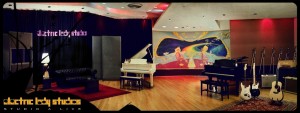
NYC composer Gary Meister of Naturalistic wrote and tracked Concrete’s gripping score at the aptly-named Naturalistic Studios downtown. A multi-purpose songwriter and producer, Meister (AMC, Bravo, CBS, HBO, Magnolia Pictures, Showtime) explained how this engrossing movie’s music came together.
How he got involved on the project:
In a way, this project came about because of the band Anvil. A couple of years ago I went to a screening of the doc Anvil! The Story of Anvil, and ran into an old college friend, filmmaker Cindy Burstein. She was working on her film and was struggling with the composer they had hired. I gave her my thoughts on how I thought they might proceed with him. After some time, it still wasn’t working out, so they changed composers and hired me.
The musical mindset:
For Concrete, Steel & Paint we really wanted the score to help audiences connect with these inmates and the families of victims, as well as the artists who worked with them to create the murals. I set out to create a score that would support the emotional moments you see on screen, and help with the overall pacing and story and character development.
Style and instrumentation:
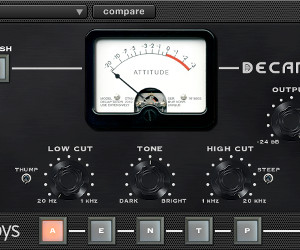
The score I wrote wound up incorporating a few musical styles. Most tracks have a soul/blues feel, but some have elements of classical, hip-hop or afro-pop thrown in as well. I recorded myself playing acoustic and electric guitar, bass, electric piano, percussion, samples and more. Liberal use was made of the Sound Toys plug-ins (among others) for reverbs, delays, backward effects, bass tones, etc…
A balancing act:
As with many of the social/political docs I’ve scored, the music needed to reflect the film’s balance of the gravitas of the subject matter with it’s sense of hope. Often I was working with cues that conveyed a “bittersweetness” (as we started referring to it) and had to find ways to evoke either more or less bitterness or sweetness.
Hear two tracks from the film by visiting Naturalistic, then click on “Work”, then “Music”, then “Soul & Funkyness”, and listen to “Concrete Skies” (the opening theme) and “Tricked Out”, a Naturalistic library track that was featured in the soundtrack. Or check out the official trailer below.
Full Coordinates:
Concrete Steel and Paint
Friday, MAY 20th at 7:30PM
Maysles Cinema
343 Malcolm X Boulevard / Lenox Avenue (between 127th and 128th Streets)
Tickets: $10 Suggested Donation
For more information or to purchase tickets, please visit Maysles Cinema
The SonicScoop Year in Review: Top NYC Music Business News and Trends of 2010
December 29, 2010 by David Weiss
/* Filed under Music Biz */
THE FIVE BOROUGHS: 2010 has been busy all right. For anyone involved in New York City’s expansive business of music – producer, publisher, entrepreneur, engineer, artist, and many more – the environment remains fast-paced, ultra-competitive and constantly changing.
With 2011 looming, SonicScoop looked for the news, trends and topics that stood out to us over the past 365 days.
In audio post, it was grow or die in the uppermost echelon. The biggest facilities, including hsr|ny, Nutmeg, and Sound Lounge made serious expansions into audio and/or video:
Sound Lounge opened an ADR Stage and multiple studios.
Nutmeg Post added a strong team and facility when it soaked up Soundhound.
The big post house Mega Playground built out audio capabilities.
Northern Lights added a 5.1 audio mixing suite.
Video house Click3X reversed the trend and added their own audio suite.
Large and mid-sized recording/tracking/mixing studios kept making capital improvements and expanding:
Premier Studios took over the 8th floor at 723 7th Avenue.
Engine Room opened up its penthouse studio.
Stadium Red expanded with a new studio for Just Blaze and a mastering suite.
Platinum Studios added Augspurgers to Studio K.
Sear Sound set up the Moog-centric Studio D.
Tainted Blue swapped out its SSL for a Euphonix (nee Avid) System 5.
And props to Electric Lady for marking its 40th Anniversary.
Converse (yes, the shoe company) has an interesting business plan for the Rubber Tracks studio it’s going to open in Williamsburg in 2011: no-cost recording.
Advanced smaller studios – independent and within larger facilities — and producer rooms also opened up at a peppy pace:
Chris Theberge’s Music Works arrived on the Upper West Side.
The former One Point Six in Williamsburg was reborn as Three Egg Studios.
Manhattan Center Studios launched The Fuse Box with Public Enemy’s Brian Hardgroove.
Avatar opened up its Studio W writing room.
Sisko’s Min-Max Studios opened up in midtown.
Guitarist Justin King moved his Vinegar Hill Sound from Portland, OR to DUMBO, Brooklyn.
Avid capped off a furious year of reinvention and new products with the release of Pro Tools 9.
Music houses and composers still had a ton of TV, film and video game work to go after and win:
Joel Beckerman of Man Made Music continued to make NYC a TV music powerhouse.
Composer Peter Nashel turned ears everywhere with his work for shows like Rubicon.
Outfits like Expansion Team scored for networks such as the Biography Channel.
Tom Salta understands how to get chosen to score for games like Prince of Persia and Red Steel 2.
Production music and synch licensing remained a solid business, especially for those who got in at the right time or had a smart approach.
NYC’s Kingsize Music was acquired by 615 Music.
And later on Warner-Chappell (NYC) bought up 615 Music.
NYC’s Videohelper released the “Scenarios” music search tool.
Jingle Punks continued to grow.
Mechanical licensing experts RightsFlow kept progressing.
One of NYC’s most controversial music business plays, peer-to-peer file sharing network Limewire, appeared to be finally finished.
Tracking, mixing and mastering at NYC’s established facilities did a relatively healthy volume of A-level and independent work throughout the year:
The Black Eyed Peas, Rivers Cuomo and Kanye West were at Germano Studios.
Neon Indian, Beach House, Matt and Kim, Bear Hands and more were mastered at The Lodge.
MSR Studios handled Kid Cudi, Evanescence and Broadway Cast recordings.
Lenny Kravitz, The Dirty Pearls, “Glee”, and Vampire Weekend were all at Avatar.
Joe Lambert Mastering worked with Moby and Ninjasonik.
New software and hardware happiness abounded:
Propellerhead released Reason 5.
NYC suffered losses when beloved people and places left us:
Recording icon Walter Sear passed away.
The great hip hop/jazz experimentalist Guru was gone before his time.
Clinton Recording Studios hosted its last session.
Brick and mortar music retail took another hit when Fat Beats shuttered its last stores.
Baseline Studios, home of Just Blaze and countless Jay-Z hits, closed.
Chung King Studios started off 2010 with a bang by suddenly vacating Varick Street.
NYC-based producers, mixers, engineers and artists became businesses in their own right:
People like Allen Farmelo developed their distinctive sound.
Choice songwriter Claude Kelly made a business of hits.
Shane Stoneback’s career took off via work with Sleigh Bells and Vampire Weekend.
Mixer Mark Saunders embraced multiple aspects of the biz from his studio at Beat 360.
Dream Theater’s Jordan Rudess took his iPad/iPhone app MorphWiz all the way to #1.
The studio scene got a lot more socialicious and FUN:

Two fiesta types plus (r) introspective Stadiumred artist Jeremy Carr. SonicScoop says: HAVE FUN AND PROSPER IN 2011!
Digital Music NY was one of many popular business-based meetups.
Stadium Red partied down post-CMJ.
20dot20 mixed advertising and music.
And the Connectors connected a LOT of people.
What big stories would you include? And what do you see next in 2011? Don’t be shy – leave a comment and let us know!
– Janice Brown and David Weiss
On The Record: Laurie Anderson, Mario J. McNulty On The Making Of “Homeland”
June 25, 2010 by Janice Brown
/* Filed under NYC Spotlight */
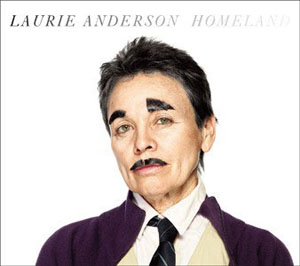
SOHO, MANHATTAN: Iconic NYC artist and sonic adventurer Laurie Anderson released her amazing new album, Homeland, earlier this week. Years in the making, Homeland emerged after a challenging and at-times vexing process in the studio, and very nearly never emerged at all.
“It’s this very, very weird hybrid,” says Anderson, struggling to pinpoint what ultimately makes up Homeland. “I’ve never worked on something this odd before: it was sort of a bunch of filters, a bunch of live [recordings] and a bunch of studio ideas. I’m not even sure what to call it because it’s such a bizarre collection of things.”
It started with sonic scaffolding. Anderson is credited as an engineer on Homeland, and would have to be for the way the songs are composed: they are, in effect, engineered.
“I start with many different rhythmic riffs — even though Homeland doesn’t sound particularly rhythm-driven, it really is,” she describes, when asked of her sonic palette. “By that I mean most of the songs are built on these scaffolds that get removed, and they are mostly violin filters that I’ve been building myself with a software designer named Konrad Kaczmarek. They were based originally on Eventide filters but we went further afield in building our own.”
These became the building blocks for Homeland — movements both ominous and euphoric built up underneath and around an epic narrative. And Anderson toured the work, developing it on the road, recording performances of her constantly evolving Homeland live show all over the world for three years. “That’s various versions of the show, in various tempos, in various keys,” she points out.
Along the way, she recorded with a variety of collaborators, including Tuvan throat singers and igil players of Chirgilchin, and captured improvisational sessions with NYC experimental jazz and rock musicians including Rob Burger (keyboards), Omar Hakim (drums), Kieran Hebden of Four Tet (keyboards), John Zorn (saxophone) and Antony Hegarty (vocals).
“I wanted to make a record that would really relate to the live shows,” Anderson shares. “My live rig incorporates so many tools now — soft synths, homemade pedals, vocal processing, different vocoders, the homemade software we call ‘Tide’ in homage to Eventide” — to where I can do almost anything in the live show. It’s really, really exciting and I wanted to get that feeling into the record.
“So it’s like I ‘wrote the record on the road,’ and then came back to the studio and tried to ‘record’ it, but all of those terms were sort of meaningless by that point. I thought, OK now I’ll take some of these live files and paste them together into these songs in the studio and get that live feel. And, that was beyond hard! We took some of those rhythmic elements, printed them and then tried to make a studio version and the air went out of the whole thing.
“And, I thought, No!! I really didn’t want to do something that pristinely goes from my box to your box. I [found myself] sitting there working with all these clean files thinking now what? I’m going to put fake air around them? No! That kind of air to me feels like air-conditioned air — stale air from a hotel in Tokyo that’s never been aired out. I wanted to use air that had been pumped through real places; waves that had been somewhere.
“At that point, the record budget was pretty much over and it was just me sitting with like 100,000 sound files. Here I’d been thinking I’m going to make this spontaneous live thing, and now I was digging through and labeling all these files. I truly would never recommend this to anyone. (laughs) Do not try this at home!”
HOMELAND EXCAVATION: DIGGING, COMPILING, MORE RECORDING
It’s somewhat unsurprising, for an artist who’s always so embraced technology, that the infinite possibilities of today’s methods of music production might tip the scales into the overwhelming. “I got super-depressed looking at all those files and I actually stopped working on it many times,” Anderson admits. “At that point, I was only working on it as a hobby, a couple days a month. I thought I would never finish it. And it was because of Lou [Reed] that I finished it and because of Mario [McNulty] too. Mario really hung in there, and he said it is possible to do this. He was really willing to dig into those bins, and he was really patient.”
A NYC-based engineer/producer, Mario J. McNulty had worked with Anderson before. He mixed sound for a short film she directed in ‘05. “The first time I ever spoke to Laurie, we had a really nice chat about mixing,” McNulty recalls.
“And it was so great because it was abstract and artistic — the ultimate way I like to approach things, in a totally non-conformist sense. It wasn’t ‘this is a rock mix’ where the kick drum does this, etc. It’s not of the mainstream world at all, it’s of this world that I really admire, of Laurie and Eno and Gabriel and Bowie and Talk Talk and all of these records that I’m really passionate about.”
“That’s maybe the only talk we’ve ever had about mixing, and we’ve worked on and off ever since,” he continues. “So, on Homeland, we never had to talk specifically about what the album should sound like, because I already have a good sense of what she wants: she wants beauty. And, her vocal needs to be in the right place and really only she knows where that is. I mixed the record, but she’s very, very involved in the process.”
McNulty went into Anderson’s studio in SoHo and began the process of compiling Homeland, with the expectation of beginning to mix it. “There had been a lot of different people working on it, so the material was all over the place, literally,” he describes. “On different hard drives, in different studios. Neither of us realized how spread out the project was. I consolidated it all into one location, so something could be played back that made sense to her. And by that point, she was realizing she had more work to do. It just wasn’t moving her the right way.”
Anderson put mixing on hold to do some more recording, editing, and arranging at her studio, which has been her workspace since the 80s. “She has a lot of equipment, but the main recording system there is a Pro Tools HD2 rig,” McNulty describes. “And she has a series of laptops with soft synths, vintage and modern keyboards and racks of time-based effects like her Eventide Harmonizers, which she uses in the recording process as well as in mixing.”
“Pretty much any time we would need an effect, we’d go to the Harmonizer,” says McNulty. “She’s one of the pioneers of the Harmonizer so she’s very familiar with it and even the software emulations of the Harmonizer, so we would get into all kinds of sounds with them. She’ll record violin through this really awesome stereo delay patch that she made — and she also has patches that Brian Eno made for her stored in her Harmonizer.”
As she has throughout her career, Anderson used filters to essentially create new instruments, new voices. Homeland’s “Another Day in America” uses one of her classic vocal filters to voice her male alter-ego, “Fenway Bergamot,” the darkly comic storyteller, the omniscient narrator of the Homeland live show.
“Mario’s the reason I added Fenway Bergamot to the record — we just put up a mic and improvised for awhile to see what would happen,” Anderson recalls. “And that became ‘Another Day in America.’ I’m very glad I included that because my music is about words and their rhythm, so to have that very stripped-down [piece] in the middle is kind of what I was going for as well.”
THE MIX OVERLAY: UPGRADING THE SIGNAL PATH
By the end of the summer of ’09, Anderson had finally finished recording and decided she wanted to mix the record in her own studio. “I proposed that we rent some equipment, basically do an upgrade to the studio,” says McNulty. “So I called Jim Flynn Rentals and explained how I wanted to mix analog but that I wanted to avoid all the old analog gear that I wasn’t liking in her space, like her Mackie consoles which she mainly uses for monitoring.
“We did what Jim called a “mix overlay,” McNulty relays. “We upgraded to an HD3 system and added a Dangerous 2-BUS for analog summing, and a series of compressors — Urei, LA2As, 1176s. We also had some gear from Lou Reed. He brought over his LA2A, which is the best LA2A I’ve ever heard, and some Avalon compressors and EQs. We were able to basically bypass her patch bay and patch all of our analog compressors and EQs by hand. So it was a totally custom setup.”
McNulty also rented an A-Designs Hammer. “I used one side of this stereo EQ on Laurie’s voice, and it’s just a fantastic sound,” he adds.
They also rented an arsenal of plug-ins. “Laurie had a good collection of plug-ins but I also needed some other tools that I find really useful when mixing, like the McDSP Emerald bundle, the Crane Song tape saturation plug-ins and the Sound Toys bundle — TimeBlender, PitchBlender, and Echoboy is my favorite. They’re really useful and really fast — sometimes you need to just pull things up quickly, especially in a mix scenario. I also used the Waves SSL plug-ins and EQs, which Laurie owns, and the Sonnox EQs. For effects, I’ll use ReVibe, Waves and the Eventide Harmonizer plug-ins as well.
“We also used her hardware Harmonizers on the mix — she has special reverbs, cave reverbs, all kinds of de-tuned stuff that won’t be found in any other H3000 because they are patches that were designed either by Laurie or by Brian Eno. So that was a real treat!”
HOME-STRETCH: LOU REED, HI-FI- MONITORING, KILLER BASS!
Though Homeland had involved many people’s contributions along the way, including Roma Baran who’s credited with Reed as a producer, by the end, it was Anderson, Lou Reed and McNulty finishing the project in the mixing stage.
“That was, in a way, the hardest stage,” says Anderson. “In the beginning of a project, it’s all experimentation and great and at the end, you realize ‘oh, but we do have to eventually make something and present it to someone.’ Lou said he was going to come in and sit here in the studio with me until I was done. And I thought, ‘oh, that’s a bad idea for a couple!” (laughs) but I would truly, literally be working on it today, without that.’
“Lou is a great producer,” Anderson continues. “I’d play something and he’d say that’s done, let’s move on. And I’d say ‘No, no! It needs horns, background vocals, etc…I can’t leave that vocal on there.’ Lou is a really fascinating blend of perfectionist and purist and somebody who’s just really loose. He’d say, ‘Leave that raggy stuff in! Why would you take that out?’ And ‘This doesn’t need 17 more parts. Air can be part of it. Air can be rhythmic.’
“Every writer I know is indebted to their editor if they have a good one and same with a musician to their producer. And Mario in a lot of ways worked as a kind of producer. He wasn’t just the engineer — he would definitely express himself in a way that was so well-timed, he understood the process so well that he was never intruding but he had this way of putting his opinion in.’
They monitored Homeland on a few systems. “Laurie has her ProAc speakers that she’s used to listening on in the control room and then I added NS10s, which Lou and I would listen on,” says McNulty. “We also wanted a really hi-fi monitoring setup we could listen on, so Lou brought these huge ATC monitors over from his studio. We set them up in the live room — on foam on the floor — and there was a couch and blankets, and people would sit in there and listen on these huge 3-way monitors, which have this incredible frequency response.
“That was great — to be in the control room with the nearfield monitors and then be able to clear our minds, take two minutes and go in the other room and crank it on the big guys — see where the bass is sitting, see where the vocal is sitting.”
What was Anderson listening for? “We conceived it with a very wide sonic range,” she describes. “And I wanted scary bass. I wanted the bass to jump out and kill you! I’m so sick of hearing MP3s coming through people’s laptop speakers and you hear this tinny thing…and you think, ‘That’s the song?’ Why did I spend more than two minutes on the song if it was going to sound like that? So, I wanted to make something where if you wanted to crank it up on a huge system, you’d hear tons of colorful details and all these little things.”
Nonesuch Records released Homeland on June 22. Buy it HERE! The album is available as audio-only and as a CD+MP3+DVD (which includes the 40-minute documentary “Homeland: The Story of the Lark.” Anderson will perform “Another Day in America: Songs from Homeland & other stories” at Le Poisson Rouge, July 13. Tickets here!
Mario J. McNulty is represented by Joe D’Ambrosio Management.