The Spirit of NYC Mastering: Get Inside the Ears of James Cruz and Zeitgeist Sound Studios
February 14, 2011 by David Weiss
/* Filed under Deli Feed, NYC Spotlight, SPARS Feed */
LONG ISLAND CITY, QUEENS: Scratch below the surface of any of today’s independent masring engineers, and most likely you’ll find a team player there. There are a lot of one-person shops dotting the NYC landscape, but these individual practitioners weren’t always flying solo.
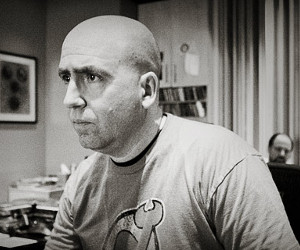
Case in point: James Cruz, founder and sole proprietor of Zeitgiest Sound Studios in Long Island City. In another dimension – circa 2004 – Cruz was a young addition to a mastering dream team operating within the dearly departed Sony Studios. His collaborators there were some of the heaviest hitters – then and now – in the industry: Vic Anesini, Vlado Meller, Joseph M. Palmaccio, Darcy Proper, and Mark Wilder. The late, great technical genius Dave Smith, VP of Sony Music Engineering, oversaw it all.
Change being the constant that it is, in 2007, Sony Studios closed to make way for something else deemed more useful. The All Stars are now scattered across the planet, but Cruz, a longtime resident of Astoria, made it just across the river to Long Island City to found scenic Zeitgeist. Since settling in, his credits have included the last three Calle 13 albums (winners of a total of seven Latin GRAMMYS and two GRAMMYS), Mary Mary, Cee Lo, Three-6 Mafia, Natasha Bedingfield, and more.
Here, Cruz cues us in on many things mastering – why he stays in the box, how artists can make the most of their session, and the beauty of being your own boss.
Tell us about the “signal path” that got you into mastering.
Ha! If you want me to start at the top…Just about out of college I sent resumes all over town — I wanted to be a record or mix engineer. Troy Germano at the Hit Factory called me for an interview and hired me as a GA (General Assistant) in the mastering department. At the time I had never heard of mastering and knew nothing about it, but he said to give it a try and eventually I can move over to “the other side.”
This was at the time The Hit Factory was at its peak: The engineering staff consisted of Herb Powers, Tom Coyne, Chris Gehringer and Roger Talkov. At the time Roger was one of the few people in New York with a new workstation called Sonic Solutions, and he was betting on it being “the future of the business.” Roger needed to move on, I decided that I would learn the system, and I was literally learning trial-by-fire style doing sessions for Celine Dion and Jim Steinman two days later.
Soon after that Tom went over to Sterling Sound so I picked up the computer, put it in his room and said “mine.” I was doing Toni Braxton sessions with LA Reid the next week. All while still making coffee and running the library. Then I learned how to cut records from Herbie – one of the best vinyl cutters ever and learned my EQ chops from Gehringer. It was a pretty special time. I liked it so much that here I am 20 years later. I never went to “the other side.”
That sounds a little like how I got started writing about pro audio! Your mastering career led you to a nice distinction – one of the final group that made up Sony Mastering: What do you feel was special about the people that were there? And the facility, for that matter, at the time that it got shut down in 2007?
Sony was amazing. The Hit Factory was great for many reasons but Sony was amazing. It was one of the most underappreciated and under-used facilities ever. Never again will there be a place like it: You could walk in with nothing, book a production room, record, mix, master and duplicate your album. Then you could go down the hall and shoot and edit your video and do artwork, and even do a live broadcast from the soundstage.
Another thing about it was the technical staff. By far the best in the business. I could ask them for the most bizarre setups you could think of and it would be done in 30 minutes, without ever having to rent gear. The mic locker was epic.
Then there were the engineers. Of course everyone knows the juggernaut that is Vlado Meller, but on top of that was Mark Wilder, a pair of golden ears if there ever was one, and Vic Anesini who did fantastic work. It was a place where we all worked on making each other better and it was always great to have these guys to give an opinion on an EQ or compressor setting. I feel like The Hit Factory was a long training session and Sony is really where I came into myself as an engineer.
I always wondered why it was so quiet every time I was at Sony. After that, why did you decide to go solo and set up Zeitgeist, rather than joining another mastering facility?
Honestly, Sony shut down and I had no interest in working for someone else anymore. I couldn’t really see myself at Sterling or Masterdisk so I didn’t even pursue it. I figured I had already worked in two of the best spots ever and now it was time to do my own thing. I also like the idea of being completely responsible for myself and not having to answer to anyone.
So how would you describe what you’ve created in Zeitgeist – what were your objectives for the room? How did you set it up?
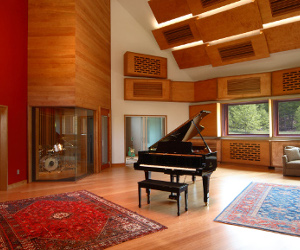
The most important thing for me was the vibe. Even though I’ve worked in these amazing studios, all the rooms always felt very cold and sterile – there’s really only so much you can do with a black couch and lava lamps. So first and foremost I wanted sunlight.
I also went in the complete opposite direction of the “modern mastering room” and went back to what it was originally intended to be, and that’s the best-sounding living room stereo in the world. So I did just that: I built a giant living room with tons of comfort and a front window that’s 20’ long by 8 ½’ high — I barely even need to use electric lighting anymore.
Zeitgeist is the Comfort Zone. You also mentioned to me that you master virtually 100% in the box. Why is it that?
Pristine signal flow — mastering rule Number One. When I started everything was on tape. It came in on ½” (sometimes DAT) and ended up on lacquer and/or UMatic. There was always a physical medium so there was always multiple pieces of gear, a bunch of feet of wire, patch bays etc…
Even though everything was as high quality as possible, it always imparted a sound. Sometimes it was good, sometimes it was bad. Along the way I noticed everything started to go all-digital — started with DAT then recordable CD. So I started to back off on the analog gear. I didn’t want to convert to analog, go through a bunch of stuff, then have to go back to digital. Eventually it went to all WAV files so I found no reason to ever leave the box.
I’m using very high quality mastering grade plug-ins and my signal flow is as short as possible. Do I miss analog stuff? Yes. Very much. I would much prefer to turn a knob then adjust a trackball! There are definitely some advantages to doing it this way, though, besides the signal flow. It allows me to work much faster, which benefits the client in the end. I also have a lot more flexibility than I ever had with analog stuff.
There’s always a tradeoff, in either direction. How is your workstation configured?
My workstation is the Sequoia by Magix and my main EQ is the Orange Linear Phase by Algorithmix. I can’t live without them. It runs on Windows XP and the computer was custom built by Sony’s computer genius Jim Yates.
It’s a powerhouse of a system and extremely stable. It’s so over-engineered I have seen no reason to update it yet, to be very honest. My next batch of plug-ins will probably be the Sonnox Oxford stuff – it’s not new but it is some great-sounding stuff. Universal Audio is also doing some very cool stuff with all their emulations.
Turning around to what’s coming into your system, what would you say are the trends you’re seeing in terms of the recording techniques and audio quality of the music you’re getting? How are projects evolving, and how is that affecting the way you approach your job?
Let me start here, and this is as diplomatic as possible: owning Pro Tools doesn’t make you a recording engineer, in the same way that owning a frying pan doesn’t make you a chef. That being said there are more and more projects being done in smaller project studios and fewer people are actually involved in the process. There is actually a very good article in a current magazine about the engineer becoming a loner, where in the days of the larger studios there were always other people around to give opinions and push you to be better.
That’s a major change that’s affecting the way things are done. As far as audio quality, it’s always been hit or miss. There have always been bad engineers and great engineers. As technology gets cheaper there do seem to be more and more engineers though.
On that topic, you said that client education is something you’re a big proponent of. What’s an example of a correctable mistake you often hear on the projects you get – something that people could easily fix so that you can deliver a better master?
I love for new clients to call me before the session and ask as many questions as they want. I am a big believer in one-on-one communication with the client. It benefits everybody.
The biggest mistakes I get are too much compression/limiting – see “level wars” discussions in every audio publication and message board written in the last 10 years — and the tops and tails of the tracks not being right. If your mix engineer is adding a limiter on the two-mix just to make it loud, tell him to remove it before sending it to mastering. Your mastering engineer should be able to make your track loud without wrecking all the wonderful dynamic range that makes music connect on an emotional level.
It’s also helpful to leave a second or two of air before your song. Don’t start your WAV right on the music, let it breathe a bit. Your mastering person can trim it for you. And lastly, that applies to the end of the track too: Leave some air at the end so your mastering engineer has some room to work, especially when sequencing an album. The worst, and costly, mistake is not being prepared. Call your engineer before the session and get in detail the way that things should be done, if you have any questions.
That’s some super-solid advice! Things are pretty competitive here in the NYC mastering scene, right? How are things evolving for you and your competition?
I think the smaller guys are making a pretty serious play. To be very honest, and I mean this with the utmost of respect, I don’t really see how the giant muti-room places can survive with that business model much longer. The overhead is just too high. As budgets continue to shrink and the web continues to shut down labels it’s going to be the boutique studios that will be able to keep up.
On another tip, who are some music innovators that have inspired you – be they engineers, artists, business people, chefs…?
Wow. Good one — there are so many. In no particular order: Jimmy Page, Pink Floyd, Brian Eno, Daniel Lanois, Pete Townsend, Geoff Emerick, George Martin, Brendan O’ Brien, Jim Thirwell, Jon Brion, Joe Strummer, The Talking Heads and XTC. Just to name a few.
That’s a heady mix! Finally, when you sit down to master a record – whether it’s an indie artist or major label hit – what’s the big payoff?
I love doing an attended session and playing the before-and-after for a client and seeing their face light up. That’s a lot of fun for me. When everything is complete, the client sits down and listens to the complete product, and says “YES!” that makes me very happy.
File under “What a Feeeeeeeling!” Anything else to add?
I need a vacation. It’s been way too long.
Amen!
Misery’s “Evil is Crowned” Recorded at Systems 2 in Brooklyn, Due Out February 15
February 4, 2011 by Janice Brown
/* Filed under News */
Long Island-based metal band Misery will release their new album, Evil is Crowned, on February 15 via Super Metal Records.
The album was recorded at Systems 2 Recording Studio in Brooklyn, produced by Joey Z of Life of Agony, and mastered at Sterling Sound.
We couldn’t find a website for Systems 2, but found Joey Z’s Brooklyn studio, Method of Groove.
Misery’s CD release show is happening at Duff’s in Williamsburg next Friday, February 11 at 9PM. \m/ \m/
For more Misery, visit: http://www.myspace.com/miseryny
Chile’s Los Tres Mix With Joe Blaney at Fluxivity
August 16, 2010 by Janice Brown
/* Filed under News */
This summer, Chilean rock band Los Tres traveled to New York to record, mix and master their new record. Working with producer/engineer Joe Blaney, Los Tres tracked the record up at Dreamland Recording, outside of Woodstock, and then mixed and recorded overdubs at Fluxivity in Williamsburg.
This is the fourth record Los Tres has made with Blaney, who brought the project to Fluxivity to mix on the automated Neve 8048 console with Flying Faders. Fluxivity owner Nathaniel Priest notes that this is the same console Blaney used to record Ron Woods, Bob Dylan and Steve Stevens on in the 80s!
The session was recorded and mixed on ATR analog tape, which Priest notes “sounded fabulous and performed flawlessly.”
“Joe brought in two of his own racks of outboard gear to Fluxivity that he had at his former studio in Greenwich Village,” Priest shares, adding, “We are set up here to interface with racks of users’ gear, either on DL connectors or XLR’s.
“Los Tres is a band that very much knows music, music history and appreciates the art of playing fine music and making a record that will endure as a notable example of artistic expression,” Priest adds.
“The record has 16 songs which expertly covers a range of styles, from rock to more traditional Andean tunes. It was made in the classic authentic style of record making with particular attention to sonic quality and detail, drawing on the many finely-honed skills of Joe Blaney.”
The group finished mixing the last song within the hour of the start of the mastering session at Sterling Sound, and Priest relays, “left here with a reel of warm tape!” The record was mastered by Sterling’s Dave McNair.
In other recent sessions at Fluxivity…Chris Brown visited the studio to wrap up mixing the upcoming Abrams Brothers album Northern Exposure with Grammy-winning engineer Brian Thorn. And for its 21st Anniversary release, Matador Records mixed a live 1999 Anniversary show from Irving Plaza. Jesper Eklow produced and Tom Gloady engineered.
MOTU Ships BPM 1.5 with Expanded Sound Library; Samples Mastered at Sterling Sound
August 7, 2010 by David Weiss
/* Filed under News */
MOTU has begun shipping BPM Version 1.5. The new version represents a significant update of the MOTU rhythm production virtual instrument/UVI sound library for Mac and Windows.
The expanded library is over 19 GB in size, consisting of kits, patterns, samples, loops, and instruments covering dozens of musical styles including big beat, dancehall, dub, electro, hard trance, house, drum ‘n’ bass, progressive, and others.
New software features in BPM 1.5 include enhanced support for hardware MIDI controllers, a note repeat function, and bank effects that can be saved with kits.
In-depth features include:
Beat Box Anthology
BPM 1.5 includes Beat Box Anthology, a comprehensive 4 GB collection of legacy rhythm sounds (over 10,000 samples) from 80 classic drum machines from the 1970′s, 80′s and 90′s.
Users can browse individual samples, kits, and patterns from three categories of devices: classic, analog, and digital, and a “classic” category for machines such as the 808 and 909 series. Samples are also organized by type (kick, snare, etc.) for easy browsing.
Sampling of the original instruments took place at 24-bit 96 kHz audio quality. Professional mastering of all samples was at NYC’s Sterling Sound.
FlexLoops and musical styles
BPM 1.5 includes hundreds of new FlexLoops™, which are fully programmable kits+patterns that give users control of every loop element, from individual samples to specific FX parameters. Dozens of expanded musical styles are represented, including:
Big beat
Dancehall
Dirty south
Dub
Electro
Hard trance
Hip hop
R ‘n’ B
House
Jungle
Drum ‘n’ bass
Minimal
Progressive
Ragga
Trip hop
Vinylized
Users can combine kits and patterns from each style to quickly create unique hybrid beats. BPM 1.5 also introduces bank aux FX, which allow users to create three independent effects processing chains for a bank of sounds, apply the effect chains as desired to each individual component sound of the bank, and then save the effects with the bank. This new feature makes the effects an integral part of the bank, so that when the bank is saved with a pattern, the result is a fully programmable FlexLoop.
Enhanced MIDI controller support
As a software-only virtual instrument, BPM 1.5 has been enhanced with programmable MIDI remote control features that allow it to work well with third-party hardware controllers, including pad controllers and MIDI keyboards. BPM ships with hardware template files for several popular drum pad controller products, such as the Akai™ MPD Series. When loaded into the hardware, the template file quickly programs the controller for use with BPM.
Users can further customize their beat making experience using BPM’s new MIDI Remote preferences, a long list of BPM functions that can be attached to any MIDI controller key, switch, fader, or knob using “MIDI learn” functionality.
The new MIDI Select feature gives users direct access to each pad — up to 64 simultaneous pads per scene — for quick editing and tweaking directly from a MIDI controller. For example, if a user needs to tweak the filter cutoff on the crash cymbal, they simply play the crash cymbal pad and then twist the assigned knob to tweak the filter.
Note repeat
To repeat the currently held note, users hold down the Note Repeat button. Any note repeat value, from triplet 64ths to dotted quarters to 32x, can be chosen. The note repeat button can be used on-screen or mapped to any control item on a MIDI controller. Users can change the repeat value on the fly from their controller. Volume (velocity) of repeated notes is controlled with aftertouch pressure.
BPM 1.5 upgrade package
The BPM 1.5 upgrade package includes:
– BPM 1.5 installer CD
– Updated BPM 1.5 soundbank DVDs
– New Beat Box Anthology soundbank DVD
– Beat Box Anthology serial number (iLok authorization code)
Availability
BPM 1.5 is now shipping. Price remains the same at $295. Registered 1.0 users can upgrade to version 1.5 for $79.
Drew Lavyne Reopens A.L.L. Digital Mastering
July 1, 2010 by David Weiss
/* Filed under News */
Drew Lavyne announced yesterday that he has reopened his original mastering studio, A.L.L. Digital.
“After having spent the last year at Sterling Sound I have discovered that my clients still prefer the flexible budgets and one-on-one access of being able to communicate and work with me directly, so that is exactly what I am going to provide,” says Lavyne. “It’s been a long road since starting A.L.L. Digital in 1993, and I look forward to continuing on in the spirit with which it began.”
Recent credits for Lavyne include Taylor Swift, Adam Lambert, Sarah McLachlan, The Twilight Soundtrack, Alpha Rev, Miike Snow and Pete Yorn. All inquiries can be directed to him at drewlavyne@mac.com, and at 917.544.2111.
AES: A Weekend To Indulge Your Beatles, Motown, Mastering, Max/MSP and Haydn Curiosities
September 16, 2009 by Janice Brown
/* Filed under News */
Go to the AES Convention for the gear, stay for the technical program. This year’s program of Events, Workshops, Tutorials and Tech Tours really has something for everyone.
Check out the full agenda here and below are some of SonicScoop’s top-picks of events, panels and tech tours:
Motown at 50 (Friday, Oct. 9 9-10:30AM): This discussion of Motown and its legacy kicks off the weekend, moderated by Jason King.
Recording The Beatles (Friday, Oct. 9 3-5): Kevin Ryan and Brian Kehew co-authored the definitive book on the Beatles’ studio sessions, and will take you inside the stories behind the beloved recordings.

Duncan Sheik and other performers will participate in the Platinum Artists panel, alongside engineer/producers Kevin Killen, Bob Clearmountain and Scott Jacoby.
Platinum Artists (Sat, Oct. 10 11:30 – 1): Jonatha Brooke, Bob Clearmountain, Scott Jacoby, Kevin Killen, Maiysha and Duncan Sheik will share their perspective on the recording process.
Grammy SoundTable: Mixing With Attitude (Sat, Oct. 10 2:30 – 4): Chris Lord Alge, Tony Maserati and Nile Rodgers will talk about how to create mixes that stand out and sound great in every environment.
1080P and MP3: We Got the Picture. What Happened to the Sound? This panel includes John Atkinson, Stereophile; Steve Berkowitz, Sony / BMG; Greg Calbi, Sterling Sound; Alan Douches, West West Side Music; Bob Ludwig, Gateway Mastering & DVD and EveAnna Manley, Manley Audio Labs and will examine the incongruity between video’s leap from 480i 4:3 to 1080P 16:9 and the degradation of audio from 44.1 K/16 bit to low bit rate MP3. How can the industry reconnect consumers to good sound? Find out at this workshop
Pimp Your Mix (Mon. Oct. 12 4-6): Grammy-winning (NYC-based) mixers Bassy Bob Brockmann (Christina Aguilera, Babyface, Fugees) and Ryan West (Rihanna, Kanye West, John Legend) will take a production previously mixed by an upcoming producer, tear it apart and reassemble it with state-of-the art and vintage analog gear.
Max for Live (Fri. Oct. 9 12-1): Yukio King, Ableton AG, and panel will explore the integration of Max/MSP/Jitter into the Ableton Live platform, and discuss Max for Live from the perspective of violinist and composer, Mari Kimura, in the context of her ongoing work with interactive performance technology.
Virtual Haydn (Sat. Oct. 10 9-10:30): Recording and Performing in Virtual Acoustics: Chair, Wieslaw Woszczyk, McGill University and panel will reveal how a leading keyboardist, producer, and virtual acoustics architect collaborated on the first application of “virtual acoustics” for the recording of Virtual Haydn, released this year on four Blu-ray discs by Naxos.
Tech tours going on off-site throughout the four-day Convention include:
NYU’s Steinhardt School of Culture, Education and Human Development Department of Music and Performing Arts Professions (Friday, Oct. 9 from 11:30 – 1:30): A 7500 + sq. ft. recording studio/teaching complex currently under construction near Washington Sq. Park with studio design & acoustics created by the Walters Storyk Design Group. The tour will be guided by John Storyk and David Kotch.
The brand-new Thomas Edison National Historical Park (Fri, Oct. 9 2-5): Tour Thomas Edison’s laboratory and residence in West Orange, NJ.
Sterling Sound (Sun. Oct. 11 2-5): Tour Sterling Sound, the impressive mastering facility featuring nine studios and mastering suites, and 15 celebrated engineers including one dedicated to vinyl.
audioEngine (Mon. Oct. 12 9AM-noon): The audioEngine complex has eight mixing rooms and eight unique studio environments including the recently completed Studio E which specializes in theatrical mixing, and the Adirondacks-style inspired “Cabin In The Sky.”
Tickets for the Tech Tours are available on-site at the Javits, at the Reception Desk in the main lobby in advance of departure.
Vinyl Comeback Prompts Sterling’s New All-Analog Vinyl Mastering: Part I
June 16, 2009 by Janice Brown
/* Filed under Tech & Reviews */
CHELSEA, MANHATTAN — Catering to consistent calls for vinyl across music genres and markets, Sterling Sound, the A-list mastering complex housing the likes of Greg Calbi, Ted Jensen, Tom Coyne and George Marino among others, has added all-analog vinyl mastering to its repertoire. With the addition of a Neumann VMS-80 cutting lathe and the one-of-a-kind modification of an ATR-102 tape machine, Sterling now offers as pristine an analog path to vinyl as possible. SonicScoop caught up with Calbi, Marino and Sterling head technician Barry Wolifson to get the details on how this system works and why these guys have gone to such lengths to bring back a lost art.

Through joint effort by Sterling’s chief tech Barry Wolifson and ATR Services owner Mike Spitz, this ATR-102 was modified to add a preview head (left) for analog vinyl mastering.
“Almost everybody who comes here for mastering at least inquires about vinyl,” assures Calbi. “And, with so many bands putting out vinyl, there’s more competition now to get attention for those releases. What’s been the standard in recent years, for mastering vinyl releases for both DJs and indie bands, is to simply transfer the CD master to vinyl. But we now offer two options for higher-quality vinyl — we can re-master your digital source as a high-res 24-bit/96k file for vinyl, or we can take your analog mix and master it to vinyl via an entirely analog signal chain, for a true ‘AAA’ vinyl release: that’s analog mix, analog master, analog playback.”
The all-analog vinyl mastering setup in Marino’s room is unique to Sterling, and few facilities in the world offer this service via any equipment configuration. The typical mastering chain for vinyl involves a digital delay, where the signal cut to the lacquer is actually a delayed stereo feed as opposed to the analog signal from the tape. A couple other NYC facilities do offer an all-analog mastering path for vinyl, with no digital delay — Masterdisk in midtown and Salt Mastering in Greenpoint — but Sterling’s equipment modifications pose some innovative updates on this classic process.
Marino describes, “The basic setup for cutting records is that you have an analog playback machine and the playback head feeds the signal to the cutting lathe. To cut a record properly, the computer in the cutting lathe needs to have a ‘preview’ [of what’s coming next as it’s printing], which is typically done via digital delay. The lathe gets two signals — the preview and the digitally delayed signal — and it’s the delayed signal that gets cut to the lacquer, which is not ideal.”
Any facility that offers all-analog vinyl mastering has a tape machine that’s been modified to add a preview head. At Sterling, Wolifson worked with ATR’s Mike Spitz to design such a modification for the ATR-102 machine. “People love this particular ATR machine,” says Wolifson. “And, with the modification, this is the only one of its kind.”
The system’s design also involves a unique concept for delaying the signal but printing the original signal. “On this machine, the tape travels along a path, from preview head to playback head, which is the longest delay you’re ever going to need. For anything shorter than that, we actually delay the delay,” explains Marino. “So, we use a digital delay, but only for the preview, and what’s being fed to the lathe is the original pristine signal from the tape machine.”

Ben Harper and Relentless 7’s White Lies for Dark Times was mastered for CD by Greg Calbi and then assembled and mastered/cut for a 2-LP 180-gram vinyl release by George Marino.
Key to getting Sterling’s analog vinyl mastering system running has been equipment designer and mastering guru Chris Muth, who built Sterling’s mastering consoles. “We’re turning our Muth mastering console into an A/B console, with Chris’ help,” says Wolifson. “We need to have two identical sets of processors so that we can match the two signals going to the lathe — the preview signal and the signal going on the lacquer. So we have our standard Muth mastering console and then another Muth console, normally used for surround sound processing, that becomes the preview processing area when we’re cutting vinyl.”
The A/B console allows the mastering engineer to pre-set his processors one song ahead of time, a critical piece of this continuous vinyl cutting process. “One song may have been cut in Chicago and the other in LA, and they can sound pretty radically different from one to the next,” describes Marino. “We’ll make it sound more continuous in the mastering process, but since it’s all running in real-time, we’d only have 1 or 2 seconds between songs to run and change the settings. With the A/B console, you just hit one button to switch the whole thing over to your pre-sets for the next song.”
The records coming into Sterling for AAA vinyl release have ranged from classical and audiophile to popular music, including re-issues of Beastie Boys Ill Communication and Nirvana’s Bleach, a re-issue of a classic recording of Mussorgsky’s Pictures At An Exhibition and a brand-new record by Ben Harper and Relentless 7.
So, when does doing AAA vinyl make sense? And how much time and budget should you commit to whatever vinyl release you choose to do? Tune into Part II of Vinyl Comeback to find out what Sterling recommends!
Vinyl Comeback Prompts Sterling’s New All-Analog Vinyl Mastering: Part II
June 16, 2009 by Janice Brown
/* Filed under Tech & Reviews */
CHELSEA, MANHATTAN — Going the extra mile to do a AAA record pressed on 180-gram vinyl can be a costly “add-on” at the mastering stage of a record depending on how and where the record was tracked and whether the artist’s audience will appreciate the top-quality LP.
Like many mastering engineers these days, Sterling’s Greg Calbi is called on often to consult with clients on how best to master their records for vinyl. “You need to analyze your market, and then determine whether that extra money you’re going to spend mastering for vinyl is going to be worth it,” says Calbi. “Depending on how you plan to master, it can be very time consuming.”
There are options — Sterling offers three tiers of vinyl mastering:
1) Transfer the CD master to vinyl
2) Re-master the digital source as a high-res 24-bit/96k file for vinyl
3) Master from analog tapes, through an all-analog path, exclusively for vinyl
“Tell us up front that you want to do a vinyl release and we’ll discuss the best way to do that,” says Calbi. “Typically I’ve been recommending a high-def bounce of the mixes, and master for vinyl as well as for CD. This adds about two hours of studio time at roughly $400/hour, so it’s about an extra $1K for a great-sounding vinyl release. I recently talked to an artist, Jay Reatard, who said that about 20 percent of his total sales are vinyl, so for him, the extra $1K is worth it. But if you’re just going to have them on your merch table as extras for the die-hard fans, maybe just transfer the CD master.”
Mastering engineers will also advise on optimal running times per side. The more minutes of music you try to fit on a side, the thinner the grooves have to be to fit them all, and thus the quieter the signal. “At 22-minutes a side, you get a certain RMS (Root Mean Squared: refers to loudness) level, but once you get up to 26, 27 minutes, it diminishes drastically,” explains Calbi. “The best way to do it is to do a double-LP and put 13-14 minutes on a side; the signal-to-noise ratio is way more in your favor. It’ll be a really good sounding record, but it does double the cost of your pressing and jacket costs. So, again, you really have to evaluate your sales potential.”
Going for an all-analog vinyl release may mean more time and money, starting with the assembly of your record onto a reel. “They don’t necessarily have to walk in with an assembled tape, but to assemble here you’re going to pay top dollar,” says Marino. “There are ways to cut down on the time spent here, i.e. don’t spend five hours here listening to mixes; choose your mixes ahead of time and assemble it in your own studio.”
Or, Sterling can assemble the tape. In that case, it helps to have anticipated the vinyl release in the mixing stage. “If the CD has cross-fades, for example, you’re into a whole other level of expense,” says Calbi. “Those cross-fades that take 30 seconds in the computer can take half-an-hour with tape.”
The process can be affordable, however. “If you come in with a sequenced tape, it really wouldn’t be much different than coming with a digital file,” notes Marino. “People can even do their mixing to digital in order to select their mixes, and then re-run the mix, and just print the ones they’ve decided on, to tape.”
Content is also a consideration in deciding how best to master your record for vinyl. “In the heyday of vinyl, engineers knew the challenges of the mechanics of vinyl,” says Marino, “And they knew that the wilder the sound — like if there’s really out-of-phase drums or record scratching effects — the wilder the grooves made into the lacquer, and it’s harder to fit a lot of those wild sounds onto vinyl.”
And, the time needed to press and package your vinyl, too, must be considered, as the 180-gram vinyl pressing plants in the U.S. may be inundated with orders. According to Calbi, a lot of the spill-over from one of the major plants, RTI in CA, has been taken on by Palace, a plant in Germany represented in the U.S. by Furnace MFG in Fairfax, VA, where jacket and assembly is done. Depending on the weight of your vinyl — 120-gram, 140-gram or the audiophile-grade 180-gram — there are also local pressing plants, including Brooklyn Phono and EKS Manufacturing in Long Island City, that may be able to press your order.
“If you’re going to go to the trouble of doing a AAA vinyl release, you’ll want to do 180-gram vinyl,” notes Calbi, adding that this higher-quality option will up your cost per record by about $1 a piece. The thicker and heavier the vinyl, the lower the noise and typically, the wider the dynamic range, especially if mastered from analog.
Though vinyl has made a mainstream comeback, the top-quality AAA vinyl format will only appeal to a small portion of Sterling’s clientele. Marino assures, “We get great results cutting vinyl from digital as well.” And Wolifson clarifies, “A lot of other mastering facilities cut from a finished digital file, where George takes the digital mix and masters from there, going through the analog console.” Marino adds, “So, we’re printing from the output of the analog console as opposed to the CD file. And that can be quite successful — a little different coloration than having it off analog, but way better than mastering from the finished digital file.”