Marc Alan Goodman’s Building Strange Weather Blog: A Control Room is Born
November 9, 2011 by Marc Alan Goodman
/* Filed under NYC Spotlight, SonicSearch News */
Latest in the “Building Strange Weather Blog” series by producer/engineer and studio owner Marc Alan Goodman. Click to start at Step 1: Finding A New Home; #2: Design; #3: Waiting For Permits (Part 1) and #4: (Part 2); and #5: Stops & Starts, #6: Demolition, #7: The Structural Work, #8 The Joys of Home Ownership, and #9 Rain, Rain, Rain.
Wow, what a month. If you remember last time we were held up because of rain, and I was watching it fall through and collect in our basement, wondering when we would get an opportunity to seal up the roofs. That opportunity finally came, and inside work has seriously begun. But first came AES.
In no way could I have expected the outpouring of support for the build we received during the convention. It seemed like every person we spoke to had heard about the build and had great things to say about how excited they are to see the place finished. After a year of toiling with what has felt like minimal results my ego got the boost it needed, and the excitement has returned. I’d like to take a quick moment to thank all of you reading this. Just knowing you’re doing that is moving this project along more than anything else.
Getting back to business, the Tuesday following the Convention Tony Brett and his crew came up from North Carolina to frame the control room. I don’t think I’ve ever met a better crew of guys in my life. To call them craftsmen feels like an understatement.
First thing on Tuesday they walk into the space and immediately discover everything I’ve been doing wrong, but in a very constructive way. One look at the few existing HVAC problems and Tony was able to tell me exactly what I needed to change to make it work.
At some point our engineer had switched out the split units (where the compressor is outside and the air handler is inside) for combined units that are entirely outside. While this does put the fan in the air handler farther away from the actual control room, it also means that there’s nothing isolating the ducts on the outside from the ducts on the inside; hence, mechanical noise such as rainfall could become a serious problem.
The solution is relatively simple in that we need to insulate the ducts that are outside in some way, but without that knowledge now we could have had a serious problem on our hands further down the road.

Fresh concrete on the control room floor, with PVC pipes running underneath. The wood box will be the cable trough for underneath the console.
After analyzing the mechanical plans further, I am now going back to my engineer to redraw the entire thing. If we had installed the rest of the HVAC to the current plans it would have all had to be torn out. In an hour Tony had saved me more money than it was costing to put them up in a Brooklyn hotel for the month of work they’ll be doing.
The next big discovery was the centerline of the building. We had already laid out PVC piping for the studio wiring under the control room floor. The floor is cement and we had poured a new layer on top of it.
But when we measured the room to figure out where to place the pipes, which need to come up exactly under the console, racks, and patchbay, we worked from the center of the back wall. It turns out that the rear section of the building, which was built after the front, skews away at a slight angle. It’s only a difference of two or three inches, but suddenly it was clear that not having a definitive centerline to work from would have a severe effect on the symmetry of the place.
Out came the laser levels and scientific calculator, and a few tough measurements and trigonometric functions later, Tony had discovered a centerline that could be followed through the entire building without having to change the plans in any way. And then, the real work began.
The framing of the control room itself seemed to happen in a flash. The guys knew exactly what they were doing, and weren’t afraid to go back and recut a piece of wood seven or eight times in order to get the exact angle needed to make the room fit together. If I had to guess I’d say that they were working well within a sixteenth of an inch tolerance, and doing so with ten-foot pieces of lumber from a New York yard, some of which were straight and some not so much.
The front corners of the room were most perplexing to me, where multiple angles on multiple planes intersect, but Tony and his crew didn’t even flinch. By mid-Sunday afternoon the control room was standing as it’s going to stand from now on, and it finally looks like we’re building a recording studio.
On top of all of that, the guys helped me identify a number of problems I need to deal with including leaks, plumbing and electrical issues, and dozens of other things. I thought that being a year into this project, I had a pretty complete understanding of the plans, but suddenly it was like I was looking at a whole new set.
I have my work cut out for me over the next few weeks getting everything in line for them to come back up and help finish the framing, but for the first time I feel like I know exactly what it is I need to be doing.
Other parts of the project are coming along as well. In the apartment, all of the walls are framed, the plumbing is roughed in and the electric is all in place. Next step is to get an inspector to sign off so we can sheetrock the walls. However the riser diagrams on our stamped plans are missing one HVAC unit and a boiler, which means we need to get the plans changed before we can move on, and as I’m sure you know now, getting the Department of Buildings to do anything is a nightmare. Hopefully we’ll have all of that lined up just in time to sheetrock the studio as well.
Oh, and my neighbor who’d disappeared after demanding that I remove a tree finally sent a check, which at this point I had all but given up on receiving. Things are looking up and up.
You can head over to our photoblog at http://strangeweatherbrooklyn.blogspot.com if you want to see more pictures of the control room framing process, and as always please feel free to contact me if you have any questions at all.
And thanks for reading!
- Marc Alan Goodman
strangeweathersound [at] gmail dot com
http://strangeweatherbrooklyn.com
Marc Alan Goodman is a producer/engineer who’s worked with artists such as Jolie Holland, Marc Ribot Shudder to Think, Dub Trio, Normal Love, Alfonso Velez, Angel Deradoorian and Pink Skull.
Review: 2Q Intelligent Talkback Remote by Marc Alan Goodman
November 2, 2011 by Marc Alan Goodman
/* Filed under Deli Feed, Deli NYC Feed, Tech & Reviews */
Communication is vital in any recording studio, but the separation between the musicians and engineer will strain the conversation without a proper workaround.
Artists often come into the studio ready to bare their souls which can lead to extremely personal, and productive interactions during a session. However, in most studios there is more than a figurative wall between the musicians and the engineer.
Since that wall went up engineers have been looking for ways to get around it, to enable an ongoing dialog so the musician does not feel like they’re trapped alone in a fishbowl.
The obvious solution has been the talkback button – simply, a microphone in the control room which allows the engineers, producers, or whoever is isolated from the musician to share their input. Originally the talkback mic was just left on all the time, but in order to prevent feedback through the studio’s monitors it has over time been connected to a simple momentary switch. This switch is the only thing preventing clear communication between the two rooms, and it always seems to do a good job of it.
Our control room – at Strange Weather – has become crowded with gear over the past few years, and as a result it’s difficult for anyone other than the engineer to sit at the desk itself. When another band member, producer, or anyone else in the room wants to be able to speak with a musician in isolation they have to get right into the engineer’s space. To top it off, when conversations get excited people often forget to press the button and end up talking to themselves.
The 2Q Wireless Talkback Remote system – developed by Techshop NY – is not a new idea. I’ve worked in a number of SSL rooms over the years where the house tech had rigged up a similar wireless talkback system using garage door openers. However they were always directional, never seemed to work right, ran on batteries which died quickly and you had to be able to build it yourself.
The 2Q solves all of those problems.
The package includes two remote controls, a receiver, and a wall wart power supply. At our request it came wired up to interface with our API 1608, so all we had to do was plug in the 5-pin XLR to the remote port on the desk and plug in the attached wall wart. The remote controls could then activate the talkback microphone from anywhere in the room.
First things first, as soon as we had it plugged in I moved from the desk to the couch while the musician was warming up. We were tracking some preliminaries for the new Alfonso Velez album, and the drummer wanted an opportunity to get used to the kit and move things around.
Normally I would sit at the desk so I could quickly answer any questions he may have or make any adjustments to the cue mix. However this time I got my head out of the computer monitor and was able to respond in a timely manner by using the remote.
Once we got going I gave the remotes to the bass player, who was in the control room, and the drummer who was in the live room. Alfonso had a scratch vocal mic set up so it was easy for him to communicate, but not so easy for other people to reply. Now, when the bassist had something to say to the drummer he didn’t need to lean over and get my attention at the desk, he could simply push a button. The drummer, on the other hand, didn’t need the button to talk, but whenever he felt like something was going on in the control room that he couldn’t hear all he had to do was press the button and he was part of the conversation.
After the session we spent a bunch of time trying to trick the 2Q. We put the remotes under pillows, we brought them down the hall, and no matter what we did they worked flawlessly.
The 2Q is a simple solution for a simple problem, and it does a fantastic job of it. It may not be in the signal chain, but it’s amazing how much improving communication can improve both people’s moods and their performances. I’d been considering building my own system for the same purpose, and now that I have it running I can’t believe I put it off for so long.
- Marc Alan Goodman, Strange Weather Brooklyn
The 2Q Wireless Talkback Remote ($270) is available through Redco Distribution or directly from Tech Shop NY via www.twocue.com.
Marc Alan Goodman is a producer/engineer who’s worked with artists such as Jolie Holland, Marc Ribot Shudder to Think, Dub Trio, Normal Love, Alfonso Velez, Angel Deradoorian and Pink Skull.
Marc Alan Goodman’s Building Strange Weather Blog: Rain Rain Rain
September 16, 2011 by Marc Alan Goodman
/* Filed under NYC Spotlight */
Latest in the “Building Strange Weather Blog” series by producer/engineer and studio owner Marc Alan Goodman. Click to start at Step 1: Finding A New Home; #2: Design; #3: Waiting For Permits (Part 1) and #4: (Part 2); and #5: Stops & Starts, #6: Demolition, #7: The Structural Work and #8 The Joys of Home Ownership.
Just when I thought the Department of Buildings would my biggest road block, nature stepped in and showed me who’s boss. The structural repairs to the building have been finished for weeks, but the holes in the roof and walls they caused can’t be sealed up until the rain stops.
First was the storm two weeks before Irene. That was actually the worst since we weren’t expecting it. The roof was still wide open with a piece of plywood laying over it that read “CAUTION: HOLO ROOF”. An intriguing typo! Maybe I was too excited about the possibility of owning a “holo-roof” (holographic?!) to worry about the potential repercussions. Meanwhile, the rain was excited about swooping right in and soaking the hell out of the place. And insects were excited about the new stagnant lake that developed in my basement. It’s like a party down there.
Not much can be done while we’re waiting for the weather to take our side, but we’ve been doing it anyway.
The original chimney was removed (causing yet another hole in our exterior) and is now being replaced by one along the north wall, which will eventually go through the studios only closet space (who needs storage anyway?). The plywood radiant flooring system has been installed in the second floor. This took quite a bit of rain as well, but seems to be fine.
And the real exciting step forward is that the springs and grid to hang the ceiling of the studio have been installed. Right now the grid is pressed up against the ceiling joists, but once we hang three layers of 5/8 drywall from it the springs will compress and the ceiling should hang about three quarters of an inch below the joists. We were able to keep the drop so minimal by hanging the springs from the sides of the old wooden joists instead of from the bottom, as we would have had to do if we had completely replaced the structure with steel. Our planned ceiling height is only about ten feet, which while comfortable doesn’t leave us a lot of room to play with. Six inches saved feels like a mile.
Then, two weeks after that first storm, Hurricane Irene came to visit. If you were in NYC you know, but if not it’s hard to describe what a strange occurrence it was. Just ten or so blocks from here people were all evacuated from their homes, and due to the transit and taxi shutdown the whole city was quiet. Luckily for me both my current and future studios are set on higher ground. All we got was a slight addition to our basement lake. There were a couple of things stored in the basement on top of wood palates, including our RPG diffusers for the back wall of the control room. It seems like everything most likely survived, if damply.
The good thing the hurricane brought was a couple clear days afterward, which gave us time to put a first layer down on one of our four (!) roofs and to pour the concrete roof over the control room. Once that was done we got right into hanging the HVAC ducts. In order to keep them quiet Wes [Lachot, studio designer/acoustician] specified an extremely low air velocity for the system, which means we need to have huge ducts. However one look at them told me they were too huge.
I had to go back to the drawing board and reevaluate our needs in order to size them in a way that wouldn’t cost us the ceiling height we had just saved in the live room. Our engineer, Bruce, while obviously overworked still made time to work out the details within a couple of days of my asking.
Now, it’s the Tuesday after Labor Day, and I’m sitting in my apartment, listening to the rain again, wondering when we’ll get a chance to finish the roofs. As soon as we do we can start the inside work, including framing everything out and the wiring, but until then I’m keeping myself occupied by designing our new headphone distribution system. I’ll let you know how it turns out!
As always you can catch weekly updates on our photoblog at http://strangeweatherbrooklyn.blogspot.com and you can feel free to email me with any questions you may have.
- Marc Alan Goodman
strangeweathersound [at] gmail dot com
http://strangeweatherbrooklyn.com
Marc Alan Goodman is a producer/engineer who’s worked with artists such as Jolie Holland, Marc Ribot Shudder to Think, Dub Trio, Normal Love, Alfonso Velez, Angel Deradoorian and Pink Skull.
Marc Alan Goodman’s Building Strange Weather Blog — The Joys of Home Ownership
August 17, 2011 by Marc Alan Goodman
/* Filed under Deli NYC Feed, NYC Spotlight, SonicSearch News, SPARS Feed */
Latest in the “Building Strange Weather Blog” series by producer/engineer and studio owner Marc Alan Goodman. Click to start at Step 1: Finding A New Home; Step 2: Design; Step 3: Waiting For Permits (Part 1) and Step 4: (Part 2); and Step 5: Stops & Starts, Step 6: Demolition, Step 7: The Structural Work.
So the last tree in the backyard came up and with it, a whole series of problems.

Marc Alan Goodman's Strange Weather is a recording studio currently located in East Williamsburg pending the new build-out in Williamsburg proper.
Our next-door neighbor had a wooden post in her yard with her clothesline mounted on it. When we started to take our tree down, it immediately fell over, demonstrating that it wasn’t attached to the ground at all, it was just hanging from our tree.
So the woman immediately calls her son, who shows up at our site waving his arms and screaming, getting in the crew’s face. Nick, the GC, is cool as a cucumber and didn’t even flinch at the guy (hell, why would he, he’s got like seven guys behind him) but it almost came to blows.
After the guy blew off, Nick did him a solid and hung the clothesline from the corner of our building. If you swing by the photoblog you can see a picture of how rotten the thing was. Completely ridiculous.
To top it off I’ve still seen no sign of the money my other neighbor promised me for taking the tree down, which I didn’t want to do in the first place. I only agreed because she threatened to call the Department of Buildings (DoB).
To top that off, she DID complain to the DoB. They showed up due to a complaint from “someone in the community” that there were no permits posted. The permits were posted, but on the glass door which was behind a metal shutter when the site was closed.
The inspector couldn’t see them but also couldn’t get into the site so she left us a warning. However this had me panicked because we were still waiting for the final permits for the second floor, which we were supposed to have months ago. The DoB is slowed to almost a stop and I’m starting to question what my expediter has been doing this whole time.
After receiving the inspection notice I really kicked things into gear in order to make the second floor legit. I called the expediter and they informed me that there was paperwork that myself and my architect (Hannah) needed to get signed. So they sent it to Hannah, she signed it and got it notarized, then sent it to me. When I got it I noticed that my name was wrong, so they had to send me a new one which I signed and had notarized, then sent it to Hannah in Connecticut where she signed it, got it notarized, and sent it to the expediter.
Two days later I hear through Hannah that I put the wrong amount on one of the checks. Apparently what they meant by “I put the wrong amount” was that they wrote the wrong amount in the cover letter they sent me. So I had to get them another check.
Two days later I call again to check in and they informed me that my asbestos report from about a year ago was no longer valid, and the person who performed the inspection is no longer certified. So they sent over their guy to do a new inspection, as if we’d added new asbestos in the last year that we now wanted to remove.
The guy was scheduled to arrive at 2 pm but showed up early at noon when both Nick (contractor) and I were out to lunch. He walked in, didn’t explain who he was, and walked back out. I called the expediter to find out if he’d gotten what he needed and they said yes. Two days later I called back and they told me that no, he didn’t get it. So he came back again. However this time he took one look at the second floor, which has been gutted for weeks, and says “There are no walls to test, so I suggest he take a sample from the hallway. I asked if it had to be the second floor hallway and he said no, so he just took it from the first.
Five days after that the test results came back and I heard from the expediter that they were not valid because he wrote that they were from the first floor. So he had to come back again to take some from the second floor hallway. Two days after that we FINALLY had a valid asbestos report and could finish the second floor filings.
Which brings us to yesterday, when the filings were approved, meaning that we could pull the building permit as early as today. Of course today is the first day of the GC’s vacation.
And, of course, the inspector shows up today. She sees the permits out front, makes a note, and then says “Hey, while I’m here let me see the plans.” Somehow, by some stroke of luck, she doesn’t even notice that the second floor plans aren’t there, but she does notice that the engineer’s structural drawings of the joist work are not stamped and approved.
Both the architect and expediter have been telling me from the beginning that we shouldn’t need those, but the inspector wasn’t having it. She’s given us one more chance to get them together before shutting us down, so now we have to drum those up fast, which I’m in the process of figuring out how to do.
So that’s been my job. While I’ve been doing that the guys have finished sistering all the joists, moved the chimney, finished up the rear structure, fixed some of the floors to the basements, and cleaned up all of what’s going to be the exposed brick.
The new AC units have been delivered and came in through the front window, and now they’re out back waiting to get hoisted on to the roofs after we pour the concrete next week. Plus the ducts are now coming into the building so we can seal up the new roofs around them.
All the roof work is supposed to be done next week, but we’ll see what happens. This is all assuming the DoB doesn’t come shut us down for what, as far as I can tell, is absolutely no reason at all.
Yay Brooklyn!
- Marc Alan Goodman
strangeweathersound [at] gmail dot com
http://strangeweatherbrooklyn.com
Marc Alan Goodman is a producer/engineer who’s worked with artists such as Jolie Holland, Marc Ribot Shudder to Think, Dub Trio, Normal Love, Alfonso Velez, Angel Deradoorian and Pink Skull.
Marc Alan Goodman’s Building Strange Weather Blog — Step 7: The Structural Work
July 7, 2011 by Marc Alan Goodman
/* Filed under NYC Spotlight */
Seventh in the “Building Strange Weather Blog”series by producer/engineer and studio owner Marc Alan Goodman. Click to start at Step 1: Finding A New Home; Step 2: Design; Step 3: Waiting For Permits (Part 1) and Step 4: (Part 2); and Step 5: Stops & Starts, Step 6: Demolition.
Now that things are moving, WOW are they moving fast.
Upon opening the ceiling on the second floor we discovered a situation even worse than what we’d had on the first floor. Whoever had built the second and third floors must not have had joists long enough to span the entire building so they just rested them on the center wall.
However, if you remember from my last blog post, that center wall is the one that was removed on the ground floor and had the joists cut on both sides. Essentially nothing but plaster and good wishes has been holding the top floor up for what’s been at least years and most likely decades.
After some emergency shoring up was done, Nick and his crew went right to work replacing all the joists on the second floor with engineered wood beams called LVLs. You can work with them like wood, but functionally they’re closer to steel in strength. It’s an added expense and our first change order but it was well worth it for the peace of mind.
Once the new second floor ceiling joists were in place it was time to get cracking on the ground floor. Pulling up the floors led us to discover that they weren’t just linoleum covered in parquet; they were wood covered in plywood covered in linoleum covered in parquet covered in linoleum covered in parquet! Our ceiling just grew an extra couple inches by taking all those layers off. It was a difficult job, but once it was done, the rear structure — which will soon be our control room — started going up.
First we took down the top layers of brick and started to build the walls up with cinderblock. This was followed by setting steel I beams for the new ceiling and setting in the tin sub-roof which will have concrete poured over it. Standing straight up off of the I beams are pedestals which will hold the air conditioning units for both the first and second floor. When the original ceiling came out and I got to see the real height of the control room, it was inspiring. 14 feet in height makes for a big room.
Inside the steel C beams have all been getting cut up and placed along the ceiling of the first floor. The difference between C-beams and I-beams is exactly what you’d think: C-beams are shaped like a letter C and I-beams like a letter I. I-beams are much stronger, but the C beams have one flat side to place against the existing joists. That way we can sister them, or bolt them together to increase the strength of the existing structure.
As usual things on the planning side have been hectic. It’s getting close to the time when I’ll need to fly in the studio building crew to frame the control room and do the initial technical wiring, but it’s almost impossible to tell when exactly they’ll be able to start working.
The plywood radiant floor heating system has been delivered but is for now piled in the back of the space waiting for the ceilings to be finished. There’s no way for me to know if installing it will take a day or two weeks, it all depends on how quickly the current crew can figure out the installation process and get the plumber to show up and start working.
To top it all off the HVAC guy wants to sell me the air conditioning units now so he can move them through the empty building and store them in the back yard. It does make sense (otherwise we’d have to crane them over the entire building) but it’s an expense I wasn’t expecting this week and I just spread myself nice and thin investing in a rack of Neves!
To top the whole thing off I stopped by the space Monday and was told by my crew that one of our neighbors had been screaming at them, threatening to call the Buildings Department. Last Friday my GC told me that someone had stopped by asking me to call and left a number, but I was running out of town and didn’t get back until late Sunday night. So I called her back and met up to see what the problem was…
Apparently my one remaining tree in the backyard is pushing her fence over.
I got a good look at it and it must have been happening over the last decade so I can’t imagine what the rush is. The tree is situated in between our two fences. I always figured it was on their side since my fence looks older but she seems to think hers is perfectly surveyed (even if with a quick glance I can see that if it was perfect then her house sits a few inches on to her neighbors property).
Anyway, in order to keep things copasetic I decided to just take the tree down. It’s super sad to have to take down all of my trees but I can always plant more, and this time firmly on my own land. Plus if she’s sure that is the property line I’ll take my fence up and gain an extra twelve inches of property.
This point is only notable because I’m predicting problems with her in the future, when bands are hanging out in the back yard at two in the morning smoking cigarettes and yelling at each other because they’re deaf from hanging out in the control room all day.

Marc Alan Goodman's Strange Weather is a recording studio currently located in East Williamsburg pending the new build-out in Williamsburg proper.
In short, things are moving along. I’d say we’re about 75 percent of the way through the structural work, and after that we get to start building the actual studio. You can check out pictures of the progress on our photoblog at http://strangeweatherbrooklyn.blogspot.com and as always please feel free to contact me with any questions.
A number of people have gotten in touch with me through the blog so far and it’s been great to meet other engineers in the neighborhood. I felt like I already knew everyone a year ago and I seem to meet somebody new every week. There are a lot of us out here…
- Marc Alan Goodman
strangeweathersound [at] gmail dot com
http://strangeweatherbrooklyn.com
Marc Alan Goodman is a producer/engineer who’s worked with artists such as Jolie Holland, Marc Ribot Shudder to Think, Dub Trio, Normal Love, Alfonso Velez, Angel Deradoorian and Pink Skull.
Studio Tour: North Brooklyn, Part 2
April 14, 2011 by Justin Colletti
/* Filed under Deli Feed, NYC Spotlight, SPARS Feed */
NORTH BROOKLYN: Our neighborhood studio tour continues with four more decidedly uncommon studios in North Brooklyn. We talked to the owners of Strange Weather, Headgear, Metrosonic, and the Fort about sessions, toys, and building an active niche in this teeming slice of the city.
STRANGE WEATHER
South Williamsburg (Coming Soon: Williamsburg/Greenpoint)
www.strangeweatherbrooklyn.com
Room Rate: $450/day
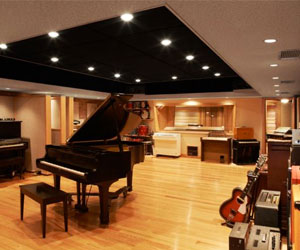
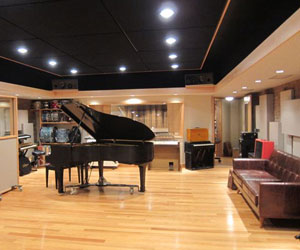
Those familiar with the SonicScoop blog-roll may recognize the name of Marc Alan Goodman, who’s been recounting the saga of building Strange Weather’s new, full-service tracking studio on the Greenpoint/East Williamsburg border. In the meantime, it’s a small secret that his current location already hosts one of the most impressive collections of hand-picked ear candy in the city.
More than anything, this is a studio for artists and engineers with boutique tastes. No summary can do justice to the extensive selection of gear that includes names like Neve, API, Purple, Gates, Federal, ADL, Neumann, Coles, dbx, RCA, and Bricasti. Strange Weather is also home to a startling collection of guitars, drums, and keyboards at the ready for capturing any sound musicians can imagine.
Most surprising of all, according to Goodman, is the price, and the fact that all his vintage treasures are in prime working condition.
“I wanted to build a studio where people can walk in and use world-class gear at an affordable price in a functioning atmosphere,” Goodman says. “There’s nothing worse than booking a day at a studio where nothing works. I feel like that’s the rule rather than the exception in the commercial studios I’ve worked in.”
In the interest of full disclosure, this reporter has recently been in for some sessions at Strange Weather, and this kind of attention to detail has it fast-becoming one of my favorite places to work. Owning a studio has begun to turn Goodman into a capable tech in his own right: his racks are over-stuffed with impeccably maintained vintage gear, and handmade re-creations of studio classics like the LA2A, LA3A and 1176.
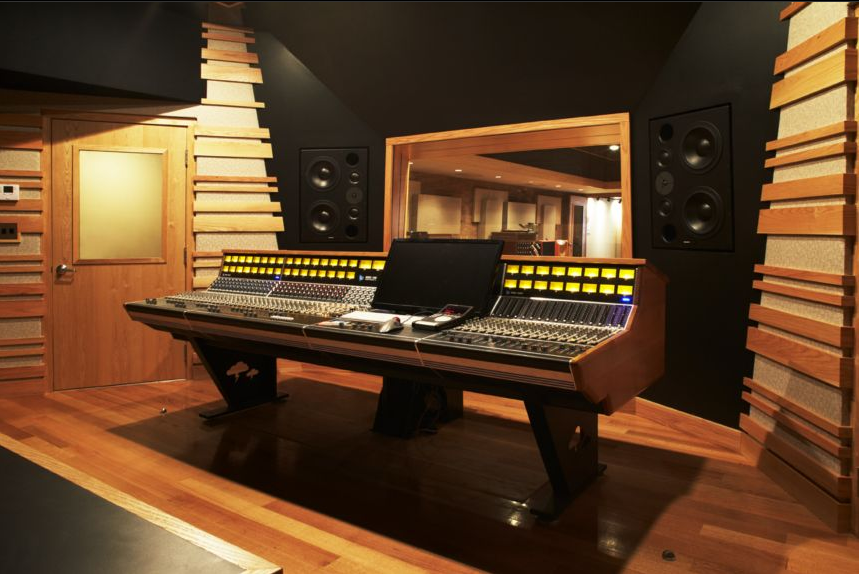
Built around a new 32-channel API 1608 console brimming with the choicest EQs, Strange Weather turns out to be an ideal room for overdubs, mixing, or any sessions that don’t require a cavernous live room.
When asked about his niche in the studio scene Goodman says: “Ideally everyone would complete their records from start to finish in a studio, but today it seems more common for musicians to combine studios with smaller at-home or portable rigs. We’re focused on making that process as seamless as possible; to give musicians and engineers used to working at home a place they can walk in and use great, often rare equipment in a functioning environment.”
—
HEADGEAR RECORDING
Williamsburg, Brooklyn
www.headgearrecording.com
Rates: Click for Room + Engineer Rates
Room Rate: $600/day; $550/day for blocks of 3 days or more.
If there’s any truth behind the idea that Williamsburg is a great place to make music, a lot of responsibility for that would have to fall on studios like Headgear Recording. Since opening in 1998, Headgear has been the birthplace of seminal records from TV On The Radio, Massive Attack, Lee “Scratch” Perry, Animal Collective, CocoRosie, Nada Surf, My Morning Jacket, Son Volt, the Yeah Yeah Yeahs, Moby and Santigold.
Although the “Room For Rent” model of studio has waned as competent owner-operators create their own personal oases of sound in every corner of the city, Headgear remains one of the most accessible and freelance-engineer-friendly studios in New York.
In addition to house engineers Alex Lipsen, Scott Norton, and Dan Long, Headgear has been home to projects from a who’s who of hip and distinctive producers and engineers, including John Agnello, Peter Katis, Dave Sitek, John Hill, Chris Moore Gordon Raphael, TJ Doherty, and Chris Coady.
Headgear is also no stranger to Film and Television Post. Recent clients include “Grey’s Anatomy,” MTV’s “Skins,” “CSI: Miami” and the Columbia Pictures comedy Walk Hard: The Dewey Cox Story.
According to studio manager Jackie Lin Werner, the studio’s appeal is personal as much as it is technical: “ We’re not stiff or pretentious. We’re down to earth and like to be helpful. Beyond the gear and the size of our rooms, I believe people trust Headgear as an established studio with a respectable client list. Headgear probably appeals most to indie bands and major label bands looking for an affordable, high quality studio in a space that has a creative vibe. “
Headgear’s A-room houses an automated Trident 80C console and offers a choice of Pro Tools HD and 24-track 2-inch tape. A well-equipped B room is also available for mixing and overdubs.
—
METROSONIC
Williamsburg, Brooklyn
www.metrosonic.net
Contact for rates.
Neve Console. Pro Tools HD. Ampex 2”. Engineers who know what they’re doing. What more could you need to know?
According to Metrosonic’s Pete Mignola, it’s the people who make a studio: “The people who built it, the people who run it, the people who use it,” he tells us.
“Everyone who comes to Metrosonic talks about the vibe. Of course they like the great gear, the affordable rates, the windows & city views, but they always say that they love the vibe here. There’s human element to this that makes each studio unique and special in its own way.”
Metrosonic has always had a large, comfortable control room. More recently, the studio’s originally modest live room underwent significant renovations in 2008, and now, Pete and the crew are excited to bring a new 850 square-foot live room into the fold.
—
THE FORT
Bushwick, Brooklyn
www.thefortbrooklyn.com
Rates: $40/hr, including Jim Bentley as Engineer.
Over the past decade, North Brooklyn’s Bushwick neighborhood has filled up with enough small private studios to fill an area twice its size. In that time, Jim Bentley’s studio The Fort has stood as one of the neighborhood’s active mainstays.
Persevering in this competitive new territory since 2003, owner/operator Bentley has hosted noteworthy clients including Brit Daniel of Spoon, Doug Gillard and Kevin March of Guided by Voices, James McNew of Yo La Tengo, Jennifer O’Connor, John Agnello and Jemina Pearl.
This especially affordable studio is equipped for both analog and digital sessions, offering a Neotek Elan console, Tascam 1” 16-track, and a 24-channel MOTU/Apogee system. The studio bills at $30/hr on weekdays from noon to 6pm and at $40/hr 6pm-midnight or weekends, and includes Bentley’s services as engineer.
Bentley is most proud of his live room, a large, vibey space with vaulted, heavy-timber ceilings: “I love to track full bands in the room live for feel and then sauce it up and make it sound supernatural from there,” he says.
Bentley’s down-to-earth approach is made clear in his parting words to us. The Fort, he says, “appeals to the clients who realize making records is more about the man and the performance than the machine or the media buzz behind it.”
Justin Colletti is a Brooklyn-based audio engineer and music producer who’s worked with Hotels, DeLeon, Soundpool, Team Genius and Monocle, as well as clients such as Nintendo, JDub, Blue Note Records, and the Metropolitan Museum of Art. Visit him at www.justincolletti.com.
The SonicScoop Year in Review: Top NYC Music Business News and Trends of 2010
December 29, 2010 by David Weiss
/* Filed under Music Biz */
THE FIVE BOROUGHS: 2010 has been busy all right. For anyone involved in New York City’s expansive business of music – producer, publisher, entrepreneur, engineer, artist, and many more – the environment remains fast-paced, ultra-competitive and constantly changing.
With 2011 looming, SonicScoop looked for the news, trends and topics that stood out to us over the past 365 days.
In audio post, it was grow or die in the uppermost echelon. The biggest facilities, including hsr|ny, Nutmeg, and Sound Lounge made serious expansions into audio and/or video:
Sound Lounge opened an ADR Stage and multiple studios.
Nutmeg Post added a strong team and facility when it soaked up Soundhound.
The big post house Mega Playground built out audio capabilities.
Northern Lights added a 5.1 audio mixing suite.
Video house Click3X reversed the trend and added their own audio suite.
Large and mid-sized recording/tracking/mixing studios kept making capital improvements and expanding:
Premier Studios took over the 8th floor at 723 7th Avenue.
Engine Room opened up its penthouse studio.
Stadium Red expanded with a new studio for Just Blaze and a mastering suite.
Platinum Studios added Augspurgers to Studio K.
Sear Sound set up the Moog-centric Studio D.
Tainted Blue swapped out its SSL for a Euphonix (nee Avid) System 5.
And props to Electric Lady for marking its 40th Anniversary.
Converse (yes, the shoe company) has an interesting business plan for the Rubber Tracks studio it’s going to open in Williamsburg in 2011: no-cost recording.
Advanced smaller studios – independent and within larger facilities — and producer rooms also opened up at a peppy pace:
Chris Theberge’s Music Works arrived on the Upper West Side.
The former One Point Six in Williamsburg was reborn as Three Egg Studios.
Manhattan Center Studios launched The Fuse Box with Public Enemy’s Brian Hardgroove.
Avatar opened up its Studio W writing room.
Sisko’s Min-Max Studios opened up in midtown.
Guitarist Justin King moved his Vinegar Hill Sound from Portland, OR to DUMBO, Brooklyn.
Avid capped off a furious year of reinvention and new products with the release of Pro Tools 9.
Music houses and composers still had a ton of TV, film and video game work to go after and win:
Joel Beckerman of Man Made Music continued to make NYC a TV music powerhouse.
Composer Peter Nashel turned ears everywhere with his work for shows like Rubicon.
Outfits like Expansion Team scored for networks such as the Biography Channel.
Tom Salta understands how to get chosen to score for games like Prince of Persia and Red Steel 2.
Production music and synch licensing remained a solid business, especially for those who got in at the right time or had a smart approach.
NYC’s Kingsize Music was acquired by 615 Music.
And later on Warner-Chappell (NYC) bought up 615 Music.
NYC’s Videohelper released the “Scenarios” music search tool.
Jingle Punks continued to grow.
Mechanical licensing experts RightsFlow kept progressing.
One of NYC’s most controversial music business plays, peer-to-peer file sharing network Limewire, appeared to be finally finished.
Tracking, mixing and mastering at NYC’s established facilities did a relatively healthy volume of A-level and independent work throughout the year:
The Black Eyed Peas, Rivers Cuomo and Kanye West were at Germano Studios.
Neon Indian, Beach House, Matt and Kim, Bear Hands and more were mastered at The Lodge.
MSR Studios handled Kid Cudi, Evanescence and Broadway Cast recordings.
Lenny Kravitz, The Dirty Pearls, “Glee”, and Vampire Weekend were all at Avatar.
Joe Lambert Mastering worked with Moby and Ninjasonik.
New software and hardware happiness abounded:
Propellerhead released Reason 5.
NYC suffered losses when beloved people and places left us:
Recording icon Walter Sear passed away.
The great hip hop/jazz experimentalist Guru was gone before his time.
Clinton Recording Studios hosted its last session.
Brick and mortar music retail took another hit when Fat Beats shuttered its last stores.
Baseline Studios, home of Just Blaze and countless Jay-Z hits, closed.
Chung King Studios started off 2010 with a bang by suddenly vacating Varick Street.
NYC-based producers, mixers, engineers and artists became businesses in their own right:
People like Allen Farmelo developed their distinctive sound.
Choice songwriter Claude Kelly made a business of hits.
Shane Stoneback’s career took off via work with Sleigh Bells and Vampire Weekend.
Mixer Mark Saunders embraced multiple aspects of the biz from his studio at Beat 360.
Dream Theater’s Jordan Rudess took his iPad/iPhone app MorphWiz all the way to #1.
The studio scene got a lot more socialicious and FUN:

Two fiesta types plus (r) introspective Stadiumred artist Jeremy Carr. SonicScoop says: HAVE FUN AND PROSPER IN 2011!
Digital Music NY was one of many popular business-based meetups.
Stadium Red partied down post-CMJ.
20dot20 mixed advertising and music.
And the Connectors connected a LOT of people.
What big stories would you include? And what do you see next in 2011? Don’t be shy – leave a comment and let us know!
– Janice Brown and David Weiss
Marc Alan Goodman’s Building Strange Weather Blog Step 4: Waiting for Permits Part 2
October 26, 2010 by Marc Alan Goodman
/* Filed under NYC Spotlight */
Fourth in the “Building Strange Weather Blog” series by producer/engineer and studio owner Marc Alan Goodman. Click to start at Step 1: Finding A New Home; Step 2: Design; Step 3: Waiting For Permits (Part 1).
Williamsburg, Brooklyn: The building that’s going to house the new Strange Weather is an interesting beast. As far as I can find it was originally built in 1919 as a factory of some sort. The main structure is brick with ten-foot ceilings and nominal wooden joists (the ceiling and floor joists are actual inch measurements as opposed to dimensional lumber in which a 2 x 4 is really 1.5 x 3.25 inches).
There is part of a staircase in the basement that looks like it must have been for the factory. Then, at some point after that, two stories of apartments were built on top. These were built with dimensional lumber and to me look like they were probably intended initially as temporary housing for dock workers from the then newly constructed Williamsburg waterfront. Sometime after that, a hollow cinderblock addition was added to the first floor with slightly lower ceilings and no basement.
As far as the city is concerned, or at least as far as they would tell me, the building was put up in 1919 and a “shed for storing barrels” was added in 1925. There are no other records, no other plans. But in order to work with what we have it was necessary to do a lot of research. And by research I mean tearing open every wall I could find to see what’s going on in between. This brought a lot of both good and bad news.
The Tree!
Since the plans call for raising the ceiling on the rear structure where the new control room is going to sit, the first thing we needed to know is what kind of foundation, if any, was there. Which meant digging a hole. At the time, there was a 50 or so year old tree growing out of the rear wall of the building.
There was no internal damage but it seemed like the roots must be in the foundation, so the tree had to go. With the roots would hopefully come enough concrete and dirt to see what the foundation was like down there. I got six or seven estimates for the work, but one company cut me a really good deal because they were doing a job in the neighborhood and were going to have a truck there anyway.
They came in early the next morning, took the tree down and left the whole thing in my back yard. Plus they didn’t pull the stump up. The team that was supposed to come pick it up never showed, and their phone went out of service and website disappeared. All in all very strange, but they only got half of my money and it wasn’t even very much for the job so I figured something must be up.
A few weeks later I finally get a return phone call saying that one of the men had fallen out of a tree and they were out of commission for a week or two. Two weeks after that I got another call promising that they’d come take care of it as soon as possible as well as do some other work for free.
Well, I’m sure you can see where this is going — they still never showed. So after five weeks I hired Evergreen Tree Service to come in and finish the job. Then, after Evergreen were already on the way to my place, the first company calls and says they’ll be there at 9:30 the next morning. So I call Evergreen and apologize. The next day: again no show. Lesson learned. I called Evergreen back and they took care of it fast. Consider them highly recommended.
It turned out to be a really big job removing the stump, which is probably why the first company disappeared. The roots were not growing into the building as suspected, they were wrapped around a concrete bin and digging in about four feet away from the main growth of the tree. It looked like some crazy rain forest root. But since the whole tree was sitting on top of the concrete they couldn’t just take a chainsaw to it, and it took all day with a pick-axe to get the thing out.
If you’ve ever been to someone’s home in Brooklyn you may have noticed that every building has a strange free-standing iron ladder installed in the backyard. These were originally put up to hang clotheslines from, many of which are still around. The ladder at the new Strange Weather was directly in between the tree and its roots. When they removed the stump, the ladder bent all the way over across my yard, through a fence, across my neighbors yard, through their fence, and then into my third neighbors yard about eight inches away from one of his light fixtures.
I tried to move it but it must have weighed about a ton and was still connected to the concrete of my backyard. So, next I had to hire someone to come take it down without ruining my neighbor’s home, cut it up and dispose of it.
And after all this, we still had no information on the building’s foundation. So it was time to get a sledgehammer and a shovel and start tearing the backyard apart. The good news is that there’s a full four-foot foundation with a six inch footing which is plenty for what we need. The downside is that I had to smash up about 16 square feet of concrete with a sledgehammer and then dig a four and a half foot hole to find this out. I know you’re not supposed to dig a hole without permits in the city but I figured I was safe right up against the foundation. Plus it needed to get done. I just wish I could have done it five weeks earlier.
So it was good news in the end! If there was no foundation we would have had to put the building up on stilts, dig out underneath it and install a new one, which would have been, as I’m sure you can guess, extremely expensive. But not all news is good news.
Sinking Feelings
Next up was the insides of the building itself, most notably all the internal walls. The basement of the building has a very old steel beam running its length immediately under the inside of the stairwell for the apartments. I imagine that when they took parts of the ceiling out to install the stairs to the upper floors, they had to move the support wall inward, so they added the beam underneath. It was good thinking. However the second and third floors still sank significantly towards the center of the building.
I needed to find out what was going on, so out came the hammer, drill, and sawzall and I started taking the ceiling of the ground floor apart. First things first I put a hand on the drop ceiling to get at the higher tin ceiling and the whole thing collapsed. Drop ceilings aren’t heavy but they fell all over my Studer 820 machines, which were luckily covered with a tarp. It was a gut wrenching moment.
After the dust cleared I could see a dark spot on the tin ceilings, which showed that there was at one time a wall up the middle of the ground floor. My guess is that between removing that wall and cutting a hole in the ceiling for a second stairwell they weakened the beams enough to start to dip the middle of the house. And if I hadn’t pulled the whole ceiling down on my head I never would have known!
Since I don’t want the whole thing to collapse in five years we have a problem. However it is a fixable problem and our solution is to attach new steel joists to all of the wood ones, effectively replacing them, in a process called “sistering.” It’s a big expense but it’s necessary for the longevity of the building so there it is. I suppose it’s about what it would have cost to pour a new foundation in the back. You win some, you lose some.
Next time I’ll get into the rest of the pre-permit process. Feel free to write with any questions!
Marc Alan Goodman
strangeweathersound at gmail dot com
http://strangeweatherbrooklyn.com
Marc Alan Goodman is a producer/engineer who’s worked with artists such as Jolie Holland, Marc Ribot Shudder to Think, Dub Trio, Normal Love, Alfonso Velez, Angel Deradoorian and Pink Skull.
Marc Alan Goodman’s Building Strange Weather Blog — Step 3: Waiting for Permits (Part 1)
September 21, 2010 by Marc Alan Goodman
/* Filed under NYC Spotlight */
Second in the “Building Strange Weather Blog” series by producer/engineer and studio owner Marc Alan Goodman. Click to read Parts I and II.
Today is the five-month anniversary of my purchasing the building and official work still hasn’t begun. I’m expecting approval of my plans some time in the next few days, and after that we can start pulling permits to do work. But a lot has happened leading up to this…
The New York City Department of Buildings
In 2010, budget cuts hit the Department of Buildings hard, and most if not all of the staff have been cut back to three days a week. What this means is that a difficult process just got even more difficult.
When I started to try and contact the department before I bought the building it quickly became obvious that they just weren’t going to be very helpful. It’s a classic New York story: You go to the DoB to find out information on your property. They tell you that there’s no information and no way to look it up. But the moment you start construction, the inspector is there and suddenly they know exactly where the property lines are, what the air rights are, the existing certificate of occupancy and so on.
The Certificate of Occupancy is a really great example of this. This is the paper that proves you have the right to use a property for a certain purpose. It is vital when it comes to things like getting insurance.
When digging through the DoB’s records I was able to find that the building does have Certificate of Occupancy. However there was no digital copy of it. So I contacted the DoB office to see if I could come look it up. Apparently I’d have to wait for permission. How long would that take? Who knows. So I let it go, relying on the fact that one does exist somewhere and that it should theoretically work in my favor.
When my Real Estate lawyer was finally able to dredge up a copy we found it to be a photocopy of a carbon copy of a scribbled paper from 1925. It was totally illegible. So we had to wait until someone could read it. Apparently my building is officially a “shed for storing barrels,, at least as far as the city is concerned.
That’s all well and good, but I happen to know that the previous tenant was a Physical Therapy office. There’s no way they could operate without insurance, and there’s no way they could get insurance without a Certificate of Occupancy. So — somewhere — there is one stating that it is legally either an office or a medical office. If it says “office” then all is well, however if it says medical office I may have to file to change it. And there’s absolutely no way for me to find out until someone complains about the studio (which will hopefully be never, though musicians have been known to get drunk and smoke outside of my place while conversing loudly). Then, suddenly, the DoB is bound to have exactly the information they need to give me a hard time.
Having seen all this in a very short time it became clear to me that I needed to hire an expeditor. I got a referral for Alexis from CODE LLC. Basically she’s the middle-woman between myself and the DoB, as well as any other city departments I may have to deal with. Without hiring an expeditor I have no idea how you could do any construction in this crazy city.
Good, Old Fashioned NYC Steam Boilers
The next thing to become an issue was the building’s existing steam boiler. I now know more about boilers than I ever thought I would. Apparently steam boiler systems are extremely rare everywhere in the world except New York City. I was told the statistic that there are more functioning steam boilers in NYC than the rest of the world combined. The reason is that it’s a very, very finicky system.
At one point boiler explosions were the number one cause of death in the United States. It took decades of trial and error to bring them to a point where they were safe to use. Since a large portion of existing New York was built around the start of the twentieth century this was the technology implemented, and since it’s so expensive to replace, the existing units keep getting repaired, piece by piece.
The previous owners of my building had installed a brand-new steam boiler two years before selling the place. Since the rest of the infrastructure was already in place it was probably the cheapest option available on hand. However they didn’t bother to go through the proper permitting process and ended up with a bunch of citations for possible fines from the city.
As we learned earlier, trying to get information from the city is a long and often impossible task. We knew that they had failed inspections in 2002, and that they were cited for not being inspected for the following two years. But there was no available record of anything after that.
Fines for steam boilers can be extremely high (remember how dangerous they can be), and it’s entirely possible that there were thousands of dollars in back fines associated with the lack of inspections with no way to find out for sure until the city decides to send you a bill.
Luckily my lawyer was smart enough to spot this issue during the sale and got a large chunk of money held in escrow until they dealt with it. To this day it’s still unresolved. What I do know is that if they haven’t gotten their money yet it means this process has been extremely difficult and expensive. When purchasing a place, be absolutely sure that there are no DoB violations on the property, or at least have money put aside to ensure that the seller deals with them.
Inheriting Tenants, Rent Stabilization, Landlord Stuff!
The previous owner left me the gift of one tenant in the building when he moved. If my sarcasm isn’t clear enough let me put it this way: crossover tenants are a huge pain.
I got lucky and the woman who was living there was actually very nice and easy to deal with. However there were a couple problems. First off she was only paying $600 per month for a two-bedroom apartment on Graham Ave. In my business model I’m relying on at least $1,500-2,000 per month rent in order to meet expenses. So there was no way I could afford to keep her.
Secondly she had been living in the apartment for fourteen years. Fifteen years is where rent stabilization laws start to come in to effect. If I waited until construction was finished I risked having to spend a long time in court to clear the place out, and in turn losing myself all that potential rent.
So I had to ask her to leave. It was certainly a difficult thing, especially considering the fact that she has a young son, but the previous owner had intentionally left the tenant situation very vague in our conversations and this is where I was stuck. Realizing that no matter what I did she could still hold me up for months simply by refusing to move I offered her a lump of cash for moving expenses, hoping that would keep the process moving, and I’m lucky I did. Without it I think I’d be in court right now dealing with an eviction.
As soon as it was clear that she actually had to move her demeanor changed quite a bit, and she stopped paying rent. To be honest she asked me if she could go without rent for the last few months, but she included a veiled threat by saying that she knew she could potentially hold up my whole project.
So I compromised, took part of the rent out of the security deposit that I was giving her (which, by the way, there was no record of and she was certainly not actually owed) and let her get away with part of it. For a couple hundred bucks it was my cheapest way out.
Tune in next time for Part II of the New York City building permits saga. As always, please feel free to write with any questions you may have!
Marc Alan Goodman
strangeweathersound at gmail dot com
http://strangeweatherbrooklyn.com
Marc Alan Goodman is a producer/engineer who’s worked with artists such as Jolie Holland, Marc Ribot Shudder to Think, Dub Trio, Normal Love, Alfonso Velez, Angel Deradoorian and Pink Skull.
Marc Alan Goodman’s Building Strange Weather Blog – Step Two: Design!
September 1, 2010 by Marc Alan Goodman
/* Filed under NYC Spotlight */
Second in the “Building Strange Weather Blog” series by producer/engineer and studio owner Marc Alan Goodman. Click to read Part I.
WILLIAMSBURG, BROOKLYN: Since I opened the first Strange Weather, I’ve considered myself an amateur acoustical designer. I’ve always had to look at the space available to me and figure out how to best use it, and the new studio started no differently.
The first thing I did was pull out all of my studio design books and re-read them. I highly recommend both Home Recording Studio: Build it Like the Pros by Rod Gervais and the older but still accurate Building a Recording Studio by Jeff Cooper.
Now, for the first time in my life, I’m working with a completely blank space, a rectangular frame in which I can do anything I want, which presents me with a completely different list of problems and questions. In the past I’ve only had to worry about things such as “How do I beef up the sound reduction of this wall?” or “Where do I place the console to get the most even reflections?”
Now those questions have become secondary to “Where should the walls go?”and “How will the electrical and HVAC systems work?”
INTELLIGENT DIY DESIGN: LEARNING WHAT YOU CAN AND CANNOT DO YOURSELF
As in the past, I decided the best way to learn is to do, so I opened up Google SketchUp (a free AutoCAD program, which I highly recommend toying around in even if only for fun) and started laying out the space. I made myself a simple shell and moved the rooms around in various ways, always trying to find what the problems were with each subsequent design.
After I’d gone through a few and the problems became less obvious I headed to a few online studio design forums to get some outside advice.
It’s unbelievable to me the community of people who spend their time online talking about just designing studios. Almost all of the main recording forums have flourishing studio design sections, and there are a few where it is the only topic.
The one with the most technical replies consistently turned out to be the John L. Sayers Recording Studio Design Forum. John is in his own right an internationally-known studio designer and he hosts a forum where not only he but a number of other well-known designers regularly mingle with home studio owners.
It only took two real postings for me to realize I was going to need some help.
People were helpful if a little harsh in their commentary (like all web forums there’s still a good amount of unrestrained argumentativeness) and I felt like my designs were being torn apart. It took a day or two for me to realize that it wasn’t a personal affront. I am not a professionally trained architect or studio designer — of course I don’t know what I’m doing. I realized that it would take years for me to accumulate the additional knowledge I would need to design this space well.
Armed with that trinket of information I went back to the bottom line: my budget. The only thing more expensive than building a recording studio is rebuilding one.
In previous spaces I’ve run up against the issue very clearly. If I build a wall, and it doesn’t do what I expected it to do, I have to tear it down and build another wall. And it costs me twice as much. Since all of my spaces have been temporary it hasn’t been a significant problem, but the whole game changes in a permanent space. If I build it right the first time I should never have to change it. And now understanding how little I really know about design, I decided that a greater part of my budget should be put towards architects and engineers.
I can paint, I can hang drywall, I can even learn simple plumbing and improve my framing techniques, but I’m never going to learn a lifetimes worth of design in that same period of time.
FINDING A STUDIO DESIGNER
So where does one look to find studio designers? There were a bunch of names I already knew like George Augspurger and John Storyk, having heard their names a thousand times, as well as Rod Gervais from his book and John L. Sayers from his forum. I’d heard a number of Augsperger and Storyk rooms but before contacting them to find out about costs, I discovered a designer named Wes Lachot.
Wes is from North Carolina and started out as a recording engineer and musician. He’s been running Overdub Lane Studio in Durham NC for years but at some point branched out into studio design. Since then he’s built rooms for Mitch Easter, Mike Mogis (Saddle Creek Records) and Doug Van Sloun, and designed the completely ridiculous carbon-neutral uber-studio soon to open in North Carolina, Manifold Recording.
Looking at photos of his designs and speaking to a number of people who’ve worked with him online, my interest was definitely piqued, and I decided the only logical thing to do next was go listen to one of his rooms.
By a strange coincidence the room he had most recently completed was Charleston Sound just outside Charleston, SC. One of my best friends in the world had moved down there and I hadn’t had an opportunity to visit her yet, so I hopped on my 72 Beemer and rode down in a day. (As a side note I don’t recommend spending 14 straight hours on a motorcycle. I love long rides but it was a little much for even me.)
Wes and his wife Lisa who runs the company with him (along with their one employee, draftsman Rob Warren) were down in South Carolina for an annual visit to the Frank Lloyd Wright house. We all met up at Charleston Sound and I got an opportunity to walk through it with Wes, hear about his ideology and his reasoning in designing the place, and give the control and live rooms a serious listen.
I was floored.
Wes is a proponent of the RFZ (Reflection Free Zone) school of control room design. This means building control rooms where the reflections are absolutely minimized at the listening position.
While the ideas behind this aren’t new, the technology has improved dramatically in the last few decades. But what I heard when sitting at the console wasn’t any of the technological data. It was simple and beautiful sonic balance. We skimmed through a couple records and to this day I can’t believe how deeply I could hear into what was going on.
But that’s not the only thing that sold me. The real trick was when I went to sit down on the couch.
As every engineer knows, the sound on the couch — usually in the back of the control room — traditionally sounds pretty damn different from at the console. I find myself constantly reminding clients that when they’re giving a serious listen, they should pull chairs up to the front of the room. But sitting on the couch at Charleston Sound was an entirely different story.
I won’t claim it sounded exactly like the sweet spot, but it was so close as to be almost indistinguishable, and it was definitely a significant improvement over even the sweet spot of any control room in which I can remember working. Right there I made my decision, but I tried to hold my cards back to see how much it was going to end up costing me.
Over lunch Wes and I realized we have very similar outlooks on what a recording studio is, should be, and what life inside one should be like. I just folded right there and told him he was designing the new Strange Weather.
WAIT, I NEED ANOTHER ARCHITECT?
Now it was time to go through the whole thing again, but in another direction. While certainly competent enough, Wes is not a licensed Architect in New York State. So I was going to need a second architect to go over the plans for any local specifics and to submit them for permits due to it being a commercial space.
On top of that, since the building contains more than just the studio, I needed another architect to help design the apartment for the second floor.
It all fell into place relatively easy. I got in contact with a few friends looking for recommendations, and my friend (and great musician) Sam Barron put me in contact with Hannah Purdy.
Hannah’s designs fit perfectly into my aesthetic for the apartment, plus she was extremely excited about getting to work on a recording studio and learn more about the specifics of soundproofing and acoustical design.
ROUNDING OUT THE CREW…
So now there was only one piece of the design puzzle left. We still needed a licensed engineer to deal with structural issues in the building (soundproofing weighs a lot!), as well as to finalize the HVAC and electrical systems.
Again I got lucky and Hannah suggested I get in contact with Bruce Merdjan at Brooklyn-based Advanced Professional Engineering. Not only does the man know everything about his profession but he also rides a 90’s BMW bike. Maybe it’s not the most obvious selling point in the world, but you really do have to get along with the people you’re working closely with.
TIME TO GET TO WORK!
That’s the team I’m working with, and how and why I selected them. Obviously the case may be totally different for anyone else but I couldn’t recommend any of these people more highly.
Next entry we’ll start getting into the oh-so-fun world of New York City building permits, as well as the realities of having become a landlord. As always please feel free to write with any questions you may have!
Marc Alan Goodman
strangeweathersound at gmail dot com
http://strangeweatherbrooklyn.com
Marc Alan Goodman is a producer/engineer who’s worked with artists such as Jolie Holland, Marc Ribot Shudder to Think, Dub Trio, Normal Love, Alfonso Velez, Angel Deradoorian and Pink Skull.