NYC Indie Labels: Frenchkiss Records

January 26, 2012 by  
/* Filed under Deli NYC Feed, Music Biz */

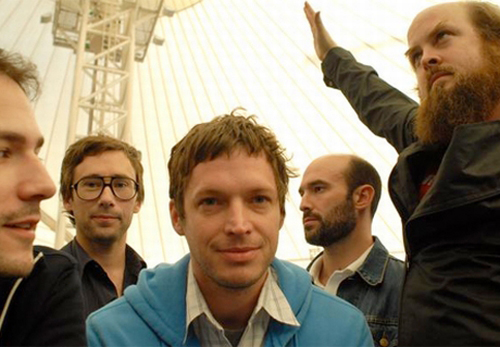
Just as the major labels began their decade-long downward spiral, NYC’s Frenchkiss Records began growing. Today, they’re a sustainable and influential indie rock label, and in an age when seemingly home-brewed labels are often just boutique imprints for giant conglomerates, Frenchkiss Records staunchly remains a true independent.

Est. in 1999

“Frenchkiss is definitely my baby,” label owner and Les Savy Fav bassist Syd Butler told us in an interview yesterday. “I’ve had people ask to invest in it, and all I can say is ‘well, maybe we can invest in other things, but Frenchkiss – that’s mine’.”

None of this, however, means that the label is against expanding. Last year, Frenchkiss started its own publishing company. Last month, it announced it would leave the RED distribution network completely in favor of its longtime digital distributor, The Orchard. And just yesterday, Butler confirmed that Frenchkiss would start its very own label group in an effort to help “developing labels transform into developed labels.”

How To Grow Your Own Label From Home (Or The Road)

Since Syd Butler’s day job as bass player for the NYC indie rock band Les Savy Fav keeps him on the road much of the time, he conducts a good portion of his official Frenchkiss duties from a Blackberry. He started the label to release his band’s second record back in 1999, and has refused to treat either role as secondary.

“When we first started, expectations were different,” Butler says. “Back then, the bands we signed were happy to sell 500 copies of their records.” Frenchkiss has grown significantly since, and the label places its goal for new bands at about 5,000 copies. “We budget all of our records on that number, so if we can sell more than 5,000, it’s a huge success for all of us. Anything less and we know we have some work to do.”

After blowing up on Frenchkiss, Passion Pit signed to Columbia for UK distribution

Of course, some Frenchkiss bands do much more than that, often selling 5,000 copies in vinyl alone. Butler cites Passion Pit, who went from playing shows in front of friends at small clubs to filling 2,000 seat venues and selling more than 20,000 records in 2 weeks.

Other label mates, from straight-ahead rockers like The Hold Steady to no-wave infused experimentalists like Ex Models have become critics’ darlings and major names in their circles after joining the label. Same goes for newer signees like The Antlers, Local Natives, and Freelance Whales.

But then again, the term “signee” may be a little misleading. According to Butler, The Hold Steady’s contract was “a handshake over a burrito.” He says that’s business as usual at Frenchkiss: “We basically give the bands some money, and tell them they can use it to go make a record… or not.”

“Sure, we expect them to deliver an album, but they can pretty much use [the advance] on whatever they want. Some of the bands are pretty good on Pro Tools and end up doing a lot of that at home, and some of them use that money to help pay a producer and a studio.

“Then, there are sometimes bands who’ve completed everything themselves and don’t want us to own the masters, but they’ll license it to us instead. In that case, we’ll basically rent the rights to sell the album for ten years. There are a lot of ways it can work.”

An Artist’s Biggest Threat

Since Frenchkiss grew substantially when the major labels were crying foul on file sharing, Butler can be dismissive about most of the negative side effects of a free and unfettered web. “If you put out a good record, people are going to buy it,” he says. “The days of selling 50 million copies of one album – that’s what’s long gone.

Les Savy Fav with Syd Butler, center

“The weird thing, though, is that the songs you give away, the ones that people share the most – those are the ones they buy the most too. Those are the ones they come out to concerts to hear.”

What Butler does see as potentially dangerous are album leaks. He’s  had to deal with them in his own band: “The last Les Savy Fav record leaked about 2 months before its release date. People were downloading it and ripping it before we even had a chance to promote it or to offer it up for sale.”

“It was strange, because when we went on tour, our audience was growing, and people were singing along to the new songs. Yeah, we were getting paid more money to play live, but people stopped buying our merch, and that really effected us.

“If you release a record and then people some people download it or whatever, that’s one thing. But at least you were allowed to do what you needed to do to set it up and sell some copies. A promotional campaign starts 4 or 5 months out. It takes a long time to get all those ducks in a row, and if the album leaks right in the middle of meeting – well, the whole ship falls apart, and that’s when a band has trouble selling its record.”

Keeping It In The Family

Frenchkiss is rare for a small indie in that there appears to be little tying their bands together as far as genre is concerned. Although there are sure to be some crossover fans, it’s often hard to hear a stylistic thread running between the electropop of Passion Pit, the cacophony of Ex Models, the homespun charm of Freelance Whales and the jittery art-punk of Les Savy Fav.

Butler (right) + Frenchkiss staffers

Butler says that Frenchkiss only has two rules for signing new bands: they have to love and believe in the music, and they have to love and believe in the people. One is not sufficient, and there are no rules as to style. (“If the next thing we all love is a hip hop band, we’re going to sign a hip hop band,” Butler says.)

“We only put out about 8 records each year, so we really get behind all of the bands we sign.” The bands have to get behind Frenchkiss, too. “There are some bands who pass on us because they’re offered a ton of money to sign at a major label instead, and that’s fine.”

“I think the bands who sign with us see the advantage of being on an artist-run label. I’ve been in that van, I’ve done that drive, and it means we can all relate when we’re hanging out having beers or getting dinner together. It adds this level of trust and connection that’s not there with a manager and an A&R guy.  They know that our survival depends on growing each of the bands we sign. We can’t afford to throw any of them away.

“I know too many bands who’ve signed to a major and then find that their A&R guy gets fired and they have no idea what’s happened. With us, when a band calls they’re going to get me on the phone. At the end of the day, I’m the boss, and no one is going to fire me from under them.”

Justin Colletti is a Brooklyn recording engineer and studio journalist. He is a regular contributor to SonicScoop and edits the music blog Trust Me, I’m A Scientist.


NARM and General Assembly Present “Music Start Up Academy”, Six Sessions From April 14-June 23

April 14, 2011 by  
/* Filed under News */

The National Association of Recording Merchants, or NARM, the non-profit music business association, and General Assembly, the urban campus for entrepreneurs, are presenting The Music Start Up Academy, a series of six sessions designed to reduce barriers to entry into the music business for entrepreneurs.

NARM is teaming with General Assembly to present "Music Start Up Academy".

Coordinated by Bill Wilson, NARM’s VP of Digital Strategy & Business Development, and Nikke Slight, Founder of Act III Digital, the coursework of each session will provide a clear roadmap to success by offering actionable insights into the core structure, legal framework, content deals, business models, and the “nuts n’ bolts” of getting things done to build a legal, streamlined, and competitive music property.

Each class will be taught by industry experts that know the ins and outs of technology, start-ups and the music industry. The classes will be held from 6pm-7:30pm at the General Assembly campus, 902 Broadway, 4th Floor, for $30 per session or $150 for the full course. Registration for the classes is online now at http://musicstartupacademy.eventbrite.com/.

NARM & General Assembly Music Start Up Academy Courses:

April 14 – Can it Be More Confusing? The Anatomy Of The Music Business
Discuss the fundamentals, structure and economics- who the major players are, who controls which rights, the org chart of the business, and how each silo interoperates.

Instructor:       J.J. Rosen, CEO, Indaba Music

April 28 -  Label and Publishing Basics for Entrepreneurs

A deeper dive into the economics of the music industry, including performance rights, including understanding the various rights for master recordings and songwriting. The session will also go over the various legal issues surrounding music product development.

Instructor:       Fred Beteille, Sr. Director, Strategic Technology, HFA

May 19 -  Music Industry Content Acquisition and Business Development
Want Lady Gaga for your music service? A cool product isn’t enough. What are the “dos and don’ts” in licensing vast libraries of major content. Learn the third rails and how to manage navigating around the barriers to entry.

May 26 – Avast! The High Seas of Music Piracy and the Law
A lively discussion on what constitutes piracy and fair use and implications on entrepreneurs.

Instructor:             David Hughes, SVP Technology, RIAA

June 9 – Getting Under The Hood: Music Operations For CTOs and Developers
Content: Once a deal is done on the legal side, technical teams need to work out content delivery and royalty reporting mechanisms. This course will discuss industry XML standards for content delivery, and royalty reporting, metadata, best practices, and troubleshooting.

Instructor:       Josh Builder, Vice President, Product Development & Operations, The Orchard

June 23 – Tales from the Trenches
Tales from the front lines on the good, the bad, the ugly.  Real, practical lessons from veterans on the reality of life in a music start-up.

Instructor:       Larry Miller, CEO, ROBA Interactive

Andrew Maury On Ra Ra Riot & The Road To “The Orchard”

August 25, 2010 by  
/* Filed under NYC Spotlight */

NEW YORK, NY: For young producer-engineer-remixer Andrew Maury, the last few years have been a whirlwind tour both on and off the road with Ra Ra Riot.

Andrew Maury pictured in Sound City

Between touring as their FOH engineer and co-producing their latest record, The Orchard (released yesterday!), Maury has become that indispensable “fifth Beatle” kind of co-producer for Ra Ra Riot — an “in-house engineer” that can be accountable for the band’s sound on and now off the stage.

In the barely three years since he joined Ra Ra Riot on the road to tour ’08′s The Rhumb Line, Maury has pinballed through his own personal crash course in remixing, sound reinforcement, recording and production. On tour in ’08, he buddied up to Death Cab For Cutie guitarist and producer Chris Walla and landed his first recording gig on Tegan and Sara’s Sainthood, then bounced to his first record production with The Static Jacks, remixes with RAC (Remix Artist Collective) and onward to his latest work on the beautifully-rendered The Orchard.

We caught up with Maury earlier this month while he was out in Los Angeles recording with Princeton, and talked…EVERYTHING, including specifics on recording The Orchard. Check it out:

Man, in a short amount of time, you’ve moved pretty quickly from remixer to FOH engineer to recording engineer and producer. Let’s start with mixing FOH for Ra Ra Riot since this is kind of what led to everything else. How did you land this gig?

There was some luck involved! I’m a musician and played in bands and my college band in Syracuse played the same local venues as Ra Ra Riot. We became friends. When they left school, they’d come back through town to play shows and they’d stay with me. At that point, I was doing some remixes and taking audio classes at school. I was really into all that, plus I was a real cheerleader of the band. I just loved them.

They saw an opportunity to take me out on the road and have a sound guy a little earlier than they might have been able to given their budget at the time. So I went out with them and started learning FOH sound as I went.

So it was total trial by fire?

Maury (right) with Ra Ra Riot's Wes Miles and Milo Bonacci

At the beginning I would go and make friends with the FOH guy at the venue and tell them I was just learning how to mix FOH — that they should feel free to give me some tips, and if they had any ideas how to improve the mix, I would dive into it. I picked it up pretty quickly. The concepts weren’t new to me, but it was a matter of getting to where I felt I knew how to handle the PA, which is like this big beast. You have to know how to cut frequencies and when you’re riding the PA at the right level — these are just visceral things you only know after doing it over and over again.

And how did this process prepare you for working with the band in the studio? Does being a band’s FOH engineer help or influence the studio work at all?

I don’t think the live work influences the studio work other than that it enhances the communication. You just get to know the band really well. We’re all comfortable with each other and we all have the same goals in mind and we all know what the band’s about.

I think the reason they went with me for engineering the new record was because they felt that comfort with me. They could have picked a producer, someone they didn’t really know, to come in and handle the album. But I think they got really into the idea of making it their own with me and that’s exactly what we did. It was just the band and myself at the studio tracking the album.

Makes a lot of sense, especially since you were able to get your engineering and production stripes so fast.  Seems like one of the milestones was probably working with Chris Walla on Tegan and Sara’s record, Sainthood. Tell us about that!

Yeah, that experience was really cool. I met Chris when Ra Ra Riot was opening for Death Cab For Cutie on tour in April of ‘09. I’ve been a huge Death Cab fan for a long time. So getting to meet them and hang out was exciting. Chris and I got to be buddies on the subject of recording and he asked me to come out to LA and help with that Tegan and Sara record.

Maury in Sound City control room during recording sessions for Tegan and Sara's "Sainthood."

He was producing and playing bass on it while Howard Redekopp (New Pornographers, A.C. Newman) was the producer who was actually running the console. That album was tracked live “off the floor” to tape and Logic simultaneously — so they needed an extra person in the control room to run Logic.

It was cool because I got to see Chris and Howard making all these decisions — as far as placing mics and setting compressors, etc. The record was made at Sound City, which has unbelievable equipment and an incredible history. It was a great experience.

Sounds amazing, and quite a workflow and crew to be rolling with. What was the takeaway for you? Is this the ideal way to work if you can pull it off?

I think about it often. I really have to hand it to Chris for really pushing that method because I think it’s so easy for bands to fall back on their own space and time to think about things and make decisions later. It was really inspiring to see them do it this way, where they’re all under the gun — it’s now or never — and I think the record sounds really cool as a result.

I’ve read Chris say that he can count on his own 10 fingers how many times something was digitally manipulated on that record, deviating from what was recorded to tape. It was definitely inspiring but not something every band could do.

You did go into your first producing/engineering gig straight from there though, with The Static Jacks and their EP, Laces. So what were you able to apply from the Tegan and Sara sessions to your next gig?

Yeah, I’d known I was going to be working on The Static Jacks even before I got the gig to work on Tegan and Sara, so it was great to be able to experience this super-pro session and then dive into this next project myself.

We recorded The Static Jacks in Westfield, NJ, the band’s hometown, in a cavernous church Sunday School room. This was my first real recording session with a band where I was fully responsible for making something happen and making it good. And, if anything I learned from the Tegan and Sara record, it’s that even though we were in this incredible studio, with an amazing history and all this amazing gear and musicians, it’s still just a group of people problem-solving. That was inspiring and made the process less daunting. I learned to just push through and in the end, everyone’s talented, so it will work itself out. We did not have exceptional gear for the Static Jacks record though…

You brought your own gear into that situation, setting up in this church?

Yes and this was last summer. I was still using my PreSonus 8-channel interface — I’ve since bought Apogee converters, some preamps, and more microphones. I’ve been investing almost all my money into my own rig to be able to do this better.

It’s funny though, I listen back to the Static Jacks EP and it still sounds good. It’s amazing how some of this inexpensive digital audio equipment still sounds relatively high quality.

We tracked that EP live and then went back and re-tracked a few parts. And then I mixed it in Logic.

You’ve also recently mixed a record by The House Floor, Warship. Tell us about that.

Right, they tracked most of that that themselves, really DIY. And it was recording over the course of a few months. I heard a couple of the rough mixes and I really wanted to get involved and help them do justice to these great songs.

Maury recording DC's Detox Retox

I spent about a month mixing on my own in my free time, and then we got together for the last four or five days to collaborate on the final decisions. It was kind of a beast — there are tons of tracks and tons of things happening and the recording quality was a little dubious at times, so we were sort of hammering it into places we wanted it to be. I’m pretty happy with the way that turned out and I really think it’s a seriously brilliant album. I can’t begin to describe how heavy and moving that record is.

Did you mix it in a studio or on your laptop? What kind of setup do you have for mixing?

It was a laptop job. I’m almost at the point where I’m going to buy a better computer, but it’s funny — I keep doing these projects where I’m mixing or tracking on my Mac Book Pro, and I can’t believe that the thing gets the job done. This is a computer I got in 2006 and it almost never chokes!

It really is powerful enough to do what I need it to do at 48k. Even this Princeton record has like some songs with upwards of 60 or 70 tracks on it and it’s been cool.

And you keep it in-the-box, using the built-in Logic plug-ins?

Yeah, the plug-ins in Logic are great. The compressor plug-in has 6 or 7 different circuits, which are meant to emulate the classic gear – 1176, the Focusrite RED, LA2A, 160. They totally work for me right now.

I’m wary of investing in plug-ins. I have a few, but they’re expensive and there’s no resale value. My next move is to start summing out of the box and eventually building up analog compression. Chris Walla was telling me that the API DSM (Discrete Summing Mixer) is really cool. It’s a rack-mount, streamlined summing system and it sounds unbelievable.

But, I grew up doing this stuff in Logic, on a computer, being able to pull up a plug-in or automate anything is second nature to me, so to not have that is kind of scary. I think I’ll probably always be working out of a DAW just because that’s how I move quickly and know how to get it done, but sonically, I want to start feeding it into hardware.

RECORDING THE ORCHARD: BIG RHYTHMS & STRINGS, BIG CLASSIC POP

So now back to Ra Ra Riot and The Orchard, what was the band looking to accomplish sonically. Going into the studio, what was discussed?

Well, there was a lot of talk about 70s records. Sonically, I think the goal was to make a ‘classic sounding pop record.’ There’s influence from Fleetwood Mac, Michael Jackson, The Police, maybe even Elton John. There’s piano and Wurlitzer and they weren’t afraid to use synthesizers. The drums are also pretty huge sounding. I remember them saying they wanted to get away from that four-on-the-floor disco drum beat which there’s a lot of on The Rhumb Line. We just went more classic pop all around.

You guys recorded at Black Dog up near Albany. Was that after significant demo sessions?

"The Orchard" came out August 24 on Barsuk Records.

The whole album process was done in two parts — the first part being at an actual Orchard (the photo on the album cover) of a family friend of Milo Bonacci, the guitar player. The band went and wrote/lived there while the house was on the market for sale. It was a period of writing and total experimentation.

We put together some comprehensive demos and also left with some not-yet-fully-formed demos for some songs. Then they did a Fall tour and following that, we went into Black Dog to actually execute the record.

The studio is located in a rural area in the middle of nowhere. And it’s a privately owned studio built at the end of the owner’s driveway. So we got to live there and have 24-hour-access to it. It’s a really great studio, really well designed and it had some cool gear. The coolest thing was that it was just the band and I working on the album and we could use it as much as we wanted.

There’s definitely a spaciousness about the production — how did you approach the production overall as far as tracking basics?

We hammered out all the drums in five days because Gabe was headed to Portland for a little while. We also hired a drum tech — Jon Cohan who was recommended by [producer/engineer] Chris Zane. He owns all these really cool drums: a lot of great snares, a bunch of old vintage toms and kick drums and a huge pile of cymbals. You just tell him anything you want and he’ll make it happen somehow.

I also took a bunch of cues from how I saw Chris and Howard engineer drums for Tegan and Sara. One tip I picked up from Chris is to place a mic just over the kick drum, where the beater hits, between the snare and the kick drum. He calls it the “crotch mic.” It’s a really good complimentary mic to have; it sounds really good.

We really went instrument by instrument, building it — drums then bass, then guitar then synth than strings and vocals.

There are some real stand-out bass lines early in the record, on “Boy” and “The Orchard” and awesome bass sounds.

Maury behind the board during Ra Ra Riot sessions at Black Dog Recording in Stillwater, NY. Photo by Josh Goleman: www.joshgoleman.com.

Yeah, Matt [Mathieu Santos, Ra Ra Riot bass player] really shines on this record. It’s pretty cool how in the foreground he is on some of these songs. He has two basses — a Fender P Bass and another is a Fender Sting Signature model (he’s a huge Police fan) and he uses Flatwound strings on his basses, which is kind of the cornerstone of his sound. And he has an Ampeg SVT. We also tracked a couple songs through one of Milo’s guitar amps, a Fender Twin Reverb with a 15” speaker. I think bass on both “Boy” and “The Orchard” were tracked through that. [Stream “Boy” here: http://www.barsuk.com/shop/bark106]

He played every song about four times through and then we did a quick comp and it was done. Perfect. He is one of the most incredible bass players I’ve ever seen.

What else in particular did you spend a lot of time engineering? Are there other sounds that you worked especially hard to get?

I’m really happy with how the violin and cello sound on the record. We found a combination of microphones that really seemed to bring them to life and then we doubled or tripled them in every song, so it’s a really rich sound. They wanted bigger, fuller, more apparent string sounds throughout.

On violin, we used an old AKG C 414 in cardioid down by Rebecca’s chest to catch the underside of the violin for a warmer less immediate, full sound. And then we also had an AEA R84 ribbon mic over top. And it was pretty sensitive to placement. You have to really try and get the phase lined up and complimenting each other, but we found the right spot and just went with that for every song.

On cello, we did a similar thing. We used a Soundelux iFet 7, down by the F hole near the bridge. And then another mic in Omni up near the scroll of the Cello, which was Allie [Lawn]’s idea. She wanted to try miking it from where she hears her cello and it worked so that’s what we went with.

Sonically, “Massachusetts” stands out to me. The sort of reggae-chamber-pop feels really loose, but with a tight groove. Tell us about making this track.

“Massachusetts” was a really fun song to work on. Matt wrote this song and had made a demo of it on his laptop. They’d arranged it as a band but didn’t have a fully formed vision for it. And so when we started tracking that song, we set up this really cool Frankenstein drum set — a really weird kit with tons of toms tuned really high and cymbals resting on toms, a cowbell, just a huge array of weird drums set up in weird places. And Gabe improvised the whole thing, all the way through four times, and then we just ended up picking one of those to use as the foundation of the song.

From there we kind of built the song not having any idea exactly what it was going to be…it just came together on the timeline as we saw fit. We were all floored when we found our combination of parts and how it all worked together. I couldn’t be happier with how it came out.

Ultimately, as far as how the record sounds overall, I have to credit Chris Walla who mixed it. He did an amazing job!

Stay up with Ra Ra Riot via http://www.rarariot.com and buy The Orchard here: http://www.barsuk.com/shop/bark106 or on iTunes. Catch them live at Bowery Ballroom on 9/21-22 or Music Hall of Williamsburg on 9/23-24. For more on Andrew Maury and to get in touch, visit www.andrewmaury.net.

Stacie Rose: On Fearless Songwriting, Sharp Synch Licensing, and her ALTER EGO

July 5, 2010 by  
/* Filed under Music Biz */

RUTHERFORD, NJ: When an insatiable appetite for songwriting collides with a quest for success, artists like Stacie Rose are the result. You could say this career-focused New Jersey native is fast-emerging, except there’s a lot to suggest she’s already arrived.

A young but oft-licensed songstress with a clear ear for hooks, her cuts have already garnered synch uses from clients including MTV’s “The Hills”, VH1′s “Tough Love”, Paste Magazine’s “SONGS FOR HAITI” compilation, amc, FX, ABC, Escada fragrance campaign, American Airlines Radio, and FUSE TV. Those tracks, several off of her Shotgun Daisy! album, are about to get a run for their money from her dual ALTER EGO EP releases of Raw Sugar and Means to an End (Enchanted Records), going first to her Pledge Music supporters on July 20, and then to the big ole’ world on August 17th.

She’s no calculating bean counter, though. Rose’s approach to creativity and collaboration are what keep her energized, as she revealed in the SonicScoop interview. Listen to what she lays out here — we say this is How to Make it in Music, 2010 style.

You’re a pretty prolific writer. How does a song get started for you?

My approach to songwriting varies a little. It generally starts with a lyric, a gut feeling or story that leads to a lyric, or sometimes I just grab the guitar and start strumming, and humming, and then it’s racing around looking for a pen and something to jot ideas on, like junk mail or the back of a magazine, and then my digital recorder to sing into.

Then, it’s Demo One, followed by Demo Two, many versions, verse and chorus — sometimes days in between, then a bridge might emerge.

Maybe that’s more my process: My approach is really capturing the essence of the moment, or concept, I’m writing about. I try to bring my perspective to things, my metaphors, and create a mood, a picture, or emotional landscape. Sometimes I try to teach myself a lesson, work through a  personal challenge, or celebrate an epiphany.

I used to feel very evolved, but I seem to be going through a new phase where I am suddenly tripping upon survival skills, questioning things, reacquainting myself with my inner strength and writing through it all. Sometimes I don’t try to do anything at all, no goals — and the songs/words pour out.

That lines up with the very thing that I’m trying to relearn this week – that change is GOOD. So how does that songwriting approach reflect how you see yourself as an artist?

I view myself as a unique, pop songwriter, both fiery, and feminine. I’m almost always in motion, even when I am still.

I’m not an anarchist, but certainly do not conform to anything or anybody. I don’t follow the pack. I do take my work/songs very seriously, but don’t take myself tooooo seriously. I have dark comedy tendencies and the deepest love of melody and words. I’ve come to accept my own dichotomies. I can rock out pretty well, but can also turn a shy side. I’m part late-night, acoustic singer-songwriter girl, who sometimes likes to mash and trash it up!

That’s multiple personalities! But at SonicScoop, it’s not a disorder. What’s been your approach or strategy for developing your musical career?

My goals are to continue to create music on my terms with people whom I respect, and enjoy sharing the process with. I always want to give myself the room to grow and experiment. It’s important for me to be true to my heart, my vision and to stay in the moment as much as possible, enjoying, or at least feeling the process even when it’s more difficult.

I really make a grand effort to help these songs out into the world, so that they can have a life, and hopefully work their way into people’s homes, hearts, heads, and iPods.

You’ve built up a great track record all ready with synch placements – MTV, VH1, FX, FUSE TV. How did you get started on this track? What role have music-to-picture placements had in your artist development?

The Orchard managed to place my song “Here’s Looking at You” in an ESCADA “Sunset Heat” Webisode. When I saw the footage, it felt really fitting. The song is up tempo and free-spirited. The episode was summery, sexy, & beachy.

I’ve actually had two songs in racy bathroom scenes, which I think is kind of funny and interesting. My good friend and filmmaker, David Kittredge, used my song “Promised Land (remix)” in his award-winning film, “Pornography: A Thriller”. The song pumps in a club as two guys size each other up in the men’s room. Another song of mine called “Back to Life” made it into an episode of the FX show, “The Riches” (with Minnie Driver and Eddie Izzard). That song played in a bathroom scene in which Minnie got groped at a neighborhood house party by her husband’s colleague. Good stuff!

Then the placements in MTV’s “The Hills” and VH1’s “Tough Love” got a lot of buzz since those hit shows are such guilty pleasures! I had a song called “Find Your Way” in an amc movie spot, and it was wonderful because it aired just before my last record Shotgun Daisy! was released.

The movies being promoted were stellar and stories within the spot really meshed well with the lyrics and melody. The characters in the movies were in fact “finding their way” A really great spot, and good match! And, amc was super cool and artist-friendly, including an artist/song/label credit, which helped with record sales. The spot is on YouTube and gets a lot of love from fans, and made new people aware of my music.

In general, the licensing is a really great way for artists to earn money and to continue creating. The consistent placements have really helped me to build buzz, gain momentum, and get people’s attention.

Licensing PROPS. So does it get hard NOT to think of synch-ability as you continue to write? Do you find yourself wondering if a song is going to work for picture as you write it?

I usually don’t think about synch when I write. I might just have a knack for finding a universal way to convey things. I like being poetic, and crafty in my writing but I also want people to get it — I believe in the power of a good pop song!

It may sound obvious, but why do you think having an understanding of synch licensing is important for emerging artists?

You want to be able to market yourself and bring your songs to the surface, reaching the masses. You’ve got to know the game if you want to play. People are watching TV, webisodes, and films. They won’t always seek you out, so you need to find ways to bring the music to them.

This is a sneaky and savvy way of getting your music to be heard and felt. It’s quick and painless. And, if they dig it, they might come back for more, seek you out, purchase your music, stalk you, blog about you, etc…

Well put. Switching gears, do you have your own studio in NYC, or do you record at other people’s facilities? Where do you like to work?

I demo all my songs at home on a digital Sony mini recorder. If I’m on the run, with no guitar on hand, I will sing into my iphone(recorder ap). If I mean business and am going for a real recording or even a pristine demo, I will work at Defy Recordings with Robert L. Smith. He gets beautiful sounds. I work on a lot of arrangements with Jeff Allen at his place in the Bronx, and often bounce around to various studios (mostly in NYC) to work on various side projects.

When someone works with a variety of producers like you do, how do you decide who to work with?

I guess I mostly work with the people I love and trust the most because it’s like home. Robert and Jeff have really been constant collaborators. Both of them have introduced me to a myriad of amazing singers, musicians, and writers.

David Patterson and Rob McKeever (both guitar players) have consistently helped me find a voice for my songs through the years, so I often turn to them as I write.

I am really loyal to those who have been on board since the get-go and, at the same time, incredibly open to meeting new artists and melding my music with others. I feel as if I’ve been collecting new friends and building momentum mostly because of the exciting energy that comes from good, soulful, collaborating. It’s the key to my success as an artist.

That’s BIG. Did that work go into your new EPs – two different projects — that are about to come out simultaneously?

Alter Ego awaits...

I’m about to release the most exciting project of my musical career thus far: The Alter-Ego EPs, officially due on on August 17th. I raised a good portion of the budget for this through PLEDGE MUSIC.  I have been sharing the process, and progress through PLEDGE, Facebook, my website, Twitter, blogs etc…

This is really the first of many concept projects for me. The Alter-Ego EP: MEANS TO AN END is a bit more raw than my other records, and veers off on an edgier, live-ish path.

The sound and approach is mostly influenced by some of my classic rock heroes. Jeff Allen ( the producer of this EP) and I got our dream band together, did two long rehearsals and then went right into the studio and recorded six tracks in one long day, so that the ideas would be slightly rough around the edges and possess that raw, unaffected energy that comes with the initial creation of something.

We recorded with Oliver Straus at Mission Sound in Brooklyn. He got stellar sounds, and the day is one of my favorite memories. Since then I’ve been finishing my vocals, and we’ve been adding a few exiting overdubs –The icing! It’s being mixed right now!

The Alter-Ego EP: RAW SUGAR is pretty dancy. It’s pop at its clubbiest for me and has been really exciting to make.

Robert L. Smith has produced this EP with me. It’s been intensely collaborative, constantly evolving and there are so many exciting people involved. It’s a departure for me in a way, but feels totally natural. I’ve worked with Robert to corral and empower the various producers, mixers, programmers and singers involved, to help shape, and make these songs a sensation.

In doing so, I have felt new sides of myself emerge. I see neon, champagne, and many costume changes in my future. So, I guess I would describe the overall project as gritty and pretty, pop and pow, sugary and savory, thunder and lightning. They go together but are totally different.

On another musical side of you — you introduced me to a really interesting project involving the Beatles and some ukuleles…

Well I’m sort of late to the party, but happy to have been invited nonetheless.  This whole thing happened pretty organically. I had the good fortune to have been introduced to the amazing singer-songwriter/vocal producer Mike Harvey. My friend/producer/collaborator Robert L. Smith hooked us up for the ALTER-EP project I am currently working on.

Mike’s soulful voice has become a key ingredient in the dance/pop songs. He introduced me to David Barratt who founded the high-concept art project THE BEATLES COMPLETE ON UKULELE with Roger Greenawalt. It’s like “Where’s Waldo?”, but with ukulele. You’ve got these amazing, intricate, arrangements, and exciting incarnations of beloved Beatles songs, and somewhere within each track there is a UKULELE! How fun is that?!!!

Sometimes the instrument plays a large roll, sometimes it’s a bit more discreet, but it’s the common thread that binds this project together. I loved having the opportunity to pick the song I wanted to approach in my own way. When I got the list of available songs, my eyes raced down the page, searching for I ME MINE (written by George Harrison)… it was free! It was MINE! once I declared it so, David built the most gorgeous, hypnotic track for me to sing to and the rest is history. The track should make its way into the world this summer!  It’s quite a unique and exiting project, with so many amazing artists lending their voices.

The track we heard was indeed awesome — although the latest post (July 2) on the blog makes note of “irreconcilable differences” between Roger and Dave. Intrigue! Anyway, so you’re off to a good start: What advice do you have for songwriters/artists who are just getting started now? And in that vein, what do you know now that you wished you had known a few years ago as you were getting started?

WOW — I wish I had known so many things when I got started and I really knew nothing. It was a blessing in many ways because it taught me to be resourceful, organized and creative.

I made countless mistakes, and made astonishing waves by being fearless, and stepping up to things. I always acted like I had it going on, and this confidence seemed to draw others into my orbit.  Sometimes I wish I possessed the same brand of moxie now.  Ignorance is bliss, to a point. Knowledge is power, always–and some place in between that–if you can remain open, stay focused. learn from mistakes, trials and errors, and hold onto that raw, gutsy, mojo… that’s magic!

I would also tell a newbie, to do things on your own terms. There’s no fast track, no tricks, and no finite way to make or promote music today. Find what works for you. Define your own sense of success. It’s ok if you don’t have all the answers, but you have to be willing to learn, ask, and try.

You don’t know? Draw from your heroes and influences but always try to be unique, authentic and GOOD! Persistence often pays off. Put good energy out into the world, treat others as you wish to be treated, seriously, and don’t do it if you don’t love it and burn for it.

Thanks for some inspirational insights. Lastly, why do this in NYC and not LA, Nashville or Nairobi?

Because NYC is still the best place in the world, with the best pulse, the hottest vibe, and an intangible energy force-field! There will always be a certain artistic history, and edge about NYC that reminds you that you’re alive and that anything is possible. There’s both a toughness and friendliness about it.  There’s an infinite amount of inspiration, beauty and grit, swirling about to draw from!

It might be the BIG apple, but when you’ve done the circuit for a bit and start to see how small certain circles really are, it’s quite a cozy, comfy place to be writing, recording and performing music. And that street cred thing about making it in NYC is still something to shoot for.

– David Weiss

Greg Scholl Leaving The Orchard to Become President, Local Media Platforms for NBC Local Media

October 26, 2009 by  
/* Filed under News */

NBC Local Media announced that Greg Scholl, former President & CEO of the global digital media services company The Orchard, is joining the division as President, Local Media Platforms. He will report directly to John Wallace, President of NBC Local Media. Scholl’s appointment is effective November 2.

Additionally, two members of the NBC Local Media leadership team were promoted. Brian Buchwald, Senior Vice President of Local Integrated Media, the organization’s digital business, is being promoted to Executive Vice President of the group and will add oversight of the NBC Everywhere out-of-home business to his responsibilities. Mark French, who previously served as Senior Vice President and General Manager for NBC Everywhere, will take on a new role as Senior Vice President and General Manager of Local Enterprise Solutions, a newly formed unit designed to use Local Media’s platforms, assets and audiences to drive value across other NBC Universal businesses.

In his newly created position, Scholl will help structure and build upon the group’s work to evolve and grow its local media business to remain relevant in today’s digital age. The core executive team reporting to Scholl will include Morgan Hertzan, Senior Vice President and General Manager of LX.TV, Brian Buchwald and Mark French.

As President & CEO of The Orchard Enterprises, Scholl oversaw the company’s shift from being a physical distributor of unsigned bands into a global digital distributor and marketer, encompassing music, video and brands, with operations in 29 global territories. Scholl joined The Orchard in 2003.