Producer Gordon Raphael (The Strokes, Regina Spektor) Launches Gordotronic.com – Eclectic Music, Art & More
February 7, 2012 by David Weiss
/* Filed under News, SPARS Feed */
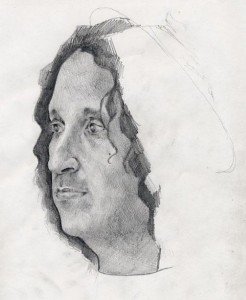
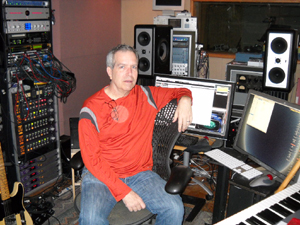
Gordon Raphael, who established himself as one of New York City’s most influential music producers during his relatively short residency here, announced that he has launched www.gordotronic.com, the “World Headquarters” for all things Raphael.

Gordon Raphael's original sounds are worldwide now on the Gordotronic (artwork by Fabrizio Moretti of the Strokes).
Raphael left a huge imprint on rock by producing The Strokes’ 2001 album Is This It in his Lower East Side studio Transporterraum NYC, and their 2003 follow up Room On Fire. (See the 2009 SonicScoop interview with Raphael about Is This It here.) He also produced NYC artist Regina Spektor’s brilliant 2004 album Soviet Kitsch (which was included in NME’s list of the decade’s Greatest 100 Albums in 2009).
Visitors to the site will be greeted and treated with a mélange of ear/eye-popping aesthetics from Raphael, who is now based in Berlin. The site contains choice video and art curated by Raphael, and his first 7 albums of his own music, none of which had ever been released before now.
Lovers of sonic discovery will especially appreciate his “Silhouette Shack” podcast that streams from the site – an eclectic and essential listen. “When I was a kid, I had a little transistor radio that I’d put under my pillow, and before I slept I’d hear a very atmospheric, psychedelic show called Silhouette,” Raphael told SonicScoop. “I was always transported by this show — the discussions and music were very special to me – dealing with how important young people are to the future, and also how music has the power to affect world change in a positive way.
“So I’ve made ‘Silhouette Shack’ as my own kind of psychedelic radio show, and put it on the front page of the Gordotronic World Headquaters. In aiming for my own music website, I had the chance to dig through my entire surviving music archive — my first decade of work was destroyed in a fire at my church studio in Seattle — and decided that the first radio show would feature a sampling of my favorite self-made songs, and things I produced that featured other artists, such as Miss Machine and Sarah Maguire.
“Analog Poodle and Black Light were two different bands I was in, and even though these albums aren’t out yet — I wanted to give a taste of our future releases. Since I literally spent about 2 1/2 decades composing and recording my own songs, the process of digging in the archives has led to re-discovering many songs, such as ‘Solina Space’ and ‘Queens Echo Two,’ which I had lost track of. As you can imagine, releasing my first seven albums on the same day has been unbelievably exciting and artistically satisfying!”
Raphael is now back in Berlin after a year in the USA, producing approximately 30 bands in San Antonio, Texas and California.
5 Questions With Matt Pinfield: Taking Over TV Again with the Return of “120 Minutes”
July 30, 2011 by David Weiss
/* Filed under Music Biz */
LOWER EAST SIDE, MANHATTAN: People parked in front of their TV’s at 1:00 AM, EST on Saturday, July 30th either got a blast from the past or an exciting new music jolt, depending on their carbon date. The spark? None other than “MTV2’s 120 Minutes with Matt Pinfield.”
Now a monthly series, the show marks the return of NJ-home slice Matt Pinfield to a format that connected an entire generation of listeners to the new music that they craved. Originally airing on MTV from 1986-2000 (and on MTV2 from 2001-2003), “120 Minutes” began as an alternative music lifeline, serving as pre-Internet sound discovery for the likes of Jesus & Mary Chain, New Order, Kate Bush, the Smashing Pumpkins, Bad Religion, and scores more. Nirvana’s debut of the “Smells Like Teen Sprit” video there was just one of the revelations for the millions who made it a point to tune in.
A prince of all media himself, Pinfield is now back in the saddle taping the new “120 Minutes” from Arlene’s Grocery on the LES – just as the plug got pulled on his popular radio morning slot with Leslie Fram on WRXP due to the station’s sale in June. Whatever the format, Pinfield’s exhaustive knowledge of rock music never ceases to entertain and educate, delivered at it is in his ultra-high energy style.
Pinfield connected with SonicScoop to give the lowdown on his return to the screen, the ups and downs of radio, and the buzz behind NYC.
Your debut episode is going to feature some pretty diverse interview subjects: Dave Grohl, Lupe Fiasco, PJ Harvey, Sleigh Bells, Das Racist, Dangermouse, to name a few. That’s a pretty wide spread – what’s the common thread between these artists?
Dave Grohl is one of the humblest men in rock and roll. The guy was a DIY guy — the first album Foo Fighters did was on a cassette. Dave started in Scream, going around the country in a station wagon with promoters threatening to shoot him.
The reality is that it doesn’t just have to be new and unknown, up-and-coming artists. I want people there with a history from “120 Minutes,” or who are plugged into the aesthetic or ethos of “120 Minutes.” The Lupe thing relates to the fact that people listen to music now so much differently than they did when the show was originally airing – checking out dubstep on their iPod. Lupe has a punk band, and he picked my favorite Radiohead video to play on the show.
In the next episode, Big Boi from Outkast will be talking about producing the Modest Mouse record. The rapper Theophilus London talks about Morrissey! It all comes back around. There’s so much going on in there.
I thought Arlene’s Grocery was an interesting choice as the host venue for the new “120 Minutes.”
Arlene’s Grocery had a great look to it. The color and look of the background had a similar aesthetic to the original “120 Minutes.” You had a starkness, and it was focused on the music. I like Arlene’s for that reason, and you can’t deny that The Strokes and a ton of other bands did their residency at Arlene’s.
I think Arlene’s represents the Lower East Side. I’ve hung out in every bar on the LES, but we were sold on Arlene’s when we were scouting places. Although we might change it up sometime in the future — there’s always that possibility.
How did you acquire your encyclopeadic knowledge of music? What’s the trick to maintaining and adding to all that knowledge?
I guess my enthusiasm is very child-like. I’ve never lost that youthful thing. From the time I was three years old, I was fixated on the family turntable. I was sitting in front of a record player rocking to the Four Tops, the Beatles, the Rolling Stones – this was something I was focused on.
I retained the musical information because it’s the thing I’m the most excited about. People would laugh when we were taping “120 Minutes” and say, “He’s been talking for a while. How did he get so much information on that cue card?” But all that would be there was the title of the song! I always wanted to know the lyrics, and the inspiration behind them. I cared about stories, and as I met my inspirations, young and old, they told me things that were amazing. I read books and newspapers — the floor of my bathroom has books, magazines, Mojo Uncut. Or I’m online. I’m always reading about music.
There’s people like you and me that have a passion about exposing people to music. But I’m a music enthusiast, not a music idealist. I don’t want to keep my knowledge of music in my back pocket – I want to share that experience I have when music takes me into a passionate place, elevates my mood, makes me feel OK because I’m lonely that day, or makes me feel like I’m in love. That’s how I look at music. I just enjoy it and I’m moved by it.
Have you been using Spotify?
I think Spotify is cool. There’s so many great Websites out there right now. If you have a passion like we have, then any tool you can use to become more aware of the artist you love, or go a little deeper – that’s one of the beautiful things about the Internet.
You talked comprehensively about the June sale of WRXP by Emmis Communications to Randy Michaels and GTCR in a recent “Hollywood Reporter” article. Why, specifically, do you think NYC has a problem keeping a rock radio station going? Isn’t this like LA not having an NFL franchise?
I’ll say this only once: The problem had nothing to do with the format or the music. It had to do with financial issues at the top of the company (Emmis).
There’s an incredible misconception that rock can’t work in NYC. That’s complete bullshit. We sold out five Christmas shows, bringing bands like Spoon, Arcade Fire, Kings of Leon onstage. We were doing a lot of great things and our fans were really receptive. It had nothing to do with what rock could do in NYC. NYC radio at the moment is really lacking, and I think it would be ridiculous for someone to not pick up the torch and run with it.
But there’s so many politics about how people own stations, and how they look at their market share. Rock’s surely not down for the count, but the situation of the radio station being sold was all above our heads. There was nothing that we could have done as a staff for ratings, or whatever, that could have stopped that sale.
I had a great three year run with Emmis. I loved the opportunity, and that they believed in me and the brand of me. But when a company gets acquired, it doesn’t matter what the business is – it could be a shovel-making company – it’s going to change the dynamic.
Finally, where do you sees the NYC music industry headed as a whole. Is this still the place to be involved in music?
NYC is still the greatest city in the world. It always will be. It doesn’t matter the genre, beyond NYC and into the tri-state area, it’s still the place to be. People move here for a reason: There’s an energy about being a band in NYC that’s unmatched anywhere.
Even as things get gentrified or change, you’ll still find more excitement in an NYC area show than anywhere on the planet. And I know that because I’ve hung out everywhere. Artist for artist, venue for venue, it’s stronger here, and there’s a business to support it. It’s a great, proactive area. It’s the city of artists.
New episodes of “MTV2’s 120 Minutes with Matt Pinfield” will air the last Saturday of every month at 1 AM ET/ 10pm PT and will be available online at 120.MTV2.com.
– David Weiss
Music Producer Profile: David Kahne Leads On
May 10, 2011 by David Weiss
/* Filed under Deli NYC Feed, NYC Spotlight */
HELL’S KITCHEN, MANHATTAN: Modern music can get shaped by the most unassuming of influencers. David Kahne is one such source: often unseen, but always very well heard.
Spend some time with him, and it’s clear that he always puts sound first. If you’re lucky, you’ll be there when Kahne hears a song that he loves – wholly absorbed, the music literally moves him.
After being an artist on Capitol Records a long time ago, in a galaxy far far away, Kahne stayed interested in the studio. He became a producer/engineer for the legendary 415 Records new wave label in San Francisco, then a VP of A&R for Columbia Records and Warner Bros.
Along the way, Kahne’s scientific instincts established him in some circles as an indispensable producer. In addition to a GRAMMY win for producing Tony Bennett’s 1995 MTV: Unplugged album, Kahne’s production credits range from Fishbone, Sublime, Sir Paul McCartney, The Strokes, Sean Lennon, and Linkin Park, to current collaborators such as Ingrid Michaelson, Regina Spektor, James McCartney, Jay Brannan, and The Dirty Pearls. If that’s not enough, Kahne is beginning a production of a ballet version of Peter Pan that he wrote, and he’s just wrapped scores on three films.
One way he does it is by working out of a personal audio wonderland he’s established at Avatar Studios. A resident of New York City since 1990, and bi-coastal until 4 years ago, Kahne was led from the Golden State by his muses to become a full-time NYC dweller. Now Kahne is feeding off of the Big Apple’s energy as he moves music forward.
Why is NYC your home base now? And how did you settle on Avatar as your HQ?
I liked the vibe and the creative feeling of it here. I’ll give you a great example; I write ballet music — I recently wrote a ballet of Peter Pan in MIDI – and I found a choreographer in Brooklyn. 90 dance companies use her space, and it’s part of a thing that makes that sense of DIY seem stronger here.
I sometimes feel like the LA scene is more about chasing the industry – although there are so many talented musicians there – and I like the environment of NYC. Walking, biking, the way the clubs are…It’s more saturated here in the city.
How does that translate with the artists you’re working with here in NYC?
When I was head of A&R at Columbia, there were 212 artists on the roster. I asked somebody over there recently how many artists they currently have signed onto the roster, and they said it was in the fifties. So that’s a hundred-something records not being made, artists not being supported. Those artists are still making music, but now they’re trying to turn their own thing.
People I work with like Regina Spektor, Ingrid Michaelson, Jay Brannan, these are amazing artists — Jay books himself, he manages himself, and he saves money for his album budget. It’s hard. You’re spending more and more time promoting yourself, and less time making music. But I think that that’s the way it’s going to be for more and more artists.
Back in the day, there was a general feeling that a song could change the world. And that created an environment for big rosters and lots of sales, and more artists being able to have careers spanning decades. I think that bubble has burst.
I feel like we’re all entrepreneurs now, more than ever. The means of distribution and collection change almost faster than we can adapt to them, and there’s not a settled system for monetizing the music. So it’s harder to build a business.
I also think it’s interesting that we’re back to the way it was in the ‘50’s, a singles market. The publishers started record companies then, and they have a lead on the power now, especially when you talk about the synch fees. Synch seems like the new radio for lots of new artists.
It’s very difficult for a major label to build up an artist around touring. It takes a long time to do that, and for the most part, I don’t think the numbers work. Gotta get radio.
A self-contained artist would most often have a very hard time with all the test marketing that goes on, and all the changes that are made to the music to meet the market expectation. If the market were “people who are looking for something new, different, etc…” it would be a different music world. But that market is very individualized, and spread out and you have to reach it in a different way. That’s my opinion, anyway.
Shifting gears, how do you see yourself today? As a producer? Mixer? Engineer? Composer? All of the above? How do you balance all those roles?
Yes, all of the above. Because of the economics of things now, I’m mixing. I think my favorite parts of the process — arranging and programming — are sort of blended together, and that’s one reason I like working on the ballet so much. It’s all orchestral, and when you’re scoring something you’re actually mixing something while you’re writing the arrangement.
With my MADI system in my room here at Avatar, I mix as I go. I have all this outboard gear and it’s all accessible through real time via the MADI. When I call Cubase up to continue a session or do an overdub, I call all my hardware up at the same moment.
I have the entire Vienna library on one dedicated computer. It runs through Ethernet with zero latency – it’s mind-blowing. I used to be able to load four complex instruments on Cubase, now with this 64-bit computer running Windows 7 I can load 31! Another computer runs only Hollywood Strings, which is a fantastic library, but it’s all solid state drives. Some of these Hollywood Strings loads are 18,000 samples and streaming. Without solid state drives, you can’t even load the complex instruments. It’s worth getting the drives.
It’s crazy, but it’s fascinating technology. Again, with the DIY thing, you’re getting to the place where you’re going to have the ability to create whole orchestrations, to the point where nobody’s going to be able to tell it’s not a real symphony orchestra playing.
Looking at your setup and how many up-to-date components you have – hardware and virtual – it’s clear that you’re constantly introducing new software and hardware into your system. How do you keep up such a breakneck pace?
Every time I see a new plugin, I buy it! I bought buy plug-ins like Geist or Trigger the first day they come out. I’m quite the early adopter. I went full 64bit and Windows 7 the moment it was possible. I’m spending probably 15% of my time keeping my gear running and checking out new software.
I don’t need any new hardware. Sometimes I think about having a console, and then I tell myself I’m insane, what am I talking about? I have friends that are still on consoles, and they sometimes feel behind the curve, because it takes time to get up to speed on the computer, and trust your software.
Hardware compressors are my favorite thing. I’ve got a Fairchild, and two Federals over there. Someone told me about the Elysia Mpressor when it came out, and I freaked when I got it. It’s so powerful – with the gain control, you can get tremendous compression without harshness. You can get it to pump and suck, and now the software version is identical to the hardware unit, as far as I can tell.
But Brainworx and all the UAD stuff, and some of the SPL stuff is important stuff to have because it’s like having another instrument. It’s like the difference between two different kinds of saxophones. You’d use one for one thing, and a different one for another.
How does your particular studio setup allow you to get around the console?
I have four Dangerous 2-Bus summing boxes, totaling 64-channels, with my analog outboard gear hard-wired between the interface D/A outputs and the inputs to the 2-Busses. This allows me to select what track or stem I want to send to a particular piece of outboard via the output assignment in MADI, so I have in effect a virtual analog patch bay.
You can also set up parallel processing chains with this system. For example, I have an output from the computer going to my Fairchild on a dedicated line, so I can send a dry stem directly to the Dangerous 2-Bus and also send the same stem to the Fairchild; the Fairchild is patched into its own 2-Bus input, so I get foldback compression as part of the stream in the 2-Bus summed mix. If I want insert compression only, I just turn off the dry stem feed. All the audio splits out in the MADI mixer, 64 tracks.
I save the MADI mixer doc for the song I’m working on, and when I call the song back up in the DAW, I load the MADI mixer and my mix is back exactly as I left it. I have about 20 pieces of gear, or chains of gear, that I can access from my computer in this way.
You get the call for some pretty high-profile clients to work on their projects – Sir Paul McCartney picking you to co-produce James McCartney’s excellent 2010 EP Available Light comes to mind. Why do you think they chose you?
I’ve been working with Paul for a while, on two studio albums and three live albums. I’d met James earlier, and we all knew each other, and Paul asked me if I would work on James’ album with him. Paul knows me and I think he thought I’d be a good person to get the album done. And we’re still working on it. We just did two new songs – it’s a work in progress.
You seem to really get the most out of a band’s sound, whether you’re working with James McCartney, Fishbone, The Strokes, Regina Spektor. What’s your approach to tracking and mixing?
Mostly it’s the preparatory work, I have to say, that I really like. I spend a lot of time in rehearsal and pre pro, so that as much as I can know about not only the amplifier, but how the people play. That’s if it’s a band. If it’s a solo artist, I like to build models and get the vocals done as soon as possible, and then do the arrangements: and record the live instruments last. Takes the mystery out of it, saves money, and there’s still plenty of room for surprises to happen with great players.
You know, I was in Vegas once. I was backstage, there were these tall girls walking by with massive eyelashes — they looked like freaks. I thought, “It’s so weird looking.” But later on, seeing them out in the theater they looked really pretty. It’s about scale. Environment. Arranging and mixing for stereo is the same thing – you’re trying to create depth and power using musical tools of counterpoint, voice-leading. Then software after. At least, that’s what I try to do.
My main focus for arranging is vocals. For example, there’s a band I was going to work with, where this girl is an amazing singer. There was all this great stuff I heard from them live, but the demos of the new songs had big holes. In a lot of the songwriting, they’d have a verse that worked great. You could feel this stuff going on between the quiet and loud in her voice, and you knew that was going to work. But in the pre-choruses, she would start vamping because there wasn’t enough information there, and as a singer she instinctively knew there wasn’t enough going on in the song — she was trying to make it happen physically in the performance, rather than in the composition.
So she was giving away the nut that was supposed to be in the chorus. I heard her go there in a less musical way. She was solving the problem by singing it out. She felt like she made the arc to the chorus, but I was talking to her about working on this one part of the song so that she could sing across the bar line and get into the chorus.
That would have solved the problem, but the leader of the band didn’t like that. I didn’t end up working on the project. I like to find that out early on – if I can’t develop an approach to the music overall with the artist, it’s best that we don’t work together. There’s only been a few times when I’ve started working and the method we’d agreed on didn’t work.
An emerging NYC band you’re working on now is the Dirty Pearls. How did you get involved with them?
I heard their song “New York City Is a Drug”, and I really liked that. So we worked together on the album. I really liked the style of that record – they wanted to play guitars loud and be a band. I saw these guys live at a music festival. There were 20 bands on before them that were completely interchangeable. Then these guys came on – they have a show, they look different.
We’re trying to see if we can get something going with them. We’re getting airplay, but again as we were talking about earlier, it’s some guys starting a business. They’re building their brand, so to speak – that term is used so much now.
We’ve talked about you being a mentor and inspiration to many. Who out there is inspiring you now?
Bartok. I listen to Bartok’s Concerto for Orchestra to go (in awe) “FUUUUCK!”. To feel tiny. There’s a bust of him on 57th because he used to live over there. I go by there to look at his head.
Regina Spektor was a big influence on me. She’s one of the reasons I moved back here, because she’s completely her own person. That’s how Brad in Sublime was, and he was a big influence on me as I was working with him, not before. I end up being very heavily influenced by the people I work with if they’re really good: Paul, Regina, Brad, James Brown… Fishbone was a huge influence on me. I go back and listen to that stuff, and think about all the different places they were coming from.
When I was in college, I was listening to Count Basie and I decided I would try to do that. So I got theory books, studied them like a music slave, and wrote with my first big band chart. It’s all about that organization of instruments and tones in time. What do you play and where does it go? You look at a score, and you have a master plan for the musicians. Then they play it, you listen, and then say (awed), “Oh FUCK. I suck,” or “I’m doing OK.”
That’s why the masters were so influential to me – I learned by reading their scores. It’s just some guys doing great stuff, and it’s fascinating to see how they approached it – and did it a hundred years before it became popular. Debussy, they must have thought he was out of his fucking mind, like the Dead Kennedys.
That kind of thinking about music is sort of what I assume you could keep yourself sane with. Because you’re in awe of something, it gives you perspective. Rather than thinking that brushing your teeth with Jack is the coolest thing you could possibly do.
– David Weiss
Music Seen: Music-to-Picture Hot Picks * Curious Pair by Debate Team
April 24, 2011 by Chris Tarantino
/* Filed under Music Biz */
Artist: Debate Team
Song: Curious Pair
Why I Luv It: Remember the 1990s? I do. Vaguely.
One of the things that separates it from now musically is the deep divide between “pop” music that charts and sells and indie bands who write and produce their own music. Save for a few acts that manage to break through, such as The Strokes or Kings of Leon, most music that sells and sells well is glossy, well-produced dance pop hand-delivered to you by an adorable tween.
Gone are the halcyon days of cities that represented small pockets of rock music: Seattle, Austin, Portland, Chapel Hill, the list goes on. One of the genre victims of the death of this trend was power pop. Simple, straight-forward, catchy, pop rock which virtually dominated the 1990s in college charts AND the radio.
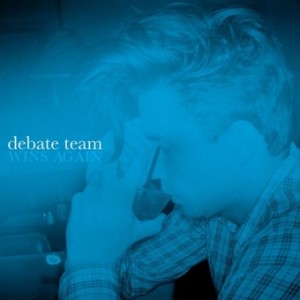
So that must mean that Debate Team are either creepers in their mid-40s preying upon this memory (read: Rascal Flatts) or kiddies too young to even remember its existence (read: everyone else). No, the Los Angeles five-piece fall right in between those two categories on their debut EP Debate Team Wins Again.
Sharing members with OK GO, The Hush Sound and OneRepublic, the band has power pop pulsing through its veins and clearly has the formula down for hits. Strongly recalling the underrated Fountains of Wayne or a far less ironic/irritating version of Weezer, Debate Team has revived the genre with hook-filled defibrillators.
Obvious single “Curious Pair” is an insanely catchy pop confection with witty, nursery rhyme-y lyrics that bring to mind elder Canadian poppers Sloan and could very easily be placed in spots across the board.
Scene I Can See It In: The lyrics of the song tell a story about meeting someone on the street who is so similar to you that it’s almost frightening. While at first the narrator is taken aback, it ends up being the one thing that brought these people together.
“For my entire life I thought I was the only one, I thought I was unique
But little did I know that somewhere out there in the world there was another me”
This is exactly what technology companies constantly strive for: “What does your phone/media player say about YOU??” These days with Apple’s dominance of the market, people are less concerned with what their devices say about them and just want to be part of a shared global experience.
I could see this song being used in a spot for another brand’s competing device. “Don’t be part of the herd! Think outside of the box! Be unique!” Most of the lyrics are slightly too specific, but an instrumental version with just a few choice phrases kept in could easily get this across.
“What would it take to make you see that I’m not the only me?”
The device catches on one person at a time as its owners meet other like-minded people because of the product. The shimmering introductory guitars set the stage for separated friends or loved ones, longing for one another and staying in touch only because of their devices. A lonely soul messages someone at night as someone receives it, moments later it in the morning. Both happily stay in touch with the help of this technology and as they go about their day, they encounter more and more people using the very same technology, creating a new shared experience for everyone.
As the spot continues, we get to larger and larger places with more people all of whom are using the device and noticing each other. By the final grand sweep of the song, we pull out of a huge arena during a concert where thousands of them are lit up and held in the air.
The angelic coo’s in the background help take us into outer space where millions of lights now shine all over the planet. While this moment was an impossibility in the 1990s, we can still use its musical influences to soundtrack the shared experiences of today.
Chris Tarantino is a Music Supervisor at Thwak! Music in NYC, a writer for The Village Voice & host of his own radio show on East Village Radio.
James McCartney Releasing “Available Light”: 5 Questions for David Kahne, Co-Producer & Mixer
September 19, 2010 by David Weiss
/* Filed under NYC Spotlight */
HELL’S KITCHEN, MANHATTAN: With conviction like his, James McCartney doesn’t have to convince anybody of anything. Just a few seconds into “Angel”, the opening cut of his new EP, Available Light, it’s clear to all with ears that his hooks are heroic. And they’re his.
Of course, with his bloodline, James has to convince a whole ton of people that he really can play guitar and sing, much less write a song. On the one side of his heritage is Sir Paul McCartney, the Beatle who transformed Western music along with his bandmates John Lennon, George Harrison and Ringo Starr. James’ DNA springs equally from Lady Linda McCartney, a primary sonic force as Paul’s muse and partner in Wings.
That kind of family tree will trigger high expectations – probably why James McCartney has kept quiet about himself for most of his 33 years. But with the kind of natural talent he possesses on guitar and vocals, it was only a matter of time before a record would arrive.
Now, the moment is right. Available Light, co-produced by Paul McCartney and David Kahne, debuts Tuesday, September 21 on NYC’s Engine Company Records, and the sounds it holds just might shock and awe. After the instant rush of “Angel” is the driving tension of “Glisten”, the bittersweet uplift of “My Friend”, and the Cobain-dark drama of “Denial”. The capper is his band’s masterful cover of Neil Young’s “Old Man”, with the power to raise neck hairs after repeated listenings.
The New York City-based Kahne, a longtime collaborator of Paul and a wide spread of artists including Tony Bennett, Fishbone, Sublime, The Strokes, Sugar Ray, The Bangles, Sean Lennon, Stevie Nicks, Regina Spektor, Linkin Park and Mike Doughty was on hand for it all. He oversaw the recording sessions at Paul’s Hog Hill Mill Studios in Sussex, Abbey Road Studios in London, and SeeSquared Studios and Avatar Studios back here in NYC, and mixed the record.
Typically occupied with a diverse palette of projects – scoring two films, working with the NYC rock band the Dirty Pearls, developing eight other artists, and finishing an orchestral ballet of Peter Pan – Kahne granted SonicScoop a rare interview about co-producing this rarest of records.
What made you the right teammate for James McCartney and Co-Producer Paul McCartney on Available Light?
I’ve worked with Paul for 10 years, and I’ve known James for about eight years, although James and I had never worked on any music. So when Paul decided that he wanted James to get a record made, he called me up and asked if I was interested in producing James’ music with him… It was really that simple. And I immediately said yes.
Knowing James from before helped, and I’ve worked with Paul a lot so he must have felt I might be a good person to collaborate with. Paul hoped we could work together well in a triangle. So we all agreed and started working. I think he was right.
There were two recording stages for “Available Light”. The first phase saw James playing most of the instruments, and Sean Pelton on drums. Towards the end of those sessions James also formed a band with members of the Dead 60s, toured with them and re-recorded several of those tracks plus six new ones. Why was this two-phase process undertaken?
We recorded quite a bit of the first recordings in Paul’s studio (Hog Hill Mill Studios) in the south of England, in Sussex. James, Paul, and me – Paul not playing by the way, except to come up with parts, a few of which stayed as Paul’s performances. We had a great drummer from New York, Shawn Pelton, come in, but James played bass, guitar and keyboards. We got an album’s worth of songs, actually more than that, done. But we were still looking for more to choose from.
Then we talked about having a band, to see what that was like, and so that James could start playing gigs. James had played some in bands, but not that much. I had produced a band called the Dead 60s from Liverpool. I called up the drummer Bryan Johnson and the bass player Charlie Turner, connected them with James, and they started rehearsing with him. Then we brought in their friend Steve Bayley, who played guitar and keyboards.
We decided “This sounds really good, too.” We recorded a bunch of new songs, and re-recorded some of the previously recorded songs to compare them to what we already had. On Available Light the new band recorded “Old Man”. All of the other songs, “Angel,” “Glisten”, “My Friend” and “Denial” were from the older sessions, but a couple of those songs have overdubs from the new band. It’s definitely worth noting that Gil Goldstein plays accordion on “Old Man”. And Steven Isserlis plays cello on “Glisten”.
James brought in 50 cover songs to choose from, and we chose two: “Old Man” was one of the songs we decided on. We were going through the list, and when we got to “Old Man” I heard him sing the first line and I got a chill. It was a great moment.
It’s an absolutely dynamite cover of one of Neil Young’s signature creations. In the studio, how would you describe James’ approach to recording – what sound/feel was he going for with Available Light, and how did you facilitate that?
I wouldn’t say James goes for a particular sound and feel. It’s not like a directed, “This is what I want.” He kind of plays the way he plays. He’s a gifted musician who can play bass and guitar right-handed and left-handed — he can play his Dad’s bass with either hand. And he has a massive vocal range, at least three-and-a-half octaves. His guitar playing is world-class, as his hands are so sure and effortless. And his piano playing is graceful and strong. He held a note the other day for 52 seconds.
He writes the song, he feels something when he writes the song, and when he plays it, it’s done the way he felt it. So in production, the point was to make sure that was as wholly fleshed out as possible, without squashing or stepping on the original sense and feel of what he’d played. It’s very easy in the studio to run roughshod over original intentions.
The song “Denial” is very, very dark, and “Angel” is another great example, just based on what he’s feeling when he writes it. When he performs, the songs come off the way that he felt. He has a very direct connection to what he feels and what he sounds like, and actually doesn’t talk much about what the songs mean. He’s a very feeling person.
I didn’t know any of the songs when we started, and Paul hadn’t heard a lot of them. James would play them, Paul and I would sit and listen, and there were many times when we looked at each other and said, “WOW.”
On one song we were listening to for the EP, James was singing quietly and then got so loud so quickly that he hurt my ears, just singing and playing acoustically. Paul and I jumped and James said, “Was that too loud?” He can go from 0-to-60 in a second. As I understand, he’s always been like that, since he was little. He could play “The Wind Cries Mary” when he was 12. He would listen to songs and quickly be able to play them, no matter how difficult.
Moving on to the mixing. How would you describe your philosophy overall as a mixer, and then how did that guide your approach to mixing this record?
Well, I’m usually mixing while I produce, so the way I work is that by the time I get to mixing, I’m already close to my final goal, since I mixed as I went along. Which is interesting, now that I think about it, because it’s kind of Beatley – they had sub-mixes which they had made by bouncing back and forth on four tracks. Their mix parts were committed to early on.
I use a lot of analog outboard gear, but I’ve set my computers up through a MADI system so that I have access to that gear outside the computers while I’m working on the project. So I can instantly get to or recall that gear if I recall the session. If I get a vocal sound I like, using my Federal Limiter or my Fairchild, I can keep it and continue with it through the overdubs.
We started the second phase at Abbey Road, and then finished recording at Paul’s studio in Sussex, mixed the whole record, and then I came back to NYC, to my studio, and I remixed about 2/3rds of it in recall. I’m very much vocal-first: I put the vocal up first and go around that. That was a really good thing to do in James’ case – it keeps anything from getting mixed in a way that pulls away from the voice. And of course, getting the arrangement right in the first place helps.
We would redo the guitars with different voicings to draw the voice out, for example. I call that mixing, too. It’s just fixing it another way. If there’s a vocal in there, I figure that takes precedence and has to be served.
There was some serious rock royalty all over Available Light – what did you learn personally from this project, both about songwriting and recording?
It was fascinating working with Paul and James, not only as producer and artist, but as father and son. Musically, I’m always learning about the artist and his/her point of view. If they’re good, there’s something unique and distinctive there. And these recordings were no exception. I learned so much from working with James and Paul.
James’ ability as a guitar player was astounding to me. He did things I had never experienced before. He would play a really complicated guitar part, and then I’d ask him to double it on acoustic. He would do that, and it would be as if I had made a copy of the first one. He knows where every note is, and that makes for a certain kind of power in a recording – the level of precision that comes out.
It was also different working with Paul as Co-Producer, because he wasn’t playing. It was Paul and me talking about things, then the two of us talking to James. Or Paul or myself singley working with James at times. I got to work with Paul in a different way on this album. I think it worked out really well. And James shines through.
– David Weiss
40th Anniversary Salute to Electric Lady Studios Hosted by AES NY Section
August 24, 2010 by David Weiss
/* Filed under News */
On Tuesday, August 24th, the NY Section of the Audio Engineering Society hosted a 40th Anniversary Salute to the legendary Electric Lady Recording Studios and the Jimi Hendrix legacy.
Almost four decades ago to the day, on August 26th, 1970 Electric Lady opened its doors at 52 West 8th Street in Greenwich Village. Just 23 days later, Hendrix passed away, leaving his inimitable music to live on as well as his studio, which has been the birthplace of hits for Bob Dylan, David Bowie, Coldplay, The Rolling Stones, Patti Smith, U2, Sheryl Crow, The Strokes, Jay-Z, Beyonce and scores more.
A panel presentation was a part of the evening and included:
– Jimi’s sister, Janie Hendrix, CEO/President, Experience Hendrix
– Eddie Kramer, engineer of all Hendrix’s recording sessions
– studio architect/acoustician John Storyk, who began his recording studio design career with Electric Lady, and whose international Walters-Storyk Design Group has created over 3,000 studios around the globe
– long time Electric Lady engineer Tony Platt (AC/DC, Foreigner)
– Grammy-winning engineer Bob Margouleff (Stevie Wonder)
Other guests, included artists who have recorded at Electric Lady throughout its 40-year history.
While admission was strictly limited to 60 attendees, CBS provided streaming of the event via the AES NY Section Website at http://www.aes.org/sections/ny/.
The Postelles Get St(r)oked for Their Upcoming Debut Album
May 3, 2010 by David Weiss
/* Filed under NYC Spotlight */
UPPER WEST SIDE: From the land of mediocre restaurants and mid-life crisis, the Upper West Side, come The Postelles. How did this foursome rise above the cultural obstacles of their upbringing, coming from a place where the Gap and Starbucks reign as supreme as in the Topeka suburbs, to make their own ear-tingling brand of rock?

There are four of them.
It starts with their pure and simple influences, drawing off of resources that range from Motown to the Strokes, Buddy Holly and the Beatles. As a result, their upcoming self-titled debut due out on July 27th on Astralwerks/Capitol Records is due to get its own notice from the lo-fi, upbeat crowd.
The four-piece squad of 21/22-year-olds, Daniel Balk (lead vocals, guitar), David Dargahi (lead guitar), John Speyer (bass) and Billy Cadden (drums), co-produced the 11-track album with Albert Hammond, Jr. of the Strokes. One listen to jangly tracks like “White Nights” (available as a free download from the band’s site), and it’s no mystery why band and producer were a royal fit.
The record may have been made in two chunks – one under the supervision of Sr. Hammond, Jr., the other without – but it comes together as one big burnin’ hunka New York City rock ‘n’ roll. Appropriately, we grilled Daniel Balk about it.
Q: So the recording of this record was a “half-and-half”? Explain.
A: This is how it worked out: We did the first half with Albert and Gus Oberg, who engineered it, at Looking Glass Studios, and I think we were the last band to record there. We did five songs in 14 days, which is the way we usually record.
We learned a lot from that phase. Albert really taught us a lot about how to record. So the next half we did at Quad — eleven songs in three days. We came in at 11 AM and stayed until 4 AM every day.
Q: You said you learned a lot from Albert – like what?
A: I play guitar, and David also plays lead guitar. Albert taught us a lot about getting the right tone, like how you can change it by turning the treble down for the verse and up for the chorus. We usually just plug in and play, and we still do, but now we can do a lot more than that.
David more uses so many pedals and I don’t use any, but speaking for him he would say his favorite pedal that he learned about from Albert and Gus is the Jeckyll and Hyde overdrive pedal. If you’re going to be a lead guitarist, and want a dirty sound but not too processed, that’s the best pedal around, for sure. I know the Strokes use it, and they have some of the best sounds around.
Q: How come no pedals for you? I thought all guitarists hearted pedals.
A: It could be a little bit of laziness. But its more so that I really love the early Beatles, Buddy Holly, even the Stones, early on. If you look at them live, they don’t have any pedals. I love the sound of the guitar plugged into the amp without anything else coming in.
Dave’s doing solos, changing sounds, so he has to do that. But for me, I didn’t want to fuck around with it too much. I love that raw sound. I don’t think it’s anything too crazy. On the album, the amp I played through was a Peavey Classic from the late ‘70’s/early ‘80’s. I played a white Stratocaster, and I also played a Gretsch Penguin.
For the drum sounds, Gus and Albert spent six hours a day on drum sounds. For the song “Hold On,” we put a few napkins on the snare drum to deaden the sound, and that sounded really cool. We also spent a lot of time on bass.
Q: That’s funny, because when you think of the Strokes, their most famous records have a reputation for being lo-fi, i.e. not spending a lot of time…
A: I thought that, too. But Albert’s a perfectionist. The second time we recorded (at Quad) it was more like that – faster — but not in a bad way. It was more like we knew what we were recording.
Q: Why were you working with Albert Hammond, Jr., in the first place?
A: He saw us in a club called Sidewalk Café. He was nice enough to come in, sort of liked us, and we did a demo in his bedroom.

Albert Hammond, Jr. (Photo credit: Justin Jay)
When it came time to do the album, he had never really produced anything except his own work. He said, “I’d love to do it,” and it was a no-brainer. We were good friends, and Is This It is one of my favorite records ever. The label threw out a lot of big producer names — we met a lot of people, and it didn’t feel right. We wanted to work with someone we respected and got along with also.
Q: Once everything got going, was there a deliberate sound that you’re going for there?
A: We didn’t want it to sound like a huge album — we’re not an arena rock band. We also didn’t want it to sound like a demo. We wanted to go in between, and have a retro kickback sound that no one has nowadays. We wanted to get that across.
Our big thing is recording live. We wanted to not overdub, and do all the instruments playing together, like the Strokes, the Ramones, the early Beatles.
We did do a few overdubs, naturally. We definitely heard things a few days later like “Holy shit, we have to redo that vocal!” Obviously, we didn’t do the harmonies live, because no one’s perfect.
[At this point, someone on Daniel’s end asks him if he wants a sandwich].
Yeah. Turkey, swiss, mayo.
We think harmonies really build up a song. Going back to Motown, doo wop groups – we love the way that sounds. That has to be perfect, and we’re not the Temptations.
Q: Yes, you are the Postelles. So why wasn’t Albert producing for the album’s second half?
A: We went into the first half saying we had songs we wanted to do. Then after those were recorded we got back into writing, and he was doing some touring and it didn’t work out.
It ended up perfectly, because everything we learned from him in the first half we took into the second half. We had a great engineer at Quad named Robert Dorsey, and he really helped us out a lot.
Q: What are some songs from each recording chunk where you feel like everything really came together?
A: The most fun song from the first half was “Hold On”, a slow song. I think we did one take and nailed it. We really like that, getting it done. I think it came out the best.
In the second half, I think maybe the song “Can’t Stand Still.” It came out really well – it’s the newest song on the recording. I didn’t play guitar on it. It was fun to do the vocals and not worry about the guitar.
Q: Right on – we’re looking forward to hearing the whole album when it drops in July. Until then, why do you think people are digging on the Postelles?
A: There’s a lot of bands nowadays from Brooklyn with seven synthesizers or whatever. But I think a lot of band now are doing it just to do it, because it’s cool. With us, I think people find comfort in going back to the old bands, where they just plugged in and played without backing tracks. I hope people appreciate it. I like just going up, playing, and not having to worry about all these wires everywhere. — David Weiss
Avatar Hosts The Strokes, Mary J. Blige, Moby, The Dirty Pearls & David Kahne
March 22, 2010 by David Weiss
/* Filed under News */
Avatar Recording Studios hosted a number of sessions this past month, with high-profile artists, producers and engineers.
Studio A and its famed live room saw the likes of The Strokes, recording with producer/engineer Joe Chiccarelli, assisted by Justin Gerrish. Moby was recording there with engineer Scott Norton, assisted by Rick Kwan, while Vince Mendoza tracked in the room with engineer Jim Anderson, again assisted by Rick Kwan. A Latin version of “We Are The World” was recorded with Taboo of the Black Eyed Peas in Studio A with producer Emilio Estefan and engineer Roy Hendrickson, assisted by Fernando Lodeiro.
In Studio B, the Bill Charlap Trio recorded with producer Todd Barkan, along with engineer Katherine Miller assisted by Aki Nishimura. Oud player Joseph Tawadros was in B with engineer Jon Rosenberg, assisted by Bob Mallory.

Mary J. Blige
Mary J. Blige was in Studio C overdubbing with producer Ron Fair, and engineer Anthony Ruotolo, who was assisted by Charlie Kramsky. Also in C were Nikki Yanofsky, working with producers Phil Ramone and Jesse Harris, along with engineer Tom Schick assisted by Bob Mallory. The Dirty Pearls were in C recording with producer David Kahne, engineer Roy Hendrickson, and assisted by Justin Gerrish. On the jazz tip, Mark Johnson was in Studio C recording with producer Eliane Elias, while engineer Joe Ferla was assisted by Rick Kwan.
Last but not least, indigenous Australian musician Gurrumul Yunupingu was in Studio G recording with producer Michael Hohnen, engineer Anthony Ruotolo, and assistant Aki Nishimura.
The Strokes Still Rule the Decade: “Is This It” Explained by Gordon Raphael
December 22, 2009 by David Weiss
/* Filed under NYC Spotlight */
EAST VILLAGE, MANHATTAN: Why did The Strokes album Is This It change the world? Raw aggravations and melodic mastery were set free by five wizened Manhattan youths whose instincts were apparently dead on about…everything that had anything to do with music.
Rough rough rough when so much else in 2001 was sounding slick slick slick, the 11 tracks of Is This It seemed to have a magical effect on almost everyone who heard them. Arriving at a time when reality was, apparently, desperately needed by all, the landmark album was recently named “Album of the Decade” by NME and landed the coveted #2 on Rolling Stone’s own Decade list.
The unmistakably downtown songs were played by five very energetic young guys, headed by the vision of Julian Casablancas, but it was producer Gordon Raphael who was key in somehow setting their music free. The Strokes made their way into Raphael’s Lower East Side basement studio, Transporterraum, on their way to signing with RCA in search of anything except the conventional approach to recording records at the time. In a cosmically fortunate turn of fate, they had their man.
“I’ve mulled it my head a thousand times,” the always-mellow Raphael reflected from his current home base of Berlin, on Is This It’s nonstop impact. “All I can say is that when people heard the authentic sound of people enjoying playing music together, rather than this manufactured, ‘This-is-what-music-is’ product – with all these people programming beats and technology and assembling it – they appreciated it.”
Raphael was famously directed by Casablancas to make the album, which would include the hits “Someday”, “Last Nite”, and “Hard to Explain”, sound like it was by “a band from the past that took a time trip into the future to make their record”. The Seattle-bred producer, who had cut his teeth on the industrial scene, knew exactly what to do – and what not to do — with his limited recording resources.

Gordon Raphael
“They wanted to sound like something different from anything that was going on then,” he explains. “I thought, ‘Well, we’ve only been using Pro Tools instead of tape for four years, and all the producers are going nuts over the fact that they can do 64 tracks of audio.’ Everyone was pasting together five samples to make a snare drum sound. So what’s the opposite of that? No samples. Everyone is playing to a click track, and isolating drums from the guitar. So let’s have everyone in the room at the same time, live. There was something about The Stooges that they liked, something not really in control, but exciting. Out of balance. Chaotic, but fun.”
The recording techniques – or lack of same – that Raphael applied to what came next is well-documented. A punk rock, three-mic approach to Fabrizio Moretti’s drumkit, with bleed from the guitars of Nick Valensi and Albert Hammond, Jr., plus the bass of Nikolai Fraiture, very much allowed to live. No EQ after the preamp for the guitar amp mics. Casablancas vocals recorded through a miniscule Peavey practice amp. When it came to fidelity, the open-minded Raphael willingly took the lo road, all the better for The Strokes’ starkly honest rock songs to just come on through the speakers.

Gordon steadfastly watches over Julian
For Raphael, one quintessential Is This It song is the extra-brash track “Take It or Leave It” that ended the U.S. album. “Just recording it and the guitar solo – it was a giantly expressive piece,” says Raphael. “It just jumped out of the speakers with no politeness whatsoever, and cleared your ears in the most delightful way. But I think a lot about ‘New York City Cops’. It rounded off the album and was forced to be taken after the American pressing after 9/11. Taking that piece of music off of it was like shooting a foot off, and then going on the hike. It wasn’t quite as powerful without that little gem on the record.”
Released in the US on October 9, 2001, the response to Is This It was immediate and explosive, a musical salve for the incredibly deep emotional wounds that so many in NYC and beyond were feeling at the moment. The people (that’s us) embraced it. Critics – for what they’re worth – gave the record the most massive props they could, with album-of-the-year (or equivalent) honors coming from the likes of Billboard, CMJ, Time and more.
Now with album-of-the-decade accolades coming in, and 3.5 million copies sold since release, it’s clear that Is This It was not just a knee-jerk reaction to the times: It’s a true classic. Small wonder that it caused an almost overnight change in the NYC music culture. “I lived in NYC in the ‘90’s and into the 2000’s,” says Raphael. “When I was there, it was all about guys with chains and backwards baseball hats. Every club was spinning acid music, focusing on a DJ up on a platform being worshipped like the Messiah. That was the scene.
The July/August 2001 cover of "Is This It"
“The year after Is This It, I came back to the East Village and the entire scene was guys in leather jackets carrying guitars on their backs. That’s my kind of music. I’ve gotten so much from rock music my whole life. It’s been my best friend, and it seems like something I was involved with brought back the idea of guys playing guitars together. It was like a little payback.” – David Weiss