Session Buzz: Who’s Recording In & Around NYC — A Monthly Report
March 9, 2011 by Janice Brown
/* Filed under Deli Feed, NYC Spotlight, SPARS Feed */
GREATER NYC AREA: Both through the grapevine and straight from the source(s), we’ve been hearing about a number of different recording projects going on in studios throughout the NYC area. The following is but a sampling of recent sessions, and works in progress…a snapshot of what’s going on around town:
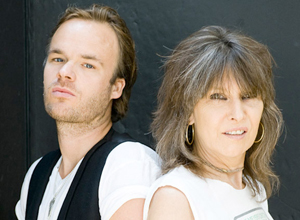
Starting in Williamsburg, Chrissie Hynde and J.P. Jones are cutting their new album at Mission Sound this month, with Victor Van Vugt producing. Hynde and Jones released their debut collaboration, Fidelity, as J.P., Chrissie and the Fairground Boys last summer.
A couple stops away on the L train at The Brewery, Staten Island-native hip-hop veteran JoJo Pellegrino and producer Lofey (Nas, Foxy Brown, Beanie Sigel) wrapped up mixing Pelligrino’s upcoming mixtape with engineer Andrew Krivonos.
For the song “Love,” which features Chris Brown, they guys completely mashed up the track with a new instrumental and had to make pitch and time elastic audio changes in Pro Tools — complete surgery — spending 20+ hours over a three-day stretch tweaking and perfecting little details.
“We really wanted it to have a certain feel so we worked until we got it right. We’re totally psyched about hearing the feedback on JoJo’s project,” says Krivonos. Pellegrino released the track on Monday… check it out!
Meanwhile, at J Rock Studios in Chelsea, engineer Jamie Siegel recorded with Fall Out Boy lead singer/songwriter Patrick Stump for his upcoming solo album. With Stump producing and playing drums and Matt Rubano on bass, Siegel recorded a couple key parts for the opening track of Stump’s new solo record.
“We tracked live bass (with an octave pedal) and a drum solo that added a really interesting depth to a mostly electronic track,” says Siegel. “One week after the recording session, the EP Truant Wave debuted at #5 on iTunes.”
Downtown, the new Will Knox album was being produced entirely within Flux Studios on the Lower East Side. Produced by Fabrice “Fab” Dupont and recorded by Flux chief engineer Meredith McCandless, the album was tracked live to a minimal amount of tracks over 4 days and mixed the following week over a couple of days by McCandless and Dupont.
“There was no editing, no tuning, no MIDI, just a few B3, Wurlitzer and Glockenspiel overdubs,” Flux manager Chris Sipes relays. “Old school spirit for a new school sound!” Dupont also mastered the record, which is being released as a comic book with download codes for the music — no CDs are being printed.
And at Germano Studios, Keith Richards has been writing and recording new material with NYC native multi-instrumentalist producer Steve Jordan. NYC-based Dave O’Donnell engineered these sessions in Germano’s Studio 1.
Across the Hudson, Brooklyn-based singer/songwriter Jennifer O’Connor has been recording at Tom Beaujour’s Nuthouse Recording in Hoboken. Beaujour is co-producing, recording and mixing, and collaborators include Jon Langmead on drums, Michael Brodlieb on bass, and cameos by Kendall Meade (Wurlitzer), Richard X. Baluyut (vocals and guitar) and Amy Bezunartea (vocals and guitar).
And just a ways up the River, at Bicoastal Recording in Ossining, jazz singer/songwriter Michael Franks and bassist/producer Mark Egan worked on a new song, featuring Clifford Carter on keys, Joe Bonadio on drums and Chuck Loeb on guitar. Bicoastal owner Hal Winer was the engineer. In another recent session at Bicoastal, NYC string quartet Ethel recorded with engineer/producer Dave Cook, and Francois Moutin tracked some new material with trumpeter Lew Soloff and vocalist Anne Sila with Winer engineering.
Back in Manhattan at Threshold Studios, Freelance Whales were recording and mixing a new track with Jeremy Sklarsky engineering and co-producing. Sklarsky also recently engineered sessions with composer Tim Janis and Alexa Ray Joel. Check out Threshold’s new website/blog at www.thresholdstudios.com.
Over at Stratosphere Sound, where songwriter/producer Amanda Ghost and producer Dave McCracken have recently taken up residence, Florence Welch was in for writing sessions with Ghost — McCracken producing and Andros Rodriguez engineering — and John Legend was also in for sessions with the duo, engineered by Adam Tilzer.
And as previously reported…
Kim Gordon, Thurston Moore and Yoko Ono are making a record together at Sear Sound in Midtown Manhattan. Chris Allen is engineering.
Fluxivity, Nat Priest’s custom Neve 8048-equipped Williamsburg studio, recently hosted Matt Mays with engineer/producer Ted Young, and Juan Son with Blonde Redhead drummer Simone Pace producing and Brian Thorn engineering.
Also, portions of Kurt Vile’s latest Matador album, Smoke Ring For My Halo, were recorded and mixed by producer/engineer John Agnello at Fluxivity, along with a few other local studios, including Magic Shop, Headgear, Water Music and Vacation Island.
Speaking of Vacation Island, it seems Beirut recently mixed their latest record at the Brooklyn studio with producer Griffin Rodriguez.
And speaking of Headgear, Agnello has also been working there with Joy By Proxy, Andy Shernoff and Sons of Bill. And coming up, he’ll be tracking and mixing a new album there with Staten Island-based indie rock foursome Cymbals Eat Guitars.
And we know there’s so much more going on out there! If you’d like to be featured in “Session Buzz,” please submit your studio news to submissions@sonicscoop.com.
Nuthouse Recording: Tom Beaujour’s “Bonhamtastic” Hoboken Studio
June 2, 2010 by Janice Brown
/* Filed under NYC Spotlight */
HOBOKEN, NJ: Tom Beaujour brought Nuthouse Recording into the world for many of the same reasons anyone builds a studio: 1) to record his own band, 2) to collaborate with other bands and 3) to enhance his abilities to do both. But Beaujour, formerly the Editor of Revolver and now Editor at Guitar Aficionado, is not your typical engineer/studio owner. Nope.
“I’ve seen so many bands and styles come and go in almost 20 years in the music press,” says Beaujour. “And my experience there informs my work in the studio in that I’m able to help advise bands on recording and overall sonic direction as well as track arrangement and best presentation. I’ve been in an office surrounded by piles of CDs and music critics and I’ve seen what works and what doesn’t.”
As an engineer and producer with this unique perspective and a love of recording, Beaujour’s taken Nuthouse from pet project to legitimate full-blown studio. In the three years Nuthouse has been up-and-running out of the old Wonder Bread Factory on 8th Street in Hoboken, it has become a go-to studio for its “Bonhamtastically-big” live room by NJ-based rock producer/engineer Machine (Lamb of God, Cobra Starship, Four Year Strong) and a growing list of band-clients including Nada Surf, Those Mockingbirds, Mutiny Within and Scale the Summit.
Here, we speak with Beaujour about building Nuthouse, balancing music journalism and production careers, and engineering for clients with disparate notions of good sound and fidelity.
So Nuthouse started as your home studio. Tell us about how it grew from there!
Yes, I started recording with my band, True Love, years ago in my basement in Hoboken, and after awhile, other bands started coming down. Matthew [Caws] from Nada Surf came in to do some extra guitar tracking and it came out really well and they were happy with it. That was when I decided I should try and do this for other bands. I figured even if I don’t know what I’m doing, maybe I have good taste, and taste is probably ¾ of the battle, right?
I found a two-room setup in Union City and moved the studio in there. That’s when I really started buying more gear and getting more serious about recording and production. I didn’t want to build in that space though, figuring I was going to have to move soon anyway. So I moved again.
That’s when you moved into your current space?
Yes, I found this space about 4 years ago. And the first year of building and assembling this studio was probably the worst experience of my life!
Whoa, why? What happened?
I guess it’s a common experience that building a studio always ends up being more expensive and more complicated than you think it’s going to be. The floor I moved into in this warehouse building hadn’t been used in maybe 20 years. There was basically no power. There was a pigeon nest in the pipes. It was just totally raw. I ended up working with these shady contractors. I had a terrible experience with my first console purchase. All my stuff was under tarps for 6 months. It was the full nightmare.
Oh man, that’s awful! But you somehow managed to convert this raw space into a proper, isolated control room and live room?
Yeah, I built double walls that don’t touch and built a control room that I floated on those U-boats. But it’s a modern-day studio in that I didn’t bother floating everything. You’re just never, in this day and age, going to make that money back and it just doesn’t seem to matter all that much to my clients. At least so far it hasn’t been a problem.
Did you build the studio with other people in mind? Both artists you’re working with and potentially outside engineer/producers?
Yes, not so much to book it out constantly, but definitely with the goal of getting other people in here. For example, Machine or his engineer, William Putney, book the room to track drums. Drums for the Chiodos record were tracked here.
So it must be a pretty awesome sounding drum room?
It is a really good sounding drum room. I’ve got treatment on the walls, but the ceilings are like 14-foot. There’s one area where I hung some clouds, to create a dead drum area. Machine has been tracking the drums right in the middle of the room.
It’s big enough that you get really good room mic sound — it’s live enough that you can get all that goodness without [it being too boomy.] I really like what I capture in the far stereo mics. It’s just a really good drum room.
…which there’s definitely a shortage of those these days…
Yeah, that’s why when I saw the space, I knew I was doing something crazy, but I really loved the idea of having a great drum room.
And you have a pretty impressive equipment collection — did that just grow organically?
It has been a gradual process of me acquiring gear, but also, when Revolver got sold a few years ago, they threw me a little ‘thank you’ gift, which I immediately invested into the studio! I bought six channels from Brent Averill and then some API gear. I have the now-discontinued-but-totally-awesome Universal Audio 2108. And then, I bought this Neve console which turned out to be such a nightmare — it was in terrible shape and after pulling it apart and having it recapped and worked on, I ultimately had to get rid of it.
When that console left the building, I felt that I really couldn’t get another vintage console. I’m not at the studio all the time but when I am, I want to know that my equipment’s going to work! So I bought a used SSL AWS 900 from Vintage King. It’s the most money I’ve ever spent on anything in my life and I’m totally happy with it.
So there’s a happy ending!?
Yes! I’m sure it’s a common studio story — there’s a happy ending but I ended up spending way more money than I thought I’d have to to get there. Having a console feels like a luxury, but the AWS-900 is a really cool unit and being able to flip the faders from analog console to DAW controller is awesome. And I really like the mic pre’s.
Awesome. And you somehow manage to balance work as a magazine editor with a career in recording and production. Tell us about that — are there benefits to doing both?
What I like about the balance is that I don’t have to do every job that comes through the door at the studio. I’m not recording terrible bands! So it keeps recording a pure pursuit for me. Also the budgets just seem so small for records right now that I don’t know if I’d put myself in the position where the studio was my main career. Right now, it’s a good balance, and my work as a music critic/writer/editor totally informs the work in the studio! I find I can really help bands a lot because of my experience.
Like in what ways?
I sit in an office with piles of CDs so my perspective can be helpful. You don’t have that much time when you’re a young person in a band. You only have so many shots.
I’ll see a band making an obvious mistake and be able to advise them — I can say put the band name on the album cover and don’t worry about being too obvious, make that song the lead track. I’ll also be the first one to tell bands to master their records loud, because I’ve seen people obviously paying less attention to a record because it wasn’t as loud as the thing before it.
So, I can help the band with the recording and arrangements, as well as the ‘after-purchase care,’ where they’re like ‘what should we do?’ I can give them some advice — it doesn’t guarantee success but it’s helpful.
Awesome, geez that’s a great bonus of working with you! Now, let’s talk about a couple recent recording projects you’ve done at Nuthouse — you recently worked on Nada Surf’s new covers record, If I Had a Hi-Fi?
Yeah, I mixed one track and did a ton of engineering on that record, and then I also co-produced, engineered and mixed three Japanese bonus tracks, two of which I just found out are coming out as a 7-inch as well.
I’ve also been doing a bunch of stuff with Spin Magazine — they do these live performances in their offices. I got recommended when Phoenix was coming in to play. I put together a mobile unit — my Digi 003, API pre’s, some good mics and my laptop — and then I mix it back at my studio. I’ve done those sessions with Phoenix and Silversun Pickups.
Oh and my favorite band of all time (ever!) is Guided By Voices and Robert Pollard is currently scoring this documentary on Pete Rose [1492], and we’re going to be doing the string session here at Nuthouse! Bob Pollard is the man. To be able to work on a project he’s involved in is amazing.
And tell me about Trumpeter Swan – you recently worked on that record?
Yes, I mixed that album. Drew Patrizi, who is Trumpeter Swan, had been working on this project for like three years. There were so many layers of sounds so we spent a long time going through everything. It was a heavily involved mixing job and a really good learning experience.
There’s definitely something happening in music right now, which can be challenging to engineers, or at least I find it challenging. It’s the effect of the “blog rock” movement on the notion of what “sounding good” means. If you look at the mixing choices made on a Deerhunter record, for example, vs. a metal record these days — where everything’s triggered and pristine and precise — the aesthetic is so different.
Trumpeter Swan was one of the first times I was confronted with this idea of having to make things that were recorded hi-fi to sound lo-fi. On some level, you’re being asked to make stuff sound a lot smaller and less good. And you almost have to re-train yourself — it’s like you’re doing things the opposite way of how you’d do them if you were making a Steeley Dan record!
It’s hard for one engineer to be able to produce the expected sounds for all the different spectrums right now. Like if you’re recording an emo record and then you’re recording a band from Williamsburg… you have to understand the different sonic directions really well. That’s another thing about being in the music press — I hear all this stuff and understand how a band is going to want their record to sound for one context and audience vs. another.
Yeah, I don’t know if bands and engineers had to have as many of those conversations in the past — maybe it used to be more obvious what needed to be done to make it “sound good” at the mixing stage?
Well, that just means very different things to different people. I think about the different notions of fidelity all the time. Sometimes when I listen to a record, I really can’t tell whether it sounds like it does because it was all done by the band on their own with a shitty mic and an Mbox, or whether it was mixed to sound that way. But definitely a lot of that “blog rock” music has a very definable texture to it. And at the same time, if a different kind of rock band came into the studio and you started mixing it that way, they would murder you. So I think it’s an interesting time to be doing this!
For more on Nuthouse Recording, visit www.nuthouserecording.com.