Lauten Audio Introduces FC-387 Atlantis – New Solid State Large Diaphragm Condenser Microphone

January 27, 2012 by  
/* Filed under Deli Feed, Deli NYC Feed, News */

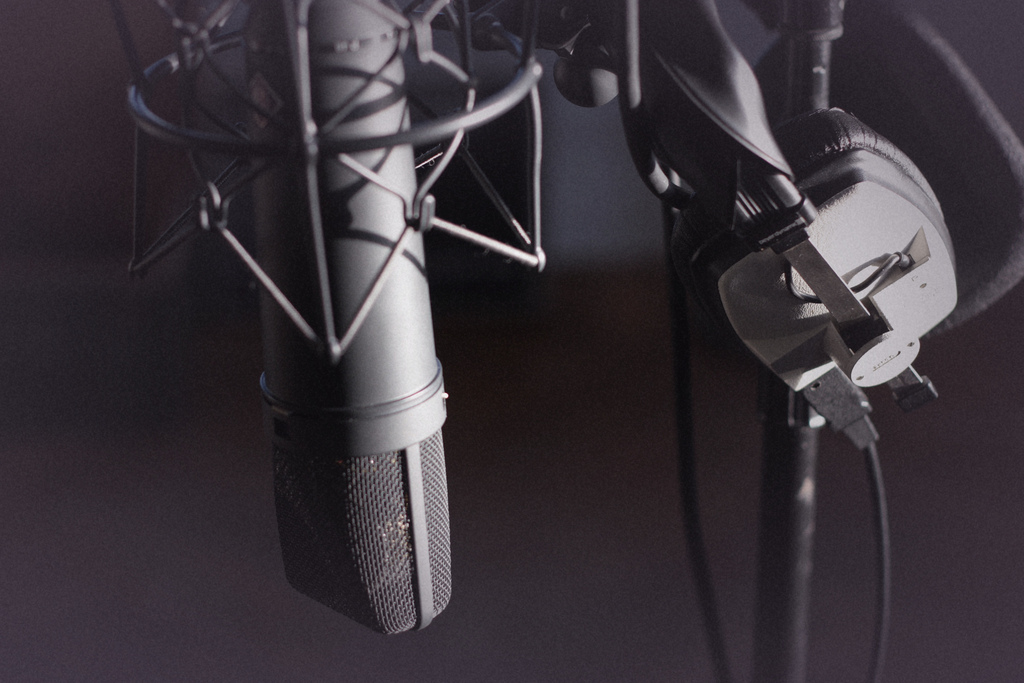
Another intriguing new product introduction that took place at the 2012 Winter NAMM show was from Lauten Audio, which announced the new FC-387 “Atlantis”solid-state multi-functional, large-diaphragm condenser microphone.

The Atlantis from Lauten Audio is about to land!

Created for audio pros needing an extremely diverse FET studio microphone, the Atlantis features multiple switches for three different polar patterns, gain, and unique timbre settings. It offers a blend of full and rich low and mid-range, as well as smooth and unique high-mid and high-frequencies.

The Atlantis FC-387 microphone retails for $1599 (US) and will be available in Q2 of 2012.

Created with extensive input from Fabrice DuPont of FLUX Studios in NYC’s East Village, the Atlantis sports a number of innovative features. Multiple switches located on each side and back of the FC-387 Atlantis microphone allow the engineer to uniquely configure the microphone:

– A polar pattern switch gives recordists the option of choosing between Cardioid, Omnidirectional or Figure-8 polar patterns.

– The gain options from its sibling, the Lauten Audio “Clarion” FC-357 microphone, are featured in the form of a -10db and +10dB switch. The +10dB gain switch increases versatility by allowing a choice of whether to have more character from the preamplifier gain, or directly from the microphone. Meanwhile, the -10dB switch reduces its output and increases the maximum SPL level, allowing it to record very loud sources.

– A unique feature of the Atlantis microphone is a voicing switch, which gives recordists three very different timbres to choose from that satisfy an extremely wide range of recorded sources. The options are: Gentle, Neutral and Forward. The “Gentle” position provides maximum control of bright or peaky sources like S’s in vocal recordings. The “Neutral” position offers a nice, even response with good control over vocal S’s and other audio peaks, while the “Forward” position can help bring life to dull sources without having to use EQ, but while still maintaining control over any peaks.

Designed for extreme precision, the FC-387 Atlantis is built using an individually hand-tuned capsule and premium high-resolution electronics.

Technical Specifications for Atlantis FC-387:

Type: 31.25mm dual large diaphragm pressure gradient transducer microphone

Polar Patterns: Omnidirectional, Cardioid and Figure-8 selectable

Circuit: Low-noise solid-state FET

Frequency Range: 20Hz – 20Khz

Dynamic Range: 120dB minimum

Impedance: < 200 ohms

Max. SPL: 0.5%THD@1000Hz: 130dB

Self-noise Level: < 12dB(A)

Sensitivity: 16mV/Pa OR -36±2dB 0dB=1V/Pa 1000Hz

Special Features:

3-way -10 dB attenuation, 0dB and +10dB gain switch
3-way Gentle, Neutral, Forward voicing switch
3-way Polar pattern switch

Connector: 3-Pin standard XLR

Power Requirement: +48V phantom power

MOTU Announces MicroBook II Audio Interface

January 26, 2012 by  
/* Filed under Deli Feed, Deli NYC Feed, News */

MOTU has followed up NAMM by being the first with a significant post-show product news: Today the company announced the MicroBook II, an updated version of the compact, studio-grade audio interface for Mac or PC.

The MicroBook II is designed to compete with audio interfaces in the $600-800 range.

Shipping in the spring of 2012, the MicroBook II will retail for $269 USD (the same price as its predecessor), providing users with a personal 4 x 6 recording studio that features professional I/O and monitor mixing.

The MicroBook II comes in a compact, rugged cast metal case suitable for mobile recording, personal studio tracking, laptop-based DJ-ing, and myriad other recording/playback activities.

Sized at 5.5 x 3.5 x 1.25 inches, the bus-powered MicroBook II has all the features of the original model, plus hands-on volume control, USB 2.0 connectivity for low-latency performance, more simultaneous outputs (six), an XLR mic input, and support for 96 kHz recording and playback.

MOTU provides these additional details about MicroBook II:

“I/O engineered for sound quality

The four inputs (mic, hi-Z guitar, and stereo balanced line in) can be recorded simultaneously. The mic preamp delivers neutral coloration and pristine sound, with 20 dB pad and 48V phantom power for condenser mics.

Engineered for exceptional audio quality, the MicroBook II includes balanced analog connectors and digitally controlled analog trim. Input trim is controlled separately from input mix volume, so that users never have to sacrifice sound quality for a balanced mix.

The MicroBook II provides six channels of computer output on eight physical outputs (four pairs): balanced TRS quarter-inch main outs, stereo “mini” line out, S/PDIF digital out, and phones (on a stereo quarter-inch jack). The S/PDIF digital output always mirrors the main outs.

Advanced features

Internal CueMix mixing and routing features let users program a different stereo mix for each output pair, consisting of any combination of live inputs and host audio tracks. Alternately, users can send the same mix to multiple outputs, or choose a separate output for the MicroBook’s built-in test tone generator or white and pink noise generator.

The driver provides an extra input and output pair for routing complete mixes back to the computer host, for scoping audio streams with the analysis tools in the included CueMix FX software, and for routing virtual instrument (or other host) output to the MicroBook II mixer.

On-board effects include modeled analog EQ and compression, which can be applied with near-zero latency (in the hardware) to live inputs.

MicroBook feature highlights

- 4-input, 6-output bus-powered “plug-and-play” USB 2.0 audio interface for Mac and Windows.

- 6 x 8 physical input/output channels.

- 8-bus digital mixer to route and mix live inputs with computer tracks.

- Pre-amp equipped mic input with Precision Digital Trim™ 48V phantom power, and 20 dB pad.

- Hi-Z guitar input with Precision Digital Trim.

- Stereo line level analog input (balanced TRS quarter-inch or stereo mini).

- Stereo balanced TRS quarter-inch line level main outs.

- Stereo eighth-inch “mini” line level out.

- S/PDIF digital out (duplicates main out).

- Headphones output on quarter-inch stereo jack with independent volume control.

- Digitally controlled analog trim for all analog inputs.

- Digital trim for all outputs.

- Output volume digital rotary encoder. Push to cycle among three modes: main out, phones, or both.

- Mic input digital rotary encoder for adjusting trim level, 48V and pad.

- Dedicated 3- or 4-segment LED meters for all inputs and outputs.

- CueMix FX no-latency mixing and monitoring with EQ and dynamics processing.

- 7-band parametric EQ and compression.

- Test tone and white/pink noise generator.

- Support for recording and playback at 2x sample rates (88.2 and 96 kHz).

- Advanced audio analysis software tools, including FFT display, spectrogram “waterfall” display, oscilloscope, X-Y plot, and phase torch.

- Industry standard Mac and Windows audio drivers (Core Audio, Wave, and ASIO) for across-the-board compatibility.

- Compatible with all current and recent generation Macs and PCs.

- Includes AudioDesk DAW software, USB cable, and mic cable adapter.”

The Hamptons — Now with World Class Sound: MonkMusic Elevates East End Recording

January 15, 2012 by  
/* Filed under NYC Spotlight, SPARS Feed */

EAST HAMPTON, NY: Cynthia Daniels was surrounded by foam. But when the natural beauty of the famed Hamptons – and the surprisingly abundant audio needs of its equally famed residents – are beckoning, this is not a good thing.

Audio has a new adress on the East End: Welcome to MonkMusic. (click to enlarge)

What were the reasons for the acoustic insulation overload that was affecting Daniels, a GRAMMY-winning engineer/mixer/producer who has been recording sounds of every sort since 1984? Her condition stemmed from two causes:

1)  Nonstop demand for her talents, which span recording and mixing for Broadway, film, TV, and music clients of every stripe, and

2)  The almost total lack of an acceptable audio facility to work out of anywhere near her Hamptons home base

“I can’t tell you the amount of money I spent on foam, and trying to make records in a small space,” Daniels relates of her home studio days. “Sometimes I got good results. But there are many people who come here over the summer – or live here all year – who need a place to record. They’re used to a beautiful environment where they’re being taken care of, and they like finding it run by an engineer with the same years of experience in cities like Los Angeles and New York.”

That engineer would be Daniels, and the place they can now go to record anything from a quick VO to a full-on rock album is MonkMusic, a new 650-sq. ft. studio designed by the Walters-Storyk Design Group. As versatile as its owner, the three-room complex is built to welcome an East End jam band outfit one day, and an airtight ADR session for the likes of local residents like Sir Paul McCartney, Alec Baldwin, and Sarah Jessica Parker the next.

Perfect Placement

Like a lot of smart ventures, location location location was a massive part of the strategy for making MonkMusic – an aesthetically appealing wing attached to Daniels’ home – a reality.

“Having lived in the Hamptons for 15 years, and vaciatoned here for 15 years before that, I know there is nothing close to this – technically or sonically — for at least 70 miles,” Daniels explains, in her high-energy manner. “So I’m providing what I hope is a technical and aesthetic excellence that comes from my experience. Meanwhile, I try to keep my ears and mind open, because innovation and new means of expression are the name of the game.”

If anyone knows the game its Daniels, a Connecticut native attracted early on to the wonders of audio engineering, who then moved to NYC and managed to get her early training with no less than Phil Ramone at the landmark studio A&R Recording. Surrounded by the “Platinum Crew” of legends like Ramone, Elliot Scheiner, Ed Rak and Tom Jung, Daniels quietly became an A-list engineer in her own right, amassing a dizzyingly large list of clients since her first credited session in 1984.

Of her hundreds of credits — from Broadway to Carnegie Hall soloists and Lincoln Center opera, TV, film and spoken word — highlights include a 2002 GRAMMY Award for recording and mixing The Producers, a 2007 Emmy for composition and music supervision on the longest-running daytime series “Guiding Light“, and yet another GRAMMY in 2011 for her work on the Julie Andrews Collection CD.

Her music clients span the best of orchestral pop to big band jazz, including Chaka Khan, Judy Collins, Barbara Cook, Sandra Berhnard and Eartha Kitt. There’s literally far too much to list – a trip to her Website is highly recommended for the full picture.

Sporting a singularly spectacular place for her business, and 2.5 decades-plus of contacts to complement it, Daniels had a clear vision of what MonkMusic should be. Working closely with WSDG principal John Storyk and his team, she was able to map out a vision for a tailored facility where space – due to the Hamptons’ understandably specific zoning requirements – would be the only limitation.

Zen and the Art of Studio Design: “More Than a Mix Room”

For Daniels, the opportunity was not simply to have the best-sounding studio possible, but one molded exactly to her ears and workflow. “The goal was to get a room that I really understood,” she explains. “In terms of sound characteristics, predictable results and aesthetic appeal, it needed to deliver a consistent product in a place that had a great vibe.

MonkMusic makes the very most of its 650 sq. ft. (click to enlarge)

“I never imagined I would have my own John Storyk-designed room, and that’s a selling point for the studio. I think people like to know that, from the ground up, you’ve chosen the best for a project, to create a room that’s well-made for recording. The result here is the best money could buy, in this amount of space. I don’t think we cut any corners – what we cut was real estate.”

Although 650 sq. feet may sound small for a three-room recording/mixing complex, MonkMusic in fact feels expansive, and fittingly zen. Daniels’ priorities in the design were to make it “more than a mix room”, specifying clear lanes for visual contact between the compact live room and iso booth that flank the invitingly spacious control room. High ceilings of 11’ 2” allow the sounds from vocalists, guitar amps, drums, horns, strings, and/or a piano to breathe without being overly live.

At all turns, of course, total sound isolation between the rooms and especially to the outside world — where a permanent “Do Not Disturb” sign hangs on the high-priced homes in all directions – is essential. “This is a commercial-grade studio in a residential town,” says Daniels. “The soundproof double doors here are one of the most expensive parts of the facility.”

With magic carpets clean out of stock, Daniels chose a hybrid Avid C-24 console to fly the room, currently running Pro Tools 9 (an upgrade to 10 is imminent) with HD 3. A set of 5.1 Genelec 8240DSP monitors w/subwoofer were tuned for the room by Genelec and Mike Chafee of Michael Chafee Enterprises.

Available preamps include choices from Avalon, NPNG, Pacifica, Sytek, Millenia, and Focusrite, connecting to a treasure chest of classic and custom mics including a pair of DPA 4006-TL’s, a vintage AKG C-12 with original 6072 tube, Tab Funkenwerk UM 25 and UM 17 handbuilt by Oliver Archut with NOS Telefunken tubes, Neumann U87 and U89, AKG 414, Sennheiser 421S, and Royer R-122 Tube mic. Allesandro amps and cabinets, vintage guitars, a Yahama upright piano, and much more for the noisemakers are all on site.

Ready for the Pressure

While WSDG project manager Matt Ballos nailed down the studio’s acoustics (working closely with the local contractor who had never built acoustically-focused rooms before), Daniels worked with WSDG associate Judy Elliot-Brown of Rocket Science, and Mike Donahower on the wiring program and systems integration/installation. All the better to best handle what she identifies as the single-most daunting task on Monk Music’s menu of offerings.

“An ADR session can be extremely complex,” she points out. “It often requires you to send time code down the line, as you deliver the video into a part of the country with a different time zone. You are checking the synch, while you have pages and pages of lines close to each other, setting up leads in beeps, keeping track of the takes, which are moving fast because the artist needs to move fast. The director and three other people are in L.A., and another producer is over here. That, to me, is incredibly challenging in terms of focus and flow. I’m more relaxed recording a 60-piece orchestra on any given day!”

Sonic Sophistication Fit for the East End

But as it turns out, the difference in executing fast, painless ADR and VO for the mega-celebs that populate the Hamptons isn’t entirely about what she brings to the sessions – it’s also what they arrive with. “I’ve found that the more professional a person is, and the more experienced they are, the less they have to prove,” says Daniels. “What they really want is to do the job, so they can get out of here and go do what they want, without having to go all the way to Manhattan. No matter how famous the person is, your task is the same: You’re working with an artist, and your job is to make their job easier. As an engineer, you are facilitating – you are a facility.”

(L-R) Cynthia Daniels and Beth Walters of the Walters-Storyk Design Group. (click to enlarge)

While it may be easy to channel some reverse snobbery of sorts at the Hamptons, the fact is that this collection of villages and hamlets on Long Island’s South Fork is a vibrant cultural beacon all its own. The serene beauty of the ocean and land have long served as a muse for American artistic giants ranging from Jackson Pollack and John Steinbeck to Billy Joel, a setting inspirational to an active East End music scene that stays creative year-round.

Daniels does her part to shed light on that scene with her MonkMusic Radio broadcast, which happens twice a month on WPPB 88.3 FM. “I’ve produced and recorded a lot of local artists, put them on the air, and its blossomed into something bigger than I ever expected,” relates Daniels, whose recent guests have included Nancy Atlas, Joe Delia and Garland Jeffries (go here to check out the archived broadcasts). “I’m really active in the community, and I’ve created a facility for the local musicians to come to. And I realized that I’m in service of something – service is not a penance, and everything they said is true: The more I give, the more I get.”

What Cynthia Daniels and the Hamptons have both gotten is a much-deserved sonic sanctuary. Finally in a home away from foam, her new wing is a wonderland where an accomplished career is taking flight once again.

“I’m feeling an advance in my level of creativity,” she confirms. “There’s something about the feeling of this space…it’s an amazing environment where musicians want to come, play live, and record with each other. I can spend innumerable hours a day here, and want to come back for more.”

David Weiss   

Studio Stories: Galuminumfoil Upgrade, Part II “After”

November 28, 2011 by  
/* Filed under NYC Spotlight */

As you recall, a few months ago Chris Cubeta, the multitasking/muli-instrumentalist co-founder of the busy Williamsburg recording/mixing/mastering facility Galuminum Foil, embarked on a serious upgrade of his studio.  (If you missed Part 1 “Before”, you can check it out right here.)

The BEFORE shot of Galuminum's control room. Scroll down to see the transformation...

The plan was to ramp up control room workflow and equipment with a new 32-channel Neotek Elan console, better converters, and fresh treatments in order to maximize the performance of their 400 sq. ft. live room. How did his big ideas pan out? Now that the revamped Galuminum Foil is 100% functional, your wait for data — and images that don’t lie –  is officially over.

The Battle Plan:
My plan for the redesign was not much of a plan, HA! I knew I had to get it done within a week so we could get back to work.  Everything went pretty well until the “hurricane” hit.  We had some fear of flooding so we had to put most of the equipment up on cinder blocks, which was a bummer since we had just gotten everything situated. FYI, we didn’t keep the studio open during the renovations.

Making it Happen:
The process was a bit like this:  Galuminum’s Jeff Berner spent the week prior to the renovation trying to get our new computer, software and Lynx-Aurora converters to communicate with one another, which was a bit of a challenge but he forged through it and got it working.

The first thing we did to the room itself was completely empty it out. This meant removing all equipment, sound treatment, carpet and countertops.  Following a trip to our local pub and a few hours of sleep, the next day we hung all of the rough cut pine on the walls.  That pretty much took up the entire day.  The following morning the new carpet was installed and then we moved the console into the room.

AFTER: Now starring the 32-channel Neotek Elan console, and a highly appealing new vibe.

The following three days were spent wiring up the console and all of our outboard gear, while simultaneously hanging the new sound treatment on the walls.  At this point we are still making some minor changes to the room as we listen and get familiar with how things are sounding.  Overall we couldn’t be happier.  It really does sound quite good!

If I Knew Then What I Know Now:
To be honest, there wasn’t that much I would have done differently unless I had more money to work with.  It would have been nice to have a proper tech for a few days to help troubleshoot some of the wiring issues.

Drum roll…The Result!
It came out GREAT!  The combination of the console, converters and a better-sounding room is amazing.  We are getting great sounds and we are honing in on our workflow.  Myself, (and Galuminum staffers) Jeff Berner and Gary Atturio all have some projects that we’re really excited about.

Bonus Point:
Just a big huge “thank you” to all of the artists who have recorded with us.  We work really hard to be good at our craft, so it’s nice that people appreciate that. Other than that, I just did a solo tour of Germany and a short run of dates with my friend Elizabeth Ziman opening for Sarah Bareilles. Next up: I plan to be in the studio for most of the winter working on records!

– Chris Cubeta, Co-founder, Galuminum Foil

Recording Studio Sweet Spot: Tiny Thunder Audio, Greenpoint

October 30, 2011 by  
/* Filed under NYC Spotlight */

GREENPOINT, BROOKLYN: Bigger isn’t necessarily better. Nestled inside Greenpoint is Tiny Thunder Audio, a compact room designed to maximize sonic ideas.

Serge Espitia has massive plans for Tiny Thunder.

A full-service analog/digital facility, the room was borne into New York City this year by Chief Engineer, Producer and Music Business Consultant Serge Espitia. The Mexico City native toiled as an attorney before turning over to the Light Side of the Force and making music his #1 priority.

At Tiny Thunder, Espitia makes the most of his brain/space to not only record and mix, but also partner with his clients on artist development.

Read forward for all the facts…

Facility Name: Tiny Thunder Audio Inc.

Website: www.tinythunderaudio.com

Location: Greenpoint, Brooklyn, walking distance from the Nassau Ave subway station on the G line.

Neighborhood Advantages: Greenpoint offers an eclectic, relaxed atmosphere. Despite its proximity to NYC, the neighborhood feels like a great escape from the chaos of the city. Greenpoint is also home to a diverse community of musicians and artists, so creativity is always in the air.

Date of Birth:June 2011

Head compression comes standard at TTA.

Facility Focus: While we track and mix all genres of music, vocal and voiceover recording are the studio’s primary focus. Production is also a very big part of what we do.

Our goal is to develop and enhance each client’s artistic vision, and deliver a product that exceeds their expectations. We also provide music business consulting services for artists who are trying to launch or develop their musical careers.

Mission Statement: Our motto “small in size but big on sound” reflects our vision and business model. We believe that everyone should have the opportunity to work with high-end recording equipment without having to spend a fortune in the process. We try to accomplish this by offering affordable rates that can be tailored to satisfy each of our client’s particular needs.

Clients/Credits: Our client lists includes independent artists from all over the world, such as: Cat Caught Lark, Emerson Young, Johann Kolstrup, Ek Entertainment, Elreda, Liz Scott and is constantly growing.

Key Personnel: Serge Espitia

System Highlights: Neve 8816 analog summing mixer, Pro Tools 9 (Waves, Sound Toys) TL Audio and Universal Audio microphone preamps and dynamics, along with a wide assortment of microphones and musical instruments. I am frequently adding new software and equipment to help create a unique, polished sound for my clients.

Distinguishing Characteristics: The studio offers a very relaxed and cozy environment. We really try to provide clients with all the tools they need to express themselves in a fun and creative way, and make them feel right at home in the process.

The Les Paul shall live!

The building is on fire, you only have time to grab ONE thing to save, what is it? The first thing I would run for would be my Gibson Les Paul.

Rave Reviews: I actually get this quote a lot: “Nice little place where you can really get things done”. I guess that really sums up our studio.

We take a no-frills, pragmatic approach to recording, and our clients walk away feeling like they were able to accomplish what they wanted for a reasonable price. We also have a great time in the process!

Most Memorable Session Ever: So far, I think that the Cat Caught Lark sessions have been the most memorable ones. Cat Caught Lark is a neo-folk duo from Denmark, and were recently here for a couple weeks working on their debut album. We worked long days and even longer nights, and a lot of fun recording and mixing a beautiful set of songs.

Session You’d Like to Forget: Haven’t had one (yet…)

Dream Session: Just to think of Led Zeppelin in the studio gives me goosebumps.

Serge Espitia, Founder, Tiny Thunder. Visit www.tinythunderaudio.com for more information and to get in touch.

No Artificial Reverb Allowed! The Tracking and Mixing Challenge of La Dispute’s “Wildlife”

October 11, 2011 by  
/* Filed under NYC Spotlight */

HARLEM, MANHATTAN: You don’t have to imagine what’s like to be in the head of La Dispute. Everything about this intensely emotional rock band – their lyrics, their message, their music, and even the way it’s recorded – is about removing the mystery.

"Wildlife" by La Dispute has something extra-natural about it.

It’s all obvious from the moment that you hear the band’s singer, Jordan Dreyer, pushing it out in “a Departure,” the opening track from their arresting new album Wildlife. Don’t wait around for the raw energy of this Michigan five-piece to let up either, because the artfully charging guitars, rhythmic explorations, and intimate space of their post-hardcore screamo/progressive rock songs just keep on coming at you.

The recording team of producer Andrew Everding (Thursday) and engineer Joe Pedulla (Swizz Beatz, Thurday, Patent Pending) arrived at an early self-imposed challenge while working with this uniquely inspired group: no artificial reverb allowed. Whether it was plates or Lexicon PCMs, all ambience not imposed by the band’s actual surroundings was banished on Wildlife – instead, only the natural sound of the rooms at NYC’s Stadium Red and Chicago’s Drasik Studios were allowed to influence the sonic sense of space.

Like many feats of engineering, the “no reverb” rule came not by design but as a matter of natural course, starting at the initial sessions in Chicago. “We had miked the drums in the live room, and the room mics that were in there were set up for talkback,” Pedulla recalls. “Then the guitarist was in there to be next to his amp, and we started realizing, ‘This sounds cool.’ The parts needed this ambience, and sounded really good with that sound that you don’t get from close mics.

“So we started printing more and more room mics,” Pedulla continues, “and we realized early on the importance of that way of working. Collectively, we started printing everything by having a ribbon mic in the center of the room. Midway through the record, we made it official: Shoot for no digital reverb, and bash away in a way that you can’t do in a basement studio. Obviously, it’s a digital album to begin with, recorded entirely into Pro Tools, so we did what we could from there to remain in the natural era of recording. It was a fun science experiment for us to do.”

AMPED UP WITHOUT REVERB

Space to breathe: Jordan Dreyer belts it out at Stadium Red. (Photo Credit: David Summers)

After recording six of Wildlife’s 14 songs in Chicago (without vocals), the scene shifted to NYC, where the rest of the album was tracked in the spacious complex of Stadium Red uptown. As Everding, Pedulla, and La Dispute — Dreyer, drummer Brad Vanger Lugt, guitarists Chad Sterenburg and Kevin Whittemore, and bassist Adam Vass – progressed, they got an increasing feel for the appeal of the real reverb that they were cultivating.

“We were just trying to capture what it would be like for an audience member sitting and listening to a guitar in a room,” says Pedulla. “There was something natural about it — no one ever listens to a guitar with their ear right against the speaker. Whenever someone is in their bedroom or basement playing guitar there’s a natural ambience to it, so we wanted to put that down and get the big parts to sound really big, and really ambient.

“The singer, Jordan Dreyer, has this crazy dynamic range – a 20dB swing from how loud and quiet he gets. So there are some vocal parts with no resonance at all, where he’s speaking/singing softly, the room is not echoing, and he sounds close and in-your-face. Then the dynamic swing happens, and we would see how big it can get.”

SPATIAL RELATIONS

At Stadium Red, where Pedulla frequently works, the team took full advantage of the versatile, 1,000 sq. ft. Studio A. “I love that room for its flexibility,” Pedulla says. “It’s got gobos and a throw rug to emulate the size of different rooms, and with the small (300 sq. ft.) drum room, leaving the door full or partially open makes a difference. You can really have everything sound intimate with close mics, or you can open your room mics and get the long throw on it.”

To record the drums at Stadium Red, Pedulla first put a combination of close mics and boundary mics on the kit. Leaving the drum room’s sliding door open, he then miked the large live room purely to pick up the drums’ resonance. “We did a couple of different setups,” says the engineer. “We had a Royer 121 as our mono room mic, and a pair of AKG 414’s as the stereo-pair room mics, or two of the Audio Technica3060 tube condenser mics, which they don’t make anymore.

Watch the sliding doors -- opening it up from the iso booths. (Photo Credit: David Summers)

“There was another mono room mic from the ‘50’s or ‘60’s, the STC 4021 that I know as a ‘ball and basket.’ It’s a really cool, dark-sounding ribbon mic. Ribbon mics on rooms are king, and that’s what we used for our vocal room mic as well — there’s something about the way a ribbon mic chops off the top end, and makes it kind of smooth. Using a ribbon for the room on drums you don’t get too much of a cymbal bang, it’s not harsh, with a really solid top end and it gives you the mid range you need to capture that natural, resonating snare reverb.”

Dreyer’s close vocal mic was the Bock Audio 151 tube microphone, going into an Amek 9098 preamp, then tamed by an Empirical Labs Distressor. “We printed room mics on the vocals as well the whole album through, except for one song because of scheduling we had to record in Stadium Red’s C room,” Pedulla notes. “So for that, while I was mixing I took a Genelec 1031 speaker and placed it in the vocal booth in the exact spot that Jordan was standing. Then I placed the STC 4012 ribbon mic in the center of the live room and ‘reamped’ the vocals.”

When miking guitars, Pedulla looked to a Shure SM57 and a Royer 121 for close mikes, and a Neumann TLM 103 for the room. “There’s something cool about that, from 6’ to 25’ back from the amp. You can put it right in front of the amp and still get the ambience, or put it all the way at the end and really have it sounding big.”

Those listening even semi-carefully will hear some artificial wash on the guitar part for the song “a Poem.” “We used an analog spring reverb, the Sound Workshop 262 Stereo Spring Reverb, on one guitar part there on input,” concedes Pedulla.  “The guitarist, Chad insisted on using it — he used it sort of as you would a pedal into his guitar amp. We were using it as an effect, by picking up and actually dropping the 2U box. Rest assured, this was accompanied by a room mic for more reverb.”

StadiumRed’s SSL G+also helped shape and tame the sound. “We had a 26” kick drum, and that went straight into the SSL,” Pedulla says. “Those drums were so big, and there was something about the kick that I hated at first, but Andrew and I reduced 15 dB at 120Hz – that solved the problem of the kick drum, getting rid of the low-mid garbage we didn’t need. The flexibility of that EQ and that one cut alone saved the drum kit – to me, cutting is just as important as boosting, if not more.”

La Dispute glued it all together with the Stadium Red SSL G+. (Photo Credit: David Summers)

MAKING IT WORK IN THE MIX

Knowing that Studio A and the SSL G+ were booked up, Pedulla executed the Wildlife mix in the box. “I really liked using HEAT in Pro Tools|HD on this album,” he notes. “For a raw-sounding rock band like La Dispute are, I really liked overcompressing at times and then hearing the harmonic character of the HEAT distortion. I summed through the SSL, with two faders up to unity gain – the SSL 2-buss compressor combined with HEAT was really important to the glue of the mix.”

While temptation ran rampant, Pedulla was able to keep his hands off any and all reverb – hardware or plugins. “It was always in the back of my mind, but I was on this mission to make the record happen without it,” states Pedulla. “Even if it was sounding weird, and the room mic wasn’t able to give me what I wanted to throw in the mix, I just did what I could to make it work. We agreed on it, that’s what it is, and we accepted that fact. Even if it was a little bizarre or not quite perfect, that’s what it was going to be, regardless of the character.”

BEAR-HUGGING THE LIMITATIONS

For Pedulla, Everding, and the brave souls of La Dispute, the self-imposed restrictions of Wildlife were well worth the pain. “You kind of get painted into a corner sometimes, and you need to know how to dig yourself out,” Pedulla says. “The limitations are fun. It’s the challenge of engineering. Some days you’ll say, ‘I have to focus on compression and making this sit well,’ realizing the dynamic and importance of it for the band.

“One of the big lessons I learned from this project is the importance of room mics, and that I shouldn’t neglect them when recording. Even if the fader is at -25 dB, there’s still a little ambience in there, so it can sit in the mix a bit better. And now I know there are some things you can do with room mics that you can’t do with digital reverb — that’s for damn sure!”

– David Weiss

Wildlife is available now on No Sleep Records. Stream the album and purchase at www.ladisputemusic.com.


Sneaky Studios Opens Upstate — Duncan Sheik’s Residential Recording HQ Available to Artists

October 10, 2011 by  
/* Filed under Deli NYC Feed, NYC Spotlight, SPARS Feed */

GARRISON, NEW YORK: Sometimes the siren call of New York City crossfades into the call of the wild, and upstate tracking and mixing begins to beckon. At those naturally inspired moments, audio havens like upstate’s Sneaky Studios become a logical location to look to.

SonicScoop first made mention of Sneaky Studios in our June article on the facility’s founder, Duncan Sheik (“Barely Breathing”, Spring Awakening). While the studio was fully functional then, there was still an incognito feel when it came to the Garrison, NY hideaway’s commercial availability.

But lately, with multiple projects completed and all systems totally go, Sheik and his talented Chief Engineer, Michael Tudor, have been making it clearer: Artists interested in booking time at Sneaky should get in touch. For those who make the one-hour drive up the Pallisades Parkway, it’s a safe bet they’ll find that this residential music destination was worth the trip.

The natural surroundings of Sneaky Studios in Garrison, NY, beckon.

Blessed with space, light, views, and the ambiance of the Appalachian Trail passing through the backyard, Sneaky provides its clients with a musician-centric workflow, designed as it was around Duncan’s multi-instrumentalist skills and impulsive creativity.

“The fact that it’s owned by an artist is the first thing that distinguishes this place,” says Tudor, Sheik’s longtime engineer. “There’s so many toys there: probably 30 guitars, tons of pedals, percussion instruments, keyboards. There’s a huge pallet of stuff to work from there, as opposed to a studio in the traditional sense — where you go in and the room is kind of zeroed out, and anything you want to use has to be unpacked and put together by an assistant.

“At Sneaky Studios, all the guitars are hung out on the wall, and everything is within reach,” Tudor continues. “Also, Duncan’s always looking for what’s new and interesting, in terms of software and synths — he’s loves going into Rogue Music and swapping for gear he’s just heard about.”

Within you, without you.

For Tudor, who cut his teeth working at sound-for-picture houses like duotone early in his career, the ability to quickly capture a great live sound for guitars, drums and keyboards is paramount.

“Having spent small amounts of time to get good sounds, and letting the mics do the work – I’ve found that’s the way to go,” he explains. “It keeps the clients interested if you can immediately pull up something that sounds great. We designed the studio so that as many of the toys that you have your disposal can be hooked up in the shortest amount of time. We thought ahead about how we should design the patch bays, and what cables we would need to loop everything back out of the computer.”

During tracking and mixing, Sneaky employs an extensive Dangerous Music setup, using the Dangerous 2-Bus analog summing mixer, Monitor ST speaker switching system, and DAC ST D/A converter to cut out the console and work with the Logic/Pro Tools DAW at maximum efficiency.

“The new music industry paradigm is that the budgets are smaller, which means you need to be able to work quicker and make revisions fast if you’re working partially in the box like we are,” says Tudor, who runs a parallel setup in his own Woodstock studio, Mama’s Place. “The Dangerous gear really helps me trust that every time. Whenever I have to come back to a revision, or A/B against other commercial records, I feel like the Dangerous gear is there to do that job for me, and in a very transparent way.”

Via the Dangerous setup, Sheik and Tudor have established a highly dependable system for checking their mixes via Sneaky’s Focal and NS-10 monitors – a workflow that aided them in the completion of recent projects like Sheik’s outstanding Covers ‘80s album. An Apogee Symphony A/D D/A system is also in the signal flow, along with Neumann and Royer microphones, and Telefunken and Urei 1176 mic pre’s/outboard. It’s all the better to capture the 1917 Steinway Upright, 1911 Steinway (Happy 100!) O Grand Piano, Fender Rhodes, Wurlitzer, Hammond organs, mandolins, banjos, ukuleles, acoustic/electric guitars, marimba and more that are onsite.

With all of that going on inside, Sneaky’s setting can’t help but to elevate the music that’s made within. “The pastoral environment takes you out of your everyday head, and it’s sort of otherworldly to be surrounded by all that beauty,” Tudor relates. “Artists can be here and be completely focused: The day can be about recording, meals and going on hikes. It gives you protection and isolation from the everyday world, and creates a safe environment where you can get away and create.”

A highly thoughout out patch bay, multiple Dangerous Music units, and a tight collection of outboard make up the toolkit.

While singer/songwriters will be obviously attracted to Sneaky with its pedigree and amenities, Tudor points out that its natural appeal is wider than that. “As I said, Duncan is also a great collector of synthesizers, and very much plugged into the tools that are more electronica-oriented. So Sneaky could easily serve the new crop of young bands that are combining synths and acoustic instruments. It really has a pretty broad pallet, because Duncan’s interests and his obsession with new technology drive the design of the studio.”

The studio is adjacent to a large house with four sleeping areas, making longer-term creative stays a logistically smooth proposition. But if all this loveliness sounds like something meant just for the upper crust artist, think again.

“The way we think about it is developing relationships,” Tudor says of Sneaky Studios’ flexible rate structure. “We’re sensitive to the realities of the music business as it is. We want to make good records, and obviously we want to pay the bills, but we’re most interested in creating opportunities for people. Duncan and I are both writers/producers/engineers. We’re doing all of those things, all the time, and this is a natural extension of that.”

The 1917 Steinway Upright at Sneaky Studios.

Track next to Washington Square Park – or cross the George Washington Bridge? As Michael Tudor observes, area facilities located off the city grid have an important function in the region’s constantly evolving audio production ecosystem.

“I think that the upstate studio fulfills a need that the NYC facilities can’t,” he says. “I spoke before about the idea of being a sort of a safe haven and a real inspiring environment creatively. An artist can come up to one of these upstate studios and feel like they’re really spreading out — go for walks, breathe the air. We go out shopping and cook in a kitchen, and there’s something therapeutic about it.

“I’m definitely a lover of NYC studios,” Tudor continues, “but you’re still in the rat race and hustle/bustle there. When you come upstate, you’re coming to an environment that will serve your every creative impulse, You enter a comfort zone that you can’t get in the city.”

– David Weiss

Another view of the control room in the round.


Guitars are ready to play, not just on display.


Go old skool with the century-old Steinway upright...


...or plug in with the synth collection.

Was Steve Jobs Good for Music?

October 6, 2011 by  
/* Filed under Music Biz, SPARS Feed */

Was Steve Jobs good for music?

Steve Jobs...musical hero?

The Web doesn’t need another tribute, career retrospective, huzzah or think piece on his impact on the Local Group of Galaxies. His contributions to humanity and technology, and his genius for innovation aren’t in question here.

But this is the right forum to ask: Was Steve Jobs, and the company he co-founded with Steve WozniakApple Computer Inc. – good for music?

It’s hard to say.

Jobs’ brainstorms ultimately led to the three most music-transforming creations of the last 15 years. Can you imagine your own music production, distribution, and playback landscape without the advent of the Mac, iTunes and the iPod?

I mean, really, what would it look like? How would you record and mix your clients today if there weren’t a Mac in your workflow? Where would you envision the song ending up and selling 100,000 copies overnight? How would people listen to it on the subways, on the street, and in their homes?

Um…

Now’s the moment when a lot of people can stand up and point out that Jobs’ products decimated our product: Music recording and mixing went from the “natural” source that was analog tape to the “artificial” world of binary code. iTunes devalued the sale price of music down from the regal sums that CDs (and vinyl albums before them) commanded. The iPod sounds crappy!

So, OK, turn back the clock. Go ahead. The man behind the curtain is resting in peace – you can unplug your Mac and chuck it in the dumpster, remove your singles from iTunes, and then hit the street hawking Sony Walkmans, CD players and 8-track machines.

Why are you still here? Because just maybe the Mac is the greatest thing yet to happen to music. We can write, compose, arrange, record, mix, master and distribute far more efficiently today than we ever could before Apple arrived. Soft synthesis allows the invention and discovery of new sounds daily – an infinite universe of sonic sensations have been enabled by the Mac Pro, limited only by your DSP, imagination and time.

Riding the Timeline

When I’m visiting a studio today, I imagine Mozart sitting next to me. “This is all for making music,” I tell him in my fantasy, as he gazes wide-eyed at the array of gear, recognizing the MIDI keyboard, but ultimately transfixed by the dual 27” Cinema Displays. “OK,” he would reply, “tell me how!!” Imagine what might come next.

Would Apple and Amadeus have gotten along? Famously, I think — Herr Mozart would probably say that making things that make more music are, indeed, great for us all.

Steve Jobs, and all the tangled vines that have grown from his mind, did just that.

– David Weiss

Behind the Record: Mocean Worker’s “Candygram for Mowo!”

October 5, 2011 by  
/* Filed under NYC Spotlight */

UPPER EAST SIDE/PHILADELPHIA/LOS ANGELES: Are you in the continuum? Moving musically through time? Next time you find yourself on a trip where vintage sounds and styles meld seamlessly with forward-thinking beats and production, you might just be with the MOWO.

"Candygram for Mowo!" is the third -- and final? -- installment of a Mocean Worker odyssey.

Also known as Mocean Worker, also known as Adam Dorn, this is an artist too hyper to be defined, too diversified to sit still. MOWO first made a splash in 1998 as a Philly-to-Paris-to-NYC transplant with his imaginative drum & bass debut, Home Movies from the Brain Forest, which transfixed our ears with energetically beautiful revelations like “What’s Wrong”.

The evolution from there to Dorn’s latest release, Candygram for Mowo! (his sixth studio album), has been dramatic. Today, his sound identifies heavily with soul, circa 1930’s big band, jazz, ‘50’s hard bop, and yet even more styles, crystallizing in a charismatic collection that remains motivating after repeated listenings.

One source of MOWO’s rich internal collage is his bloodline, borne of the highly respected producer/A&R man Joel Dorn (Roberta Flack, Bette Midler, Leon Redbone, Don Mclean, The Neville Brothers). But another may be the multimedia explorer energy that drives him – his tracks are heavily licensed, and he successfully maintains a parallel path as TV/film composer. Connecting it all is a massive aptitude for audio software and a desire to merge it with the most organic of sounds in the studio.

Recently relocated to LA, Dorn let us in on the deep journey that was Candygram: From the devastating loss of his father, to a cross-country trek, and embracing the limitations of a Philadelphia studio’s ancient Pro Tools setup, this album’s story has it all.

You had some serious inspiration for Candygram for MoWo!, connected as it is to your father Joel Dorn. What is your personal journey and artistic statement with this record?

This album was started on a very sour note. Sadly — and very, very shortly after starting the writing for it — my father passed away. Many of you may know him as five-time GRAMMY-winning record producer Joel Dorn. I knew him simply as “dad.” I really checked out for a minute as his passing was incredibly disturbing and sudden. I knew I had to make another record and it had to be special.

The title for the album is a nod to Mel Brooks — I know that sounds insane. I just mentioned my father passing away, and yet the album is a cheeky wise-ass nod to Mel Brook’s movie Blazing Saddles — what gives? Well, my father and I shared a strong love and passion for all things comedy. While he was an editor of sorts throughout my entire writing career up to the point of his passing, he also was just my best friend. We would work on music together from time to time, but really he was just such a strong supporter of what I did and a cheerleader.

He never said “do this” or “do that,” he just gave me an incredible set of ears to play music for. This album represents the first time I didn’t get to use his filter as it were. It took me about 18 months to get back on track and get out of the pretty deep depression I had fallen into.

That’s a heavy backstory. How did all this emotion start to come out in the sound of the album?

I don’t normally write dark music — at least not since my debut albums which were actually darker, jazz-influenced Drum & Bass. I knew that this album was going to have to be a continuation of the last two MOWO! albums (2004′s Enter the Mowo! and 2007′s Cinco de Mowo!) and that means a few things.

Esteemed producer Joel Dorn: Very much the spirit of "Candygram".

1) fun, funky music with a nod to past eras 2) uplifting non-pretentious tunes that folks can listen to in many contexts — this is not electronic music strictly for a club setting, in fact, it really strives at being home listening and headphone-oriented music — 3) obey rules 1 and 2 HA!

Simply put I could not make a dark sad album. I just didn’t want to. I wanted to do something that celebrated my old man, was fun, and was an extension of my previous work. So, I took a little while, reflected and got myself to a good place. It’s really an album based on love for looking at the bright side of things. It’s a positive album top to bottom.

You moved out of Manhattan halfway into the production process. Was it difficult shifting gears, location-wise, in the middle of making a record?

I really didn’t have a hard time shifting gears at all. I had started to get on a roll and I just kept it going. I have to say the hardest part of keeping on a roll was that I had set up a new writing environment and I just could not get a handle on what the room sounded like.

The problem with most writing rooms, or at least all the rooms I’ve ever had, is that they pretty much sound terrible. I battle this by writing at low volumes and just trying to keep things simple. I try not to clutter the stereo field at all. This is really hard as I’m often mixing old samples with new beats and live instruments and, well, it’s nearly impossible not to run into some conflicts doing that.

Once I had a vague sense of what my room sounded like I just forged ahead. By the time I started mixing I knew what I was dealing with, and it was what it was. In a dream scenario I will eventually write and always record in a room where I know what I’m getting. I haven’t gotten there yet. Maybe someday I will?

You said you made some interesting observations about long-distance collaboration in the process. What were some of the advantages and disadvantages of that workflow that you discovered as the project went on?

Yeah, it was interesting going through an entire record where only one or two times did I find myself in the room with a musician playing on my stuff. It was surreal, as I’m really accustomed to being in the same room with someone overdubbing on my material, but I just didn’t have that luxury this time out.

The two musicians I happened to get to record with were Charlie Hunter (“Sho Nuff Now”) and Steven Bernstein ( “Shooby Shooby Do Yah! and “It Still Don’t Mean a Thing.”) I gotta be honest: I didn’t have much to say to them when I was in the room with them anyway. I knew why I had hired them, and I got EXACTLY what I wanted to get out of them and I got it. Those two sessions just ended up being incredible hangs where there was no need for notes. I have learned — and this album cemented this concept for me — that you know who you are hiring and what to expect, and 99% of the time you get what you need without much communication. It’s that situation where if you don’t know what you want, and you hire somebody you may run into a problem.

Nobody on this album was hired because I was just poking in the dark with a stick. Everyone on the album was a friend or someone I had worked with numerous times before, or lastly someone I had always wanted on a tune and knew their thing. An example of this is John Ellis’s solo on “Say Yeah Yeah”: I love his playing, have been wanting him for years to play on something but I just didn’t have the right song. This came up and he just nailed it. Bill Frisell is also an old friend and someone I’ve worked with on film scores, his records and my own recordings (ENTER THE MOWO!) so that was also a no-brainer. Seriously, once I had the tracks laid out it was so easy to just pick and choose who I wanted where. The table was set nicely. I can’t say enough about how everyone gave their time and creative energy to this record — just a really huge record for me.

I do have one posthumous collaboration, and that’s with (jazz multi-instrumentalist) Rahsaan Roland Kirk. This is a collab that’s happened on my last three records, and I have some Rah sitting around that my dad had recorded and I love working him into my tunes. He was my father’s favorite artist, and I really love having him in this context — I know my father loved hearing Rah this way, so I had to bring him back on a tune as a nod to my old man.

When I last interviewed you, you were really getting inspired by Reason. Is this still your main creative tool? How has your use of the program evolved along with updates?

OK, this is a very complicated question for me to answer. Sort of.

I have always and will always use Propellerheads software products to write. It’s ingrained in my soul. A little while into writing the album the props released Record and I fell in love instantly with its mindlessly simple interface. I love the software, but I can’t say that I really changed a ton in terms of how I use the products.

The MAIN way I changed everything is the use of the mixing console built into Record. It’s an incredible writing tool. I love the fact that I instantly had the ability to really EQ and write at the same time. The mixing desk, modeled after an SSL mixing console, really made me feel musical. Other sequencers offer you the ability to build a desk suited to your needs by adding plugins and building the signal path. Meanwhile, Record has a desk, its sounds amazing and it has that incredible master bus compressor just sitting there begging you to engage it. It’s just such a simple yet musical piece of software.

As of this moment Reason 6.0 is coming out and now Record is bundled into Reason. So I will see with the new devices how things change. I’m already LOVING the Alligator device like you cannot believe. I am a HUGE fan of the Rex file. It enables me to play samples and make music from records mine. I always find inspiration from it.

What are some cool Reason tips and tricks you can share – what’s a song or songs on “Candygram” where we can hear this in action?

Mocean Worker is Adam Dorn is Mowo!

I would say check out the tune “Out there In The Random” from the new album. There are some insanely tweaked-out samples in there – really, really odd things all put together and they make this weird electro lullaby odd little track. Its all Reason top-to-bottom, was mixed in Record, actually, and then touched in Pro Tools a bit.

It’s a vibe not often associated with my sound. I’m proud of it because it sounds simple, but its construction is not simple at all: It’s a bevy of sounds delayed to death and tuned to be in sympathetic keys. It’s a very sing-songy sounding thing with an ‘80′s bent but its based all on totally unrelated samples and the synths built into Reason. It’s a rare example of my actually using the synths in Reason which I do not do very often.

As it was coming together I kind of hated it and loved it at the same time. It’s a strange puzzle but it’s MY strange puzzle. Lots and lots of filtering, reverb and delay went into it. No real trick, just a lot of experimenting.

Why did you find yourself tracking/mixing on a really old version of Pro Tools in Philly? How did the limitations of that platform eventually benefit the final result?

Well, I was introduced to this amazing and insane character named Paul Atkinson, a Brit living in Philadelphia near my house at the time. A close friend named Clay Sears, who plays guitar with Janet Jackson, suggested I check him out. I went into his studio — a complex in the basement of an industrial building in a working class neighborhood. I was not sold at first, and he pushed me for the gig saying, “Just give me a tune and we can take it from there.”

I have a weakness for Brits. I think they are much better at sound than we are. My favorite records are mostly made in Britain, and I find far more influential movements in electronic music coming from there. So, he had at a tune and he kind of nailed it. Over the course of the next five weeks we tweaked and messed with every song multiple times and got things just sitting in such a nice tight funky way.

This was not material he was accustomed to dealing with and I wasn’t used to working in Pro Tools 5.1…..oh did I mention that? We were mixing in the box on an old Mac running OS 9. What was I thinking? It really freaked me out at first, since I hadn’t messed with OS 9 since the year 2002, I think. It felt so ancient but he just got great sound and I slowly over the course of a couple of weeks just trusted him to nail it down. He did! I think he did an amazing job.

That little piece of software time travel is fitting for Candygram, we think! Now, along with the album, you’re scoring for “Weight of the Nation” on HBO. Why is scoring a natural extension of what you do?

I mostly write instrumental music. I’ve always been told my music lends itself to picture. Over the years I have really been blessed to have many of my tunes licensed for films, TV show and commercials — NEVER with the intention of them showing up there. I guess I just write a certain style and it works.

I really have never had a design on it but Id be lying if I said at this point I didn’t expect some licensing here and there. The track record has been incredible with spots for Ford, Kia, Hyundai, Kraft, Marriott, Crayola, Honda, Miller Genuine Draft and Chicos to name a few. I just love that something about my music continues to resonate with music lovers, film makers, advertisers and hipsters and absolute non-hipsters. Just in general, I make my living having music end up in things, having it licensed. I don’t tour, I don’t show up on talk shows. My living and my artistry is funded by all of these things so I sincerely hope it continues.

The “Weight of the Nation Project” is a documentary series about the problems with eating disorders, and food in general in the United States. It’s a four-part series being produced in conjunction with the US Government, so it’s a huge honor to write music and lend music to that cause.

My goal in the next portion of my career is to do more scoring. I have been insanely lucky enough to score films along side Brian Eno, John Cale, Hal Willner and peripherally Danny Elfman — a Disney film called Meet the Robinsons where I scored a nice scene and Master Elfman, one of my heroes, did the rest of the amazing score. I just think that’s the direction things are headed in. Folks know me as MOWO! for sure, but I’ve also scored about five films and documentaries and have had my Mocean Worker music in about 25-30 feature films. I’d love to get the chance to continue doing this alongside my MOWO! career.

That’s a music-for-picture track record that just about any artist would want to achieve, no question. Back on the tech tip for a second: You’ve said you recently started incorporating Logic into your workflow. How has changing DAWs been helpful to you, and in what ways is it a difficult transition?

Man, Logic is a mixed bag. I love it for its stability while running many AU plug ins. I’m using Logic an enormous amount for the HBO ““Weight of the Nation” project. Inside of Logic I’m using Native Instruments’ Komplete Ultimate 8, and the full compliment of Spectrasonics plugs with an emphasis on Omnishpere and Trillian.

Reason -- one of the three DAW musketeers for the Mowo.

I’m also, as always, using Reason 6 for some tunes where a little something different is needed. I’m sure I could just easily run Reason inside of Logic but it’s just a pain in the ass. Id rather just get what I need out of Reason and print stems for importing. I’m lazy. If someone has a nice tutorial for me to watch , please….send it along!

Pro Tools is factoring in less and less. I just ran out of patience. The lack of stability with soft synths just wore thin on me. I have Pro Tools 9 and according to many producer and composer friends it’s far more stable now. I just kind of use it for mixing now when I need to and some other kinds of editing. I don’t feel quite comfortable enough yet in Logic yet to do MOWO! material, but I’m sure as time goes on I will find it to be second nature to do some stuff.

So there you have it. I use three DAWS. I know that sounds insane. It’s just each program offers a specific thing I love.

You’ve just moved to L.A. What are you seeing are the advantages/disadvantages of being based out of there as a musician/engineer/producer, as compared to NYC?

The weather. That’s the only advantage thus far. All of my work is still based in NYC and back on the East Coast. I’ve only been here about 10 weeks at this point, so I would check back in in a couple of years and I think that that will be a different story.

I’m finding things to be different out here so far. Everything is great, but I’m seeing some advantages to the brutal honesty of NYC. They both have upsides and downsides. I love both places but my heart is in NYC, not gonna lie about that. I did 25 years there and will come back as often as I can. That energy only exists in a few places on earth — London, Berlin, Tokyo as well — and I need to feed off it from time to time.

You’ve said that Candygram will “complete a thought” for you musically. Can you explain what you mean by that?

I’ve made three albums under the “MOWO!” moniker, or rather with the word MOWO! in the title. Its sort of a character MOCEAN WORKER turned into. These last three albums I can say without a doubt or reservation I have really feel like I’ve invented something that I can call my own.

Candygram for Mowo! is the last in this installment, I think. I think I said what I wanted to say with the old jazzy thing. I want to start exploring other things a little. Having said that I might find that, “HEY……this is what I do” and can continue to explore this sound. But I remember starting off making drum and bass music, and then taking a really insane hard turn into house/breaks which turned into what I’m doing now.

Enter the Mowo! was delivered to my former record label and handed back to me as a failure. It was discarded as a mistake and the end of my career. I knew that wasn’t the case, self-released it, and haven’t looked back now over the last three albums. It’s been insanely difficult and a make-it-up-as-I-go process. I was DIY when it was SO not cool to go your own way — now everyone is joining me because the business is falling apart.

However, I don’t think it’s falling apart. I think it’s settling in and back to a thing that sort of existed in the ‘50′s: I know that might sound weird, but its kind of a Wild Wild West again, and I think I’m gonna be OK. I think planning success is important, but some things have to also happen on their own and find their cracks and crevices.

So, I say it completes a thought on these types of titles because I might not have a ton more to say. Meanwhile, shit, I just took four years to make an album after losing my father and going through such tremendous change. Moving out of NYC, meeting a wife and becoming a step dad. I think the MOWO! train is still chugging along – it’s going to change, morph and become new and exciting things.

David Weiss

Candygram for Mowo! is available digitally and physically now.

MOTU Shipping 896MK3 Hybrid Firewire/USB2 Audio Interface

October 4, 2011 by  
/* Filed under Deli Feed, Deli NYC Feed, News */

MOTU announced that it is shipping the 896mk3 Hybrid, an enhanced version of its 896 audio interface.

USB 2.0 connectivity makes the MOTU 896mk3 a hybird to have on hand.

USB is always a great option to have on hand, and the system now provides flexible connectivity to Mac or Windows computers via the original Firewire or high-speed USB 2.0. This versatile-looking package includes eight XLR/TRS “combo” style analog inputs with high-quality preamps, ten XLR analog outputs, a total of 28 inputs and 32 outputs, 192 kHz analog operation, signal overload protection, a 32-bit floating point DSP for digital mixing and effects processing, two banks of configurable optical I/O, and support for time code synchronization.

In the back, the rear panel of the 896mk3 Hybrid provides both Firewire A (400 Mbps) and hi-speed USB 2.0 (480 Mbps) ports. Users will be able to connect the 896mk3 Hybrid to their computer using either format for full-featured operation and ultra-low bus latency.

The Firewire jacks on the 896mk3 are 9-pin Type B jacks, but they can be connected to any Firewire jack on the computer (6-pin Type A, 4-pin Type A “mini”, or Type B) using any standard Firewire cable that has the necessary connectors on it.

Other feature updates for the system include computer-controllable pad and 48V phantom power switches for the eight mic inputs.

The 896mk3 Hybrid is now shipping at the same price as the original award-winning 896mk3 (MSRP: $1250). According to MOTU, the 896mk3 Hybrid includes all the features from the earlier Firewire-only mk3, including:

• CueMix FX — flexible 28 input/16 bus mixer with on-board DSP effects, including reverb with sends/returns, plus EQ and compression on every input and output.

• 28 inputs / 32 outputs (at 44.1/48 kHz) — there’s no channel sharing in the 896mk3; the mic inputs, AES/EBU I/O, S/PDIF I/O, headphone out and main outs are all handled as separate channels.

• Front-panel control — access any setting in your entire 896mk3 mix directly from the front panel.

• Stand-alone operation — users can program mixes at the studio and then bring the 896mk3 to a gig — no computer needed. If they need to tweak the mix, they can do it on site using the back-lit LCD and front-panel controls.

• Multiple CueMix FX mixes — for example, users can create different monitor mixes for the main outs and headphones. Or add send/return loops for outboard gear with no latency.

• Eight rear panel combo jacks provide 1/4” guitar/line input or XLR mic input with phantom power, pad and plenty of gain.

• Clip protection — input limiter prevents digital clipping and distortion from overloaded signal levels up to +12 dB over zero.

• Eight 24-bit 192 kHz analog inputs and outputs on XLR jacks.

• Precision Digital Trim — Digitally controlled analog trim on all analog inputs provides accurate adjustments in 1 dB increments. Users can fine-tune the balance of the analog inputs and then save/recall trim configurations.

• Flexible optical I/O — 16 channels of ADAT lightpipe, 8 channels of SMUX (96 kHz) or two pairs of stereo TOSLink. Mix and match formats between the two banks.

• Expandable — add additional interfaces for more I/O as connectivity needs grow.

• Separate XLR main outs and front-panel headphone jacks, each with independent volume control.

• Stereo 24-bit 96 kHz AES/EBU in/out.

• Stereo 24-bit 96 kHz S/PDIF in/out.

• Word clock in and out.

• Foot switch input — conveniently located on the front panel; connect a standard foot pedal switch (sold separately) for hands-free punch-in and punch-out while recording. Or map the pedal to any keystroke function in the host software.

• Includes native 32- and 64-bit drivers for Mac OS X and Windows 7/Vista, including ASIO, WDM, Wave, and Core Audio. Supports all popular Mac and Windows audio software.

• 100% compatible with all host-based effects processing in today’s popular audio programs.

• Includes AudioDesk full-featured sample-accurate workstation software for the Mac with recording, editing, mixing, real-time 32-bit effects processing and sample-accurate sync.

• Front panel volume control for monitoring. Stereo, Quad, 5.1, 7.1 and user-defined surround monitoring setups available.

• Two front panel headphone jacks with independent volume controls.

• Comprehensive front panel metering for all analog and digital audio I/O.

• Dedicated front panel clock status LEDs.

• International 100-240V, 50-60 Hz auto-switching power supply.

Next Page »