Vampire Weekend, John Popper, Erik Friedlander Recording at Excello

November 11, 2011 by  
/* Filed under Deli NYC Feed, News, SonicScoop Video, SonicSearch News */

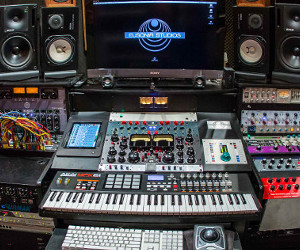
Excello Recording, one of Brooklyn’s most unique recording facilities, has been hosting a wide variety of sessions of late.

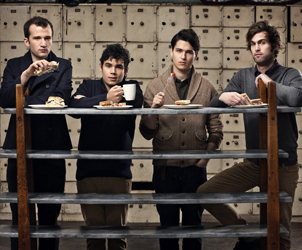
Vampire Weekend. Photo by Søren Solkær Starbird.

Vampire Weekend, John Popper and Jamie McClean, and Erik Friedlander were all through (separately, of course) to record in Excello’s large tracking room (1,000-sq.ft. w/ 17′ ceilings).

The members of Vampire Weekend were at Excello writing and recording material for their next release, tracking to tape with Ethan Donaldson and Nathan Rosborough.

John Popper was in recording with guitarist Jamie McClean (Dirty Dozen Brass Band) for his band’s latest album, Sunday Morning.

Engineer/producer Chris Shaw was at Excello working with the group Nick Casey – which is Nicholas Webber and Casey Spindler with the rhythm section of Dan Rieser and Tim Luntzel. This crew tracked between 20-30 songs over just two days at Excello.

Engineer/producer Scott Solter spent some time at the studio recording cellist Erik Friedlander latest solo project.

And mixer/engineer Hector Castillo has brought various projects to Excello, working on albums with singer Sophie Auster and singer/songwriter Clarence Bucaro, and recording the soundtrack for the film, La Camioneta, with composer Todd Griffin.

Meanwhile, Excello owner Hugh Pool has mixed records with Lase Salgado, The Compulsions, and his own band, Mulebone.

Additionally, Excello does analog-to-digital transfers for clients – recently handling projects by Richard Dev Green and the band Dead Leaf Echo – and audio restoration – through which they recently consulted on a Supreme Court criminal case.

Check ‘em out at www.excellorecording.com.

Behind The Release: “Cults”

Before Sony’s Columbia record label picked up the Brooklyn band Cults, they made do with a spare Bandcamp page and a text-only website to list upcoming shows.

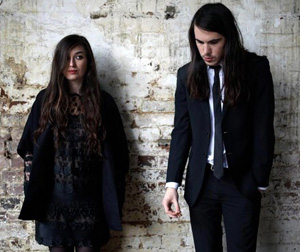
Cults' Madeline Follin and Brian Oblivion

Bloggers world-round seemed to marvel at the band’s ability to ignite industry interest without Facebook and Myspace – much like the rest of us wonder how we were ever able to meet at a pre-designated time and place before cellphones existed.

(Hint: Being good at what they do and having ties to the industry didn’t hurt.)

At their best, Cults offer simple, unpretentious, catchy pop tunes with a startlingly-retro production sensibility.

It’s a sound that’s novel and familiar at once, playing on the ear like a cross between The Ronnettes and Peter Bjorn and John.

We talked at length with co-producer and engineer Shane Stoneback who used a combination of vintage and modern tools to help the band craft huge, hazy, reverb-drenched mixes to complement their casually-cultivated air of mystery.

STONEBACK’S STORY

“Are you looking for work? Because I just fired somebody 30 minutes ago.”

The man facing Shane Stoneback was a large one, heavy-set and imposing. He carried a sandwich in one hand and a microphone in the other.

Stoneback, who would go on to work with Cults, Vampire Weekend, Sleigh Bells, F*d Up, and The Magic Kids, told a fateful lie: He said yes.

“Good. I’m going to sit in the lounge and eat this sandwich.’’ The studio manager passed him a Neumann U87 with his other hand. “By the time I come back, have this up so I can hear it in the headphones.”

The year was 1999. Stoneback was on vacation, visiting New York City from Minneapolis where he already had an entry-level job at recording studio.

In what he would later consider “a naïve move,” Stoneback had thumbed through the alphabetical Recording Industry Source Book; making phone calls, hoping to secure a quick tour at one of New York’s flagship studios.

Shane Stoneback at SMT Studios, NYC.

By the time he got to the letter “B”, someone said yes. He found himself in Battery Studios, the home of Jive records, being asked if he wanted a job.

‘This was in their C-room,” says Stoneback. “They had a digital Euphonix console in there. I never would have been able to figure that thing out in time, but I plugged the mic in, and somehow, I heard the headphones click. Whoever used the room before me hadn’t disconnected anything yet! That was it. I got the job and I never came back from vacation.”

If you ask Shane Stoneback about it, he’ll tell you he’s just a lucky guy.

From that encounter, he ended up working for Jive records during its heyday. The experience afforded him what he considers an “amazing pop training,” assisting on sessions with the biggest selling pop-artists of the day: Britney Spears. Backstreet Boys. ‘N Sync.

When Zomba Corporation (and in turn, Jive) was bought out by Sony, their Battery recording studios closed down. Again, Stoneback says he got lucky: He was unemployed for an afternoon. That once sandwich-toting manager had lined him up with a job at a post-production house called Sound One, where he would help veteran film mixers learn their new Pro Tools systems.

But to say it was all luck would discount the 8-hours Stoneback would put in each night after the studio closed up each evening. After hours, he spent his time recording whatever interesting local bands he could find.

“They had a closet full of LA-2A’s and old Neve components – all this stuff that was just kind of old and irrelevant in their work.  I got to put some of this stuff into a series of road cases and wheel it all into the studio at night. And they were cool about it, as long as in the morning, the place looked like a post-production room again.”

He’d meet Vampire Weekend through colleague Jeff Curtin (Those Darlins’, Vampire Weekend, Small Black). Sensing they were set to make waves, he “dropped everything” to help them finish their record at Treefort recording, the new Brooklyn studio he had started to build.

That band would go on to receive rave reviews, immense popularity, wide notoriety, and a healthy dose of media backlash. (More on that later.)

From then on, Stoneback was keyed into a world of novel and emerging NYC artists, and into the rolodexes of label executives.

“If you get one legitimate credit under your belt,” says Stoneback ,”it kind of spirals into all these other projects from there.”

CULTS

When Stoneback met Cults, they already had a sound. Two songs on an internet web page had been all it took to get the right people talking. They called Stoneback, not to reinvent their sound, but to reinforce it.

Cults' eponymous debut, released on Columbia Records, June 2011.

“Ultimately, we didn’t change much from the original demos,” Stoneback says of the songs that had already made waves.

“We re-recorded one or two things, maybe even tried some new vocals, but in the end it was pretty clear there was some kind of magic about those tracks already.”

“I did go back into the mixes to beef them up a little bit – Just to make them slightly more modern-sounding.”

“As much as there’s this late-50s/early-60s girl-group aesthetic that’s so obvious, a lot of the songs have these almost Outkast-style hip-hop beats underneath them. So I’d add a little bit of low end to each of the mixes, maybe a little more smack to the snare, so they’d have this sort of strange duality of a 50s girl-group with a secret club-banger element going on underneath.”

When listening, it’s easy to imagine the Cults LP as being faithfully captured with vintage equipment and then amped-up with more modern tools. But much of the time it turns out, the opposite approach was at play.

TOOLS, TWEAKS, AND TONES

“I have this old Silvertone amp [model 1472] that’s just beat to sh*t. People call it the ‘TV amp’ because of the way it looks. It’s just a small combo amp with two channels that you can kind of hot-rod together. It’s got a really simple tube circuit and a slightly torn speaker that adds to that kind of broken magic quality. I’ve used it on almost every record I’ve done.”

“That was a big part of the keyboard sounds. A lot of those sounds were coming off of a really modern sounding keyboard – a software version of an FM-synthesizer really. But with that amp, it all came back sounding really vintage and authentic.”

Similarly, vocals were recorded to a DAW through a modern-sounding microphone, then degraded to become an almost-impressionistic exaggeration of an old-school sound.

The team decided early on that, although the albums should ultimately feel more like a collection of songs recorded on different dates with different setups, they’d stick with the main kick and snare sound songwriter and co-producer Brian Oblivion created for their demos. Even when they recorded live drum tracks, they would reinforce them with the kick and snare sounds that had originally come come from a drum machine on Oblivion’s computer.

To sonically warp the voice, drums and instruments, Stoneback used Roland Space Echo extensively – not as a delay, but as a sound-shaping tool.

[For those who aren't familiar with it, the Space Echo is a vintage effects box that uses a small tape cartridge to deliver delay effects. Some of the later models feature a spring reverb, even chorus. This one did not -Ed.]

Stoneback would set the unit for a quick, single repeat. But   instead of combining the output of the Space Echo with the original sound to achieve a traditional slap-back delay, he would record the tape-delayed signal into Pro Tools, and slide it back in time to replace the original sound.

“It’s kind of like a tape plugin but with all the genuine foibles of tape. And there’s really no worse tape machine than a Space Echo!” Stoneback laughs.

“I mean the quality is just asinine. But it was perfect. The first time I tried it out as a test, [the band] just loved it. It probably wouldn’t stack well if you wanted to record 9 tracks of vocals. There could be a lot of buildup in one [frequency range] .. Maybe, 2k[Hz]. But for this it was great.”

The work was tedious he says, but worth it:

“The Space Echo tapes have these little splices on them. So if you play it all the way through you’ll hear a glitch each time the tape comes around. I’d have to do 2 passes, knowing that statistically speaking, the hiccup probably wouldn’t happen in the same place twice. Then we’d have to combine those passes together.”

“You couldn’t combine it with the original take [in parallel]. The tapes move at such an inconsistent speed that the phasing is just unbearable. On some places though, you can hear that effect on a stereo source. On certain things, it was  a complication we learned to love and didn’t see it as a flaw. Stereo drums, things like that – what they gained from the character of the machine made up for the phase issues completely – it just gave them a really unique sound.”

And it’s perceptible. There are times that the stereo field of the record has a sound that’s huge, hazy and deliberately “sloppy” in the best sense.

THE BIG WASH

Reverb benefited from a similar approach:

“For the demos, the band had been using a reverb plugin in Logic, and had become pretty attached to it. At first I tried making my own version of it with the rack gear I had or with my own plugins, but they just weren’t really feeling it.”

“I ended up bringing a lot of the vocal tracks into Logic to use that particular plugin, and then export the reverb tracks back into Pro Tools, just because that’s what I use, kind of as a default.”

But Stoneback wanted more out of the sound:

“There’s a whole cinder-block basement [below Treefort]. When we were building it, the wiring guy had run a few tie-lines down there, so one day, just for the hell of it, I set up a JBL Eon [a self-powered PA monitor -Ed.], and put a mic near the top of the stairway.”

“It’s not going to go down in the annals of history as one of New York’s great reverb chambers or something, but running the plugin reverb into that – it just came back sounding so much more legit. Once there’s actual air pressure moving around in the room it just makes everything sound so much better.”

“We also used the Space Echo as kind of a pre-delay going into the chamber, with a repeating slapback to get a little more out of the reflections down there. That’s a pretty classic trick that [60s girl-group producer] Phil Spector would use to milk a little more time out of a reverb chamber.”

Since then, Stoneback has continued to use his basement chamber on almost every record in some capacity, and he now has plans to build it out to make it a more flexible space, using microphones mounted on motorized camera tripods to  allow him to change reverb settings in real-time.

He says he’s happy to hear how warmly the reverb sounds on the Cults record have been received. He can remember 3 long days of work spent making sure they were going in the right direction with ambiance alone. But he insists what people are hearing is more than a microphone, a few wire patches, and the turn of a knob.

“Really, a lot of the character of the vocal is just the way [singer] Madeline [Follin] sounds. I’ll give you one example: There’s a vamp in the final chorus of “You Know What I Mean” where she modulates up a key. That’s one of the coolest vocal moments on the record, and there’s nothing being done with switches and knobs; it’s just the way she leans into it, really hard. The gear reacts to that, not the other way around. That part is so special because of the way she sang it.”

Now that he’s worked with so many musicians who’ve convinced others they’re doing something worth hearing (and at such a young age) we asked if there was a common thread that tied them all together.

“No,” he laughs. “Absolutely not. They’re all so different.”

Then he adds: “Brian was [studying film and] taking some music and technology program at NYU. If you’ve ever been to one of those, you get the feeling that a lot of kids will record some stuff for class, you know, to turn in the assignment. They’ve got their social lives going on and all that. But with Brian, I know he would just run home to record – to try things out with Madeline.”

“And I will say that a lot of [the people I've worked with],in their most honest moments, they want to be successful. Not in a sleazy  ‘cha-ching’ kind of way. But when they make a record, they want people to hear it. They need that as an artist, to feel that real connection to an audience. Otherwise, what’s the point of doing it?”

We also asked Stoneback if his early training with bubblegum divas and boy bands has ever been a liability with hip Brooklyn bands or edgier artists like Sleigh Bells and F*d Up.

Again, a quick “No.”

“If anything, they’re hoping I’ll bring some of that to the table. I make no secret that it’s my desire to bring some of the most pop elements out of their music. None of them are ashamed of it, they encourage it. Even the work I did with a band like  F*d up – I think that’s about as pop as that band can sound. Little things, like the levels of vocal-to-snare, panning choices, that kind of thing. Clients are hoping to reap some benefit from that.”

And he has been instrumental in helping some bands find that wider audience. In moments, Cults have come close to risking the kind of backlash engendered by fellow Stoneback clients, Vampire Weekend.

So far, they seem to have escaped the worst of it. Perhaps because they’ve avoided over-exposure, and maybe because they’ve avoided their predecessor’s mistake of making public comments that would make them appear obnoxiously entitled, and culturally sheltered, to many fans and critics.

But to Stoneback, a little bit of controversy isn’t always a bad thing. It can even help a band find its audience. Of Vampire Weekend, he says:

“Any successful circuit has to have polarity to work – positive and negative – and they had that.”

“There were positive and negative things beaming out of that whole thing from the first moment. Maybe universal acceptance would have created a short-lived kind of success. But that polarity required people to not just write it off as some summertime jam, or some irrelevant crap. Eventually, people kind of realized that this is a band that’s gonna be around for a while.”

“It was funny – there were as many people writing about what kind of clothes [Vampire Weekend] were wearing as there were people writing about their music. I kind of just thought to myself ‘Oh no! Is this what these kids are gonna have to go through?’  But of course [that won't be all]. They’re a great band, especially live. That’s pretty rare, and hard to ignore.”

There are already echoes of that story in Cults, although on a smaller scale. Time will tell how they play out the rest.

Justin Colletti is a Brooklyn-based producer/engineer who works with uncommon artists, and a journalist who writes about music and how we make it. Visit him at www.justincolletti.com.

The SonicScoop Year in Review: Top NYC Music Business News and Trends of 2010

December 29, 2010 by  
/* Filed under Music Biz */

THE FIVE BOROUGHS: 2010 has been busy all right. For anyone involved in New York City’s expansive business of music – producer, publisher, entrepreneur, engineer, artist, and many more – the environment remains fast-paced, ultra-competitive and constantly changing.

Northern Lights' WSDG-designed 5.1 audio mix suite

With 2011 looming, SonicScoop looked for the news, trends and topics that stood out to us over the past 365 days.

In audio post, it was grow or die in the uppermost echelon. The biggest facilities, including hsr|ny, Nutmeg, and Sound Lounge made serious expansions into audio and/or video:

Sound Lounge opened an ADR Stage and multiple studios.

Nutmeg Post added a strong team and facility when it soaked up Soundhound.

The big post house Mega Playground built out audio capabilities.

Northern Lights added a 5.1 audio mixing suite.

Video house Click3X reversed the trend and added their own audio suite.

Celebrating 35 years in business, hsr|ny continued to expand as a full-service video and audio post facility.

Large and mid-sized recording/tracking/mixing studios kept making capital improvements and expanding:

Premier Studios took over the 8th floor at 723 7th Avenue.

Engine Room opened up its penthouse studio.

Stadium Red expanded with a new studio for Just Blaze and a mastering suite.

The remarkable Electric Lady celebrated turning 40.

Platinum Studios added Augspurgers to Studio K.

Sear Sound set up the Moog-centric Studio D.

Tainted Blue swapped out its SSL for a Euphonix (nee Avid) System 5.

And props to Electric Lady for marking its 40th Anniversary.

Converse (yes, the shoe company) has an interesting business plan for the Rubber Tracks studio it’s going to open in Williamsburg in 2011: no-cost recording.

Advanced smaller studios – independent and within larger facilities — and producer rooms also opened up at a peppy pace:

Chris Theberge’s Music Works arrived on the Upper West Side.

The former One Point Six in Williamsburg was reborn as Three Egg Studios.

Manhattan Center Studios launched The Fuse Box with Public Enemy’s Brian Hardgroove.

Brian Hardgroove is building up the Fuse Box.

Avatar opened up its Studio W writing room.

Sisko’s Min-Max Studios opened up in midtown.

Marc Alan Goodman announced an ambitious new expansion for Brooklyn’s Strange Weather, then blogged about the buildout – step by step – for SonicScoop.

Guitarist Justin King moved his Vinegar Hill Sound from Portland, OR to DUMBO, Brooklyn.

Avid capped off a furious year of reinvention and new products with the release of Pro Tools 9.

Music houses and composers still had a ton of TV, film and video game work to go after and win:

Joel Beckerman of Man Made Music continued to make NYC a TV music powerhouse.

Composer Peter Nashel turned ears everywhere with his work for shows like Rubicon.

The Rubicon ensemble tracking in Avatar Studio C

Outfits like Expansion Team scored for networks such as the Biography Channel.

Tom Salta understands how to get chosen to score for games like Prince of Persia and Red Steel 2.

Production music and synch licensing remained a solid business, especially for those who got in at the right time or had a smart approach.

NYC’s Kingsize Music was acquired by 615 Music.

And later on Warner-Chappell (NYC) bought up 615 Music.

NYC’s Videohelper released the “Scenarios” music search tool.

Jingle Punks continued to grow.

Mechanical licensing experts RightsFlow kept progressing.

One of NYC’s most controversial music business plays, peer-to-peer file sharing network Limewire, appeared to be finally finished.

Tracking, mixing and mastering at NYC’s established facilities did a relatively healthy volume of A-level and independent work throughout the year:

will.i.am produced a new Black Eyed Peas record at Germano Studios.

The Black Eyed Peas, Rivers Cuomo and Kanye West were at Germano Studios.

Neon Indian, Beach House, Matt and Kim, Bear Hands and more were mastered at The Lodge.

MSR Studios handled Kid Cudi, Evanescence and Broadway Cast recordings.

Lenny Kravitz, The Dirty Pearls, “Glee”, and Vampire Weekend were all at Avatar.

Joe Lambert Mastering worked with Moby and Ninjasonik.

New software and hardware happiness abounded:

We elected many items “Buzzworthy” at AES, from Universal Audio, Focal, SSL, Burl, Shadow Hills, Izotope, Sound Toys, Lavry Engineering, Telefunken and more.

Propellerhead released Reason 5.

NYC suffered losses when beloved people and places left us:

Recording icon Walter Sear passed away.

Walter Sear's spirit continues to thrive at Sear Sound.

The great hip hop/jazz experimentalist Guru was gone before his time.

Clinton Recording Studios hosted its last session.

Brick and mortar music retail took another hit when Fat Beats shuttered its last stores.

Baseline Studios, home of Just Blaze and countless Jay-Z hits, closed.

Chung King Studios started off 2010 with a bang by suddenly vacating Varick Street.

NYC-based producers, mixers, engineers and artists became businesses in their own right:

Producer Chris Coady worked on some hugely acclaimed records this year, including Beach House Teen Dream and Delorean Subiza, as well as records with Hooray for Earth, Zola Jesus, Smith Westerns, Cold Cave.

People like Allen Farmelo developed their distinctive sound.

Shane Stoneback is in the right place, right time.

Choice songwriter Claude Kelly made a business of hits.

Shane Stoneback’s career took off via work with Sleigh Bells and Vampire Weekend.

Mixer Mark Saunders embraced multiple aspects of the biz from his studio at Beat 360.

Dream Theater’s Jordan Rudess took his iPad/iPhone app MorphWiz all the way to #1.

Joel Hamilton continued down an immersive production path, working on records with Blakroc, Dub Trio, The Parkington Sisters and Blakroc.

And John Agnello brought his classic production and engineering technique to new records for Kurt Vile, J Mascis, Shayna Zaid And The Catch and Dead Confederate (among others).

The studio scene got a lot more socialicious and FUN:

Flux Studios was always hosting something in the East Village, like Alto and Dangerous converging for a schooling from Fab.

Two fiesta types plus (r) introspective Stadiumred artist Jeremy Carr. SonicScoop says: HAVE FUN AND PROSPER IN 2011!

Digital Music NY was one of many popular business-based meetups.

Stadium Red partied down post-CMJ.

20dot20 mixed advertising and music.

And the Connectors connected a LOT of people.

What big stories would you include? And what do you see next in 2011? Don’t be shy – leave a comment and let us know!

– Janice Brown and David Weiss

Shane Stoneback: Music Production Career Construction with Sleigh Bells, Magic Kids & Vampire Weekend

September 16, 2010 by  
/* Filed under NYC Spotlight */

DUMBO, BROOKLYN/CHELSEA, MANHATTAN: Shane Stoneback would be the first person to tell you that he’s a lucky son-of-a-gun. Sure this fast-emerging producer/engineer has sharp ears, sharper instincts and a marvelously open mind, but he’s also got an undeniable knack for being in the right place at just the right time.

Shane Stoneback in the right place...again.

A quick scan of his expanding discography bears that out, with some of the timeliest artists tapping him to bring new sounds, classic styles, and hybrid approaches to their projects. Vampire Weekend, the arresting joy-noise of Sleigh Bells, updated old-skool of Magic Kids, and mystery-soaked Brooklyn duo Cults, are all his latest clients, and that’s just for starters.

To handle the heavy metal, undefinable psychedelia, and everything in between, Stoneback’s dual NYC studios are seeing an enviable level of action. He often gets things started in the raw DUMBO zone he calls Treefort Studios, then crosses the river to finish at SMT Studios in Manhattan, the SSL 4000 G+/Augspurger-endowed mushroom wood dream room he shares with engineer Brian Herman.

Able to make the most out of every opportunity that comes his way, Stoneback has gone a good distance since his formative years as a tech at Battery Studios and in the machine room of audio post HQ Sound One. Settled comfy comfy behind his big board at SMT, Stoneback caught us up on his latest adventures.

You did some recording recently with Magic Kids, we hear.
Right. I went to MemphisW for about a month to a studio owned by Doug Easley. He’s worked with Cat Power, Sonic Youth, and a bunch other great groups. Previously he had a beautiful, old-school studio with three-story-high live rooms, like at Abbey Road. It was famous, but it burned down four years ago.

Now he’s set up shop in an old insurance sales office. It’s a decent studio, but he has a Neotek board that’s like a Salvador Dali painting, because the knobs are kind of melted. We did all the principal tracking there – guitar, bass, drums – and hired this whole cast of local musicians. The talent pool in Memphis is pretty amazing, and Magic Kids is a big band with a lot of members – their network is pretty extensive, and they’re only two calls away from any instrument you can think of.

Magic Kids’ keyboardist/producer Will McElroy has these elaborate, intensive arrangements in his head. In the 1970’s you would have spent six months making this record, and we spent two months. I ended up getting really sick because I spent so much time making it. I didn’t get a lot of sleep in those two months.

They’ve definitely got a style that stands out – how would you describe their sound?
There’s nine people in this band. The Magic Kids have classic songwriting sensibilities, but with modern tools used in their creation, like lots of big 808s.

That new song you produced with them, “Cry with me Baby”, has some old skool elements, but it also doesn’t sound 100% retro…
Sounding retro was a big fear. When I start with a band, if I can I spend time with them a little bit, at a rehearsal or wherever, and talk about music, or I see what’s on their iPod when they’re not looking. These guys were listening to house music when I met them, which I thought was so odd, but it kept it from being a throwback record.

Magic Kids

They didn’t want to make a cutesy throwback record – they avoided that at every turn. Some of the songs are super epic, on a level with Electric Light Orchestra songs.  Anyway, the record is coming out in August, and you better get your roller skates on for it!

OK! Or can we just hop on our bike? In the meantime back here in NYC, you’re running not one but two facilities. Let’s take it from the top with Treefort Studios in DUMBO.
Treefort is one of those loft locker spaces. I got it three years ago for a writing room and I started to build it out when one of the kids from Vampire Weekend came in. I wasn’t done with construction, but they came out and started doing drum overdubs, and I started a good relationship with those guys.

The room is great, it’s a raw inspiring environment with books, chotchkes…people seem amused out there, but it is roughing it. I don’t have proper air conditioning, and the last few days have been brutal. But then again, Treefort is a much bigger room. There’s a lot of bands in particular I work with that want to lay down core live takes with three or four band members. They’ve been touring and they have it all locked together. You also have much more options for mic placement there. Plus I have tube organs, weird keyboards, and the room is cheaper because there’s a lot lower overhead.

We couldn’t help but notice the SSL 4000 G+ here at SMT Studios in Manhattan. Why keep it separated, instead of having everything together in Treefort?
We could never build this room in that place for a bunch of different reasons. The zoning would be difficult, and I’m not sure how long that building will last because of housing development in the area. The Treefort is awesome, but it’s collapsible. I could tear it down, put it up somewhere else, and it would be the same.

So now the package is we could have a band record at Treefort, do all the overdubs, and then mix it here in a room that’s acoustically tight with a great board. Every record we’ve mixed here has, in my opinion, been my best record. I just keep on thinking it gets better in this room.

Looking around, it certainly seems like you’ve put together what would be considered a dream facility for a lot of producer/engineers today.
This room is awesome. There’s two reasons we selected this configuration. Previously we had a baby Oxford and a pair of Tannoys that are now at Treefort. At the same time, there was a series of studios closing in the city that had an SSL G and Augspurgers, and that was how all the pop hit records were being recorded. Chung King had one, Battery had one, and there’s clearly been a vacuum for that. If they’re all closing down, then clearly there’s not a line around the block for that flavor, but if they all close down, then there’s still room for one.

Brian and I both worked at Battery, and this was the combination of console and speakers that we worked on every day. Plus, I love this board and the EQ on it – you can get rough with it and it sounds really cool. Or you can do nothing, just push the faders up, and it glues everything together better than it would in your workstation. Also, to get a Neve console of the same size would have been an enormous amount of money and this console, aside from cleaning, was in pretty good shape. I think it was in Usher’s house, so it wasn’t getting abused in a commercial facility.

People need studios. Whether they need me or some other engineer, they definitely need these environments where they can come in and have all the tools. Sitting in your bedroom, making a record, you can do that once, and it sounds awesome. But every band I’ve worked with this year – Cults is a good example – love what they’ve done in Garageband. But then they want to make it bigger.

(Take a video tour of SMT Studios hosted by Shane Himself right here)

With the different things that you’re doing, do you consider yourself to be a producer, engineer or a mixer?
I’ve been thinking about this a lot lately. I feel like we’ve all become facilitators more than anything. No two things come in the door with the same ratio of requirements – some people come in with great music and no idea of how they want it to sound and they want you to hold their hand through it. Others come in with it all ready to go, and they just want you to hit “record”.  In any event, the line in the sand between producer and engineer has become very difficult to distinguish.

On the facilitator tip, I hear Derek E. Miller of Sleigh Bells is like an engineer…
The way that we met, xl recordings booked a couple of weeks at Treefort for M.I.A., so she could have some time to write and experiment. She was going to meet with a variety of people, but I believe she heard about Derek through Spike Jonze, so how awesome for him, to get cold-called from M.I.A. one day to make a song. I didn’t know who he was – he could have been Danger Mouse or this huge producer, and I could have been Steve Lillywhite for all he knew – we were both nervous around each other for a while.

Sleigh Bells -- they slay Shane

We had some time to kill, and he started talking to me about compressors and the best settings for a female vocalist. Then he started playing me the Sleigh Bells record [which would become Treats, released May 11, 2010], and I immediately loved it. I said, “Put this out right now!” He said he’d be willing to go into the studio and work on it.

Some people would have stopped him from doing what he was willing to do, like going into the red digitally. That’s “wrong”, but what he and I discovered is that initially it sounds like crap, but if you go into the red further it starts to sound better. You can crank the EQ, sweep the frequencies, and make it start screaming like a guitar distortion pedal. I started to listen to Garageband, Logic and Pro Tools overloaded, they all sounded different, and we used those like tools to get the aesthetic for that. Derek has these specific things that I don’t think anyone has brought to the table as benchmarks – I think he really did want to hurt his ears at those frequencies like 4k! Like that French electronic group Justice, the way it’s filtered it hurts when it’s turned up loud, but it still sounds really cool.

Sounds like a good schooling. What were some other surprises that came up working with Derek on the Sleigh Bells record?
He was working with these vintage drum machines from the early ‘90’s, but he hated using the rock kit on the Korg or Alesis drum machines. They didn’t sound good until we rammed the fader all the way up and just knocked every frequency up as loud as every other.

We tried a lot of guitar amps, and we settled on this Korg Toneworks which is like something for a tour bus. It sounds like crap in the best possible way. Because of the circuitry, it shaves off all these frequencies so it sits in the mix right away – you could triple or quadruple the track and it doesn’t sound muddy. It sounds like the synthesizer you wish you had!

With that record, you couldn’t really do wrong. It was like going off the deep end into some uncharted territory. I liken it to the first time someone cranked a guitar amp and someone said, “You can’t do that!” and you say, “Just give me five minutes and you’ll see what I can do.” Hopefully I won’t get asked to make a record like that again, because I wouldn’t want to repeat it. But I do pull elements from it.

On a parallel tip to all this experimentation, you told us that you’re seeing a return to a more pro studio approach in recording – what do you mean by that?
There’s definitely a slew of records coming out where people are making rock albums that don’t sound bedroomy to me. Yes, there’s a good vocal sound you can get in your bedroom because you’re recording while your roommate’s sleeping, and it’s very intimate. But there’s something about a really well-recorded vocal where people scream, go off, and get the emotion out. You don’t hear the recording, you just hear the artist, you know? I feel like that will come back.

It doesn’t have to be slick with long reverbs and all that. The Raconteurs record (Consolers of the Lonely), that sounds great. The Them Crooked Vultures record, that sounds huge: it’s really thick and sounds good quiet, but it also sounds good in here cranked up loud.

You’re getting more and more credits on projects that producers would want to get the call on – Vampire Weekend, Magic Kids, the Sleigh Bells record — why is your stock going up right now?

Vampire Weekend rocked da Treefort

Part of it is luck. So I’ve been in the right place at the right time a lot. That said I can still tell I get better at this each day. It was serendipitous that I met Vampire Weekend, and the initial job that I did for them was not exclusive knowledge – anybody could have done it. But I worked up a good working relationship. I was an assistant engineer in studios for years, so I got good at the boring parts: taking notes and backing stuff up. I’m a great Pro Tools editor, and a lot of people don’t want to deal with that. People will keep you around for that.

On the second Vampire Weekend record (Contra), I hammered home the facilitator thing. Rostam (Batmanglij) is a great keyboard player, a great arranger, and picked up the basics of engineering pretty quickly, but he still needed a facilitator to handle things on a day-to-day basis. We rented a marimba that was bigger than this table! We set it up, mic’d it and recorded it. Even if I had never done it before, I’d pretend I’d done it ten times.

Interview by Janice Brown and David Weiss

Vampire Weekend Masters “Contra” at The Lodge

December 14, 2009 by  
/* Filed under News */

Indie-pop band Vampire Weekend returned to NYC’s The Lodge to master their sophomore album, Contra, with chief mastering engineer Emily Lazar and assistant Joe LaPorta.

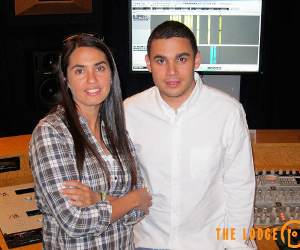
Pictured at The Lodge are (l-r): Joe LaPorta, Vampire Weekend lead singer/guitar player Ezra Koenig, Emily Lazar and VP's Rostam Batmanglij (keyboards/guitars), Chris Baio (bass) and Chris Tomson (drums).

Pictured at The Lodge are (l-r): Joe LaPorta, Vampire Weekend lead singer/guitar player Ezra Koenig, Emily Lazar and VP's Rostam Batmanglij (keyboards/guitars), Chris Baio (bass) and Chris Tomson (drums).

Contra‘s first single and lead-off track, “Horchata,” was released as a free download on the band’s website. Download it here. The full album will be released on January 12, 2010 through XL Recordings.

Vampire Weekend also mastered their eponymous debut at The Lodge, which has also mastered records by David Bowie, Björk, The Shins, Lou Reed, RZA (Wu Tang Clan), Vampire Weekend, Garbage, Depeche Mode, Tiësto, Vanessa Carlton, Morrissey, BT, Natalie Merchant, The Prodigy, Destiny’s Child, and Moby - among many others.

For more on The Lodge, visit: http://www.thelodge.com

3 Questions for…Justin Gerrish: Mixing Vampire Weekend

August 25, 2009 by  
/* Filed under NYC Spotlight */

MIDTOWN, MANHATTAN: The end of summer is nigh for Vampire Weekend. As the evening starts to show itself a tad earlier, the incredibly clever indie rock band’s next album comes that much closer to daylight.

Vampire Weekend: (l-r) Christopher Tomson, Ezra Koenig, Rostam Batmanglij, Chria Baio. Photo by Vorrasi.

Vampire Weekend: (l-r) Christopher Tomson, Ezra Koenig, Rostam Batmanglij, Chria Baio. Photo by Vorrasi.

The fast-rising four pack of Upper West Siders — Ezra Koenig, Chris Baio, Rostam Batmanglij, and Chris Tomson — asked up-and-coming engineer Justin Gerrish to mix their new collection. Gerrish and the group were recently ensconced in Avatar’s Studio E to shape Vampire Weekend’s ear-tingling concoctions. Working in tandem with co-mixer Batmanglij, Gerrish learned a thing or two about mixing – especially when it comes to fast and refreshing workflow – and gave us three chunks of insight on the experience.

Due out on XL Recordings, the new collection will probably show up in early 2010.

Q: How many tracks did you mix?

A: I co-mixed all the tracks of the album with Rostam. I also recorded some of the drum tracks. That’s how I first met the guys in Vampire Weekend.

Q: Which studio and what gear/setup did you decide on?

A: I ended up mixing the album in Studio E at Avatar Studios in NYC. Studio E is a Pro Tools room that has a vocal booth attached. I normally like to mix on a console but the guys wanted to stay in the box so that we could move from song to song quickly with minimal recall time. We typically worked on a song for a couple of hours, then we would move on to something else, and come back to that song later that day or later that week.

I usually work on a song until I think it’s done and the band has signed off on it. But with this new style of work-flow, I enjoyed having a fresh perspective on the song when I revisited it after working on different material. What’s great about working at Avatar is they have a pile of outboard gear that can be brought into any room. So for this project I did run some tracks through a chain of analog gear. I think I had some 1176s , LA-3As, Neve 33609s, GML EQ, Neve 31102sAMS RMX, Distressors, PCM 70 and a couple of live chambers that the studio has.

During mixing in Avatar's Studio E: (l-r) Batmanglij, Koenig and Gerrish.

During mixing in Avatar's Studio E: (l-r) Batmanglij, Koenig and Gerrish.

Q: What was fun about working with the band, and on this new album?

A: Vampire Weekend is a unique band with an eclectic musical taste. They took a different approach while making this record, which was exciting. We tracked drums for half the record in about two days. When it came time to mix the record, Rostam and Ezra were in the studio with me for most of the time. It was nice to get their feedback as a song was being mixed. Not having to upload mixes, and email back and forth notes with the band, saved a lot of downtime and allowed the creativity to flow. We worked collectively to achieve the sound we were happy with.

The new album has so many different elements that each song has something new. So when it came time to mix we could really experiment with creating a distinctive landscape for each song. I think this album differs from their first one, but didn’t lose any of the elements which made Vampire Weekend unique in the first place.

– David Weiss